Affiliate disclosure: As an Amazon Associate, we may earn from qualifying purchases at no extra cost to you.
Last updated: August 2026.
The best electric safe dehumidifier depends on your safe’s interior volume, power access, airflow, and the amount of maintenance you are willing to do. A plug-in heated rod lowers relative humidity by gently warming the air, a fan-assisted heater improves circulation, and a humidity-controlled model adds automatic monitoring. Rechargeable silica-gel units are useful when the safe has no cord pass-through because they work cordlessly inside the enclosure and use electricity only during regeneration.
This guide focuses on dehumidifiers designed for gun safes and other small enclosed storage spaces. It excludes tank-style room dehumidifiers and oven-only desiccant canisters that do not closely match the electric-safe buyer intent. Cordless-in-use models are included only when they recharge through an electric base or wall outlet.
Important distinction: Heated rods and fan-assisted heaters do not collect liquid water like a room dehumidifier. They mainly reduce relative humidity and condensation risk by raising air temperature and improving circulation. Always verify the result with a hygrometer inside the safe.
Quick verdict
Choose the Briidea MK-215 when you want automatic humidity response and a display, the DIGKAU 24-inch rod for simple fanless operation in a larger safe, or the Martronic fan model for a compact enclosure. Pick the Afloia TOP-Z or Eva-Dry E-333 when you need cordless moisture absorption inside the safe.
Quick Comparison of the Best Electric Safe Dehumidifiers
| Product | Best For | Type | Seller-Listed Coverage | Upkeep | Amazon |
|---|---|---|---|---|---|
| Briidea MK-215 | Automatic monitoring | Heated fan with controller | Up to 300 cu. ft. | Continuous power | Check Product Details |
| DIGKAU 24-Inch Rod | Simple continuous use | Plug-in heated rod | Up to 400 cu. ft. | Continuous power | Check Product Details |
| Martronic Fan Dehumidifier | Compact safes | Heater with built-in fan | 3.5-11 cu. ft. | Continuous power | Check Product Details |
| Afloia TOP-Z | Cordless safe placement | Rechargeable silica gel | Up to 54 sq. ft. listed | About 2-hour regeneration | Check Product Details |
| Eva-Dry E-333 | Low-cost cordless use | Wall-rechargeable silica gel | Up to 333 cu. ft. | Recharge every 20-30 days, depending on conditions | Check Product Details |
How we chose
We compared safe-specific fit, seller-listed coverage, power requirements, installation, humidity controls, regeneration needs, and practical limitations. This is a specifications-based comparison, not a claim of hands-on testing. Product details and Amazon offers can change, so confirm the exact ASIN, package contents, voltage, and warranty before ordering.
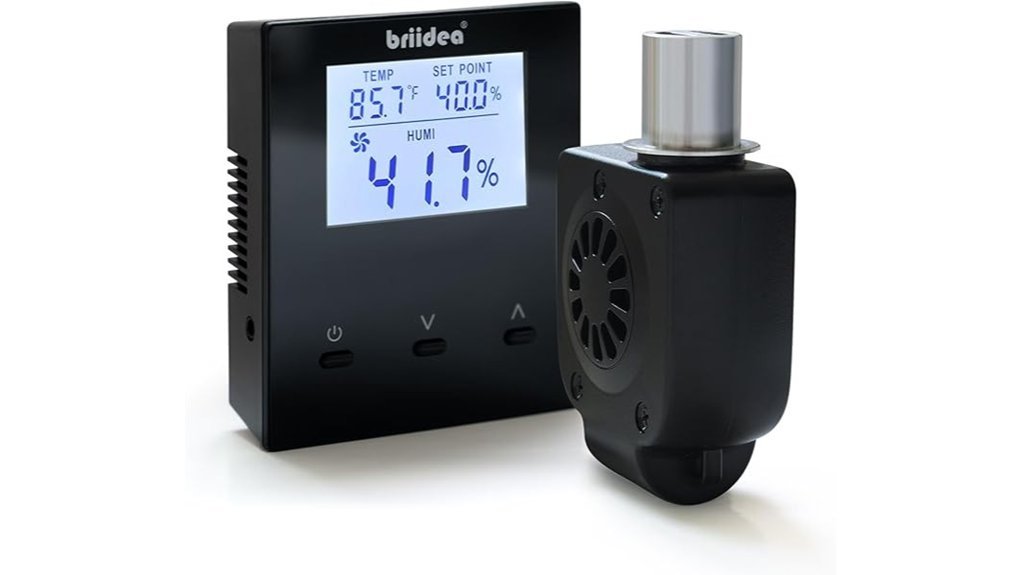
Briidea Gun Safe Dehumidifier with Humidity Control
Best Overall
The Briidea MK-215 is the strongest all-around choice here if you want the device to respond to changing humidity instead of running without feedback. Its built-in sensors work with an adjustable controller, and the backlit display shows the safe’s temperature and relative humidity. The seller lists it for enclosed spaces up to 300 cubic feet.
Unlike a basic warming rod, this unit combines a PTC heating element with fan-assisted air circulation. The seller also states that it includes a UL-certified power adapter and a V0-rated flame-retardant housing; treat those as listing claims and confirm the labeling on the unit you receive. Place it near the bottom of the safe where air can circulate, set the desired range, and cross-check the built-in reading with a separate hygrometer.
Best For: Safe owners who want automatic humidity response, a visible display, and fewer manual checks.
Why You’ll Like It: It combines monitoring, automatic control, warming, and airflow in one safe-specific unit.
Who Should Avoid It: Buyers without an interior outlet or cord pass-through, and anyone who wants a completely silent, no-moving-parts design.
Pros:
- Automatically responds when humidity rises above the selected range
- Displays real-time temperature and humidity
- Listed for safes up to 300 cubic feet
Cons:
- Must remain connected to power
- Fan-equipped designs can have more potential wear points than a simple rod
- Built-in sensor accuracy should be cross-checked with a separate hygrometer
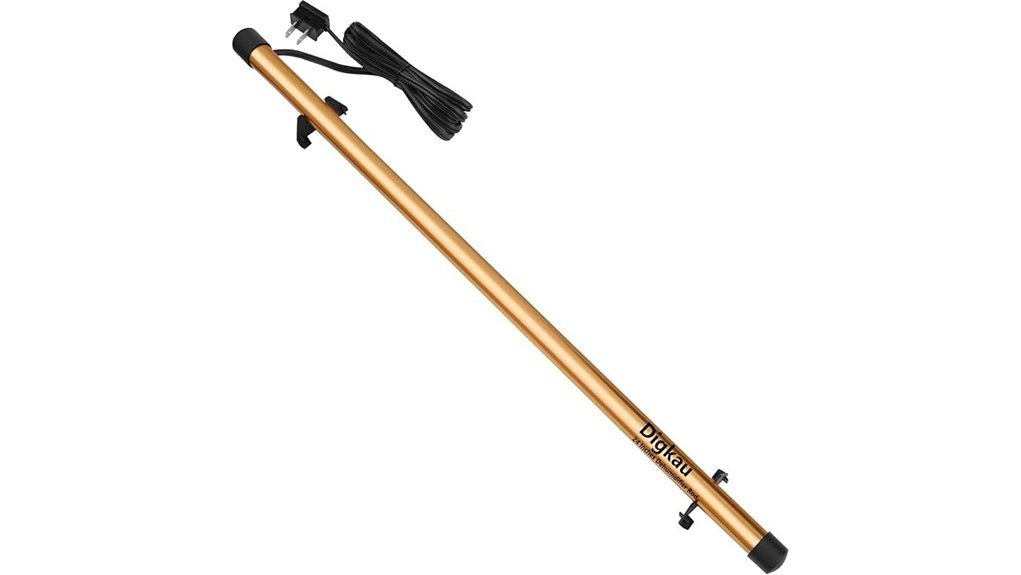
Gun Safe Dehumidifier Rod (24 Inch)
Best Heated Rod
The DIGKAU 24-inch electric gun safe dehumidifier rod is a straightforward choice for buyers who want continuous, fanless operation with no tank, beads, or settings to manage. The aluminum rod gently warms the air to lower relative humidity and encourage natural convection inside the enclosure.
The seller lists coverage up to 400 cubic feet and dimensions of about 24.02 x 0.8 x 0.79 inches. The included brackets support horizontal or vertical mounting, while the removable plug makes it easier to route the cord through a small factory access hole. The current wattage was not consistently verifiable, so confirm it on the Amazon listing or product label before estimating energy use.
Best For: Medium or larger safes with an outlet or power pass-through and enough clear wall or floor space for a 24-inch rod.
Why You’ll Like It: There is no tank to empty and no desiccant to regenerate.
Who Should Avoid It: Owners of very compact safes, tightly packed interiors, or heat-sensitive collections that require tighter temperature control.
Pros:
- Simple continuous operation with no refills
- Seller-listed coverage up to 400 cubic feet
- Vertical or horizontal mounting with included brackets
Cons:
- Requires continuous power and cord routing
- Does not display or directly control a selected humidity level
- Needs open space around the rod for safe heat distribution and airflow
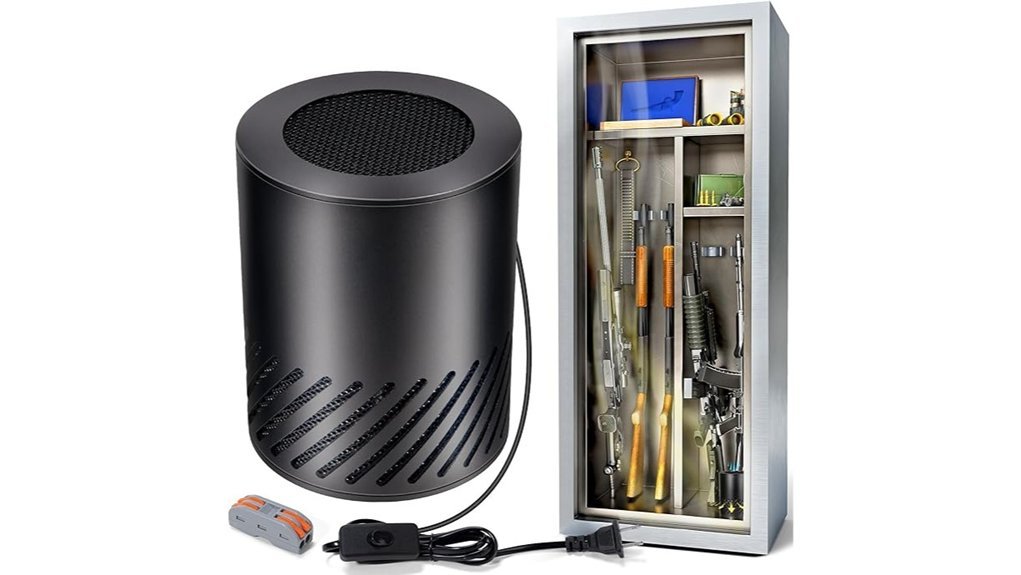
Gun Safe Electric Dehumidifier with Built-in Fan
Best for Compact Safes
The Martronic electric safe dehumidifier combines gentle heat with a built-in fan, making it a better fit than a long rod when floor space is limited. The listing recommends it for gun safes from about 3.5 to 11 cubic feet and specifies a compact 3.34 x 3.34 x 4.13-inch body.
Its seller-listed 16-watt design runs continuously and uses active airflow to distribute warm air around firearms, documents, and other stored valuables. Installation requires a 110-volt outlet and a suitable cord opening. Keep the intake and outlet clear rather than pressing the unit against fabric, foam, paper, ammunition packaging, or stored gear.
Best For: Pistol safes and other compact enclosures where a 12- or 24-inch rod will not fit.
Why You’ll Like It: It provides active air movement in a small footprint with no tank or refill.
Who Should Avoid It: Owners of larger safes or buyers who prefer a passive, fanless device.
Pros:
- Compact footprint for smaller safe layouts
- Built-in fan improves air movement around the enclosure
- Low listed power draw of 16 watts
Cons:
- Listed capacity is limited to about 11 cubic feet
- Requires continuous power and cord access
- The fan adds a moving component that a heated rod does not have
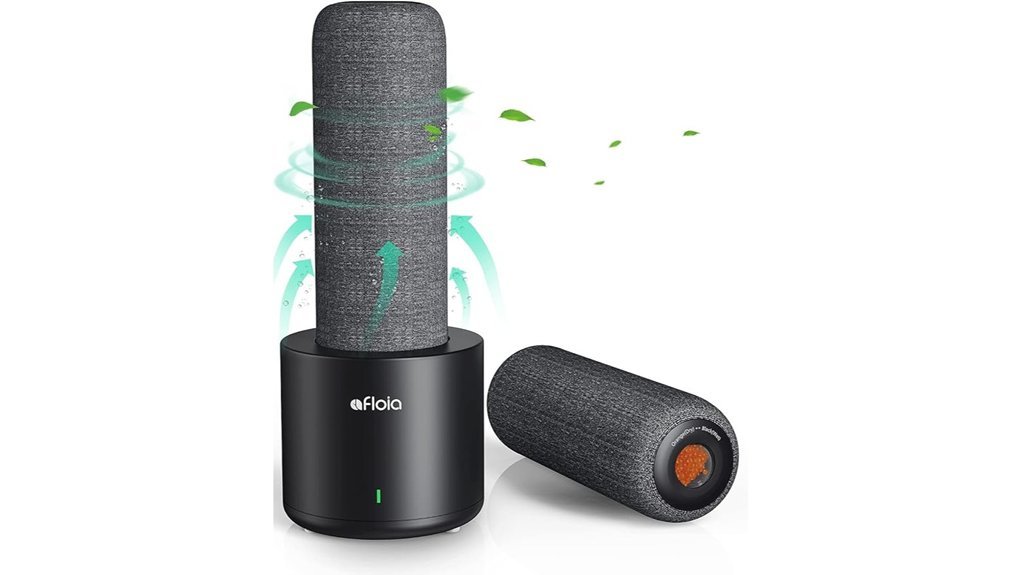
Afloia TOP-Z Rechargeable Gun Safe Dehumidifier
Best Rechargeable Kit
The Afloia TOP-Z is designed for buyers who cannot or do not want to run a power cord into the safe. It uses color-changing silica gel to absorb moisture passively during use, so the dehumidifier section remains cordless and silent inside the enclosure. When the beads change from orange to dark green, the unit returns to its 50-watt heating base for regeneration.
The product information lists moisture absorption up to 4 fluid ounces (100 ml) per cycle and coverage up to 54 square feet. The absorber stick is approximately 2.56 inches in diameter and 7.48 inches high, while the heating base is a separate component. Regeneration takes about two hours and the base is described as having automatic shutoff. Treat the floor-area rating as a general seller claim rather than a reliable safe-volume measurement because temperature, starting humidity, door openings, and airflow all affect performance.
Best For: Small safes without an interior outlet, especially when silent operation matters.
Why You’ll Like It: The moisture absorber stays cordless in the safe, while the heating base makes it reusable.
Who Should Avoid It: Buyers who want true automatic humidity control or who do not want to monitor bead color and regenerate the unit.
Pros:
- Cordless and silent during moisture absorption
- Color indicator shows when regeneration is needed
- Approximately two-hour regeneration with automatic base shutoff
Cons:
- Passive absorption is slower than powered fan circulation
- Requires periodic removal and regeneration
- The square-foot coverage claim is less useful than cubic-foot safe volume for sizing
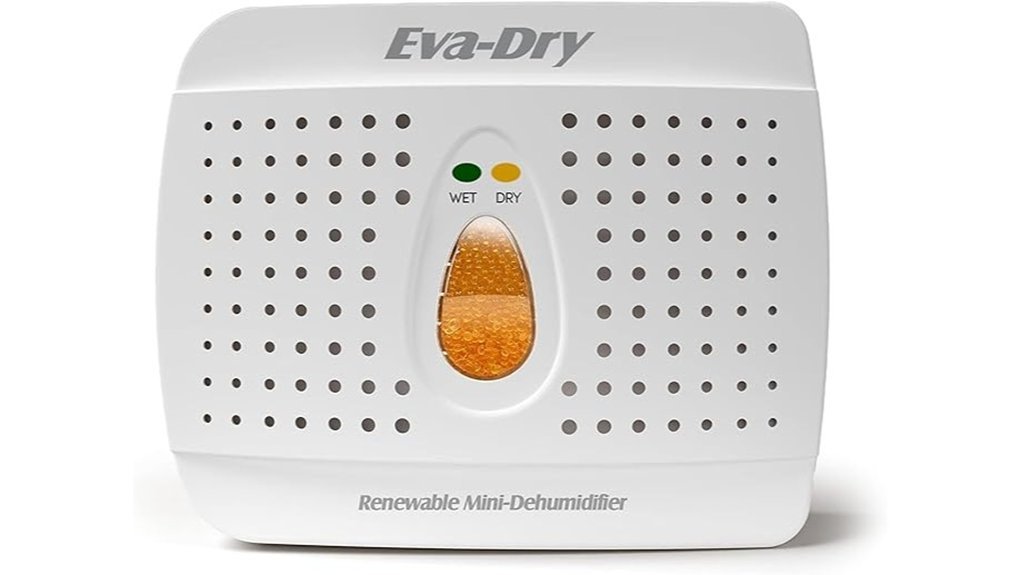
Eva-Dry Wireless Mini Dehumidifier, White (E-333)
Best Budget Cordless Pick
The Eva-Dry E-333 is a simple rechargeable option for small enclosed spaces, including gun safes, cabinets, vehicles, and storage boxes. It absorbs moisture with silica gel and needs no cord or battery while it is inside the safe. When the indicator changes from orange to green, plug the unit into a standard wall outlet to regenerate it.
Eva-Dry lists coverage up to 333 cubic feet, moisture absorption up to 6 ounces, and a typical operating cycle of about 20 to 30 days before regeneration. The actual interval can be shorter in a damp safe or when the door is opened frequently. Eva-Dry also lists a five-year warranty for the E-333.
Best For: Budget-focused buyers who want a compact, silent device and do not need a digital controller.
Why You’ll Like It: It is spill-free in normal use, easy to hang or place, and has no disposable refill.
Who Should Avoid It: Owners dealing with severe humidity, large air leaks, or multiple safes that need continuous active control.
Pros:
- Cordless, silent operation inside the safe
- Listed for enclosed spaces up to 333 cubic feet
- Reusable silica gel with a visible saturation indicator
Cons:
- Must be removed and plugged into an outlet to regenerate
- Cycle length varies significantly with humidity and safe access
- Does not show the actual relative humidity inside the safe
Factors to Consider When Choosing an Electric Safe Dehumidifier
Choose the Right Type
A heated rod is simple, silent, and low maintenance, but it does not measure humidity. A fan-assisted heater moves air more actively but adds a moving part. A humidity-controlled unit is the most convenient when you want automatic response and a display. A rechargeable silica-gel unit is best when the safe has no outlet, although it requires periodic regeneration.
Measure Safe Volume, Not Just Floor Area
Safe products are usually easier to compare by cubic feet. Multiply the usable interior width, depth, and height in feet, then account for shelves and densely packed contents that can restrict airflow. Do not assume a room rating in square feet directly equals safe capacity in cubic feet.
Power Consumption
Use the verified product-label wattage to estimate energy use: watts × operating hours ÷ 1,000 = kilowatt-hours. For example, a 16-watt unit running for 24 hours uses about 0.384 kWh per day. Multiply that figure by your local electricity rate. Do not calculate from a wattage copied from an inconsistent third-party listing.
Humidity Monitoring
Use a separate digital hygrometer unless the dehumidifier includes a built-in sensor that you have cross-checked. A practical target for many mixed gun-safe contents is about 30% to 50% relative humidity, with stability often more useful than chasing the lowest possible reading. Avoid making the safe excessively dry when it contains wood, leather, paper, photographs, or other sensitive materials. Follow the firearm, ammunition, document, optics, and safe manufacturers’ storage guidance.
Installation and Airflow
Check for an interior outlet or a factory cord pass-through before buying a continuous electric model. Place warming or fan-assisted units low in the safe when the instructions recommend it, keep vents clear, secure loose cords, and avoid direct contact with fabric, foam, paper, ammunition packaging, or other heat-sensitive materials. Regenerate removable silica-gel devices only as directed and on a stable, heat-resistant surface. Do not drill a safe unless the safe manufacturer confirms where drilling is permitted.
Maintenance Cycle
Continuous models reduce routine work but depend on uninterrupted power. Rechargeable models require you to watch the indicator and regenerate them on schedule. In a very humid location, a rechargeable unit may need attention more often than the advertised cycle.
Noise Level
Heated rods and passive silica-gel units have no fan and are normally the quietest choices. Fan-assisted products may produce some sound even when marketed as quiet. If the safe is in a bedroom or office, check the current listing and return policy rather than relying on an unsupported decibel claim.
Availability and Warranty
Amazon offers, package contents, warranties, and specifications can change. Confirm that the exact ASIN includes the expected rod length, heating base, controller, brackets, connectors, or other required parts before ordering. Save the listing and warranty details for your records.
Before You Buy
- Measure the usable interior volume and available mounting space.
- Confirm outlet access or choose a rechargeable model.
- Add a hygrometer so you can verify the result.
- Check that airflow will not be blocked by shelves or stored items.
- Review the current Amazon package contents and warranty terms.
Frequently Asked Questions
How Often Should I Replace a Safe Dehumidifier?
There is no universal five- or ten-year replacement schedule. Stop using and replace a powered unit if the cord, plug, housing, fan, controller, or heating element is damaged, overheats, smells unusual, or stops working. Replace a rechargeable unit when it no longer returns to its dry indicator color or its moisture-control cycle becomes unusually short despite correct regeneration.
Can I Use One Dehumidifier for Multiple Safes?
Usually not if the safes are separate closed enclosures. An in-safe unit controls only the air it can reach. Use one properly sized device and hygrometer per safe, or dehumidify the entire room and verify the humidity inside each safe separately.
Do Electric Safe Dehumidifiers Increase Electricity Bills?
Yes, but low-wattage models typically use modest amounts of electricity. Multiply the wattage by the hours used and divide by 1,000 to estimate kWh, then multiply by your local electricity rate. Rechargeable models draw power only during regeneration.
Are Safe Dehumidifiers Safe Around Firearms and Documents?
They can be appropriate when installed and operated according to the product and safe manufacturers’ instructions. Keep heating surfaces and vents clear, inspect cords, regenerate removable units outside the safe unless the manual explicitly says otherwise, and avoid liquid-collection units inside the enclosure. A dehumidifier does not replace secure firearm storage, safe handling, cleaning, lubrication, or corrosion inspection.
What Humidity Level Should a Gun Safe Maintain?
A commonly recommended range is about 30% to 50% relative humidity. Use a hygrometer inside the safe and avoid large swings. If you store wood stocks, leather, photographs, documents, optics, or electronics, check their specific storage requirements before targeting the driest possible setting.
Can I Put a Room Dehumidifier Inside a Gun Safe?
A tank-style room dehumidifier is generally a poor fit inside a closed safe because it needs more airflow, takes up valuable space, and requires regular tank access. Use it in the room surrounding the safe instead, then place a safe-specific rod, fan unit, or rechargeable absorber inside the safe if the hygrometer still shows excess humidity.
Conclusion
The Briidea MK-215 is the best fit for buyers who want automatic humidity response and a visible display. The DIGKAU 24-inch rod is the simplest fanless option for a larger safe with power access, while the compact Martronic fan dehumidifier suits smaller enclosures that benefit from active airflow. Choose the Afloia TOP-Z or Eva-Dry E-333 when cordless moisture absorption inside the safe matters more than automatic control.
Final recommendation
Start with your hygrometer reading and power access. Choose a powered heater or rod for continuous management, a rechargeable silica-gel model for a safe without a cord opening, and a room dehumidifier outside the safe when the surrounding basement, garage, or storage room is persistently damp.
Whichever style you choose, pair it with a hygrometer, leave room for airflow, inspect the device periodically, and confirm the current Amazon specifications, voltage, package contents, and warranty before purchasing.