Affiliate Disclosure: This article may contain Amazon affiliate links. If you buy through these links, we may earn a commission at no extra cost to you.
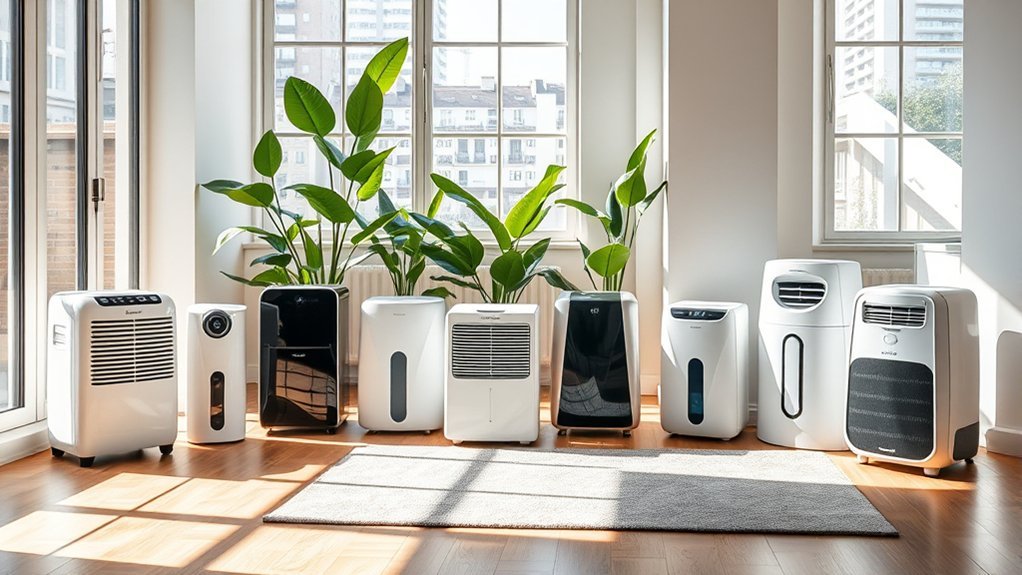
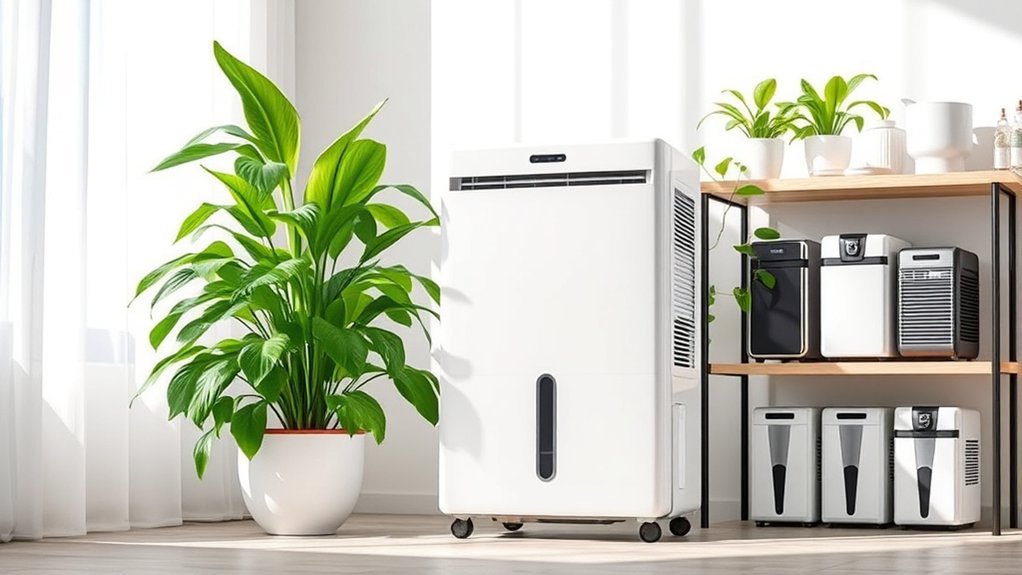
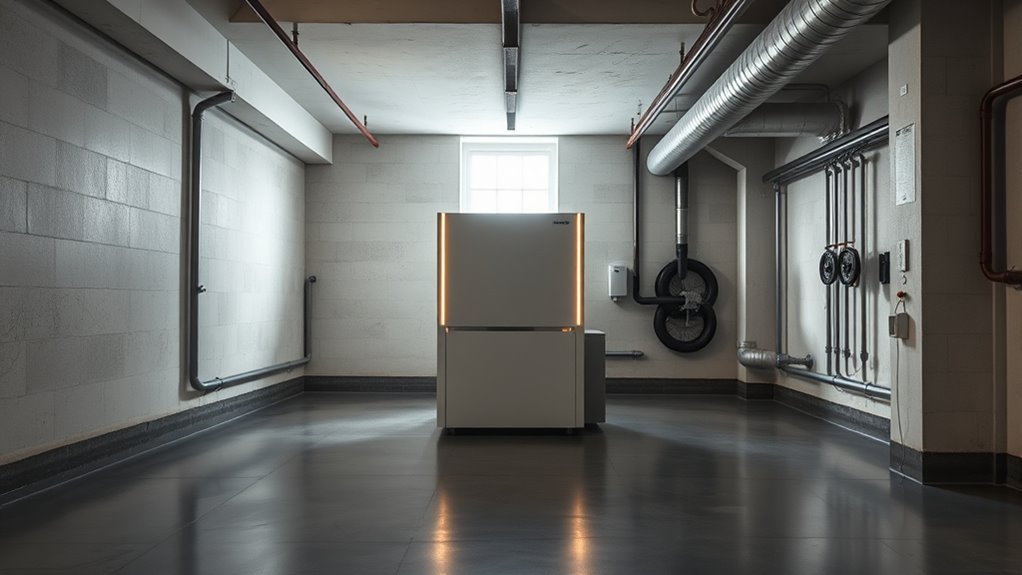
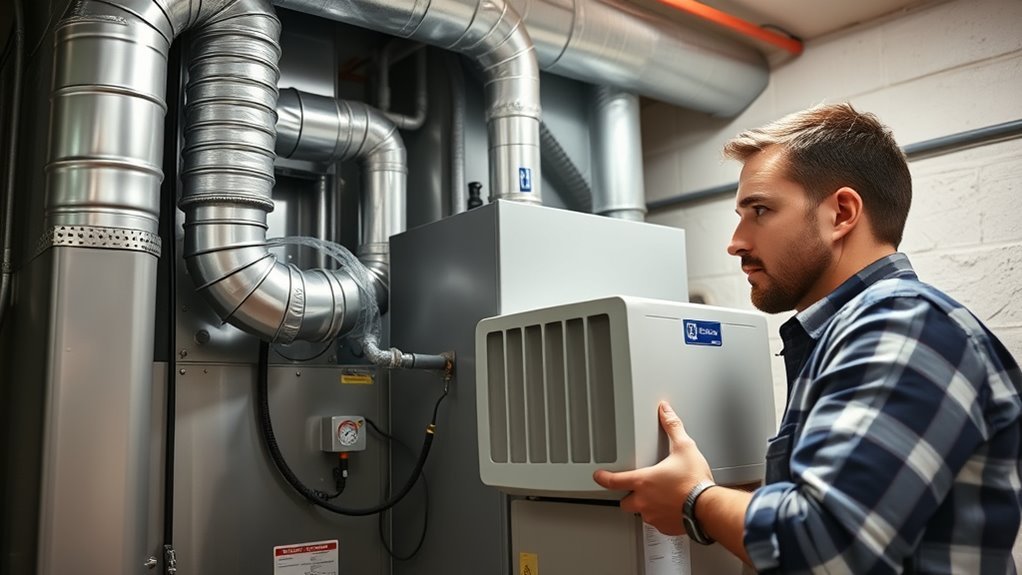
When you’re looking for the best dehumidifiers with pump and hose for 2026, the main goal is simple: remove excess moisture without constantly emptying a bucket. A built-in pump can move collected water upward or across a room through a drain hose, which is especially useful in basements, laundry rooms, garages, storage areas, and other damp spaces where gravity drainage is difficult.
The TABYIK 4,500 Sq. Ft. Smart WiFi Dehumidifier, Uhome 150 Pints, and Avylo Dehumidifier are useful choices when you want stronger advertised moisture-removal capacity or larger coverage. The Waykar and GE models stand out for pump-focused drainage, while Amazon Basics and Midea provide practical residential options. Compare capacity, manufacturer test conditions, coverage, pump setup, hose routing, noise, portability, controls, and maintenance before deciding which model best fits your space.
Quick Verdict
For many large residential spaces with moderate to heavy humidity, a 50-pint-class dehumidifier is a practical place to start. Very damp, high-load, or unusually large spaces may benefit from a higher-capacity model, but advertised pint ratings and square-foot coverage should not be compared without considering the manufacturer’s test conditions. The most important pump question is whether the unit can move water reliably to your chosen drain point without creating kinks, leaks, or a hazardous hose path.
Quick Picks: Best Dehumidifiers With Pump and Hose
- Best smart 80-pint option: TABYIK 4,500 Sq. Ft. Smart WiFi Dehumidifier
- Best for very large spaces: Uhome 150 Pints Dehumidifier with Pump
- Best basement-focused choice: Avylo Dehumidifier for Basement with Pump
- Best high-capacity Energy Star option: Waykar 150 Pints Energy Star Dehumidifier with Pump
- Best familiar brand option: GE Portable Dehumidifier with Built-in Pump
- Best simple residential option: Amazon Basics 50-Pint Dehumidifier with Pump
- Best major-brand smart option: Midea 50 Pint Dehumidifier with Pump
Comparison Table
| Product | Advertised Moisture Removal | Advertised Coverage | Best For |
|---|---|---|---|
| TABYIK 4,500 Sq. Ft. Smart WiFi Dehumidifier | Up to 80 pints/day maximum | Up to 4,500 sq. ft. | WiFi control, pump drainage, and larger home spaces |
| Uhome 150 Pints Dehumidifier with Pump | Up to 150 pints/day at 95°F, 90% RH | Up to 7,000 sq. ft. | Large basements, storage areas, garages, and big rooms |
| Avylo Dehumidifier for Basement with Pump | Up to 90 pints/day maximum | Up to 5,000 sq. ft. | Basements, garages, and larger living areas |
| Waykar 150 Pints Energy Star Dehumidifier with Pump | Up to 150 pints/day at 95°F, 90% RH | Up to 7,000 sq. ft. | High-humidity large spaces and flexible pump drainage |
| GE Portable Dehumidifier with Built-in Pump | Up to 50 pints/day | Up to 5,000 sq. ft. | Basements needing higher vertical pump drainage |
| Amazon Basics 50-Pint Dehumidifier with Pump | Up to 50 pints/day | Up to 4,000 sq. ft. | Straightforward residential humidity control |
| Midea 50 Pint Dehumidifier with Pump | Up to 50 pints/day | Up to 4,500 sq. ft. | Smart controls and everyday home moisture removal |
Comparison note: Maximum pint ratings may be measured under different temperature and humidity conditions. Use them as manufacturer specifications rather than assuming every rating is directly comparable under normal household conditions.
How We Compared These Dehumidifiers
We compared the information provided for each model based on pump drainage, advertised moisture-removal capacity, stated coverage, hose setup, humidity controls, noise information, smart features, portability, and maintenance needs. Manufacturer specifications and advertised coverage can vary by test conditions, so this guide does not treat a larger pint number or square-foot claim as automatically better for every home.
Before You Buy Checklist
- Measure the room or basement and consider how damp it feels, not just square footage.
- Check where the hose will drain: floor drain, utility sink, sump pit, laundry drain, or another suitable drain point.
- Confirm whether water must move upward. If it does, check the model’s stated pump-lift capability.
- Compare advertised capacity together with the temperature and humidity conditions used for that rating.
- Think about noise if the unit will run near a bedroom, office, nursery, or living room.
- Leave the clearance recommended by the manufacturer around the air intake and exhaust.
TABYIK 4,500 Sq. Ft. Smart WiFi Dehumidifier
Best Smart 80-Pint Option
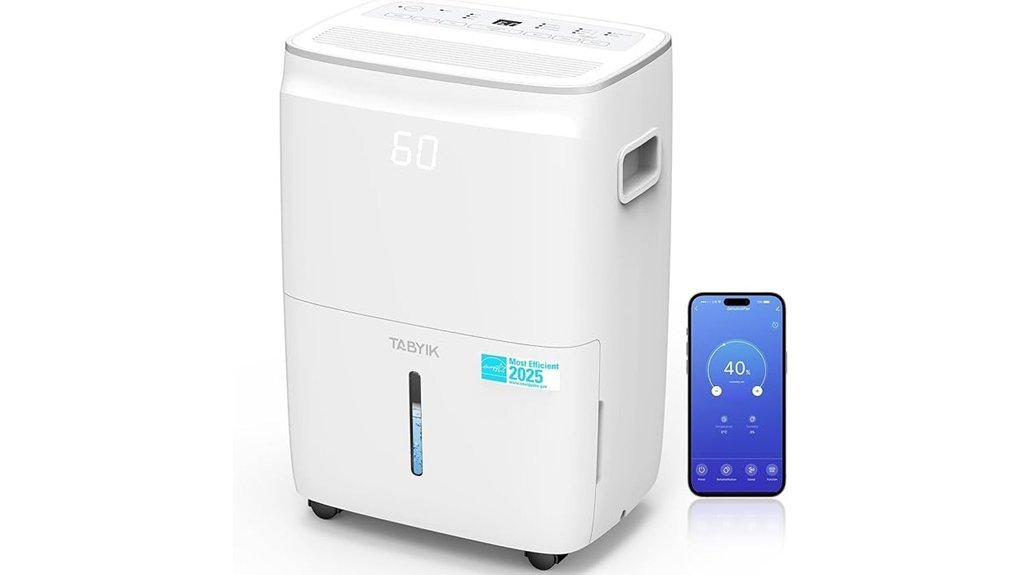
If you want smart controls plus pump drainage for a larger home space, the TABYIK Smart WiFi Dehumidifier is worth comparing. The current product listing advertises coverage up to 4,500 sq. ft. and maximum moisture removal of up to 80 pints per day under high-temperature, high-humidity test conditions.
WiFi connectivity allows app-based control from a smartphone, while the built-in drain pump helps move collected water when gravity drainage is inconvenient. The listing also describes automatic humidity modes, a programmable timer, washable filter, swivel wheels, and quiet operation as low as 40 dB under its stated conditions.
Why you’ll like it: Remote control is useful when the dehumidifier sits in a basement, garage, or utility area where you do not want to check the control panel repeatedly. The combination of pump drainage and WiFi also makes it easier to manage long operating periods.
Best For: Homeowners who want smart control, pump drainage, and stronger advertised capacity for a larger damp area.
Why it stands out: It combines a built-in pump with WiFi control and a higher advertised maximum capacity than the 50-pint models in this guide.
Pros:
- Higher advertised capacity: Up to 80 pints per day maximum under the seller’s stated test conditions.
- Smart control: WiFi connectivity supports app-based monitoring and adjustment.
- Pump drainage: Designed to move collected water when gravity drainage is not practical.
Cons:
- Capacity needs context: The maximum 80-pint rating is based on high-humidity test conditions and should not be compared blindly with every 50-pint rating.
- Specification inconsistency: Current listing information contains conflicting weight figures, so verify the latest dimensions and weight if portability is important.
- Smart features may be unnecessary: Buyers who only need basic humidity control may prefer a simpler model.
Who should buy this: Choose it if you want app control, pump drainage, and higher advertised moisture-removal capacity for a basement, garage, or other larger damp room.
Who should skip it: Skip it if your room is small or if WiFi and pump drainage add features you will not use.
Uhome 150 Pints Dehumidifier with Pump
Best for Very Large Spaces
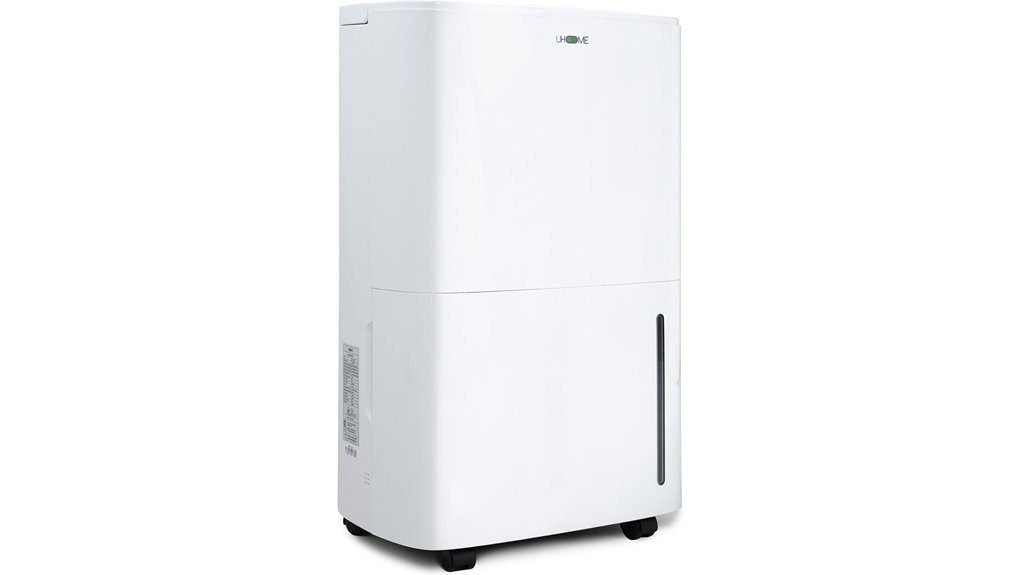
The Uhome 150 Pints Dehumidifier with Pump is aimed at large spaces with heavier moisture loads. Its listing advertises coverage up to 7,000 sq. ft. and maximum removal of up to 150 pints per day at 95°F and 90% relative humidity.
Humidity can be adjusted from 30% to 80% in 5% increments. The model offers manual bucket drainage, continuous gravity drainage, and pump drainage, giving you more flexibility for different room layouts. The listing also includes a 24-hour timer, child lock, water-full alert, auto-defrost, self-drying features, and a peak sound claim of 48 dB.
Why you’ll like it: This model can make more sense when a smaller dehumidifier runs for long periods and your large space still remains damp. The multiple drainage methods are useful when room layouts change or when you cannot rely on a nearby floor drain.
Best For: Large basements, storage areas, garages, laundry areas, and other large damp rooms where higher advertised capacity is useful.
Why it stands out: The combination of high advertised maximum capacity, a 1.85-gallon tank, and three drainage methods makes it one of the more heavy-duty options in this lineup.
Pros:
- High advertised maximum: Up to 150 pints per day at 95°F and 90% RH.
- Three drainage methods: Manual bucket, continuous gravity drainage, and pump drainage.
- Useful controls: Includes timer, child lock, water-full alert, auto-defrost, and adjustable humidity.
Cons:
- Large-space focus: It may be more capacity and physical size than a small room requires.
- Maximum rating needs context: The 150-pint figure is based on very warm, humid test conditions.
- Noise: The listed 48 dB peak sound may still be noticeable in a very quiet room.
Who should buy this: Choose it for a large basement, garage, storage space, or other damp area where stronger moisture removal and pump drainage are priorities.
Who should skip it: Skip it if you are controlling mild humidity in a bedroom, office, or another smaller space where a 50-pint-class model may be easier to place.
Avylo Dehumidifier for Basement with Pump
Best Basement-Focused Choice
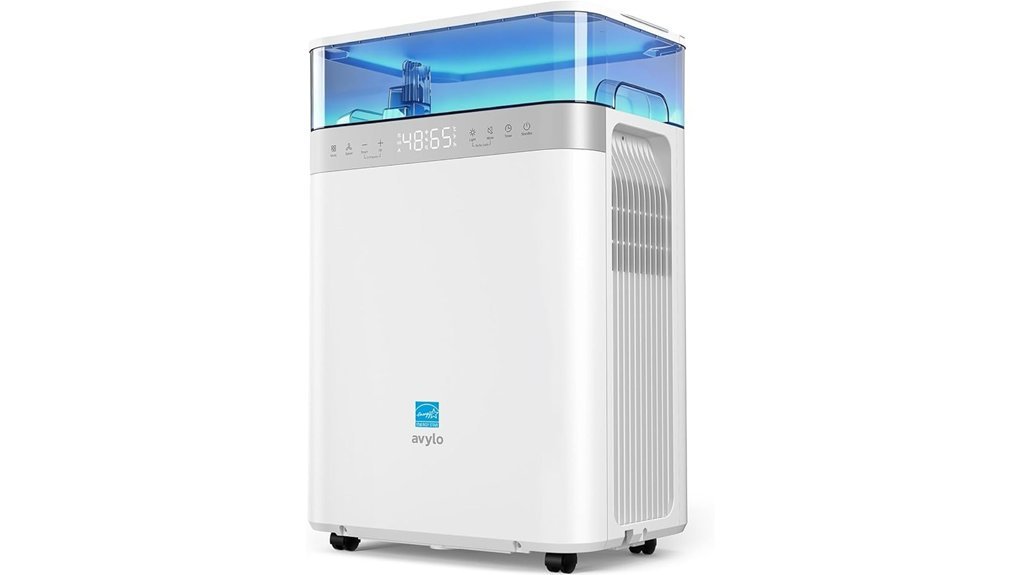
The Avylo Dehumidifier is a useful middle-ground option for homeowners who want pump drainage and stronger advertised moisture removal without moving into the 150-pint category. Its current listing advertises a maximum capacity of 90 pints per day and coverage up to 5,000 sq. ft.
The listing identifies it as ENERGY STAR Most Efficient 2025 and includes a top-mounted 2.11-gallon tank, three drainage options, automatic shutoff, and auto-defrost. Those features make it particularly relevant to basements and larger residential areas where continuous drainage is more convenient than frequent bucket emptying.
Why you’ll like it: It provides more advertised maximum capacity than the 50-pint models while remaining below the largest 150-pint options in this comparison.
Best For: Homeowners managing humidity in basements, garages, living rooms, or other larger damp residential spaces.
Why it stands out: The combination of a 90-pint advertised maximum, large top-mounted tank, and multiple drainage options makes it a balanced basement-oriented choice.
Pros:
- Advertised maximum moisture removal of up to 90 pints per day.
- Current listing states coverage up to 5,000 sq. ft.
- Built-in pump support and three drainage options improve placement flexibility.
Cons:
- Larger capacity and tank size may be unnecessary for a small room.
- The maximum capacity figure depends on the manufacturer’s stated test conditions.
- Pump systems and drain hoses still require occasional inspection for clogs, leaks, or kinks.
Who should buy this: Choose it if your basement, garage, or larger living area needs more advertised capacity than a standard 50-pint model and pump drainage is important.
Who should skip it: Skip it if the humidity problem is limited to a small bathroom, closet, or bedroom where a more compact model would be easier to manage.
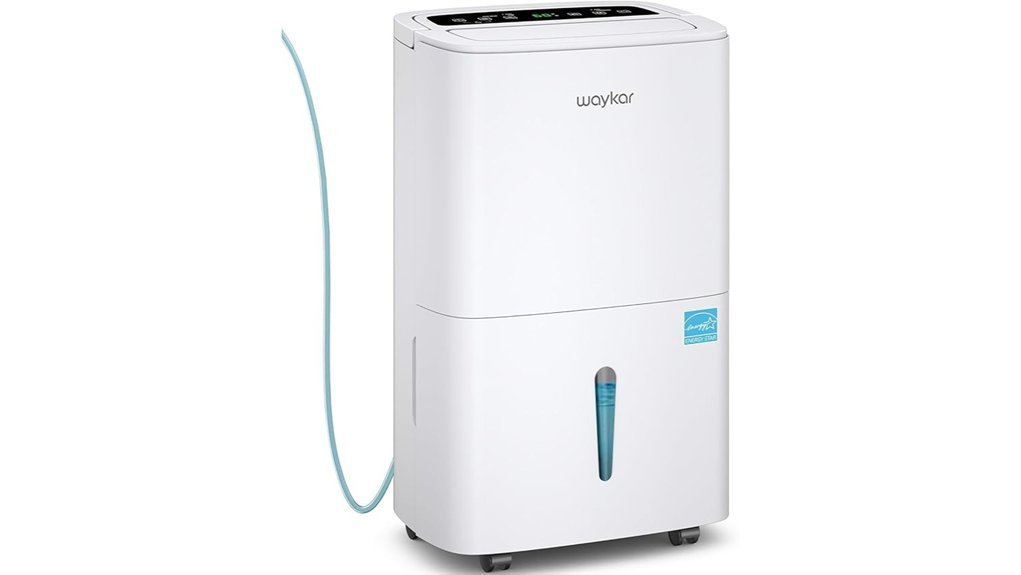
Waykar 150 Pints Energy Star Dehumidifier with Pump
Best High-Capacity Energy Star Option
For a large space with a heavy moisture load, the Waykar 150 Pints Energy Star Dehumidifier is another high-capacity option. Its listing advertises up to 150 pints of moisture removal per day at 95°F and 90% RH and coverage up to 7,000 sq. ft.
The built-in pump can move water upward, with the listing stating a pump lift of up to 9.84 feet. It also includes a gravity-drain option with an included hose. Auto-defrost, self-drying, touch controls, casters, and a top handle add convenience for larger spaces.
Why you’ll like it: This model combines a high advertised maximum capacity with flexible drainage and Energy Star certification. The specified pump-lift figure is especially useful when you already know the approximate height of your sink or drain point.
Best For: Large basements, garages, storage areas, and other high-humidity spaces where pump drainage and higher capacity matter.
Why it stands out: Buyers get a clearly stated pump-lift capability, a 1.85-gallon tank, gravity drainage, and a high advertised maximum capacity in one model.
Pros:
- Advertised maximum of up to 150 pints per day at 95°F and 90% RH.
- Built-in pump is listed to drain upward up to 9.84 feet.
- Energy Star certification, auto-defrost, self-drying, casters, and multiple drainage options.
Cons:
- The larger cabinet requires more placement space than many 50-pint models.
- The 150-pint maximum should be interpreted together with its high-temperature, high-humidity test conditions.
- A large-capacity model may be unnecessary for a moderately damp single room.
Who should buy this: Choose it if you need high advertised capacity for a large damp area and know that your drain point requires pump-assisted lift.
Who should skip it: Skip it if your humidity problem is moderate and limited to a smaller room where a lighter 50-pint-class model would be sufficient.
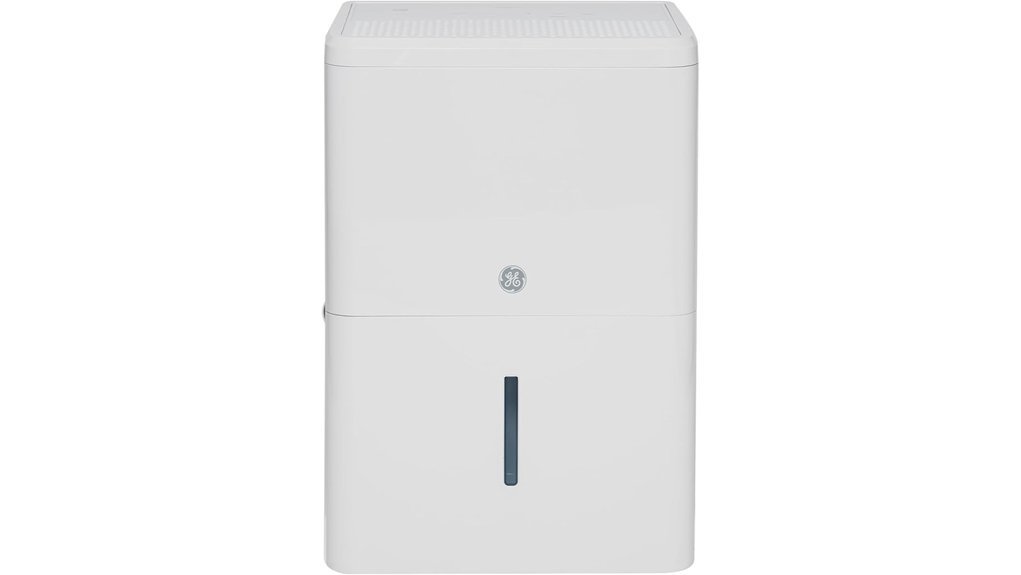
GE Portable Dehumidifier with Built-in Pump
Best Familiar Brand Option
The GE Portable Dehumidifier with Built-in Pump is designed for residential users who want a 50-pint dehumidifier with clearly specified pump capability. It removes up to 50 pints of moisture per day and is advertised for spaces up to 5,000 square feet.
The built-in pump can move collected water up to 15 vertical feet, and the model includes a 16-foot drain hose. That makes it particularly useful for below-grade basements where water must reach a sink or drain above the dehumidifier. GE’s Smart Dry Technology automatically adjusts fan speed based on room humidity, while digital controls, a timer, and an included remote improve everyday operation.
Why you’ll like it: The clearly stated pump-lift capability makes drainage planning easier. You can measure the approximate vertical distance to your drain before buying instead of relying on a vague claim that the unit simply “has a pump.”
Best For: Basements and other large residential areas where water needs to be pumped upward to a sink or suitable drain.
Why it stands out: Its 15-foot vertical pump rating and included 16-foot drain hose provide some of the clearest drainage specifications in this comparison.
Pros:
- Removes up to 50 pints of moisture per day and is advertised for areas up to 5,000 sq. ft.
- Built-in pump moves water up to 15 vertical feet with an included 16-foot hose.
- Smart Dry automatically adjusts fan speed based on humidity.
Cons:
- A 50-pint model may not suit extremely high-load conditions as well as a properly matched higher-capacity unit.
- The 15-pint bucket still needs manual emptying if you choose not to use continuous drainage.
- Fan and compressor noise may still be noticeable in very quiet living spaces.
Who should buy this: Choose it if you want a familiar appliance brand and need a pump that can move water a meaningful vertical distance from a below-grade space.
Who should skip it: Skip it if you do not need pump-assisted drainage or if your space requires a different capacity based on its actual moisture load.
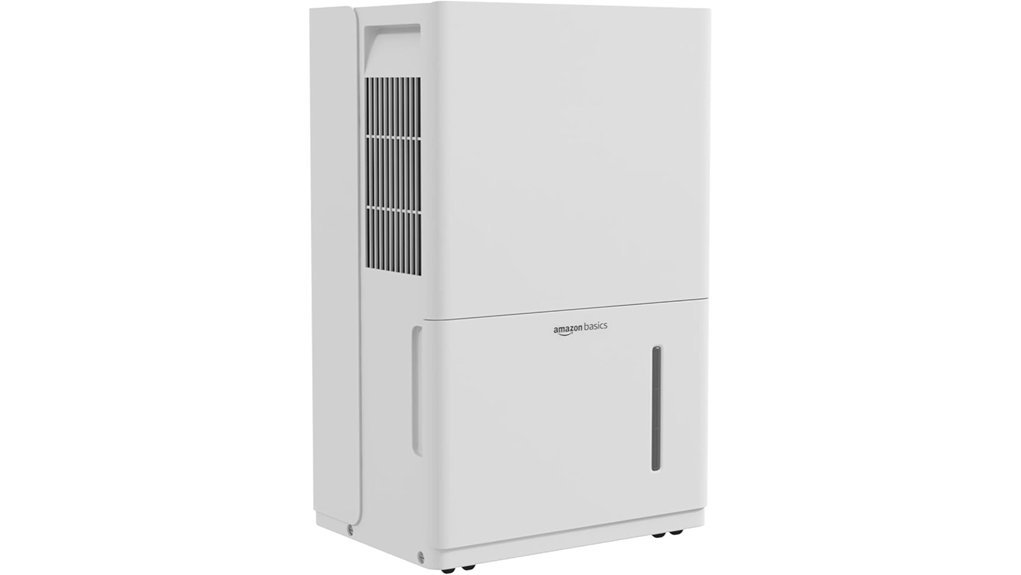
Amazon Basics 50-Pint Dehumidifier with Pump
Best Simple Residential Option
The Amazon Basics 50-Pint Dehumidifier with Pump is a straightforward residential option advertised for rooms up to 4,000 square feet. It combines 50-pint moisture removal with a built-in drain pump, making it useful for basements and other areas where continuous drainage is more convenient than carrying a full bucket.
The current listing includes Energy Star certification, auto-restart after a power interruption, smart humidity control, auto-defrost, overflow protection, a timer, and a reusable filter. The tank capacity is listed at 1.6 gallons.
Why you’ll like it: The feature set focuses on practical residential humidity control without requiring a smart-home platform or app connection.
Best For: Homeowners who want a simple 50-pint dehumidifier with pump drainage for larger residential spaces.
Why it stands out: It combines pump drainage, familiar controls, automatic restart, and easy filter maintenance without making smart-home connectivity the main selling point.
Pros:
- 50-pint capacity with advertised coverage up to 4,000 sq. ft.
- Built-in drain pump supports continuous drainage.
- Energy Star certification, reusable filter, auto-defrost, timer, and overflow protection.
Cons:
- It lacks the WiFi and voice-control features offered by some smart models.
- Its residential design is not intended to substitute for specialized commercial dehumidification equipment.
- Buyers still need to plan the drain-hose route and maintain the filter and pump system.
Who should buy this: Choose it if you want a straightforward residential dehumidifier with pump drainage and do not need advanced smart controls.
Who should skip it: Skip it if remote app control is important or if your moisture load calls for a differently sized unit.
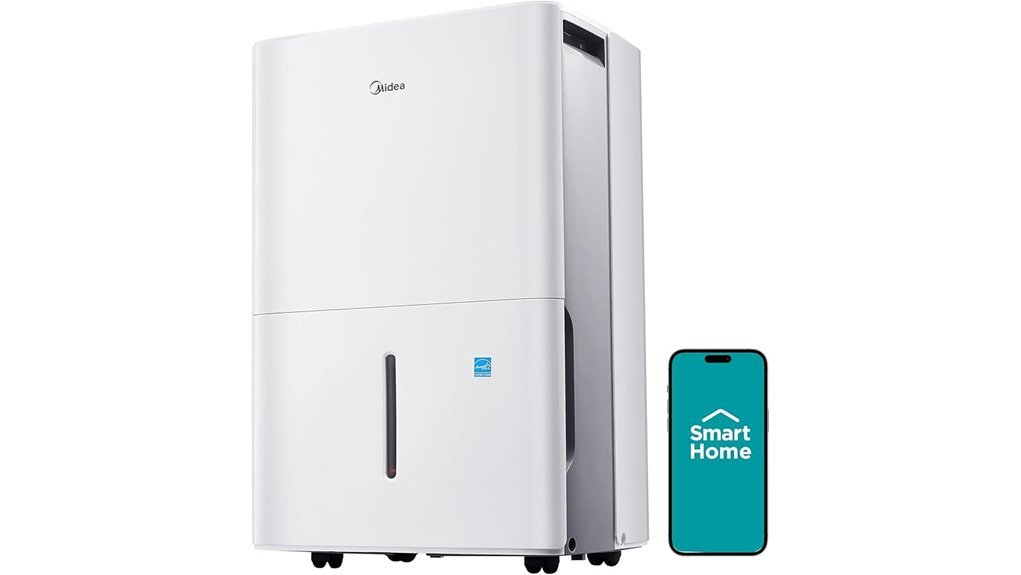
Midea 50 Pint Dehumidifier with Pump
Best Major-Brand Smart Option
The Midea 50 Pint Dehumidifier with Pump is a smart residential option advertised for spaces up to 4,500 sq. ft. It removes up to 50 pints of moisture per day and provides an adjustable humidity range from 35% to 85%.
The built-in pump can drain vertically or horizontally, while WiFi connectivity allows control through Midea’s SmartHome app. The current listing also supports voice commands through Alexa and Google Assistant. Low-mode noise is listed at 49 dBA, and the unit includes four wheels, three speeds, and a 1.6-gallon tank.
Why you’ll like it: This model is useful if you want pump drainage plus remote control from a major appliance brand. Smart-home integration also makes it easier to adjust settings without walking to the unit.
Best For: Homeowners who want connected humidity control in a basement, office, larger living area, or other damp residential room.
Why it stands out: It combines 50-pint performance, a built-in pump, WiFi control, and both Alexa and Google Assistant compatibility.
Pros:
- Removes up to 50 pints of moisture daily and is advertised for spaces up to 4,500 sq. ft.
- Built-in pump supports vertical or horizontal drainage.
- WiFi control plus Alexa and Google Assistant compatibility.
Cons:
- At about 42 pounds, it is heavier than some smaller portable dehumidifiers.
- Smart connectivity adds features that some buyers may never use.
- The listed 49 dBA low-mode operation may still be audible in a very quiet bedroom or office.
Who should buy this: Choose it if you want a 50-pint pump dehumidifier with WiFi control and voice-assistant compatibility.
Who should skip it: Skip it if you do not need smart controls or if gravity drainage and a simpler dehumidifier would meet your needs.
Factors to Consider When Choosing a Dehumidifier with Pump and Hose
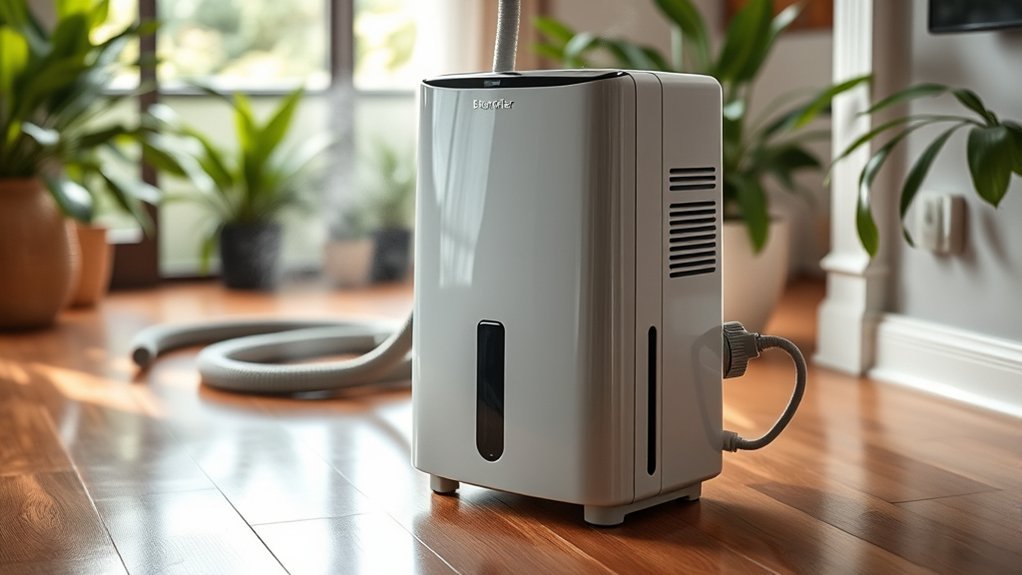
When choosing a dehumidifier with a pump and hose, focus on moisture removal capacity, the actual dampness of the room, drainage options, pump lift, hose placement, noise, maintenance, and portability. Advertised square-foot coverage can help narrow your choices, but it should not be the only sizing factor.
Essential Features Overview
Start by confirming that the model has the drainage method you actually need. If the drain is below the dehumidifier, gravity drainage may be enough. If water has to travel upward to a utility sink or another elevated drain, check the manufacturer’s stated pump-lift height. Also compare auto-defrost, auto-restart, tank size, washable filter access, timer controls, fan speeds, and the available humidity range.
Coverage Area Requirements
Do not size a dehumidifier from square footage alone. ENERGY STAR recommends considering both the size of the space and how damp it is before dehumidification. Its current guidance for spaces larger than 2,000 sq. ft. starts at about 30+ pints per day for slightly to moderately damp conditions, 40+ pints for very damp conditions, and 50+ pints for wet conditions. See the current guidance at ENERGY STAR’s dehumidifier guide. Manufacturer-advertised maximum capacities may use different test conditions, so check those conditions when comparing models.
Moisture Removal Capacity
Dehumidifier capacity is normally described in pints of water removed per 24 hours. A larger number does not automatically mean a model is the better choice because temperature and relative humidity during testing can affect the advertised result. Match capacity to room size, how wet the area is, whether laundry or seepage adds moisture, and how many hours the unit is likely to run.
Drainage Options Available
Most pump-equipped models offer some combination of bucket collection, continuous gravity drainage, and powered pump drainage. Gravity drainage needs a continuous downward hose path. Pump drainage is useful when water must travel upward or when the drain location prevents a natural downward slope. Hose lengths and maximum pump heights vary significantly by model, so check those two specifications separately before buying.
Pump Height and Hose Placement
A pump is useful only if it can move water to the place you plan to drain it. Measure the approximate vertical rise between the dehumidifier and the drain point, then compare that measurement with the manufacturer’s maximum pump-lift specification. Common drainage points include a utility sink, sump pit, laundry drain, or suitable floor drain.
Plan the hose route before setting up the unit. Avoid sharp bends, kinks, pinched sections, and places where the hose can be stepped on. If a hose crosses a walkway, it can become a trip hazard. A short, protected route is easier to inspect for leaks and blockages.
Humidity Settings and Auto Mode
For general indoor moisture control, the U.S. EPA recommends keeping relative humidity below 60% and ideally between 30% and 50% when practical. You can review that guidance at EPA.gov. Individual dehumidifiers may offer wider control ranges, and the most comfortable setting can vary by room and climate.
Auto mode can reduce unnecessary operation by cycling the compressor in response to the humidity target. Auto-restart and timer functions are also helpful for basements, garages, and storage areas where the machine may not be checked frequently.
Portability and Design Factors
Look for casters, handles, tank placement, cord storage, and cabinet dimensions if you expect to move the unit. Weight matters more when carrying a dehumidifier between floors than when simply rolling it across a basement. A reusable or washable filter can also simplify routine maintenance.
Noise Level and Room Placement
Noise matters most near bedrooms, offices, nurseries, and living rooms. Manufacturer-listed dB figures can help with comparison, but measurement methods and fan-speed settings may differ. When possible, compare noise ratings at similar operating modes rather than assuming every published number was measured the same way.
For a basement or garage, pump performance and capacity may matter more than small noise differences. In living areas, lower fan settings and automatic humidity control may make long operating periods more comfortable.
Maintenance and Filter Care
All pump dehumidifiers need basic maintenance. Follow the manufacturer’s filter-cleaning schedule, keep air intakes and outlets clear, inspect the bucket, and check drain hoses for clogs, kinks, or leaks. If the pump line becomes blocked, the unit may stop draining correctly.
Keep the dehumidifier level and follow the manufacturer’s required clearance around the cabinet. ENERGY STAR also recommends keeping drainage hoses away from electrical cords and connections and avoiding long, awkward hose routes that can create a trip hazard.
Pro Tips for Better Results
- Close windows and doors while the unit is running so it does not continually pull in humid outdoor air.
- Fix leaks or water seepage instead of relying on a dehumidifier to compensate for an ongoing water problem.
- Check the pump hose after initial setup to confirm that water is reaching the drain correctly.
- Use an inexpensive hygrometer if you want an independent check of room humidity.
- Keep the filter, intake, and exhaust areas clean so airflow is not restricted.
Frequently Asked Questions
How Do I Maintain a Dehumidifier With a Pump?
Follow the manufacturer’s cleaning schedule for the filter, inspect the water tank, keep the intake and exhaust areas clear, and check the pump hose for clogs, kinks, or leaks. Keep the unit level and make sure the hose remains securely positioned at the drain point.
If the dehumidifier has been stored for a long period, inspect and clean the tank and drainage system before restarting it.
How Long Does a Dehumidifier With a Pump Last?
There is no single guaranteed lifespan for every dehumidifier. Service life varies with operating hours, humidity load, temperature, maintenance, filter cleanliness, drainage condition, component quality, and how often the compressor cycles.
Following the manufacturer’s maintenance instructions, keeping airflow clear, and preventing drain-line blockages can help reduce unnecessary strain on the unit.
Can I Use a Dehumidifier Without a Hose?
Yes. Most portable models can collect water in their internal bucket instead of using a hose. The unit normally stops when the tank reaches its full level, after which you empty and reinstall the bucket.
A hose or built-in pump is more convenient when the dehumidifier runs for long periods in a basement, laundry room, or other consistently damp area.
What Size Dehumidifier Do I Need for My Space?
Consider both square footage and moisture level. ENERGY STAR’s current guidance suggests that larger spaces over 2,000 sq. ft. may start around 30+ pints per day when slightly to moderately damp, 40+ pints when very damp, and 50+ pints when wet. Extremely high-load situations may justify additional capacity.
Also check the conditions used for each manufacturer’s advertised capacity. A maximum rating measured at very high temperature and humidity should not automatically be treated as directly equivalent to another product’s rating.
Are Dehumidifiers With Pumps Noisy During Operation?
They produce fan and compressor noise, and the pump may make additional sound when it activates. The perceived noise depends on fan speed, flooring, room acoustics, and how close the unit is to where you sit or sleep.
If sound is important, compare manufacturer-listed dB figures at similar operating modes and place the unit on a stable, level surface away from sleeping or working areas when possible.
Is a Built-in Pump Better Than Gravity Drainage?
A built-in pump is better when collected water needs to travel upward to a sink, window-level outlet, or other elevated drain point. Gravity drainage is simpler when a hose can maintain a continuous downward slope into a nearby floor drain or sump. If your drain is above the dehumidifier, check the pump’s maximum lift before buying.
Where Should I Place a Dehumidifier With Pump and Hose?
Place it where it can effectively circulate air through the damp area while meeting the manufacturer’s clearance requirements. Keep it on a level surface and route the hose securely so it cannot kink, leak, or become a trip hazard. Keep drainage water and hoses away from electrical connections.
What Humidity Level Should I Set My Dehumidifier To?
EPA guidance recommends keeping indoor relative humidity below 60% and ideally between 30% and 50% where practical. A setting around the upper part of that range can be a reasonable starting point for many homes, then adjusted based on comfort, condensation, and the room’s moisture conditions.
Final Verdict
Choosing the right dehumidifier with a pump and hose is mostly about matching moisture load with capacity and matching your drainage route with the pump’s capabilities. Do not choose only from the largest advertised pint number or square-foot figure. Consider how damp the room is, where the water needs to go, how far it must travel vertically, and how often you want to interact with the machine.
If you want WiFi control with a higher advertised maximum capacity, the TABYIK Smart WiFi Dehumidifier is worth comparing. For very large or high-load spaces, the Uhome 150 Pints and Waykar 150 Pints offer higher advertised maximum removal, with Waykar also publishing a specific pump-lift figure. The Avylo provides a middle-ground 90-pint maximum option, while the GE stands out for its clearly specified 15-foot vertical pump capability.
For everyday 50-pint residential use, compare the Amazon Basics model for simplicity and the Midea for WiFi and voice control. The best choice is the one whose capacity, drainage method, pump lift, controls, noise, and maintenance requirements fit your actual room rather than simply the model with the biggest number on the listing.
Final Recommendation Box
Choose the TABYIK if WiFi control and higher advertised capacity are priorities. Choose the Uhome 150 Pints or Waykar 150 Pints for larger, wetter spaces that justify higher capacity. Choose the Avylo for a middle-ground basement-focused option. Choose the GE when a clearly specified 15-foot vertical pump lift matters. Choose Amazon Basics for straightforward residential operation or Midea for a 50-pint model with WiFi and voice-assistant control.