Affiliate disclosure: As an Amazon Associate I earn from qualifying purchases. This article contains affiliate links to Amazon, so we may earn a commission if you buy through them, at no extra cost to you.
Cleaning hearing aids is essential in 2026 because it helps preserve sound quality, reduce wax buildup, and prevent moisture damage. Top choices include Phonak Wax Traps Grey Pack for wax protection, Jungle Care Hearing Aid Cleaning Kit for routine upkeep, PerfectDry LUX Dryer & Dehumidifier for moisture control, and Audiologist’s Choice Hearing Aid Cleaner for gentle cleaning. The right tools can extend device life, and more helpful details follow below.
Phonak Wax Traps Grey Pack (80 Units)
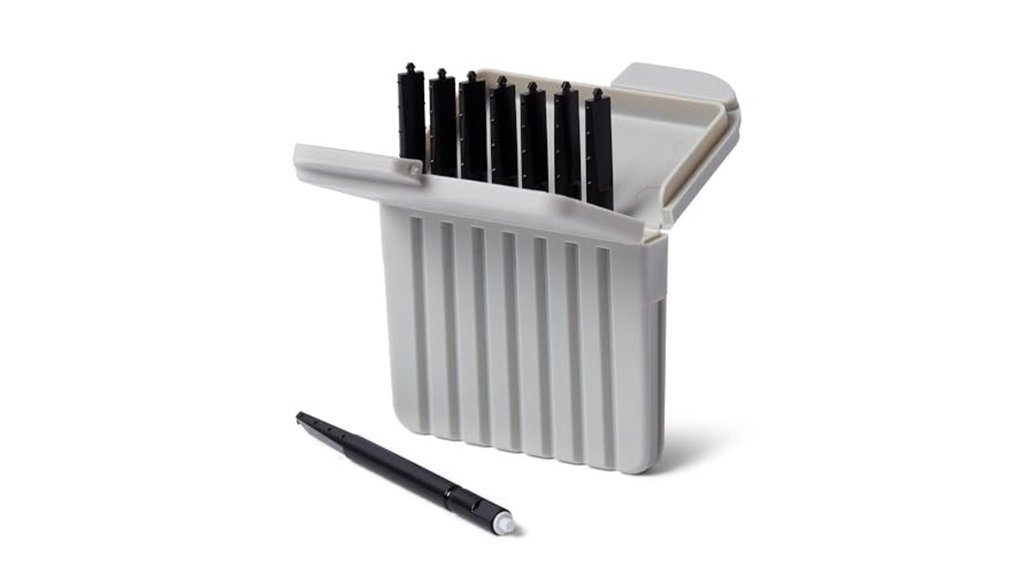
Phonak Wax Traps Grey Pack (80 Units) is best suited for hearing aid users who need a reliable, original replacement solution for wax protection. This genuine grey pack includes 10 packs, totaling 80 units, and is designed specifically for Wax Trap hearing aids. Branded by Phonak and manufactured by Widex, it carries model BD10582 and falls under health and beauty and drugstore classifications. Its purpose is straightforward: help preserve hearing aid performance by blocking earwax buildup. For users prioritizing proper fit and authentic replacement parts, it offers a practical cleaning accessory.
Best For: Hearing aid users who want an authentic, reliable wax trap replacement pack to help protect their devices from earwax buildup.
Pros:
- Genuine original grey pack for compatible Wax Trap hearing aids
- Includes 80 units total, offering a long-lasting supply
- Helps maintain hearing aid performance by reducing wax blockage
Cons:
- Only useful for users with compatible Wax Trap hearing aids
- Not a universal hearing aid accessory
- Focused on replacement function rather than additional features
Jungle Care Hearing Aid Cleaning Kit with Case

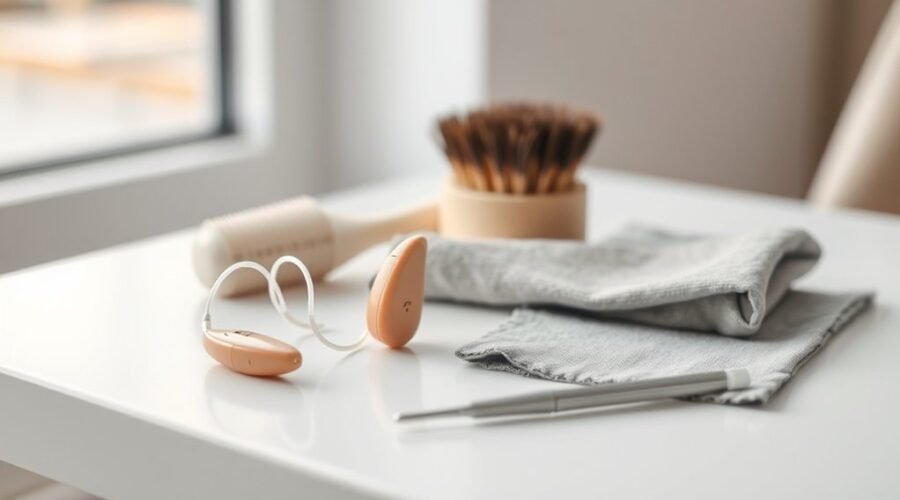
The Jungle Care kit suits users who want an all-in-one, portable cleaning solution for many devices. This 8-piece set includes three cleaning brushes, a tube and vent cleaner, a disassembly tool, a screwdriver, a cleaning cloth, and a zip-up case. Its universal fit supports hearing aids, hearing amplifiers, AirPods, iPhone earbuds, and standard headphones. The compact case makes storage simple and transport easy. Built from safe, environmentally friendly materials, the kit helps remove earwax, dirt, and moisture while allowing access to battery compartments. It is backed by a full money-back guarantee.
Best For: People who want a compact, all-in-one cleaning kit for hearing aids, earbuds, and headphones, especially for routine maintenance at home or on the go.
Pros:
- Includes 8 useful pieces for cleaning, disassembly, and battery compartment access.
- Universal compatibility works with hearing aids, AirPods, earbuds, and standard headphones.
- Portable zip-up case makes it easy to store and carry.
Cons:
- Basic accessory kit may not satisfy users needing professional-grade cleaning tools.
- Manual cleaning tools require careful use to avoid damaging delicate devices.
- No mention of replacement parts or specialized cleaning solutions included.
PerfectDry LUX Hearing Aid Dryer & Dehumidifier
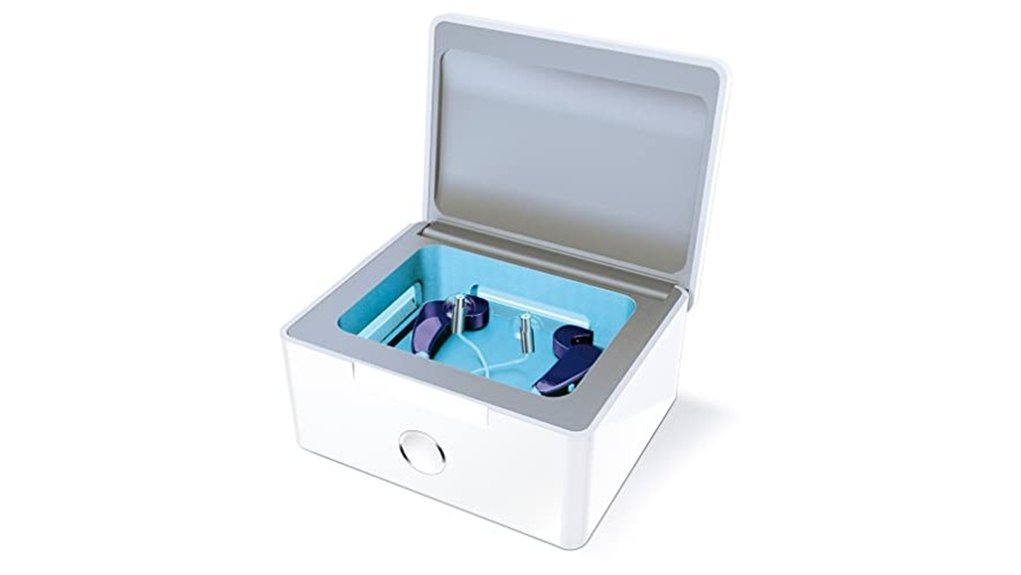
PerfectDry LUX suits hearing aid users who want fast, thorough drying with minimal effort. This Audinell dryer and dehumidifier completes a cycle in 45 minutes, then shuts off automatically. Its 360° UV-C lamp reaches all surfaces, while heat-based moisture removal avoids desiccants and reduces upkeep. The FDA-registered Class 1 device is safe for all hearing aids, including rechargeable models, and maintains 113°F during use. Compact at 3.6 x 1.9 x 3.0 inches, it supports major brands such as Oticon, Phonak, Resound, Signia, Widex, and Starkey, delivering reliable everyday protection.
Best For: Hearing aid users who want a fast, low-maintenance dryer and dehumidifier that safely works with all hearing aid types, including rechargeable models.
Pros:
- 45-minute cycle with automatic shut-off for quick, easy use
- 360° UV-C lamp and heat-based drying for thorough moisture removal without desiccants
- FDA-registered Class 1 device compatible with major hearing aid brands
Cons:
- Only handles one pair at a time due to its compact size
- Requires power, so it’s less convenient for travel than passive drying options
- Higher upfront cost than simple desiccant-based dryers
Audiologist’s Choice Hearing Aid Cleaner -2oz
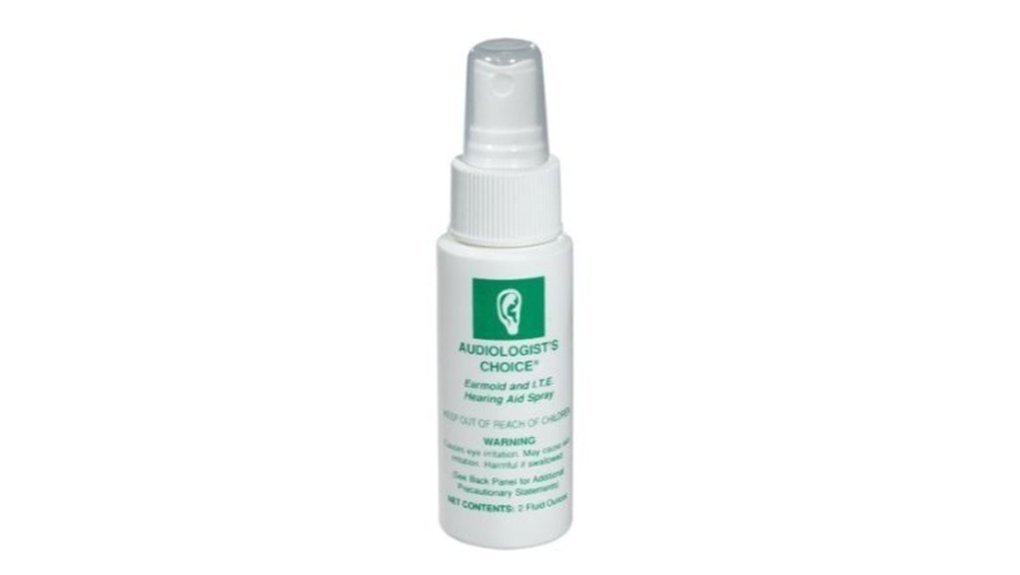
Audiologists Choice Hearing Aid Cleaner offers a compact, non-abrasive solution for ITE and CIC hearing aids. The 2-ounce spray bottle is designed for routine cleaning of hearing aids and other hearing instruments without harsh scrubbing. Its travel-friendly size supports use at home or on the go, while the royal blue bottle helps distinguish it in a cleaning kit. Manufactured by Audiologists Choice as model 00602, it is intended for careful maintenance rather than heavy-duty restoration. Users are advised to follow the provided instructions for best results and safe application.
Best For: People with ITE or CIC hearing aids who want a compact, non-abrasive cleaner for routine maintenance at home or while traveling.
Pros:
- Gentle, non-abrasive formula helps clean hearing aids without harsh scrubbing.
- Compact 2-ounce spray bottle is easy to carry and store.
- Specifically designed for ITE and CIC hearing aids and other hearing instruments.
Cons:
- Small bottle size may not last long with frequent use.
- Not intended for heavy-duty cleaning or restoration.
- Directions are not fully detailed here, so users may need the included instructions for proper use.
Factors to Consider When Choosing Hearing Aid Cleaning Tools
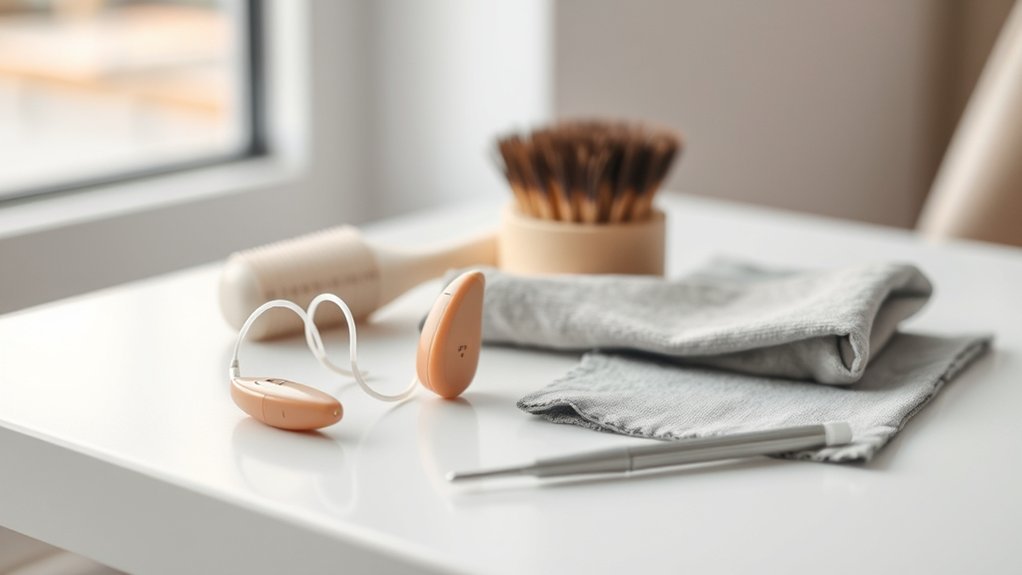
Choosing the right method to clean hearing aids begins with device compatibility, since different models require different tools and techniques. A useful option also offers a variety of cleaning tools, moisture control features, and simple operation for routine maintenance. A portable storage case can add convenience by keeping the equipment protected and organized between cleanings.
Device Compatibility
Device compatibility matters because hearing aids are built with different designs and materials that may require specific cleaning tools and solutions. A product that is not intended for a particular model can damage delicate components, weaken performance, and shorten the device’s lifespan. Compatibility also affects safety, since some cleaning solutions are formulated for certain styles, including ITE and CIC hearing aids, to clean them without harming sensitive surfaces or internal parts. Many cleaning kits are marketed as universally compatible, but their contents still need to be checked against the specific hearing aid model. Regular maintenance matched to the device’s requirements helps limit earwax, dirt, and moisture buildup, supporting reliable function and better long-term performance without unnecessary wear or contamination.
Cleaning Tool Variety
A well-rounded cleaning kit should include brushes, cloths, and disassembly tools to remove dirt, moisture, and earwax from hearing aids effectively. A tube or vent cleaner is also valuable, since it helps keep airflow passages clear and reduces blockages in small components. Multi-functional tools add efficiency by handling several debris types with one instrument, which supports more complete routine maintenance. A portable storage case improves organization and makes it easier to keep supplies accessible when traveling or storing them between uses. Choosing varied, well-designed tools helps users clean delicate parts without unnecessary wear. Over time, consistent cleaning with the right kit can support better device performance and extend hearing aid lifespan by limiting buildup that interferes with normal operation.
Moisture Control Options
Moisture control plays a key role in preserving hearing aid performance, since excess dampness can damage sensitive components and lead to malfunction. Hearing aid dryers and dehumidifiers offer practical options, using heat or UV-C technology to draw out trapped moisture after daily wear. Many models complete the process quickly, making routine protection straightforward. Regular drying helps limit earwax and moisture buildup, two frequent causes of failure. Even water-resistant hearing aids benefit from this maintenance, because resistance does not eliminate internal condensation or exposure from humid environments. Effective moisture management supports longer device life, steadier performance, and better comfort by protecting electronic parts from corrosion and instability. For long-term reliability, moisture control remains an essential part of hearing aid care.
Ease Of Use
Ease of use should be a top priority when selecting hearing aid cleaning tools, since simple, easy-to-handle products make routine maintenance more manageable without professional help. Tools that are intuitive and comfortable to use help users clean devices consistently and correctly. Compact kits with user-friendly layouts can keep essential items organized and ready for quick use, improving efficiency. Multi-functional tools that combine brushes and cleaning cloths reduce the need to manage several separate products. Products requiring little assembly or few instructions are especially practical, because they support straightforward maintenance without confusion. Easy portability also matters, as it allows cleaning to be done regularly wherever needed. Overall, uncomplicated designs encourage better care and make upkeep less likely to be delayed.
Portable Storage Case
Portable storage cases help keep hearing aid cleaning tools organized, easy to find, and ready for regular use. A compact design lets the case fit easily into a pocket or bag, supporting maintenance during travel or daily outings. Good cases also shield brushes, cloths, and picks from damage and contamination, which helps preserve sanitation and tool performance. Compartments for separate items improve order and make cleaning sessions faster and more efficient. With supplies grouped in one place, users are more likely to clean hearing aids consistently. That routine helps reduce earwax and moisture buildup, both of which can shorten device life. A portable case consequently supports convenience, protection, and better long-term hearing aid care.
Frequently Asked Questions
How Often Should I Clean My Hearing Aids?
They should be cleaned daily, with a deeper inspection and maintenance routine weekly. Regular cleaning helps prevent wax buildup, moisture damage, and sound distortion, keeping hearing aids performing reliably and comfortably over time.
Can I Use Water to Clean Hearing Aids?
Water should generally be avoided on hearing aids, because moisture can damage delicate electronics. A dry cloth or approved cleaning tools are safer. If cleaning seems necessary, the person should consult the manufacturer’s instructions first.
What Signs Show My Hearing Aids Need Cleaning?
Like a fogged window, hearing aids needing cleaning often sound muffled, whistle more, collect visible wax or debris, and fit less securely. Reduced battery life or intermittent performance can also signal buildup.
Should I Clean Hearing Aids Before Storing Them?
Yes—hearing aids should be cleaned before storage. Removing wax, moisture, and debris helps prevent damage, preserves performance, and reduces odor or corrosion. They should then be stored in a dry, protective case.
How Do I Clean Hearing Aids Safely at Home?
How else can hearing aids stay reliable? They should be wiped daily with a dry, soft cloth, brushed gently, and kept away from water or alcohol. Wax guards may be changed, but one should follow manufacturer instructions.
Conclusion
To summarize, maintaining hearing aids with the right cleaning tools remains essential in 2026. Products like wax traps, cleaning kits, and dehumidifiers help protect performance and extend device life. One striking statistic shows that up to 60% of hearing aid issues are related to moisture or earwax buildup, creating a clear visual of how simple maintenance prevents common problems. Choosing the proper cleaner can make daily use more reliable, clearer, and more comfortable.