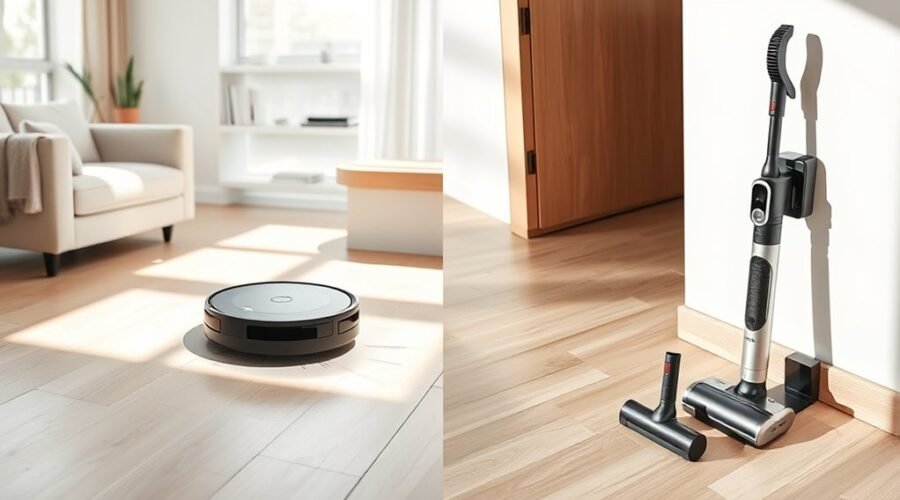
Choosing between a robot vacuum vs. stick vacuum can change how much time you spend cleaning your home. Both remove dust, crumbs, and pet hair, but they work in different ways. The right choice depends on your floors, cleaning habits, budget, and how much hands-on work you prefer.
Quick Answer
A robot vacuum is better for scheduled, hands-free floor maintenance. A stick vacuum is better for deep carpet cleaning, quick messes, stairs, and upholstery. Robots help control everyday dust, while stick vacuums offer stronger manual control and greater reach. If your home has mixed flooring and pets, using both often gives you the best results.
Key Takeaways
- Robot vacuums clean mostly flat floor areas and cannot vacuum stairs or furniture.
- Stick vacuums work across more surfaces, but cordless models have limited battery runtime.
- Brush design and floor settings matter more than vacuum type alone when protecting hardwood.
- Self-emptying docks reduce bin-emptying work but add parts that require maintenance.
- The best value depends on cleaning performance, useful features, and ongoing costs, not simply the purchase price.
Robot Vacuum vs. Stick Vacuum: Key Differences
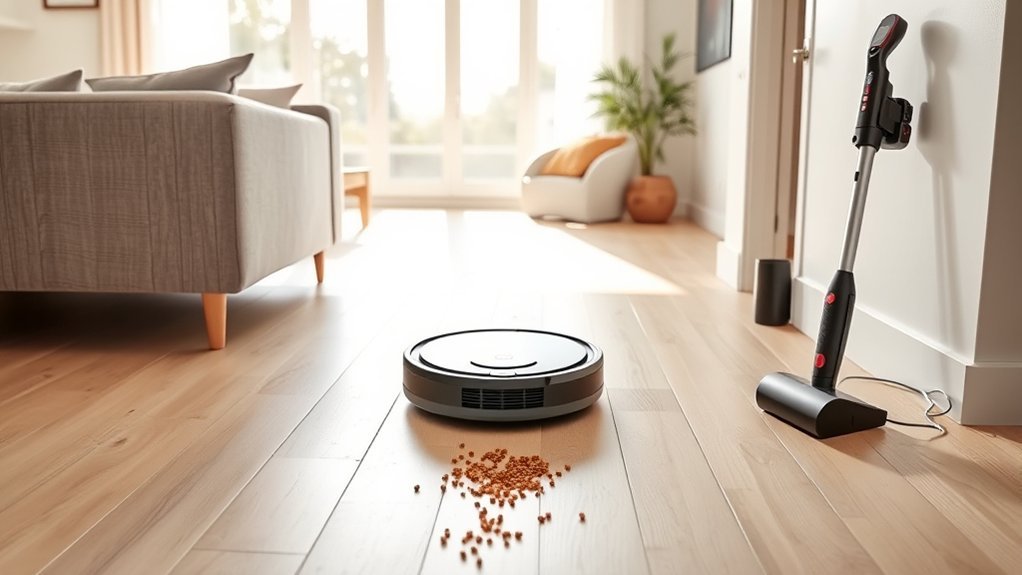
The main difference between a robot vacuum and a stick vacuum is how you clean. A robot moves around your floors automatically, while a stick vacuum requires you to guide it. That difference affects cleaning depth, convenience, reach, and maintenance.
A robot vacuum uses sensors and navigation software to clean accessible floors. Many models also map rooms, follow schedules, and return to their charging docks without your help.
A stick vacuum gives you direct control over where to clean. You can move slowly over dirty carpets, reach corners, and use attachments on furniture and stairs.
Both can clean hardwood, tile, and suitable rugs. However, cordless stick vacuums generally perform better when you need to remove deeply embedded carpet debris.
Robot vacuums are especially useful for frequent floor maintenance. Running one regularly can reduce the amount of dirt left between deeper cleaning sessions.
Cost is another difference. Robots with advanced navigation and self-emptying docks often cost more than basic stick vacuums. However, premium cordless models can also be expensive, so price alone does not determine which type offers better value.
What Is a Robot Vacuum?
A robot vacuum is an autonomous floor cleaner that collects dust and debris with limited human involvement. It uses wheels, sensors, brushes, and suction to move across accessible areas of your home.
Many robot vacuums support cleaning schedules through a mobile app. You can arrange routine cleaning without manually moving the machine from place to place.
More advanced models use LiDAR or camera-based navigation to create maps and plan cleaning routes. LiDAR uses laser measurements to understand distances and room layouts.
Mapping helps a robot follow organized routes, but it does not guarantee that the machine will avoid every obstacle. Reliable cord and object detection depends on the sensors and software included.
Robot vacuums generally handle hard floors and low-pile carpets well when matched to suitable surfaces. Performance on thick rugs varies, especially when long fibers interfere with the brushes or wheels.
Some models also offer:
- Automatic dustbin emptying
- Room-specific cleaning schedules
- Virtual boundaries and no-go zones
- Carpet detection and suction adjustment
- Vacuuming and mopping on compatible floors
- Automatic charging and cleaning resumption
Even with these features, robot vacuums cannot clean stairs, shelves, or upholstery. You also need to keep the floor reasonably clear and maintain the machine.
What Is a Stick Vacuum?
A stick vacuum is a slim, upright cleaning tool designed for convenient manual cleaning. Most modern models are cordless, although corded stick vacuums are also available.
Stick vacuums suit quick cleanups, carpet cleaning, and areas a robot cannot reach. Many include detachable handheld units or specialized accessories for furniture, stairs, and narrow spaces.
Their main advantage is control. You decide exactly where to clean, how many passes to make, and when to use stronger suction.
Battery-Powered Design
Most cordless stick vacuums use rechargeable lithium-ion batteries. This lets you move between rooms without changing electrical outlets or managing a power cord.
Battery life varies with the model, power setting, floor surface, and attachment. Many models offer roughly 20 to 60 minutes of runtime, while some premium options provide longer operation.
For example, published specifications for a cordless stick vacuum list up to 60 minutes of runtime. However, that maximum does not mean the machine runs for an hour at its highest suction setting.
Using Boost or Max mode generally reduces operating time. A motorized cleaning head can also use more battery power than a nonmotorized attachment.
If you clean a large carpeted home, compare the expected runtime with the amount of floor space you need to cover. A removable, replaceable battery can make longer sessions more convenient.
Corded stick vacuums avoid battery limits but sacrifice some mobility.
Lightweight Maneuverability
Stick vacuums are designed to be easier to carry and steer than many traditional upright vacuums. Their narrow bodies also make them convenient in tight spaces.
Many cordless models weigh approximately 5 to 10 pounds, although lighter and heavier designs exist. Total weight is worth checking, especially if you regularly clean stairs.
A swivel head makes it easier to move around chair legs and furniture. A detachable handheld unit helps you reach shelves, sofa cushions, and car interiors.
The compact design also suits small homes with limited storage. Many models use wall-mounted charging docks or slim storage stands.
However, a lightweight vacuum can still feel tiring during long sessions. Check how weight is distributed around the handle and whether the machine requires you to hold a trigger continuously.
Spot Cleaning Power
A stick vacuum is useful when you need to clean a mess immediately. You can target crumbs, dust, pet hair, tracked-in grit, and other dry debris without waiting for an automated cleaning cycle.
For example, a stick vacuum lets you clean around the dining table after a meal or remove dirt from a rug near the entrance.
Attachments make it more versatile:
- Crevice tool: Reaches narrow gaps and corners.
- Upholstery tool: Cleans sofas, chairs, and fabric surfaces.
- Dusting brush: Removes dust from suitable delicate surfaces.
- Motorized mini brush: Helps remove pet hair from stairs and furniture.
A stick vacuum can also clean the same dirty area repeatedly until you get a satisfactory result.
Warning: Do not vacuum liquid spills with a dry-only stick vacuum. Use a machine specifically rated for wet pickup or clean the liquid by hand.
Robot Vacuum vs. Stick Vacuum for Daily Cleaning
For daily cleaning, a robot vacuum saves more hands-on effort, while a stick vacuum offers faster response and better control. The right choice depends on whether you need scheduled maintenance or frequent spot cleaning.
| Feature | Robot Vacuum | Stick Vacuum |
|---|---|---|
| Operation | Automated floor cleaning | Manual operation |
| Best use | Routine daily maintenance | Quick and deep cleaning |
| Coverage | Accessible floors and suitable rugs | Floors, stairs, corners, and upholstery |
| Cleaning style | Frequent passes to control buildup | Targeted cleaning with direct control |
| Cost | Extra cost for advanced automation | Basic models often cost less |
If you have busy weekdays, scheduled robot cleaning can help keep visible dust and crumbs under control. You do not have to set aside a separate cleaning session every time.
Stick vacuums are more convenient when dirt appears in one specific place. Instead of running a complete floor-cleaning cycle, you can pick up the vacuum and clean that area.
A robot may also clean under low furniture that is difficult to reach with a stick vacuum. However, the robot must fit under the furniture and navigate around its legs.
Robots can still become trapped by cables, loose fabrics, or awkward furniture. Some advanced models recognize common objects, but detection is not perfect.
For homes with frequent floor clutter, you may need to prepare the area before an automated run. A stick vacuum gives you more freedom to clean around objects manually.
Models with mapping may let you set restricted areas. Manufacturer guidance on obstacle recognition and keep-out zones explains how supported robots can avoid selected obstacles and areas.
The practical choice is straightforward: use a robot for regular floor coverage and a stick vacuum for immediate or detailed cleaning.
Which Vacuum Works Better on Carpets?
A cordless stick vacuum generally performs better on carpets, especially when dirt and pet hair are trapped deep in the fibers. Its manually controlled cleaning head can make repeated passes over heavily soiled areas.
Carpet cleaning depends on more than suction alone. Brush agitation, airflow, floorhead design, and the carpet’s pile all affect performance.
A rotating brush helps loosen embedded debris so the vacuum can remove it. Flooring manufacturer Shaw’s carpet vacuuming guidance recommends suitable brush agitation for many carpets while warning that some delicate and long-pile styles require gentler cleaning.
Robot vacuums can handle everyday debris on many low- and medium-pile carpets. They are particularly useful for collecting dust before it builds up.
However, thick carpets, shag rugs, and loose fringes can create problems. A robot may struggle to move across them or become tangled.
Advanced models can improve carpet performance. For example, the DEEBOT X9 PRO OMNI uses a manufacturer-rated 16,600 Pa suction system, carpet recognition, and automatic mop lifting.
These features help with carpet maintenance, but a high suction rating does not prove that a robot cleans more deeply than a particular stick vacuum. Actual debris pickup and brush performance matter more than a single advertised number.
For carpet-heavy homes, prioritize:
- Effective brush agitation for embedded dirt and pet hair.
- Suitable floorhead adjustment for your carpet pile.
- Anti-tangle features if your household has pets or long hair.
- Strong real-world pickup rather than suction specifications alone.
If your home has mainly thick carpet, a good stick vacuum is usually the more useful primary cleaner. A robot can support regular maintenance between deeper cleaning sessions.
Which Is Better for Pet Hair, Stairs, and Furniture?
A robot vacuum helps control daily pet hair on accessible floors. A stick vacuum is more versatile because it can clean carpets, stairs, furniture, and other surfaces where hair collects.
If your pet sheds heavily, regular robotic cleaning can reduce the amount of loose hair on hardwood and tile. However, embedded hair on carpets may require a motorized stick-vacuum attachment.
Brush design matters for both machines. Anti-tangle rollers and combs can reduce hair wrapping around moving parts, although they may still need inspection.
For stairs, a stick vacuum has a clear advantage. Robot vacuums cannot travel up or down staircases, even when their cliff sensors detect drops.
A stick vacuum also lets you clean upholstery and cushions with suitable attachments. This is especially useful when pets spend time on sofas or upholstered chairs.
In a multi-story home, a robot can clean one level at a time when placed there. You may need to carry it between floors or use another machine for separate levels.
If you have pets and multiple floors, a practical setup is a robot for regular floor cleaning and a lightweight stick vacuum for stairs, furniture, and deeper carpet cleaning.
Robot Vacuum vs. Stick Vacuum on Hardwood Floors
Both robot vacuums and stick vacuums can clean hardwood floors effectively. The safest choice depends on brush design, wheels, floorhead settings, and how carefully the equipment is maintained.
Robot vacuums are convenient for routine dust removal, while stick vacuums give you more control over concentrated dirt and grit.
Neither type is automatically scratch-proof. Both can damage a floor if hard debris becomes trapped in a wheel, brush, or cleaning head.
Hardwood Floor Care
Regularly removing dust and grit helps protect a hardwood floor’s finish. Either vacuum type can do this when designed for the surface.
The National Wood Flooring Association’s hardwood care guidance recommends vacuuming with a bare-floor setting and cleaning up spills promptly.
A robot vacuum is useful if you want regular floor maintenance without manually cleaning every room. Some models also include mopping for compatible sealed floors.
A stick vacuum can remove heavier grit and debris more directly. Look for a soft roller or a floorhead specifically recommended for hardwood.
When using either machine, consider these precautions:
- Choose a brush or cleaning mode suitable for hardwood.
- Keep wheels and cleaning heads free of trapped grit.
- Inspect brushes for damage or excessive wear.
- Follow the flooring manufacturer’s care instructions.
- Keep water exposure within the limits of your floor’s finish.
Warning: Avoid using wet or steam mopping on hardwood floors. If your robot has a mop, follow the flooring manufacturer’s moisture limits and use only approved settings and cleaning products.
Surface Protection Differences
Hardwood safety depends more on the vacuum’s contact with the floor than on whether the machine moves automatically. A soft cleaning head and clean wheels can help reduce scratching.
Robot vacuums may use soft brushes and rubberized wheels, but trapped debris can still mark a delicate finish.
Stick vacuums provide direct control over pressure and movement. However, an unsuitable rotating brush or damaged floorhead can also scratch hardwood.
| Vacuum Type | Scratch Risk | Best Use |
|---|---|---|
| Robot vacuum | Depends on wheels, brushes, and trapped debris | Regular dust removal |
| Stick vacuum | Depends on floorhead and cleaning settings | Targeted grit and debris removal |
| Both | Manageable with suitable equipment and care | Routine hardwood maintenance |
If hardwood is your main flooring, choose a vacuum with a surface-safe cleaning head and reliable debris pickup. Automation is a convenience benefit, not a guarantee against scratches.
How Much Maintenance Does Each Need?
Robot vacuums require less manual effort during cleaning, but they do not always need less maintenance. Stick vacuums have fewer navigation components, while robots include sensors, wheels, and docking equipment that also need attention.
A robot with a self-emptying base reduces how often you empty its onboard dustbin. However, the dock’s bag or collection container still needs attention.
Robot maintenance commonly includes:
- Removing hair from main and side brushes.
- Cleaning or replacing filters.
- Wiping sensors and charging contacts.
- Checking wheels for trapped debris.
- Emptying dustbins or replacing dock bags.
- Cleaning mop pads and water tanks on models with mopping.
For a specific example, a manufacturer’s robot vacuum maintenance schedule recommends checking the main brush and filter weekly, or twice weekly in homes with pets. It also specifies periodic care for charging contacts and cliff sensors.
Actual maintenance schedules vary by model and usage.
Stick vacuums require more hands-on cleaning but generally have simpler routines. Their main maintenance tasks include:
- Emptying the dustbin when needed.
- Cleaning or replacing filters.
- Removing hair from brush rollers.
- Checking attachments and air passages for blockages.
- Recharging and maintaining the battery on cordless models.
Some cordless filters are washable, but others are not. Manufacturer filter-care instructions for compatible models recommend monthly washing and at least 24 hours of drying before reinstalling the filter.
Always follow your own machine’s filter instructions rather than assuming every filter can be rinsed.
The practical difference is that a robot reduces the effort of cleaning floors, while a stick vacuum has a more direct and usually simpler maintenance process.
Which Features Matter Most in 2026?
In 2026, the most useful vacuum features depend on your floor types, home layout, and cleaning routine. For robots, navigation and automation matter. For stick vacuums, cleaning heads, runtime, and attachments often make the biggest difference.
Important Robot Vacuum Features
Look for features that solve actual problems in your home rather than paying for every available upgrade.
- Mapping: Supports organized cleaning routes and room selection.
- Obstacle avoidance: Helps detect cords, shoes, and other floor objects on supported models.
- Carpet detection: Adjusts cleaning behavior when moving between floor types.
- Self-emptying dock: Reduces manual dustbin emptying.
- Mopping controls: Helps manage compatible hard floors and protect rugs from moisture.
- Recharge and resume: Lets supported robots continue unfinished cleaning after charging.
Mapping and obstacle avoidance are separate capabilities. A robot may create an accurate floor map yet still struggle with a cable lying on the floor.
Consider the robot’s height, its ability to cross thresholds, and whether replacement brushes, filters, and bags are readily available.
Important Stick Vacuum Features
For a stick vacuum, prioritize cleaning performance and ease of handling over the number of advertised settings.
- Floorhead design: Match the brush to your carpets and hard floors.
- Battery runtime: Choose enough usable cleaning time for your home.
- Adjustable suction: Use stronger power for stubborn dirt and lower power when appropriate.
- Useful attachments: Look for tools that suit stairs, upholstery, edges, and narrow spaces.
- Filter maintenance: Choose a model with clear cleaning and replacement instructions.
- Weight and grip: Consider comfort during longer cleaning sessions.
Some premium stick vacuums also include dust detection, automatic suction adjustment, and displays showing remaining battery time.
These features can improve convenience, but an effective cleaning head and comfortable design are more important for everyday use.
Which Vacuum Should You Buy for Your Home?
Buy a robot vacuum if you want frequent floor cleaning with minimal hands-on effort. Choose a stick vacuum if you need a versatile machine for floors, carpets, stairs, and furniture.
Your home layout and cleaning habits should guide the decision.
Choose a Robot Vacuum If…
- You have mostly hard floors or suitable low-pile rugs.
- You want scheduled cleaning while you do other tasks.
- Your floors are usually clear enough for automated navigation.
- You want to reduce daily dust and pet-hair buildup.
- You value automatic charging and optional self-emptying.
Choose a Stick Vacuum If…
- Your home has substantial carpeting or thick rugs.
- You need to clean stairs, upholstery, and furniture.
- You often deal with sudden spills of dry debris.
- You want direct control over cleaning difficult areas.
- You prefer a simpler machine without mapping and navigation systems.
Consider Both If…
- You have a mixture of hard floors and carpets.
- You own pets that shed frequently.
- You want automated daily maintenance and deeper manual cleaning.
- Your home has multiple floors or hard-to-reach spaces.
Before buying, compare the complete cost of ownership. Robot vacuums may require replacement dock bags, brushes, filters, and batteries. Cordless stick vacuums may need replacement filters, brush parts, and batteries over time.
Neither category is always cheaper. Basic robots can cost less than premium stick vacuums, while advanced robots with automated docks may require a larger investment.
Pro Tip: Before purchasing a robot vacuum, measure the clearance beneath your lowest furniture and the height of the thresholds between rooms. Compare those measurements with the model’s specifications to avoid buying a robot that cannot reach important areas.
If you can buy only one machine, think about the surfaces you cannot afford to leave uncleaned. A stick vacuum usually offers broader cleaning coverage, while a robot offers more convenience for routine floor care.
Frequently Asked Questions
Which Is Better for Me, a Stick Vacuum or a Robot Vacuum?
A robot vacuum is better if you want automated cleaning on accessible floors. A stick vacuum is better if you need manual control, deeper carpet cleaning, and attachments for stairs or furniture. If you have mixed flooring, pets, or several cleaning needs, using both can be practical.
What Are the Downsides of Using a Robotic Vacuum Cleaner?
Robot vacuums cannot clean stairs or furniture, and some struggle with thick carpets, corners, and floor clutter. They also need regular brush, filter, and sensor maintenance. Advanced models can cost more, and navigation may still fail around cables, loose rugs, or other obstacles.
What Are the Key Differences Between a Robot Vacuum and a Regular Vacuum?
A robot vacuum cleans floors automatically using navigation sensors and programmed routines. A regular vacuum requires manual operation but can usually reach more surfaces. Traditional upright, canister, and suitable stick vacuums also tend to be more effective for intensive cleaning of embedded carpet dirt.
What Are the Key Differences Between a Robot Vacuum and a Cordless Vacuum?
A robot vacuum navigates and cleans floors on its own, while a cordless vacuum must be carried or pushed manually. Cordless stick vacuums are generally more versatile for stairs, furniture, and targeted cleaning. Robot vacuums offer scheduling and automatic docking, but both types require battery charging and maintenance.
Conclusion
The best choice between a robot vacuum and a stick vacuum depends on the cleaning tasks you need to handle. A robot makes everyday floor maintenance easier, especially in homes with hard floors and regular dust buildup. A stick vacuum offers more control and versatility for carpets, stairs, furniture, and stubborn debris.
If you want to reduce daily cleaning effort, choose a suitable robot vacuum. If you need one machine for a wider range of cleaning jobs, a stick vacuum is generally the more flexible option. For mixed-floor homes, the two can work together effectively.
Sources
- BISSELL: FeatherWeight Stick Vacuum Specifications: Confirms the availability of corded stick vacuum designs.
- Dyson: V15 Detect Cordless Vacuum Specifications: Supports battery runtime, weight, attachments, and cleaning modes.
- Shaw Floors: Vacuuming Carpet: Explains brush agitation, carpet maintenance, and precautions for delicate pile.
- ECOVACS: DEEBOT X9 PRO OMNI: Documents suction, airflow, carpet recognition, and automatic mop-lifting features.
- iRobot: Image Review Help: Explains obstacle recognition and keep-out zones.
- National Wood Flooring Association: Hardwood Floor Care: Supports safe vacuuming, surface protection, and moisture precautions.
- iRobot: Roomba Care Procedure Frequency: Provides model-specific brush, filter, sensor, and charging-contact maintenance guidance.
- Dyson: Cordless Vacuum Filter Care: Explains filter washing and drying requirements for compatible models.