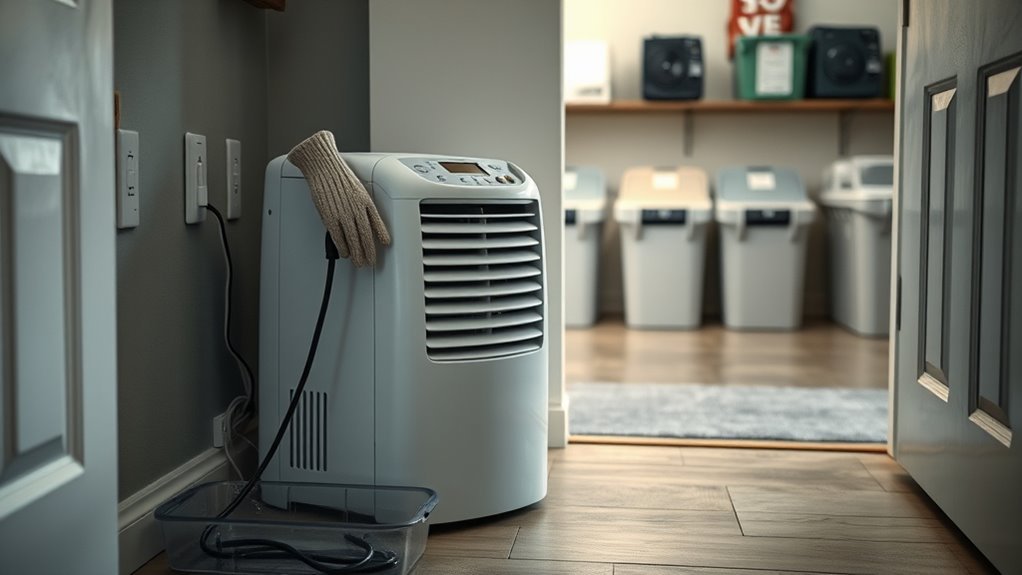
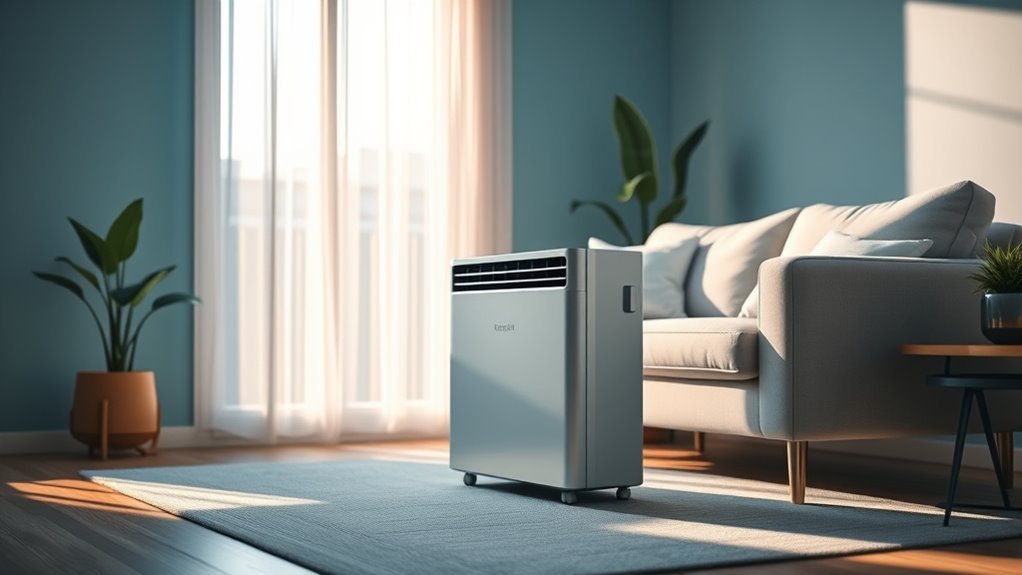
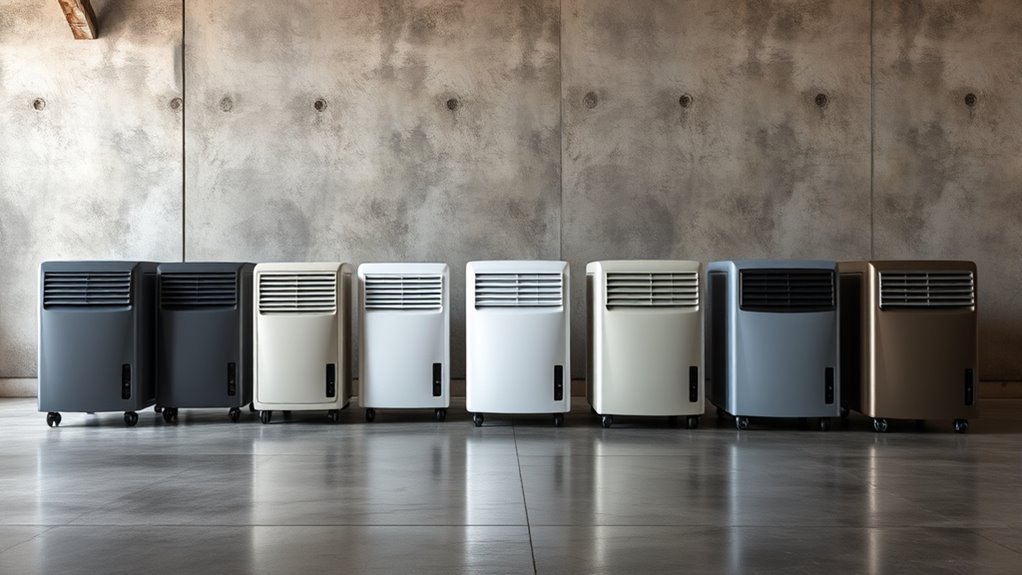
If collected water must travel upward into a sink, through a window, or to another elevated drain point, choose a room dehumidifier with a built-in condensate pump, not merely a gravity-drain connection. The Midea Cube 50 Pint offers the clearest overall balance of documented pump performance, smart control, tank capacity, and residential sizing. The TABYIK Smart WiFi Dehumidifier adds app control and a higher manufacturer-listed maximum, while the Uhome 150 Pints Dehumidifier targets very large or exceptionally damp areas. Compare the capacity test basis, pump-lift limit, included hose, room conditions, noise, weight, and service support before deciding.
Quick Verdict
For most homes, choose the Midea Cube 50 Pint because its manufacturer documentation confirms a built-in pump, smart controls, a 50-pint rating, and pump discharge up to 14 feet above the drain port. Consider the TABYIK when remote app control is important, but verify the exact model and pump specifications on the current listing. Choose the Uhome 150 Pints only when you have a very large or severe moisture load and enough room for a heavier unit.
How these picks were compared
The ranking prioritizes a true built-in pump, clarity of pump-route information, capacity test conditions, drainage options, controls, portability, maintenance needs, and suitability for common residential spaces. Manufacturer square-foot claims are treated as rough guidance rather than guaranteed performance.
Quick Comparison of Room Dehumidifiers With Pumps
| Product | Capacity Basis | Coverage Claim | Pump Details | Best For | Amazon |
|---|---|---|---|---|---|
| Midea Cube 50 Pint | Manufacturer-rated 50 pints per day | Manufacturer lists up to 4,500 sq. ft. | Built-in pump; model manual states up to 14 ft. above the drain port | Best overall balance | Check Current Availability |
| TABYIK Smart WiFi | Up to 80 pints at 95°F and 90% RH, as listed | Listed up to 4,500 sq. ft. | Built-in pump claimed; confirm exact lift and included hose for the linked model | App-based high-humidity control | Check Current Availability |
| Uhome 150 Pints | Up to 150 pints at 95°F and 90% RH, as listed | Listed up to 7,000 sq. ft. | Tank, gravity drain, and built-in pump; 2 m pump hose listed | Very large or exceptionally damp areas | Check Current Availability |
Midea Cube 50 Pint Dehumidifier with Smart Control
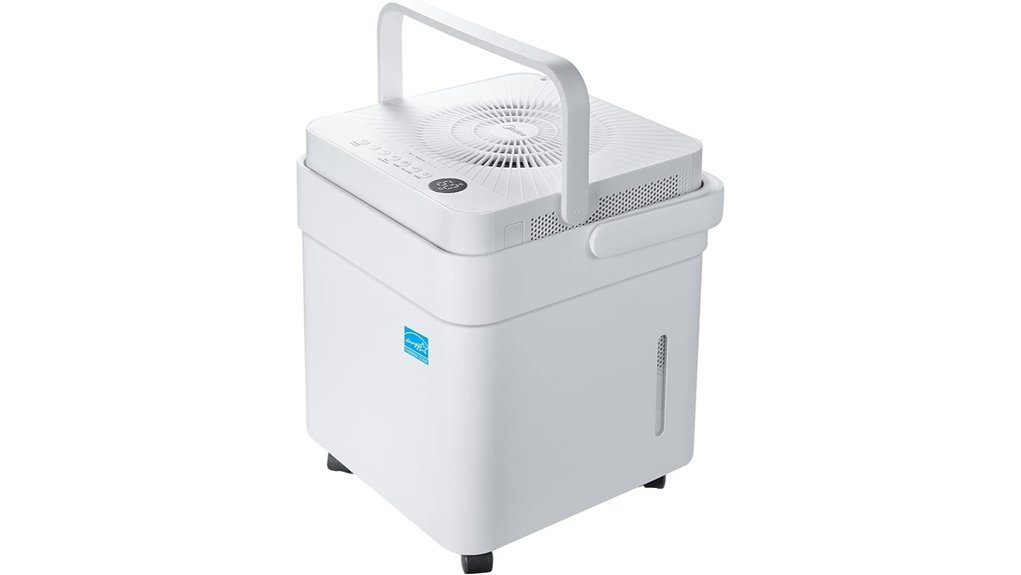
Best Overall
The Midea Cube 50 Pint Dehumidifier is the strongest all-around choice for homeowners who want pump drainage, remote control, and a large collection bucket in one residential unit. Midea lists the model for spaces up to 4,500 square feet and documents a built-in pump that can discharge water up to 14 feet above the drain port when installed as directed.
Its lift-and-twist Cube design can operate in an extended configuration or nest into the bucket for compact storage. The SmartHome app supports remote monitoring and setting changes, and Midea also lists compatible voice-assistant control. At about 41.5 pounds, the unit is manageable on its casters on one floor, but it is not convenient to carry up and down stairs regularly.
Best For: Basements, garages, storage areas, and larger living spaces where the drain is higher than the unit and smart monitoring is useful.
Why You’ll Like It
- The documented pump can move water to an elevated sink, standpipe, or other approved drain route.
- Wi-Fi controls make it easier to check humidity in a basement or room you do not visit often.
- The large bucket reduces emptying frequency when continuous drainage is not connected.
- The nested Cube design uses less storage height than many traditional upright dehumidifiers.
Who Should Avoid It
Choose a smaller model for a compact room or when you need to carry the appliance between floors. A basic gravity-drain dehumidifier may also be more economical when a low floor drain is already available and smart controls are unnecessary.
Pros:
- Manufacturer-documented built-in pump with up to 14 feet of lift above the drain port.
- SmartHome app and compatible voice controls.
- 50-pint manufacturer rating for demanding residential moisture control.
- Large bucket with nested and extended configurations.
Cons:
- Its approximately 41.5-pound weight makes frequent stair movement awkward.
- The square footprint may use more floor area than a narrow upright unit.
- Pump setup requires correct bucket placement, secure hose connections, and manual-guided activation.
- Manufacturer square-foot language should be treated as guidance, not a substitute for moisture-load sizing.
TABYIK 80-Pint Smart WiFi Dehumidifier With Pump
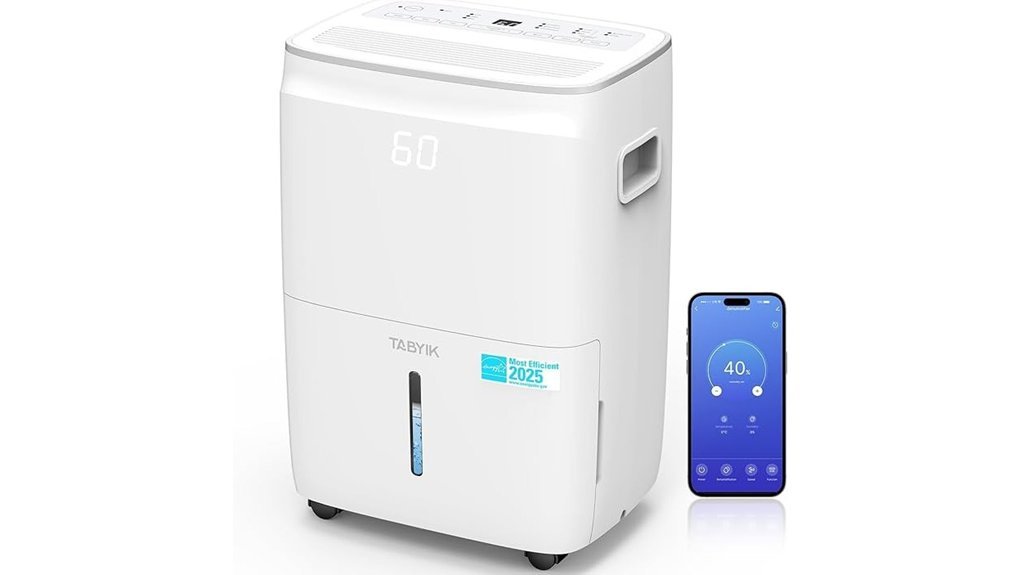
Best for App-Based Control
The TABYIK Smart WiFi Dehumidifier is aimed at buyers who want automatic humidity control, app access, and pump-assisted drainage for a large residential area. The linked listing states coverage up to 4,500 square feet and moisture removal of up to 80 pints per day at 95°F and 90% relative humidity.
That 80-pint figure is an extreme-condition maximum, not a promise of normal daily collection. Output will generally be lower in cooler rooms, at moderate humidity, or after the room approaches the selected set point. The pump is the main reason to choose this model over a gravity-only unit because it can support a drain destination above the dehumidifier when installed within the model’s limits.
Best For: Buyers who prioritize smartphone access and automatic humidity management in a basement, garage, storage room, or other large indoor area with an elevated drain route.
Why You’ll Like It
- Wi-Fi access can reduce unnecessary trips to a basement or remote room.
- A built-in pump offers more placement flexibility than a gravity-only hose.
- Automatic humidity control can cycle dehumidification as room conditions change.
- Casters make repositioning easier on a single level.
Who Should Avoid It
Skip this option when you need fully confirmed pump-lift data, standardized capacity documentation, or clearly published service terms before purchase. Buyers who do not need app control may get better value from a simpler, better-documented model.
Pros:
- Built-in pump drainage for locations without a convenient downhill drain.
- Wi-Fi app control and automatic humidity adjustment.
- High manufacturer-listed maximum for hot, extremely humid conditions.
- Portable wheel design for easier positioning.
Cons:
- The 80-pint maximum is measured at 95°F and 90% RH and should not be compared directly with a standardized 50-pint rating.
- The exact linked model’s pump height, hose specifications, certification, and warranty require confirmation.
- App setup introduces an additional dependency on Wi-Fi compatibility and software support.
- Real-world noise varies with fan speed, compressor cycling, room acoustics, and pump operation.
Uhome 150 Pints Dehumidifier with Pump
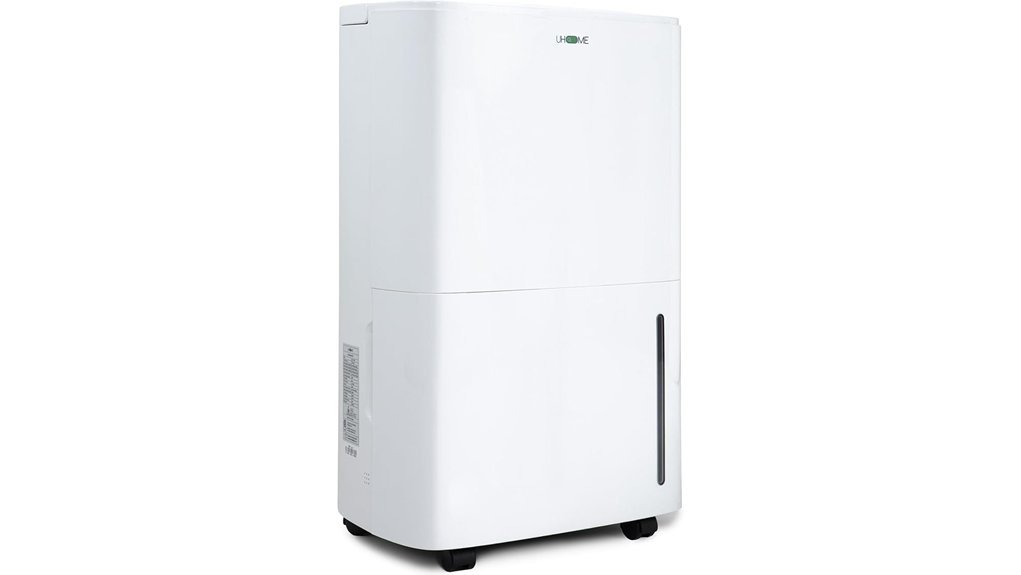
Best for Very Large Areas
The Uhome 150 Pints Dehumidifier with Pump has the highest manufacturer-listed maximum in this comparison. It is intended for very large basements, storage rooms, garages, dry utility areas, and other spaces with heavy moisture loads. The listing states coverage up to 7,000 square feet and removal of up to 150 pints per day under 95°F and 90% RH conditions.
It provides three drainage methods: a 7-liter water tank, gravity drainage, and built-in pump drainage. The manual lists a 2-meter pump hose and a 1-meter gravity hose, but the maximum vertical pump lift should be confirmed before installation. The selected humidity can be adjusted from 30% to 80% in 5% increments, and the controls include a 24-hour timer, two fan speeds, child lock, and automatic defrost.
Best For: Very large or exceptionally damp residential areas where a smaller unit would run for long periods and where water must be sent to a higher approved drain point.
Why You’ll Like It
- It has the highest listed extreme-condition maximum among these three products.
- Tank, gravity, and pump drainage provide useful backup options.
- The broad humidity setting range supports different storage and living-space targets.
- The timer and child lock help prevent unwanted control changes.
Who Should Avoid It
This model is excessive for a small bedroom, apartment, or mildly humid room. At about 46 pounds, it also requires adequate floor space, ventilation clearance, a properly grounded outlet, and a carefully measured drainage route.
Pros:
- Built-in pump plus manual and gravity-drain alternatives.
- High listed maximum for severe moisture loads and very large spaces.
- Adjustable humidistat, timer, automatic defrost, and child lock.
- Large 7-liter water tank when continuous drainage is not connected.
Cons:
- The 150-pint maximum applies to extreme 95°F and 90% RH conditions and is not a standardized everyday result.
- Its size and approximately 46-pound weight make frequent movement inconvenient.
- The 2-meter pump hose may not reach every planned drain route.
- The maximum vertical pump lift should be confirmed before purchase.
Factors to Consider When Choosing a Room Dehumidifier With Pump
A pump-equipped dehumidifier must match both the room’s moisture load and the complete drainage route. Capacity alone is not enough. Compare the test conditions behind the pint rating, vertical pump limit, hose length, tank size, noise, controls, dimensions, weight, maintenance access, warranty, and available clearance around the appliance.
Capacity, Test Conditions, and Coverage
Dehumidifier capacity is measured in pints per 24 hours, but the number is meaningful only when you know the temperature and relative humidity used for testing. A maximum measured at 95°F and 90% RH should not be compared directly with a standardized rating measured under cooler, less humid conditions.
Measure the room or connected basement area and check its normal relative humidity with a separate hygrometer. A slightly damp space needs less capacity than an area with condensation, seepage, wet materials, frequent indoor laundry drying, or humidity that stays above 70%. Manufacturer square-foot claims are useful for initial screening, but they are not standardized performance guarantees.
Pump Height, Hose Length, and Drain Route
A built-in pump is useful when the drain destination is above the dehumidifier or when a continuously descending hose route is impossible. Measure the vertical rise and horizontal run before buying. Then confirm the model’s maximum pump lift, included hose length, approved hose diameter, connection method, and permitted drain destinations.
Do not assume all pumps can handle the same height. Keep the hose secured, avoid sharp bends and pinch points, and follow the manual’s routing instructions. A loose, kinked, or undersized hose can cause drainage failure or water damage even when the pump itself works.
Gravity Drain Versus Pump Drain
A gravity hose must slope continuously downward from the dehumidifier to the drain. It cannot reliably move water uphill. A pump actively pushes collected water and gives you more placement flexibility, although it adds setup steps and may create brief extra noise when it cycles.
Models with tank, gravity, and pump drainage give you useful backup choices. The bucket can still collect water when a hose route is unavailable, but it must be seated correctly and emptied before it overfills or triggers automatic shutoff.
Energy Efficiency Ratings
Check the current ENERGY STAR product database rather than relying only on a marketplace badge. When Integrated Energy Factor is published, a higher IEF means the unit removes more liters of water per kilowatt-hour under the applicable test procedure.
The model with the largest advertised pint number will not automatically cost less to operate. Real energy use depends on rated wattage, room temperature, humidity, set point, fan speed, air leakage, filter condition, and compressor runtime. Automatic humidity control can reduce unnecessary operation after the selected level is reached.
Noise Level Considerations
Published decibel claims are useful only as rough comparisons. Real-world sound also depends on fan speed, floor vibration, room acoustics, compressor cycling, and pump discharge. A unit that seems acceptable in a basement may still be distracting in a bedroom or home office.
Place the appliance on a firm, level floor and keep it away from furniture or lightweight panels that can amplify vibration. In unfinished basements and utility spaces, drainage reliability and moisture-removal performance may matter more than a small claimed difference in sound.
Smart Features and Controls
Wi-Fi control is most useful when the dehumidifier operates in a basement, storage space, vacation property, or room you do not check frequently. Depending on the model, an app may show current humidity, change the target setting, select modes, or create a schedule.
Confirm the required Wi-Fi band, app name, account requirements, phone compatibility, and whether core controls still work without an internet connection. Smart features do not replace physical inspection of the filter, bucket, intake, outlet, pump hose, and drain destination.
Maintenance and Safety
- Unplug the dehumidifier before cleaning the filter, bucket, grille, or accessible drain connection.
- Do not open the cabinet or service refrigerant, electrical, or internal pump components yourself.
- Clean the reusable filter at the interval stated in the manual and let it dry completely before reinstalling it.
- Inspect the pump hose for clogs, kinks, loose fittings, algae buildup, and leaks.
- Keep the air intake and outlet clear and follow the manufacturer’s minimum-clearance instructions.
- Connect the unit directly to a properly grounded wall outlet and follow the manual’s extension-cord and adapter warnings.
- Do not place the appliance in standing water or where it can be splashed. Use in a bathroom or wet laundry area only when the specific manual permits that location and required clearances can be maintained.
- Check the hose end and drain destination regularly, especially during heavy rain or unusually humid weather.
Before You Buy Checklist
- Measure the actual room and any connected open area.
- Check temperature and relative humidity with a separate hygrometer.
- Identify leaks, seepage, condensation, or wet materials that need separate repair.
- Confirm whether water must travel uphill.
- Measure both the vertical rise and horizontal distance to the drain.
- Verify the included pump-hose length, approved replacement hose, and maximum pump lift.
- Compare capacity using the same test basis whenever possible.
- Match the exact model number and ASIN shown in the listing, manual, and order confirmation.
- Confirm dimensions, weight, clearance, electrical requirements, warranty, app support, and filter availability.
Frequently Asked Questions
How Do I Determine the Right Size Dehumidifier for My Room?
Measure the room and any connected open area, check normal temperature and relative humidity, and identify whether the space is slightly damp, very damp, or wet. Larger, cooler, or wetter spaces may require more capacity and longer runtime. Do not use a one-pint-per-square-foot formula. Compare ratings measured under the same conditions and allow extra capacity for seepage, indoor laundry drying, poor ventilation, or open connections to other rooms.
Can I Use a Dehumidifier Continuously?
A model designed for continuous operation can run for extended periods when it has adequate airflow, a clean filter, a secure drain connection, a suitable room temperature, and a properly grounded outlet. Let the humidistat cycle the compressor rather than setting an unnecessarily low target, and inspect the hose and drain regularly.
What Maintenance Is Required for Dehumidifiers With Pumps?
Clean the air filter and bucket, inspect the intake and outlet, and check the accessible pump hose for clogs, algae, kinks, leaks, or loose fittings. Confirm periodically that water reaches the intended drain. Unplug the appliance before cleaning, and do not open the cabinet or service internal electrical, refrigerant, or pump components yourself.
Will a Dehumidifier Help Reduce Mold and Mildew?
A dehumidifier can lower excess humidity that supports future mold and mildew growth. It does not remove existing mold, repair plumbing leaks, stop foundation seepage, or dry materials that remain wet behind walls. Existing contamination and moisture sources need separate cleaning or repair.
How Noisy Are Pump Dehumidifiers During Operation?
Noise varies by model, fan speed, flooring, compressor cycle, pump discharge, and room acoustics. The pump may create a brief additional sound when it moves water. Treat published decibel figures as estimates and consider placement, vibration, and the room’s normal background noise.
Do I Need a Built-In Pump?
You need a pump when water must travel upward or when the available drain is not low enough for a continuously descending gravity hose. If a floor drain is below the unit and the hose can slope downward without rises or sharp bends, a gravity-drain model may be sufficient.
Can a Pump Dehumidifier Drain Into a Sink?
Many pump-equipped models can discharge into a sink, standpipe, or other approved elevated drain, but the route must remain within the model’s lift and hose-length limits. Secure the hose so it cannot fall out, avoid routing it where someone can trip, and follow the supplied installation instructions.
Can I Use a Dehumidifier in a Bathroom?
Only use one in a bathroom when the specific manufacturer manual allows that location and the unit can remain outside splash zones and standing water. Many portable dehumidifier manuals prohibit wet or excessively humid locations. A bathroom exhaust fan and repair of leaks may be safer first steps.
Conclusion
The best room dehumidifier with a pump depends on the true moisture load and the height and length of the drainage route. The Midea Cube 50 Pint offers the clearest overall balance because its pump capability, smart controls, weight, and core specifications are well documented. The TABYIK Smart WiFi Dehumidifier is worth considering for app-based control, but the exact linked model’s standardized capacity and pump details should be verified. The Uhome 150 Pints is the better fit for the largest and wettest residential spaces when its size, hose reach, and power requirements are acceptable.
Final Recommendation
Choose the Midea for most homes, the TABYIK when app control is the deciding feature and you can confirm the exact listing details, or the Uhome for the heaviest moisture loads. Before ordering any model, verify the model number, capacity test basis, maximum pump lift, included hose length, drainage instructions, dimensions, warranty, and current listing information.