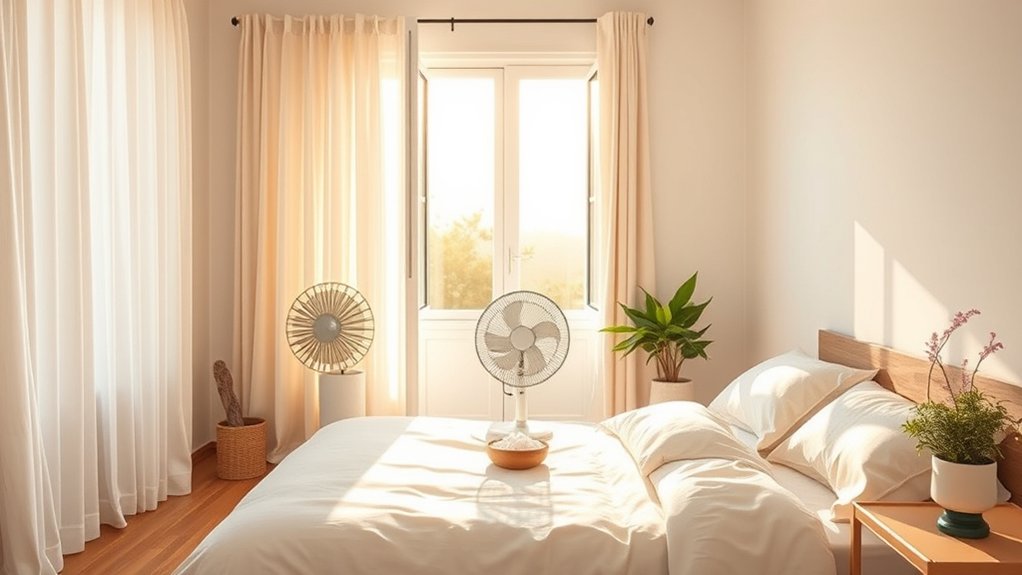
You can dehumidify a room without a dehumidifier by stopping water at its source, exhausting steam outdoors, and letting in outside air only when its dew point is lower than your indoor air. Start by placing a digital hygrometer in the room so you can track real changes instead of guessing. If your space stays damp despite ventilation and source control, see how to dehumidify a room fast with mechanical equipment.
Quick Answer
To dehumidify a room without a dehumidifier, keep indoor relative humidity between 30% and 50% by fixing plumbing or roof leaks, running outdoor-vented bathroom (50+ CFM) and kitchen (100+ CFM) exhaust fans, setting your air conditioner fan to “Auto,” drying laundry outdoors, and opening opposite windows only when the outdoor dew point is below 55°F (13°C).
At a Glance
| Time Required | 15–60 minutes for ventilation and fan checks; 1–3 hours for caulking, pipe insulation, or dryer duct cleaning |
| Difficulty | Easy for daily airflow and appliance habits; moderate for weather stripping and leak repairs |
| Tools Needed | Digital hygrometer, outdoor-vented exhaust fan, flashlight, towels, caulk or foam pipe insulation |
| Cost | $0 using existing windows, fans, and AC; $10–$35 for a digital hygrometer, caulk, or calcium-chloride absorber |
Check the Humidity Before Making Changes
Measure your baseline humidity with a digital hygrometer ($10–$50 at hardware stores) before trying to dry out a room. Place the sensor near the center of the space at breathing height, away from windows, direct sunlight, cooking appliances, supply vents, and showers. Let it stabilize for at least 30 minutes, then log readings in the morning, at night, and after showers or cooking.
The U.S. Environmental Protection Agency recommends keeping indoor relative humidity below 60% and ideally between 30% and 50%. Similarly, CDC mold and indoor humidity guidance advises keeping indoor humidity no higher than 50% all day long to inhibit mold growth and dust mites.
| Humidity Reading | What It Means | What to Do |
|---|---|---|
| Below 30% | Air is overly dry; can irritate sinuses and dry out wood. | Stop additional drying unless you are actively drying water damage. |
| 30–50% | Optimal target range for comfort and building health. | Maintain current exhaust and ventilation habits. |
| 50–60% | Moisture is elevated; dust mites thrive above 50%. | Run exhaust fans longer, check AC fan settings, and cut indoor steam. |
| Above 60% | High risk of surface condensation, mildew, and mold growth. | Locate hidden leaks immediately and use AC or mechanical drying if needed. |
Note: A ceiling fan or portable box fan helps evaporate moisture from damp surfaces and makes your skin feel cooler, but it does not remove water vapor from a closed room. Humid air must physically exit through a window, exterior exhaust duct, or air-conditioner drain line.
Open Windows to Dehumidify a Room Without a Dehumidifier

Opening windows lowers indoor humidity only when the outdoor air holds less absolute water vapor than the air inside your room. Because warm air can hold far more water than cold air, outdoor relative humidity alone is misleading. Instead, compare the outdoor dew point in your weather app before opening a window.
As the National Weather Service explains, dew point measures the exact temperature at which air reaches 100% saturation, making it a direct indicator of how much moisture is in the air. For example, 85°F (29°C) air at 25% relative humidity contains roughly twice as much water vapor as 35°F (2°C) air at 75% relative humidity. Use these outdoor dew-point benchmarks to decide when to ventilate:
- Dew point 55°F (13°C) or lower: Air is dry and comfortable. Open windows freely to flush out damp indoor air.
- Dew point 56–64°F (13–18°C): Air is moderately humid. Ventilate briefly only if you are clearing heavy indoor steam from a shower or boiling pots.
- Dew point 65°F (18°C) or higher: Air is muggy and moisture-laden. Keep windows closed, or outdoor air will raise indoor humidity.
When outdoor conditions are dry, follow these steps to maximize airflow:
- Create a cross-breeze: Open windows on opposite sides of the room or home, and prop open interior doors between them so dry air pushes damp air out.
- Clear the airflow path: Pull back heavy curtains, blinds, and tall furniture blocking window openings.
- Direct a box fan outward: Place a portable fan facing out of a downwind window to exhaust warm, humid room air while cooler, drier air enters through an upwind window.
- Close up if conditions shift: Shut windows immediately if your hygrometer reading climbs, rain blows inside, outdoor smoke or pollen is high, or an open window creates a security hazard.
Reduce Steam From Showers and Cooking
Daily showering and stovetop cooking release pints of water vapor that rapidly spread into bedrooms and living areas if not captured at the source. The most effective defense is running spot exhaust fans that vent directly through the roof or an exterior wall while you shower or cook.
According to the Building America Solution Center bathroom exhaust fan guide, residential building codes (IRC and ASHRAE 62.2) require bathroom fans to move at least 50 cubic feet per minute (CFM) for intermittent use, or 20 CFM if running continuously. For bathrooms larger than 50 square feet, size the fan at roughly 1 CFM per square foot of floor area. Keep the bathroom door closed while showering, use warm rather than scalding water, and run the exhaust fan during the shower plus 15 to 20 minutes afterward until mirrors and tile walls are completely dry.
In the kitchen, boiling water, simmering sauces, and burning gas fuel all generate substantial moisture. The Building America Solution Center kitchen exhaust checklist specifies a minimum intermittent airflow of 100 CFM for ducted kitchen range hoods. Place tight-fitting lids on pots and pans, use the back burners (which sit directly under the hood capture area), and verify your hood vents outdoors. A ductless recirculating range hood traps grease and some odors on a charcoal filter, but it blows 100% of the steam right back into your kitchen. Official ENERGY STAR indoor-air guidance emphasizes outdoor-vented kitchen and bath exhaust systems to prevent moisture accumulation and structural damage.
If your home has central or window air conditioning, use it alongside your exhaust fans during warm, muggy weather. Air conditioners pull moisture out of the air as warm room air passes over the cold evaporator coil, condensing water that drains outdoors. Always set your thermostat fan switch to “Auto” instead of “On.” When left on “On,” the blower continues running after the cooling compressor shuts off, blowing air across the wet coil and evaporating trapped water right back into your rooms.
Pro Tip: Hold a single square of toilet paper against your bathroom exhaust grille while the fan is running. If the suction cannot hold the paper flat against the grille, clean dust off the blower wheel and check that the exterior wall or roof damper flap isn’t stuck shut.
Recommended Products

📏 Universal Size Guide – PLEASE READ CAREFULLY This flat vent cover fits 4-inch diameter exhaust duct, also known as a dryer vent louver cover. The back connection opening matches 4 inches, while the overall outer panel dimension is 6" × 6". ⚠️ DO NOT confuse duct size with the cover outer size! Kindly measure your vent pipe and pre-drilled wall hole carefully before placing your order to avoid mismatches and unnecessary returns.
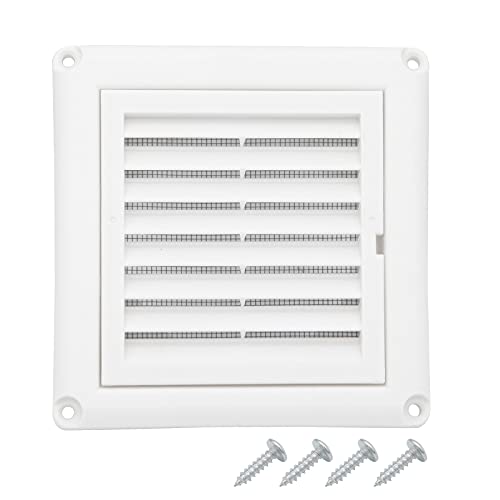
KEY SIZE DETAILS (PLEASE CHECK BEFORE ORDERING!) Fits 4-inch diameter pipes/vent openings (this is the size of the duct it connects to). Mounting diameter: 4 inches (the circular base that attaches to the wall). Overall unit size: 6 inches x 6 inches (the total width/height of the entire cover, including the frame). A size diagram is provided in the product images for clear reference

Automatic Louvered Operation :The louvered flap opens and closes automatically with airflow, ensuring efficient exhaust and preventing backdraft into the house
Dry Clothes and Cut Indoor Moisture
Hanging wet laundry indoors is one of the largest hidden causes of high room humidity, because a single load of washed clothes releases roughly 2 liters (about 4 pints or 4.4 pounds) of water as it dries. Whenever weather and local rules allow, dry laundry outdoors on a clothesline or balcony rack.
If you must air-dry laundry indoors during wet or freezing weather, contain and exhaust the evaporating water with these steps:
- Run an extra high-speed spin cycle: Spinning laundry a second time at your washer’s highest RPM setting extracts significantly more liquid water mechanically before you hang a single garment.
- Isolate the drying rack: Place the rack in a small, well-ventilated bathroom or utility room rather than a bedroom or living room, and close the door to keep moisture from migrating.
- Space garments at least 1–2 inches apart: Crowded clothes trap damp air in the fabric folds and keep room humidity elevated for hours longer.
- Exhaust the air outdoors: Run the room’s outdoor-vented exhaust fan or crack a window (if outdoor air is dry) while aiming a small oscillating fan across the clothes toward the vent.
If you use a conventional vented tumble dryer, inspect the exhaust path every few months. Confirm that the rigid metal duct is securely connected, uncrushed, and clear of lint, and look outside while the dryer runs to verify the exterior hood flap opens freely. Never use an indoor lint-trap bucket kit on a conventional dryer, and never vent a dryer into an attic, crawl space, or garage. If you use a ventless heat-pump or condenser dryer, empty the water collection tank after every load (or check that the condensate drain hose isn’t kinked) and rinse the condenser unit regularly so damp air does not escape into the laundry room.
Fix Leaks and Other Moisture Sources
No amount of window ventilation or passive absorption can overcome an active water leak or ground moisture intrusion. If a room stays damp regardless of the weather, inspect plumbing fixtures, roofs, window flashing, appliances, and basement walls for liquid water entry. EPA mold guidance stresses drying wet or water-damaged materials within 24 to 48 hours to prevent mold colonies from taking hold.
| Moisture Source | Visible Clues | Corrective Action |
|---|---|---|
| Plumbing, roof, or wall leak | Yellowish rings, bubbling paint, soft drywall, dripping under sinks, or musty odors | Shut off or repair the leak source and dry wet materials within 24–48 hours. |
| Window or exterior door gap | Damp wood trim, peeling sill paint, humid drafts, or water pooling after rain | Clear clogged window weep holes, repair exterior flashing, and apply caulk or weather stripping. |
| Washer, dishwasher, or fridge | Buckled flooring, damp baseboards, loose supply fittings, or cracked rubber hoses | Replace worn hoses with braided stainless-steel lines and tighten drain connections. |
| HVAC condensate drain | Standing water in the drip pan, wet closet floor, or water dripping from an indoor AC unit | Flush algae and sludge from the condensate drain line and level the drip pan. |
| Foundation or crawl space seepage | Chalky white powder (efflorescence) on concrete, damp basement corners, or bare soil in crawl spaces | Clean gutters, extend downspouts 4–6 feet away from the house, regrade soil to slope away, and install a crawl-space vapor barrier. |
Never caulk or paint directly over wet, rotted, or moldy surfaces. Trapping moisture inside a wall cavity or window frame accelerates wood rot and hides ongoing structural decay. Always stop the exterior water entry first, scrub any hard-surface mold with detergent and water, and let the material dry completely before sealing.
Reduce Condensation on Cold Surfaces
Surface condensation forms whenever warm indoor air touches a window pane, metal frame, cold-water pipe, toilet tank, or uninsulated exterior wall whose temperature is at or below the room’s dew point. Left alone, those water droplets run down onto drywall, baseboards, and carpets, feeding localized mold even when the center of the room measures 50% relative humidity.
Wipe standing droplets dry with a towel so the water does not evaporate back into the room or soak into wood trim, then raise the temperature of the cold surface:
- Move furniture away from exterior walls: Leave a 2- to 4-inch gap behind couches, beds, and wardrobes placed against outside walls so warm room air can circulate behind them.
- Open closet doors and window blinds slightly: Closed closets on exterior walls and tightly drawn thermal curtains trap pockets of cold air where condensation and mildew thrive.
- Insulate cold-water pipes: Wrap sweating copper or PVC cold-water pipes with inexpensive slit-foam pipe insulation sleeves ($2–$5 per 6-foot tube) and seal the seams with tape.
- Stop air leaks around windows: Apply rope caulk, weather stripping, or window insulator film kits in winter to keep indoor moist air from contacting freezing glass.
Condensation is not just a cleaning problem. It is a visible sign that indoor moisture, cold surface temperature, or both need attention.
Use Salt, Baking Soda, and Charcoal Carefully
Passive desiccants—including calcium chloride, silica gel, rock salt, baking soda, and charcoal—can pull small amounts of moisture out of stagnant air inside a closed closet, cabinet, safe, or storage bin. However, none of them can dehumidify a full bedroom, bathroom, or basement because normal air infiltration introduces moisture far faster than an open bowl can absorb it.
| Material | Moisture Absorption Capacity | Best Enclosed Use Case |
|---|---|---|
| Calcium chloride (commercial tubs/bags) | High: absorbs roughly 150–300% of its weight, dissolving into liquid brine. | Closets, under-sink cabinets, small pantries, and seasonal storage spaces. |
| Silica gel packets or canisters | Moderate: adsorbs about 20–35% of its weight into pores while staying dry; reusable by heating. | Airtight storage totes, camera bags, toolboxes, document safes, and electronics. |
| Rock salt (sodium chloride) | Low to moderate: pulls water mainly when relative humidity approaches or exceeds 75%. | Very damp utility cupboards or DIY drip buckets in small enclosed areas. |
| Baking soda or activated charcoal | Very low: absorbs minimal water vapor before caking or saturating. | Deodorizing shoe cabinets, refrigerators, or gym bags with minor localized dampness. |
Use Rock Salt in Small Spaces
Rock salt (halite) can collect water in a very damp closet, under-sink cabinet, or storage bin when humidity is high. To make a simple two-bucket absorber, drill several 1/4-inch drainage holes in the bottom of one plastic bucket, line the bottom with breathable landscape fabric or cheesecloth, fill it with 2 to 4 pounds of rock salt, and nest it inside a second solid bucket to catch the dripping brine. Keep the container level on a plastic tray and empty the bottom bucket before it overflows.
Understand the Limits of Baking Soda and Charcoal
Baking soda and charcoal briquettes are effective odor neutralizers, not room dehumidifiers. Baking soda forms a thin crust as soon as its top layer absorbs a small amount of moisture, blocking the powder underneath. Stir or replace baking soda whenever it clumps, and dry activated charcoal bags in direct sunlight for a few hours once a month so their pores stay clear for odor control.
Consider Purpose-Made Passive Absorbers
When protecting clothes in a closet or tools in a sealed bin, purpose-made desiccants outperform kitchen ingredients. Calcium-chloride tubs and hanging closet bags work steadily at normal indoor humidity levels (50% and up) and trap the resulting liquid brine in a lower reservoir. For sealed plastic totes, camera cases, or document boxes, use color-indicating silica-gel canisters that stay completely dry to the touch and can be reactivated in a warm oven according to the manufacturer’s directions.
Warning: Keep calcium-chloride flakes, silica gel, rock salt, and collected liquid brine out of reach of children and pets. Calcium-chloride liquid is irritating to skin and eyes, leaves greasy stains that stay permanently damp on wood and drywall, and rapidly corrodes metal, leather, and electronics.
Use Houseplants Sparingly and Track Humidity
Despite a common internet myth, houseplants do not lower room humidity. Plants absorb liquid water through their roots and release roughly 90% to 99% of that water back into the air as vapor through microscopic leaf pores in a process called transpiration. While one small succulent makes almost no measurable difference, grouping dozens of plants together with damp potting soil adds moisture to an already humid room.
The Penn State Extension guidance on houseplants and humidity notes that clustering plants together traps transpired moisture to raise local humidity around foliage. In a damp room, apply the reverse strategy: space plants apart, never use water-filled pebble trays, and allow the top layer of potting mix to dry between waterings.
Choose Lower-Water Houseplants
If you enjoy greenery in a humid room, choose slow-growing, drought-tolerant species with thick, waxy, or succulent leaves. Because these plants require infrequent watering and transpire slowly, they add far less water vapor to the room than thin-leaved tropical plants.
| Plant | General Watering Approach | Humidity Impact in a Room |
|---|---|---|
| Snake plant (Dracaena trifasciata) | Let potting mix dry out completely between waterings (often every 2–4 weeks). | Minimal moisture added; does not dehumidify the room. |
| ZZ plant (Zamioculcas zamiifolia) | Water sparingly only after soil is dry several inches down; avoid soggy soil. | Very low transpiration rate; safe for rooms where you want minimal soil evaporation. |
| Aloe vera | Water deeply but infrequently in fast-draining cactus or succulent mix. | Low water demand reduces surface evaporation from the pot. |
| Peperomia varieties | Allow the top 50% of potting mix to dry before watering again. | Compact size and semi-succulent leaves add very little water vapor. |
| Golden pothos (Epipremnum aureum) | Water when the top 1–2 inches of potting mix feel dry. | Moderate transpiration; keep pruned and avoid overwatering in damp rooms. |
Limit Plant Quantity
Keep only one or two low-water plants in bedrooms, basements, laundry areas, or poorly ventilated apartments. Avoid moisture-intensive plants that require constantly damp soil—such as Boston ferns, peace lilies, majesty palms, and calatheas—when you are already fighting high indoor humidity. You can also cover the top of the potting soil with a thin layer of decorative aquarium gravel or horticultural sand to slow direct water evaporation from the pot.
Monitor Humidity Levels
Check your hygrometer before watering your plants and again two to four hours afterward. Always empty drainage saucers within 15 minutes of watering so standing water does not sit and evaporate into the room. If the room’s relative humidity climbs noticeably after watering, relocate some plants to a drier, sunnier room.
Troubleshoot Persistent Room Humidity
When a room remains above 55–60% relative humidity after you adjust your daily habits, match your hygrometer patterns and visual clues to the table below to pinpoint the underlying cause.
| What You Notice | Likely Cause | Next Step |
|---|---|---|
| Humidity spikes above 65% after showers and stays high for hours | Dust-clogged, undersized (<50 CFM), or unvented bathroom fan | Vacuum the fan grille and blower wheel, verify exterior ducting, and run the fan for 20 minutes after showering. |
| Kitchen and adjacent living room feel sticky while cooking | Uncovered pots or a ductless recirculating range hood | Cover boiling pots, cook on back burners, and crack a nearby window if your hood does not vent outdoors. |
| One exterior corner or closet smells musty or feels damp | Blocked airflow behind furniture, cold thermal bridge, or exterior wall leak | Pull furniture 2–4 inches away from the wall, check exterior gutters/siding for leaks, and keep closet doors cracked open. |
| Hygrometer rises within 15 minutes of opening windows | Outdoor dew point is higher than the indoor dew point | Close windows immediately and wait until outdoor dew point drops below 55°F (13°C). |
| Room feels cool and clammy even when the air conditioner runs | Thermostat fan is set to “On” instead of “Auto,” or AC unit is oversized | Switch the thermostat fan to “Auto,” clean the AC air filter, and check the condensate drain line. |
| Laundry area or apartment stays damp all day after washing | Indoor drying rack evaporation (~2 L per load) or disconnected/clogged dryer duct | Run an extra spin cycle, dry outdoors, or clean lint from the exterior dryer vent duct and hood flap. |
Recommended Products

Installation Support: Designed for 4-inch duct. If your existing ductwork is 3 inches, reach out to Amico for a free 4" to 3" duct reducer for quick, trouble-free installation.
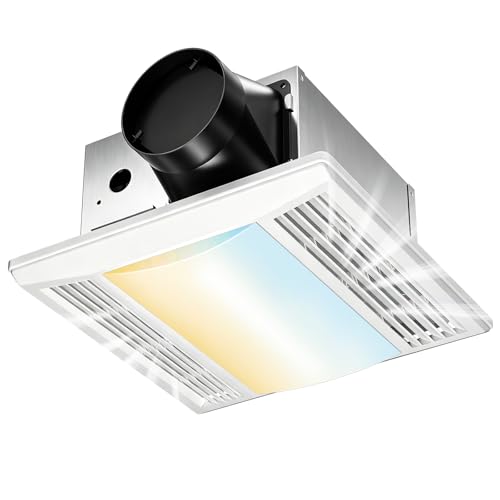
[Easy Installation] Please confirm the dimensions first: 12.1”x12.1” grille, 8.8”x8.8” ceiling cutout, 4” duct (duct not included). No attic access is required for replacement, saving you valuable time and effort.

Dimensions and Fit: Housing size 7.5 x 7.2 x 4 inches; Grille cover measures 9.4 x 8.6 inches; Includes 4-inch duct diameter for flexible installation; recommended ceiling cutout size 7.6 x 7.3 inches.
When Simple Methods Are Not Enough
Natural ventilation and source control have physical limits. If you live in a warm coastal or subtropical climate where outdoor dew points stay above 60–65°F (16–18°C) for months, or if you are dealing with a below-grade basement or windowless bathroom, passive methods cannot lower humidity to 30–50%. In those cases, running an air conditioner or a dedicated mechanical dehumidifier is the only reliable way to extract moisture from the air. For whole-home planning, see our room-by-room humidity guide.
Act immediately whenever building materials get wet. Contact a landlord, licensed plumber, roofer, HVAC technician, or certified mold-remediation specialist if the water source is hidden inside a wall or ceiling, indoor relative humidity stays above 60% despite active exhaust, mold covers more than 10 square feet (roughly a 3-by-3-foot patch, per EPA guidelines), or water is near electrical outlets or light fixtures.
Warning: Persistent dampness, a strong earthy or musty odor, visible mold growth, soft drywall, ceiling bulges, or water near electrical wiring requires immediate professional repair—not a bowl of salt or an open window.
Recommended Products

Upgrade High Efficient Dehumidification: Dehumidifier utilize semi conductor condensation technology, ensuring quiet operation while effectively extracting moisture from the air. This advanced feature helps keep humidity levels below 45%

【Ideal for Large Homes & Basements (Up to 5,000 Sq. Ft)】The Waykar 80 pint dehumidifier efficiently removes up to 80 pints of moisture per day in high-humidity conditions (95°F, 90% RH). In warmer, damp spaces like basements (86°F, 80% RH), it removes 62 pints/day. This dehumidifier for basement is perfect for large areas such as basements, bathrooms, bedrooms, and living rooms. Customize your space by adjusting the humidity level from 30% to 80%, creating a drier and healthier environment

120-Pint/Day Dehumidifier for Large Spaces Up to 6,000 Sq. Ft.: This powerful dehumidifier for basement removes 120 pints/day in humid conditions (95℉, 90% RH) and 90 pints/day in warm, damp environments (86℉, 80% RH). Ideal for spaces up to 6,000 sq. ft., including offices, bedrooms, kitchens, living rooms, garages, and RVs. The ENERGY STAR certified dehumidifier maintains humidity between 30%–80%, providing a wider range than most models, which typically range from 40%–80%.
Related Guides
Key Takeaways
- Check the outdoor dew point before opening windows—ventilate freely at 55°F (13°C) or below, and keep windows shut at 65°F (18°C) or above.
- Run outdoor-vented bathroom fans (at least 50 CFM) during showers and for 15–20 minutes afterward, and use ducted kitchen hoods (at least 100 CFM) with pot lids on.
- Keep your air conditioner thermostat fan on “Auto” rather than “On” so moisture on the cooling coil drains outside instead of blowing back into the room.
- Avoid air-drying laundry in living spaces; one wet load adds roughly 2 liters (4 pints) of water to indoor air.
- Reserve calcium chloride and silica gel for enclosed closets or storage bins, and remember that houseplants, baking soda, and charcoal cannot dehumidify a room.
Frequently Asked Questions
What draws moisture out of a room?
Outdoor-vented bathroom and kitchen exhaust fans, cross-ventilation with drier outdoor air (dew point below 55°F), air conditioners set to “Auto,” and mechanical dehumidifiers physically remove water vapor from a room. Fixing plumbing or roof leaks and covering boiling pots stop new moisture from entering. Passive desiccants like calcium chloride only draw moisture out of small enclosed spaces such as closets or storage tubs.
Do houseplants lower room humidity?
No, houseplants do not lower room humidity. Plants pull water through their roots and release 90% to 99% of it into the air as water vapor through leaf transpiration, which slightly increases indoor moisture. In a damp room, keep plant numbers modest, choose slow-transpiring succulents like snake plants or ZZ plants, and empty drainage saucers immediately after watering.
What naturally soaks up moisture?
Calcium chloride, silica gel, and rock salt naturally absorb moisture from the air, but they only work effectively in small, enclosed spaces like closets, cabinets, or sealed bins. Calcium chloride absorbs roughly 150–300% of its weight by turning into liquid brine, while silica gel traps 20–35% of its weight in dry pores. Baking soda and charcoal help mainly with odors rather than room humidity.
Will running a fan lower humidity?
No, running a ceiling fan or portable fan in a closed room does not lower relative humidity because the water vapor remains trapped inside the room. Moving air helps sweat evaporate from your skin and speeds up surface drying, but humidity drops only when the fan pushes damp air out through an open window or exterior exhaust vent.
Why is my room still humid after opening the windows?
Your room stays humid after opening the windows when the outdoor air holds more water vapor (a higher dew point) than your indoor air, which is common during rainy, foggy, or muggy summer weather. Close the windows whenever the outdoor dew point exceeds 55–60°F, and check for indoor moisture sources like wet laundry, unvented shower steam, or hidden plumbing leaks.
Does air conditioning lower room humidity?
Yes, central and window air conditioners lower room humidity by cooling indoor air below its dew point across the cold evaporator coil and draining the condensed water outside. To maximize moisture removal, set your thermostat fan setting to “Auto” instead of “On” and keep the air filter and condensate drain line clean.
Does a bowl of salt actually dehumidify a room?
No, a small bowl of kitchen or rock salt cannot dehumidify a full bedroom or living room. Sodium chloride only pulls significant water from the air when relative humidity is around 75% or higher, and its tiny surface area cannot keep up with normal room airflow. Use rock salt or calcium chloride only inside closed closets or small storage containers.
Conclusion
Controlling moisture at its source is the fastest, most reliable way to lower indoor humidity without buying a dehumidifier. Repair leaks promptly, run outdoor-vented bathroom and kitchen exhaust fans for 15 to 20 minutes after steam-producing tasks, keep your air conditioner fan set to “Auto,” dry laundry outdoors, and open opposite windows only when the outdoor dew point is lower than your indoor air.
Place a digital hygrometer in your room today and log the readings for 48 hours as you apply these steps. If relative humidity stays near or above 60%, wet materials fail to dry within 24 to 48 hours, or visible mold appears, step up to mechanical dehumidification or bring in a building professional to fix the underlying moisture entry.
Sources
- U.S. Environmental Protection Agency: A Brief Guide to Mold, Moisture and Your Home: Indoor relative humidity targets (30–50%, below 60%), 24–48 hour drying window, leak repair, and mold prevention.
- Centers for Disease Control and Prevention: Mold: Guidance on keeping indoor humidity no higher than 50% all day and using air conditioning and ventilation to control moisture.
- National Weather Service: Dew Point vs. Humidity: How dew point directly measures water vapor in the air and summer dew-point comfort thresholds (55°F and 65°F).
- U.S. Department of Energy Building America Solution Center: Bathroom Exhaust Fans: IRC and ASHRAE 62.2 minimum airflow rates (50 CFM intermittent, 20 CFM continuous) and exterior venting requirements.
- U.S. Department of Energy Building America Solution Center: Kitchen Exhaust Fan Checklist: Minimum 100 CFM intermittent exhaust airflow rate and outdoor ducting specifications for range hoods.
- ENERGY STAR: Indoor Air Quality Features: Whole-home and spot ventilation standards for exhausting kitchen and bathroom moisture directly outdoors.
- Penn State Extension: Humidity and Houseplants: How plant transpiration and grouping plants affect local moisture levels.