Does a dehumidifier help with nosebleeds? Usually not. It only helps if damp air is the problem, and it can make dry-air nosebleeds worse by pulling indoor humidity below about 30%. Aim for 30% to 50% relative humidity, check it with a hygrometer, and see a clinician if bleeds are frequent, heavy, or hard to stop.
Key Takeaways
- A dehumidifier does not directly “cause” a nosebleed, but air that is too dry can make nosebleeds more likely.
- The best indoor humidity target for most homes is about 30% to 50% relative humidity.
- Use a dehumidifier when the room is damp, but stop or raise the setting if humidity drops below 30%.
- If the air is already dry, a humidifier, saline spray, and gentle nasal care are usually more helpful than a dehumidifier.
- Get medical help if bleeding is heavy, follows a head injury, or does not stop after about 20 minutes of steady pressure.
At a Glance
| Time Required | 5 minutes to check humidity; a few days to notice whether nose dryness improves |
| Difficulty | Easy |
| Tools Needed | Hygrometer, dehumidifier or humidifier as needed, saline nasal spray, clean tissues |
| Cost | Low; a basic hygrometer and saline spray are usually inexpensive |
Does a Dehumidifier Help With Nosebleeds, or Make Them Worse?
Yes, a dehumidifier can make nosebleeds more likely if it lowers your indoor humidity too much. Dry air can irritate the tiny blood vessels inside your nose, and those vessels sit close to the surface. When the nasal lining dries out, it can crack, crust, and bleed more easily.
This does not mean dehumidifiers are bad. A dehumidifier is useful when a room is damp, musty, or consistently above the ideal humidity range. The problem starts when the room becomes too dry, especially during winter when heating systems already reduce moisture in the air.
The safest approach is to use a hygrometer and aim for about 30% to 50% relative humidity. That range helps limit excess dampness while still protecting the nose, throat, and skin from overly dry air.
Note: This article is for general education, not a diagnosis. If your nosebleeds are frequent, heavy, one-sided, linked to injury, or hard to stop, contact a healthcare professional.
Best Indoor Humidity for Nosebleeds
For most homes, the best humidity range is 30% to 50%. The U.S. Environmental Protection Agency recommends this range for indoor air quality, and it is also a practical target for reducing dry-air irritation in the nose.
Use these simple humidity readings as your guide:
| Humidity Reading | What It Means | What to Do |
|---|---|---|
| Below 30% | Air is too dry for many people | Turn down or stop the dehumidifier; consider a humidifier |
| 30% to 50% | Comfortable target range | Maintain this range and monitor daily |
| Above 50% to 60% | Air may feel damp; mold risk can rise if moisture persists | Use ventilation or a dehumidifier |
A dehumidifier is safest for your nose when it controls dampness without pushing indoor humidity below about 30%.
Recommended Products

Face Icon Comfort Indicator: Humidity temperature gauge features face icons to indicate DRY/COMFORT/WET air conditions, quickly informs you how to adjust your humidifier or dehumidifier to achieve optimal comfort.
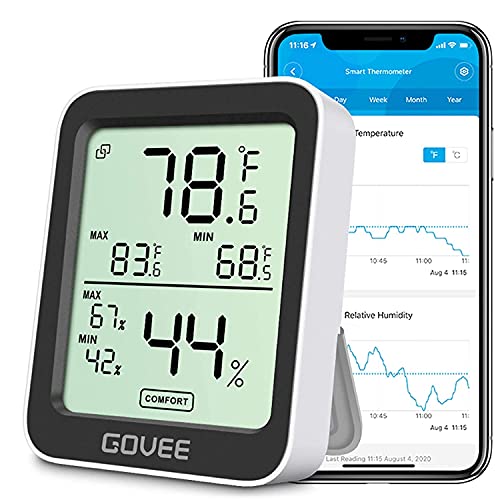
Smart Features: The Govee Wireless Thermometer Hygrometer supports all basic functions as well as smart functions such as remote monitoring and temp humidity graphs. Our humidity meters are reliable and easy to use for homes, greenhouses and more.(Only supports 164ft Bluetooth connection)

Face Icon Comfort Indicator: Humidity temperature gauge features face icons to indicate DRY/COMFORT/WET air conditions, quickly informs you how to adjust your humidifier or dehumidifier to achieve optimal comfort
Why Dry Air Makes Your Nose Bleed
Dry air makes your nose bleed because it pulls moisture from the nasal lining. The inside of the nose contains many tiny blood vessels that help warm and moisten the air you breathe. When the lining dries out, small cracks and crusts can form. Blowing your nose, rubbing it, sneezing, or picking at crusts can then break a vessel and trigger bleeding.
Dry-air nosebleeds are more common in winter because heated indoor air often has lower relative humidity. They can also happen in air-conditioned rooms, dry climates, airplane cabins, or bedrooms where a dehumidifier runs all night.
| Factor | Effect |
|---|---|
| Humidity below 30% | Can dry the nasal lining and raise bleeding risk |
| Hard nose blowing | Can rupture fragile surface blood vessels |
| Nose picking or crusting | Can scrape the delicate nasal tissue |
| Allergies, colds, or sinus irritation | Can inflame the nose and make bleeding easier |
How to Use a Dehumidifier Without Drying Your Nose
You do not have to stop using a dehumidifier if your home is damp. You just need to stop guessing. The safest way to use one is to measure the room and adjust the setting before the air gets too dry.
- Place a hygrometer in the room you use most. Bedrooms matter because many dry-air nosebleeds happen overnight.
- Set the dehumidifier to a moderate target. If your unit has a humidity setting, start around 45% to 50%.
- Check the reading after several hours. If the room drops below 35%, raise the setting or run the unit for shorter periods.
- Avoid running it all night in winter unless the room is truly damp. Heating plus dehumidification can dry the air quickly.
- Watch your body, not just the number. A dry nose, dry throat, cracked lips, static shocks, or morning nosebleeds can all signal that the air is too dry.
Pro Tip: Put one hygrometer near the dehumidifier and another across the room. Humidity can vary by location, especially in basements, bathrooms, and bedrooms with closed doors.
Recommended Products

Wellness Indicator: This humidity meter with humidity level icon indicates air conditions - DRY/COMFORT/WET, allowing this humidity sensor to ensure you’re always aware of changes to your home/household with just a quick glance

2-in-1 Thermometer & Hygrometer Meter: Equipped with a high-precision sensor, this temperature and humidity meter provides accurate readings, making it ideal for monitoring indoor environments like homes, offices, or greenhouses

Maintain the Right Room Temperature and Humidity Levels: This wireless indoor thermometer/hygrometer combination is perfect to pair with humidifiers or dehumidifiers
Humidifier or Dehumidifier for Nosebleeds?
For nosebleeds, the right device depends on the humidity reading (see humidifier vs dehumidifier for the full comparison):
- If humidity is below 30%: use a humidifier, saline spray, or other nasal-moisture steps. A dehumidifier will likely make dryness worse.
- If humidity is 30% to 50%: you may not need either device. Focus on saline spray, gentle nose blowing, and avoiding nose picking.
- If humidity is above 50% to 60%: use a dehumidifier or improve ventilation to reduce dampness, condensation, and mold risk.
A humidifier can help dry nasal passages, but it must be kept clean. The EPA recommends emptying portable humidifier tanks daily, using low-mineral water such as distilled water when appropriate, and cleaning portable humidifiers every third day to reduce scale and microorganisms.
Warning: Do not raise humidity too high to stop nosebleeds. Over-humidifying can make rooms damp and may encourage mold, dust mites, or musty odors. Keep using a hygrometer and stay near the 30% to 50% range.
Recommended Products

[3-in-1 Humidifier Meets All You Expect] Cool Mist Humidifier+Aromatherapy+Mood Light, purchase for once to satisfy all you expect! Let Homvana H101 be the best companion in your bedroom.

Top-Fill Design for Easy Refilling: Easily refill the 3L water tank by removing the top cover. No need to flip or disassemble—just pour in water and keep your hands dry.
How to Prevent Nosebleeds With Humidity
You can lower the risk of dry-air nosebleeds by keeping the nasal lining moist and the room humidity balanced. Start with the room where you sleep, because hours of dry overnight air can irritate the nose before you notice symptoms.
- Measure the room humidity. Use a hygrometer instead of relying on how the air feels.
- Keep indoor humidity around 30% to 50%. Use a dehumidifier only when the room is damp and a humidifier only when the room is dry.
- Use saline nasal spray. Saline adds moisture directly to the nasal passages and can reduce crusting.
- Consider a water-soluble nasal gel. MedlinePlus recommends saline spray and water-soluble jelly to help keep nasal linings from drying out in winter.
- Avoid smoke and strong irritants. Smoke, fragrance, dust, and cleaning fumes can irritate already-dry nasal tissue.
- Blow your nose gently. Hard blowing is a common trigger for bleeding.
- Do not pick at crusts. Soften them with saline instead.
What to Do If Your Nose Starts Bleeding
If your nose starts bleeding, humidity control can help prevent the next episode, but it will not stop active bleeding by itself. Use basic first aid first.
- Sit upright and lean slightly forward. Do not lean back, because blood can run down your throat.
- Pinch the soft part of your nose. Hold steady pressure for 10 to 15 minutes without repeatedly checking.
- Breathe through your mouth. Stay calm and avoid talking if possible.
- After it stops, avoid picking, hard blowing, bending low, or heavy activity for several hours.
- Use saline later if your nose feels dry. Do not spray or poke aggressively right after bleeding stops.
The Mayo Clinic recommends seeking medical help if a nosebleed does not stop. MedlinePlus advises emergency care if bleeding does not stop after 20 minutes, occurs after a head injury, or is severe.
Daily Habits That Prevent Nosebleeds
Daily habits can make a real difference, especially if you get nosebleeds in winter, sleep in a dry room, or wake up with crusting inside your nose.
- Hydrate consistently. Drink enough fluids so you are not dehydrated, especially when you are sick or exercising.
- Use saline spray when your nose feels dry. Many people benefit from using it before bed in dry months.
- Keep fingernails short. This lowers the chance of scratching the nasal lining.
- Manage allergies. Sneezing, rubbing, and inflammation can make bleeding more likely.
- Use nasal sprays only as directed. Overusing medicated sprays can irritate the nose or create other problems.
- Clean humidifiers properly. A dirty humidifier can release minerals or microorganisms into the air.
- Track patterns. Write down the room humidity, time of day, triggers, duration, and any medicines you take.
When Frequent Nosebleeds Need Medical Help
Even with good moisture control, frequent nosebleeds can signal something that needs medical evaluation. Dry air is common, but it is not the only cause. Nosebleeds can also be related to allergies, sinus infection, nasal injury, blood-thinning medicines, clotting problems, or structural issues inside the nose.
Contact a healthcare professional if you have nosebleeds several times a week, if they keep returning despite humidity and nasal-moisture changes, or if they are always from the same side. Seek urgent care sooner if bleeding is heavy, you feel faint or dizzy, blood runs down your throat, you take blood thinners, or the bleeding follows a head or facial injury.
For children, occasional nosebleeds are often linked to nose picking, dry air, colds, or allergies. However, a child with repeated heavy bleeding, easy bruising, a suspected object in the nose, or a nosebleed after injury should be checked. Nosebleeds in babies and toddlers under age 2 are uncommon, so ask a pediatrician.
Note: If you have high blood pressure, take blood thinners, or have a bleeding disorder, follow your clinician’s guidance. Do not stop prescribed medicine because of nosebleeds unless your clinician tells you to.
Frequently Asked Questions
Do I need a humidifier or dehumidifier for nosebleeds?
Use a humidifier if your indoor humidity is below 30% and your nose feels dry. Use a dehumidifier if your room is damp or above about 50% to 60%. If the room is already 30% to 50%, you may only need saline spray and gentler nasal care.
Can mupirocin help with nosebleeds?
Mupirocin is not a routine nosebleed treatment. It is a prescription antibiotic for certain bacterial nose infections, so use it only if a clinician prescribes it.
Why is my 2-year-old getting bloody noses?
Common causes include dry air, nose picking, colds, allergies, and irritation from hard rubbing or blowing. Keep the room humidity balanced, use saline if your pediatrician says it is appropriate, and keep nails short. Call a pediatrician if bleeding is heavy, frequent, follows an injury, comes with easy bruising, or you suspect something is stuck in the nose.
What humidity causes nosebleeds?
There is no single humidity number that causes nosebleeds for everyone, but humidity below about 30% can dry the nasal lining and increase risk. Aim for 30% to 50% indoors. If your humidity is already in that range and nosebleeds continue, look for other triggers and consider medical advice.
Can running a dehumidifier at night cause morning nosebleeds?
Yes, it can if the unit runs long enough to make the bedroom too dry. Check the humidity in the morning. If it is below 30% or you wake with a dry nose, raise the dehumidifier setting, shorten the run time, or stop using it overnight unless the room is damp.
Is 60% humidity too high if I get nosebleeds?
A brief reading near 60% is not usually an emergency, but humidity that stays high can make a room damp and may encourage mold. For most homes, bring humidity back toward 30% to 50%. Nosebleeds at 60% humidity may be caused by allergies, irritation, injury, medicine, or another trigger rather than dry air.
Conclusion
A dehumidifier can help a damp home, but it can also make nosebleeds more likely if it dries the air below a comfortable range. The fix is simple: measure humidity, aim for about 30% to 50%, and adjust your device based on the reading. If your nose is dry, use saline and gentle nasal care. If bleeding is frequent, heavy, or hard to stop, get medical advice instead of assuming humidity is the only cause.
Sources
- U.S. Environmental Protection Agency: Care for Your Air — supports the 30% to 50% indoor humidity range.
- U.S. Environmental Protection Agency: Use and Care of Home Humidifiers — supports humidifier cleaning, daily emptying, and low-mineral water guidance.
- Cleveland Clinic: Nosebleeds — supports dry-air irritation and the role of tiny nasal blood vessels.
- Mayo Clinic: Nosebleeds First Aid — supports first-aid steps and follow-up guidance.
- MedlinePlus: Nosebleed — supports prevention tips and urgent-care guidance for bleeding that does not stop.
- Mayo Clinic: Mupirocin Nasal Route — supports the note that mupirocin is a prescription antibiotic for certain nasal bacterial infections, not a routine nosebleed remedy.