Updated August 2026.
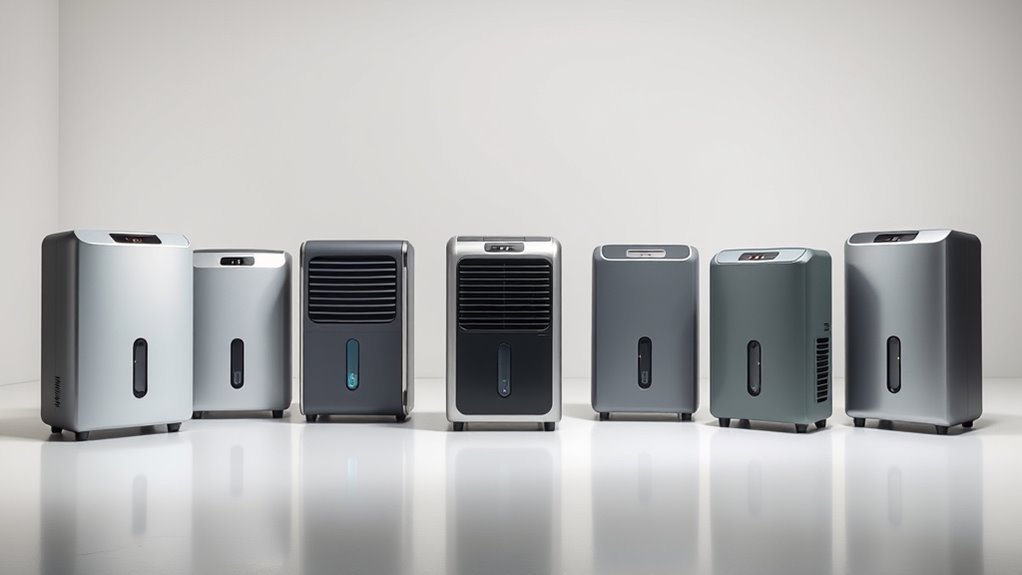
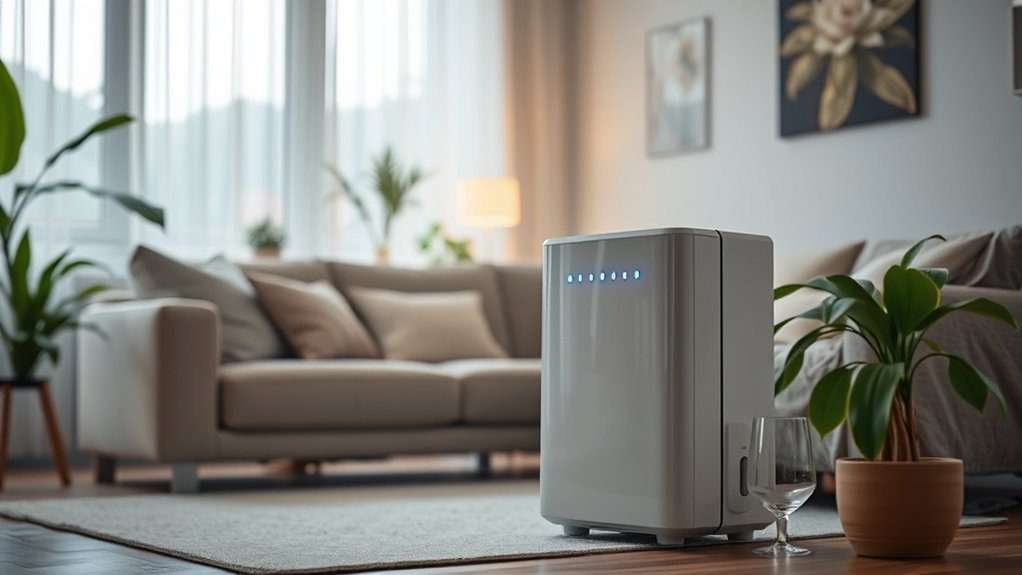
The best dehumidifier for a kid’s room should be quiet, simple to maintain, and appropriately sized for the actual moisture problem. The seven compact models below are best suited to mild humidity in enclosed bedrooms, closets, and similar small spaces. They are not substitutes for a full-size compressor dehumidifier when a room stays very damp, has visible condensation, or has an active leak.
Quick verdict: The KeepGlad 98OZ is the most complete option here because it combines a humidity display, timer, washable filter, and drain-hose support. The TABYIK 35OZ is a simpler compact choice for a small bedroom, while the TENKER 77OZ offers a larger tank for families who want less frequent emptying.
Important: Use a separate hygrometer and aim for roughly 30% to 50% relative humidity. Do not keep lowering humidity just because the unit can run continuously.
How these picks were assessed:
- Suitability for a child’s bedroom or another enclosed small room
- Tank-full automatic shutoff, sleep mode, timers, and humidity controls
- Noise claims, portability, drainage, and cleaning requirements
- Honest limitations of compact thermoelectric or semiconductor designs
These recommendations are based on listed specifications and use-case fit, not hands-on laboratory testing. Confirm the current Amazon listing and product manual before ordering.
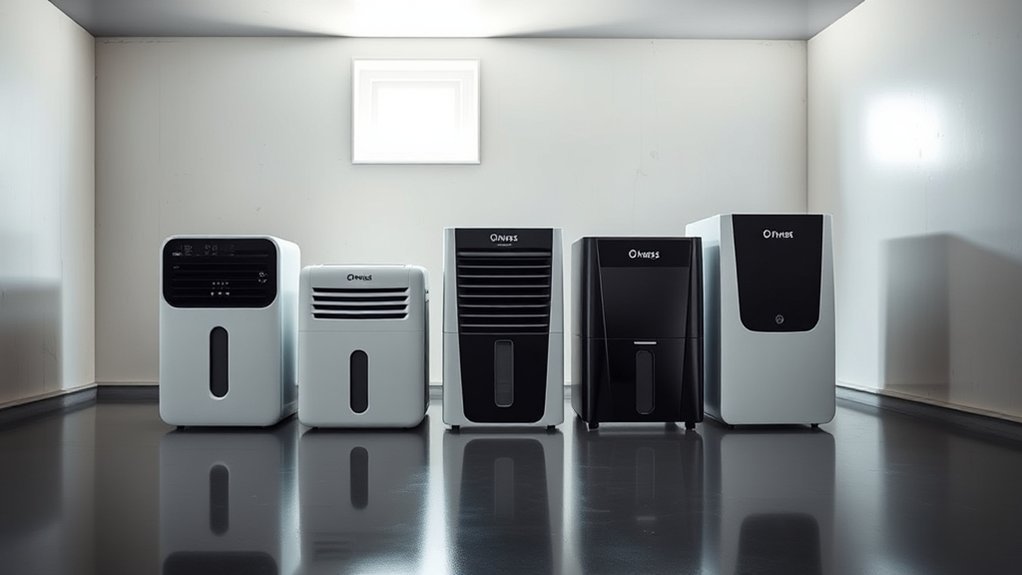
Quick Comparison
| Product | Tank | Key feature | Best fit | Amazon |
|---|---|---|---|---|
| KeepGlad 98OZ | 98 oz | Humidity display and drain hose | Parents wanting more controls | Check Price |
| TABYIK 35OZ | 35 oz | Compact 28 dB claim | Small bedrooms and closets | Check Price |
| Deyagoo DY501 | 50 oz / 1,500 mL | Simple controls and auto-off | Light moisture in a compact room | Check Price |
| Windangel 44OZ | 44 oz | Three modes and four timers | Families wanting scheduling options | Check Price |
| NeedDuck 44OZ | 44 oz | Auto-defrost and timer settings | Small rooms with changing temperatures | Check Price |
| TENKER 77OZ | 77 oz | Larger tank and sleep mode | Less frequent tank emptying | Check Price |
| ToLife 95OZ | 95 oz | Large tank and two speeds | Mild humidity in a larger enclosed room | Check Price |
KeepGlad 98OZ Dehumidifier — Best Overall Controls
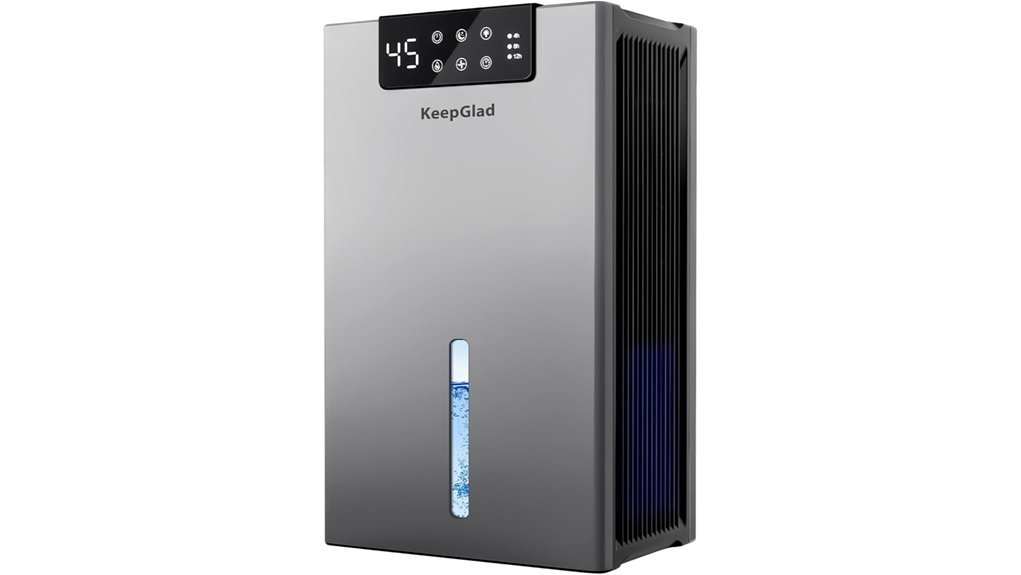
The KeepGlad 98OZ Dehumidifier is the most feature-rich option in this group. Its humidity display, timer, adjustable fan settings, washable filter, and drain-hose support make it easier to monitor and manage mild bedroom humidity than a basic one-button model.
The manufacturer advertises coverage up to 1,000 square feet, but that number should not be treated as a guarantee. This is still a compact semiconductor unit, so it is a better match for an enclosed bedroom with mild moisture than for a wet basement or a room with persistent condensation.
Why you’ll like it: The display and drainage option reduce guesswork and daily maintenance.
Best For: Parents who want visible humidity information, a timer, and the option to use continuous drainage.
Who Should Avoid It: Anyone dealing with leaks, wet walls, standing water, or a large high-humidity space that needs a compressor dehumidifier.
Pros:
- Humidity display and adjustable settings support more deliberate moisture control.
- Drain-hose option can reduce manual tank emptying when a safe drain is available.
- Washable filter and timer improve everyday convenience.
Cons:
- The 1,000-square-foot claim may overstate real-world performance in cooler or less humid conditions.
- Ambient lighting may need to be switched off at bedtime.
- It remains a compact unit rather than a high-capacity dehumidifier.
TABYIK 35OZ Dehumidifier — Best Compact Pick
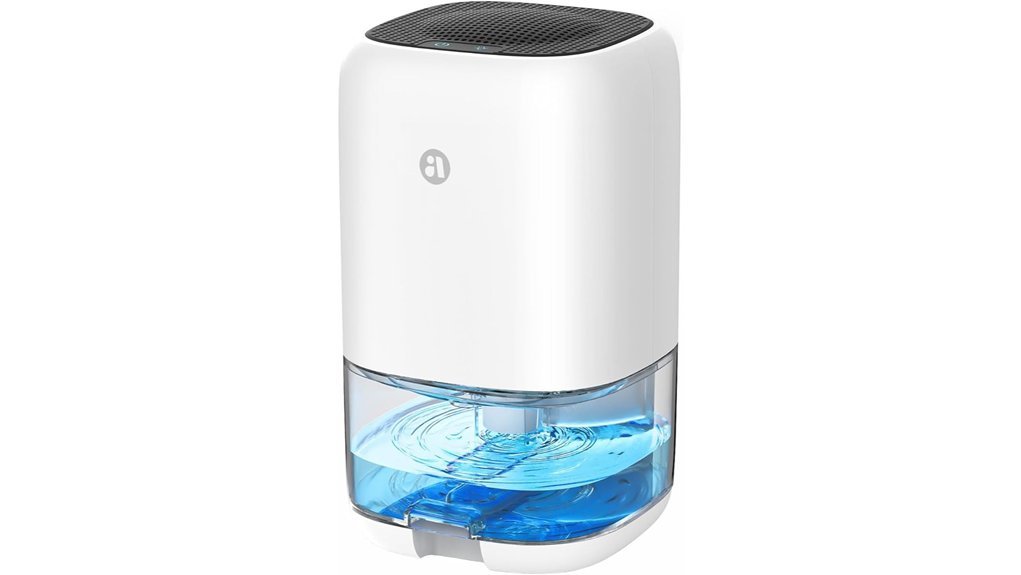
The TABYIK 35OZ Peltier dehumidifier is a straightforward option for a small, enclosed bedroom, closet, bathroom, or RV. The listing claims up to 16 ounces of water collection per day under hot, highly humid test conditions, so normal bedroom performance may be lower.
Its transparent tank makes the water level easy to see, and the tank-full automatic shutoff helps prevent overflow. The claimed 28 dB operating level is attractive for sleep spaces, although actual sound can vary with placement and room acoustics.
Why you’ll like it: It is compact, easy to move, and simple to monitor.
Best For: A small bedroom with light seasonal humidity and limited floor or shelf space.
Who Should Avoid It: Families who need automatic humidity targeting, continuous drainage, or stronger moisture removal.
Pros:
- Compact footprint and built-in handle make relocation easy.
- Transparent tank and tank-full shutoff simplify routine use.
- Low listed noise level suits bedrooms and study areas.
Cons:
- Moisture-removal performance falls as temperature and humidity decrease.
- No built-in humidistat for selecting a precise target humidity.
- The 35-ounce tank still requires regular emptying and cleaning.
Deyagoo DY501 1500mL Dehumidifier — Best Simple Option
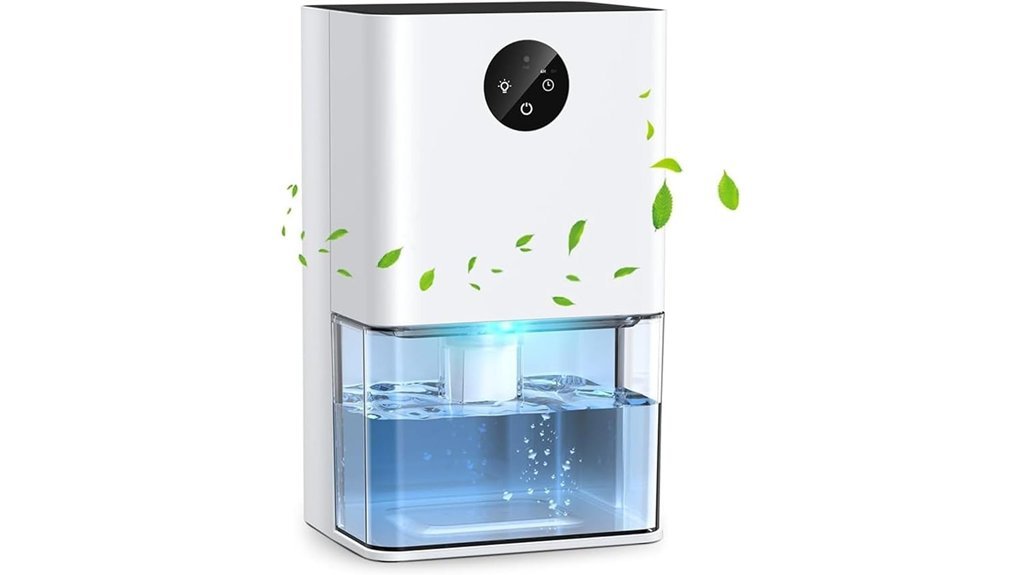
The Deyagoo DY501 uses a 1,500 mL (about 50-ounce) tank and is marketed for spaces up to 300 square feet. Its listing claims moisture collection of up to 300 mL per day under warm, humid test conditions. That makes it most appropriate for mild dampness rather than a room with a serious moisture problem.
The controls are simple, the tank-full shutoff reduces overflow risk, and the listed 30 dB sound level is suitable for buyers prioritizing quiet operation. The seven-color light is optional decoration rather than a moisture-control feature.
Why you’ll like it: It balances a moderately sized tank with uncomplicated operation.
Best For: A small child’s room, closet, or RV that needs light moisture control.
Who Should Avoid It: Buyers who need a humidistat, drain hose, or verified high-capacity performance.
Pros:
- Simple setup and automatic tank-full shutoff.
- Compact design is easy to reposition.
- Larger tank than many entry-level mini units.
Cons:
- Maximum daily extraction is modest.
- No continuous-drain option is listed.
- Tank and air openings require regular cleaning.
Windangel 44OZ Dehumidifier — Best Timer Options
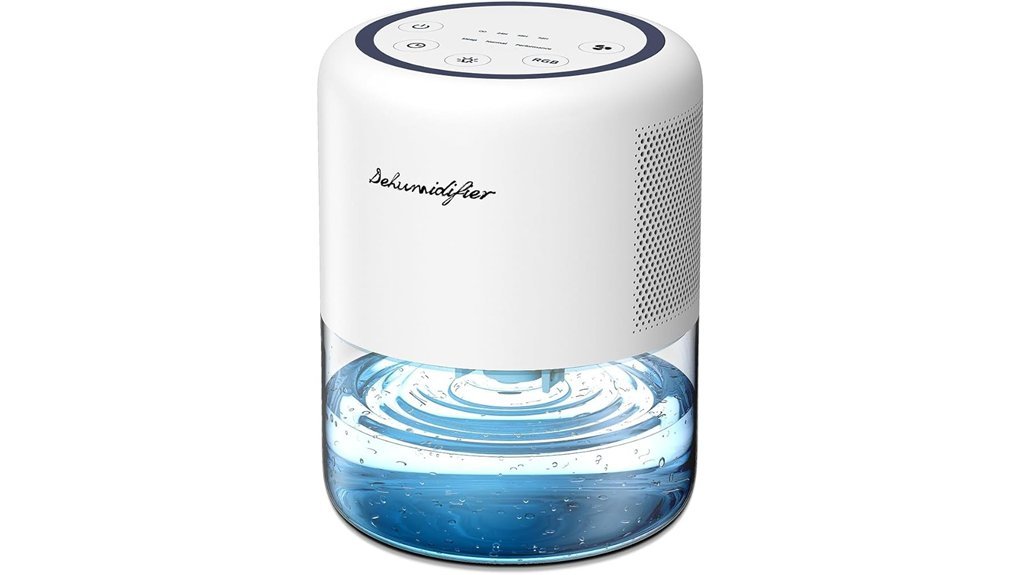
The Windangel 44OZ Small Dehumidifier is designed for compact spaces and is advertised for rooms up to 215 square feet. Its listed maximum collection rate is 11.8 ounces per day under warm, high-humidity conditions, so it should be viewed as a light-duty unit.
Three operating modes, four timer settings, tank-full shutoff, and selectable lighting give it more scheduling flexibility than a one-speed model. The sleep setting reduces distraction, but the exact noise level should be confirmed on the current listing because published figures can vary.
Why you’ll like it: The timer and mode choices make it easier to fit operation around sleep and play schedules.
Best For: Parents who want scheduled use in a small room or closet.
Who Should Avoid It: Anyone expecting a compact unit to correct heavy dampness or dehumidify an open floor plan.
Pros:
- Multiple modes and timer settings.
- Compact, lightweight design.
- Tank-full automatic shutoff.
Cons:
- Limited daily water removal.
- Advertised coverage assumes favorable conditions.
- Lighting may be unnecessary in a dark bedroom.
NeedDuck 44OZ Dehumidifier — Best With Auto-Defrost
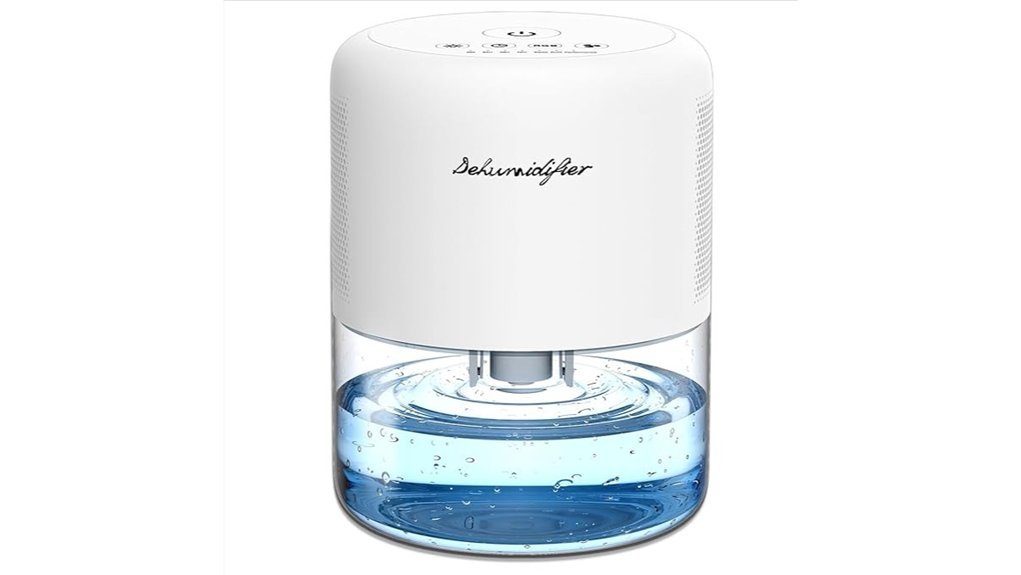
The NeedDuck 44OZ Dehumidifier combines a compact 44-ounce tank with automatic shutoff, automatic defrost, three operating modes, four timer settings, and selectable lighting. The listing associates it with spaces around 215 square feet, which is a more realistic use case than treating it as a whole-home appliance.
Automatic defrost may help protect operation when the internal cold surface begins to frost, but compact semiconductor units still become less effective as room temperature drops. Use a hygrometer rather than relying on runtime alone.
Why you’ll like it: It offers several control options without taking up much room.
Best For: A compact bedroom where changing temperatures and scheduled operation matter.
Who Should Avoid It: Buyers who need continuous drainage or a precise digital humidistat.
Pros:
- Automatic defrost and tank-full shutoff.
- Multiple timer and operating-mode choices.
- Small footprint for a shelf or dresser placed out of a child’s reach.
Cons:
- No clearly stated high-capacity moisture-removal rate.
- Manual tank emptying is required.
- Compact performance may be insufficient in a persistently damp room.
TENKER 77OZ Dehumidifier — Best Larger-Tank Pick
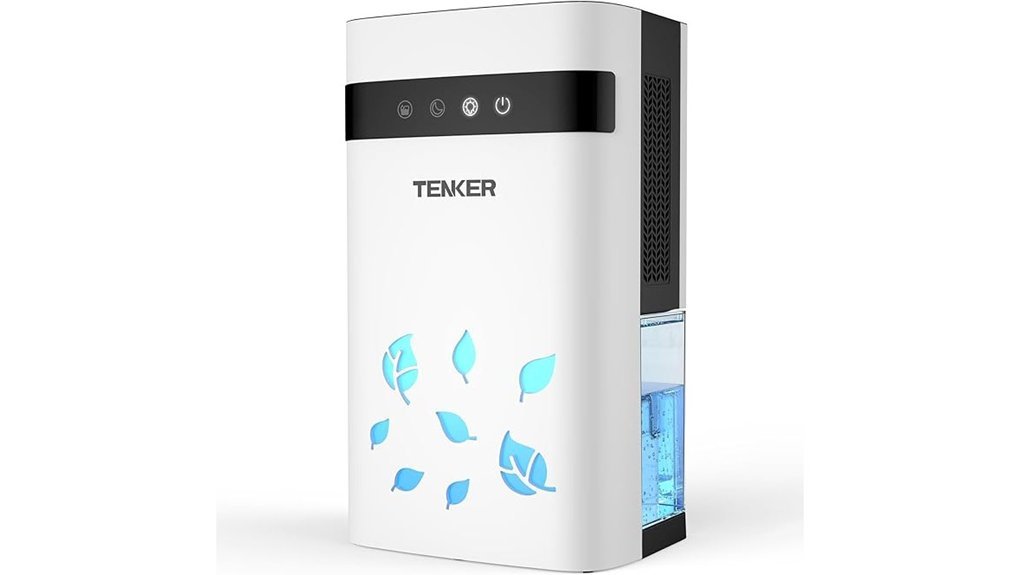
The TENKER Dehumidifier pairs a 77-ounce tank with dual-speed operation, a sleep mode, tank-full shutoff, and seven lighting choices. The manufacturer claims up to 35 ounces of collection per day in a closed room at 86°F and 80% relative humidity; normal bedroom results can be substantially lower.
Its larger tank can reduce emptying frequency compared with 35- or 44-ounce models. However, the lack of a listed continuous-drain connection means an adult still needs to check, empty, and clean it regularly.
Why you’ll like it: The larger reservoir is convenient for light but recurring humidity.
Best For: Families who prefer a larger tank and a quieter low-speed mode.
Who Should Avoid It: Anyone who needs hose drainage, automatic target-humidity control, or strong cold-room performance.
Pros:
- 77-ounce tank reduces the frequency of emptying.
- High-speed and sleep modes support different times of day.
- Tank-full shutoff helps prevent overflow.
Cons:
- No continuous-drain option is listed.
- The 1,000-square-foot marketing claim should be treated cautiously.
- Maximum extraction figures are based on unusually warm, humid test conditions.
ToLife 95OZ Dehumidifier — Best Portable Large-Tank Option
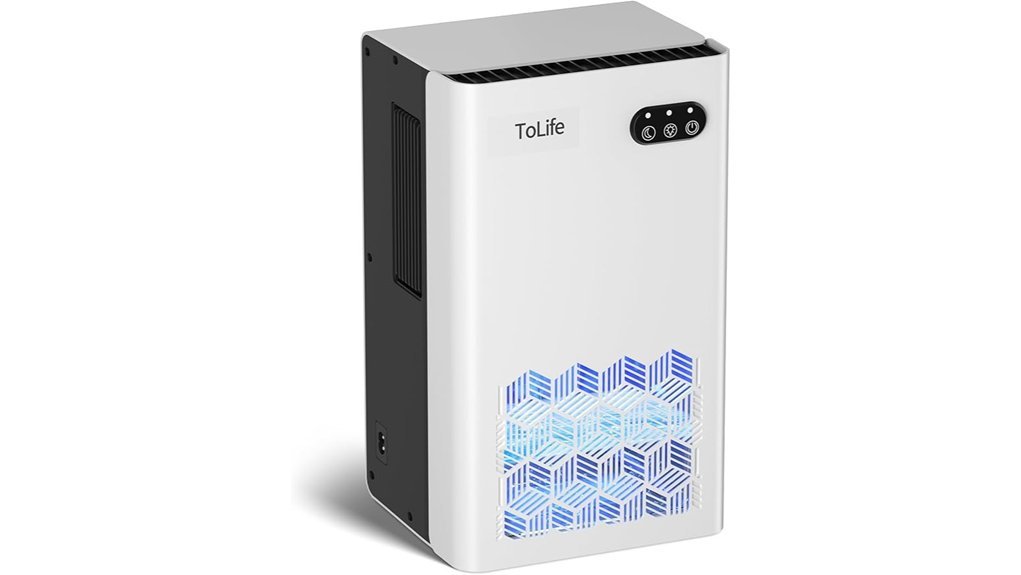
The ToLife Dehumidifier has a 95-ounce tank, two speed settings, tank-full automatic shutoff, and selectable LED lighting. At about 5.5 pounds, it is portable enough for an adult to move between enclosed rooms when needed.
Although the listing advertises use in spaces up to 1,000 square feet, the article should not imply that this compact semiconductor model will keep every 1,000-square-foot area below a fixed humidity level. Room temperature, starting humidity, air leakage, and moisture sources all affect performance.
Why you’ll like it: The large tank provides more collection space in a portable cabinet.
Best For: Mild humidity in a larger enclosed bedroom where a compact unit is preferred.
Who Should Avoid It: Buyers with heavy condensation, a cold room, or a large open space.
Pros:
- 95-ounce tank can reduce emptying frequency.
- Portable design and two operating speeds.
- Automatic shutoff when the tank is full.
Cons:
- No verified daily extraction figure is clearly stated in the source material.
- Advertised area coverage may not reflect real-world moisture load.
- Lighting may be distracting unless it can be disabled.
Factors to Consider When Choosing a Dehumidifier for a Kid’s Room
A child’s room needs balanced humidity, not simply the longest possible runtime. Compare the actual moisture problem, controls, placement, tank maintenance, and daily extraction rate before relying on an advertised square-foot number.
Measure Humidity First
Use a separate hygrometer to confirm that the room is genuinely humid. The U.S. Environmental Protection Agency generally recommends keeping indoor relative humidity between 30% and 50%. If the room is already in that range, a dehumidifier may not be necessary. See the EPA indoor air guidance.
Room Size and Moisture Load
Do not size a unit by floor area alone. A small closed bedroom with mild summer humidity is very different from a room with wet walls, frequent window condensation, or a roof leak. Compact semiconductor units are for light moisture removal. ENERGY STAR sizing guidance for genuinely damp rooms is based on pints removed per day, not tank volume or a marketing coverage claim. See the ENERGY STAR dehumidifier guide.
Noise Level
Listed noise figures around 28 to 30 dB can be useful for comparison, but they are manufacturer claims measured under specific conditions. A hard surface, nearby wall, full tank, or high-speed setting may make a unit sound louder. Place it securely away from the bed and confirm that sleep mode does not disable needed safety functions.
Humidity Controls
A humidity display or adjustable humidistat is more useful than simply running the unit nonstop. Models without a humidistat should be paired with a separate hygrometer. Stop or reduce operation if the room drops below the target range or feels uncomfortably dry.
Safety and Placement
Look for tank-full automatic shutoff, a stable base, intact power cord, and controls an adult can manage. Keep the cord and tank out of reach, never place the unit where a child can climb on furniture to reach it, and do not put it beside a crib, under loose fabric, or near a sink, bathtub, or humidifier.
Tank Size and Drainage
A larger tank does not mean faster moisture removal; it only holds more collected water. Continuous drainage can be convenient, but the hose must slope safely to a suitable drain and remain inaccessible to children. For tank operation, empty and rinse the reservoir before stale water or residue builds up.
Operating Temperature
Thermoelectric and semiconductor dehumidifiers usually work best in warm, humid rooms. Their extraction rate can fall sharply in cooler conditions. If the bedroom is cool and remains damp, compare a properly sized compressor or desiccant dehumidifier instead of assuming a mini unit will solve the problem.
Maintenance Requirements
Follow the product manual for filter cleaning, tank washing, and air-inlet care. Unplug the unit before cleaning. Check the tank frequently, keep the intake and outlet free of dust, and inspect the cord and adapter for damage. An adult should handle all emptying and maintenance.
When a Mini Dehumidifier Is Not Enough
A dehumidifier cannot repair a leak or remove existing mold. If you see damp drywall, peeling paint, repeated condensation, musty materials, or visible mold, identify and correct the moisture source. The EPA notes that moisture control is the key to mold control and recommends drying wet materials quickly.
Frequently Asked Questions
What Is the Ideal Humidity Level for a Child’s Room?
A practical target is generally 30% to 50% relative humidity. Use a hygrometer instead of guessing. During cold weather, the comfortable upper limit may need to be lower if windows begin to collect condensation.
Are Dehumidifiers Safe for Infants and Toddlers?
A properly maintained dehumidifier can be used in a child’s room, but it must be placed where the child cannot touch, tip, climb toward, or pull its cord. Keep the tank secure, follow the manual, and do not assume automatic shutoff makes the unit childproof.
Can a Dehumidifier Reduce Allergens?
Lowering excessive humidity can make the room less favorable for mold and dust mites, but a dehumidifier does not remove every allergen and is not a medical treatment. Cleaning, ventilation, leak repair, and appropriate healthcare advice may also be needed.
Do I Need a Separate Hygrometer?
Yes, especially when the dehumidifier does not have a reliable built-in humidity display. A separate meter helps you avoid both excessive humidity and unnecessary over-drying.
How Often Should I Clean the Dehumidifier?
Follow the manufacturer’s manual. In regular use, inspect the tank every few days, rinse it before residue develops, and clean washable filters and air openings as directed. Unplug the appliance first and have an adult perform the work.
Should a Dehumidifier Run All Night?
Only when the manual permits unattended operation, the unit is safely placed, and the room remains above the target humidity. A timer, humidistat, or separate hygrometer can prevent unnecessary overnight operation.
Final Recommendation
Best overall controls: Choose the KeepGlad 98OZ for its humidity display, timer, washable filter, and drain-hose option.
Best compact choice: Choose the TABYIK 35OZ for a small enclosed bedroom with light humidity.
Best larger tank: Choose the TENKER 77OZ when less frequent emptying matters more than advanced humidity controls.
Whichever model you select, measure the room first, keep the appliance out of a child’s reach, and treat advertised coverage as a starting point rather than a guarantee. For persistent humidity above 60%, visible mold, or an active leak, address the moisture source and consider a properly sized higher-capacity dehumidifier.