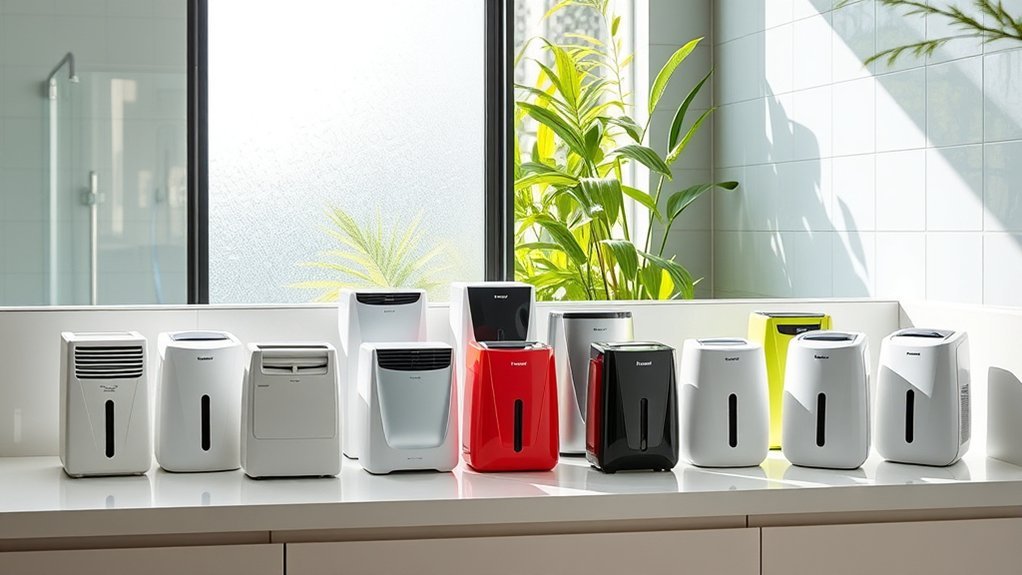
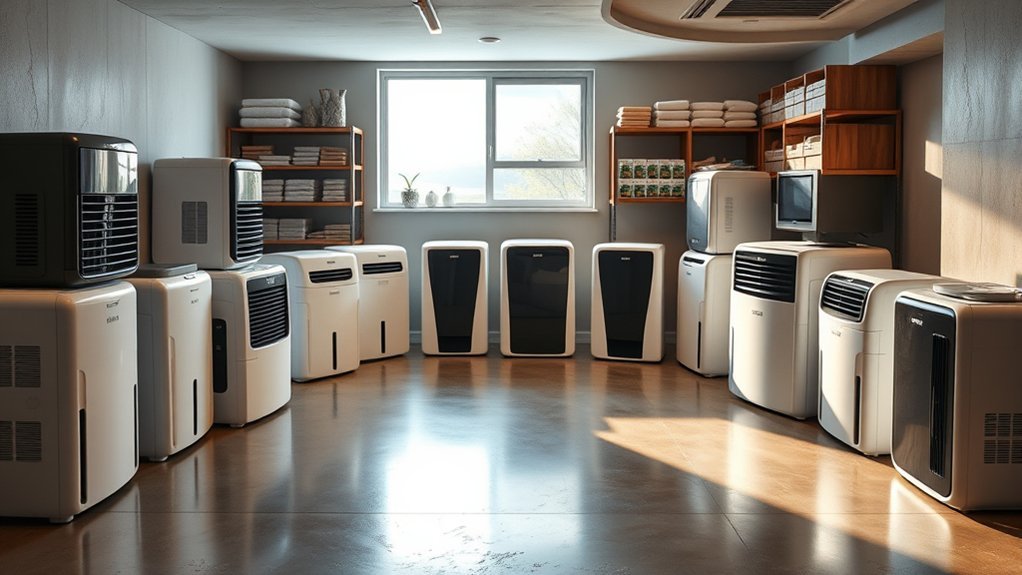
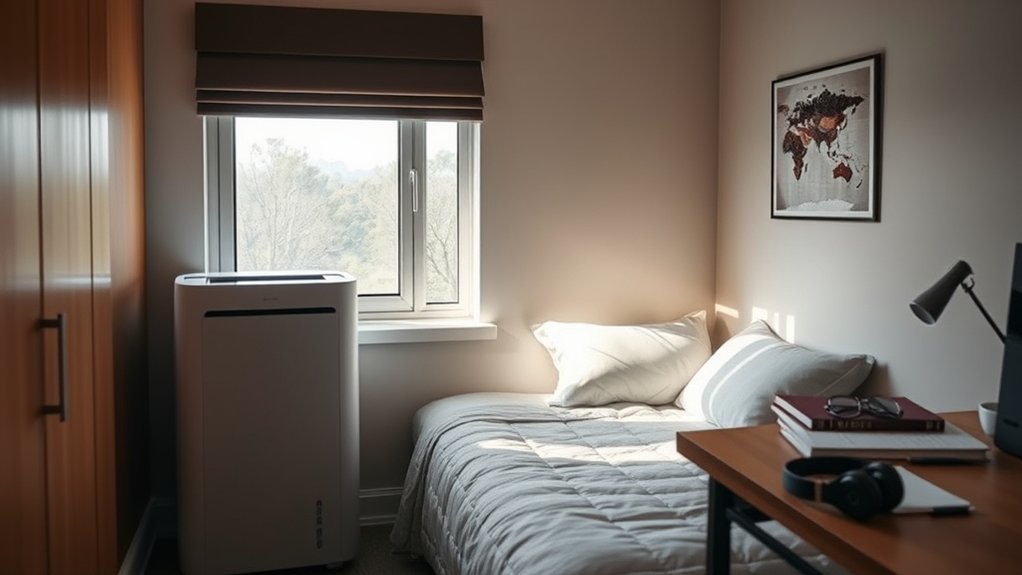
A piano responds best to a stable room environment, so the right dehumidifier is not simply the model with the biggest coverage number. For most piano rooms, prioritize an adjustable humidistat, enough capacity for the actual moisture load, manageable noise, and reliable drainage. Compact thermoelectric units can help in small, mildly humid rooms, while compressor models are usually the better choice for persistent dampness or larger spaces.
Important: Coverage and extraction figures are manufacturer-listed maximums, often measured in warm and very humid test conditions. Always confirm the reading near the piano with a separate hygrometer, follow your piano maker’s care guidance, and avoid directing dry airflow at the instrument.
Quick Comparison of the Best Dehumidifiers for Piano Rooms
| Product | Best For | Type | Key Limitation | Amazon |
|---|---|---|---|---|
| Waykar 34-Pint Energy Star Dehumidifier Best Overall |
Piano rooms needing compressor-based moisture control and continuous drainage | Compressor | May be more unit than a tiny room needs | Check Details |
| AEOCKY 50-Pint Compressor Dehumidifier Best for Medium to Large Rooms |
Larger or persistently humid piano rooms | Compressor | Large footprint for a compact music room | Check Details |
| AEOCKY 4,500 Sq. Ft. Smart Dehumidifier Best High-Capacity Pick |
Very large, open-plan, or exceptionally humid spaces | Compressor | Oversized for most dedicated piano rooms | Check Details |
| 75 oz Compact Dehumidifier Best Compact Tank Capacity |
Small rooms with mild humidity | Thermoelectric | Light-duty moisture removal | Check Details |
| TABYIK 35 oz Dehumidifier Best Quiet Compact Pick |
Small, enclosed piano rooms | Thermoelectric | No target-humidity control | Check Details |
| Deyagoo 1500ML Dehumidifier Best Budget Compact Pick |
Small rooms with mild seasonal humidity | Thermoelectric | Only 300 ml-per-day maximum | Check Details |
| Windangel 44 oz Dehumidifier Best Controls Among Mini Units |
Small rooms needing timers and operating modes | Thermoelectric | Sleep mode listed up to 44 dB | Check Details |
| SANVINDER 25 oz Dehumidifier Best for Small Rooms |
Small, closed piano rooms | Thermoelectric | No humidistat or drain hose | Check Details |
| Eva-Dry EDV-1100 Best for Very Small Rooms |
Very small rooms up to the listed 122 sq. ft. | Thermoelectric | Up to 16 oz per week only | Check Details |
How We Selected These Piano-Room Dehumidifiers
We prioritized products that can realistically support a piano room, then compared humidity control, capacity, drainage, noise, room-size fit, portability, and maintenance. Compressor models rank higher for dependable room control because they remove more moisture and usually include an adjustable humidistat. Thermoelectric models remain useful for small, closed rooms with mild humidity, but they should not be treated as equal-capacity alternatives.
Waykar 34-Pint Energy Star Dehumidifier — Best Overall
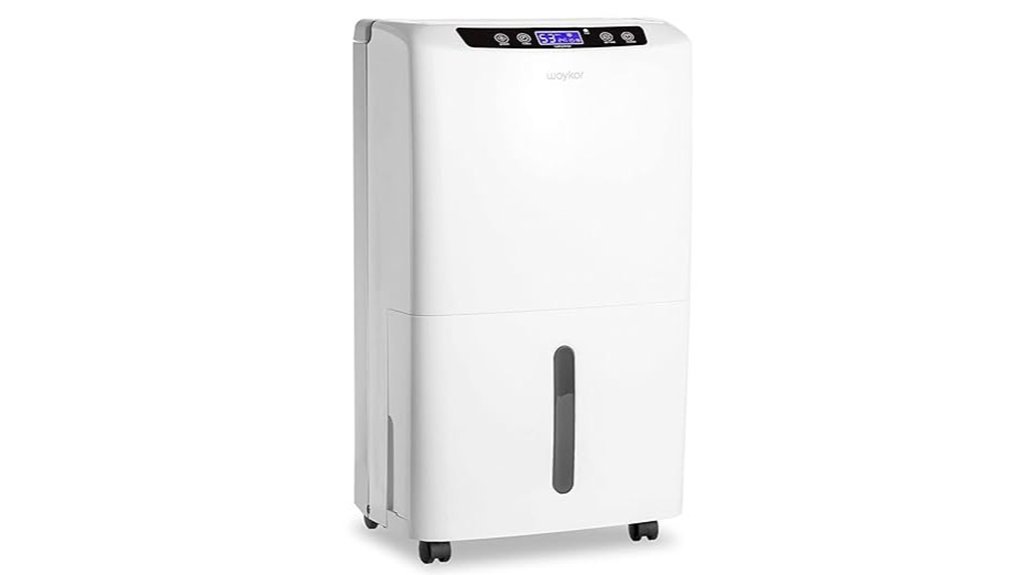
The Waykar 34-Pint model is the strongest all-around match for many piano rooms because it combines a compressor, adjustable humidity settings, automatic defrost, a removable tank, and a drain-hose option. The manufacturer lists coverage up to 2,000 sq. ft. and maximum removal of 34 pints per day under hot, very humid test conditions. Real-world extraction will usually be lower, so room temperature, air leakage, and starting humidity still matter.
Best For: Piano rooms that need dependable compressor-based moisture control, an adjustable humidistat, and optional continuous drainage.
Why You’ll Like It: Unlike basic thermoelectric units, this model can cycle around a selected humidity setting. That makes it easier to avoid both prolonged dampness and unnecessary over-drying when paired with a separate, accurate hygrometer.
Who Should Avoid It: Very small, already-stable rooms where a compressor unit would be unnecessarily large or audible.
Pros:
- Adjustable humidity control is better suited to protecting an acoustic piano than always-on mini units.
- Drain hose and removable tank support either continuous or manual drainage.
- Automatic defrost helps maintain operation in cooler rooms.
Cons:
- The tank may fill quickly in very humid conditions if continuous drainage is not used.
- Compressor noise may be noticeable during quiet recording or practice.
- The advertised coverage and pint rating are maximum-condition figures, not guaranteed room performance.
AEOCKY 50-Pint Compressor Dehumidifier — Best for Medium to Large Rooms
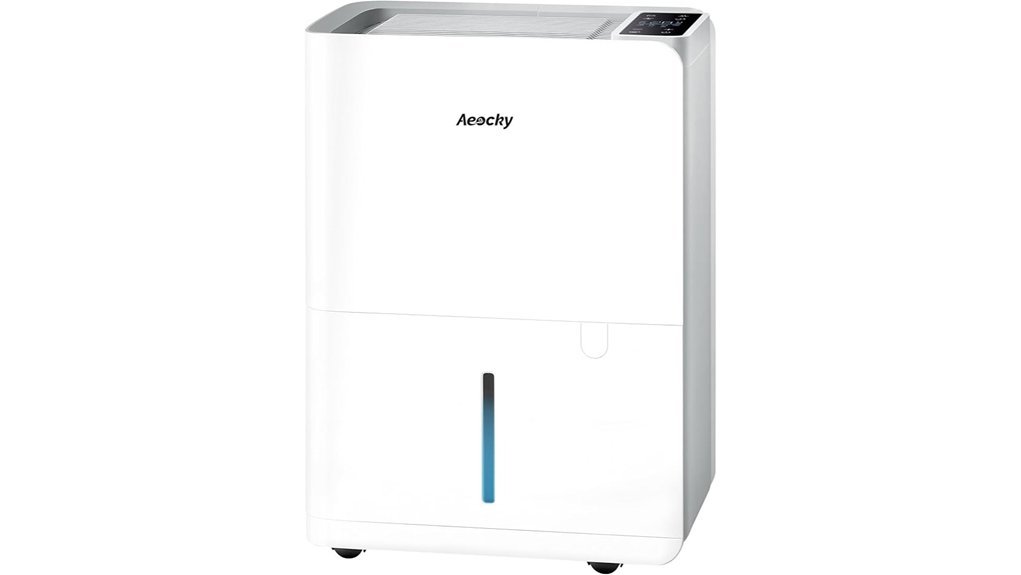
The AEOCKY BOREAS-001 is a compressor dehumidifier with a manufacturer-listed maximum of 50 pints per day, coverage up to 3,500 sq. ft., a 0.8-gallon tank, adjustable humidity control, and a drain hose. Its higher capacity can be useful when the room starts very damp or exchanges air with a larger open area.
Best For: Larger piano rooms, humid ground-floor spaces, or rooms where a small thermoelectric unit cannot hold a stable reading.
Why You’ll Like It: The built-in humidistat can reduce constant manual monitoring, while the drain option is helpful for long humid seasons. For piano care, set a moderate target and confirm the room reading with a separate hygrometer instead of relying on capacity alone.
Who Should Avoid It: Small closed rooms where the unit would cycle frequently, take up too much floor space, or create more sound than desired.
Pros:
- Compressor-based removal is more suitable for persistent room humidity than passive or tiny Peltier models.
- Adjustable humidity control, timer, child lock, and drain-hose support add flexibility.
- Higher capacity offers more headroom for open or very damp spaces.
Cons:
- May be oversized for a typical compact music room.
- Requires filter cleaning and either tank emptying or a suitable drain location.
- Manufacturer noise and coverage claims should be treated as best-case specifications.
AEOCKY 4,500 Sq. Ft. Smart Dehumidifier with Drain Hose — Best High-Capacity Pick
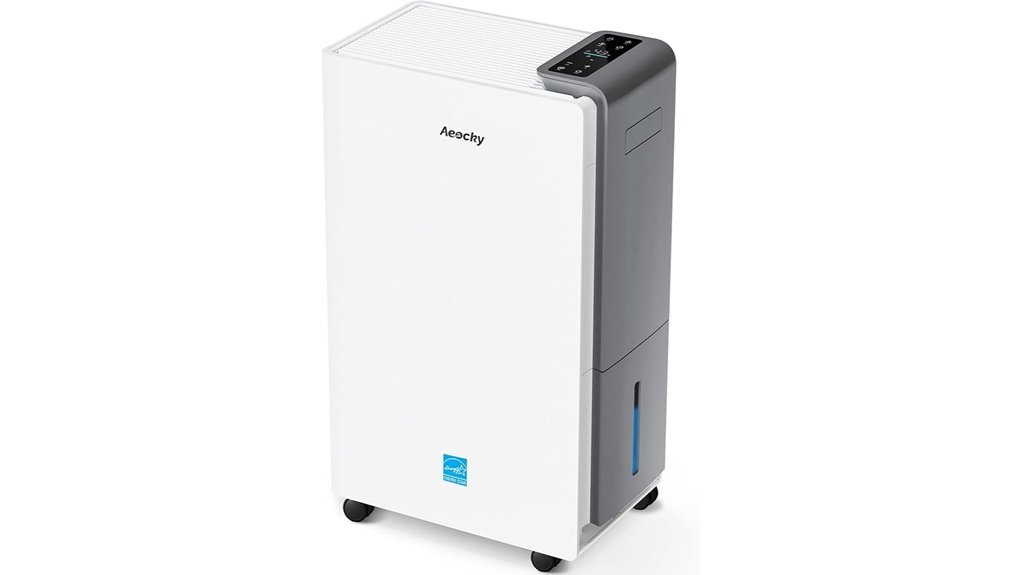
The AEOCKY RHEA-001 is the largest option in this roundup. The listing describes adjustable humidity control, a 1.45-gallon tank, drain-hose support, and up to 80 pints per day under extreme test conditions. That capacity is far beyond what many dedicated piano rooms need, but it can make sense when the piano shares air with a basement, studio, or open living area.
Best For: Very large, open-plan, or persistently humid spaces that include a piano area.
Why You’ll Like It: Its high capacity and drainage options can address heavy moisture loads without relying on a tiny tank. The key is to use the humidistat conservatively and verify the actual room humidity near the piano.
Who Should Avoid It: Small rooms, dry-season use, or buyers who only need gentle maintenance dehumidification.
Pros:
- High moisture-removal capacity for large or difficult spaces.
- Adjustable humidity control, timer, child lock, and continuous-drain capability.
- Large tank reduces emptying frequency when a drain is unavailable.
Cons:
- Bulky and likely excessive for a small dedicated piano room.
- Higher-capacity compressor operation may be audible during quiet sessions.
- Seller energy-savings projections depend heavily on climate, runtime, and electricity rates and should not be treated as guaranteed.
75 oz Compact Dehumidifier for Home — Best Compact Tank Capacity
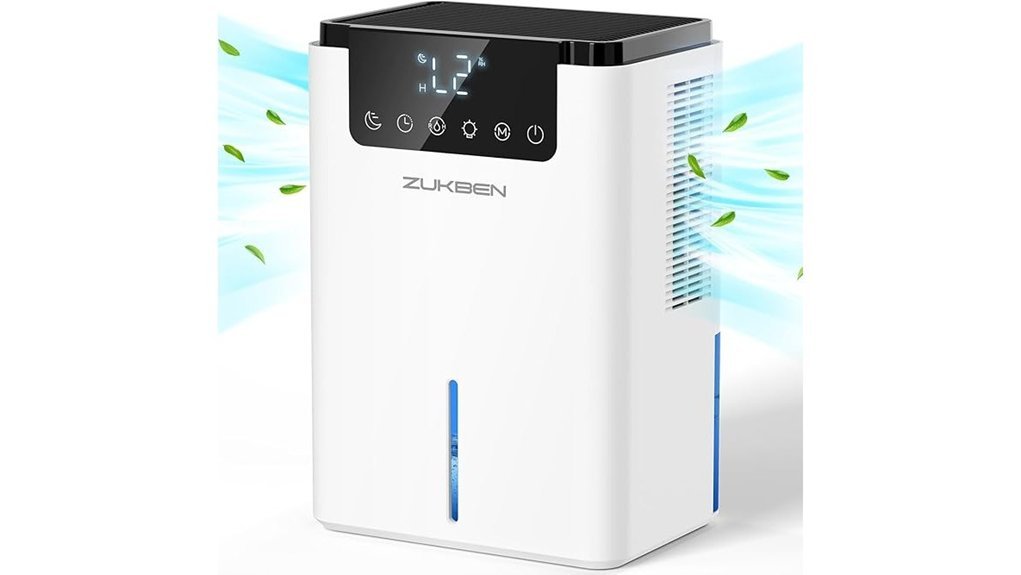
This compact thermoelectric model pairs a 75 oz tank with sleep mode, timer settings, automatic shut-off, and decorative lighting. The listing promotes coverage up to 500 sq. ft., but a mini thermoelectric unit is best viewed as a light-duty option for a small, closed room with mild humidity rather than a substitute for a compressor model in a damp climate.
Best For: Small piano rooms where low noise and a larger mini-unit reservoir matter more than rapid moisture removal.
Why You’ll Like It: The larger reservoir can reduce emptying compared with many small tabletop units. It is also easier to place away from the piano without taking up much floor space.
Who Should Avoid It: Basements, open rooms, or any space where humidity stays high despite air conditioning.
Pros:
- Large reservoir for a compact thermoelectric design.
- Sleep mode, timer, and auto shut-off support simple daily use.
- Small footprint and soft lighting suit bedrooms or music corners.
Cons:
- No true compressor-level moisture removal for severe humidity.
- Coverage claims may overstate practical performance in real rooms.
- Manual tank cleaning and emptying are still required.
TABYIK 35 oz Dehumidifier — Best Quiet Compact Pick
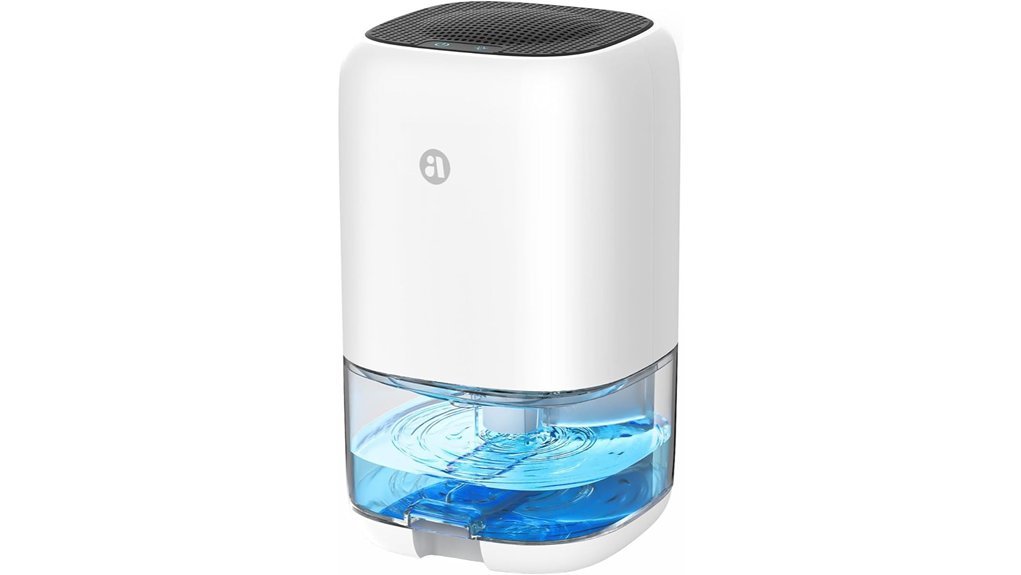
The TABYIK 35 oz unit is a compact thermoelectric dehumidifier with a manufacturer-listed 28 dB operating level, automatic shut-off, a transparent tank, and coverage up to 280 sq. ft. Its maximum removal claim is based on warm, humid test conditions, so expect less collection in cooler or moderately humid rooms.
Best For: Small, enclosed piano rooms where quiet operation and a light, portable design are priorities.
Why You’ll Like It: It is easy to move and unlikely to dominate a small room visually. A separate hygrometer is essential because this model does not offer the same humidity-target control as a full-size compressor dehumidifier.
Who Should Avoid It: Rooms with persistent RH above the desired range, open doors, high ceilings, or major moisture intrusion.
Pros:
- Compact and lightweight with a built-in handle.
- Low listed noise level is useful for practice spaces.
- Auto shut-off and transparent tank make routine use straightforward.
Cons:
- Light-duty moisture removal only.
- No continuous drain or precise humidistat control.
- Performance drops as temperature and humidity fall.
Deyagoo 1500ML Small Quiet Dehumidifier — Best Budget Compact Pick
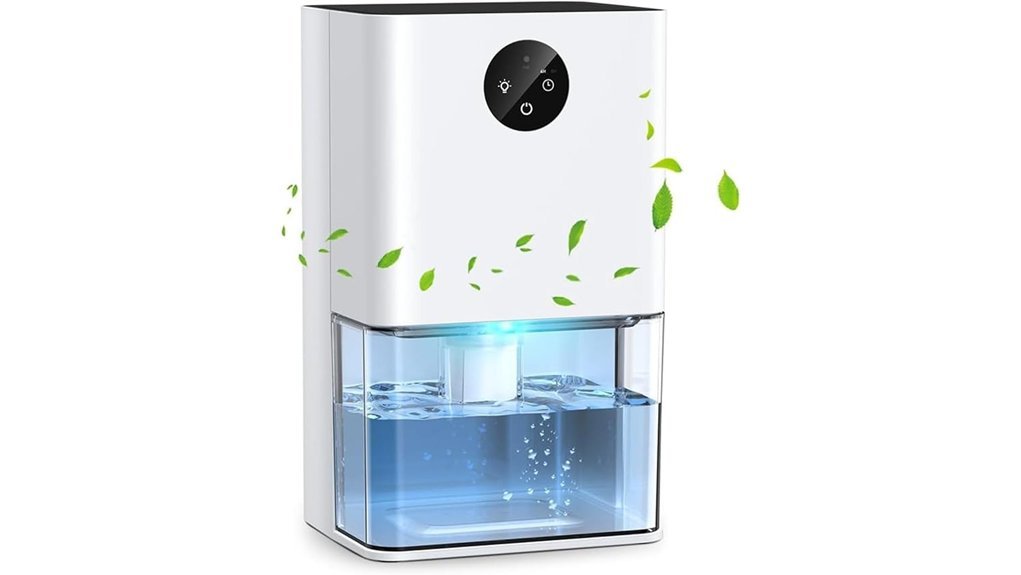
The Deyagoo DY501 uses thermoelectric cooling and has a 1500 ml transparent tank. The listing states a maximum collection rate of 300 ml per day at 86°F and 80% RH, coverage up to 300 sq. ft., and approximately 30 dB operation. Those are favorable-condition figures, so use a hygrometer to confirm that it is actually lowering the room to a safe, stable level.
Best For: A small piano room or music corner with mild seasonal humidity and limited floor space.
Why You’ll Like It: Its compact body, visible water level, and automatic shut-off make it simple to maintain. It is most convincing as a low-cost maintenance unit, not as a solution for a wet basement or open studio.
Who Should Avoid It: Very humid climates, large rooms, or buyers who need automatic target-humidity cycling.
Pros:
- Small footprint with a relatively large tank for its class.
- Quiet listed operation suits bedrooms and practice rooms.
- Auto shut-off helps prevent overflow when the tank fills.
Cons:
- Maximum 300 ml daily collection is modest compared with compressor units.
- No built-in precision humidistat or continuous drain.
- May run continuously without reaching the desired RH in difficult conditions.
Windangel 44 oz Portable Dehumidifier — Best Controls Among Mini Units
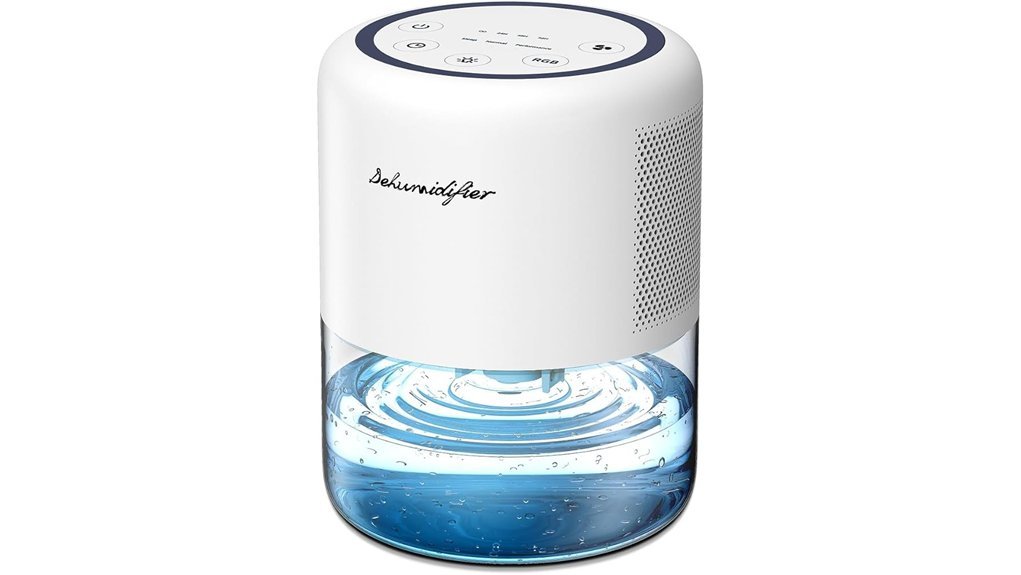
The Windangel 44 oz model offers three operating modes, timer settings, mood lighting, and a manufacturer-listed maximum removal rate of 11.8 oz per day at 86°F and 80% RH. It is marketed for spaces up to 215 sq. ft. and has a listed sleep-mode noise level up to 44 dB.
Best For: Small rooms where the user wants multiple operating modes, timer options, auto shut-off, and a portable design.
Why You’ll Like It: The added modes and timer make it more flexible than many one-button mini dehumidifiers. However, the claim that it maintains a specific humidity range should not replace an independent hygrometer reading.
Who Should Avoid It: Noise-sensitive recording rooms where even 44 dB may be noticeable, or rooms with a heavy moisture load.
Pros:
- Three modes and four timer settings provide useful control.
- 44 oz tank and auto shut-off reduce overflow risk.
- Portable size works well on a stable table or shelf away from the piano.
Cons:
- Sleep mode is not necessarily silent at the listed maximum noise level.
- No continuous drain and no verified precision humidistat.
- The advertised daily removal rate applies to warm, very humid test conditions.
SANVINDER 25 oz Dehumidifier — Best for Small Rooms
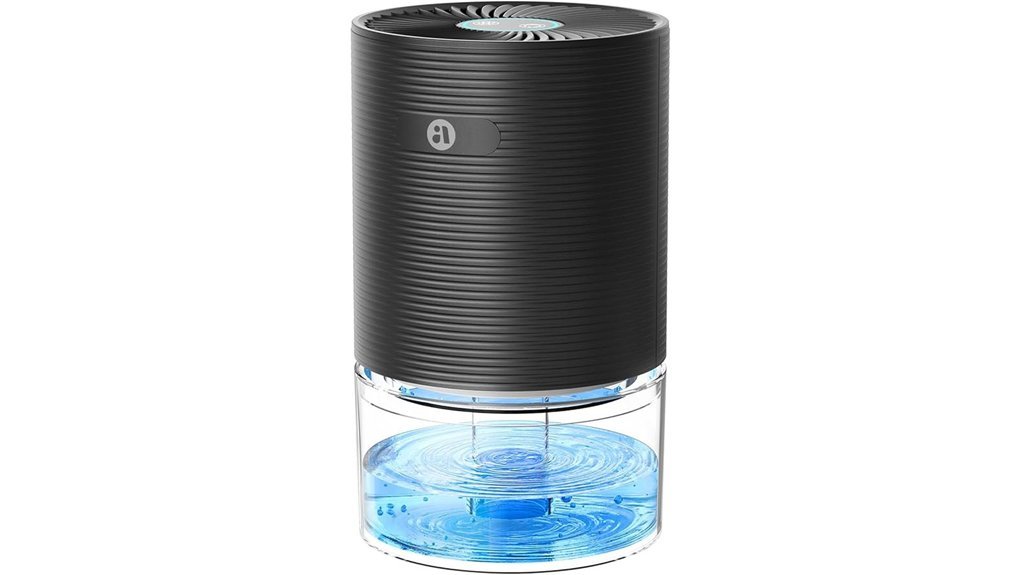
The SANVINDER is a 25 oz thermoelectric model marketed for areas up to 285 sq. ft. The seller lists up to 16 oz of water collection per day at 86°F and 80% RH, plus automatic shut-off and quiet operation. As with other mini units, actual collection falls as the room becomes cooler or less humid.
Best For: Small, closed piano rooms where simple one-speed operation is acceptable.
Why You’ll Like It: It is compact, easy to place, and uncomplicated to operate. It can help with mild moisture, but it should be judged by the hygrometer reading rather than by the amount of water visible in the tank.
Who Should Avoid It: Large or leaky rooms, severe humidity, or users who need adjustable target humidity.
Pros:
- Small footprint and straightforward controls.
- Automatic shut-off helps prevent tank overflow.
- Low power demand compared with compressor models.
Cons:
- The 25 oz tank can need frequent emptying in humid weather.
- No drain hose or adjustable humidistat.
- Coverage is limited, and the product listing overstated it as 320 sq. ft.
Eva-Dry EDV-1100 Whisper-Quiet Dehumidifier — Best for Very Small Rooms
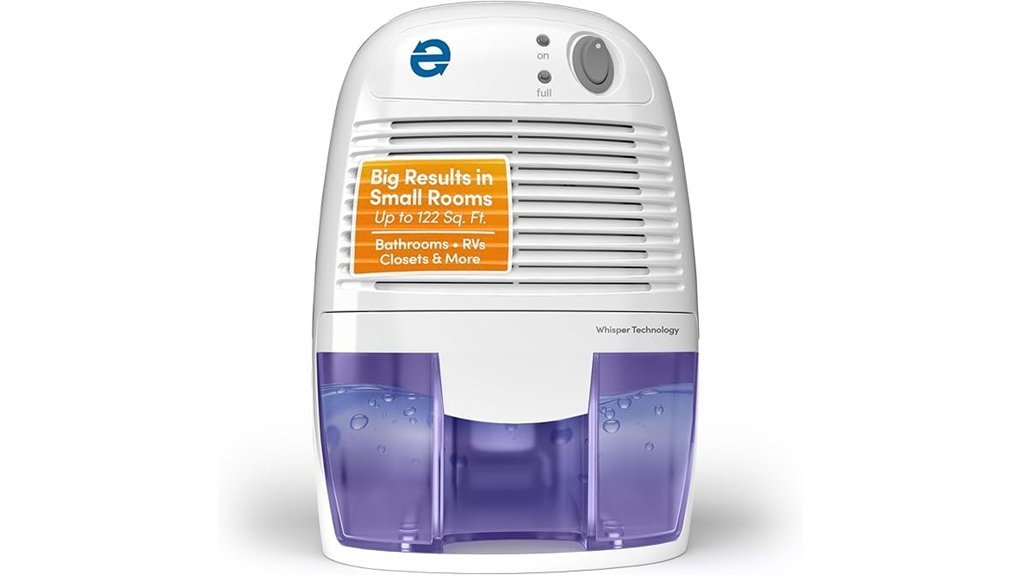
The Eva-Dry EDV-1100 is a compact thermoelectric model with a 16 oz reservoir, automatic shut-off, automatic restart after a power interruption, and a listed 33 dB noise level. The manufacturer states that it can absorb up to 16 oz per week when run continuously in warm, humid conditions.
Best For: Very small piano rooms or enclosed music spaces up to the manufacturer-listed 122 sq. ft.
Why You’ll Like It: Its modest output and small footprint can suit a tiny room that only needs gentle moisture reduction. It is not designed for cold spaces, large rooms, or humidity below 50%.
Who Should Avoid It: Any room larger than the stated coverage, temperatures below 50°F, or persistent high humidity that requires compressor capacity.
Pros:
- Compact size and low listed noise level.
- Auto shut-off and auto restart simplify unattended operation.
- Clear operating limits make it easier to judge fit.
Cons:
- Only light-duty removal, listed as up to 16 oz per week.
- No drain hose and no adjustable target humidity.
- Not recommended by the manufacturer below 50°F or below 50% RH.
Factors to Consider When Choosing a Dehumidifier for a Piano Room
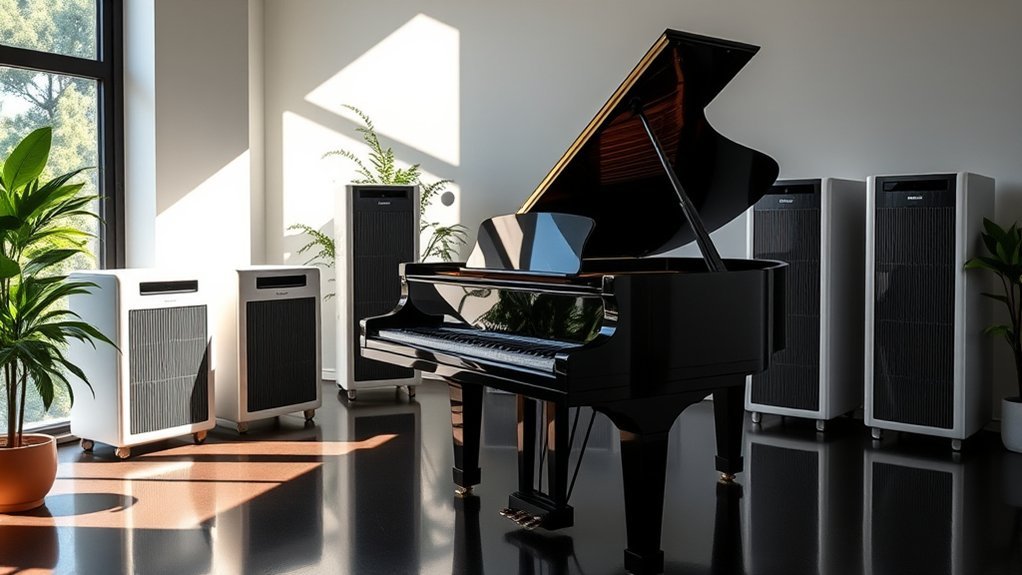
Stable Humidity Matters More Than a Single Number
Piano makers publish somewhat different acceptable ranges, but they consistently emphasize avoiding prolonged dampness, excessive dryness, and large seasonal swings. Use a dependable digital hygrometer near the piano and follow the guidance for your specific instrument. A moderate setting around the middle of your maker’s recommended range is safer than pushing the room as dry as possible.
Choose a Real Humidistat When Possible
A compressor dehumidifier with adjustable humidity control can cycle on and off around a chosen target. Many mini thermoelectric units simply run until switched off or until the tank fills. For piano care, that means a basic mini unit needs more manual monitoring and may fail to control a difficult room.
Match Capacity to the Moisture Load
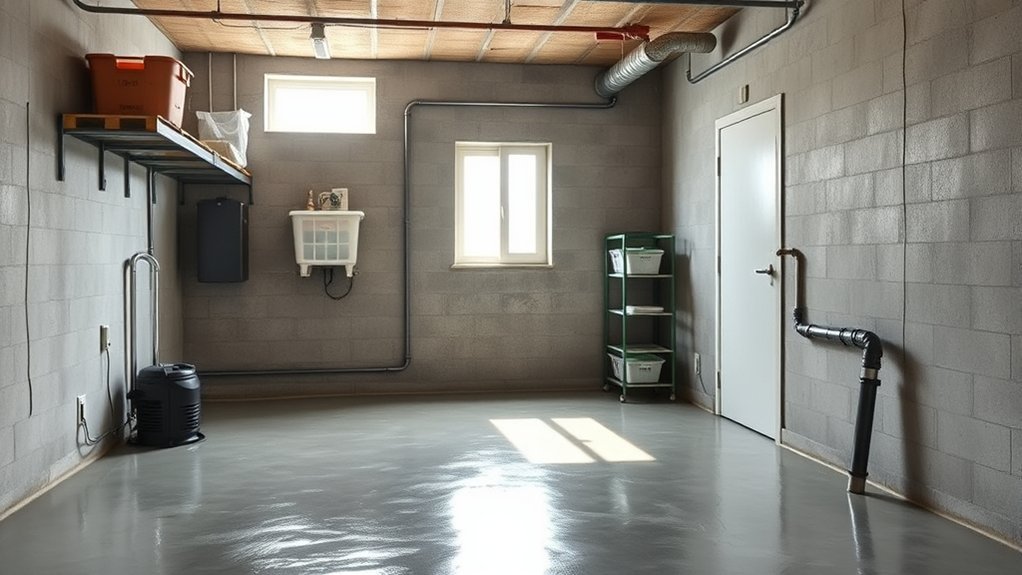
Square-foot coverage is only a rough marketing guide. Ceiling height, open doors, outdoor humidity, air-conditioning use, basement walls, and air leakage can change the required capacity. Select a larger compressor model when the room remains humid for hours, while a mini unit is better reserved for a small closed room that is only slightly above target.
Plan the Drainage Before You Buy
Continuous drainage is useful during long humid seasons because it prevents the unit from stopping when the tank fills. Confirm that the hose can run downhill to a safe drain unless the model includes a pump. For manual tanks, choose a size you can lift and empty comfortably.
Consider Practice and Recording Noise
Noise ratings are useful, but compressor tone, fan speed, floor vibration, and room acoustics also affect what you hear. Place the unit on a level surface, keep clearance around the intake and exhaust, and consider running it before practice if the sound is distracting.
Place It Safely Around the Piano
Do not aim hot or dry exhaust directly at the soundboard, case, keys, or action. Keep the dehumidifier on a stable floor or surface where a spill cannot reach the instrument, and leave the manufacturer-required clearance around air vents.
Prepare for Both Humid and Dry Seasons
A dehumidifier only removes moisture. In winter or dry climates, the room may instead need humidification. Continue using the hygrometer year-round and avoid leaving a dehumidifier running simply because it is present in the room.
Maintenance and Cleaning
Empty and wash the tank regularly, clean or replace the filter as directed, inspect the drain hose, and keep dust away from the intake. Unplug the unit before cleaning. Poor maintenance can reduce airflow, increase noise, and create odors.
- Measure the room and note whether doors stay open.
- Record RH at different times for several days.
- Decide whether you have a safe drain location.
- Check the lowest room temperature during humid months.
- Confirm the unit can be placed away from the piano’s direct airflow path.
Frequently Asked Questions
What Humidity Level Is Best for a Piano Room?
There is no single universal number for every piano and climate. Many owners aim for a stable reading around the mid-40s to mid-50s, but the safest approach is to follow the piano manufacturer’s guidance or ask a qualified piano technician. Stability matters as much as the exact target.
Can a Dehumidifier Damage a Piano?
Yes, if it over-dries the room or blows directly on the instrument. Use an independent hygrometer, avoid aggressive low settings, and stop dehumidifying when the room reaches the recommended range.
How Often Should a Dehumidifier Run in a Piano Room?
Run it according to the measured humidity, not a fixed daily schedule. A humidistat-controlled compressor model can cycle automatically. A basic mini unit requires regular checking because it may run continuously without reaching or holding the desired RH.
Is a Small Thermoelectric Dehumidifier Enough?
It may be enough for a small, closed room with mild humidity. It is usually not enough for an open room, basement, tropical climate, water intrusion, or consistently high RH. If the hygrometer does not move toward the target, step up to a compressor model.
Where Should I Place the Dehumidifier?
Place it on a stable surface with clear airflow and enough distance that the exhaust does not blow directly at the piano. Keep the tank or drain route where a leak cannot damage the instrument or flooring.
Do I Still Need a Separate Hygrometer?
Yes. Built-in sensors can differ from the humidity beside the piano, especially when the dehumidifier is across the room or near a wall. A separate hygrometer helps you judge the actual environment the instrument experiences.
What If the Piano Room Becomes Too Dry?
Turn off the dehumidifier and address the dry-air cause. Depending on the season and your piano maker’s advice, you may need room humidification or an instrument-specific humidity-control system installed by a qualified technician.
Final Recommendation
Best choice for most piano rooms: The Waykar 34-Pint Energy Star Dehumidifier offers the best balance of adjustable humidity control, compressor capacity, and drainage flexibility.
For larger or persistently damp spaces: Choose the AEOCKY 50-Pint. Use the AEOCKY 4,500 Sq. Ft. model only when the piano shares a much larger open or basement area.
For small, mildly humid rooms: The TABYIK 35 oz and Deyagoo 1500ML are compact and quiet, but verify their effect with a separate hygrometer and upgrade if the room does not stabilize.
The best dehumidifier is the one that holds a steady, appropriate humidity level without excessive noise, direct airflow, or constant maintenance. Measure first, choose capacity based on the real moisture load, and review the setting throughout the year so your piano is protected from both damp and overly dry conditions.