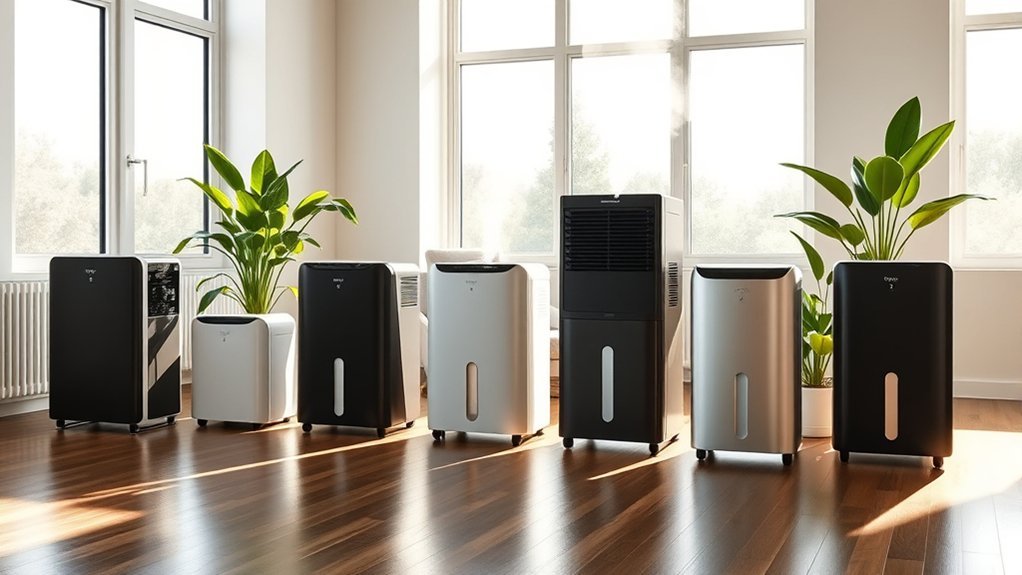
Protecting an acoustic piano from excess moisture starts with controlling the room’s relative humidity and limiting sudden humidity swings. This guide compares two compact room dehumidifiers from the original lineup and two legitimate Piano Life Saver maintenance accessories. These are not four interchangeable dehumidifiers: the first two treat room air, while the final two are useful only for owners who already have a compatible instrument-mounted system.
Quick verdict
Choose the TABYIK for a small, closed piano room with mild or seasonal humidity. Consider the BEDRED when a larger tank and quiet operation matter, but judge it by actual hygrometer readings rather than its advertised floor-area claim. Buy the Dampp Chaser watering can or pad treatment only to maintain an existing compatible Piano Life Saver system.
Choose by need
- Need to lower room humidity: Compare the TABYIK and BEDRED.
- Already have a Piano Life Saver: Check the watering can and pad treatment compatibility.
- Room stays very damp: Skip mini units and consider a properly sized compressor dehumidifier with a humidistat and drainage option.
Quick Comparison
| Product | Product Type | Best For | Main Limitation | Check Details |
|---|---|---|---|---|
| TABYIK 35 OZ | Compact thermoelectric room dehumidifier | Small, closed piano rooms with mild moisture | Limited extraction in very damp, cool, or open rooms | Check Price on Amazon |
| BEDRED 95 OZ | Compact room dehumidifier with a larger tank | Quiet, light-duty use with less frequent tank emptying | No independently verified daily extraction rate in the available source material | Check Product Details |
| Dampp Chaser Universal Watering Can | Piano Life Saver refill accessory | Owners with a compatible installed system | Does not control room humidity by itself | Check Compatibility |
| Piano Humidifier Pad Treatment | Piano Life Saver maintenance solution | Approved refill maintenance for a compatible system | Not a standalone dehumidifier or general cleaner | Check Product Details |
Room Dehumidifiers for Piano Spaces
These compact units are intended for room air, not for placement inside or directly against a piano. Their usefulness depends on the room size, temperature, air leakage, starting humidity, and how much water they can actually collect in your conditions. Use a separate digital hygrometer to confirm results.
TABYIK 35 OZ Dehumidifier: Best for Small Piano Rooms
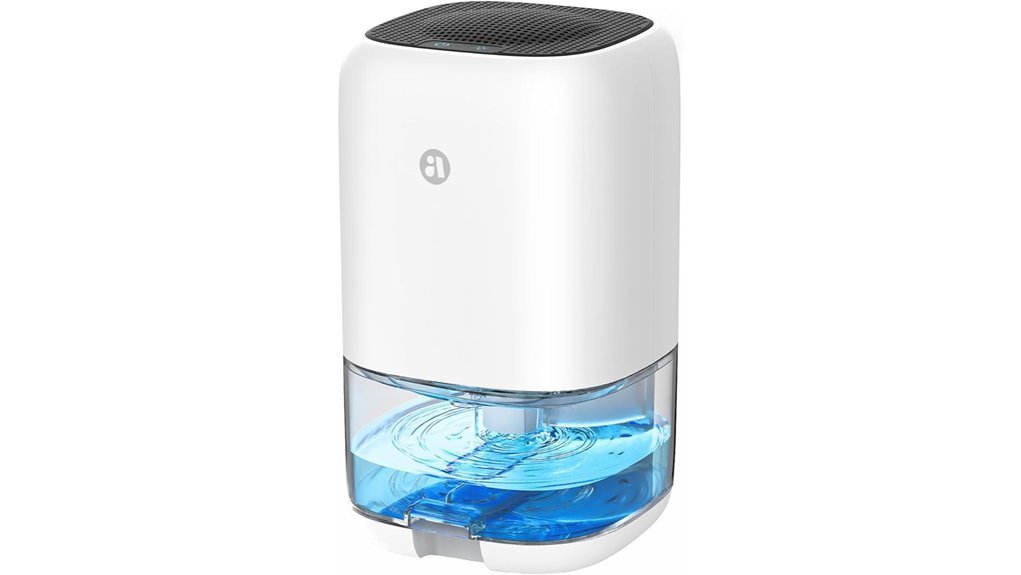
The TABYIK 35 OZ Dehumidifier is the clearest small-room choice in this lineup. It uses thermoelectric cooling, has a transparent 35-ounce tank, a portable handle, automatic shut-off, and low-noise operation. Its advertised maximum collection rate is measured under warm, very humid conditions, so real-world performance can be much lower in a cooler or only moderately humid piano room.
Why you’ll like it: It is easy to place several feet from the piano, simple to monitor, and quiet enough for many practice rooms. The visible tank also helps you see whether the unit is collecting a meaningful amount of water in your actual environment.
Best For: Small, closed piano rooms where humidity is only moderately high and a full-size compressor dehumidifier would be excessive.
Who Should Avoid It: Buyers dealing with persistent high humidity, low room temperatures, large open spaces, water intrusion, damp basements, or visible condensation.
Pros:
- Compact and easy to move between small rooms.
- Low-noise design suits practice and listening spaces.
- Transparent tank and automatic shut-off simplify routine use.
- Documented tank size and operating specifications make it easier to compare with other mini units.
Cons:
- Light-duty extraction may be too slow for severe humidity.
- No confirmed built-in humidistat for holding a precise room RH.
- Advertised coverage should not replace checking the room with a hygrometer.
- Collection performance falls as temperature and humidity conditions become less favorable.
BEDRED 95 OZ Dehumidifier: Best Larger-Tank Option
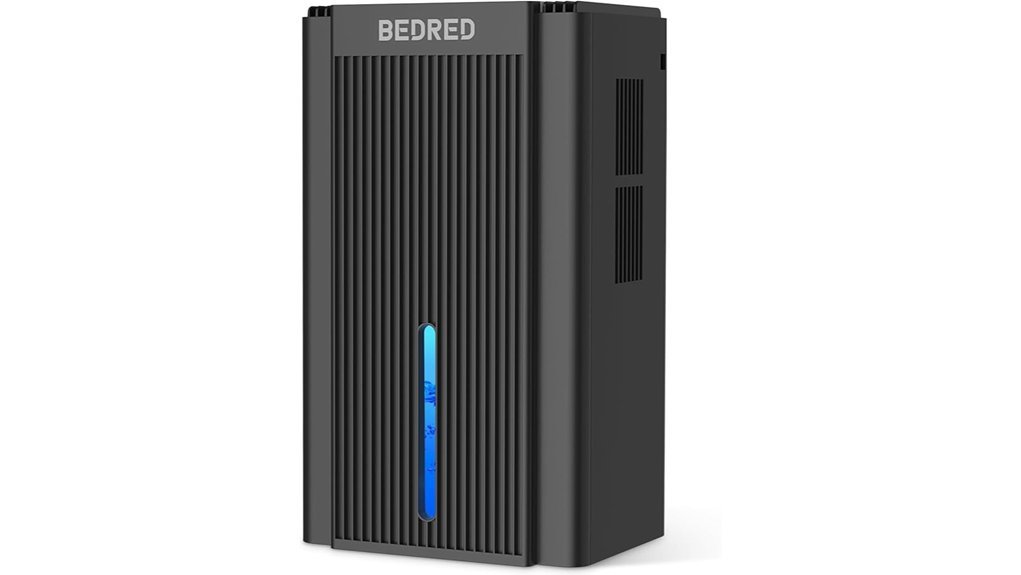
The BEDRED 95 OZ Dehumidifier offers a larger tank, automatic shut-off, ambient lighting, and quiet-operation features. Its listing advertises coverage up to 1,000 square feet, but a floor-area number alone does not show how quickly the unit removes moisture. The available source material does not provide a dependable daily extraction figure or confirm a precision humidistat.
Why you’ll like it: The larger tank can reduce how often you empty collected water, and the sleep-oriented controls are convenient in a music room that also serves as a bedroom or living area.
Best For: Buyers who want a larger-capacity, light-duty unit for a closed piano room and are willing to confirm performance with a separate digital hygrometer.
Who Should Avoid It: Buyers who need fast extraction, proven low-temperature performance, precise automatic RH control, continuous drainage, or dependable control of a basement-level moisture problem.
Pros:
- Larger 95-ounce tank than the compact TABYIK.
- Automatic shut-off helps reduce overflow risk.
- Quiet mode and optional ambient light suit shared living spaces.
- Less frequent tank emptying may be convenient during seasonal humidity.
Cons:
- Daily moisture-removal performance is not clearly verified in the available source material.
- The 1,000-square-foot claim should be treated as an advertised coverage figure, not a performance guarantee.
- No confirmed built-in humidistat for maintaining an exact piano-safe RH.
- Not the best choice for leaks, standing water, or severe basement dampness.
Piano Life Saver Maintenance Accessories
Dampp Chaser Universal Piano Watering Can
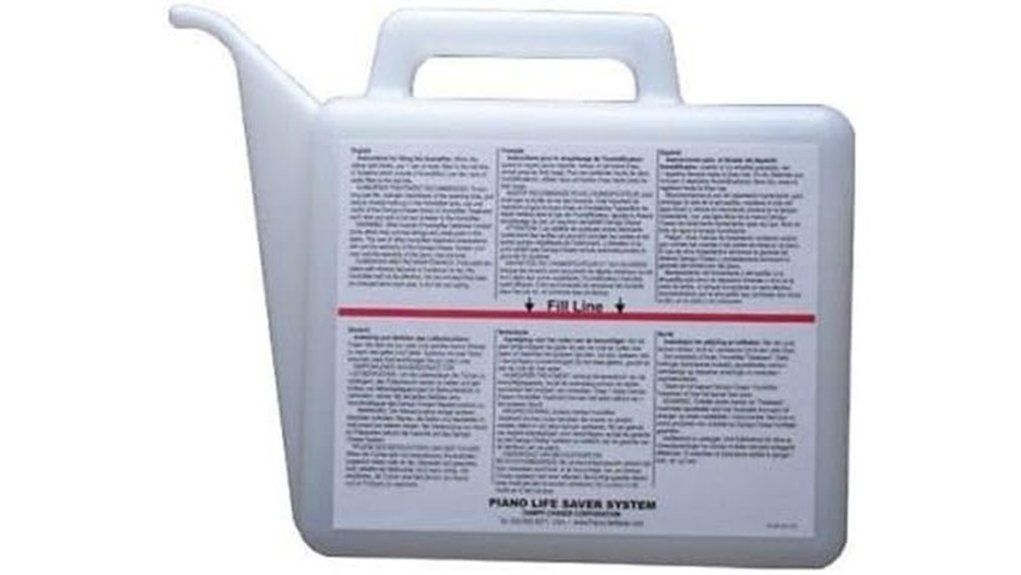
The Dampp Chaser Universal Piano Watering Can is a measured refill accessory for a compatible Piano Life Saver system. It helps owners add the intended amount of water and treatment when the system’s water indicator calls for a refill. It does not remove moisture from room air and should never be purchased as a substitute for a room dehumidifier.
Why you’ll like it: The purpose-built container and nozzle make the refill process more controlled than improvising with an unmeasured household jug.
Best For: Owners maintaining a compatible Piano Life Saver system who need the correct refill container and nozzle.
Who Should Avoid It: Anyone without an installed Piano Life Saver system or anyone who has not confirmed the watering-tube compatibility.
Pros:
- Purpose-built for the Piano Life Saver refill process.
- Marked fill level supports measured refilling.
- Nozzle helps direct water into the system’s fill tube.
- More appropriate than using an unmeasured household container.
Cons:
- Useful only with a compatible installed system.
- Does not monitor or lower room humidity.
- Older systems may require a different can or adapter.
- System compatibility should be confirmed before ordering.
Piano Humidifier Pad Treatment
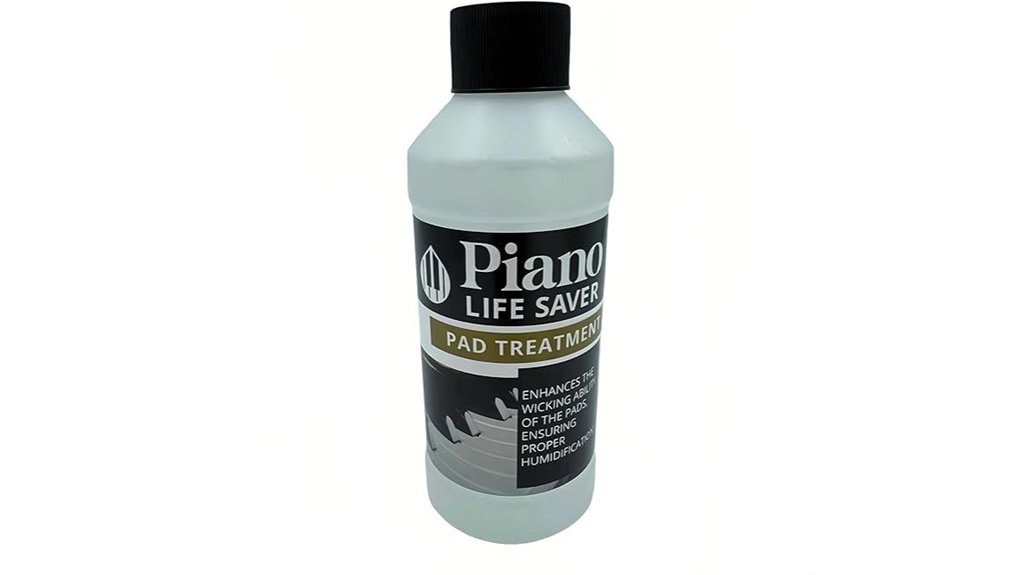
Piano Humidifier Pad Treatment is designed for the humidifier side of a compatible Piano Life Saver system. Its role is to support system maintenance and help limit mineral buildup when used as directed; it does not dehumidify the room. Confirm that the Amazon listing is the treatment approved for your exact system, and use only the amount and refill method specified by the manufacturer.
Why you’ll like it: It supports the intended maintenance routine for the installed system and is easier to store with the watering can and other piano-care supplies.
Best For: Owners who already use a compatible Piano Life Saver humidifier and need the manufacturer-approved refill treatment.
Who Should Avoid It: Anyone without a compatible system or anyone looking for a room dehumidifier, cleaner, disinfectant, or general-purpose water additive.
Pros:
- Made for specialized piano humidity-control maintenance.
- Helps reduce mineral buildup when used as directed.
- Supports routine pad and watering-tube care.
- Compact and easy to store with piano-care supplies.
Cons:
- Not useful without a compatible system.
- Does not reduce room humidity by itself.
- Requires repeat purchase as part of system maintenance.
- The exact Amazon listing contents and system compatibility should be checked before ordering.
How We Narrowed the Original Product List
Products were kept only when they served one of two clear purposes: lowering humidity in the piano room or maintaining a dedicated Piano Life Saver system. Gun-safe heating rods, tiny silica-gel canisters, desiccant packs, marine moisture tubs, and safe-specific renewable absorbers were removed because they are intended for small enclosures and do not provide dependable room-level RH control around an acoustic piano.
Selection criteria
We prioritized correct product category, realistic room use, measurable humidity control, tank safety, noise, placement, and system compatibility. We did not treat tank size, ambient lighting, or an advertised square-foot figure as proof of moisture-removal performance.
Factors to Consider When Choosing a Dehumidifier for a Piano
The best dehumidifier for a piano is not simply the one with the largest tank or advertised coverage area. Start with a digital hygrometer, measure the room over several days, and choose equipment that can hold a stable range without blowing warm, dry air directly at the instrument.
1. Measure Relative Humidity First
Place a reliable hygrometer in the piano room, away from windows, exterior doors, direct sunlight, and HVAC vents. Track daytime and nighttime readings before buying. A stable middle range is generally safer for an acoustic piano than repeated swings between very damp and very dry conditions. Follow the guidance in your piano manufacturer’s care manual when it gives a specific range.
2. Match Capacity to the Real Room
Room volume, air leakage, temperature, moisture entering from outside, and the unit’s actual water-removal rate matter more than a single square-foot claim. A small dehumidifier may work in a closed bedroom with mild humidity yet struggle in an open-plan room, basement, coastal home, or space with frequent door and window opening.
3. Understand Mini vs. Compressor Dehumidifiers
Compact thermoelectric units are usually quiet and easy to place, but they remove less water than full-size compressor models. Choose a properly sized compressor dehumidifier when the room remains very humid, a mini unit collects little water despite high RH, or you need a built-in humidistat and continuous drainage. No replacement products were added because this update is limited to the original lineup.
4. Prioritize Measured Control
A built-in humidistat is more useful than mood lighting because it can cycle the unit based on a selected RH. If the chosen product lacks one, pair it with a separate hygrometer and adjust runtime manually. Do not run a dehumidifier continuously without checking the room, because excessive drying and sudden swings can also affect piano materials and tuning stability.
5. Check Noise and Placement
Place the dehumidifier on a stable, level, water-resistant surface several feet from the piano. Do not set it on the piano, inside the cabinet, beneath a grand piano, or where discharge air blows directly across the soundboard or case. Keep the water tank and power cord where they cannot be bumped during practice or maintenance.
6. Consider Drainage and Tank Safety
Automatic shut-off is important for tank-based models, but it does not replace regular inspection. Empty and clean the tank before slime, odor, or mineral residue develops. For a severe moisture problem, a compressor unit with continuous drainage may be more practical than a small tank that needs frequent attention.
7. Confirm Piano Life Saver Compatibility
The watering can and pad treatment in this article are accessories, not complete systems. Confirm your system type, age, watering-tube size, refill instructions, and approved treatment before ordering. For installation, electrical issues, warning lights that do not clear, or uncertain compatibility, use a qualified piano technician.
8. Follow the System’s Water and Maintenance Instructions
Use the water type and treatment specified for your installed system. Do not substitute household humidifier chemicals, cleaners, fragrances, salt-softened water, or unapproved additives. Replace pads and service the system according to the manufacturer’s instructions or your piano technician’s advice.
Before you buy
- Measure the room RH for several days.
- Confirm whether the room is closed or open to other spaces.
- Check the unit’s daily extraction rate, not only its tank size.
- Decide whether you need light-duty control or high-capacity extraction.
- Look for a humidistat when precise control matters.
- Plan a safe location away from the piano and direct airflow.
- Confirm every Piano Life Saver accessory against your installed system.
Frequently Asked Questions
What Humidity Level Is Best for a Piano?
Many piano-care recommendations center on a stable middle range, often around 40% to 50% RH. However, the correct target can vary by manufacturer, model, and environment. Follow your piano maker’s care guide or a qualified technician’s advice, and focus on avoiding large or rapid swings.
How Often Should I Run a Dehumidifier Near My Piano?
Run it according to measured RH, not a fixed daily schedule. Check a hygrometer and operate the unit when the room rises above your chosen target. Recheck the room after several hours and adjust as conditions change.
Can a Dehumidifier Damage a Piano?
It can contribute to problems if it over-dries the room or blows warm, dry air directly at the instrument. Keep the unit several feet away, monitor RH, and do not assume that continuous operation is always safer.
Should I Put a Mini Dehumidifier or Desiccant Inside a Piano?
Not unless the piano manufacturer or a qualified technician specifically recommends that product and placement. Tiny desiccants and heated rods are made for enclosed storage spaces and do not regulate the surrounding piano room in a controlled way.
Is a Room Dehumidifier the Same as a Piano Life Saver System?
No. A room dehumidifier treats the air in the room. A Piano Life Saver is an instrument-mounted humidity-control system with specialized components. The watering can and pad treatment reviewed above only maintain an existing compatible system.
What if the Room Stays Humid Even With a Small Unit?
First close unnecessary windows and doors, check for leaks or damp walls, and confirm the hygrometer reading. If RH remains high, move to a properly sized compressor dehumidifier with a humidistat or ask an HVAC professional about whole-room moisture control.
Does a Larger Tank Mean Better Dehumidifier Performance?
No. Tank size mainly affects how often the tank must be emptied. Moisture-removal rate, room conditions, airflow, and humidistat control are more important when deciding whether a unit can protect a piano room.
Final Recommendation
Best decision for most readers
For a small, closed piano room with mild humidity, the TABYIK 35 OZ Dehumidifier is the clearest compact choice from this lineup. Choose the BEDRED 95 OZ Dehumidifier when a larger tank matters, but verify its performance with a hygrometer. Owners with an existing compatible Piano Life Saver system may also need the Dampp Chaser Universal Watering Can and approved Pad Treatment; neither accessory replaces a room dehumidifier.