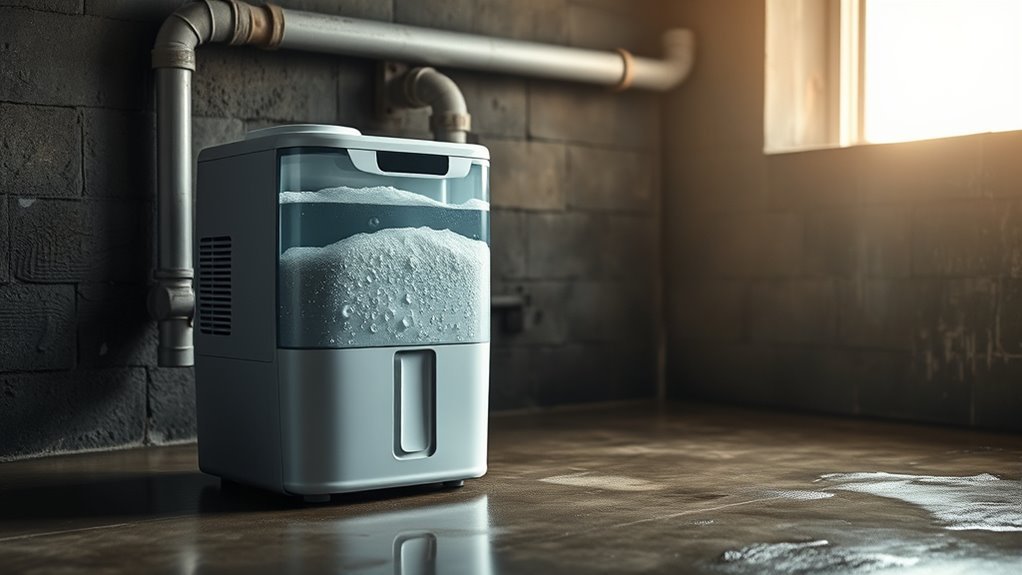
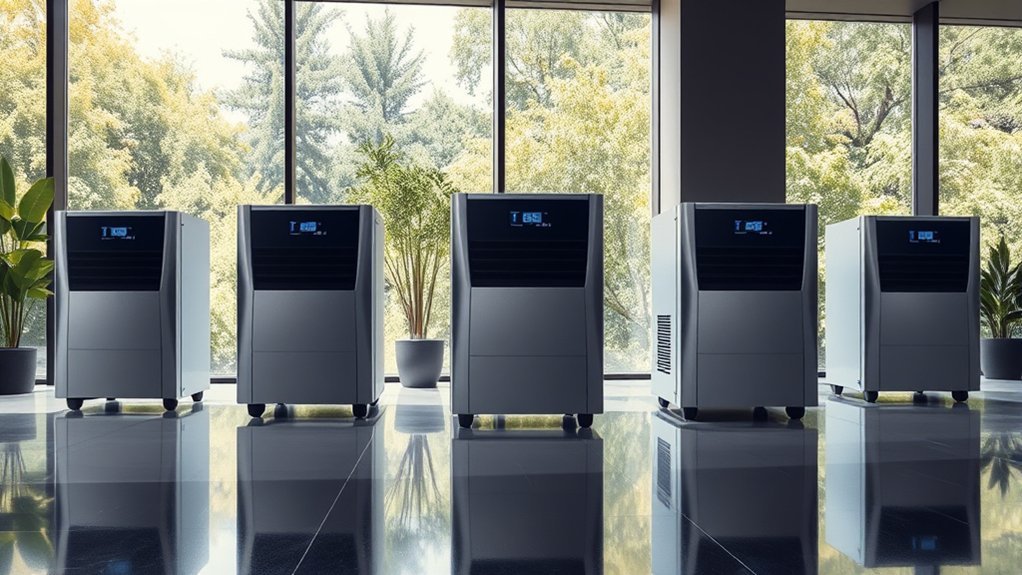
The best dehumidifier for a cold basement must do more than advertise a large square-foot number. Look for automatic defrost, a published minimum operating temperature, enough moisture-removal capacity for the actual dampness, and a practical continuous-drain setup. This guide focuses on five compressor dehumidifiers with stronger cold-basement support than the other products reviewed. A “cold basement” here means a cool space that remains above the selected model’s published minimum temperature—not a freezing room.
Quick Comparison
| Product | Published capacity basis | Published low-temperature guidance | Best use | Amazon |
|---|---|---|---|---|
| Yaufey 5000 Sq. Ft. Energy Star Dehumidifier Best Overall for Larger Cool Basements |
24.93 pints/day at 65°F and 60% RH; up to 80 pints/day at 95°F and 90% RH. | Manual lists a working range of 44.6°F to 89.6°F and includes auto-defrost. | Large, open, damp basements with a floor drain or other gravity-drain route. | Check Details on Amazon |
| Midea 1,500 Sq. Ft. Energy Star Dehumidifier Best Established Brand Pick |
22 pints/day under the current lower-temperature rating system. | Manual lists a 41°F to 90°F working environment and includes auto-defrost. | Small to medium basements with moderate humidity rather than active seepage. | Check Details on Amazon |
| AEOCKY 50 Pint/Day Compressor Dehumidifier Best Higher-Capacity Alternative |
Up to 50 pints/day under hot, humid maximum conditions; not directly comparable with a 65°F rating. | Auto-defrost is listed; the Boreas manual cautions against operation below 43°F. | Larger basements that remain above the low-40s and need more moisture-removal headroom. | Check Details on Amazon |
| KNKA 2500 Sq. Ft. Dehumidifier with Drain Hose Best Balanced Mid-Capacity Pick |
Up to 34 pints/day; confirm the test condition on the current listing. | Manual advises keeping the room above 41°F and lists automatic defrost. | Medium basements needing an included drain hose, humidistat, timer, and simple controls. | Check Details on Amazon |
| PLUSCENT 32 Pint Dehumidifier for Large Rooms Best Compact Cold-Rated Alternative |
Up to 32 pints/day at 95°F and 90% RH. | Listing states operation down to 41°F with an automatic defrost cycle. | Medium-size basements where a compact cabinet and continuous gravity drainage matter. | Check Details on Amazon |
Yaufey 5000 Sq. Ft. Energy Star Dehumidifier
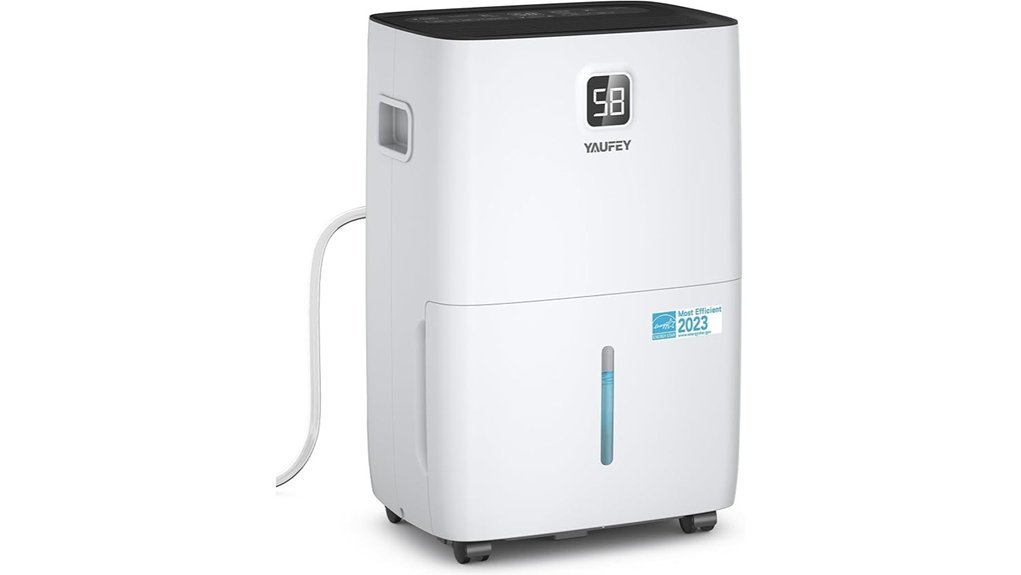
Best For: Large, open basements that stay at or above 44.6°F and have a reliable gravity-drain location.
Why You’ll Like It: The JD025Q-80 manual gives unusually useful capacity data at several temperature and humidity conditions. It is rated at 24.93 pints per day at 65°F and 60% relative humidity, then rises to a maximum 80-pint claim at 95°F and 90% relative humidity. It also includes adjustable humidity control, auto-defrost, auto shutoff, a reusable filter, a 1.06-gallon tank, and hose drainage.
Cold-Basement Check: The published operating range is 44.6°F to 89.6°F. That makes it easier to evaluate than products that only say “auto-defrost” without stating a minimum. It is still a compressor model, so moisture removal will decline as the room approaches the lower limit.
Who Should Avoid It: Skip it if the basement regularly drops below 44.6°F, if the space is divided into many closed rooms, or if you need a built-in pump to lift water to a higher drain.
Pros:
- Publishes capacity at several temperature and humidity conditions.
- Auto-defrost and continuous drainage suit routine basement use.
- Larger bucket and adjustable humidistat reduce daily intervention.
Cons:
- The 80-pint figure is a hot, humid maximum—not its basement-condition rating.
- Gravity drainage requires a drain below the hose outlet.
- Not intended for rooms below the stated 44.6°F minimum.
Midea 1,500 Sq. Ft. Energy Star Dehumidifier
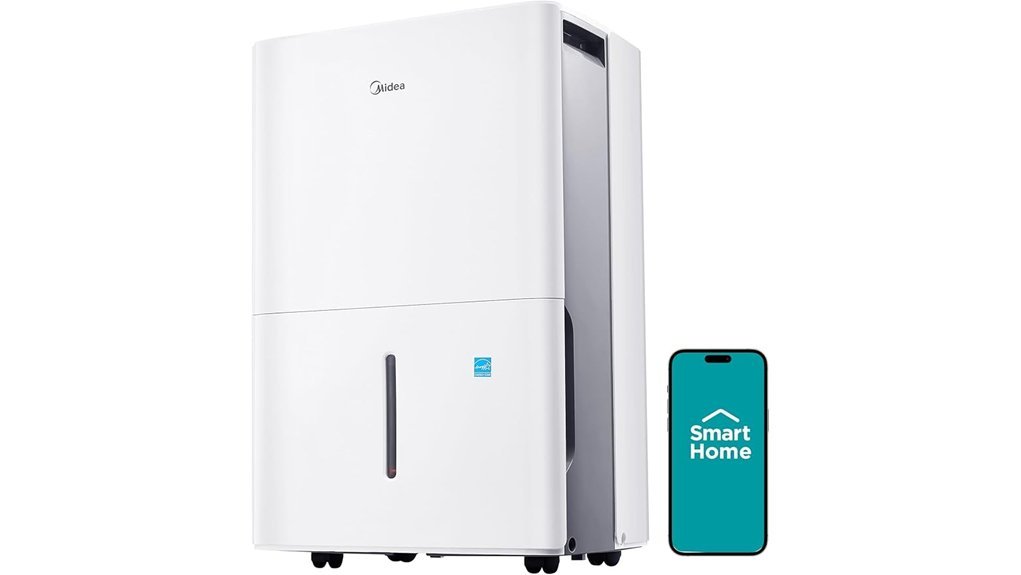
Best For: Small to medium basements that are cool and moderately damp rather than wet from ongoing leaks.
Why You’ll Like It: The Midea MAD22C1AWS is rated at 22 pints per day and includes a built-in humidistat, automatic defrost, auto restart, timer, washable filter, casters, a 0.8-gallon tank, and optional continuous gravity drainage through a standard hose. Midea also provides an official model page, manual, and stated one-year warranty.
Cold-Basement Check: The manual lists a working environment of 41°F to 90°F. Its lower capacity is a better fit for a smaller basement or maintenance duty after the initial moisture load has been reduced.
Who Should Avoid It: Choose a larger model if the basement is expansive, stays above 70% humidity, has visible condensation, or needs rapid initial drying.
Pros:
- Published 41°F minimum supports use in many cool basements.
- Official product documentation is easier to verify.
- Auto-defrost, humidistat control, and continuous drainage cover the essentials.
Cons:
- Lower capacity than the larger options in this roundup.
- A standard drain hose may need to be purchased separately.
- No built-in pump for lifting condensate to a higher drain.
AEOCKY 50 Pint/Day Compressor Dehumidifier
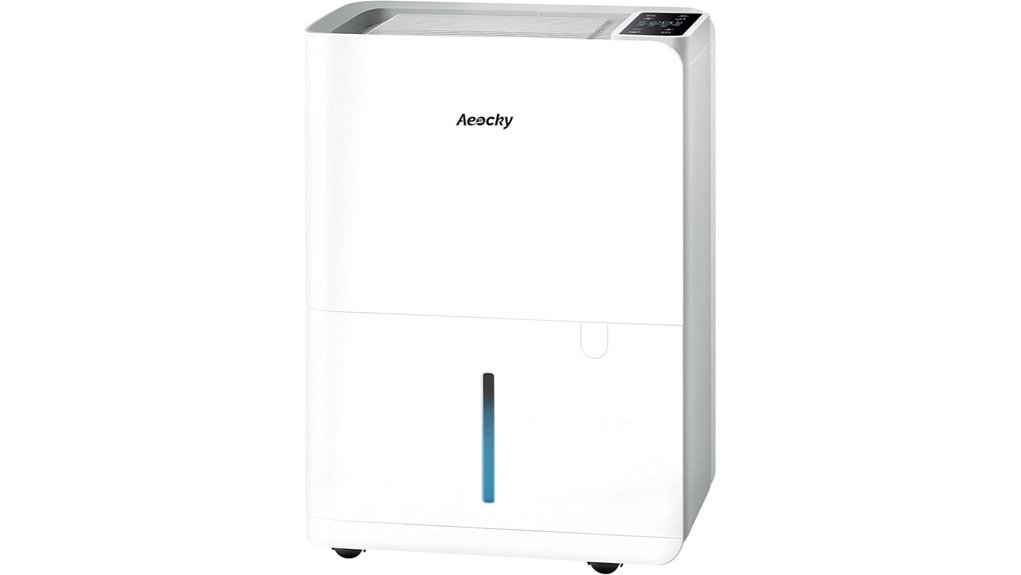
Best For: Larger or persistently damp basements that stay above the low-40s and benefit from more moisture-removal headroom.
Why You’ll Like It: This Boreas compressor model is listed for spaces up to 3,500 sq. ft. and a maximum 50-pint-per-day rating. It includes a drain-hose connection, adjustable humidistat, timer, child lock, automatic defrost, casters, and a 0.8-gallon tank. The compact cabinet may be easier to place in a utility area than some larger-capacity machines.
Cold-Basement Check: The listing promotes auto-defrost for cooler spaces, while the Boreas manual cautions against operating below 43°F. Treat 43°F as the floor and expect reduced extraction near that temperature. The 50-pint figure is a maximum claim, not a standardized 65°F basement-condition number.
Who Should Avoid It: Avoid it for a near-freezing basement or when you need a clearly published 65°F capacity figure for direct comparison.
Pros:
- Higher maximum capacity claim than the 22- to 34-pint alternatives.
- Auto-defrost and continuous drainage support unattended use.
- Humidistat, timer, child lock, wheels, and washable filter improve convenience.
Cons:
- The 0.8-gallon bucket can fill quickly without hose drainage.
- Maximum capacity is not directly comparable with a DOE-style 65°F rating.
- Not appropriate below the manual’s stated low-temperature limit.
KNKA 2500 Sq. Ft. Dehumidifier with Drain Hose
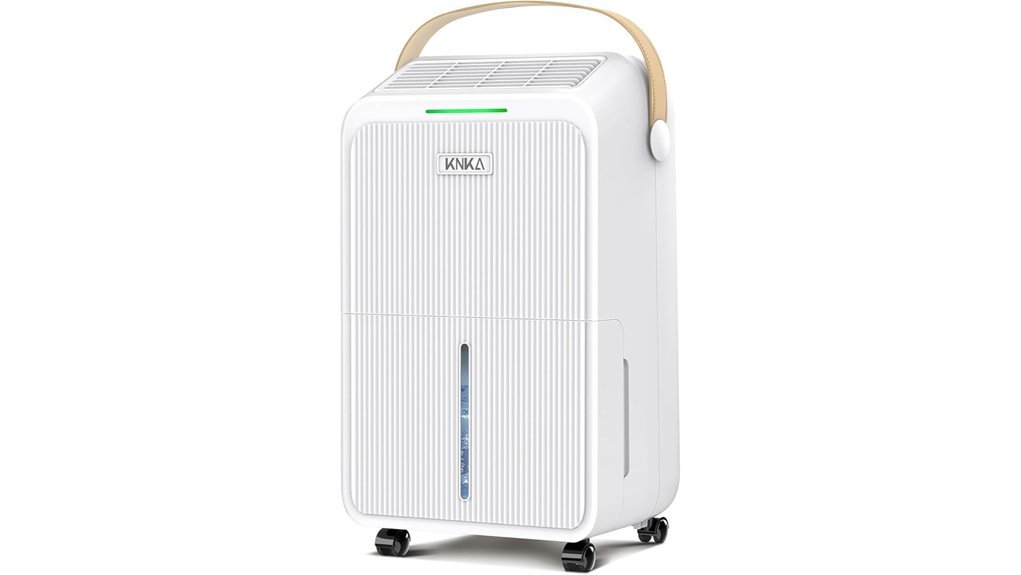
Best For: Medium-size basements that need automatic defrost, adjustable humidity control, and an included drain hose.
Why You’ll Like It: The KNKA PD22SC-12 is listed at up to 34 pints per day and includes a 3-liter tank, washable filter, 24-hour timer, two fan speeds, DEHU, DRY, and continuous modes, automatic shutoff, automatic defrost, child lock, casters, and continuous drainage.
Cold-Basement Check: Its troubleshooting guidance says to keep the room above 41°F. Because the available specifications do not clearly state the test condition behind the 34-pint maximum, use that number as a listing claim rather than a direct comparison with Midea’s lower-temperature rating.
Who Should Avoid It: Skip it if long-established manufacturer support, a built-in pump, or independently listed ENERGY STAR data is a priority.
Pros:
- Published 41°F guidance and automatic defrost fit many cool basements.
- Included hose makes gravity drainage easier to set up.
- Mid-range capacity, wheels, child lock, and washable filter provide a useful feature balance.
Cons:
- The 3-liter tank can fill quickly during initial drying.
- Capacity test conditions are not clearly presented in the available documentation.
- Warranty and support terms should be confirmed before ordering.
PLUSCENT 32 Pint Dehumidifier for Large Rooms
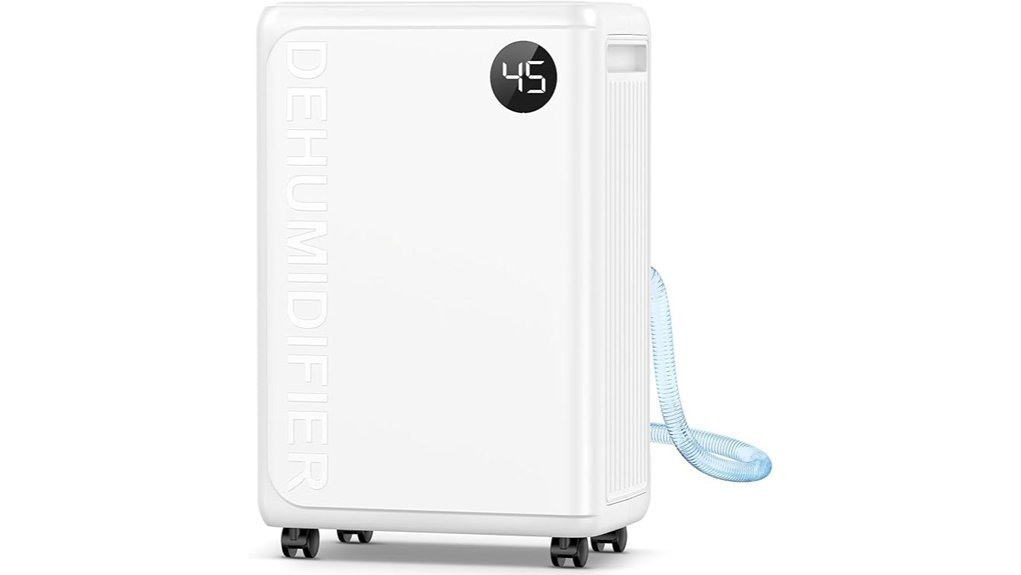
Best For: Medium-size basements where a compact compressor model, a published 41°F floor, and flexible drainage are more important than brand history.
Why You’ll Like It: This PLUSCENT model is listed for up to 32 pints per day at 95°F and 90% relative humidity. It includes dehumidify, continuous, and clothes-drying modes, plus a timer, adjustable humidistat, auto restart, automatic defrost, child lock, washable filter, 2-liter tank, wheels, and a drain-hose connection.
Cold-Basement Check: The current listing states that it can operate down to 41°F and describes an automatic defrost cycle that pauses the compressor while the fan clears frost. Its real-world water removal near 41°F will be much lower than the 32-pint hot-condition maximum.
Who Should Avoid It: Avoid it if you need a larger bucket, a built-in pump, or a long manufacturer track record with extensive support documentation.
Pros:
- Current listing provides a specific 41°F operating minimum.
- Automatic defrost and continuous drainage improve cold-basement usability.
- Compact cabinet, wheels, timer, and child lock are convenient in tight spaces.
Cons:
- The 2-liter tank is small for heavy moisture loads.
- The 32-pint rating is measured under hot, humid conditions.
- Long-term support and warranty service should be verified.
Factors to Consider When Choosing a Dehumidifier for a Cold Basement
A cold basement creates a different buying problem from a warm bedroom or bathroom. Capacity still matters, but the unit must also remain within its safe operating range as the room temperature drops. Measure the room first, then compare temperature guidance, standardized capacity, drainage, and moisture severity.
Measure Temperature and Humidity First
Place a hygrometer in the basement and record both relative humidity and the lowest normal temperature over several days. The U.S. EPA recommends keeping indoor humidity below 60%, ideally around 30% to 50% when possible. In many basements, a target near 45% to 50% is a practical starting point, but condensation risk, season, and building materials matter.
Understand Capacity Test Conditions
A pint rating is meaningful only when you know the test conditions. ENERGY STAR explains that the current portable-dehumidifier test uses 65°F to better represent basement conditions. A product advertised at 80 pints under 95°F and 90% relative humidity can remove far less water in a 55°F basement. Compare 65°F ratings whenever available and treat hot-condition “maximum” numbers as secondary information.
Match Capacity to Dampness, Not Marketing Area
Square footage is only a starting point. Also consider ceiling height, current humidity, musty odor, visible condensation, water entry, room divisions, and how quickly you need to dry the space. A 22-pint unit may maintain a smaller, moderately damp basement, while a larger unit is more appropriate for a big open space or a heavy seasonal moisture load.
Low-Temperature Operation and Auto-Defrost
Refrigerant coils can frost in cool rooms. Automatic defrost helps protect the unit and restore airflow, but it does not make every compressor dehumidifier suitable for near-freezing conditions. Check the exact model’s minimum operating temperature. If the basement frequently drops below that limit, warm the space, choose equipment specifically designed for lower temperatures, or consider a desiccant dehumidifier.
Energy Efficiency
Compare the exact model’s current ENERGY STAR status, 65°F capacity, wattage, humidistat accuracy, and expected runtime. Do not rely on a fixed annual-dollar-savings claim. Actual cost depends on electricity rates, set point, room temperature, humidity, airflow, and how often the compressor runs.
Drainage Options
Continuous gravity drainage is usually the most convenient basement setup. The drain must be lower than the outlet, and the hose needs a steady downward slope without kinks. A sump pit or floor drain may work if the manufacturer permits it. If the only drain is above the unit, choose a model with a built-in pump or use a separate approved condensate pump.
Noise and Placement
Published decibel claims may use different test methods. Place the unit on a level surface with the clearance required by the manual. Keep the intake and exhaust unobstructed, avoid standing water, and do not use an extension cord unless the manufacturer expressly allows it.
Portability and Maintenance
Casters and handles help with seasonal movement, but drainage reliability matters more for permanent use. Choose an accessible bucket, washable filter, clear full-tank indicator, and easy hose connection. Clean the filter on schedule, wash the bucket, and inspect the hose for algae, clogs, or upward loops.
Safety and Moisture-Source Control
Useful features include auto shutoff, auto restart, child lock, overload protection, and recognized electrical certification. Plug the unit into a grounded outlet and keep it away from standing water. Repair plumbing leaks, foundation seepage, poor grading, and blocked gutters instead of expecting a dehumidifier to solve the source.
- Record the basement’s lowest normal temperature and highest humidity.
- Compare capacity at 65°F when the manufacturer provides it.
- Verify auto-defrost and the exact minimum operating temperature.
- Plan a downward gravity-drain route or choose a pump solution.
- Confirm the seller, warranty, return policy, electrical certification, and included hose.
Frequently Asked Questions
What Temperature Is Too Cold for a Basement Dehumidifier?
It depends on the exact model. In this roundup, published guidance ranges from about 41°F to 44.6°F. Do not operate a unit below its manual’s minimum. Even above the minimum, extraction falls as the air gets colder, and the machine may spend more time in defrost mode.
Why Do Dehumidifier Pint Ratings Look Inconsistent?
Some brands advertise a maximum measured at 95°F and 90% relative humidity, while current standardized portable-dehumidifier ratings use 65°F and 60% relative humidity. The hotter test produces a much larger number. Compare ratings taken under the same conditions.
How Do I Know the Right Size Dehumidifier for My Basement?
Use square footage as a starting point, then adjust for humidity, visible dampness, ceiling height, room divisions, temperature, and water entry. A large or visibly wet basement usually needs more capacity than a similarly sized space that is only mildly humid.
Will a Compressor Dehumidifier Work in a Cold Basement?
Yes, when the room remains within the model’s operating range and the unit has effective automatic defrost. If the basement falls below the published minimum, performance can drop sharply and frost can accumulate.
What Maintenance Is Required?
Clean the filter, wash the bucket, inspect the drain hose, keep the airflow path clear, and watch for repeated ice buildup. Persistent frosting can mean the room is too cold, the filter is dirty, airflow is blocked, or service is needed.
Can a Dehumidifier Prevent Mold?
Lower humidity can make conditions less favorable for mold, but a dehumidifier does not remove existing growth or repair leaks. Correct water intrusion, dry wet materials promptly, and address visible or widespread mold appropriately.
How Often Should I Run It in Winter?
Use the built-in humidistat instead of a fixed schedule. Set a reasonable target and let the unit cycle only when the basement temperature is within its operating range. If winter humidity is already low, continuous operation may be unnecessary.
Is an ENERGY STAR Model Worth It?
It can be worthwhile when the unit runs frequently. Compare the exact model’s current certification, standardized capacity, wattage, and efficiency factor. Avoid assuming a specific annual dollar saving because electricity rates and runtime vary.
Final Recommendation
For a larger cool basement, the Yaufey JD025Q-80 is the strongest overall choice because its manual publishes both a 44.6°F minimum and capacity at several test conditions. For a smaller or moderately damp space, the Midea 22 Pint offers clear 41°F guidance and stronger manufacturer documentation. The AEOCKY is a useful higher-capacity alternative for basements that remain above 43°F, while the KNKA and PLUSCENT provide mid-capacity options with automatic defrost and continuous drainage.