Last updated: August 2026
The best all-around dehumidifier should provide meaningful moisture removal, an adjustable humidistat, practical drainage, and enough capacity for the room’s actual dampness. For most medium-size rooms, the Midea 22 Pint EasyDry Dehumidifier is the strongest balanced choice because it combines a verified 22-pint class capacity, simple controls, caster wheels, bucket collection, and continuous gravity drainage. The BANABIE 32 Pint Dehumidifier offers the highest advertised capacity in this comparison for larger or damper areas, while the Aiusevo AS280 is a useful value-oriented option with three operating modes and an included drain hose.
How these picks were evaluated: Product type, advertised daily moisture removal, test conditions, humidistat control, drainage, tank size, portability, documentation quality, and suitability for general room use.
Important: Advertised square-foot coverage is only a starting point. Capacity in pints per day and the severity of the moisture problem are more useful for comparison.
Quick Verdict
Best overall: Midea 22 Pint for balanced capacity, straightforward operation, portability, and continuous-drain support.
Best for larger or damper rooms: BANABIE 32 Pint for buyers who want the highest advertised daily removal in this lineup and an included gravity-drain hose.
Best value-oriented controls: Aiusevo AS280 for three operating modes, adjustable humidity control, a timer, wheels, and two drainage options.
Before buying: None of these models has a built-in condensate pump. Gravity drainage requires a drain point lower than the hose outlet.
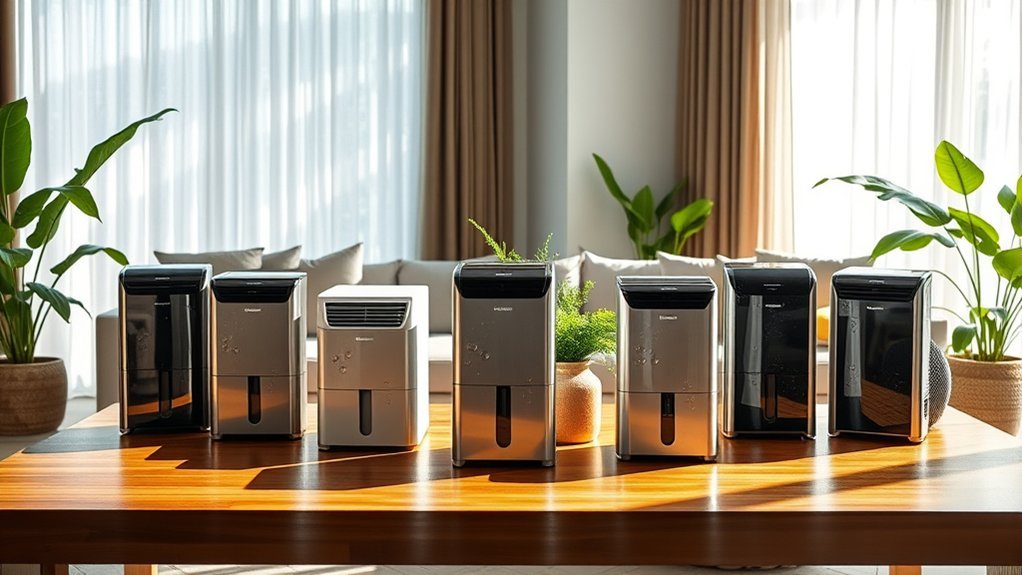
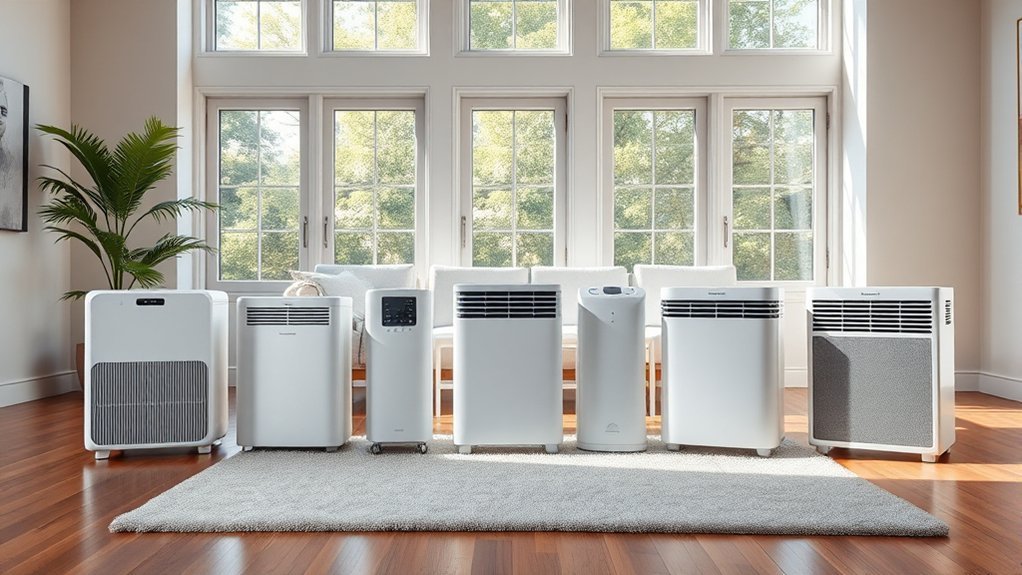
Quick Comparison of the Best All-Around Dehumidifiers
| Product | Best For | Advertised Moisture Removal | Drainage | Amazon |
|---|---|---|---|---|
| Midea 22 Pint | Best overall for medium-size rooms | 22 pints/day class | Bucket or continuous gravity drain | Check Product Details |
| BANABIE 32 Pint | Larger or more persistently damp rooms | Up to 32 pints/day advertised | 2.5L tank or included gravity-drain hose | Check Current Availability |
| Aiusevo AS280 | Bedrooms, laundry areas, and moderately damp basements | Up to 21 pints/day at stated high-temperature, high-humidity conditions | 2L tank or included gravity-drain hose | Check Product Details |
Midea 22 Pint EasyDry Dehumidifier
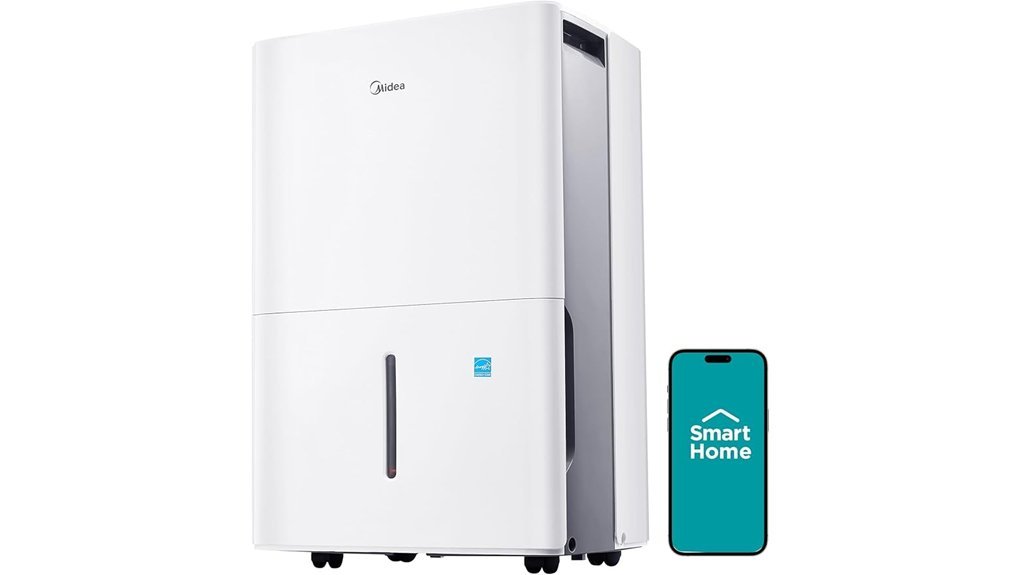
Best Overall
The Midea 22 Pint is the most balanced option in this lineup for a medium-size room or a moderately damp basement. Model MAD22C1AWS is listed for spaces up to 1,500 sq. ft. and a 22-pint daily capacity. Its four-wheel design, built-in timer, removable bucket, washable filter, auto restart, and continuous gravity-drain connection make it easier to use over the long term.
The current Midea product page lists this model as a straightforward non-connected unit, so buyers should not expect app control, Wi-Fi, or voice-assistant support. That simpler control layout can be an advantage for anyone who wants dependable operation without another app to configure.
Why You’ll Like It: It delivers useful compressor-based moisture removal with simple controls, good portability, and flexible drainage.
Who Should Buy This: Buyers who need everyday humidity control in a bedroom, living area, office, laundry room, or moderately damp basement.
Who Should Avoid This: People treating standing water, major leaks, a very wet large basement, or any setup that requires water to be pumped upward.
Pros:
- Verified 22-pint class capacity for model MAD22C1AWS.
- Bucket collection and continuous gravity drainage.
- Timer, washable filter, auto restart, and caster wheels.
- One-year manufacturer warranty listed for the model.
Cons:
- No built-in condensate pump.
- No smart control on the current manufacturer specification page.
- The bucket may need frequent emptying when the room is very damp.
BANABIE 32 Pint Dehumidifier with Smart Humidity Control
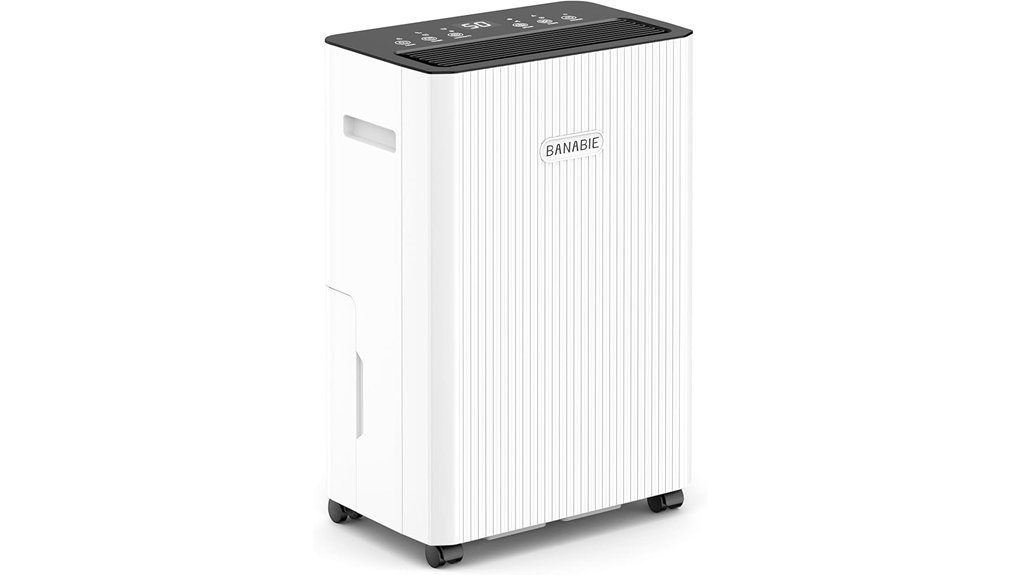
Best for Larger or Damper Rooms
This BANABIE model is advertised to remove up to 32 pints of moisture per day and to serve spaces up to 2,500 sq. ft. It includes Auto, Continuous, and Custom modes, a 2.5L removable tank, caster wheels, a washable filter, and a gravity-drain hose. Those features make it the strongest capacity choice here for a larger laundry area, open room, office, or basement where continuous drainage is available.
The 32-pint and 2,500-sq.-ft. figures are manufacturer or seller claims rather than a substitute for a standardized room assessment. Documentation and warranty information are less transparent than Midea’s, so confirm the exact model, test conditions, return terms, and support contact on the current listing before ordering.
Why You’ll Like It: It offers the highest advertised daily removal in this comparison and includes the hose needed for gravity drainage.
Who Should Buy This: Buyers with a larger or more persistently damp room who want automatic humidity control and fewer tank-emptying trips.
Who Should Avoid This: Buyers who need independently documented ENERGY STAR certification, a built-in pump, or clearly published long-term support terms.
Pros:
- Highest advertised capacity in this three-product comparison.
- Auto, Continuous, and Custom operating modes.
- Includes a 2.5L tank and gravity-drain hose.
- Caster wheels and a washable filter support routine use.
Cons:
- Coverage depends heavily on room temperature, humidity, layout, and air exchange.
- Gravity drainage requires a lower drain point.
- Warranty and support details should be verified before purchase.
Aiusevo AS280 Dehumidifier for Home and Basement
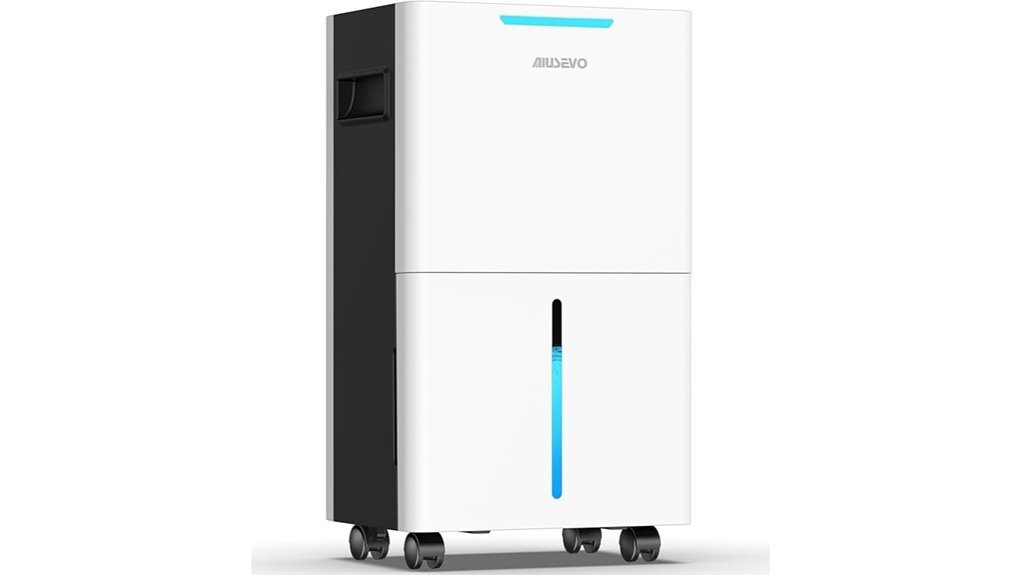
Best Value-Oriented Controls
The Aiusevo AS280 is advertised for spaces up to 1,500 sq. ft. and for removal of up to 21 pints per day at 95°F and 90% relative humidity. Its DEHU, DRY, and CONT modes let you switch between normal humidity control, laundry support, and continuous operation. It also includes a 2L tank, a drain hose, caster wheels, lift-up handles, a washable filter, a 24-hour timer, and adjustable humidity control.
The stated 21-pint output comes from hot, very humid conditions, so real-world collection will usually be lower in a cooler bedroom or basement. Published dimensions and some secondary specifications are not fully consistent across third-party sources, making current-listing verification especially important.
Why You’ll Like It: It provides the main controls buyers expect from a compressor dehumidifier without requiring app connectivity.
Who Should Buy This: Buyers who want a movable unit for a bedroom, laundry area, bathroom, office, or moderately damp basement.
Who Should Avoid This: Anyone who needs a pump, independently verified efficiency certification, or unusually strong manufacturer support documentation.
Pros:
- DEHU, DRY, and CONT operating modes.
- Adjustable humidity control and 24-hour timer.
- Manual tank collection and continuous gravity drainage.
- Handles, wheels, washable filter, and included drain hose.
Cons:
- The 2L tank may fill quickly in humid conditions.
- The 21-pint claim is based on 95°F and 90% relative humidity.
- Some published specifications should be confirmed on the current listing and manual.
Factors to Consider When Choosing an All-Around Dehumidifier
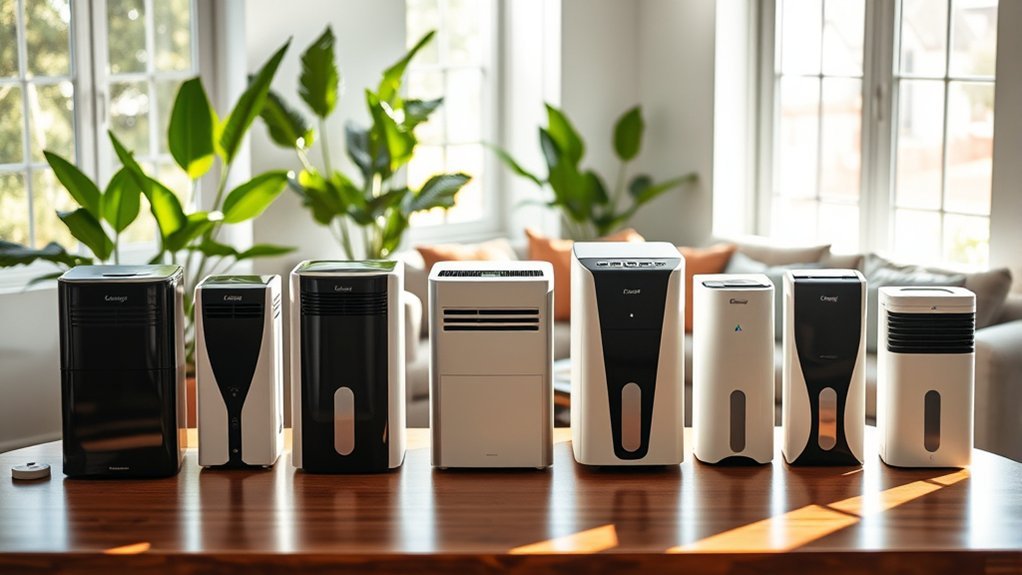
The right unit depends on the moisture load, not just the advertised room size. Compare product type, standardized or clearly stated capacity, drainage, temperature limits, noise, maintenance, and support before deciding.
1. Compressor vs. Thermoelectric Design
Compressor dehumidifiers are usually the better all-around choice for bedrooms, living areas, laundry rooms, and basements because they remove substantially more water. Thermoelectric models are lighter and often quieter, but they are better for small enclosed spaces with mild moisture. They were not included as primary all-around picks because ounce-per-day output is not equivalent to a 20- to 32-pint compressor rating.
2. Coverage Area and Dampness Level
Square-foot claims are useful only as a starting point. Ceiling height, room layout, temperature, outdoor humidity, leaks, laundry, and open doors all affect performance. A smaller room that is very damp can need more capacity than a larger room with only mild humidity.
3. Moisture Removal Capacity and Test Conditions
Compare pints per day and read the stated test conditions. Ratings measured in hotter and more humid air can be much higher than the amount collected in a typical basement. Current ENERGY STAR guidance generally places a slightly to moderately damp room under 2,000 sq. ft. in the 20- to 30-pint range, with more capacity recommended as dampness increases.
4. Energy Efficiency
Look for a current ENERGY STAR label and model record when efficiency is a priority. Certification criteria can change, so verify the exact model number rather than relying only on a retailer headline. A correctly sized unit with a humidistat usually wastes less energy than an undersized machine that runs continuously.
5. Noise and Placement
Compressor units produce fan and compressor noise, and published decibel figures may use different modes or test conditions. For a bedroom, place the unit on a level surface, keep the air path clear, and check whether the selected fan speed is comfortable before the return window closes.
6. Drainage and Tank Size
A small tank can require frequent emptying in a damp basement. Continuous gravity drainage is convenient when a floor drain or sump opening sits lower than the unit. A built-in pump is required when condensate must travel upward to a sink or window, and none of the three products in this article lists an integrated pump.
7. Maintenance, Warranty, and Support
Choose a model with an accessible washable filter, a removable tank, a full-tank shutoff, and controls that are easy to understand. Confirm the warranty, return policy, replacement-part availability, and support contact before purchase, especially for lesser-known brands.
Before You Buy Checklist
- Measure the room and identify whether it feels slightly damp, very damp, or wet.
- Choose capacity based on dampness and pints per day, not square footage alone.
- Check the rating’s temperature and relative-humidity test conditions.
- Confirm tank size, hose inclusion, drain height, and whether a pump is needed.
- Verify the exact model number, current certification status, warranty, and return policy.
- Use a separate hygrometer when accurate humidity monitoring matters.
- Fix leaks, standing water, and ventilation problems instead of relying on the appliance alone.
Frequently Asked Questions
What Indoor Humidity Level Should I Target?
A practical target for many homes is 30% to 50% relative humidity. Try to keep indoor humidity below 60% when possible. Adjust the setting for comfort, condensation, climate, and room temperature rather than forcing the unit to run continuously at an unnecessarily low target.
How Often Should I Empty the Dehumidifier’s Water Tank?
Empty it when the full-tank indicator activates. In a very damp room, that can be once or several times per day. Continuous gravity drainage reduces manual emptying, but the hose must slope downward without kinks or blockages.
Can a Dehumidifier Help With Mold Prevention?
It can help control the excess moisture that supports mold growth, but it does not remove established mold or repair a leak. Dry wet materials promptly, correct the moisture source, and use appropriate cleanup or professional remediation when needed.
What Maintenance Is Required?
Clean the filter according to the manual, wash and dry the tank, inspect the drain hose, and keep the air inlet and outlet unobstructed. Unplug the unit before cleaning and follow the manufacturer’s storage instructions.
Are Dehumidifiers Efficient for Long-Term Use?
Efficiency depends on capacity, room conditions, target humidity, maintenance, and current certification. An undersized unit may run for long periods without reaching the target, while an oversized unit can cycle more effectively when its humidistat is accurate.
How Do I Choose the Right Capacity?
Start with room size, then increase capacity for severe dampness, laundry drying, basement conditions, poor ventilation, or frequent outdoor-air exposure. For a slightly to moderately damp room under 2,000 sq. ft., a 20- to 30-pint portable dehumidifier is a practical starting range; very damp or wet spaces generally need more capacity.
Do I Need a Built-In Pump?
You need a pump when the collected water must move upward or across a route that cannot maintain a continuous downward slope. For a nearby floor drain below the outlet, a gravity hose is usually simpler and quieter.
Final Recommendation
Choose the Midea 22 Pint for the best overall balance of verified capacity, simple operation, portability, warranty transparency, and gravity-drain support in a medium-size space.
Choose the BANABIE 32 Pint when a larger or damper room calls for more advertised capacity and you can verify the current listing, warranty, and support terms.
Choose the Aiusevo AS280 when you value three operating modes, an included hose, and straightforward controls, while accepting that its 21-pint claim is based on hot, highly humid test conditions.
Whichever model you select, use a hygrometer, keep the filter and drain path clean, and correct leaks or ventilation problems so the dehumidifier is not asked to solve a building problem by itself.