Updated August 2026. Product specifications, seller terms, and included accessories can change. Confirm the exact model number on the current listing before ordering.
The Midea MAD50P1AWS-A 50-pint dehumidifier with built-in pump is a strong option for basements and other damp spaces where water must drain upward to a sink, window, or elevated outlet. The current linked Amazon listing identifies the exact model as MAD50P1AWS-A and lists 50-pint daily moisture removal, a 4,500-square-foot coverage claim, Wi-Fi control, voice-assistant compatibility, and 49 dBA operation on low.
Its biggest advantage is not the advertised room size. It is the flexible drainage system: you can use the bucket, connect a standard hose for gravity drainage, or use the integrated pump when a lower floor drain is unavailable. This review explains where the Midea fits, what to verify before buying, and how to compare any 50-pint dehumidifier safely.
Quick Verdict
Best For: Basements, crawlspaces, offices, and large rooms that need a true 50-pint-class portable dehumidifier with upward drainage. Main Strength: The built-in pump reduces bucket handling when water must travel to a higher outlet. Main Limitation: At about 42 pounds, it is easier to roll than carry, and a standard continuous-drain hose is not included.
Midea 50-Pint Dehumidifier at a Glance
| Feature | Current Listing Information | Why It Matters | Check Product |
|---|---|---|---|
| Model | MAD50P1AWS-A | Use the exact suffix when checking the manual, warranty, and connected features. | Check Product Details |
| Moisture Rating | 50 pints per day | Suitable for substantial moisture removal when room conditions match the unit’s intended operating range. | |
| Drainage | Built-in pump, gravity-hose outlet, or removable bucket | Lets you choose between manual collection, downhill drainage, and upward pumping. | |
| Tank | 1.6 gallons | The bucket is much smaller than the daily pint rating, so continuous drainage is useful in very damp rooms. | |
| Humidity Setting | 35% to 85% | Provides a broad adjustment range for different room conditions. | |
| Smart Control | SmartHome app, Alexa, and Google Assistant listed | Useful when the unit runs in a basement or another space you do not visit often. | |
| Noise Information | 49 dBA on low, according to the listing | A helpful reference, although room acoustics and compressor cycling affect perceived noise. | |
| Weight | Approximately 42.1 pounds | Caster wheels help on one floor, but stair transport may be difficult. |
Verification note: The current Amazon listing identifies this product as MAD50P1AWS-A and lists Wi-Fi and voice control. Midea uses closely related model designations across regional pages, so match the model label on the delivered unit to its manual before relying on connectivity, accessories, or a specific specification. You can also review the Midea support page.
Midea 50-Pint Dehumidifier With Built-In Pump Review
Best With Pump
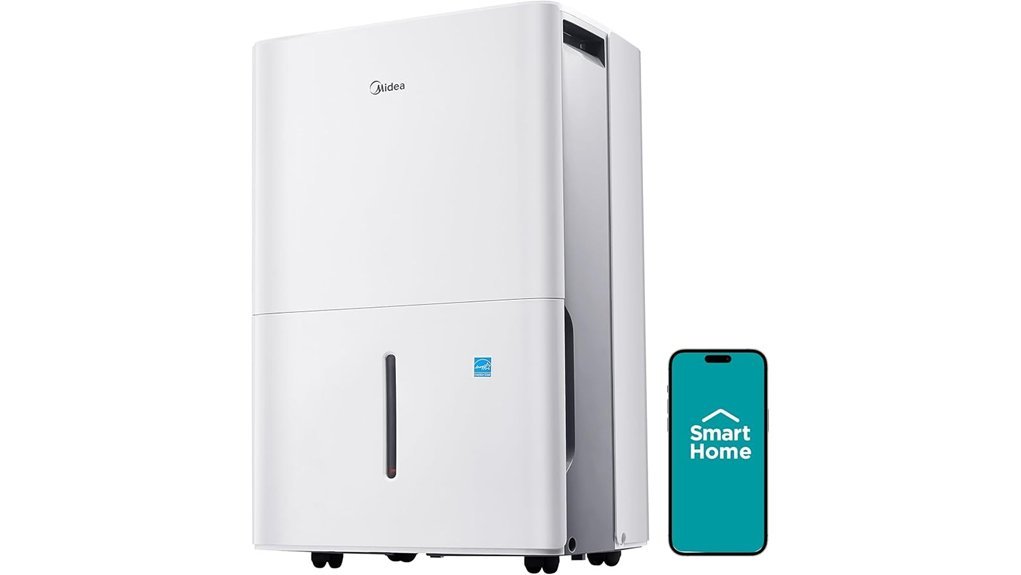
The Midea 50-pint dehumidifier is designed for buyers who need more drainage flexibility than a basic bucket-only or gravity-only machine provides. Its built-in condensate pump can move collected water vertically or horizontally toward a suitable sink, window, or elevated drain. That makes it especially practical in a basement without a convenient floor drain.
The linked listing markets the unit for spaces up to 4,500 square feet and lists a target-humidity range of 35% to 85%. Coverage figures should be treated as rough shopping guidance rather than a guarantee because actual performance depends on room layout, temperature, air movement, water intrusion, and starting humidity.
The 1.6-gallon tank includes full-bucket shutoff, while the reusable filter, automatic defrost, timer, and caster wheels support routine basement use. The listing also identifies Wi-Fi control through the SmartHome app plus Alexa and Google Assistant compatibility. These features can be useful for remote monitoring, but they do not replace correct sizing or a reliable drainage path.
Why You’ll Like It: The built-in pump solves a common basement problem by moving water to an outlet that sits higher than the dehumidifier.
Best For: Homeowners and renters who need substantial moisture removal, upward drainage, app control, and less frequent bucket handling.
Who Should Avoid It: Buyers who only need light moisture control in a small enclosed room, frequently carry the unit between floors, or have no suitable place to discharge pumped water.
Pros:
- Rated to remove up to 50 pints of moisture per day.
- Built-in pump supports vertical or horizontal drainage.
- Also supports bucket collection and gravity-hose drainage.
- Wi-Fi, Alexa, and Google Assistant support are listed for the linked model.
- Adjustable humidistat, timer, automatic shutoff, automatic defrost, and reusable filter simplify daily use.
- Caster wheels make it easier to reposition across one floor.
Cons:
- A standard hose for continuous gravity drainage is not included.
- The included-components list mentions a garden-hose adapter rather than a full gravity-drain hose.
- At approximately 42.1 pounds, the unit may be difficult to carry on stairs.
- The 4,500-square-foot figure is a manufacturer coverage claim, not a guaranteed result in divided or severely damp spaces.
- App and voice features require compatible networking, accounts, and setup.
How We Evaluated This Dehumidifier
This review focuses on the issues that matter most when buying a 50-pint basement dehumidifier: the accuracy of the linked product identity, daily moisture-removal rating, drainage flexibility, bucket size, humidity controls, automatic defrost, noise information, portability, smart features, included accessories, and warranty details.
The current Amazon ASIN was checked against its displayed model number and product details. Claims that could not be supported by the current listing or manufacturer information were removed or softened. No exact price, discount, star rating, review count, or availability promise is included because those details can change quickly.
Factors to Consider When Choosing a 50-Pint Dehumidifier
A 50-pint model can be a practical choice for a damp basement or large room, but capacity alone does not determine whether a unit will work well in your home. Compare its rating, drainage design, operating temperature, noise information, energy efficiency, and controls before choosing.
Understand the Pint Rating
The pint rating describes how much water a dehumidifier can collect during 24 hours under stated test conditions. It does not describe the size of the water tank. A 50-pint machine may therefore have a bucket that holds only a small fraction of one day’s potential moisture removal.
Be careful when a listing shows two capacity figures. The lower figure may use a recognized or normal test condition, while the larger “maximum” may come from unusually hot and humid air. Use standardized or clearly stated normal-condition figures for fair comparisons.
Coverage Area and Room Layout
Square-foot coverage claims are useful as rough shopping guides, but they should not be treated as guaranteed results. An open basement is easier to dehumidify than several closed rooms with the same total floor area. Airflow restrictions, open windows, water leaks, outdoor humidity, and cool temperatures can also reduce performance.
For a divided home, you may need to keep interior doors open, improve air circulation, or use more than one unit. A portable dehumidifier should not automatically be treated as a ducted whole-home humidity system.
Choose the Right Drainage Method
Manual tank drainage works when you can check the machine regularly. The unit stops when its bucket is full, but you must empty and reinstall the tank before operation continues.
Gravity drainage sends water through a hose to a lower floor drain. The hose must maintain a continuous downward slope without kinks or raised sections.
Pump drainage is better when water must travel upward to a sink, window, or elevated drain. A built-in pump can make unattended basement use much easier.
Drainage tip: Measure the full hose route before ordering. Confirm the outlet height, hose length, connection type, and a safe discharge location that will not send water back toward the foundation.
Energy Efficiency
Dehumidifiers may operate for many hours during humid weather, so efficiency can affect long-term running costs. Look for current ENERGY STAR dehumidifier information and compare the Integrated Energy Factor when reliable model-specific data is available. A humidistat, timer, and automatic cycling can also reduce unnecessary runtime.
Do not assume that the largest advertised coverage area is automatically the most economical choice. A correctly sized unit that reaches the target humidity and cycles off can be more practical than an undersized machine that runs continuously.
Noise Levels
Noise figures usually represent a specific fan setting and test arrangement. Compressor cycling, fan speed, vibration, flooring, and nearby walls can make the machine sound different in your room.
The linked Midea listing states 49 dBA on low. Treat that figure as a reference rather than a promise of bedroom-level silence, especially when the compressor starts or the fan runs faster.
Low-Temperature Operation
Cool basement air can cause frost to form on a dehumidifier’s coils. Automatic defrost helps the unit pause moisture removal and clear that frost, but it does not make every model suitable for every cold space.
Check the exact model’s minimum operating temperature in the manual before buying. If the room regularly falls below that limit, address the temperature or choose equipment specifically designed for colder conditions.
Smart Features
Wi-Fi control can be useful when the dehumidifier runs in a basement, rental property, office, or another area you do not visit frequently. A useful app should let you view humidity, change the target setting, select modes, and create a schedule.
Smart control does not replace proper drainage or sizing. Prioritize verified moisture capacity, automatic defrost, and drainage first, then decide whether remote control is worth the added setup.
Tank and Filter Maintenance
A reusable filter helps keep dust away from the internal coil and should be inspected regularly. Clean it according to the manufacturer’s instructions, especially in homes with pets, renovations, or heavy dust.
Wash and dry the bucket periodically to reduce residue and odors. Also inspect the drain hose and pump line for kinks, buildup, loose connections, or standing water that could interrupt continuous drainage.
Before You Buy
- Confirm that the Amazon listing still shows ASIN B0GL7R3RJV and model MAD50P1AWS-A.
- Decide whether you will use the bucket, gravity drainage, or the built-in pump.
- Purchase a compatible standard hose if you plan to use gravity drainage.
- Measure the route to the drain and confirm the pump or hose can reach safely.
- Check the exact minimum operating temperature in the current manual.
- Allow enough space around the air intake and outlet for proper airflow.
- Consider the 42.1-pound weight if the unit must be carried between floors.
- Confirm Wi-Fi network, app, account, and voice-assistant requirements.
- Read the current warranty, seller, return terms, and replacement-parts information.
Frequently Asked Questions
What Does “50-Pint Dehumidifier” Mean?
It means the unit is rated to remove about 50 pints of water from the air during 24 hours under stated test conditions. It does not mean that the water bucket holds 50 pints.
Is a 50-Pint Dehumidifier Good for a Basement?
It can be a strong choice for a moderately to very damp basement, especially when the unit has automatic defrost and continuous drainage. Basement size, temperature, leaks, airflow, and starting humidity still affect the result.
Do I Need a Built-In Pump?
You need a pump when collected water must move upward to a sink, window, or elevated drain. You usually do not need one when a hose can run continuously downhill to a floor drain.
Does the Midea Include a Drain Hose?
The current included-components list mentions a garden-hose adapter but not a standard continuous-drain hose. Confirm the latest bundle contents and buy a compatible hose separately if needed.
Can the Midea Be Controlled by Phone?
The current Amazon listing identifies the linked MAD50P1AWS-A as Wi-Fi enabled through the SmartHome app and lists Alexa and Google Assistant support. Confirm the delivered model label and current app requirements before setup.
How Often Should I Clean the Filter?
Inspect the filter every two to four weeks during regular use and clean it according to the manual. Dusty rooms, pets, or continuous operation may require more frequent cleaning.
Can a 50-Pint Dehumidifier Work in Winter?
Yes, provided the room stays within the exact model’s approved operating-temperature range. Performance falls in colder air, and the unit may spend more time in automatic defrost mode.
How Much Electricity Does the Midea Use?
The current listing states 470 watts, but actual electricity use depends on humidity, temperature, fan setting, compressor cycling, and daily runtime. Use the current EnergyGuide or model-specific efficiency information for a better operating-cost estimate.
What Humidity Level Should I Use?
A setting around 45% to 55% relative humidity is a practical starting range for many living spaces. Adjust it based on condensation, comfort, room temperature, and the manufacturer’s instructions, and avoid running the room excessively dry.
Will a Dehumidifier Remove Existing Mold?
No. A dehumidifier can reduce the moisture conditions that support mold growth, but it does not remove established contamination or repair the leak that caused it. Existing mold and water intrusion must be handled separately.
Conclusion
Final Recommendation
The Midea MAD50P1AWS-A 50-Pint Dehumidifier with Built-In Pump is a strong fit when you need substantial moisture removal and a drainage system that can move water upward. Its pump is the main buying reason; Wi-Fi and voice control are useful secondary features.
Before ordering, confirm the exact model number, drainage accessories, warranty, operating-temperature range, and connected features on the current Amazon listing and manufacturer manual. The right dehumidifier is the one whose verified capacity and drainage setup match the actual moisture conditions in your space.