Updated: August 2, 2026
If you need a commercial-grade dehumidifier with a built-in pump for a basement, compare more than the largest advertised pint number. Moisture-removal test conditions, pump lift, airflow, automatic defrost, drainage-hose routing, operating temperature, electrical demand, and portability all affect how well a unit will work.
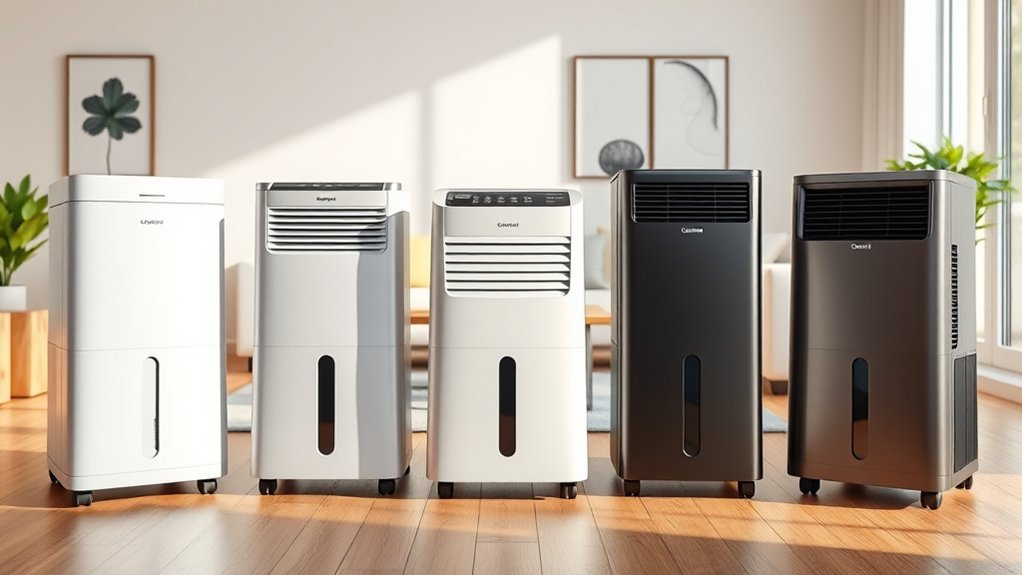
The seven models below are designed or marketed for commercial, industrial, restoration, crawl-space, or heavy-duty basement use. The Moiswell Pioneer-XI is our strongest all-around option because it combines a published 73-pint rating at 80°F and 60% RH, 265 CFM airflow, dual drainage, and job-site mobility. The Waykar 155 is a practical cart-style option for a large basement, while the HBN 125 is easier to position in a crawl space or low-clearance area.
Quick Verdict
- Best Overall: Moiswell Pioneer-XI 160 Pints Commercial Dehumidifier
- Best for Large Basements: Waykar 155 Pints Commercial Dehumidifier
- Best for Crawl Spaces: HBN 125 Pints Crawl Space Dehumidifier
- Best for Medium Basements: ARGENDON 145 Pints Commercial Dehumidifier
- Best for Smaller Basements: ALORAIR Sentinel Pro 35X
- Highest Published AHAM Capacity: ANDTE 250 Pints Commercial Dehumidifier
- Best With a Collection Tank: AVAHUM 150 Pint Dehumidifier
Capacity-rating note:
Many commercial listings call their 80°F and 60% RH result an AHAM rating. This is more useful for comparison than a maximum number measured at 90°F or 95°F and 90% RH. However, it is not identical to the current ENERGY STAR portable-dehumidifier test condition of 65°F. Always compare the temperature and humidity conditions printed beside the pint rating.
Quick Comparison of Commercial Basement Dehumidifiers With Pumps
Important: The coverage figures below are advertised maximums, not guaranteed sizing recommendations. A divided, cool, or actively leaking basement may require more capacity than an open, warm space with the same floor area.
| Product | Published Capacity | Advertised Coverage | Pump Route | Best For | Amazon |
|---|---|---|---|---|---|
| Moiswell Pioneer-XI | 160 PPD at 95°F/90% RH; 73 PPD at 80°F/60% RH | Up to 7,000 sq. ft. | Pump hose up to 16.4 ft.; gravity drain available | Large basements, restoration, and fast drying | Check Availability |
| Waykar 155 | 155 PPD at 95°F/90% RH; comparable AHAM figure not published | Up to 8,000 sq. ft. | Pump lift up to 16.4 ft.; gravity drain available | Large open basements and commercial spaces | Check Availability |
| HBN 125 | 125 PPD at 95°F/90% RH; 60 PPD at 80°F/60% RH | Up to 5,900 sq. ft. on the linked listing | Pump lift up to 16.4 ft.; gravity drain available | Crawl spaces and confined basements | Check Availability |
| ARGENDON 145 | 145 PPD at saturation; 60 PPD at 80°F/60% RH | Up to 1,500 sq. ft. on the linked listing | Pump hose up to 19.6 ft.; gravity drain available | Medium basements and long elevated drain routes | Check Availability |
| ALORAIR Sentinel Pro 35X | 70 PPD at saturation; 35 PPD at 80°F/60% RH | Up to 1,000 sq. ft. | Pump hose up to 19.6 ft.; gravity drain available | Smaller basements and routine humidity control | Check Availability |
| ANDTE 250 | 250 PPD at 95°F/90% RH; 110 PPD at 80°F/60% RH | Up to 8,000 sq. ft. | Built-in pump up to approximately 16.5 ft.; gravity drain available | Severe moisture loads and high-volume drying | Check Availability |
| AVAHUM AM150P | 150 PPD at 95°F/90% RH; comparable AHAM figure not published | Up to 7,000 sq. ft. on the linked listing | Pump lift up to 16.4 ft.; gravity drain and tank available | Flexible tank, gravity, and pump drainage | Check Availability |
How We Compared These Dehumidifiers
This guide compares published manufacturer, manual, and retailer specifications. It does not claim hands-on testing. We prioritized:
- Built-in condensate pumps for draining to an elevated sink, window, standpipe, or other approved outlet.
- Capacity at 80°F and 60% RH when the manufacturer or listing clearly published it.
- Airflow for circulating damp air and supporting faster drying.
- Automatic defrost for cooler basement and crawl-space conditions.
- Gravity-drain backup for installations where a lower drain is available.
- Portability and installation shape, including low-profile crawl-space designs and wheeled restoration units.
- Honest limitations, including rating conditions, sound, electrical demand, coverage uncertainty, and service support.
Before You Buy
- Measure the basement and ceiling height.
- Check the current relative humidity with a separate hygrometer.
- Identify and correct active leaks or seepage whenever possible.
- Measure the pump’s vertical rise and the complete hose route.
- Confirm the model’s voltage, amperage, plug, grounding, and circuit requirements.
- Check doorway, stair, and crawl-space access against the unit dimensions.
- Confirm the current seller, warranty provider, return terms, and replacement-filter availability.
Moiswell 160 Pints Commercial Dehumidifier with Pump
Best Overall
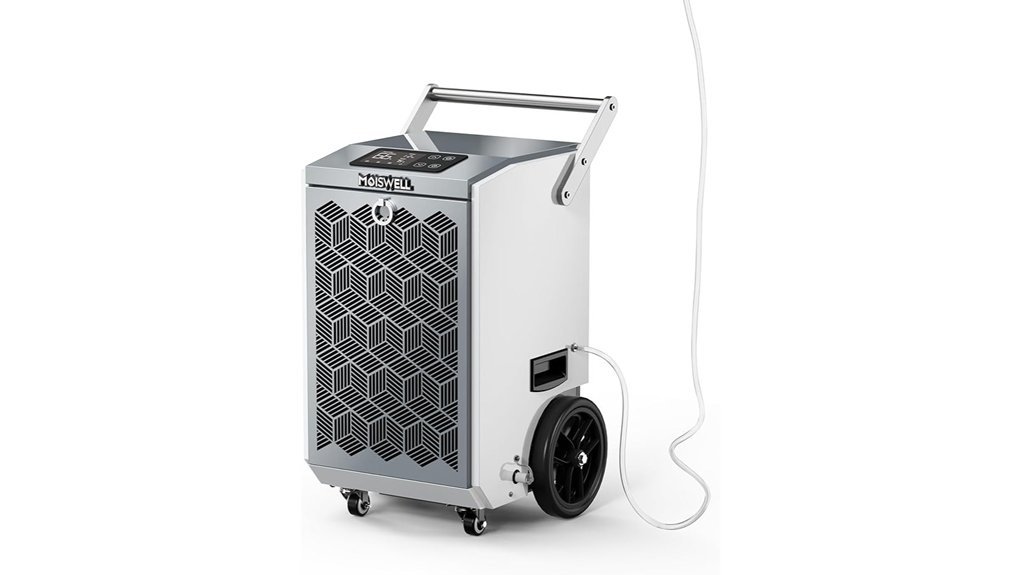
The Moiswell Pioneer-XI provides one of the clearest combinations of capacity, airflow, drainage flexibility, and mobility in this comparison. It is rated for up to 160 pints per day at 95°F and 90% RH and approximately 73 pints per day at 80°F and 60% RH.
Its published 265 CFM airflow can circulate more damp air than many compact crawl-space units. The built-in pump uses a hose route of up to 16.4 feet, while the separate gravity-drain connection provides a simpler alternative when a lower drain is available. Large wheels and detachable handles support movement between basement or restoration work areas.
Best For: Large basements, construction drying, restoration work, workshops, and buyers who want a published 80°F/60% RH capacity.
Why You’ll Like It: The 73-pint comparison rating, 265 CFM airflow, dual drainage, and large wheels make it easier to evaluate and deploy than models that publish only a hot-condition maximum.
Who Should Avoid It: A small basement with mild seasonal humidity may not need its size, airflow, or restoration-style mobility.
Pros:
- Transparent capacity: Publishes both hot-condition and 80°F/60% RH moisture-removal figures.
- Strong airflow: Useful for moving damp air and supporting faster drying.
- Dual drainage: Includes pump and gravity-drain options.
- Job-site mobility: Large wheels and removable handles help with repositioning.
Cons:
- Stair transport requires planning: It is still a substantial commercial appliance.
- Noticeable operation: High airflow and compressor operation are better suited to utility areas than quiet living rooms.
- Potentially excessive for mild humidity: Smaller basements may be better served by a lower-capacity model.
Waykar 155 Pints Commercial Dehumidifier with Pump
Best for Large Basements
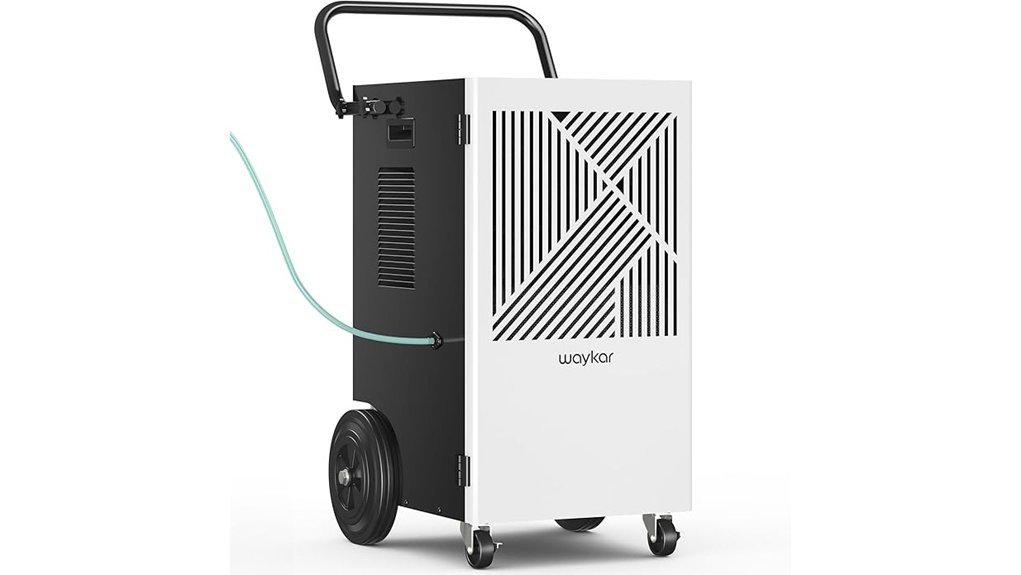
The Waykar 155 Pints Commercial Dehumidifier combines a built-in pump, gravity drainage, automatic controls, and cart-style mobility. Its published maximum is 155 pints per day at 95°F and 90% RH, with approximately 165 CFM of airflow.
The manufacturer advertises coverage up to 8,000 square feet, but this should be treated as a maximum marketing figure rather than a sizing guarantee. The pump can lift condensate up to 16.4 feet. Large rear wheels, swivel casters, a washable filter, automatic defrost, and a cart-style handle make the unit practical for a large open basement or commercial work area.
Best For: Large basements, warehouses, workshops, gyms, and buyers who want a wheeled commercial unit with both pump and gravity drainage.
Why You’ll Like It: Its cart design, washable filter, wide humidity-control range, and two drainage methods address the practical installation needs of a large basement.
Who Should Avoid It: Buyers who require a directly comparable 80°F/60% RH rating may prefer Moiswell, HBN, ARGENDON, ALORAIR, or ANDTE.
Pros:
- Flexible drainage: Supports pump and gravity-drain operation.
- Easy to reposition: Large rear wheels, front casters, and a cart handle improve mobility.
- Washable filter: Helps simplify routine maintenance.
- Automatic defrost: Useful in cooler basement conditions within the published operating range.
Cons:
- No comparable AHAM figure: The 155-pint hot-condition rating is harder to compare with 80°F/60% RH figures.
- Large and heavy: The published weight is around 79 pounds, so stairs may require two people.
- Moderate airflow for its size: The approximately 165 CFM rating is lower than some restoration-focused machines.
HBN 125 Pints Crawl Space Dehumidifier with Pump
Best for Crawl Spaces
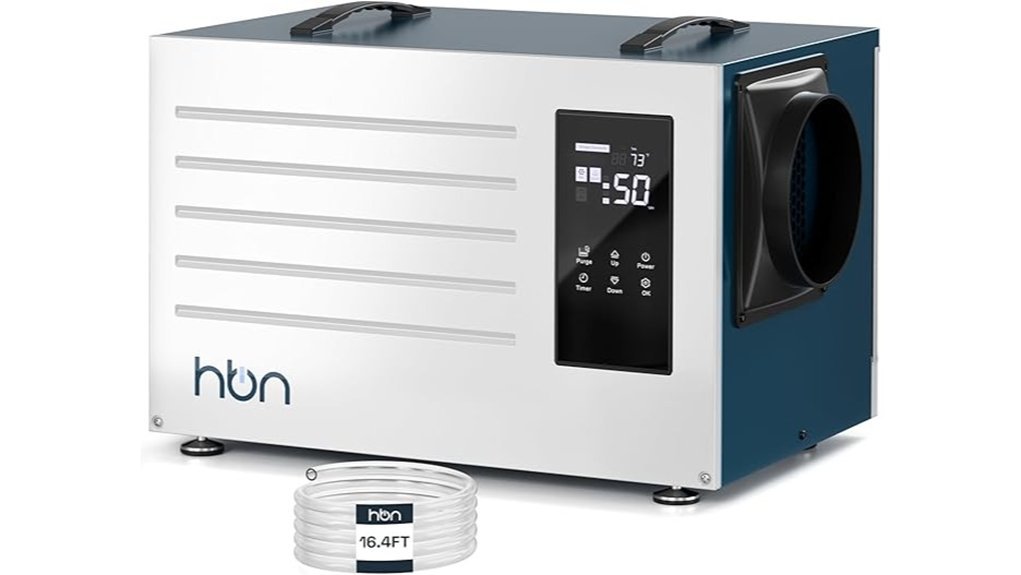
The HBN 125 Pints Crawl Space Dehumidifier is shaped for confined basements, crawl spaces, workshops, and utility areas where a low-profile machine is easier to position than a tall restoration cart. The linked listing publishes up to 125 pints per day at 95°F and 90% RH and approximately 60 pints per day at 80°F and 60% RH.
The built-in pump is advertised to move condensate upward by as much as 16.4 feet. A gravity-drain connection provides a lower-maintenance option when a suitable drain is below the unit. Automatic defrost, power-loss memory, adjustable humidity control, a timer, and a front control panel support less frequent supervision.
Best For: Crawl spaces, low-clearance basements, workshops, and permanent installations where both pump and gravity drainage are useful.
Why You’ll Like It: The horizontal shape is easier to fit below ducts or framing, while the published 60-pint figure at 80°F/60% RH provides a more useful comparison than the maximum number alone.
Who Should Avoid It: Restoration crews that need high airflow, large wheels, and frequent room-to-room movement may prefer a cart-style model.
Pros:
- Two published capacity conditions: Easier to compare than a maximum-only listing.
- Dual drainage: Supports gravity drainage and built-in pump drainage.
- Confined-space design: Better suited to low-clearance installation than a tall upright unit.
- Automatic restart: Can resume operation after a power interruption according to the listing.
Cons:
- Limited independent documentation: Core specifications rely mainly on the linked marketplace listing.
- No large transport wheels: It is less convenient for frequent job-site movement.
- Accessory uncertainty: Confirm whether a remote controller, hanging kit, or extra hose is included or sold separately.
ARGENDON 145 Pints Commercial Grade Dehumidifier
Best for Medium Basements
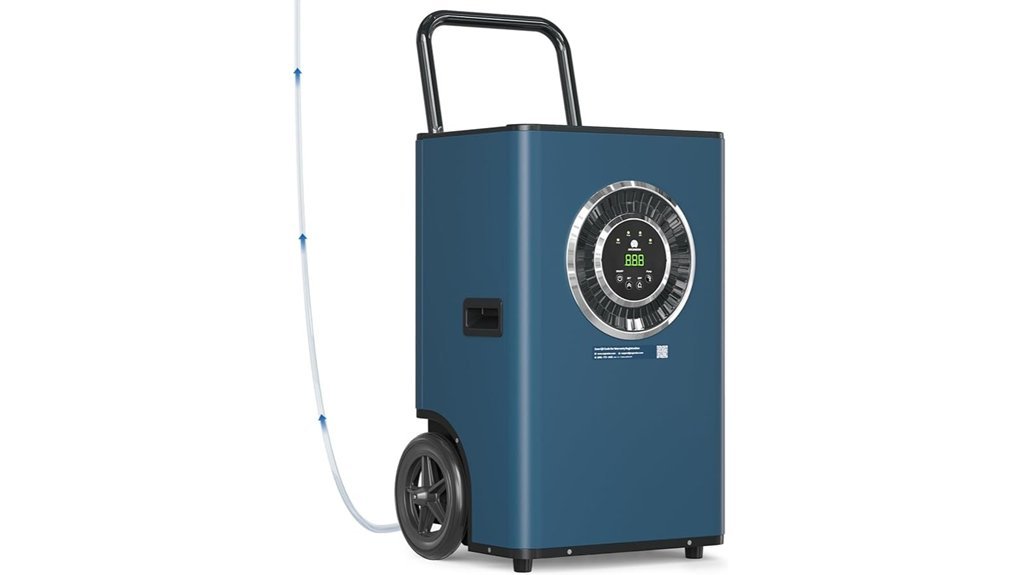
The ARGENDON 145 Pints Commercial Grade Dehumidifier publishes a maximum rating of 145 pints per day at saturation and approximately 60 pints per day at 80°F and 60% RH. The linked listing advertises coverage up to 1,500 square feet, although ARGENDON sells several closely related 145/60 models with different housings and coverage claims.
The built-in condensate pump supports a hose route of up to 19.6 feet, giving it one of the longest published pump routes in this comparison. Gravity drainage, automatic defrost, memory restart, and commercial-style construction make the product relevant to basements, crawl spaces, garages, and focused drying work.
Best For: Medium basements, crawl spaces, workshops, and installations with a relatively long route to an elevated discharge point.
Why You’ll Like It: The 60-pint comparison rating and 19.6-foot pump hose provide useful decision points for normal basement humidity control.
Who Should Avoid It: Buyers should verify the exact model attached to the Amazon listing because ARGENDON offers several similar 145-pint designs with different airflow, coverage, and mobility features.
Pros:
- Useful comparison rating: Publishes a 60-pint figure at 80°F and 60% RH.
- Long pump route: The published 19.6-foot hose offers installation flexibility.
- Dual drainage: Supports both gravity and pump drainage.
- Automatic defrost: Helps manage coil frost in cooler conditions.
Cons:
- Similar model names: Confirm the exact dimensions, airflow, and housing shown on the current listing.
- Coverage remains a marketing estimate: Do not size the unit from square footage alone.
- Not the highest-capacity restoration option: Severe water damage may justify more airflow and a higher 80°F/60% RH rating.
ALORAIR Sentinel Pro 35X Commercial Dehumidifier with Pump
Best for Smaller Basements
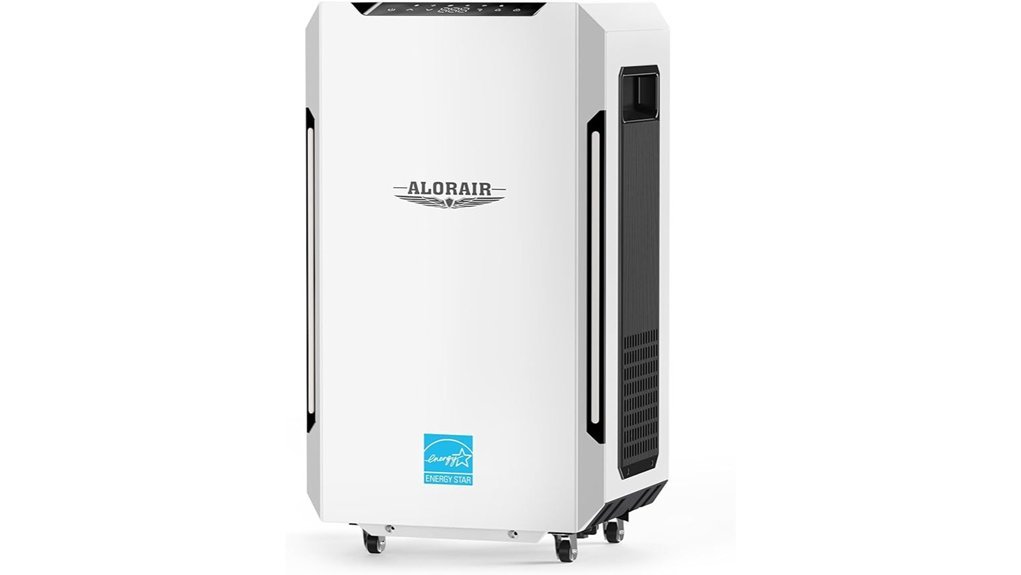
The ALORAIR Sentinel Pro 35X is a compact commercial-style unit for basements, garages, storage areas, and workspaces up to an advertised 1,000 square feet. Its specification table lists approximately 35 pints per day at 80°F and 60% RH and up to 70 pints per day at saturation.
The built-in pump uses a 19.6-foot hose and can route condensate to an elevated discharge point. The model also provides gravity drainage, automatic defrost, automatic humidity control, memory restart, a MERV-1 filter, approximately 180 CFM airflow, and four swivel wheels.
Best For: Smaller basements, garages, storage rooms, and buyers who want commercial-style drainage and controls without a 100-plus-pint comparison rating.
Why You’ll Like It: It combines a pump, long hose, filter, automatic controls, and manageable capacity in a smaller package.
Who Should Avoid It: Its 35-pint rating at 80°F/60% RH is not intended for rapid structural drying across a very large area.
Pros:
- Practical smaller capacity: Less excessive for routine basement humidity control.
- Long pump hose: Useful when the discharge point is above or some distance from the unit.
- Clear comparison rating: The specification table provides a 35-pint figure at 80°F/60% RH.
- Published sound figure: The manufacturer lists approximately 52 dBA under its stated test conditions.
Cons:
- Lowest comparison capacity here: Not designed for severe water intrusion or large restoration projects.
- Coverage is limited: Better for a smaller, defined space than an expansive open basement.
- Manufacturer-page inconsistency: Confirm the capacity table rather than relying on abbreviated promotional wording.
ANDTE 250 Pints Commercial Dehumidifier with Pump
Highest Published AHAM Capacity
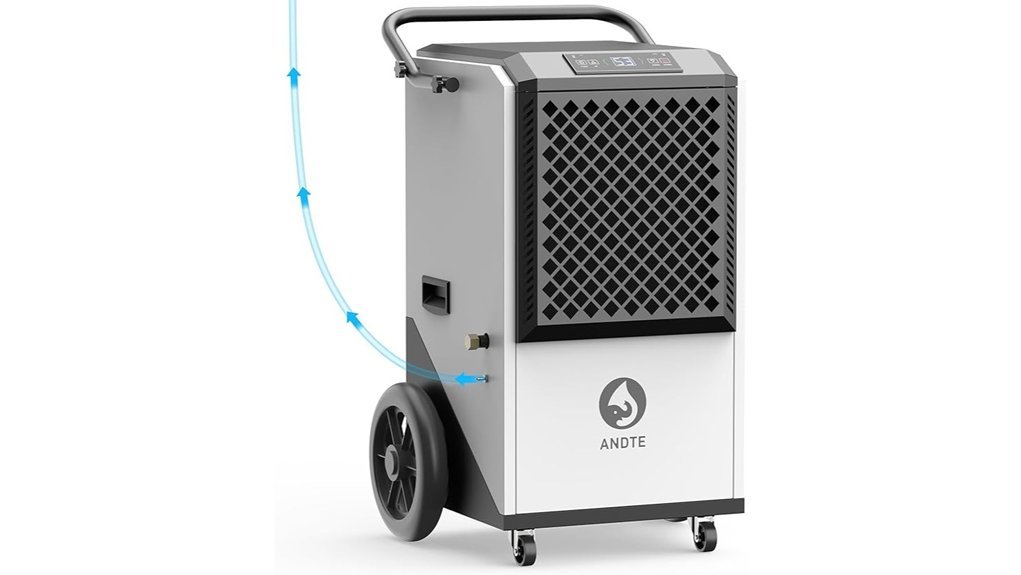
The linked 250-pint product is identified as an ANDTE commercial dehumidifier. It is intended for severe basement humidity, warehouses, restoration work, and other high-volume drying applications. Published ratings include up to 250 pints per day at 95°F and 90% RH and approximately 110 pints per day at 80°F and 60% RH.
ANDTE publishes approximately 370 CFM airflow, a metal housing, automatic defrost, automatic restart, and a built-in pump capable of routing condensate upward by approximately 16.5 feet. The model is listed for 120V, 60Hz operation with a rated current of approximately 11 amps, so buyers should verify the intended circuit and all manual requirements before installation.
Best For: Severe moisture loads, large open basements, water-damage restoration, warehouses, and high-volume drying.
Why You’ll Like It: It has the highest published 80°F/60% RH capacity in this comparison and substantially more airflow than the smaller crawl-space models.
Who Should Avoid It: It is likely unnecessary for an ordinary residential basement with moderate seasonal humidity.
Pros:
- High published capacity: Approximately 110 PPD at 80°F and 60% RH.
- High airflow: Approximately 370 CFM supports large-area drying.
- Built-in pump: Allows continuous drainage without relying on a lower floor drain.
- Metal construction: Better aligned with commercial and restoration use than a lightweight room unit.
Cons:
- Potentially excessive: Most small and medium basements will not need this capacity.
- Higher electrical demand: Confirm the nameplate, manual, outlet, and circuit before use.
- Large and heavy: Doorways, stairs, storage space, and transport should be checked before ordering.
- Support requires verification: Confirm the current warranty provider, seller, return terms, and replacement-part access.
AVAHUM 150 Pint Dehumidifier for Large Rooms
Best With a Collection Tank
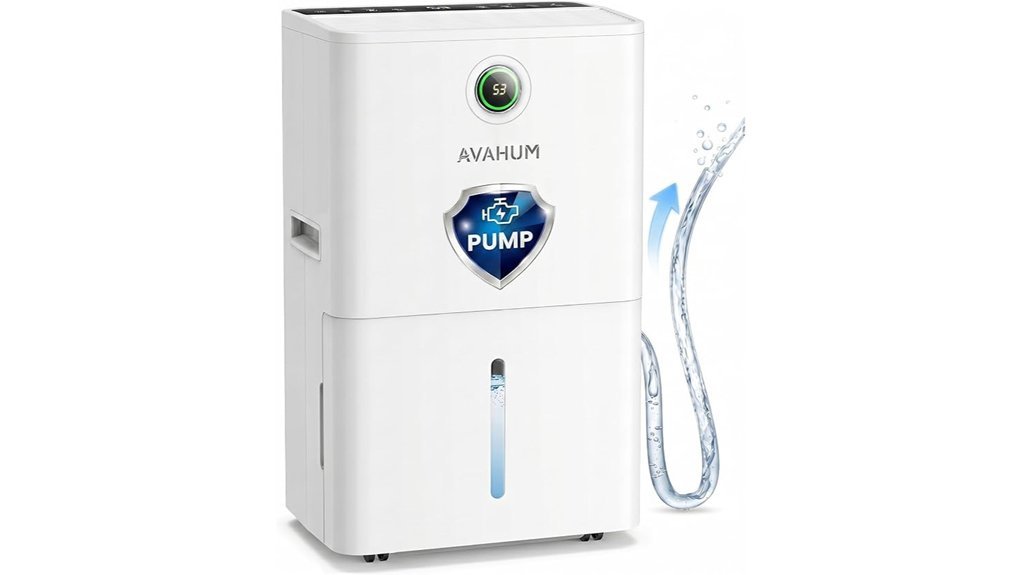
The AVAHUM AM150P is a high-capacity room dehumidifier marketed for large basements, garages, residential spaces, and some commercial applications. Its 150-pint rating is measured at 95°F and 90% RH, and a directly comparable 80°F/60% RH figure was not found.
Unlike the tankless restoration-style models, the AVAHUM includes a 2.1-gallon collection tank as well as gravity drainage and built-in pump drainage. The pump is advertised to lift water up to 16.4 feet. Published features include approximately 250 CFM airflow, three fan speeds, automatic defrost, a timer, digital controls, casters, and carrying handles.
Best For: Buyers who specifically want the flexibility of a collection tank, gravity hose, and condensate pump in one unit.
Why You’ll Like It: The tank allows temporary use without installing a hose immediately, while gravity and pump modes support longer unattended operation.
Who Should Avoid It: Restoration professionals or buyers seeking a metal, tankless commercial machine with a clearly published 80°F/60% RH capacity should choose another model.
Pros:
- Three drainage methods: Tank, gravity hose, and pump drainage provide setup flexibility.
- Strong published airflow: Approximately 250 CFM is useful for a large room-style unit.
- Portable format: Casters and handles help with movement across a smooth floor.
- Automatic controls: Includes adjustable humidity, defrost, timer, and multiple fan speeds.
Cons:
- No comparable AHAM figure: The 150-pint hot-condition number is difficult to compare fairly.
- Less restoration-focused construction: The plastic, tank-style format is closer to a large room dehumidifier.
- Coverage discrepancy: Published material varies between approximately 7,000 and 8,000 square feet.
- Electrical demand should be checked: Confirm the current nameplate, manual, outlet, and circuit requirements.
Factors to Consider When Choosing a Commercial Grade Dehumidifier With Pump for Basement
A commercial basement dehumidifier is a substantial purchase, so do not choose one based only on the largest pint or square-foot number. Compare the test conditions, pump route, airflow, temperature range, portability, electrical requirements, drainage access, and maintenance needs.
Dehumidification Capacity and Test Conditions
A commercial listing may publish several different capacities. A maximum rating measured at 90°F or 95°F and 90% RH will be much higher than performance in a cool basement.
When available, the published figure at 80°F and 60% RH is generally more useful for comparing the commercial products in this article. It should still be read with its test conditions because current portable ENERGY STAR ratings use a different, cooler test procedure.
A basement with mild seasonal humidity may not need a 100-plus-pint machine. Active seepage, wet building materials, construction work, or a large open commercial area can create a much greater moisture load.
Coverage Area Considerations
Advertised coverage should be treated as a rough maximum. Two basements with the same floor area can require very different equipment because of ceiling height, ventilation, wall materials, temperature, room divisions, air leakage, and the amount of water entering the structure.
For better sizing, consider:
- The basement’s floor area and ceiling height.
- The starting relative humidity and desired humidity range.
- Whether surfaces are slightly damp, visibly wet, or receiving active water.
- Whether the basement is one open room or several closed rooms.
- Whether the goal is routine humidity control or rapid structural drying.
- The unit’s capacity at the stated test temperature and humidity.
- The published airflow in CFM.
Drainage Options and Pump Lift
A built-in condensate pump is useful when water must travel upward to a sink, standpipe, window, or other approved discharge point. Models in this guide publish pump routes of approximately 16 to 19.6 feet.
Check whether the manufacturer is describing the included hose length, maximum vertical lift, or total supported route. These are not always the same measurement. Follow the exact manual for maximum lift, hose diameter, hose length, and approved discharge setup.
Avoid tight bends, pinched tubing, freezing discharge points, and locations where pumped water could return toward the foundation. Use gravity drainage when a safe lower drain is available because it is simpler and has fewer moving parts.
Electrical Requirements
Commercial dehumidifiers can place a substantial continuous load on a basement circuit. Before ordering, confirm:
- The voltage and plug type shown on the product nameplate.
- The rated amperage and wattage in the current manual.
- Whether other major appliances share the intended circuit.
- The manufacturer’s grounding and extension-cord restrictions.
- Whether the installation area requires GFCI protection or other local electrical measures.
- Whether the outlet remains safely accessible for disconnecting the unit.
Do not rely only on a marketplace specification table. The nameplate and current manufacturer manual should control the installation decision.
Energy Efficiency
Do not judge efficiency by wattage alone. A more powerful unit may consume more electricity per hour but complete a severe drying task faster. Compare the capacity at stated conditions, published efficiency data, airflow, operating controls, automatic cycling, and ENERGY STAR information when the exact model is listed.
Correct sizing also matters. An undersized unit may run continuously without reaching the target humidity, while an oversized restoration machine may be unnecessarily expensive, heavy, and noisy for routine seasonal control.
Portability and Mobility
Commercial dehumidifiers can be heavy. Check the unit weight, stair width, doorway clearance, wheel type, handle design, and whether protruding handles can be removed.
Large rear wheels are useful on uneven floors and job sites. Four small casters work well on a smooth basement floor but may be harder to manage on stairs, thresholds, gravel, or unfinished surfaces. Low-profile crawl-space units may be easier to place permanently but less convenient to move frequently.
Airflow and Drying Speed
Airflow is measured in cubic feet per minute, or CFM. Higher airflow can move more damp air through the dehumidifier and may support faster drying of flooring, framing, plaster, and other materials after water exposure.
Airflow is not a substitute for moisture-removal capacity. For restoration work, compare both CFM and the pint rating at the stated conditions. Air movers may also be used by restoration professionals to circulate air across wet surfaces.
Low-Temperature Operation
Basements can become cool enough for frost to form on a refrigerant dehumidifier’s coils. Look for automatic defrost and confirm the exact operating-temperature range in the manual.
Defrost helps manage frost, but it does not mean a unit will remove its full advertised capacity in near-freezing conditions. Moisture-removal performance normally falls as temperature and absolute moisture levels decrease.
Maintenance and Serviceability
Check how easily you can remove and clean or replace the filter, inspect the pump hose, access the gravity-drain connection, clean the collection tank when present, and obtain replacement parts.
A clogged filter reduces airflow. Debris, slime, or a kink in the pump hose can interrupt drainage. Inspect the discharge point periodically to confirm that water is leaving the building safely.
Confirm the current warranty provider, registration requirements, exclusions, authorized service process, and seller return terms before ordering. Marketplace terms may differ from the manufacturer’s direct warranty.
Fix the Water Source First
A dehumidifier can remove moisture from the air and assist with drying, but it cannot repair foundation cracks, failed waterproofing, plumbing leaks, poor grading, clogged gutters, or groundwater intrusion.
Correct active water sources whenever possible. Do not operate electrical equipment in standing water or an unsafe flooded area. For major water damage, contaminated water, structural concerns, or extensive mold growth, professional assessment may be appropriate.
Frequently Asked Questions
How Do I Maintain a Commercial Dehumidifier With a Pump?
Turn off and unplug the unit before routine maintenance. Follow the manual for cleaning or replacing the filter, inspect the gravity and pump hoses for clogs or kinks, keep the air inlet and outlet clear, and confirm that the pump sends water to the intended discharge point. Inspect the filter more often in dusty construction or restoration areas.
What Size Dehumidifier Is Best for My Basement?
Start with the capacity at the stated test conditions, then consider the basement’s volume, starting humidity, temperature, layout, airflow, and water source. A 35- to 60-pint unit at 80°F/60% RH may be practical for routine control in a smaller or medium basement. Severe seepage, wet materials, restoration work, or a very large open area may justify a 70- to 110-pint machine at the same stated conditions.
What Humidity Should I Set in a Basement?
A common starting target is approximately 45% to 50% RH, with adjustment based on comfort, condensation, building materials, and climate. Avoid trying to make the basement as dry as possible. Use a separate hygrometer to confirm the actual room humidity because the sensor near the machine may read differently from distant parts of the basement.
Are Dehumidifiers With Pumps Energy-Efficient?
A condensate pump uses some electricity, but it allows continuous operation without manually emptying a tank. Overall efficiency depends more on the compressor, fan, capacity at the stated test conditions, correct sizing, humidity setting, air leakage, and how long the machine must run.
Can I Use a Dehumidifier in Cold Temperatures?
Yes, when the temperature remains within the model’s published operating range. Choose a unit with automatic defrost for a cool basement. Do not assume a standard refrigerant dehumidifier will remain efficient near freezing, even when it can complete a defrost cycle.
How Loud Are Commercial-Grade Dehumidifiers During Operation?
Commercial models generally use larger compressors and higher-airflow fans than ordinary room units, so they can be noticeable. Compare manufacturer-published dBA figures when available, but remember that room surfaces, fan setting, distance, and installation can change the perceived sound.
How High Can a Built-In Pump Drain Water?
The products in this guide publish pump routes of approximately 16 to 19.6 feet. Confirm whether the number describes vertical lift, included hose length, or another routing limit. Always follow the exact manual rather than assuming the full hose can rise vertically.
Should I Use Pump or Gravity Drainage?
Use gravity drainage when a safe drain is below the dehumidifier and the hose can maintain a continuous downward slope. Use the pump when the approved discharge point is above the unit or gravity drainage is impractical. Gravity drainage is mechanically simpler, while a pump provides more placement flexibility.
Can a Dehumidifier Fix a Wet Basement?
No. It can reduce airborne moisture and help dry damp materials, but it cannot repair foundation leaks, poor exterior drainage, failed waterproofing, plumbing problems, or groundwater intrusion. Correct the water source whenever possible.
Do I Need a Collection Tank if the Dehumidifier Has a Pump?
Not necessarily. Many commercial and restoration units are tankless and send condensate directly through a gravity hose or pump. A collection tank can be useful for temporary placement, but it adds another component to clean and may stop the machine when full if continuous drainage is not connected.
Final Recommendation
Our Top Pick: Moiswell Pioneer-XI
The Moiswell Pioneer-XI 160 Pints Commercial Dehumidifier is the strongest all-around option in this comparison because it combines a published 73-pint rating at 80°F/60% RH, 265 CFM airflow, pump and gravity drainage, automatic defrost, large wheels, and removable handles.
Choose the Waykar 155 for a large open basement when cart-style mobility, automatic controls, and a washable filter matter more than having a published 80°F/60% RH capacity.
The HBN 125 is better for a low-clearance crawl space or confined basement. The ARGENDON 145 is a practical medium-capacity option when a long 19.6-foot pump hose is useful. For a smaller basement, the ALORAIR Sentinel Pro 35X offers a more manageable 35-pint rating at 80°F/60% RH.
The ANDTE 250 has the highest published 80°F/60% RH capacity in this comparison, but its size, airflow, and electrical demand make it more appropriate for severe moisture, large spaces, or restoration work. Choose the AVAHUM AM150P only when you specifically value having a collection tank in addition to gravity and pump drainage.
Before purchasing any model, compare the capacity at the stated temperature and humidity, pump route, airflow, operating-temperature range, unit dimensions, electrical requirements, filter access, current warranty terms, and the source of the basement moisture.