Affiliate disclosure: As an Amazon Associate I earn from qualifying purchases. Product specifications and availability can change, so always verify the current Amazon listing before purchasing.
If you are shopping for the best commercial dehumidifiers with a pump, focus on three specs first: real-world moisture removal capacity, vertical pump lift height, and the physical layout of the space you need to dry. A built-in condensate pump lets you push water upward into a utility sink, standpipe, or elevated drain line—up to 15 to 19.6 feet vertically—so you can dry damp basements, crawl spaces, warehouses, job sites, storage rooms, spas, and garages without emptying a bucket all day. In this guide, we compare 10 high-capacity options ranging from compact 70- and 80-pint units to heavy-duty restoration machines like the MOUNTO 310 Pints, MOUNTO 268 Pints, ALORAIR 180 PPD, Waykar 155 Pints, and Airzentti 155 Pints. Use the quick verdict and comparison table below to match the right pump dehumidifier to your space.
Quick Verdict: Which Commercial Dehumidifier With a Pump Should You Choose?
Choose a heavy-duty commercial or restoration unit (155 to 310 PPD at saturation) if you are drying flooded rooms, warehouses, large damp basements, or commercial job sites. Choose a low-clearance crawl space model or an Energy Star upright pump unit (70 to 125 PPD) if you need hands-free upward drainage in a tight crawl space, finished basement, office, or medium-sized utility area.
- Best heavy-duty restoration pick: MOUNTO 310 Pints Commercial Dehumidifier with Pump for demanding job sites, water damage recovery, and severe moisture.
- Best wheeled restoration pick: MOUNTO 268 Pints Compact Dehumidifier with Pump for flood cleanup and large damp spaces needing easy transport.
- Best crawl space picks: ALORAIR 180 PPD and CADPXS 125 Pints Crawl Space Dehumidifiers with Pump for low-clearance areas with a 19.6-foot vertical pump lift.
- Best warehouse & large-area picks: Waykar 155 Pints and Airzentti 155 Pints Commercial Dehumidifiers with Pump for open storage rooms, shops, and commercial buildings.
- Best energy-conscious home or business pick: AEOCKY 4,500 Sq. Ft. (80-Pint) Energy Star Dehumidifier with Pump for quieter, efficient operation in basements and offices.
| Product | Best For | Claimed Capacity* | Pump Lift & Max Area | Key Advantage | Amazon |
|---|---|---|---|---|---|
| 190-Pint Commercial Dehumidifier with Pump for Large Spaces | Large basements, warehouses, spas | 190 pints/day | 16.4 ft lift | Up to 7,500 sq. ft. | High 265 CFM airflow and caster mobility | Check Price on Amazon |
| AEOCKY 4500 Sq.Ft Energy Star Dehumidifier with Pump | Homes, offices, and quiet basements | 80 pints/day | 360° pump | Up to 4,500 sq. ft. | Energy Star efficiency and low-vibration pump | Check Details on Amazon |
| MOUNTO 268 Pints Compact Dehumidifier with Pump | Water damage restoration and flooded rooms | 268 pints/day | 15 ft lift | Restoration grade | Heavy extraction with semi-pneumatic wheels | View Deal on Amazon |
| CADPXS Crawl Space Dehumidifier with Pump | Crawl spaces, tight basements, storage | 125 pints/day | 19.6 ft lift | Up to 1,300 sq. ft. | Low-clearance housing with tall 19.6 ft pump lift | Check Availability on Amazon |
| MOISWELL 70 Pints Portable Dehumidifier with Pump | Medium basements, crawl spaces, utility rooms | 70 pints/day (saturation) | 16.4 ft lift | Up to 1,000 sq. ft. | Compact footprint with built-in vertical pump | Check Price on Amazon |
| DECIUU Max 100 Pint Dehumidifier with Pump | Large homes, garages, light commercial spaces | 100 pints/day | Upward pump | Up to 5,000 sq. ft. | Energy Star upright design with vortex fan | See Price on Amazon |
| ALORAIR 180 PPD Commercial Dehumidifier with Pump | Damp crawl spaces and low-clearance basements | 180 pints/day (90 AHAM) | 19.6 ft hose | Up to 2,300 sq. ft. | Compact commercial chassis with auto-defrost | Check Details on Amazon |
| Airzentti 155 Pints Commercial Dehumidifier with Pump and Hose | Industrial warehouses and large basements | 155 pints/day | 16.4 ft lift | Up to 7,500 sq. ft. | 220 CFM airflow, timer, and 60 lb frame | View Deal on Amazon |
| Waykar 155 Pints Commercial Dehumidifier with Pump | Commercial buildings, warehouses, shops | 155 pints/day | 16.4 ft lift | Up to 8,000 sq. ft. | Wide 10%–90% RH target range and push handle | Check Availability on Amazon |
| MOUNTO 310 Pints Commercial Dehumidifier with Pump | Contractors, job sites, severe flood drying | 310 pints/day | Continuous pump | Up to 5,000 sq. ft. | Highest moisture extraction and roto-molded shell | Check Price on Amazon |
*Note on capacity and coverage ratings: Commercial dehumidifiers typically advertise moisture removal at saturation conditions (90°F, 90% RH), which is roughly double their output under normal room conditions (AHAM: 80°F, 60% RH). Similarly, restoration-focused brands rate square footage conservatively for wet, flooded structures, whereas general commercial brands rate for routine humidity maintenance in enclosed spaces.
Commercial Dehumidifier with Pump for Large Spaces (190 Pints)

When managing persistent dampness across open floor plans, this 190-pint commercial dehumidifier with a pump is built for basements, warehouses, indoor spas, and storage facilities where manual bucket emptying is impractical. With a claimed saturation capacity of 190 pints daily and a strong 265 CFM airflow rating, it moves enough air to service enclosed areas rated up to 7,500 square feet under moderate humidity maintenance conditions.
Four swivel casters and recessed carry handles make it straightforward to roll across concrete warehouse or basement floors. Its internal float-switch condensate pump can push collected water vertically up to 16.4 feet, allowing you to route the drain hose up into a utility sink, overhead drain line, or window discharge point. A 24-hour programmable timer and automatic humidity control also let you cycle the unit during off-peak hours rather than running the compressor continuously.
Why you’ll like it: High 265 CFM airflow paired with a 16.4-foot vertical pump lift makes this unit well suited for open commercial floors that lack a nearby floor drain.
Best For: Open basements, warehouses, indoor pool/spa rooms, and commercial storage spaces needing high airflow and upward drainage.
Who Should Buy This: Facility managers and property owners who want an upright, caster-mounted commercial dehumidifier that can roll between rooms and pump water up to a wall drain or sink.
Who Should Avoid This: Buyers who need a low-profile horizontal unit to fit inside a shallow residential crawl space, or those who want multi-speed fan adjustments and Wi-Fi app controls.
Pros:
- Strong Airflow & Extraction: Combines up to 190 pints of daily saturation removal with 265 CFM airflow to circulate air across wide rooms.
- Easy Floor Mobility: Four swivel casters and sturdy side handles simplify rolling across flat commercial floors.
- 16.4-Foot Vertical Pump Lift: Automatically purges condensate upward when a floor-level gravity drain is unavailable.
Cons:
- Single Fan Speed: Runs at a fixed high-airflow speed, which limits noise adjustment in quieter rooms.
- No Smart App Integration: Controls are onboard only, with no remote Wi-Fi monitoring.
- Upright Footprint: Too tall for low-clearance crawl spaces.
AEOCKY 4500 Sq.Ft Energy Star Dehumidifier with Pump

The AEOCKY 4,500 Sq. Ft. Energy Star Dehumidifier with Pump bridges the gap between standard residential portables and loud industrial machines. Rated to remove up to 80 pints per day under high-humidity conditions, it is tailored for finished basements, offices, retail backrooms, and climate-controlled storage areas where electricity costs and operating noise are everyday concerns.
Unlike tankless industrial units, this upright model offers three drainage modes: a removable collection bucket, continuous gravity draining, and 360° active pump drainage that pushes water to an elevated sink or window when gravity flow is not possible. Its Energy Star certification and low-vibration pump architecture keep both power draw and mechanical hum lower than metal-bodied warehouse units, making it much easier to live and work around.
Why you’ll like it: It delivers hands-free pump drainage and Energy Star efficiency in a quieter, home- and office-friendly appliance package.
Best For: Finished basements, commercial offices, clinics, and light-commercial storage rooms up to 4,500 sq. ft. with moderate-to-high dampness.
Who Should Buy This: Homeowners and small-business operators who want automatic upward drainage without the industrial noise or heavy power draw of a job-site restoration unit.
Who Should Avoid This: Restoration contractors drying standing floodwater or unconditioned industrial warehouses that require a rugged 180+ pint commercial chassis.
Pros:
- Energy Star Certified: Engineered to extract moisture efficiently without spiking monthly utility bills during seasonal humidity.
- Quieter Low-Vibration Pump: Significantly less disruptive in occupied basements and office workspaces than industrial restoration blowers.
- Flexible 3-Way Drainage: Supports active pump discharge, passive gravity hose draining, or manual bucket use.
Cons:
- Residential/Light-Commercial Build: Plastic appliance casing is not meant for rough construction or flood-restoration transport.
- Lower Extraction Ceiling: At 80 pints per day, it cannot match 180- to 310-pint commercial units in severe water-intrusion events.
- Periodic Reservoir Care: Internal pump tubing and float assemblies require occasional flushing to prevent buildup.
MOUNTO 268 Pints Compact Dehumidifier with Pump

For property managers and contractors tackling water damage restoration or chronic structural dampness, the MOUNTO 268 Pints Compact Dehumidifier with Pump is a true job-site workhorse. Rated for up to 268 pints per day at saturation (roughly 125–145 pints under standard AHAM conditions), it is built to pull deep moisture out of wet drywall, subfloors, carpets, and large commercial basements after plumbing leaks or storms.
At 88 pounds, it uses large semi-pneumatic wheels and an upright trolley-style handle so one operator can roll it across thresholds and job sites. The heavy-duty internal condensate pump provides a 15-foot vertical lift head for continuous unattended draining, while the onboard digital humidistat tracks ambient relative humidity in real time. Better yet, it runs on a standard 120-volt household circuit at 470 watts, drawing low enough amperage that you can plug it into standard wall outlets without needing a 240-volt industrial hookup.
Why you’ll like it: It packs serious restoration-grade moisture extraction (268 PPD saturation) into a wheeled frame that runs on a standard 120V outlet.
Best For: Water damage restoration, flooded basements, drying wet building materials, and high-moisture commercial environments.
Who Should Buy This: Contractors, maintenance teams, and homeowners recovering from basement leaks who need high daily extraction and rugged wheeled transport.
Who Should Avoid This: Anyone looking for a quiet, lightweight household appliance for a bedroom or small living area.
Pros:
- Restoration-Grade Extraction: Removes up to 268 pints per day at saturation for rapid structural and carpet drying.
- Standard 120V Operation at 470W: Delivers high commercial output without requiring a specialized 240V outlet.
- Job-Site Mobility: Semi-pneumatic wheels and a tall handle make rolling an 88-pound machine across uneven surfaces manageable.
Cons:
- Heavy on Stairs: At 88 pounds, lifting it into a vehicle or up a narrow basement staircase is best done by two people.
- Slightly Shorter Pump Lift: Its 15-foot vertical pump head is plenty for most basements, though slightly lower than the 19.6-foot lift on some crawl-space models.
- Circuit Load Planning Needed: While 470 watts is efficient for its size, you still need to watch total circuit amperage if running multiple air movers on the same breaker.
CADPXS Crawl Space Dehumidifier with Pump

If your primary battle is a damp, low-clearance crawl space or tight basement where upright dehumidifiers simply will not fit, the CADPXS Crawl Space Dehumidifier with Pump is purpose-built for the job. Rated at up to 125 pints per day at saturation, its horizontal profile slides neatly between floor joists or sits on a crawl-space pad while outperforming plastic household dehumidifiers.
Delivering 147 CFM of airflow, it is sized specifically for enclosed crawl spaces, cellars, and storage zones up to 1,300 sq. ft. Its standout feature is a high-head automatic condensate pump with a 19.6-foot vertical lift—giving you extra reach to route the drain line up through a rim joist, into a sump basin, or out to an exterior drain. Simple digital humidity controls and auto-restart after power interruptions make it a dependable set-and-forget unit for hard-to-reach underfloor spaces.
Why you’ll like it: A low-profile horizontal chassis and a tall 19.6-foot pump lift make it ideal for tight crawl spaces where you never want to crawl underneath to empty water.
Best For: Encapsulated or vented crawl spaces, low-ceiling cellars, and tight basements up to 1,300 sq. ft.
Who Should Buy This: Homeowners and waterproofing installers who need a horizontal commercial unit with high vertical pump lift to keep subfloor wood dry and prevent mold growth.
Who Should Avoid This: Buyers trying to dry a massive open warehouse beyond 1,300 sq. ft., where a higher-CFM 155- to 310-pint unit is required.
Pros:
- Tall 19.6-Foot Pump Lift: Easily pushes condensate up from deep crawl spaces or below-grade basements to upper drain lines.
- Low-Clearance Horizontal Design: Fits into tight under-house spaces and utility chases where upright units cannot stand.
- Set-and-Forget Operation: Digital humidistat and automatic purge pump eliminate manual bucket maintenance.
Cons:
- Focused Coverage Area: Its 147 CFM airflow and 1,300 sq. ft. rating are built for crawl spaces and basements, not sprawling warehouses.
- No Built-In Casters: Designed for stationary floor or hanging installation rather than frequent room-to-room rolling.
- Noticeable Airflow Hum: Can be heard through uninsulated floorboards if mounted directly beneath a quiet bedroom.
MOISWELL 70 Pints Portable Dehumidifier with Pump

When you want commercial-style durability and automatic upward pumping for a smaller footprint, the MOISWELL 70 Pints Portable Dehumidifier with Pump is a smart choice for medium basements, crawl spaces, laundry rooms, commercial kitchens, and utility rooms up to 1,000 sq. ft. Removing up to 70 pints per day at saturation, it solves the problem of small spaces that are too damp for a flimsy household unit but do not need a 200-pint giant.
Its Energy Star certification keeps operating costs reasonable during continuous summer runs, while the internal condensate pump pushes water vertically up to 16.4 feet. Weighing 40 pounds, it is lighter and easier for one person to position in a crawl space or utility room than 65- to 125-pound industrial models, and its straightforward digital control panel automatically maintains your target humidity setting.
Why you’ll like it: At 40 pounds with a 16.4-foot pump lift, it brings tankless commercial pump reliability to spaces up to 1,000 sq. ft. without the bulk of a full-size unit.
Best For: Medium basements, smaller crawl spaces, laundry rooms, workshops, and utility rooms up to 1,000 sq. ft.
Who Should Buy This: Property owners who want a compact, durable, tankless pump dehumidifier that one person can carry and install in a sub-1,000 sq. ft. space.
Who Should Avoid This: Anyone drying spaces larger than 1,000 sq. ft. or dealing with acute flood restoration.
Pros:
- Manageable 40-Pound Weight: Much easier for one person to carry into a crawl space or down basement stairs than heavier 180+ pint machines.
- 16.4-Foot Vertical Pump Drainage: Drains upward into a utility sink, washer standpipe, or sill-plate outlet automatically.
- Energy Star Efficiency: Keeps electricity consumption in check for smaller continuous-run spaces.
Cons:
- 1,000 Sq. Ft. Ceiling: Undersized for large open basements or multi-room commercial warehouses.
- Stationary Carry Handles Only: Does not use upright rolling casters, so moving it requires lifting by the handles.
- Higher Upfront Cost Than Plastic Portables: Costs more initially than basic department-store bucket dehumidifiers.
DECIUU Max 100 Pint Dehumidifier with Pump

The DECIUU Max 100 Pint Dehumidifier with Pump is an upright, high-capacity portable unit designed for large basements, garages, workshops, and light-commercial rooms. With a listed capacity of 100 pints per day and claimed coverage for enclosed areas up to 5,000 sq. ft. under standard maintenance conditions, it provides noticeably more moisture-pulling power than 50- to 70-pint household models.
Inside, a rotary compressor and vortex fan help circulate damp air toward the evaporator coils efficiently. The integrated pump supports upward condensate drainage into a sink or window when floor drains are out of reach, while the top-mounted LED control panel makes it easy to read and adjust target humidity without bending down. Its Energy Star certification also makes it appealing if you run a dehumidifier daily through humid spring and summer months.
Why you’ll like it: It steps up to 100-pint daily capacity while retaining an approachable upright appliance layout, top LED controls, and Energy Star efficiency.
Best For: Large residential basements, multi-car garages, retail storage areas, and light-commercial spaces with ongoing seasonal humidity.
Who Should Buy This: Buyers who want more drying power than an 80-pint home unit while keeping an upright, wheeled appliance style that blends into finished rooms.
Who Should Avoid This: Contractors who need a rugged horizontal crawl-space dehumidifier or a 200+ pint water-damage restoration unit.
Pros:
- 100-Pint Daily Capacity: Bridges the gap between standard residential portables and heavy industrial machines.
- Built-In Upward Drain Pump: Eliminates daily bucket trips in basements without a floor drain.
- Energy Star Rated with Top LED Panel: Combines efficient rotary compressor operation with easy-to-read standing controls.
Cons:
- Not Built for Rough Job Sites: Upright plastic housing is meant for indoor floors, not construction or flood remediation transport.
- Louder Than Bedroom Units: The high-output vortex fan produces noticeable airflow sound on maximum speed.
- 5,000 Sq. Ft. Rating Assumes Mild Conditions: In very wet or leaky basements, realistic effective coverage will be closer to 1,500–2,500 sq. ft.
ALORAIR 180 PPD Commercial Dehumidifier with Pump

The ALORAIR 180 PPD Commercial Dehumidifier with Pump (Sentinel HDi90 series) is one of the most established low-clearance commercial dehumidifiers on the market. It extracts up to 180 pints per day at saturation (and roughly 90 pints per day at AHAM 80°F/60% RH), giving it serious drying muscle inside a compact horizontal body designed to fit crawl spaces, mechanical rooms, and tight basements up to 2,300 square feet.
Notice how AlorAir rates this 180-pint machine for 2,300 sq. ft. while smaller upright units claim 4,500+ sq. ft.—that is because AlorAir sizes its commercial equipment for genuinely wet, challenging below-grade environments rather than dry living rooms. It includes a heavy-duty internal condensate pump with a 19.6-foot drain hose for vertical discharge, plus an automatic hot-gas defrost system that keeps coils from icing over in cool basements and winter crawl spaces. Be sure to review the current multi-year limited warranty breakdown on the listing for long-term peace of mind.
Why you’ll like it: True commercial crawl-space engineering—180 PPD saturation (90 PPD AHAM), hot-gas auto-defrost for cool basements, and a 19.6-foot pump drain line.
Best For: Wet crawl spaces, low-clearance basements, commercial storage vaults, and cool below-grade areas up to 2,300 sq. ft.
Who Should Buy This: Homeowners and contractors who want a proven, dedicated crawl-space commercial dehumidifier that handles cool temperatures and heavy moisture year-round.
Who Should Avoid This: Users who want a lightweight unit on caster wheels to roll around upstairs rooms every week.
Pros:
- High Real-World Extraction: Delivers 180 PPD at saturation (~90 PPD at AHAM) inside a low-profile crawl-space chassis.
- Automatic Defrost for Cool Spaces: Prevents coil freeze-ups in chilly basements and unheated crawl spaces down to low operating temperatures.
- 19.6-Foot Pump Drainage Included: Ships ready for vertical or long-run discharge without gravity slope constraints.
Cons:
- Heavy Stationary Build (64.3 lbs): Built to be installed in place (or suspended on brackets) rather than wheeled from room to room.
- 646-Watt Power Draw: Higher amperage consumption than smaller 70-pint units when running under heavy moisture loads.
- 104°F Upper Ambient Limit: Not intended for unventilated attics or industrial rooms exceeding 104°F.
Airzentti 155 Pints Commercial Dehumidifier with Pump and Hose

The Airzentti 155 Pints Commercial Dehumidifier with Pump and Hose combines a high-capacity compressor with a comparatively compact 60-pound frame (measuring 24.3 x 14.2 x 15 inches). Rated to extract up to 155 pints of moisture daily at saturation with a 220 CFM airflow rating, it is built to maintain dry air across warehouses, workshops, large basements, and commercial storage areas rated up to 7,500 square feet.
Its integrated condensate pump lifts water up to 16.4 feet vertically through the included drain hose, so you can route discharge overhead or into a distant utility sink without babysitting a tank. An onboard timer, multiple operating modes, and Energy Star certification let you balance runtime and power consumption in commercial buildings that require daily humidity control.
Why you’ll like it: At 60 pounds, it is noticeably lighter and more compact than many 155-pint competitors while still delivering 220 CFM airflow and a 16.4-foot pump lift.
Best For: Industrial warehouses, large residential basements, workshops, and commercial storage rooms needing hose-ready pump drainage.
Who Should Buy This: Buyers who want 155-pint commercial drying power and an included pump-and-hose setup in a 60-pound footprint that is easier to position than 80+ pound machines.
Who Should Avoid This: Small apartment owners or quiet-office users who need whisper-quiet acoustic performance.
Pros:
- 155-Pint Extraction with 220 CFM Airflow: Moves substantial air volume to keep large open spaces dry.
- 16.4-Foot Pump & Hose Setup: Ready for automatic vertical or horizontal drainage right out of the box.
- Manageable 60-Pound Chassis: Nearly 20 pounds lighter than several competing 155-pint wheeled commercial units.
Cons:
- Commercial Fan Noise: Its 220 CFM blower produces noticeable sound in quiet rooms.
- Two-Person Lift on Stairs: While lighter than restoration giants, 60 pounds still requires care on narrow stairs.
- 7,500 Sq. Ft. Claim Is for Maintenance: In heavily saturated or unsealed spaces, effective coverage will be more modest.
Waykar 155 Pints Commercial Dehumidifier with Pump

If you need a rugged, cart-style dehumidifier for large floors, the Waykar 155 Pints Commercial Dehumidifier with Pump is engineered for commercial buildings, warehouses, gyms, greenhouses, and large basements. Rated to remove up to 155 pints of moisture daily at saturation and listed for enclosed maintenance areas up to 8,000 sq. ft., it pairs a heavy-duty metal-and-molded exterior with oversize rear wheels and a detachable push handle.
What sets the Waykar apart is its unusually wide 10% to 90% RH adjustable humidity range, allowing precise setpoint control for moisture-sensitive inventory, woodshops, or document storage. You can drain it via passive gravity flow or engage the internal pump to push condensate vertically up to 16.4 feet. A washable air filter keeps ongoing maintenance simple, and Waykar backs the line with dedicated technical support (verify current warranty terms on the Amazon listing).
Why you’ll like it: Heavy-duty rear wheels, a push-cart handle, a 16.4-foot pump lift, and a wide 10%–90% RH setpoint range make it a versatile workhorse for commercial floors.
Best For: Warehouses, commercial shops, gyms, indoor grow/storage facilities, and large basements requiring easy floor transport.
Who Should Buy This: Facility operators who want a cart-style 155-pint dehumidifier that rolls easily over thresholds and offers both pump and gravity drainage.
Who Should Avoid This: Users with tight crawl spaces (where the upright handle and frame will not fit) or single-room residential needs.
Pros:
- Wide 10%–90% RH Control Range: Lets you dial in strict humidity targets for specialized commercial storage or workshops.
- Dual Drainage (Pump + Gravity): Includes a built-in condensate pump with a 16.4-foot vertical lift plus standard gravity drain capability.
- Cart-Style Portability: Large rear wheels and a tubular push handle make rolling its 79.36-pound frame across shop floors straightforward.
Cons:
- Heavier 79.36-Pound Frame: Bulkier and nearly 20 pounds heavier than compact 155-pint horizontal units.
- Requires Floor Clearance: The cart handle and upright chassis take up dedicated floor space.
- 8,000 Sq. Ft. Rating Is Optimistic for Wet Rooms: Best sized for 2,000–4,500 sq. ft. when dealing with active moisture intrusion.
MOUNTO 310 Pints Commercial Dehumidifier with Pump

The MOUNTO 310 Pints Commercial Dehumidifier with Pump is the undisputed heavy hitter in this roundup, built specifically for professional water damage restoration, flooded basements, industrial drying, and severe job-site dampness. With a massive saturation capacity of 310 pints per day (roughly 150 pints per day at standard AHAM conditions), it pulls water out of saturated structures far faster than mid-size 70- to 155-pint models.
It is encased in a rotationally molded (roto-molded) polyethylene housing—the preferred shell in professional restoration because it resists dents, rust, and scuffs when loaded into vans or bumped against doorframes. The built-in heavy-duty condensate pump purges water continuously so crews can leave the machine running unattended on a job site, while the digital control panel displays real-time inlet/outlet humidity and temperature readings and automatically restarts after power interruptions.
Why you’ll like it: Maximum 310-pint daily extraction and a dent-proof roto-molded restoration shell make this the top choice for serious flood recovery and contractor job sites.
Best For: Professional water-damage restoration contractors, flood cleanup, large commercial job sites, and severe structural moisture up to 5,000 sq. ft.
Who Should Buy This: Restoration pros, property management groups, and industrial facilities that need maximum daily water extraction and rugged job-site durability.
Who Should Avoid This: Homeowners who only need mild seasonal humidity control in a quiet basement—this 125-pound industrial machine is overkill for light household use.
Pros:
- Maximum 310-Pint Capacity: Highest daily moisture extraction on this list for rapid structural drying and flood remediation.
- Rugged Roto-Molded Housing: Dent-resistant, rust-proof polyethylene body withstands rough contractor transport better than thin sheet metal.
- Continuous Pump & Auto-Restart: Purges condensate automatically and resumes operation after power drops without manual resetting.
Cons:
- Very Heavy (125 Pounds): While wheeled for flat surfaces, loading it into a truck or carrying it up stairs requires two people or a ramp.
- High Job-Site Noise & Airflow: Built for industrial drying velocity, not quiet residential living spaces.
- Higher Power & Upfront Investment: Commands a contractor-grade budget and draws more amperage than compact models.
Factors to Consider When Choosing a Commercial Dehumidifier With a Pump
Choosing the right commercial dehumidifier with a pump requires looking past the biggest pint number in the headline. To avoid buying an undersized unit that runs nonstop—or an oversized industrial blower that trips your breaker—evaluate real-world capacity ratings, pump lift height, form factor, airflow (CFM), operating temperature range, and maintenance access.
Before You Buy Checklist
- Calculate cubic volume, not just floor area: Multiply square footage by ceiling height—a warehouse with 16-foot ceilings holds twice as much air as a basement with 8-foot ceilings.
- Compare Saturation vs. AHAM pints: Check whether the advertised pint rating is measured at saturation (90°F, 90% RH) or standard AHAM room conditions (80°F, 60% RH).
- Measure your vertical drain rise: Ensure the pump lift rating (typically 15 to 19.6 feet) exceeds the vertical height from the dehumidifier base to your sink, standpipe, or sill-plate exit.
- Match the form factor to the space: Pick a horizontal low-clearance unit for crawl spaces and a wheeled upright or cart unit for open floors and job sites.
- Check low-temperature defrost capability: Below-grade basements and crawl spaces often sit between 50°F and 65°F and require automatic defrost to prevent coil icing.
- Verify electrical circuit capacity: Confirm your 115V/120V circuit has enough spare amperage, especially if running air movers or sump pumps on the same breaker.
1. Dehumidification Capacity Requirements (Saturation vs. AHAM Ratings)
Dehumidification capacity is measured in pints per day (PPD), but not all pint ratings use the same test standard. Most commercial and restoration dehumidifiers advertise their maximum capacity at saturation conditions (90°F and 90% relative humidity), whereas real-world indoor drying happens closer to AHAM standard conditions (80°F and 60% RH) or U.S. Department of Energy (DOE) test temperatures.
As a rule of thumb, a commercial dehumidifier’s AHAM moisture removal is roughly 45% to 55% of its saturation rating. For example, a unit rated at 180 PPD at saturation (like the ALORAIR 180 PPD) removes about 90 PPD at AHAM conditions. For routine humidity control in a medium basement or crawl space, a 70- to 125-pint saturation model is usually sufficient. For active water intrusion, wet concrete, or restoration work, step up to a 180- to 310-pint saturation machine so the compressor is not overworked.
2. Energy Efficiency Ratings
Because dehumidifiers in basements, crawl spaces, and warehouses often run for months at a time, electricity consumption adds up quickly. Look for ENERGY STAR certified models when shopping in the 70- to 155-pint class, or compare the unit’s wattage draw against its AHAM moisture removal rate (measured in liters per kilowatt-hour, or L/kWh).
Keep in mind that a slightly higher-wattage commercial unit with a high-efficiency rotary compressor and strong CFM airflow can actually use less electricity over a week than an undersized portable unit. Why? Because the properly sized commercial unit reaches the target humidity setpoint quickly and cycles off, whereas an undersized machine runs 24/7 without ever drying the room.
3. Pump Lift Height and Drainage Setup
The main reason to buy a commercial dehumidifier with a built-in pump is to eliminate gravity-drain limitations. Standard gravity drainage requires the hose to slope continuously downward into a floor drain right next to the machine. By contrast, an internal condensate pump collects water in a small internal reservoir and uses a float switch to actively pressurize the line—pushing water 15 to 19.6 feet vertically and across long horizontal runs.
When planning your installation, remember that total pump head is affected by both vertical lift and horizontal tubing length. Route the included drain hose smoothly without sharp kinks or deep U-traps where stagnant water can collect, and verify that the pump’s internal check valve prevents water in the vertical riser from flowing back into the unit when the pump cycles off.
4. Coverage Area and Airflow (CFM) Specifications
You may notice in our comparison table that some 155-pint units claim coverage up to 7,500 or 8,000 square feet, while a 180-pint crawl-space unit claims 2,300 square feet and a 310-pint restoration unit claims 5,000 square feet. That happens because there is no single mandatory rule for how brands calculate square footage: general commercial brands assume a well-sealed building with mild humidity, while restoration brands (like MOUNTO and ALORAIR) calculate for wet crawl spaces, high air infiltration, or flooded materials.
To judge real-world reach, look closely at airflow capacity in Cubic Feet per Minute (CFM) Alongside PPD. A unit with 220 to 265+ CFM circulates air across large open rooms much more effectively than a 140 CFM unit. For spaces over 3,000 square feet—or layouts divided by partition walls—using two mid-size units placed at opposite ends often controls humidity more evenly than a single machine in one corner.
5. Noise Level Considerations
Commercial dehumidifiers move a lot of air, and high CFM airflow naturally creates fan and compressor sound—typically ranging from 50 to 62 dBA (similar to a box fan on high or a background conversation). In an industrial warehouse, mechanical room, or unoccupied restoration site, acoustic output rarely matters.
However, if you are placing the unit in an occupied basement, office, spa, or directly underneath a bedroom floor in a crawl space, noise becomes a primary buying factor. For occupied rooms, favor upright models with low-vibration pumps (such as the AEOCKY 80-Pint), or place horizontal crawl-space units on anti-vibration rubber pads or hanging straps to stop structural hum from transferring through floor joists.
6. Form Factor and Portability Features
Commercial pump dehumidifiers fall into three distinct body styles, and picking the wrong shape is a common buyer mistake:
- Low-Profile Horizontal Units (ALORAIR 180 PPD, CADPXS 125 Pints, MOISWELL 70 Pints): Built with side carrying handles to slide into tight crawl spaces or sit on basement shelves. They are meant for stationary installation, not daily rolling.
- Wheeled Restoration & Cart Units (MOUNTO 268 & 310 Pints, Waykar 155 Pints): Equipped with large semi-pneumatic rear wheels and push handles so contractors can roll 80- to 125-pound machines over job-site thresholds, hoses, and ramps.
- Upright Caster Models (190-Pint Large Space, AEOCKY 80-Pint, DECIUU 100-Pint): Roll on four bottom swivel casters across flat indoor floors like basements, offices, and storage rooms.
7. Maintenance and Durability
Long-term reliability depends on both housing construction and routine preventative care. For rough job sites and damp crawl spaces, look for roto-molded polyethylene housings or powder-coated corrosion-resistant chassis coupled with automatic defrost protection and auto-restart memory.
To keep the condensate pump running trouble-free for years, rinse or vacuum the intake air filter every 2 to 4 weeks during heavy use so dust does not coat the wet evaporator coils and wash down into the pump sump. Once or twice a season, flush the internal pump reservoir with clean water (and a manufacturer-approved mild cleaning solution) to prevent slime or biofilm from sticking the float switch or clogging the drain tubing.
Pro Tips for Better Dehumidifier Results
- Seal outside air leaks first: Close exterior doors, basement windows, and unsealed crawl-space vents while the unit runs so you are not paying to dehumidify the outdoors.
- Leave 12 to 18 inches of clearance: Keep both the air intake grille and the dry-air exhaust louver clear of walls, boxes, and curtains for unrestricted CFM airflow.
- Secure the discharge hose end: Fasten the drain hose securely at your utility sink or standpipe so water pressure from the pump cycle cannot whip the hose loose.
- Add an independent hygrometer: Place a small digital hygrometer on the far side of the room to verify that dry air is reaching the corners, not just circulating near the unit.
- Supplement with air movers for flood recovery: When drying wet carpets or drywall, pair your commercial dehumidifier with high-velocity floor fans to lift boundary-layer moisture into the air so the dehumidifier can capture it.
Frequently Asked Questions
Do I Ever Have to Empty a Commercial Dehumidifier With a Built-in Pump?
No—as long as the drain hose is properly connected and pump mode is active, you do not have to empty water manually. In dedicated commercial and crawl-space dehumidifiers (like the ALORAIR, CADPXS, MOISWELL, and MOUNTO models), there is no removable water bucket at all; instead, an internal pump reservoir with a float switch automatically purges condensate through the hose every time it fills. Upright hybrid models (like the AEOCKY and DECIUU) include both a removable bucket and a pump, so you only empty the bucket if you choose not to hook up the pump hose.
Can These Dehumidifiers Operate in Cold or Freezing Temperatures?
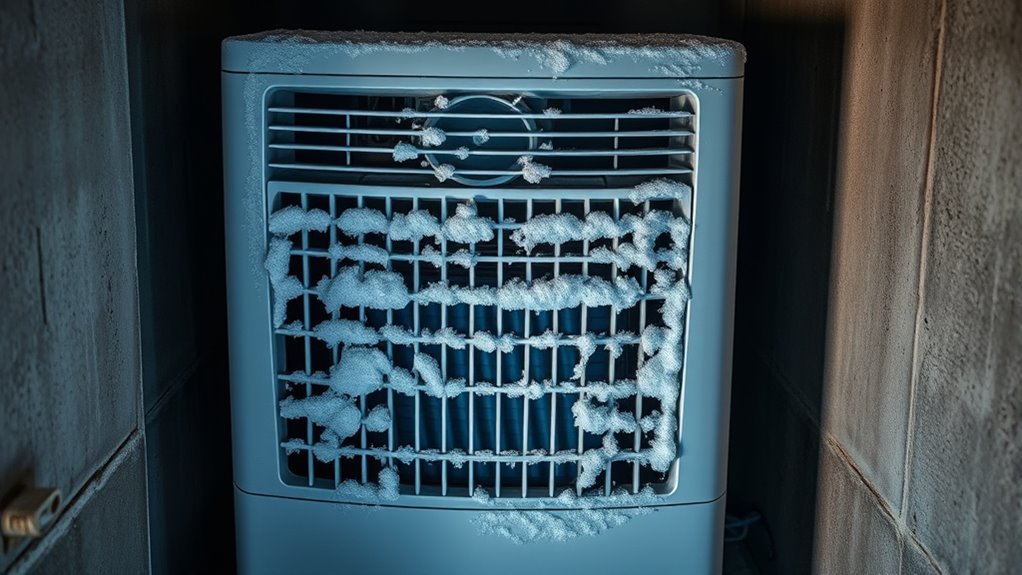
Standard compressor dehumidifiers should not operate in freezing temperatures (below 33°F), as water in the drain hose and internal pump reservoir will freeze solid and damage the machine. However, commercial units equipped with automatic hot-gas defrost (such as the ALORAIR 180 PPD and commercial crawl-space models) can operate reliably in cool basements and winter crawl spaces down to roughly 36°F–41°F by periodically melting frost off the evaporator coils. Always check the manufacturer’s minimum operating temperature before installing in an unheated space.
What Maintenance Is Required for the Built-in Condensate Pump?
To keep a built-in condensate pump reliable, clean the air filter every 2 to 4 weeks so dirt does not wash off the coils into the pump sump. Inspect the vinyl drain hose periodically for kinks, pinholes, or algae buildup, and flush the pump reservoir every few months so sediment or biofilm does not jam the internal float switch or check valve. Most commercial units also include a manual “Pump/Purge” button you can press to drain the reservoir completely before moving or storing the machine.
How Loud Are Commercial Dehumidifiers With Pumps?
Most commercial dehumidifiers with pumps operate between 50 and 62 decibels (dBA)—comparable to a standard box fan on medium-to-high speed. You will hear steady airflow and compressor hum during drying cycles, plus a brief 10- to 20-second whirring sound whenever the internal condensate pump activates to purge water through the hose. For quiet basements or offices, choose an upright Energy Star model with a low-vibration pump or isolate crawl-space units on rubber anti-vibration pads.
Do Commercial Dehumidifiers With Pumps Consume a Lot of Electricity?
Power draw depends on capacity: compact 70- to 100-pint models typically use 350 to 500 watts, while heavy-duty 155- to 310-pint commercial units draw 470 to 900+ watts on a standard 115V/120V circuit. The condensate pump itself uses almost no power because it only runs for a few seconds at a time. Choosing a properly sized or Energy Star-rated unit that reaches your target humidity and cycles off is far more economical than running an undersized residential unit non-stop.
What Humidity Level Should I Set for a Basement, Crawl Space, or Warehouse?
For most basements, crawl spaces, offices, and commercial storage areas, set your target relative humidity between 45% and 50% RH (and always keep it below 55% RH). That range stops condensation on cool pipes and concrete walls, prevents musty odors, and keeps mold spores dormant without forcing the compressor to run continuously. Only dial the humidistat down to 35%–40% RH during active water-damage restoration or when protecting highly moisture-sensitive inventory.
Is a Built-in Condensate Pump Worth It Over Gravity Drainage?
Yes, a built-in pump is well worth the investment whenever your floor drain is far away, obstructed, or located higher than the dehumidifier. While gravity hoses easily airlock or back up if they do not maintain a continuous downward slope, an internal pump lets you place the dehumidifier right where the moisture is worst and pump the water up to 15 to 19.6 feet vertically into a sink, sump pit, standpipe, or exterior drain line.
Final Recommendation
Selecting the right commercial dehumidifier with a pump comes down to matching real-world moisture output and physical form factor to your building. Here is how to make your final pick:
- For flood restoration and heavy job sites: Go with the MOUNTO 310 Pints for maximum drying capacity or the wheeled MOUNTO 268 Pints for 470-watt plug-and-play portability.
- For low-clearance crawl spaces and damp basements: Choose the ALORAIR 180 PPD (90 PPD AHAM) for larger below-grade spaces up to 2,300 sq. ft., the CADPXS 125 Pints for spaces up to 1,300 sq. ft., or the lighter 40-pound MOISWELL 70 Pints for areas under 1,000 sq. ft.
- For open warehouses and commercial buildings: Pick the cart-style Waykar 155 Pints, the lighter 60-pound Airzentti 155 Pints, or the 265 CFM 190-Pint Large-Space Commercial Dehumidifier.
- For quieter residential basements and offices: Opt for the AEOCKY 80-Pint or DECIUU Max 100-Pint Energy Star upright pump models.
Before ordering, double-check the current Amazon listing for exact dimensions, vertical pump lift height, included drain hose length, and warranty terms so your unit installs cleanly on day one.