Listing check: Product names and published specifications were reviewed on August 2, 2026. Listings, certifications, warranties, and availability can change.
A dehumidifier with a built-in pump can move collected water to an approved sink, standpipe, sump, or other drain even when the outlet is above the unit. That makes pump-equipped models especially useful in basements, crawl spaces, laundry rooms, and other damp areas where gravity drainage is not practical.
This 2026 guide compares nine pump-equipped models by published moisture-removal capacity, suggested coverage, pump setup, noise, smart controls, tank size, and intended use. Coverage figures and “maximum pint” claims come from manufacturers and are not directly comparable unless the test conditions are the same.
Quick verdict
Gasbye is the strongest all-around choice for buyers who want a lower published noise level and an accessible pump. Choose Midea or hOmeLabs for mainstream app control, GoveeLife for more preset modes, avylo for the lowest published fan-noise claim in this group, and MOISWELL for a low-profile crawl-space installation.
Quick Comparison of Dehumidifiers With Pumps
| Model | Best for | Moisture-removal claim | Suggested coverage | Key advantage | Amazon |
|---|---|---|---|---|---|
| Gasbye DryPrime-35-WP | Best overall | 50 pints/day at 80°F, 60% RH; 75-pint maximum claim | Up to 4,500 sq. ft. | Replaceable, accessible pump | Check Current Amazon Availability |
| Shinco SDZ1-150P/P-W | Very large open areas | 70 pints/day standard rating; 150-pint maximum claim | Up to 7,000 sq. ft. | Wi-Fi and three drainage methods | Check Current Amazon Availability |
| hOmeLabs HME1004 | Smart large-space control | 50 pints/day at 80°F, 60% RH; 120-pint maximum claim | Up to 7,500 sq. ft. | App control and internal pump | Check Current Amazon Availability |
| AEOCKY LEO-001 | Efficiency-focused buyers | Up to 80 pints/day under manufacturer-stated conditions | Up to 4,500 sq. ft. | Internal pump and smart humidistat | Check Current Amazon Availability |
| GoveeLife H7152 | Smart modes and app users | 50 pints/day at 65°F, 60% RH; up to 137 pints/day at 91°F, 90% RH | 900–4,500 sq. ft. | Five modes and 16-ft pump hose | Check Current Amazon Availability |
| avylo ADC018 | Quiet operation | Up to 90 pints/day at 90°F, 90% RH | Up to 4,500 sq. ft. | 41 dB claim and 2.11-gallon tank | Check Current Amazon Availability |
| DECIUU DEPR32S10-50 | High-humidity conditions | 50 pints/day at 80°F, 60% RH; 100-pint maximum claim | Up to 5,000 sq. ft. | 16.4-ft pump-lift claim | Check Current Amazon Availability |
| Midea MAD50P1AWS-A | Mainstream smart choice | 50 pints/day | Up to 4,500 sq. ft. | App and voice control | Check Current Amazon Availability |
| MOISWELL Defender ME-7S | Crawl spaces and compact commercial use | 35 pints/day AHAM; 70-pint saturation claim | Up to 1,000 sq. ft. | Low-profile metal housing | Check Current Amazon Availability |
Note: “Maximum” moisture-removal numbers are often measured in hotter, more humid conditions than a model’s primary daily-capacity rating. Compare models only when the listed test conditions match. Square-foot figures are manufacturer guidance, not a promise of performance in every layout.
Gasbye 75-Pint Dehumidifier With Replaceable Pump
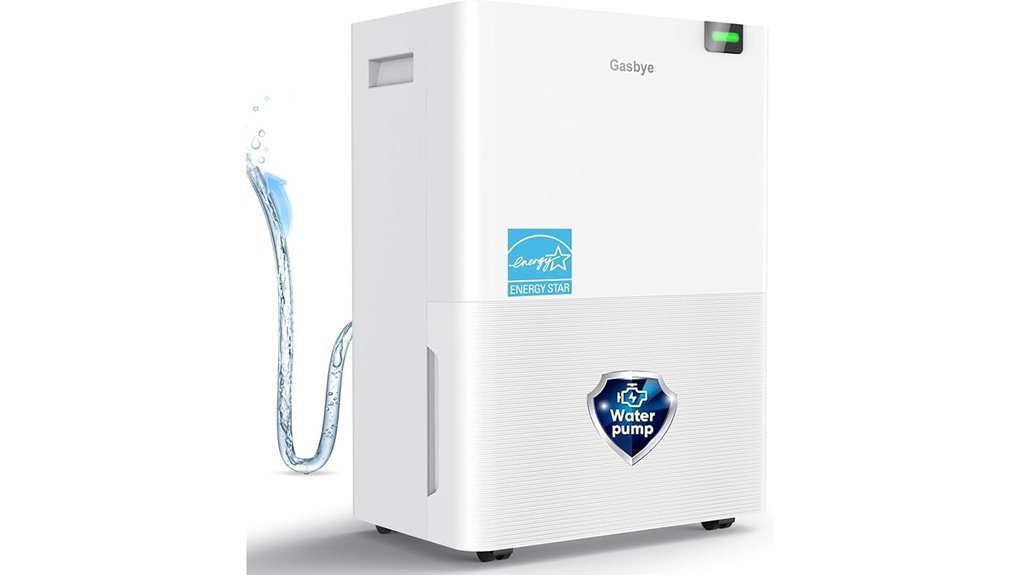
The Gasbye DryPrime-35-WP is a practical choice for a basement where pump maintenance matters. Its defining feature is a pump mounted inside the water tank, where it can be accessed for cleaning and replaced separately if needed. Gasbye lists moisture removal at 50 pints per day at 80°F and 60% RH, with a 75-pint maximum claim at warmer, more humid conditions.
It is designed for spaces up to 4,500 square feet and has a 1.45-gallon tank, three drainage choices, washable filter, automatic shutoff, and adjustable humidity control. The 44 dB noise claim also makes it one of the quieter published options in this roundup.
Why you may like it: The removable pump is easier to inspect, clean, or replace than a sealed internal-pump design.
Best For: Homeowners who want a balanced large-room dehumidifier with a quiet published noise level and easier pump access.
Who Should Avoid It: Buyers who need a larger bucket or a unit designed for crawl-space ducting.
Pros:
- Replaceable and accessible built-in pump.
- 44 dB published noise level.
- Standard and high-humidity capacity figures are clearly stated.
Cons:
- The 1.45-gallon tank is modest if you do not use a drain hose.
- The manufacturer-stated 4,500-square-foot coverage assumes suitable room conditions and airflow.
- Confirm the current ENERGY STAR record and warranty terms for the exact model before purchase.
Shinco 7,000 Sq. Ft. Dehumidifier With Pump and Wi-Fi
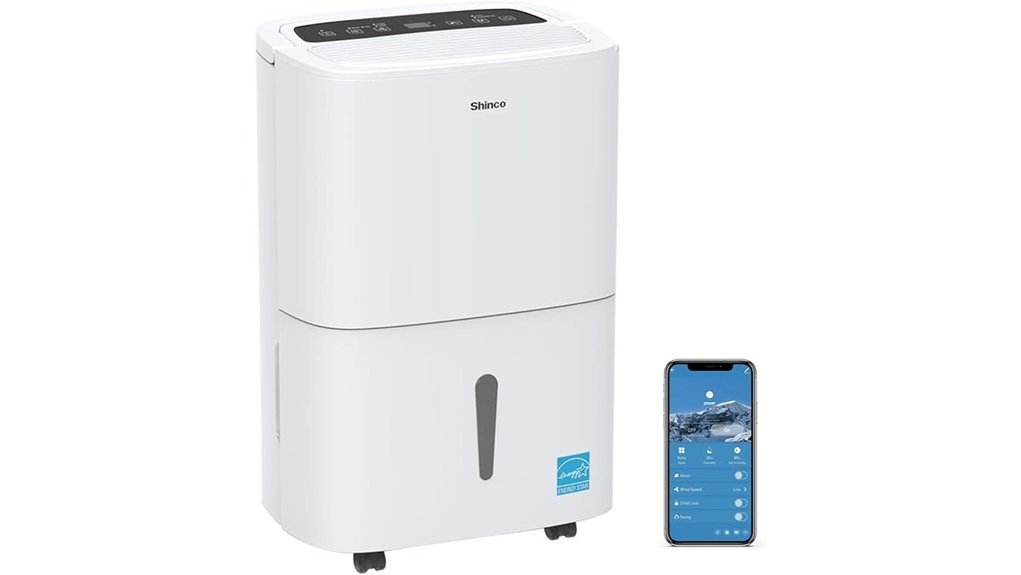
The Shinco SDZ1-150P/P-W combines app control, a built-in pump, gravity drainage, and a large manufacturer-stated coverage area. The key correction is capacity: it is listed at 70 pints per day under the standard rating and up to 150 pints only under more extreme temperature and humidity conditions.
The unit offers a 30% to 80% humidity setting range, two fan speeds, a 24-hour timer, auto defrost, auto restart, child lock, and a 1.85-gallon bucket. Its pump hose is intended to move collected water to a higher drain when gravity flow is not possible.
Why you may like it: It provides both Wi-Fi control and three drainage methods in one portable cabinet.
Best For: Large basements or open-plan areas where app control and upward drainage are priorities.
Who Should Avoid It: Light sleepers or buyers who may be distracted by a published peak noise level around 48 dB and intermittent pump noise.
Pros:
- 70-pint standard rating with a higher maximum claim for extreme conditions.
- Manual, gravity, and pump drainage options.
- Wi-Fi control, timer, child lock, and auto-defrost functions.
Cons:
- The 150-pint headline is not a standard-condition rating.
- The 7,000-square-foot figure is manufacturer guidance, not a guarantee for divided or poorly ventilated rooms.
- Wi-Fi pairing adds setup steps that some buyers may not need.
hOmeLabs 50-Pint Wi-Fi Dehumidifier With Pump
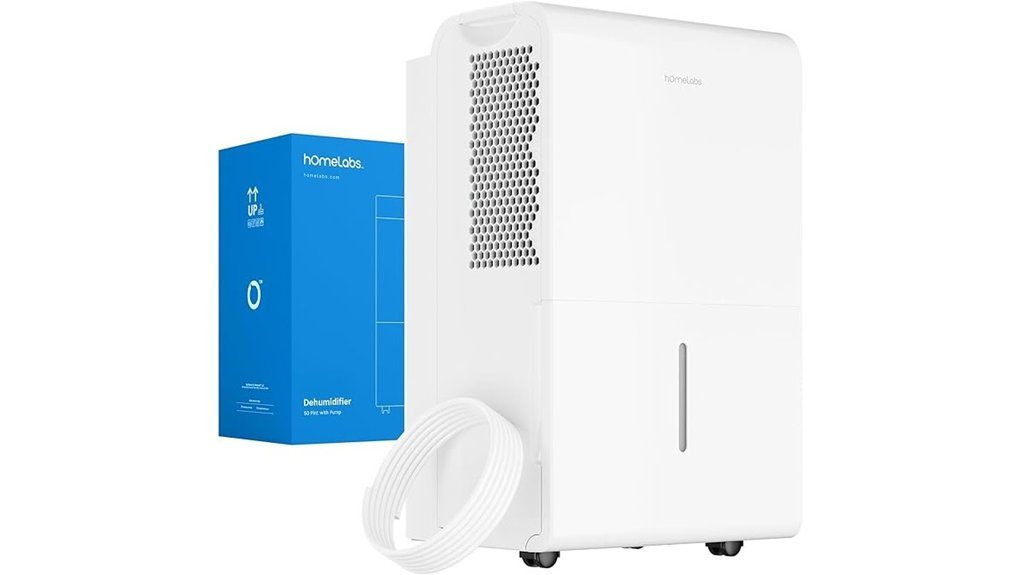
The hOmeLabs HME1004 is built for buyers who want remote monitoring plus hands-off drainage. It is listed at 50 pints per day, while the 120-pint figure applies to 95°F and 90% RH maximum conditions. The current product listing states coverage up to 7,500 square feet.
Controls include Comfort, Turbo, Continuous, timer, filter alert, and adjustable humidity settings. The internal pump uses an included pump hose, while a standard garden hose can be attached separately for gravity drainage. The published bucket volume is 1.6 gallons.
Why you may like it: The app and built-in pump can reduce trips to a basement that needs regular humidity control.
Best For: Large basements where remote settings, alerts, and upward drainage are useful.
Who Should Avoid It: Buyers who need a compact or lightweight unit; the published weight is about 42.1 pounds.
Pros:
- Wi-Fi control with multiple operating modes.
- Built-in pump plus gravity-drain capability.
- 50-pint daily rating for easier comparison with other models.
Cons:
- Large and relatively heavy.
- A gravity-drain garden hose may need to be purchased separately.
- Current stock status can change, so verify availability on Amazon before relying on this exact model.
AEOCKY LEO-001 Dehumidifier With Pump
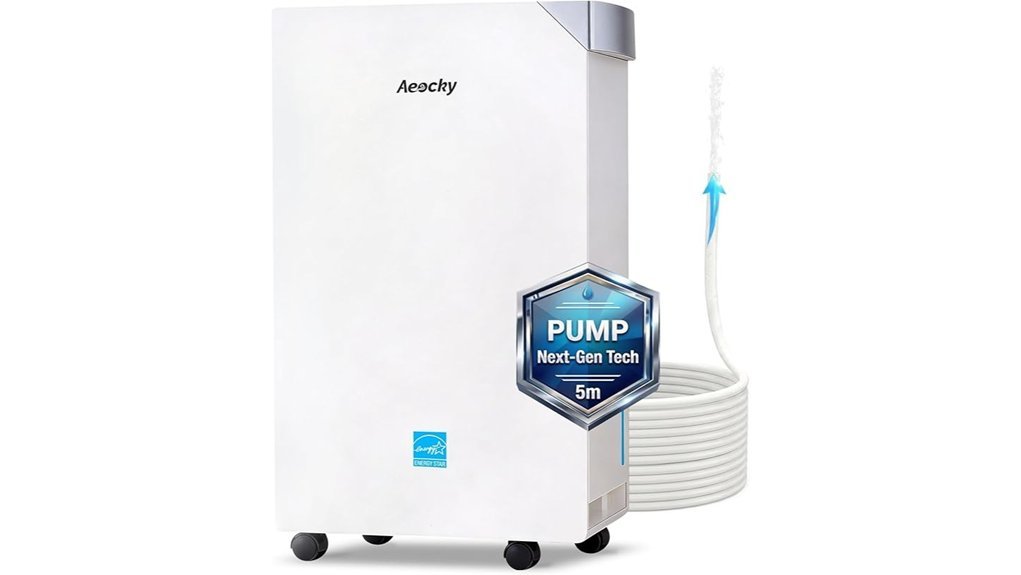
The AEOCKY LEO-001 targets large residential spaces with a manufacturer-stated maximum capacity of up to 80 pints per day and suggested coverage up to 4,500 square feet. The listing does not present that 80-pint headline under the same conditions used by every competing model, so treat it as a maximum claim rather than a direct comparison with a 50-pint daily rating.
Its features include an internal pump, drain hose, intelligent humidistat, power-off memory, automatic operation, and a 1.45-gallon tank. The listing promotes an ENERGY STAR Most Efficient 2025 designation; because certification labels are year-specific, confirm the exact model in the current ENERGY STAR database.
Why you may like it: It combines automatic humidity control and pump drainage in a relatively narrow cabinet.
Best For: Buyers prioritizing energy-related features and automatic operation in a basement or large room.
Who Should Avoid It: Anyone who needs a clearly documented standard-condition capacity for strict side-by-side performance comparisons.
Pros:
- Internal pump with included drainage hose.
- Smart humidistat and power-off memory.
- Manufacturer-stated coverage up to 4,500 square feet.
Cons:
- The standard-condition pint rating is not clear in the supplied information.
- The 1.45-gallon tank may fill quickly if pump drainage is not used.
- Certification wording should be verified for the exact current model.
GoveeLife Smart Dehumidifier Max With Pump
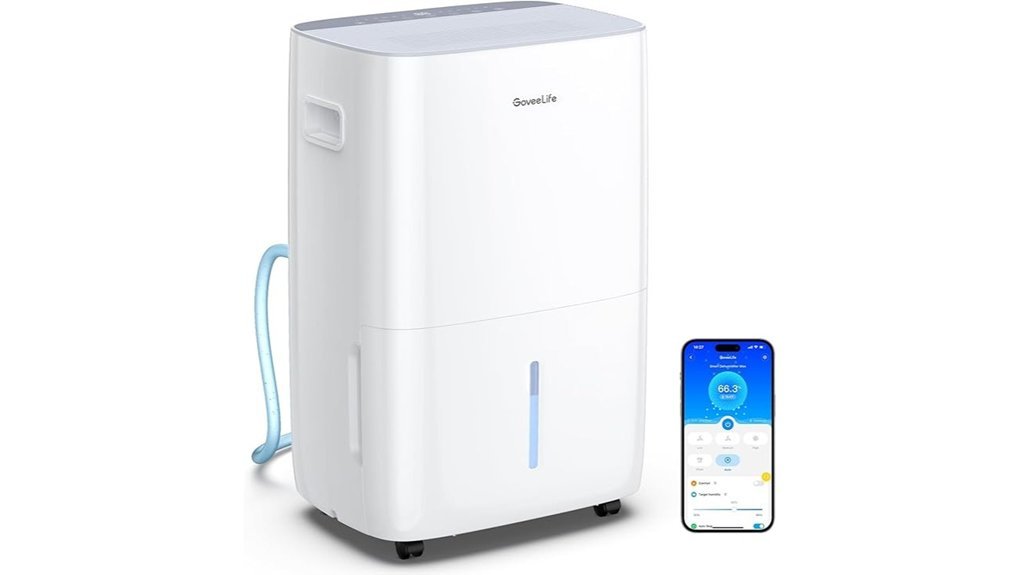
The GoveeLife H7152 Smart Dehumidifier Max is listed to remove 50 pints per day at 65°F and 60% RH, with higher claims of up to 137 pints per day at 91°F and 90% RH. The manufacturer recommends it for roughly 900 to 4,500 square feet. Its built-in pump and included 16-foot hose can move water to an approved elevated drain within the installation limits.
Its app-connected modes include Auto, Comfort, Drying, Maintain, and Sleep. The 1.8-gallon tank, automatic defrost, automatic shutoff, and multiple fan settings add flexibility, while the 860-watt published input means buyers should consider operating cost if the unit will run for long periods.
Why you may like it: It offers more mode choices than many basic pump-equipped models and can be managed remotely.
Best For: Smart-home users who want app control, preset modes, and pump drainage.
Who Should Avoid It: Buyers who prefer simple manual controls or who need the lowest possible power draw.
Pros:
- Built-in pump with an included 16-foot drain hose.
- Five smart operating modes.
- Published capacity conditions are disclosed for easier comparison.
Cons:
- Published power input is 860 watts.
- At roughly 40 pounds, it is not especially light.
- App features depend on a stable compatible Wi-Fi connection.
avylo ADC018 Dehumidifier for Basement With Pump
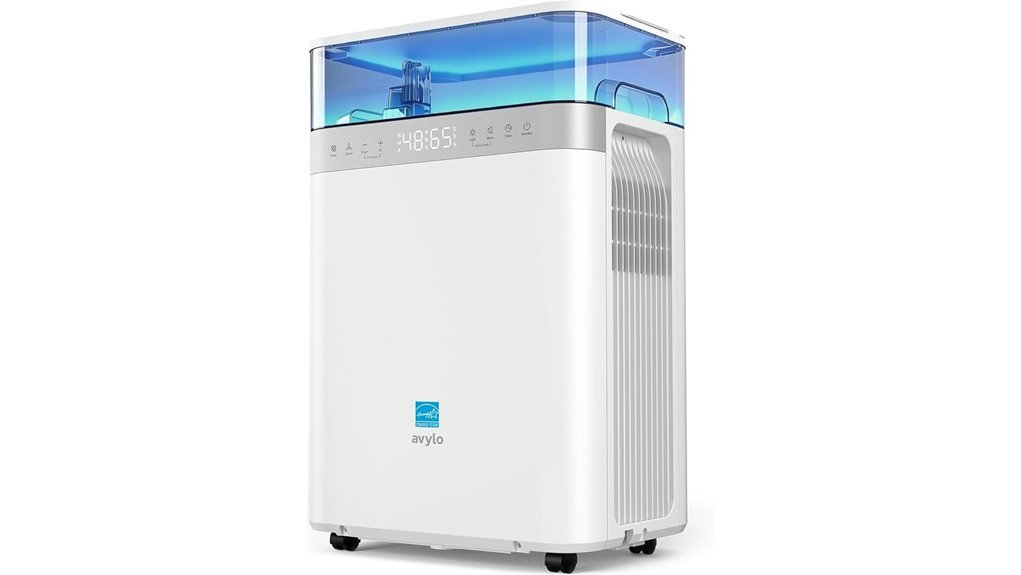
The avylo ADC018 stands out for its 41 dB published noise claim and larger 2.11-gallon top-mounted tank. Its structured listing data states coverage up to 4,500 square feet, while the headline markets a larger area. The 90-pint claim is a maximum measured at 90°F and 90% RH, so it should not be compared directly with lower-temperature ratings.
The built-in pump is designed for a vertical lift of up to 15 feet and is paired with a 15-foot hose. Auto, Continuous, and Sleep modes, three fan speeds, automatic defrost, a 24-hour timer, and target-humidity control make it suitable for long-running basement duty.
Why you may like it: The combination of a lower published noise figure, larger tank, and pump drainage is useful near living or work areas.
Best For: Bedrooms, offices, finished basements, or other spaces where lower fan noise matters.
Who Should Avoid It: Buyers who need a verified standard-condition pint rating rather than a maximum-condition claim.
Pros:
- 41 dB manufacturer noise claim.
- 2.11-gallon tank reduces manual-emptying frequency.
- Built-in pump with up to 15 feet of stated vertical lift.
Cons:
- The 90-pint figure applies to 90°F and 90% RH, not a mild-room test condition.
- Pump operation can still create intermittent sound even when fan noise is low.
- Confirm the exact certification and warranty details before buying.
DECIUU Max 100-Pint Dehumidifier With Pump
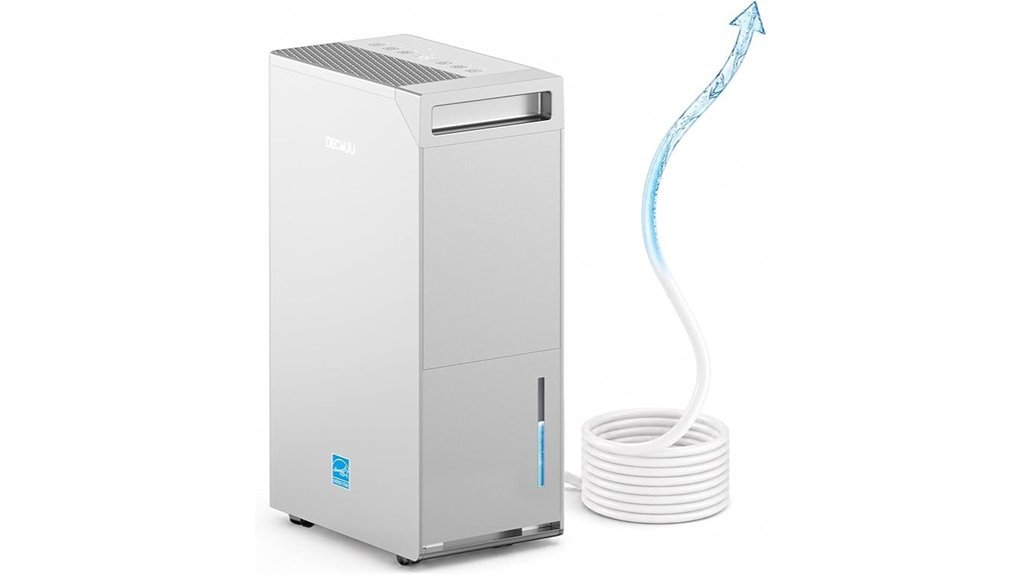
The DECIUU DEPR32S10-50 illustrates why test conditions matter. The listing presents 50 pints per day at 80°F and 60% RH, 70 pints at 86°F and 80% RH, and a 100-pint maximum at 95°F and 90% RH. Use the 50-pint figure when comparing it with another model rated under the same 80°F and 60% RH condition.
The unit is intended for spaces up to 5,000 square feet and includes a 1.45-gallon tank, three fan speeds, automatic defrost, auto restart, child lock, timer, adjustable humidity control, washable filter, and a built-in pump with up to 16.4 feet of stated lift.
Why you may like it: It publishes multiple capacity figures with test conditions, making its performance claim easier to interpret.
Best For: Large, persistently humid rooms where a 50-pint standard-rated unit and upward drainage are appropriate.
Who Should Avoid It: Buyers who might assume the 100-pint headline is the standard residential test rating.
Pros:
- Capacity claims are available for several humidity and temperature conditions.
- Built-in pump with a 16.4-foot lift claim.
- Useful safety and convenience features, including child lock and auto restart.
Cons:
- The 100-pint headline can be misleading without the test conditions.
- The 1.45-gallon tank is small relative to the maximum moisture-removal claim.
- Do not rely on broad percentage energy-saving claims without checking the current certified efficiency data.
Midea 50-Pint Smart Dehumidifier With Pump
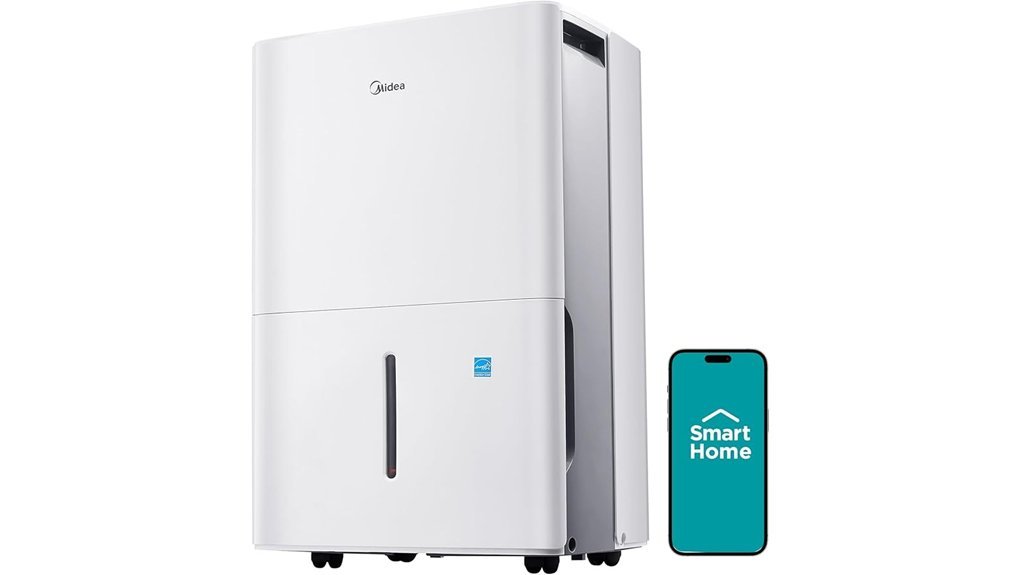
The Midea MAD50P1AWS-A combines a published 50-pint daily capacity, manufacturer-stated coverage up to 4,500 square feet, Wi-Fi control, and a built-in pump. The pump can move collected water to a higher approved drain, while the 1.6-gallon removable bucket remains available when a hose setup is not practical.
Its adjustable humidity range is 35% to 85%, and the model is listed at 49 dBA on low. Smartphone control through the SmartHome app and compatibility with supported voice assistants add convenience in a basement or office.
Why you may like it: It offers a familiar appliance brand, a clear 50-pint rating, and both smart and pump features.
Best For: Buyers seeking a straightforward 50-pint smart dehumidifier for a large room or basement.
Who Should Avoid It: Anyone wanting a very light unit or a warranty longer than the listed one-year term.
Pros:
- 50-pint daily capacity and built-in pump.
- Wi-Fi and supported voice-assistant control.
- Automatic shutoff and wheeled cabinet.
Cons:
- About 42 pounds, so stairs may be difficult.
- Smart setup requires an app and compatible network.
- The listed limited warranty is one year.
MOISWELL Defender ME-7S Commercial Dehumidifier With Pump
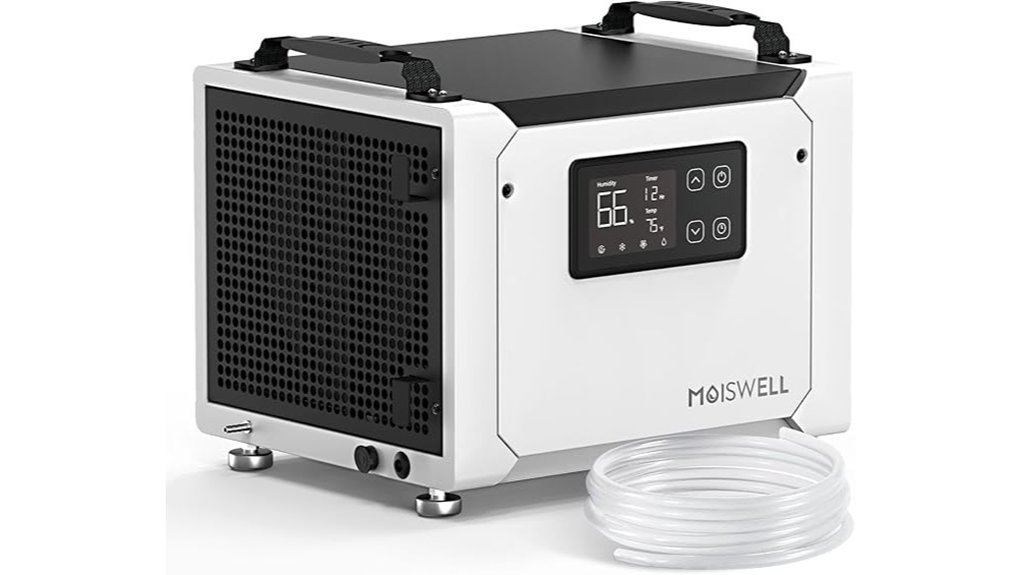
The MOISWELL Defender ME-7S is the most specialized model in this list. Its low-profile metal housing is intended for crawl spaces, floor-joist areas, basements, and compact commercial installations rather than a typical bedroom. The listing copy states 35 pints per day under AHAM conditions and up to 70 pints at saturation, although some structured listing fields may display a different capacity. Confirm the current manual or specification sheet before sizing it for a project.
The unit is designed for areas up to 1,000 square feet and includes a built-in pump with a 16.4-foot drain hose, automatic defrost, auto restart, error detection, humidity controls, and a 24-hour timer. Published power input is 450 watts.
Why you may like it: The compact horizontal design fits locations where a tall residential cabinet may not.
Best For: Crawl spaces, storage areas, tight basements, and small commercial zones needing continuous pump drainage.
Who Should Avoid It: Buyers looking for Wi-Fi, a large manual bucket, or a quiet living-room appliance.
Pros:
- Low-profile metal construction for restricted spaces.
- Built-in pump with a long drain hose.
- The main listing copy distinguishes AHAM and saturation capacity claims.
Cons:
- Capacity fields on the listing are not fully consistent, so verification is important.
- About 40 pounds despite its compact footprint.
- Commercial-style airflow and compressor noise may be noticeable in occupied rooms.
Factors to Consider When Choosing a Dehumidifier With a Pump
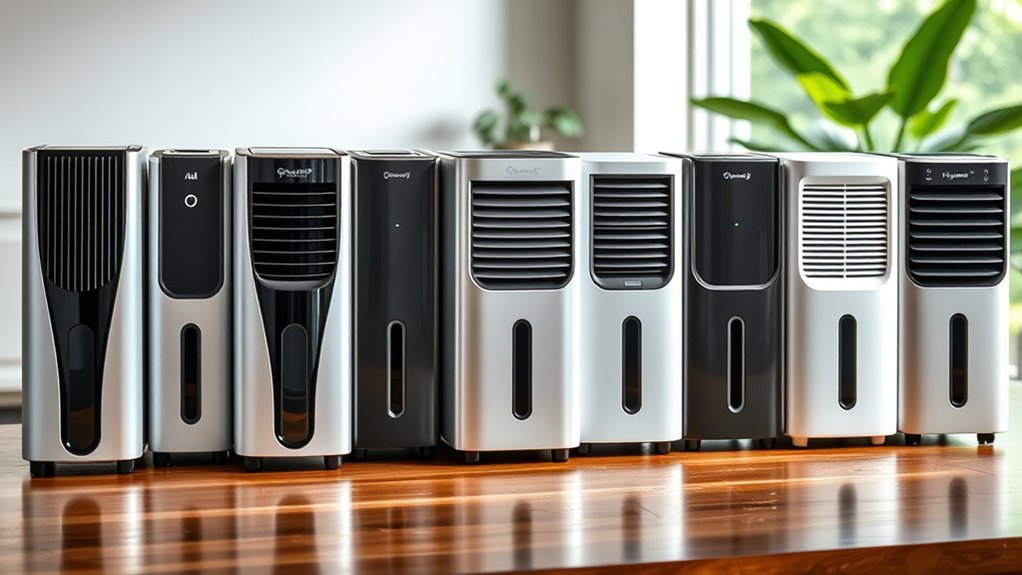
The pump is only one part of the buying decision. Capacity, test conditions, drainage height, room temperature, airflow, noise, maintenance access, and certification all affect how well a dehumidifier will work in your space.
Compare Capacity Under Matching Test Conditions
Dehumidifier capacity is measured in pints removed during 24 hours, but the test conditions can vary. A model advertised as “100 pint” or “150 pint” may have a much lower daily rating under milder conditions. Compare the primary daily-capacity figure and its stated temperature and humidity, then treat hotter-condition maximums as additional context rather than a direct comparison.
Match Capacity to Dampness and Layout
Square-foot coverage is a manufacturer estimate. A very damp 1,500-square-foot basement may need more capacity than a mildly damp, open 3,000-square-foot room. Walls, closed doors, stored boxes, low temperatures, air leaks, and standing water can all reduce real-world performance. Correct leaks and drainage problems instead of expecting the appliance to solve an active water-intrusion issue.
Check Pump Lift, Hose Length, and Drain Route
Confirm the model’s maximum vertical lift and permitted hose length before installation. Route the hose without kinks, protect it from freezing, and terminate it only at an approved drain location. Gravity drainage is simpler when a floor drain is below the outlet; a pump is useful when water must travel upward to an approved sink, standpipe, sump, or other suitable discharge point.
Verify Current Energy Certification
ENERGY STAR says certified dehumidifiers use about 20% less energy than similarly sized conventional models. Certification years and “Most Efficient” labels can change, so search the current ENERGY STAR product database using the exact brand and model number rather than relying only on older packaging or listing copy.
Consider Fan and Pump Noise Separately
Published fan-noise claims in this roundup range from about 41 to 49 dB, but measurement methods may differ. The condensate pump can also make a short, more noticeable sound when it cycles. For a bedroom or office, prioritize a lower fan setting, Sleep mode, vibration-free placement, and enough distance from the seating or sleeping area.
Plan for Cold Basement Operation
Compressor dehumidifiers remove less water as the air gets colder and may frost if the temperature falls below the model’s operating range. Auto defrost helps, but it does not make every unit suitable for an unheated winter space. Check the minimum operating temperature in the manual.
Decide Whether Smart Controls Are Worth It
Wi-Fi is useful when the unit is in a basement or second property because it can reduce unnecessary trips and may provide status alerts. It is not essential for moisture removal. A reliable humidistat, auto restart, full-tank shutoff, washable filter, and easy hose access may matter more than app control.
Look at Maintenance and Serviceability
Clean the filter on the schedule in the manual, wash and dry the bucket, inspect the pump inlet, and check the hose for algae, debris, kinks, or leaks. A removable or replaceable pump is helpful because condensate can carry dust into the pump system over time.
Before You Buy Checklist
- Measure the room and judge whether it is slightly damp, very damp, or wet.
- Compare the primary pints-per-day rating and its stated test conditions.
- Measure the vertical pump lift and total hose route.
- Check the minimum operating temperature for a cold basement or crawl space.
- Confirm whether the pump hose and gravity hose are included.
- Check tank size if you may use manual drainage.
- Verify the exact model’s current ENERGY STAR status and warranty.
- Confirm the power requirements and use a properly grounded outlet as directed in the manual.
- Confirm the Amazon listing still matches the model described here.
Frequently Asked Questions
How Often Should I Empty the Water Tank?
If the pump or gravity hose is installed correctly, manual emptying should be infrequent. Without continuous drainage, empty the bucket whenever the full-tank indicator activates. In very humid conditions, that can happen more than once per day. Inspect and clean the tank regularly even when a hose is used.
Can I Use a Dehumidifier in Colder Temperatures?
Yes, but only within the model’s specified operating range. Compressor dehumidifiers become less effective in cooler air and may enter defrost cycles. For an unheated basement or crawl space, choose a model with auto defrost and verify the minimum temperature in the manual.
What Maintenance Is Required for a Pump Dehumidifier?
Unplug the unit before maintenance. Clean the washable filter and bucket, inspect the pump inlet, flush or replace a dirty hose as allowed by the manual, and make sure the drain route remains clear. Never open the sealed refrigeration system yourself.
Are Pump Dehumidifiers Noisy?
Most make steady fan and compressor noise, plus a brief sound when the pump activates. Published ratings are useful for screening models, but they may not be measured the same way. A level floor, clean filter, lower fan speed, and clearance from walls can reduce unnecessary vibration and airflow noise.
How Do I Choose the Right Capacity?
Use both square footage and dampness. A wet basement, divided layout, low temperature, or active air leakage can require more capacity than a mildly damp open room of the same size. Compare ratings measured under the same test conditions, and do not size a unit from an extreme-condition maximum alone.
Does a Built-In Pump Mean I Do Not Need a Floor Drain?
Usually, yes. A pump can send water upward to an approved sink, standpipe, sump, or other drain within the manufacturer’s lift and hose limits. Follow local requirements and the installation instructions, and never discharge where water can damage the building, freeze, or create a slip hazard.
Will a Dehumidifier Remove Existing Mold?
No. A dehumidifier helps control moisture, but it does not remove existing mold or repair leaks. Address the water source, clean or remediate affected materials appropriately, and use the dehumidifier to help maintain a lower indoor relative humidity afterward.
Final Recommendation
Choose Gasbye for the best overall balance of published capacity, lower stated noise, and an accessible pump. Midea and hOmeLabs are stronger fits for mainstream smart control, GoveeLife offers the broadest preset-mode selection, and avylo is appealing where a lower noise claim and larger tank matter. For a tight crawl space, MOISWELL is the more purpose-built option.
Whichever model you choose, compare capacity claims measured under the same conditions, confirm the pump-lift requirement, and aim to keep indoor relative humidity around 30% to 50%. Fix leaks and active water intrusion first; a dehumidifier is moisture-control equipment, not a substitute for repairs or mold remediation.