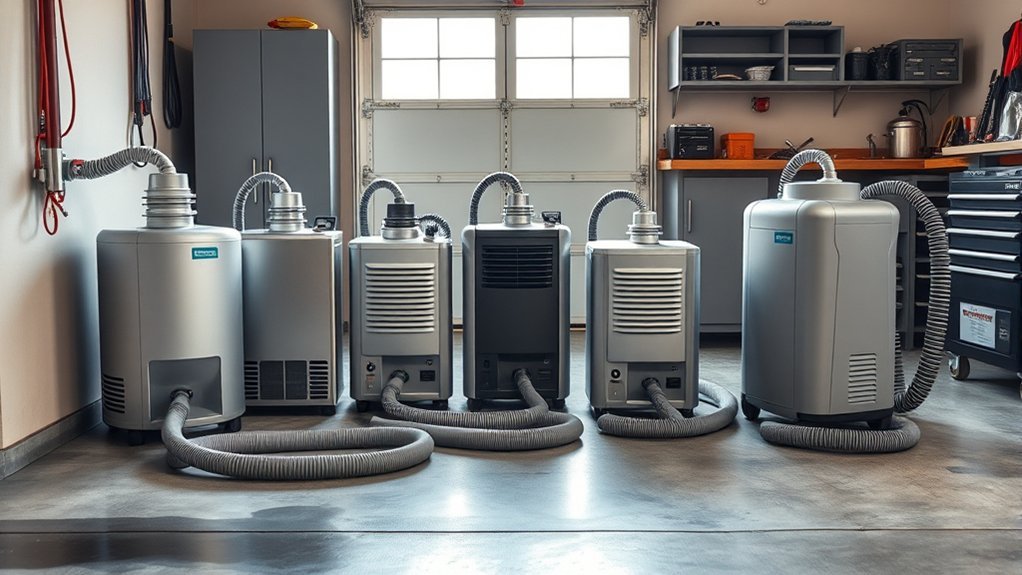
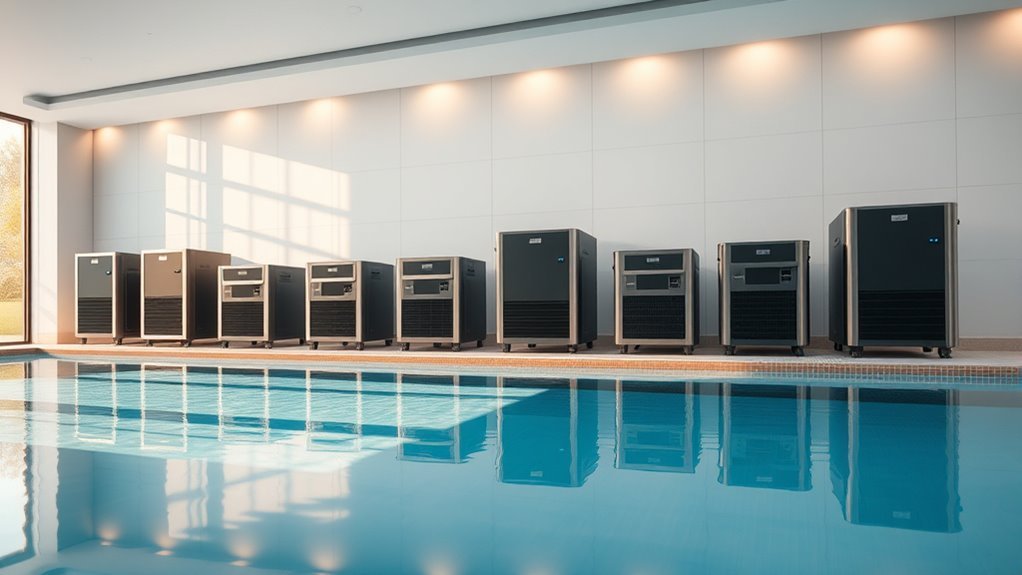
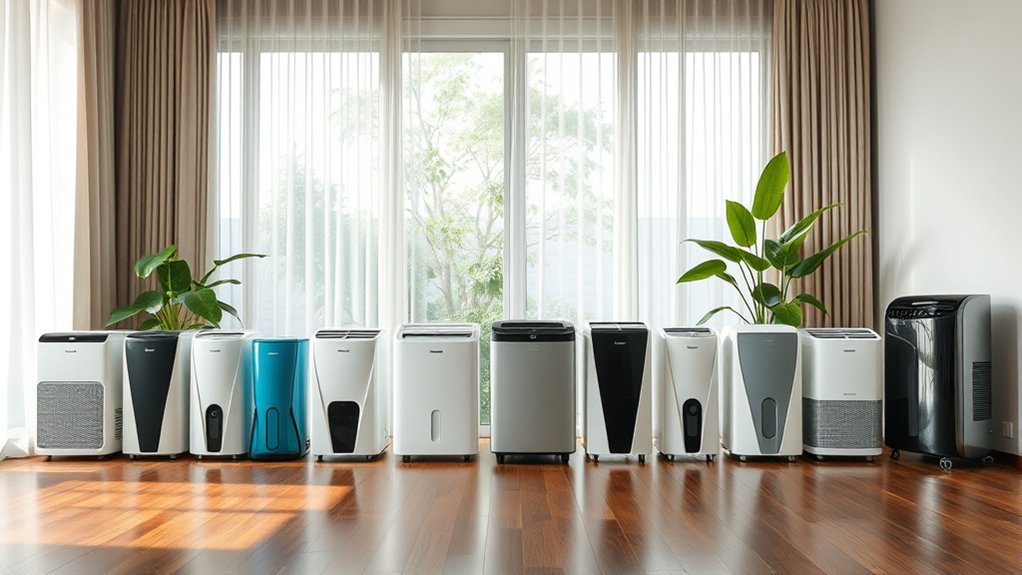
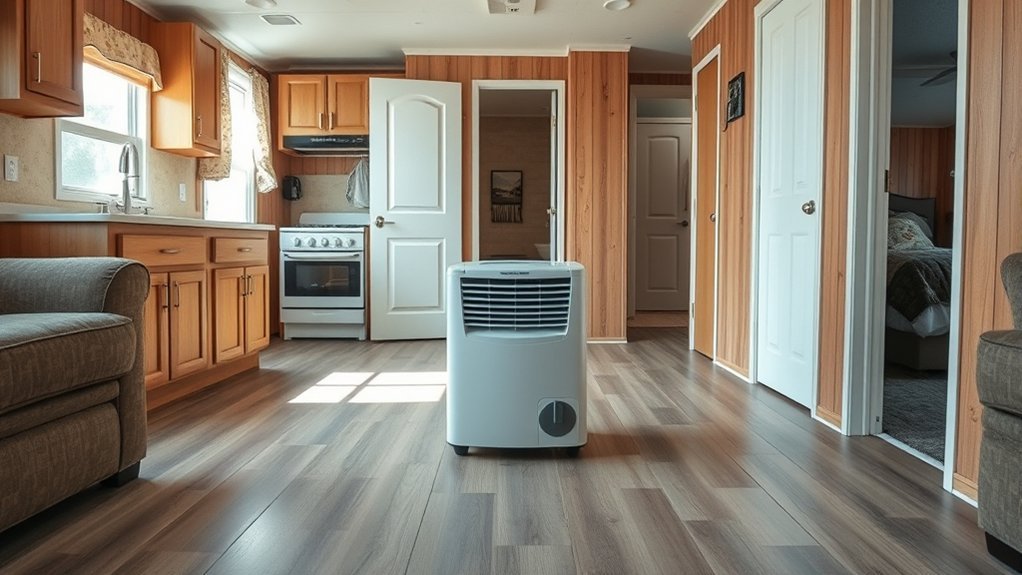
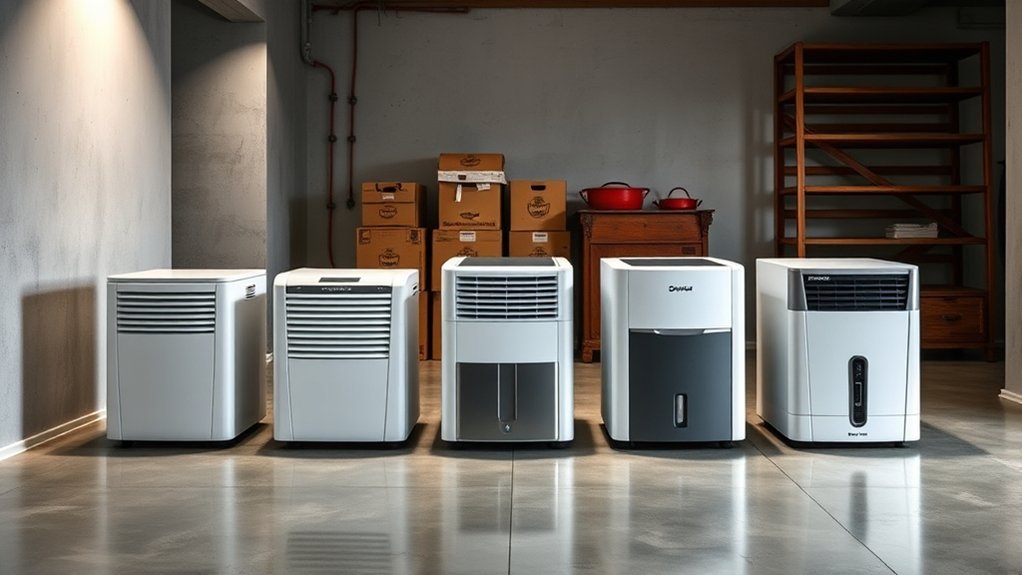
Choosing a commercial dehumidifier in Dromana requires more than selecting the largest advertised moisture-removal figure. The right unit must suit the building’s total air volume, moisture source, drainage route, operating temperature, airflow restrictions, electrical supply, and expected daily workload.
Before comparing models, determine whether you need routine humidity control, permanent moisture management, equipment for a one-off water problem, or professional structural drying. These applications can require very different equipment.
Before You Buy a Commercial Dehumidifier in Dromana
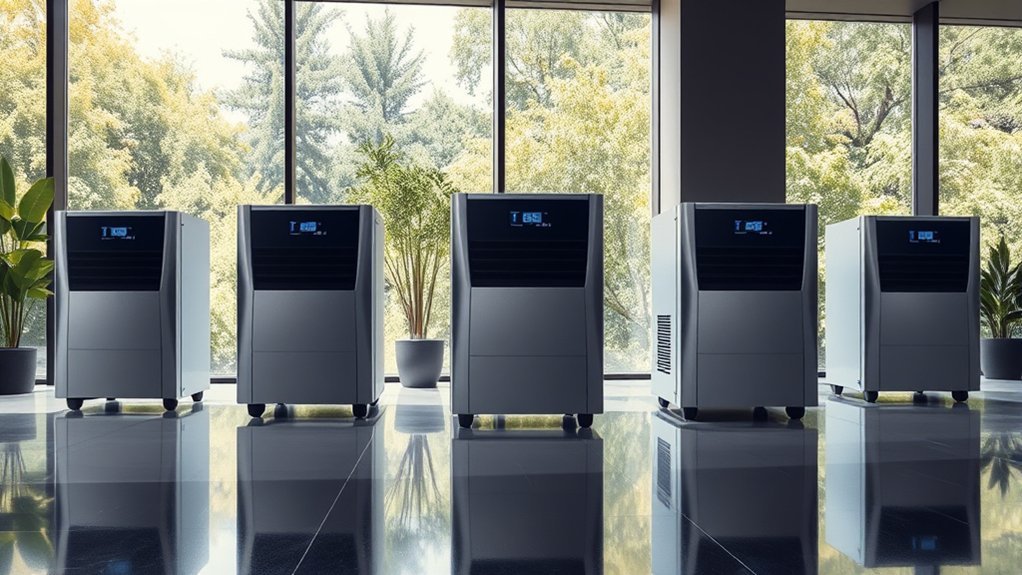
Use this checklist to define the job before comparing brands or models:
- Define the application: Decide whether the unit will maintain humidity, support a permanent installation, dry a recently wet area, or form part of a professional restoration setup.
- Confirm the electrical specification: Check the exact model’s rating plate and written documentation for 230V/50Hz Australian use. A travel adapter, replacement plug, or matching plug photograph does not confirm electrical compatibility.
- Measure the site: Record the room length, width, ceiling height, starting humidity, normal temperature, lowest expected temperature, moisture source, and expected operating hours.
- Compare like-for-like capacity: Check the temperature and relative humidity used for each moisture-removal claim. Give preference to ratings shown in litres per day under clearly stated conditions.
- Plan the drainage route: Decide whether gravity drainage is practical or whether condensate must be pumped upward or across a longer distance.
- Assess airflow: Note partitions, closed rooms, shelving, stock, machinery, furniture, and other obstructions that may prevent humid air from reaching the unit.
- Check transport requirements: Mobile restoration equipment may need wheels, handles, stackability, cable storage, and a durable housing. A permanent installation may instead need duct connections, a compact footprint, and service clearance.
- Confirm commercial-use support: Ask who handles warranty claims, freight, labour, refrigeration-system work, filters, pumps, sensors, fan motors, and control boards.
- Confirm service coverage: Verify whether the supplier delivers to Dromana and whether technicians, replacement parts, or return arrangements are practically accessible from the site.
How to Size a Commercial Dehumidifier
A floor-area claim is only a starting point. Two buildings with the same floor area can have very different moisture loads. A sealed storeroom with mild humidity may need much less drying capacity than a frequently opened warehouse, poorly ventilated lower-level room, wet workshop, or building with ongoing water entry.
- Calculate the total air volume.
- Identify and correct the moisture source where possible.
- Record the normal and lowest expected operating temperatures.
- Compare moisture-removal ratings under equivalent test conditions.
- Confirm airflow, drainage, duty cycle, and the required drying time.
Measure the Entire Air Volume
Measure the room’s length, width, and ceiling height. Multiply these figures to estimate the enclosed air volume:
Air volume = length × width × ceiling height
This calculation does not determine the required dehumidifier capacity by itself, but it gives a more useful starting point than floor area alone. High ceilings increase the amount of air that must be processed. Open doorways, connected rooms, stairwells, ventilation systems, and frequent door traffic can enlarge the effective treatment area.
Identify the Moisture Source
Determine whether the moisture comes from outdoor air, groundwater, plumbing leaks, roof leaks, wet construction materials, laundry, food preparation, open doors, flood damage, poor drainage, or insufficient ventilation.
A dehumidifier can reduce airborne moisture, but it should not replace leak repair, drainage correction, ventilation improvements, or professional remediation. Continuing water entry can overwhelm even a high-capacity unit.
Compare Capacity Test Conditions
Commercial dehumidifier capacity is commonly listed in litres per day. Imported listings may also use pints per day. In either case, the number is useful only when the test temperature and relative humidity are provided.
A maximum or saturation-condition result may be much higher than the amount removed under ordinary warehouse, office, basement, shop, or storage conditions. When comparing models, use figures measured under equivalent conditions and ask for additional performance data when only a maximum number is shown.
Allow for the Drying Load
Routine humidity control and structural drying are different applications. A unit maintaining a sealed storage room may cycle on and off after reaching the target humidity. Restoration equipment may run continuously while moisture is released from concrete, timber, plasterboard, carpet, insulation, furnishings, or stored materials.
Water-damage work may require several dehumidifiers, air movers, moisture meters, containment, controlled heat, material removal, and professional monitoring. Do not assume that one large portable unit is sufficient for concealed or widespread building moisture.
Consider the Required Drying Time
A unit that can eventually control humidity may still be unsuitable when the site must dry within a limited timeframe. Ask how the proposed capacity relates to the starting conditions, amount of wet material, outdoor-air exchange, and required completion time.
For time-sensitive commercial work, a site assessment is more reliable than choosing equipment from a general coverage claim.
Quick Requirements Comparison
| Application | Important Features | Main Buying Risk |
|---|---|---|
| Warehouse or storage area | Humidistat control, continuous drainage, suitable airflow, automatic restart, serviceable filter | Selecting by floor area without considering ceiling height, door traffic, stock layout, or outdoor-air exchange |
| Basement or low-clearance area | Compact housing, suitable low-temperature performance, gravity drain or pump, optional ducting | Insufficient drainage fall, blocked airflow, or poor access for filter and pump maintenance |
| Flood and restoration work | High extraction at stated conditions, wheels, pump drainage, durable casing, hour meter, automatic restart | Using a maintenance-grade unit for heavy or concealed structural moisture |
| Office, shop, or occupied workspace | Lower sound output, accurate humidistat, controlled airflow, safe cable and hose routing | Choosing excessive noise, airflow, or capacity for an occupied environment |
| Permanent commercial installation | Documented electrical suitability, ducting support, accessible filters, service clearance, local repair network | Buying equipment without confirming installation requirements, parts access, or commercial warranty coverage |
Should You Buy, Hire, or Use a Restoration Professional?
The best purchasing path depends on how often the equipment will be used and how complex the moisture problem is.
| Option | Usually Best For | Check Before Deciding |
|---|---|---|
| Buy | Recurring humidity control, ongoing storage protection, frequent commercial use, or a permanent moisture-management plan | Maintenance cost, service access, expected operating hours, storage space, warranty, and parts availability |
| Hire | Short projects, temporary seasonal use, isolated leaks after repair, or testing whether mechanical drying solves the problem | Hire period, delivery, collection, damage terms, included hoses, pump capability, and extension charges |
| Use a restoration professional | Flooding, sewage exposure, widespread wet materials, hidden moisture, mould concerns, or time-sensitive structural drying | Assessment method, monitoring, containment, documentation, equipment plan, and responsibility for damaged materials |
Factors to Consider When Choosing a Commercial Dehumidifier in Dromana
1. Dehumidification Capacity
Compare moisture-removal capacity under matching temperature and humidity conditions. A large maximum rating may look impressive but may not represent performance in a cooler warehouse, basement, shop, or storage facility.
Ask for the unit’s capacity at conditions similar to your site, its operating-temperature range, recommended airflow, and expected duty cycle. Undersizing can leave the unit running continuously without reaching the target. Excessive capacity can increase purchase cost and may produce unnecessary cycling in a small, lightly loaded area.
2. Coverage Area and Layout
Treat coverage claims as estimates rather than guarantees. Ceiling height, partitions, shelving, stored goods, closed doors, insulation, ventilation, and outdoor-air exchange all affect performance.
A single large unit may not distribute dry air evenly through a divided building. Multiple units, approved ducting, transfer fans, or air movers may provide better circulation in long, obstructed, or multi-room spaces.
3. Electrical Compatibility
For use in Dromana, verify that the exact model is marked and documented for Australian 230V/50Hz power. Check the rating plate, manual, supplier documentation, connection type, input current, and circuit requirements.
Do not rely only on a marketplace title, product photograph, plug shape, travel adapter, or general statement that the equipment works worldwide. A changed plug does not establish that the compressor, fan motor, controls, and protection systems are suitable for the electrical supply.
4. Energy Use and Running Cost
Check the rated input power rather than relying on general “energy-efficient” wording. Use the following calculation to estimate the daily operating cost:
Daily cost = (input watts ÷ 1,000) × operating hours × electricity rate per kWh
For example, use the hours during which the compressor is expected to operate, not only the time the machine remains switched on. A continuously wet site may keep the compressor running for long periods, while a correctly sized maintenance unit may cycle after reaching the target humidity.
Sealing unnecessary openings, repairing water entry, cleaning filters, maintaining clear airflow, and using an appropriate humidity setting can reduce avoidable runtime.
5. Drainage Options
Commercial dehumidifiers commonly use gravity drainage, pumped drainage, or both. Gravity drainage is simple and avoids an additional pump, but the hose must maintain a continuous downward fall without kinks, traps, compression, or raised sections.
A built-in pump is useful when condensate must travel upward or across a longer route to a suitable discharge point. Check the maximum lift height, maximum hose arrangement, pump-access requirements, non-return protection, overflow response, and what happens if the pump becomes blocked or fails.
6. Airflow and Ducting
Airflow determines how effectively humid air reaches the dehumidifier and how evenly drier air returns to the space. High extraction capacity is less useful if walls, shelving, boxes, stock, furniture, or poor placement restrict circulation.
For divided or difficult spaces, check whether the unit accepts supply-air or return-air ducting. Confirm the manufacturer’s permitted duct diameter, length, bends, and restriction because unsuitable ducting can reduce airflow and moisture-removal performance.
7. Operating Temperature and Dehumidifier Type
Refrigerant dehumidifiers may lose extraction performance or enter defrost cycles as conditions become cooler. Compare the manufacturer’s operating-temperature range with the lowest temperature expected at the site, not just the daytime average.
Automatic defrost can support cooler operation, but it does not mean every model performs equally near its minimum temperature. Ask for extraction data at the temperatures expected in the building.
Refrigerant units are commonly considered for general commercial humidity control. A supplier may recommend desiccant equipment for specialist drying or lower-temperature environments. Compare the intended application, energy use, airflow, discharge-air characteristics, installation needs, and service requirements rather than assuming one technology is always better.
8. Noise Level
Noise matters in offices, shops, accommodation areas, studios, reception areas, and other occupied spaces. Compare stated sound levels and consider where the air inlet, outlet, compressor, fan, and drainage pump will be positioned.
A restoration unit may be suitable for an unoccupied worksite but disruptive beside desks, meeting rooms, customer areas, or bedrooms. Where possible, confirm the noise at the operating mode and fan speed you expect to use.
9. Portability and Construction
For mobile restoration work, look for strong wheels, stable handles, protected controls, a durable casing, manageable weight, and secure hose and cable storage. Confirm that the unit can pass through the site’s doorways, stairs, lifts, loading areas, and service corridors.
For permanent installations, compact dimensions, adjustable feet, mounting options, duct connections, filter access, drainage access, and service clearance may matter more than wheels.
10. Controls and Monitoring
Useful commercial controls may include an adjustable humidistat, automatic restart after a power interruption, continuous-operation mode, fault indicators, hour meter, pump alarm, filter reminder, remote control input, or external monitoring support.
Do not assume that an advanced display guarantees accurate humidity control. Compare the unit’s reading with a separate, reliable hygrometer and position the external sensor away from direct supply air, doors, wet surfaces, and heat sources.
11. Warranty and Local Support
Read the written warranty rather than relying only on the advertised number of years. Check which periods cover the complete unit, compressor, refrigeration circuit, parts, labour, freight, call-out charges, and commercial use.
Confirm whether warranty service is available for a unit operating in Dromana. Ask whether the supplier sends a technician, requires return freight, uses an authorised repairer, or expects the customer to arrange local diagnosis.
Also check the expected availability of filters, pumps, sensors, fan motors, control boards, drain hoses, wheels, handles, and qualified refrigeration technicians. A maintainable unit with practical parts access may provide better long-term value than a difficult-to-service imported model.
Questions to Ask the Supplier Before Ordering
Use this supplier checklist:
- What is the exact model number and electrical rating?
- Is the unit specifically documented for 230V/50Hz Australian use?
- At what temperature and relative humidity was the advertised capacity measured?
- What is the expected extraction rate under conditions similar to my site?
- What is the rated input power and required circuit?
- Does the unit include gravity drainage, a condensate pump, or both?
- What is the pump’s permitted lift height and hose arrangement?
- Can the unit be ducted, and what duct restrictions apply?
- What clearances are required around the air inlet, outlet, filter, and service panels?
- Does the written warranty cover commercial use, parts, labour, freight, and the refrigeration system?
- Who handles warranty service for equipment located in Dromana?
- Are replacement filters, pumps, sensors, and control boards stocked in Australia?
Commercial Dehumidifier Installation Checklist
- Repair active plumbing, roof, groundwater, drainage, or building-envelope problems before relying on mechanical drying.
- Place the unit on a stable surface with the clearances specified by the manufacturer.
- Keep the air inlet and outlet free from walls, boxes, curtains, shelving, dust, stock, and other obstructions.
- Use an electrical circuit and connection method that meet the manufacturer’s documented requirements.
- Avoid unsafe extension leads, overloaded outlets, damaged sockets, and exposed connections.
- Route the drain hose to a suitable discharge point and test the complete route for leaks.
- Confirm that a gravity hose slopes continuously downward without traps or raised sections.
- Test the condensate pump, alarm, and high-water protection where fitted.
- Protect cables and hoses from vehicles, foot traffic, doors, sharp edges, and trip hazards.
- Use a separate hygrometer to confirm room conditions rather than relying only on the built-in display.
- Record the starting humidity, temperature, equipment settings, operating hours, and daily progress.
- Follow professional drying guidance for flood-damaged, contaminated, or structurally affected materials.
Commercial Dehumidifier Maintenance
Maintenance frequency depends on dust levels, operating hours, transport conditions, and the environment. Construction and restoration sites may require more frequent checks than a clean storage room or office.
- Filters: Inspect regularly and clean or replace them according to the manufacturer’s instructions.
- Air inlet and outlet: Remove dust and obstructions that could restrict airflow.
- Drain hose: Check for kinks, algae, sediment, leaks, compression, disconnection, and poor slope.
- Condensate pump: Test its operation and clean the reservoir, screen, and accessible components as directed.
- Coils: Inspect for dust, frost, corrosion, or damage without bending the fins or opening sealed refrigeration components.
- Power cable and plug: Stop using the unit if the cable, plug, socket, switch, or casing is damaged.
- Humidity sensor: Compare the displayed reading with a separate hygrometer and investigate persistent differences.
- Wheels and handles: Check mobile equipment for loose fasteners, damage, or instability before transport.
- Storage: Drain and dry the unit before transport or long-term storage, following the manufacturer’s instructions.
- Service records: Record filter changes, faults, pump cleaning, repairs, and operating hours for commercial equipment.
Frequently Asked Questions
What Size Commercial Dehumidifier Do I Need?
The correct size depends on the total air volume, starting humidity, temperature, moisture source, air exchange, wet materials, required drying time, and site layout. Use floor area only as an initial guide. For water damage, large warehouses, concealed moisture, or complex layouts, obtain a professional moisture assessment.
Should I Buy or Hire a Commercial Dehumidifier?
Buying may suit recurring humidity control, regular commercial use, or a permanent moisture-management plan. Hiring may be more practical for a short project or one-off event after the source of the water has been repaired. Widespread water damage, contaminated water, hidden moisture, or structural drying may require a professional restoration service rather than equipment hire alone.
Should I Choose Gravity Drainage or a Built-In Pump?
Choose gravity drainage when a suitable discharge point is below the unit and the hose can slope downward continuously. Choose a pump when water must travel upward or across a longer route. Verify the pump’s permitted lift height, hose arrangement, overflow response, and maintenance access.
Can I Use an Imported 115V Dehumidifier in Dromana?
Do not connect a 115V compressor dehumidifier directly to an Australian outlet or rely on a simple plug adapter. Select equipment documented for 230V/50Hz Australian use. Before considering specialised imported equipment, obtain written manufacturer confirmation and advice from a licensed electrical professional.
Should I Choose a Refrigerant or Desiccant Dehumidifier?
The appropriate technology depends on the operating temperature, humidity level, drying objective, energy use, installation, and required airflow. Refrigerant units are commonly used for general commercial humidity control. Desiccant equipment may be considered for specialist drying or lower-temperature applications. Ask a qualified supplier to compare performance under the actual site conditions.
Can a Commercial Dehumidifier Help Reduce Mould Risk?
A dehumidifier can support moisture control by reducing excess airborne humidity. It does not remove existing mould, repair leaks, dry every concealed cavity, or replace cleaning and remediation. Correct the water source and seek professional help when contamination is extensive, recurring, or hidden.
Do I Need Professional Installation?
A portable unit may require only correct placement, power, drainage, and setup according to its manual. Permanent, ducted, high-capacity, remotely drained, or electrically specialised installations may require licensed tradespeople. Commercial sites may also have workplace inspection, testing, maintenance, and record-keeping requirements.
How Long Does a Commercial Dehumidifier Last?
There is no reliable universal lifespan. Service life varies with operating hours, duty cycle, temperature, filter maintenance, coil cleanliness, drainage reliability, transport damage, power conditions, refrigeration-system design, and access to repairs.
A serviceable unit with replacement parts and practical local support may offer better long-term value than a model that is difficult or uneconomical to repair.
How Can I Estimate the Running Cost?
Divide the unit’s input watts by 1,000, multiply the result by the expected compressor operating hours, and then multiply it by your electricity rate per kilowatt-hour.
This provides an estimate. Actual consumption can differ because the compressor may cycle, enter defrost, operate alongside a pump, or run continuously during a heavy drying load. Suitable energy-monitoring equipment can provide a more accurate site measurement.
What Humidity Setting Should I Use?
The appropriate setting depends on the building, stored materials, occupancy, process requirements, and moisture-control plan. Use a reliable hygrometer and avoid setting the target unnecessarily low, as this can increase energy use without correcting the underlying moisture source.
Why Is the Dehumidifier Running Continuously?
Continuous operation may indicate a heavy moisture load, active water entry, open doors or windows, excessive outdoor-air exchange, restricted airflow, a dirty filter, low-temperature defrost operation, an unrealistic humidity target, or insufficient capacity.
Check the room conditions with a separate hygrometer, inspect the drainage and airflow, and investigate the moisture source before assuming the machine is faulty.
Final Recommendation
Best Buying Approach for Dromana:
Begin with a site assessment and decide whether buying, hiring, or professional restoration is the most appropriate path. Shortlist only equipment with a clearly documented electrical specification, capacity measured under stated conditions, an operating range suited to the site, dependable drainage, sufficient airflow, and a practical service arrangement.
Before ordering, ask the supplier to confirm the exact model number, 230V/50Hz documentation, included connection, input power, test-condition capacity, drainage requirements, pump limits, ducting restrictions, commercial-use warranty, replacement-part availability, and service coverage for Dromana.
These checks are more useful than choosing the largest advertised extraction or coverage figure.
A carefully sized and maintainable commercial dehumidifier can provide reliable humidity control when the moisture source, airflow, drainage, and operating conditions are properly managed. Repair active water entry, monitor conditions with a separate hygrometer, maintain the equipment, and seek professional drying assistance when moisture is widespread, concealed, contaminated, or time-sensitive.