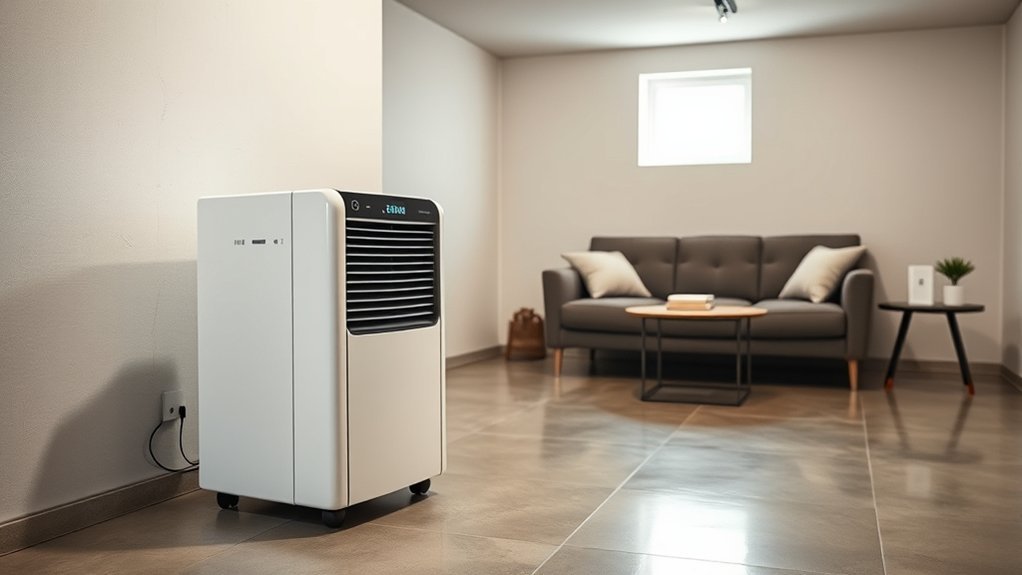
If you’re looking for the best dehumidifiers with pumps for whole-house moisture control in 2026, focus on moisture-removal capacity, coverage guidance, pump drainage, hose setup, operating temperature, and noise level. A built-in condensate pump is especially useful when water needs to move upward to a sink, laundry drain, utility tub, window, or another elevated drain point instead of relying only on gravity drainage.
This updated guide focuses on portable large-space pump dehumidifiers for basements, garages, open rooms, utility areas, crawl spaces, and high-humidity zones. These are not ducted HVAC whole-house systems, but they can help manage moisture across large problem areas when capacity, airflow, drainage, and placement match the space.
The hOmeLabs Wi-Fi model is a strong smart large-space pick, Shinco combines high-capacity moisture removal with Wi-Fi control, DECIUU Max offers a useful 16.4-foot pump-lift rating, AEOCKY combines intelligent humidity control with pump drainage, and the Airzentti commercial model is designed for heavier-duty moisture problems.
Affiliate disclosure: As an Amazon Associate, this site may earn from qualifying purchases. Product specifications, included accessories, certification status, seller availability, and test-condition ratings can change, so always confirm the current Amazon listing before buying.
Quick Verdict
Choose hOmeLabs if Wi-Fi control and built-in pump drainage are your priorities. Choose Shinco if you want a large-space residential model with Wi-Fi, pump drainage, and a clearly stated 70-pint standard-condition rating. Pick DECIUU Max when a verified 16.4-foot vertical pump rating matters, AEOCKY for intelligent humidity control with pump drainage, and Airzentti for crawl spaces, workshops, attics, storage areas, and other demanding moisture problems.
Quick Comparison
| Category | Product | Best For | Main Advantage | Action |
|---|---|---|---|---|
| Best Smart Large-Space Pick | hOmeLabs Wi-Fi Dehumidifier with Pump | Large rooms, basements, and Wi-Fi users | 50 pints/day at 80°F, 60% RH plus built-in pump and Wi-Fi | Check Price on Amazon |
| Best High-Capacity Home Pick | Shinco 7,000 Sq.Ft Energy Star Dehumidifier with Pump | Large basements, kitchens, bedrooms, and open areas | 70 PPD standard rating, up to 150 PPD maximum, Wi-Fi, and pump drainage | Check Price on Amazon |
| Best for Pump Lift | DECIUU Max 100 Pint Dehumidifier with Pump | Basements, garages, and spaces without a nearby floor drain | Built-in condensate pump rated for up to 16.4 ft of vertical drainage | Check Price on Amazon |
| Best Pump + Humidistat Pick | AEOCKY 4500 Sq.Ft Smart Dehumidifier with Pump | Homes needing intelligent humidity control and upward drainage | Pump drainage with intelligent humidistat and 5 m hose | Check Price on Amazon |
| Best Heavy-Duty Commercial Pick | Airzentti 155 Pints Commercial Dehumidifier with Pump and Hose | Large basements, crawl spaces, attics, workshops, and commercial-style areas | 70 PPD AHAM, 155-pint maximum rating, 220 CFM airflow, and pump drainage | Check Price on Amazon |
Capacity note: Do not compare headline pint numbers without checking the test conditions. Some models advertise moisture removal at standard or moderate conditions, while others emphasize a much higher maximum rating measured in very hot, humid air. Square-foot coverage is also a manufacturer or seller guideline rather than a guarantee. Match the unit to your actual moisture load, room layout, temperature, and drainage setup.
hOmeLabs Wi-Fi Dehumidifier with Pump
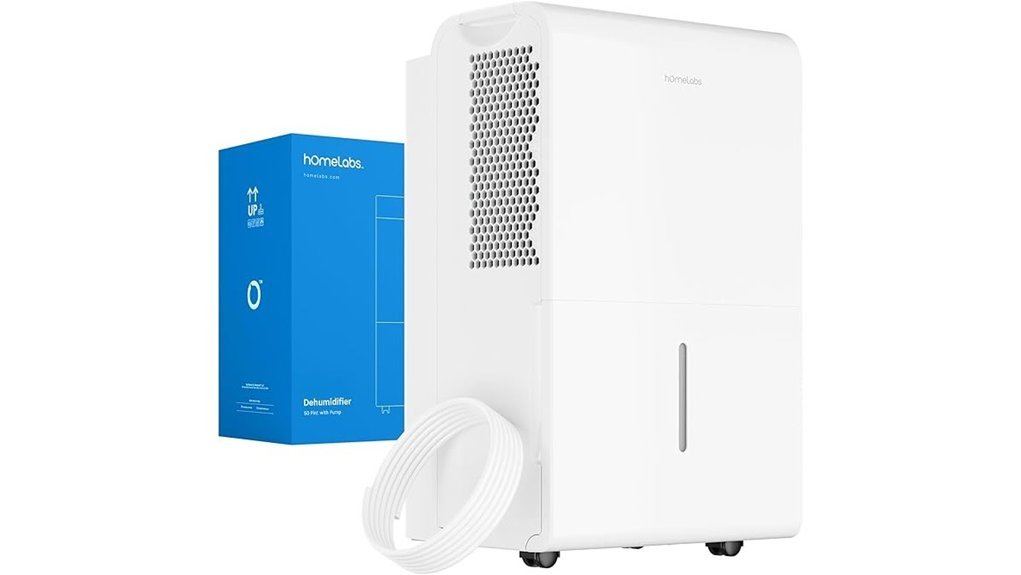
The hOmeLabs Wi-Fi Dehumidifier with Pump is a strong option if you want remote humidity control and automatic drainage in a large room, basement, garage, or office. The current Amazon listing states moisture removal of up to 50 pints per day at 80°F and 60% relative humidity, with a maximum rating of 120 pints at 95°F and 90% relative humidity.
Coverage wording varies between current listings: Amazon describes this ASIN for spaces up to 7,500 sq. ft., while hOmeLabs currently lists its 50-pint Wi-Fi model for up to 7,000 sq. ft. Treat those square-foot numbers as approximate coverage guidance and size the unit primarily around the humidity level and moisture-removal capacity your space actually needs.
Best For: Buyers who want Wi-Fi control, a built-in pump, and large-space moisture management for basements, garages, finished living areas, or offices.
Why You’ll Like It: Wi-Fi control makes it easier to adjust settings remotely, while the integrated pump reduces dependence on manual bucket emptying when you have a suitable drain-hose route. The digital control panel also makes target-humidity adjustments straightforward.
Who Should Avoid It: Skip it if you only need a compact dehumidifier for a small room or if you have no safe place to route the pump drain hose.
Pros:
- Wi-Fi Control: Supports remote humidity management.
- Useful Standard Rating: Listed at 50 pints per day at 80°F and 60% RH.
- Integrated Pump: Supports continuous drainage when the hose is installed correctly.
Cons:
- Coverage Claims Vary: Current Amazon and manufacturer coverage figures are not identical.
- Large-Unit Footprint: It may be excessive for small bedrooms, closets, or tight corners.
- More Features to Pay For: Wi-Fi and pump drainage may be unnecessary if you only need basic gravity drainage.
Shinco 7,000 Sq.Ft Energy Star Dehumidifier with Pump
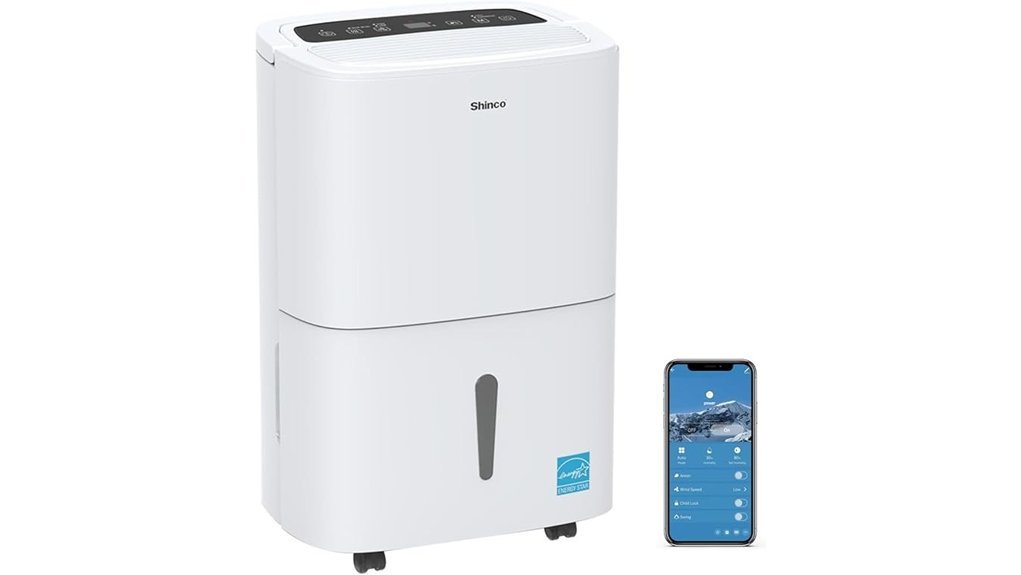
The Shinco 7,000 Sq.Ft Energy Star Dehumidifier with Pump is designed for larger residential areas and heavier moisture problems. The current listing states a standard dehumidification rating of 70 pints per day at 80°F and 60% RH and a maximum rating of 150 pints per day at 95°F and 90% RH.
Best For: Larger basements, kitchens, bedrooms, bathrooms, and open living areas where Wi-Fi control and multiple drainage choices are useful.
Why You’ll Like It: The humidity setting can be adjusted from 30% to 80% in 5% increments. Wi-Fi connectivity adds remote management, and the unit offers manual, continuous, and pump drainage. The current listing also states a peak sound level of 48 dB.
Who Should Avoid It: It may not be the best fit for a small bedroom, closet, or lightly humid space where a smaller-capacity unit would be easier to place.
Pros:
- Clear Capacity Ratings: 70 PPD at standard stated conditions and up to 150 PPD under extreme humidity conditions.
- Wi-Fi Connectivity: Supports remote management and monitoring.
- Three Drainage Methods: Supports manual, continuous, and pump drainage.
Cons:
- Maximum Rating Can Be Misleading: The 150-pint figure should not be compared directly with another unit’s standard-condition rating.
- Noise: Even a stated 48 dB peak level may be noticeable in a very quiet bedroom.
- Tank Maintenance: The 1.85-gallon tank still requires attention if you are not using continuous or pump drainage.
DECIUU Max 100 Pint Dehumidifier with Pump
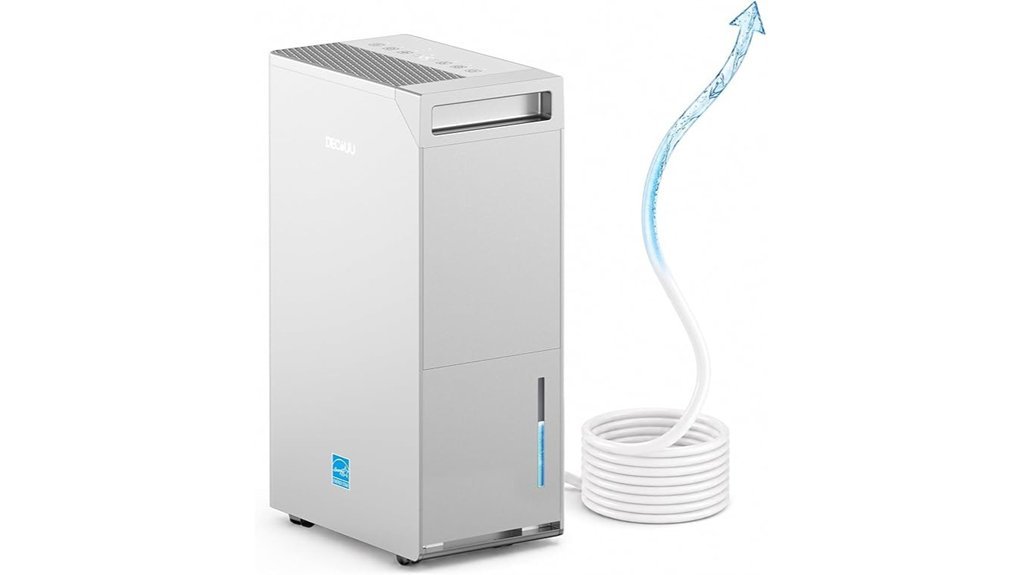
The DECIUU Max 100 Pint Dehumidifier with Pump is listed for spaces up to 5,000 sq. ft. and is designed for basements, garages, laundry rooms, storage areas, and other damp spaces. Its current listing states moisture removal of up to 100 pints per day at 95°F and 90% RH and up to 70 pints per day at 86°F and 80% RH.
Best For: Buyers who need flexible drainage in a large damp area, especially when the available sink, utility tub, window, or drain point is above the dehumidifier.
Why You’ll Like It: The built-in condensate pump is listed to move collected water upward by as much as 16.4 feet. Multiple drainage options, adjustable humidity control, automatic defrost, automatic restart, timer functions, and continuous draining make it well suited to less convenient basement or garage installations.
Who Should Avoid It: It may be more dehumidifier than you need for a small bedroom, closet, or mildly humid room.
Pros:
- Large-Space Design: Listed for areas up to 5,000 sq. ft.
- Verified Pump-Lift Claim: Built-in pump is listed for up to 16.4 ft of vertical drainage.
- Flexible Operation: Includes automatic defrost, restart, timer, humidity adjustment, and multiple drainage choices.
Cons:
- 100 Pints Is a Maximum Rating: That figure is measured under hot, highly humid conditions.
- Potential Overkill: The size and capacity may be unnecessary for smaller spaces.
- Drain Setup Matters: Pump performance still depends on proper hose routing without kinks or blockages.
AEOCKY 4500 Sq.Ft Smart Dehumidifier with Pump
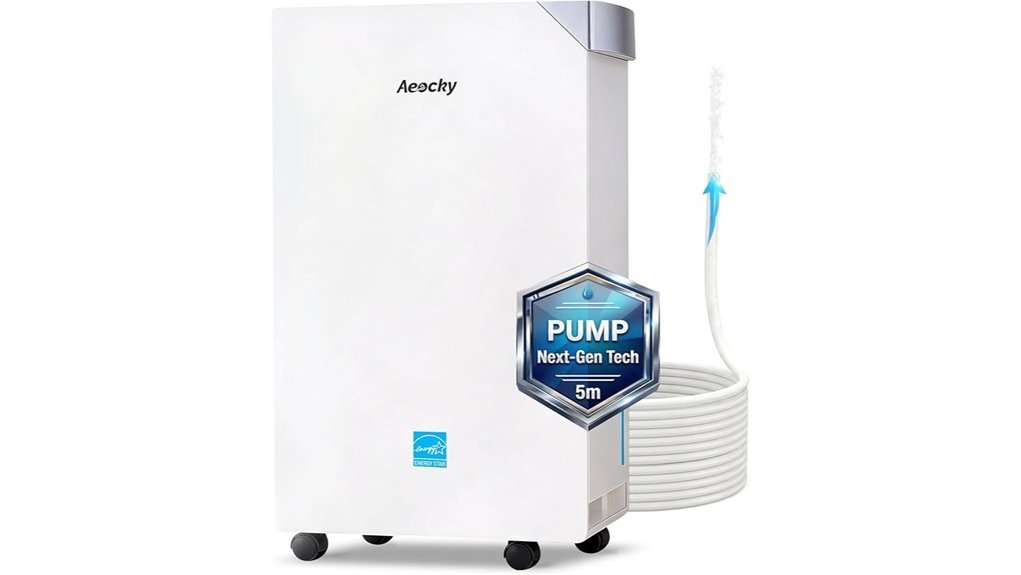
AEOCKY’s 4500 Sq.Ft Smart Dehumidifier with Pump is aimed at residential spaces where automatic humidity control and upward drainage are important. The current LEO pump listing states a maximum moisture-removal rating of 80 pints per day at 95°F and 95% RH and 56 pints per day at 86°F and 80% RH.
Best For: Homeowners who want an intelligent humidistat and pump drainage for basements, garages, living spaces, bathrooms, or other damp residential areas.
Why You’ll Like It: AEOCKY markets the LEO-001 pump system for 5 m upward drainage and includes a 5 m drain hose. Its intelligent humidity-control system automatically responds to changing humidity, which is useful when you want ongoing control without repeatedly adjusting the settings yourself.
Who Should Avoid It: It may not be worthwhile if you only need a basic low-cost unit, gravity drainage is already easy, or you specifically want built-in Wi-Fi/app control rather than automatic humidity management.
Pros:
- Pump Drainage: Designed to move collected water upward instead of requiring a continuously downward-sloping gravity hose.
- Intelligent Humidistat: Automatically manages operation around the selected humidity level.
- Residential Coverage: Listed for spaces up to 4,500 sq. ft.
Cons:
- 80 Pints Is a Maximum Rating: The headline figure is based on very humid conditions.
- Not the Same as Wi-Fi Control: Intelligent humidity management should not be confused with built-in remote app control.
- Installation Still Matters: You need a safe drain destination and properly routed hose for automatic drainage.
Airzentti 155 Pints Commercial Dehumidifier with Pump and Hose
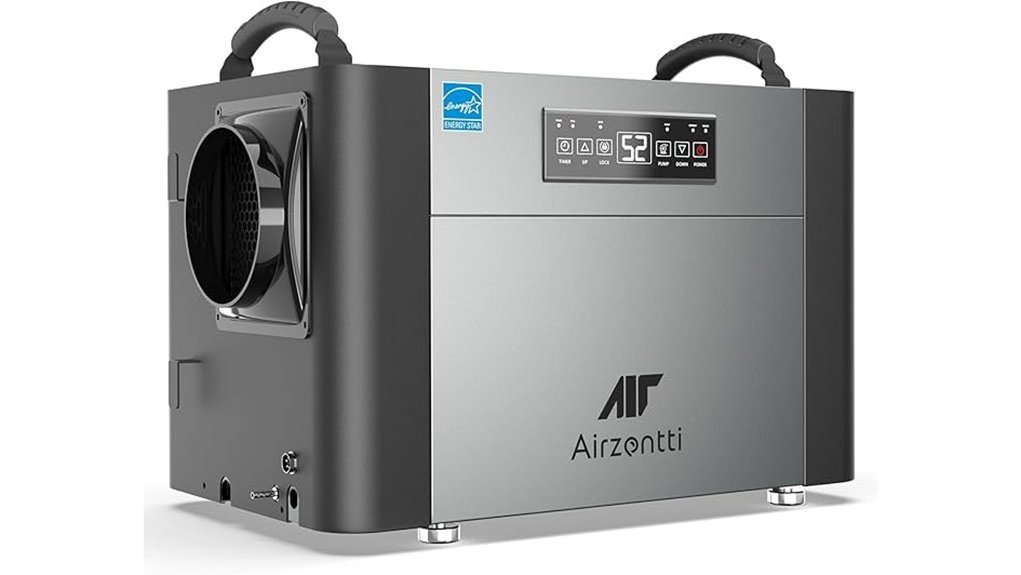
The Airzentti 155 Pints Commercial Dehumidifier with Pump and Hose is designed for demanding moisture control in large basements, crawl spaces, attics, workshops, storage areas, homes, and commercial settings. Its current listing states 70 pints per day under AHAM conditions and up to 155 pints per day under nearly saturated conditions, so the 155-pint headline figure should be treated as a maximum rather than a standard-condition rating.
Best For: Homeowners, property managers, and businesses dealing with heavier moisture loads in large or difficult-to-drain areas.
Why You’ll Like It: The listed 220 CFM airflow supports strong air movement, while the built-in pump can drain up to 16.4 feet according to the current listing. It also includes humidity-level adjustment, timer functions, gravity drainage, automatic defrost, and automatic drainage.
Who Should Avoid It: It is not a practical choice for a small bedroom, compact apartment, or anyone who needs a lightweight appliance that will be carried between floors regularly.
Pros:
- AHAM Capacity Provided: The current listing states 70 PPD AHAM in addition to its 155-pint maximum rating.
- Built-in Pump: Listed to drain water up to 16.4 ft with proper hose routing.
- Strong Airflow: Listed at 220 CFM for larger damp areas.
Cons:
- Heavy Unit: At about 60 lbs according to the current listing, frequent carrying may be inconvenient.
- Commercial-Style Design: It may be excessive for normal small-room humidity control.
- Maximum Rating Needs Context: The 155-pint figure is measured under nearly saturated conditions rather than AHAM conditions.
Factors to Consider When Choosing Whole House Dehumidifiers With Pump
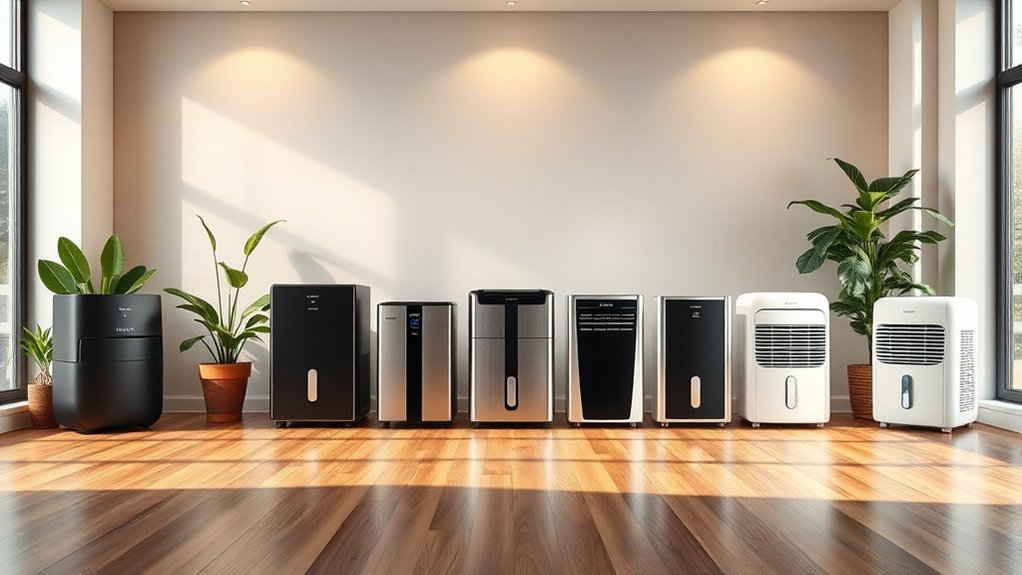
When you’re choosing a whole house dehumidifier with a pump, assess the space size, moisture load, pint rating and test conditions, pump lift, hose route, operating temperature, energy efficiency, and noise level. The right unit should match your actual humidity problem and make drainage easier rather than simply offering the biggest advertised number.
Portable vs. Ducted Whole-House Dehumidifiers
Many products described as “whole house” dehumidifiers in retail listings are large-space portable or freestanding units rather than dehumidifiers integrated into HVAC ductwork. Portable pump models can work well in basements, garages, crawl spaces, open living areas, and specific high-humidity zones. If you need centralized humidity control through your HVAC system, look for a purpose-built ducted whole-house dehumidifier and have the system sized and installed appropriately.
Compare Pint Ratings Carefully
Pints per day only become meaningful when you know the temperature and relative humidity used for the rating. A model advertised at 150 pints under extreme conditions is not automatically twice as powerful as a 70-pint unit rated under standard or AHAM conditions. Look for the stated test conditions and compare like-for-like ratings whenever possible.
Key Specifications To Evaluate
Start with dehumidification capacity and your actual moisture load rather than relying only on a square-foot number. Then compare coverage guidance, pump lift, drain-hose requirements, tank capacity, timer settings, filter access, automatic restart, auto defrost, minimum operating temperature, and noise. These details often affect everyday convenience as much as maximum moisture-removal capacity.
Coverage Area Requirements
Manufacturer coverage figures are useful for narrowing the field, but they should not be treated as exact guarantees. A very damp 2,000-sq-ft basement can demand more moisture removal than a relatively dry open 4,000-sq-ft area. Ceiling height, doors, airflow, outdoor humidity, water intrusion, and temperature all affect the workload. Choose capacity for the conditions in your space, not just its floor area.
Pump Drainage and Hose Routing
A built-in condensate pump is most useful when water needs to move upward or when a gravity-only hose route is impossible. Before buying, check the stated pump-lift capability, included hose length, drain location, and whether the hose can run safely without sharp bends, kinks, or trip hazards. If you already have a nearby floor drain below the unit, gravity drainage may be simpler.
Energy Efficiency Ratings
Energy use matters because a dehumidifier may operate for long periods during humid weather. Check the exact model’s current ENERGY STAR information rather than assuming every variation in a product family has the same certification. Keeping the filter clean, maintaining airflow clearance, and ensuring the drainage system works properly can also help the unit operate efficiently.
Noise Level Considerations
Dehumidifiers produce fan and compressor noise, and pump operation can add occasional drainage noise. For bedrooms and living areas, compare stated dB figures and look for lower fan settings or sleep-friendly modes. For basements, crawl spaces, workshops, and storage areas, stronger airflow may matter more than near-silent operation.
Tank Capacity vs. Pint Capacity
Pint capacity and tank capacity describe different things. Pint capacity refers to how much moisture the machine can remove from the air during a specified period and set of test conditions. Tank capacity refers to how much collected water the bucket can hold. With continuous pump drainage, bucket size becomes less important, although the tank, reservoir, hose, and pump area still require cleaning and inspection.
Maintenance and Safety
Clean the filter on the schedule recommended by the manufacturer, inspect the hose for clogs or kinks, keep the unit level, and maintain the required clearance around air intakes and exhausts. Use an appropriate grounded outlet and follow the manufacturer’s electrical instructions. In cold basements, garages, or crawl spaces, verify the model’s minimum operating temperature and auto-defrost capability before buying.
Before You Buy Checklist
- Measure the space and consider how damp it becomes during your most humid season.
- Compare pint ratings only after checking the stated temperature and relative-humidity conditions.
- Do not rely on square-foot coverage alone when your basement, crawl space, or garage is unusually wet.
- Check the pump-lift rating and make sure the drain hose can safely reach your sink, laundry drain, utility tub, window, or other drain point.
- Confirm whether the required pump hose and gravity-drain hose are included with the exact model you are buying.
- Check the minimum operating temperature and auto-defrost guidance for cold basements or garages.
- Review filter access, portability, tank access, dimensions, and noise before using a large model in a living area.
- Use a suitable grounded outlet and follow the manufacturer’s electrical and installation instructions.
Frequently Asked Questions
How Do I Maintain My Dehumidifier With a Pump?
Clean the air filter regularly, keep the tank and pump reservoir clean, and inspect the drain hose for clogs, algae buildup, sharp bends, or kinks. Keep the unit level and maintain the manufacturer’s recommended airflow clearance. If water stops draining, inspect the hose route, pump reservoir, and drain height before assuming the compressor has failed.
Can I Use a Dehumidifier in a Cold Basement?
Yes, if the model is rated for the temperature in your basement. Compressor dehumidifiers can lose efficiency or develop frost when temperatures fall below their intended operating range. Auto defrost is helpful, but you should still confirm the exact model’s minimum-temperature guidance.
What Size Dehumidifier Do I Need for My Home?
Use both square footage and moisture severity. A very wet basement usually needs more dehumidification capacity than a similarly sized room with only moderate humidity. Compare pint-per-day ratings at similar test conditions, then consider drainage, temperature, layout, airflow, and how continuously you expect the machine to run.
Are Portable Pump Dehumidifiers the Same as Ducted Whole-House Dehumidifiers?
No. Portable or freestanding pump dehumidifiers remove moisture from the surrounding area where they are installed. A true ducted whole-house dehumidifier connects to an HVAC or dedicated duct system and is designed to manage humidity more centrally throughout the home.
How Noisy Are Dehumidifiers With Pumps?
Noise varies by compressor, fan speed, airflow, cabinet design, and pump operation. Residential models may be suitable for living areas, while high-airflow commercial units are usually better placed in basements, workshops, crawl spaces, or utility areas. Check the exact model’s stated dB rating when noise is an important buying factor.
Do I Need a Dedicated Outlet for My Dehumidifier?
Requirements depend on the model and your electrical circuit. Use a properly grounded outlet, follow the manufacturer’s electrical instructions, and avoid unsafe extension-cord or overloaded-circuit setups. For higher-capacity commercial equipment, check the listed electrical requirements before installation.
Is a Pump Dehumidifier Better Than a Gravity Drain Model?
A pump dehumidifier is usually more convenient when collected water needs to travel upward to a sink, utility tub, window, or another elevated drain point. Gravity drainage is simpler when a hose can continuously slope downward into a nearby floor drain. Choose based on the physical drain route in your space rather than assuming a pump is always necessary.
Conclusion
When comparing whole house dehumidifiers with pumps, prioritize comparable pint ratings, actual moisture load, drainage requirements, pump lift, operating temperature, noise, and maintenance. The hOmeLabs model is the strongest fit here for buyers prioritizing Wi-Fi control with pump drainage. Shinco combines a 70-pint standard-condition rating with Wi-Fi and multiple drainage methods. DECIUU Max stands out when a clearly stated 16.4-foot pump-lift capability is important, while AEOCKY is appealing for intelligent humidity control with upward pump drainage. For crawl spaces, workshops, attics, and other demanding moisture problems, the Airzentti commercial model offers the heaviest-duty design in this group. Whichever model you choose, compare ratings under similar test conditions and make sure the drainage route works in your actual space before buying.