Affiliate disclosure: As an Amazon Associate, we may earn from qualifying purchases at no extra cost to you.
Quick Verdict: Best Commercial-Grade Dehumidifiers for Basements
If you’re looking for the best commercial-grade dehumidifiers for your basement in 2026, focus on moisture removal capacity, drainage type, coverage area, portability, and long-term durability. Large, damp basements often need a high-capacity unit with continuous drainage or a built-in pump, while tighter crawl spaces may need a compact model that can fit into low-clearance areas.
The Moiswell 260 Pints Commercial Dehumidifier is the strongest choice here for serious moisture problems in large spaces. The ALORAIR 180 PPD model is a strong pump-equipped option for basements and crawl spaces, while the CADPXS 80 Pint Crawl Space Dehumidifier is better suited to smaller, tighter areas. If energy efficiency and larger residential coverage matter most, the Waykar 150 Pints and Vellgoo Max 140 Pint models are also worth comparing.
Before You Buy
- Measure your basement first: Match the unit’s rated coverage to your real room size and moisture level.
- Check drainage access: A pump is helpful if water must move upward to a sink, window, or drain line.
- Think about noise: Commercial-grade units can be louder than small home dehumidifiers.
- Plan for weight: High-capacity models can be heavy, so wheels and handles matter.
- Use safe electrical setup: Avoid overloaded outlets and follow the manufacturer’s installation guidance.
Quick Comparison Table
| Product | Best For | Key Strength | CTA |
|---|---|---|---|
| Moiswell 260 Pints Commercial Dehumidifier | Large basements, garages, warehouses | Very high moisture removal with built-in pump | Check Price on Amazon |
| CADPXS 80 Pint Crawl Space Dehumidifier | Crawl spaces and smaller basements | Compact design with flexible installation | Check Product Details on Amazon |
| ALORAIR Commercial Dehumidifier with Pump | Basements and crawlspaces needing pump drainage | Automatic drainage and defrost features | View Latest Deal on Amazon |
| Waykar 150 Pints Energy Star Dehumidifier | Large residential basements and garages | Energy Star efficiency and wide coverage | Check Current Amazon Availability |
| ALORAIR Commercial Dehumidifier HD55 | Basements, storage areas, and workspaces | Durable build with automatic drainage | Check Price on Amazon |
| Vellgoo Max 140 Pint Energy Star Dehumidifier | Large homes and high-humidity basements | Energy efficiency with multiple modes | See Today’s Price on Amazon |
| Yaufey 155 Pints Commercial Dehumidifier | Large basements, garages, and warehouses | High airflow and pump drainage | Check Product Details on Amazon |
Commercial Dehumidifier with Pump for Large Spaces
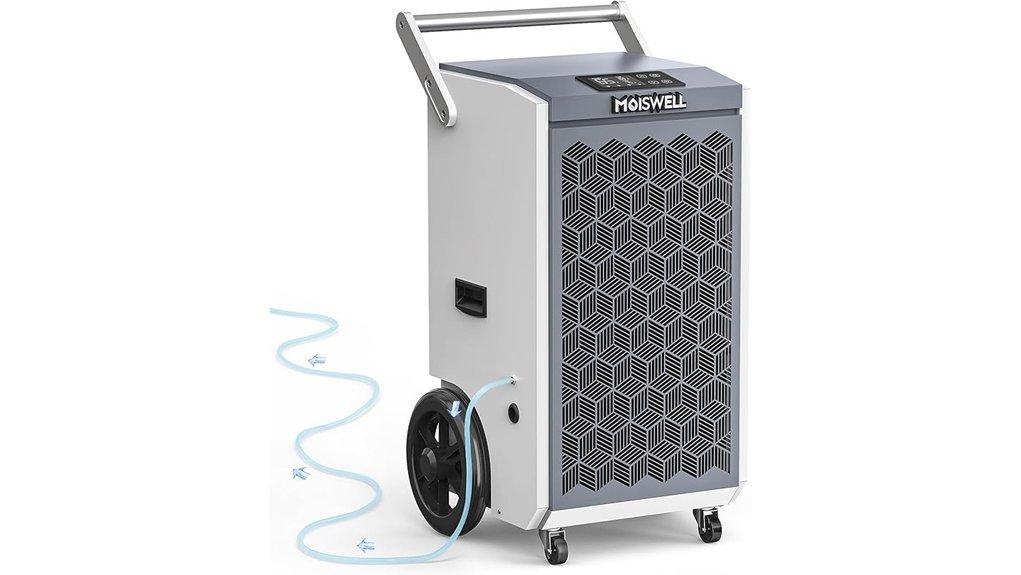
If you’re looking to tackle humidity issues in large spaces like basements or warehouses, the Moiswell 260 Pints Commercial Dehumidifier with Pump is an excellent choice. It efficiently removes up to 260 pints of moisture daily under rated conditions, making it useful for areas that need serious humidity control. The built-in pump automatically drains condensation, so you won’t have to deal with constant manual disposal. Plus, it pumps water up to 16.4 feet, giving you flexible installation options. With large wheels and detachable handles, you can move it where you need it most. Enjoy reliable performance with user-friendly controls and durable construction.
Why You’ll Like It: This model is built for people who need more than a small household dehumidifier. If your basement smells musty, feels damp, or needs continuous drying after heavy humidity, the high capacity and pump drainage can make daily use easier.
Best For: The Moiswell 260 Pints Commercial Dehumidifier is best for businesses and homeowners dealing with high humidity in large spaces like basements, garages, or warehouses.
Who Should Buy This: Choose this unit if you need a powerful basement dehumidifier with pump drainage and do not want to empty a tank frequently.
Who Should Avoid This: Skip it if your basement is small, lightly damp, or you need a lightweight unit that can be carried often.
Pros:
- High capacity: Removes up to 260 pints of moisture daily under rated conditions, ideal for large areas.
- Built-in pump: Automatically drains condensation, reducing the need for manual disposal.
- Portability: Equipped with large wheels and detachable handles for easier transport.
Cons:
- Weight: At 95 pounds, it may be cumbersome for some users to move without assistance.
- Size: The dimensions may take up significant space in smaller environments.
- Price: Commercial-grade features may come at a higher price point compared to residential models.
CADPXS 80 Pint Crawl Space Dehumidifier
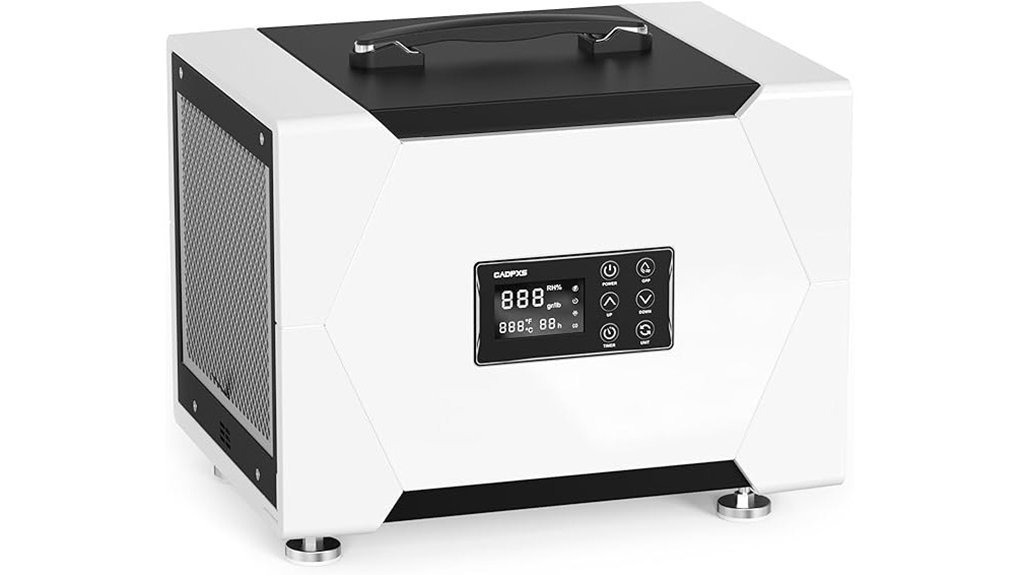
The CADPXS 80 Pint Crawl Space Dehumidifier is a practical pick for homeowners seeking efficient moisture control in basements and crawl spaces. With a capacity of 80 pints per day under rated conditions, it effectively covers areas up to 1,000 sq. ft. Its compact design makes installation simple, whether floor- or ceiling-mounted. You’ll appreciate the included 6.56 ft drain hose for hassle-free drainage. Plus, the low-noise operation and 24-hour timer enhance convenience. Enjoy peace of mind with its durable construction and cETL safety certification, backed by a 5-year warranty and U.S.-based customer support for any questions you might have.
Why You’ll Like It: Many full-size commercial dehumidifiers are bulky. This one is easier to place in crawl spaces, low-clearance areas, and basement corners where a larger wheeled unit may not fit well.
Best For: Homeowners seeking efficient moisture control in crawl spaces and basements.
Who Should Buy This: Choose this model if your main concern is a crawl space, utility area, or smaller basement where compact installation matters.
Who Should Avoid This: Avoid it if you need high-capacity drying for a very large, wet basement or commercial restoration job.
Pros:
- Compact design allows for flexible installation in tight spaces.
- Includes a 6.56 ft drain hose for easy gravity drainage, eliminating manual water removal when installed correctly.
- Backed by a 5-year warranty and U.S.-based customer support for reliable assistance.
Cons:
- May not be effective in areas larger than 1,000 sq. ft.
- Optional remote control system is not included and requires additional purchase.
- Performance may vary in extremely low temperatures despite durability claims.
ALORAIR Commercial Dehumidifier with Pump (180 PPD)
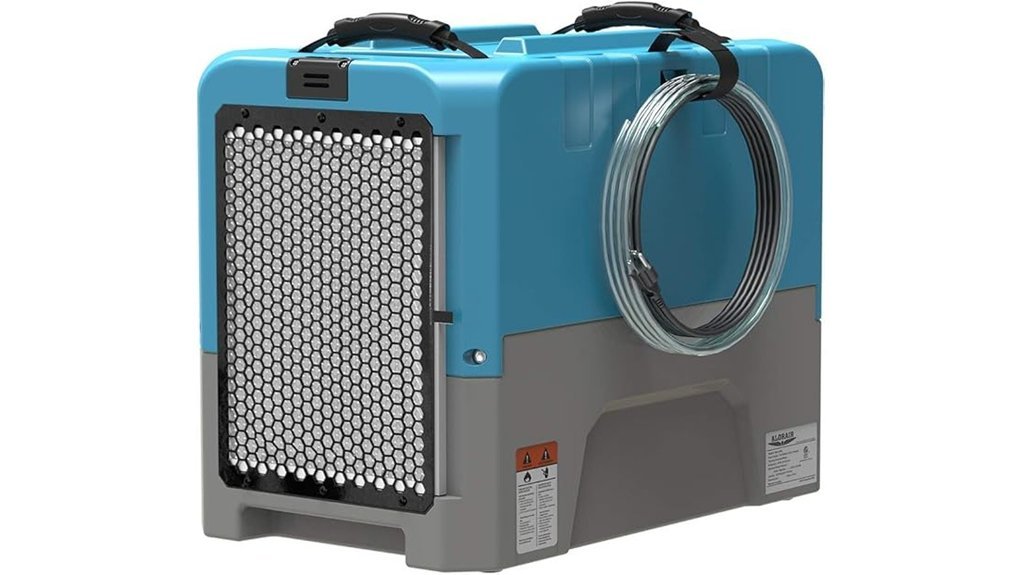
For homeowners facing moisture issues, the ALORAIR Commercial Dehumidifier with Pump (180 PPD) is a strong choice. This powerful unit can remove up to 180 pints of water daily under rated conditions, covering areas up to 2,300 square feet. Its compact design makes it easier to maneuver than many oversized commercial units, while the built-in pump supports automatic drainage, reaching heights of 14.7 feet. With features like plug-and-go operation, humidity control, and automatic defrost, it’s user-friendly and efficient. Plus, a 6-year warranty and ETL safety compliance provide added confidence. This dehumidifier’s performance and reliability make it ideal for basements and crawlspaces.
Why You’ll Like It: The built-in pump is the main selling point. It helps when your drain point is above the unit or when gravity drainage is not convenient in your basement layout.
Best For: Homeowners looking for an efficient solution to moisture issues in large areas like basements and crawlspaces.
Who Should Buy This: Choose it if you want a basement dehumidifier with automatic pump drainage, automatic defrost, and a more commercial-style build.
Who Should Avoid This: Skip it if you only need light humidity control in a small room or if power consumption is your biggest concern.
Pros:
- High water removal capacity: Removes up to 180 pints of moisture daily under rated conditions.
- Built-in pump: Allows for automatic drainage, making maintenance easier.
- User-friendly features: Plug-and-go operation with humidity control and automatic defrost.
Cons:
- Weight: At 64.3 pounds, it may be cumbersome to move for some users.
- Power consumption: Operates at 640 watts, which could increase energy bills depending on usage.
- Limited upper temperature rating: Effective only up to 104°F, potentially limiting use in extremely hot conditions.
Waykar 150 Pints Energy Star Dehumidifier with Pump
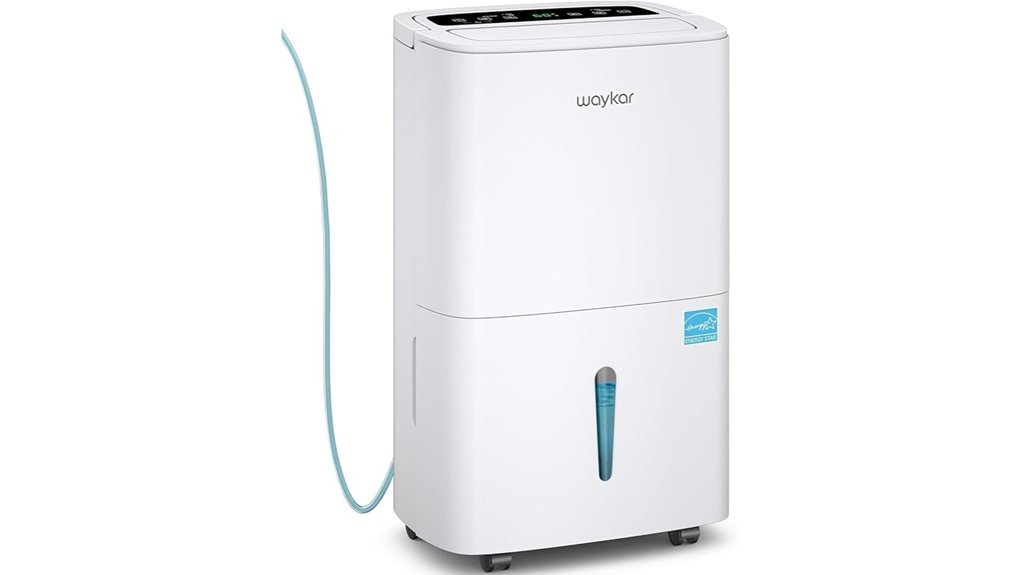
Looking for a powerful solution for damp spaces? The Waykar 150 Pints Energy Star Dehumidifier with Pump is a good option to compare. Capable of removing up to 150 pints of moisture daily under rated conditions, it covers areas up to 7,000 sq. ft., making it useful for basements, garages, or other large spaces. Its built-in pump allows for easier drainage, either upwards or into a floor drain. Plus, with its Energy Star certification, it is designed to use energy more efficiently than many non-certified alternatives. The user-friendly controls and quiet operation make it ideal for many home environments. Enjoy peace of mind with a 30-day money-back guarantee and lifetime tech support.
Why You’ll Like It: This is a strong choice if you want large-area moisture control but still care about energy use. The built-in pump and wide coverage rating make it flexible for bigger residential basements.
Best For: Those seeking an efficient and powerful dehumidifier for large damp spaces like basements, garages, or commercial areas.
Who Should Buy This: Choose this unit if you want a high-capacity dehumidifier with Energy Star certification and pump drainage for a large basement.
Who Should Avoid This: Avoid it if you do not have enough room for a larger unit or prefer a simple tank-only dehumidifier.
Pros:
- High Capacity: Removes up to 150 pints of moisture daily under rated conditions, suitable for areas up to 7,000 sq. ft.
- Energy Efficient: Energy Star certified, which may help reduce energy use compared with less efficient models.
- User-Friendly: Features an intelligent touch control system, 24-hour timer, and quiet operation for convenience.
Cons:
- Size and Weight: May be bulky for smaller spaces or difficult to move without using the casters.
- Water Tank Capacity: The 1.85-gallon tank may require frequent emptying in very humid conditions if continuous drainage is not used.
- Pump Dependence: The built-in pump may require maintenance, which could be a concern for some users.
ALORAIR Commercial Dehumidifier (113 Pint, HD55)
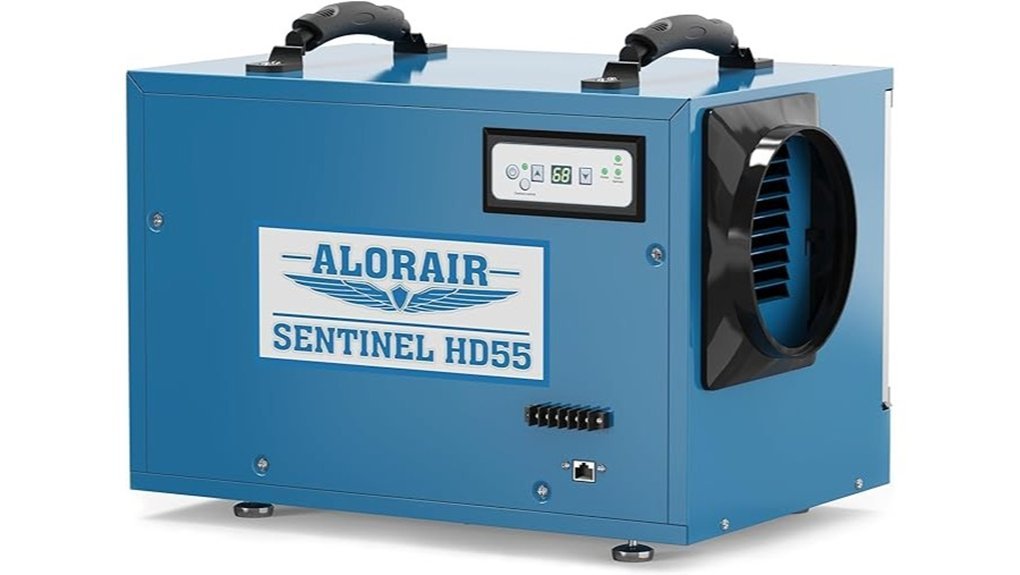
If you need a powerful solution for high humidity in your basement, the ALORAIR Sentinel HD55 is worth considering. With a capacity of 113 pints per day at saturation, it effectively covers spaces up to 1,200 square feet. Thanks to its compact design and sturdy metal casing, you can transport it wherever it’s needed. The automatic drainage feature minimizes maintenance, while the auto defrost system helps conserve energy and support long-term performance. Plus, it’s user-friendly, allowing you to set ideal humidity levels more easily. Backed by a 6-year limited warranty, this dehumidifier is a reliable choice for many basement, storage, and commercial spaces.
Why You’ll Like It: This model fits buyers who want commercial-style construction but do not need the largest 150 to 260 pint machines. It balances capacity, durability, and manageable size.
Best For: The ALORAIR Sentinel HD55 is best for businesses and homeowners looking to effectively manage high humidity levels in areas such as basements, warehouses, and offices.
Who Should Buy This: Choose it if you want a durable commercial-grade dehumidifier for a moderate-size basement or storage space.
Who Should Avoid This: Avoid it if your basement is very large, severely wet, or requires a built-in pump system instead of standard drainage.
Pros:
- High capacity: Removes up to 113 pints of moisture per day at saturation, making it useful for larger spaces.
- Automatic drainage: Reduces the need for manual water tank emptying when drainage is set up properly.
- User-friendly controls: Easy to adjust settings for optimal humidity levels.
Cons:
- Weight: At 41.7 lbs, it may be cumbersome for some users to move around frequently.
- Initial cost: The upfront investment may be higher compared to smaller dehumidifiers.
- Noise level: Can be louder than residential models, which may be a concern in quiet environments.
Vellgoo Max 140 Pint Energy Star Dehumidifier
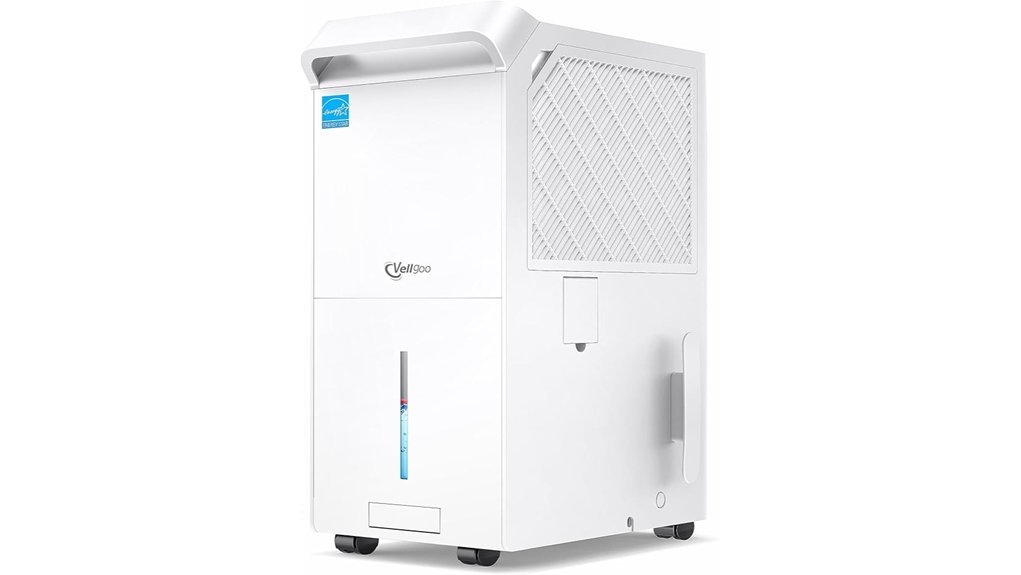
The Vellgoo Max 140 Pint Energy Star Dehumidifier is designed for large basements, effectively removing up to 140 pints of moisture daily under rated conditions. With coverage for homes up to 6,000 sq. ft., it’s built for demanding humidity situations. You’ll appreciate the high-efficiency rotary compressor and advanced “3+3” system that supports faster moisture removal. It features various modes, a clear LED panel, and built-in wheels for easy mobility. Plus, with flexible drainage options and a washable filter, maintenance is easier. Its quiet operation and smart functions, like auto-restart, help create a more convenient experience while keeping your space more comfortable and dry.
Why You’ll Like It: This model is a good fit for homeowners who want a high-capacity dehumidifier with modern controls, multiple modes, and easier maintenance features.
Best For: Homeowners with large spaces up to 6,000 sq. ft. seeking an efficient solution for high humidity levels.
Who Should Buy This: Choose this model if you want a large-space dehumidifier with Energy Star certification, rolling mobility, and flexible drainage.
Who Should Avoid This: Skip it if you only need a compact crawl space unit or do not want to clean filters regularly.
Pros:
- High moisture removal capacity of up to 140 pints per day under rated conditions, ideal for demanding humidity situations.
- Energy Star certified for high efficiency, which may help reduce electricity costs compared with less efficient models.
- Multiple modes and user-friendly interface for customizable operation.
Cons:
- Initial cost may be higher compared to standard dehumidifiers.
- Requires regular maintenance, such as filter cleaning.
- Mobility may be limited in tighter spaces despite built-in wheels.
Yaufey 155 Pints Commercial Dehumidifier for Basements
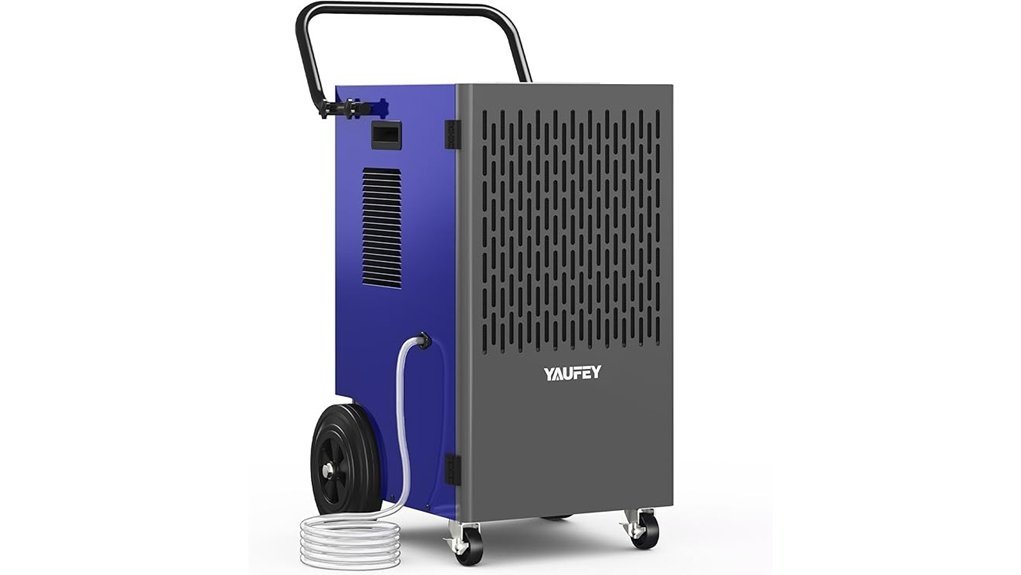
For large spaces like basements or warehouses, the Yaufey 155 Pints Commercial Dehumidifier stands out with its impressive 155-pint daily capacity under rated conditions. It effectively covers areas up to 8,000 square feet, thanks to its high airflow rate of 164.7 CFM. With built-in pump drainage, you can more easily remove moisture, while the automatic defrost feature helps support consistent performance. The intuitive digital display and adjustable humidity settings make operation simple. Plus, with its portable design and durable wheels, you can move it wherever you need. Backed by solid customer support, it’s a practical choice for maintaining better humidity control.
Why You’ll Like It: The high airflow rating helps move damp air through the unit quickly, which can be useful in larger basements, garages, and open work areas where moisture spreads across a wide space.
Best For: The Yaufey 155 Pints Commercial Dehumidifier is best for homeowners and businesses needing efficient moisture control in large spaces like basements, warehouses, and garages.
Who Should Buy This: Choose it if you want a large-capacity commercial dehumidifier with built-in pump drainage and high airflow.
Who Should Avoid This: Avoid it if you need a lightweight unit or are trying to minimize power use as much as possible.
Pros:
- High capacity of 155 pints per day under rated conditions, making it suitable for large areas up to 8,000 square feet.
- Built-in pump drainage allows for easier moisture removal without constant manual intervention.
- Portable design with durable wheels facilitates movement between different locations.
Cons:
- Weighty at 79.4 pounds, which may make it less convenient for some users to move.
- Wattage of 520 watts may lead to higher energy consumption compared to smaller dehumidifiers.
- Initial cost may be higher than standard residential models, potentially limiting accessibility for some users.
Factors to Consider When Choosing Commercial Grade Dehumidifier for Basement
When you’re choosing a commercial-grade dehumidifier for your basement, several factors come into play. You’ll want to evaluate capacity requirements, drainage options, and energy efficiency ratings to find the best fit. Additionally, think about portability and the operating modes offered to ensure it meets your specific needs.
Key Capacity Requirements
Choosing the right capacity for a commercial-grade dehumidifier can greatly impact your basement’s air quality and overall comfort. Start by considering the moisture removal capacity, usually measured in pints per day (PPD). For larger spaces, look for units ranging from 80 to over 260 PPD. Confirm the dehumidifier can cover your basement’s size. Some models handle areas up to 8,000 square feet, while compact crawl space models may be better for 1,000 square feet or less. Check for AHAM-style ratings or clearly stated test conditions when available, as they provide a more realistic measure of performance. Also, take into account your basement’s environmental conditions. Higher humidity, water intrusion, and poor ventilation might require a unit with a greater PPD capacity. Matching these factors will help you maintain ideal humidity levels and create a healthier basement environment.
Drainage Options Available
Effective drainage options are essential for maintaining the performance of your commercial-grade dehumidifier in the basement. Many models come with built-in pumps, allowing for automatic drainage of condensation, so you won’t have to worry about manual water removal. This feature is especially helpful in hard-to-reach areas. The drainage distance for these pumps typically ranges from 9.84 to 19.6 feet, giving you flexibility in directing water either vertically or horizontally. Additionally, gravity drainage systems let you easily connect a hose, allowing water to flow from high to low points. Some dehumidifiers also include long drainage hoses, around 6 to 16.4 feet, which enhances installation versatility and supports continuous operation without frequent emptying.
Energy Efficiency Ratings
Energy efficiency ratings play an essential role in selecting a commercial-grade dehumidifier for your basement, as they can greatly impact your energy bills. Look for ENERGY STAR certification, which indicates a unit’s ability to minimize power consumption while effectively removing moisture. Compare the capacity, measured in pints per day, to its energy consumption in watts. In general, lower wattage per pint is preferable. Efficiency is often assessed at conditions like 80°F and 60% relative humidity, helping you evaluate performance in typical environments. Additionally, high-efficiency compressors and advanced technologies, such as rotary compressors, can improve energy savings. Don’t forget to take into account airflow capacity, measured in CFM, as higher airflow usually leads to quicker moisture extraction and can improve overall efficiency.
Portability and Design
When selecting a commercial-grade dehumidifier for your basement, portability and design are key factors that can enhance your experience. Consider the weight and dimensions. Compact models can weigh around 64.3 pounds, while larger ones might reach 95 pounds, affecting transport and storage. Look for built-in wheels and handles. Large rear wheels can help you navigate uneven surfaces, while detachable handles make lifting easier. Evaluate design features like swivel and braked wheels for better maneuverability in tight spaces. Also, check if the unit can be mounted or placed flexibly, adapting to your specific layout. Finally, opt for a user-friendly interface that simplifies operation, especially in larger or more complex environments.
Operating Modes Offered
Choosing the right operating modes in a commercial-grade dehumidifier can greatly impact your basement’s moisture management. Many models offer various settings like Continuous, Custom, and Sleep modes, so you can tailor performance to your specific needs. If noise is a concern, look for units with a low-noise performance mode to minimize disruption. Automatic defrost modes are also beneficial, preventing frost buildup on coils and enhancing efficiency in cooler basement conditions. User-friendly interfaces often include 24-hour timers and humidity control settings, allowing you to make precise adjustments. Additionally, some models come with memory restart functions, ensuring they resume previous settings after a power outage. These features can markedly improve the effectiveness of your dehumidification efforts.
Noise Level Considerations
Selecting the right operating modes is just one aspect of optimizing your dehumidification efforts. Noise levels also play a key role in your overall comfort. In residential areas or quiet workspaces, the noise produced by commercial dehumidifiers can be a significant factor. Most models operate between 40 to 60 decibels, and lower levels are generally better for noise-sensitive environments. Look for features like low-noise performance modes and sound-dampening designs to minimize disruption. Regular maintenance, such as cleaning or replacing filters, can also help reduce noise. Understanding the decibel ratings of various models will guide you in choosing a dehumidifier that meets your noise tolerance while effectively managing humidity in your basement.
Warranty and Support Services
Understanding warranty and support services is essential for anyone investing in a commercial-grade dehumidifier for their basement. A longer warranty, like six years, often signals the manufacturer’s confidence in their product’s durability, protecting your investment. Be sure to check what components the warranty covers and for how long, as many offer limited coverage. Responsive customer support can enhance your experience, helping you troubleshoot and maintain your unit effectively. Some manufacturers also provide extended warranty options or additional support services, which can offer peace of mind for long-term use. Finally, a money-back guarantee can reflect a company’s commitment to customer satisfaction and product quality, making it a significant factor in your decision.
Pro Tips for Better Basement Humidity Control
- Set a realistic humidity target: Many basements feel better when kept around a moderate relative humidity range rather than running the unit nonstop without a target.
- Keep doors and windows closed: Open windows can pull humid outdoor air into the basement and make the dehumidifier work harder.
- Clean filters regularly: A dirty filter can reduce airflow, increase noise, and lower moisture removal performance.
- Improve drainage: Use continuous drainage or pump drainage if your basement is very damp, so the unit can run without frequent tank emptying.
- Fix water sources first: A dehumidifier helps control humidity, but it does not replace fixing leaks, seepage, or poor exterior drainage.
Safety Note
Commercial-grade dehumidifiers can be heavy and powerful. Always follow the manufacturer’s setup instructions, use a properly rated outlet, keep the unit on a stable surface, and avoid running drain hoses where they may cause tripping or water damage. If your basement has standing water, electrical issues, or visible mold growth, consider professional inspection before relying on a dehumidifier alone.
Frequently Asked Questions
How Do I Maintain a Commercial Dehumidifier?
To maintain your commercial dehumidifier, regularly clean or replace the air filter, check the drain hose for clogs, empty the water reservoir if you are not using continuous drainage, and ensure proper airflow around the unit. Schedule professional servicing periodically for peak performance, especially if the unit runs daily in a high-humidity basement.
Can These Dehumidifiers Reduce Mold Growth?
Yes, these dehumidifiers can help reduce conditions that support mold growth by maintaining better humidity levels. By keeping your space drier, they make it harder for mold spores to thrive. However, a dehumidifier should not be treated as a complete mold-removal solution. Existing mold, leaks, or water intrusion may require cleaning, repair, or professional help.
What Is the Average Lifespan of a Commercial Dehumidifier?
A stitch in time saves nine. Typically, a commercial dehumidifier lasts around 5 to 10 years, depending on usage, humidity level, cleaning, and maintenance. Regular care can extend its lifespan, keeping your space dry and mold-resistant for longer.
Are Commercial Dehumidifiers Energy Efficient?
Yes, commercial dehumidifiers can be energy efficient, especially models designed to minimize power consumption while effectively managing humidity levels. Always check for Energy Star ratings, wattage, and moisture removal capacity to compare efficiency before buying.
How Noisy Are These Dehumidifiers During Operation?
Commercial dehumidifiers can be noisy during operation, but many models feature noise-reducing technology or lower-noise modes. If you choose carefully, you can find units that maintain effective moisture control while keeping noise levels manageable for your basement, garage, or workspace.
Do I Need a Pump for a Basement Dehumidifier?
You need a pump if the water must drain upward or across a longer distance to a sink, window, or drain line. If your basement has a nearby floor drain lower than the dehumidifier outlet, gravity drainage may be enough. A built-in pump is usually more convenient for continuous operation.
What Size Commercial Dehumidifier Do I Need for a Basement?
The right size depends on your basement square footage, moisture level, drainage setup, and temperature. Lightly damp small basements may not need a very large unit, while wet, musty, or oversized basements often need higher PPD capacity. When in doubt, choose based on both coverage area and moisture removal capacity, not just square footage.
Final Recommendation
In the world of moisture control, choosing the right commercial dehumidifier is like selecting the perfect tool for the job. Each model we’ve explored offers unique strengths to fight off dampness in your basement. If you need maximum capacity, the Moiswell 260 Pints model is the strongest option in this list. If pump drainage matters most, compare the ALORAIR 180 PPD and Yaufey 155 Pints models. If you need a compact crawl space solution, the CADPXS 80 Pint model is easier to place in tight areas. Whether you value capacity, energy efficiency, or advanced features, there’s a strong option here ready to protect your space. Choose based on your basement size, drainage access, noise tolerance, and maintenance needs, and you’ll have a much easier time keeping humidity under control.