Robot vacuum performance often depends on a small but critical dimension: threshold height. Doorways, room shifts, and uneven flooring can stop a unit even when the rest of the layout is open. Measuring the vertical gap in millimeters, and noting the highest side when surfaces differ, provides the baseline for compatibility. The next step is determining which models can clear that limit, and what can be done when they cannot.
What Threshold Height Means for Robot Vacuums?
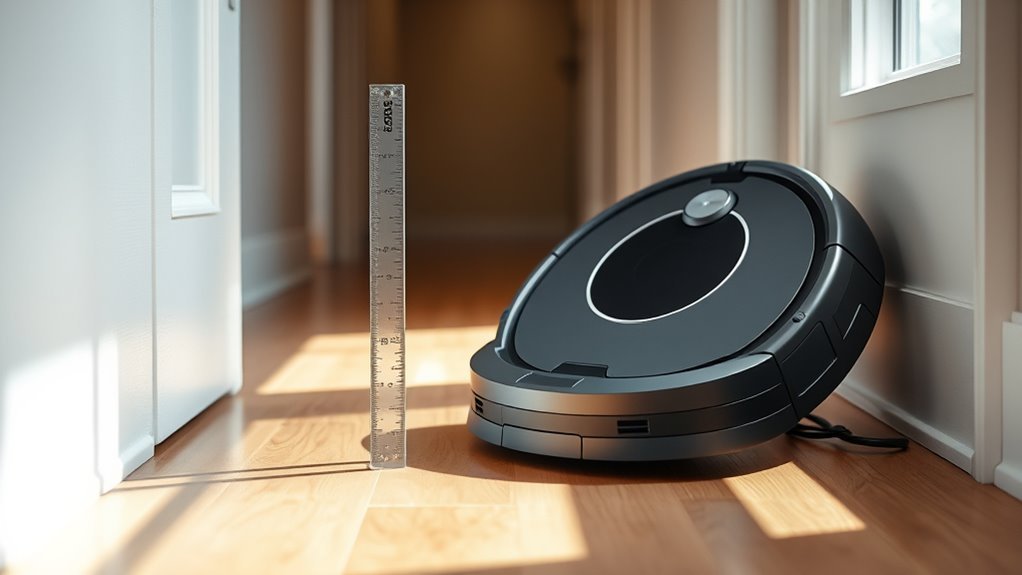
Threshold height refers to the vertical gap or step between adjacent floor surfaces at a doorway, and it directly determines whether a robot vacuum can move from one room to another without assistance.
Threshold height determines whether a robot vacuum can cross doorways and move freely from room to room.
In practical terms, threshold height governs a robot vacuum’s ability to clear floor changes and maintain autonomous coverage. Standard vacuum cleaner designs typically manage about 20 mm, while more advanced units extend to 60 mm, and high-end models may reach 80 mm.
Threshold-crossing ability depends on wheel geometry, motor torque, suction power, and obstacle detection algorithms that recognize and approach the edge correctly. Because even small deviations can alter performance, accurate measurement remains essential for matching the machine to the home’s layout.
When the threshold is too tall, cleaning routes fragment and liberation from manual intervention diminishes. When it is within specification, the robot vacuum preserves mobility, efficiency, and consistent room-to-room operation.
How to Measure Your Doorway Threshold
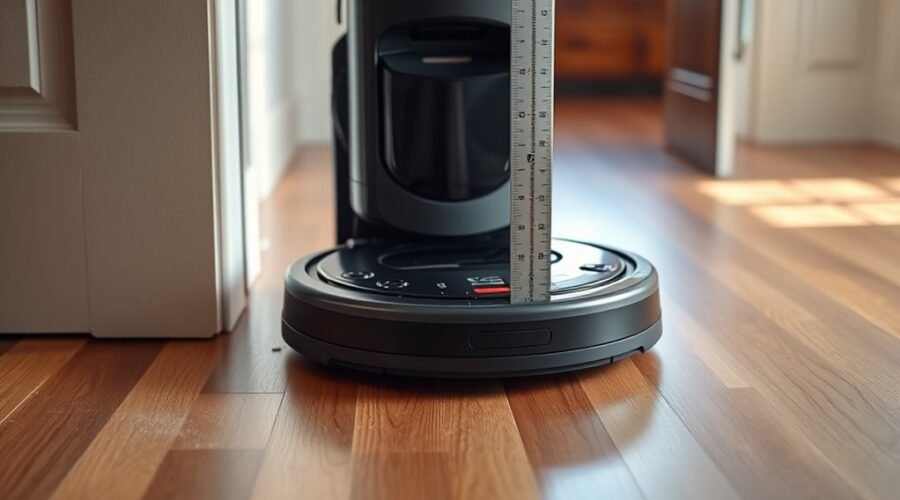
A simple measurement determines whether a doorway will impede robot vacuum travel. Use a ruler or tape measure to measure the vertical threshold height from the lower floor to the top edge. Record the result in millimeters, since millimeters align with robot vacuum specifications and enable direct compatibility checks. If the threshold differs on each side, measure both sides and retain the higher value. That conservative value supports reliable navigation and preserves autonomy.
| Checkpoint | Method | Result |
|---|---|---|
| Vertical height | Floor to top edge | mm |
| Variable sides | Measure both sides | Higher value |
| Ramp planning | Measure length too | Fit evaluation |
If the reading falls between marks, round down to the nearest millimeter. This precision reduces risk when selecting ramps and helps determine whether the doorway can be crossed cleanly. The process is simple, objective, and sufficient for evaluating access without guesswork.
Robot Vacuum Threshold Limits by Model
Model-specific threshold limits vary considerably, and published climb ratings provide a practical basis for compatibility checks. A Robot vacuum’s threshold height rating should be matched to actual doorway limits, not marketing claims alone.
In performance testing, the MOVA Z60 Ultra climbed to 80 mm, while the Dreame Aqua10 Ultra Roller cleared 44 mm despite a 42 mm rating. The DEEBOT X11 OmniCyclone, from Ecovacs Deebot, targets 40 mm via a 4-wheel-drive system.
Roborock S7 and S8 models reach about 22 mm, but surface type can reduce climbing performance. Ecovacs Deebot T20 Omni exceeds 22 mm and suits older thresholds.
- High thresholds demand verified climb data.
- Rated limits can differ from observed results.
- Robot vacuum compatibility depends on flooring thresholds.
- DEEBOT X systems emphasize traction and control.
- Roborock S models remain constrained by surface texture.
Which Robot Vacuums Handle High Thresholds Best?
For homes with tall room-to-room changes, the strongest robot vacuum performers are those with verified climb data rather than nominal ratings.
In robot vacuums for high vacuum threshold conditions, the MOVA Z60 Ultra Roller stands out, climbing 51 mm in testing and surpassing its stated 48 mm limit. Its climbing system makes it the best robot vacuum for uneven interiors.
The Dreame Aqua10 Ultra Roller follows, handling single thresholds to 44 mm in tests, though its design target is 42 mm.
The DEEBOT X11 OmniCyclone, with a four-wheel-drive platform, manages about 40 mm and remains a serious option for users seeking to handle high elevations without manual intervention.
By comparison, the Ecovacs Deebot T20 Omni clears 22 mm and suits lighter thresholds, while the Roborock S8 Pro Ultra combines advanced navigation with strong suction and reliable passage control.
Among advanced models, verified clearance data defines real freedom.
How to Help a Robot Vacuum Cross a Threshold
Accurate threshold measurement is the first step in improving robot vacuum passage, since most standard units can clear door sills up to 20 mm (0.8 in) before traction and ground clearance become limiting factors.
With the threshold height recorded, the operator can compare it against robot vacuum climbing limits in the vacuum specifications and decide whether intervention is needed. Higher door thresholds may be bridged with ramps made from rubber, aluminum, or wood, provided the slope remains gradual.
Units with larger wheels and higher ground clearance generally traverse barriers more effectively.
- Measure each doorway precisely.
- Compare against stated climbing limits.
- Install ramps for thresholds above 2 cm.
- Use performance monitoring to map failure points.
- Set no-go zones in the app to protect obstacle avoidance and preserve autonomy.
Frequently Asked Questions
Can Robot Hoovers Go Over Door Thresholds?
Yes, many robot hoovers can cross door thresholds, typically 20 mm, with premium units reaching 42–51 mm; robot capabilities, floor types, obstacle detection, suction power, battery life, noise levels, programming options, user reviews, maintenance tips affect cleaning efficiency.
What Is a Good Door Threshold Ramp for a Robot Vacuum Cleaner?
A good door threshold ramp for a robot vacuum cleaner uses durable threshold ramp materials, 10°–15° slope, and length twice the rise, maximizing robot vacuum compatibility, robot vacuum performance, and threshold ramp benefits, including DIY ramp solutions, mobility aid options, flooring change solutions, and ramp installation tips.
Can Roomba Go Over the Door Threshold?
Yes; Roomba models usually cross thresholds up to 0.8 inches, while premium units reach 1 inch. Robot vacuum performance depends on threshold challenges, floor type considerations, navigation systems, obstacle detection, and design innovations.
What Is the Recommended Height Clearance for a Robot Vacuum?
A robot vacuum should clear 20–25 mm; higher remains possible, yet uncertain. Robot vacuum specifications, cleaning performance, threshold compatibility, height measurement, floor types, obstacle navigation, charging dock placement, maintenance tips, user reviews, brand comparisons determine liberation.
Conclusion
In the house of floors and doorways, the threshold acts like a small gatekeeper, deciding which machines may pass. When its height is measured in millimeters and rounded down, the verdict becomes clear: some robot vacuums will glide through, while others will stop at the border. Accurate measurement, matched to model-specific climbing limits, turns navigation from guesswork into engineering, helping the chosen unit move room to room with reliable, data-driven precision.