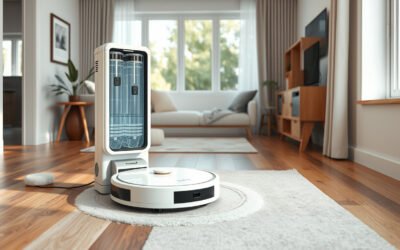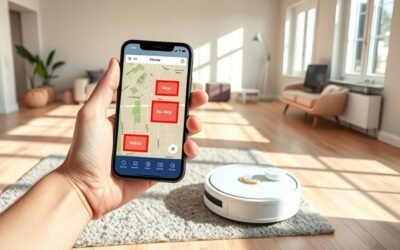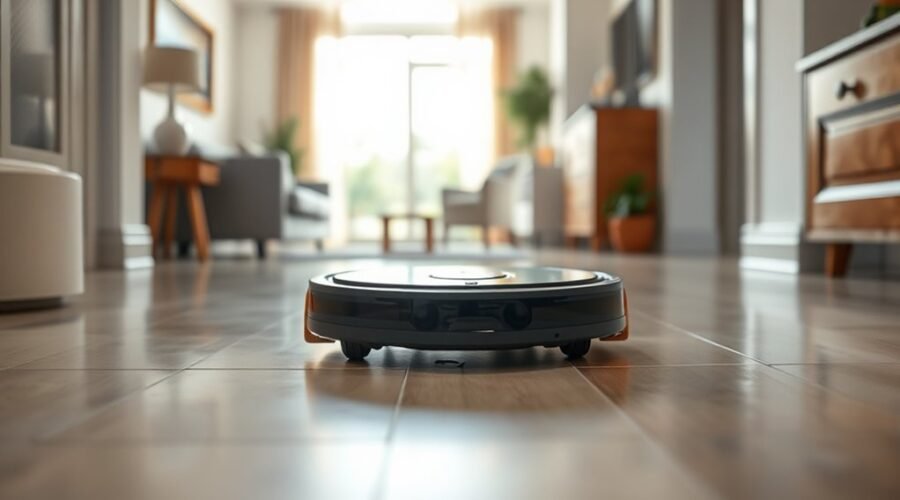
Robot vacuum threshold climbing depends on more than the height of your doorway. Most standard robot vacuums can cross thresholds around 2 cm (0.8 inches), while advanced models handle much taller obstacles. However, a robot rated for an 8 cm double threshold may still struggle with a single 5 cm step. Understanding that difference can help you avoid a vacuum that gets stuck between rooms.
Quick Answer
Most robot vacuums can climb door thresholds up to about 20 mm (0.8 inches). Advanced models such as the MOVA Z60 Ultra Roller can handle single steps up to 48 mm, according to manufacturer specifications. Crossing success also depends on threshold shape, wheel traction, ground clearance, and whether the robot uses active climbing hardware.
Key Takeaways
- Single-step and double-step climbing ratings are different. Never treat a combined height as a single vertical obstacle.
- Square-edged metal thresholds are generally harder to cross than gently sloped wooden or rubber transitions.
- Cliff sensors, slippery wheels, low ground clearance, and loose rugs can prevent crossing even when the height seems acceptable.
- Measure both sides of each doorway and test the robot in both directions before relying on automatic cleaning.
- A secure threshold ramp can help an existing robot cross a doorway without replacing the vacuum.
How High Can Robot Vacuums Climb?
)
Most conventional robot vacuums climb thresholds up to about 20 mm (0.79 inches). This is enough for many low doorway strips, flooring joints, and carpet transitions. Models with specialized lifting systems can cross much higher obstacles.
For example, Narwal’s official climbing specifications confirm that several Freo-series models handle thresholds up to 2 cm. The Narwal Flow offers additional climbing capability.
Premium models have changed the upper range considerably:
- MOVA Z60 Ultra Roller Complete: Up to 48 mm for a single threshold and 80 mm across a specified two-level obstacle.
- Dreame Aqua10 Ultra Roller: Up to 42 mm for a single step and 80 mm across two suitable steps.
- DEEBOT X11 OmniCyclone: Up to 24 mm for a single threshold and 40 mm across certain continuous threshold configurations.
- Narwal Flow: Up to 30 mm for a single step and 40 mm for a suitable double threshold.
These are manufacturer ratings under specified conditions. They do not guarantee that every doorway with the same height will be passable.
A square-edged obstacle may be harder than a rounded transition. Wet tiles, loose rugs, narrow tracks, and uneven flooring can also reduce performance.
The most useful specification is the maximum single-step climbing height unless your doorway genuinely has two separate levels.
Why Do Robot Vacuums Get Stuck at Doorways?
Robot vacuums usually get stuck at doorways because the threshold is too high, too steep, or difficult for their wheels to grip. Even a threshold within the stated climbing limit can cause problems when several obstacles overlap.
The most common causes include:
- Excessive height: The front wheels cannot lift the chassis above the threshold.
- Sharp edges: The bumper or underside hits the vertical lip before the wheels gain traction.
- Slippery surfaces: Smooth metal, polished tile, or dust-covered strips cause the wheels to spin.
- Low ground clearance: Brushes, mop pads, or the bottom housing scrape against the raised edge.
- Cliff sensor interference: Dark or reflective surfaces may cause sensors to interpret a threshold as a drop.
- Loose materials: Rug corners, fringe, cords, and debris can trap the robot during crossing.
The direction of approach matters too. A robot may climb a threshold from a lower room but fail when returning because the opposite side has a different shape.
Approaching diagonally can also reduce traction. A straight approach gives both drive wheels a better chance of engaging the raised surface together.
If the robot repeatedly turns away without touching the obstacle, investigate navigation and sensor behavior. If it touches the threshold and spins its wheels, the problem is more likely mechanical.
What Affects Robot Vacuum Threshold Climbing?
Robot vacuum threshold climbing depends primarily on wheel size, traction, motor torque, ground clearance, suspension, and chassis design. The height and shape of the obstacle determine how these features work together.
Wheel design: Larger rubberized wheels can provide more leverage against a raised edge. Their surface texture also affects grip on smooth flooring.
Motor torque: Torque is the turning force that drives the wheels. Sufficient torque helps the robot push itself upward instead of stalling against the threshold.
Ground clearance: The space between the floor and the robot’s underside determines whether the chassis can move across an obstacle without scraping.
Suspension: Flexible wheel mounts help the drive wheels maintain contact as the robot changes height. Advanced systems can also raise the entire body.
Chassis geometry: A low front bumper may catch on sharp edges. Wheel placement, weight distribution, and the shape of the underside affect the robot’s climbing angle.
Navigation sensors: Obstacle sensors can help the robot approach a barrier correctly. However, cliff sensors may stop it before the wheels reach the threshold.
Suction power is not the same as climbing power. A vacuum with very high suction can still fail at a doorway if its wheels, suspension, or chassis cannot handle the obstacle.
How Robot Vacuums Climb Thresholds
Robot vacuums cross thresholds by lifting their front edge, gripping the raised surface, and pulling the remaining chassis over it. Standard models rely mainly on their drive wheels. Advanced models may use active suspension or retractable lifting mechanisms.
The process becomes more demanding as threshold height increases. The robot needs enough clearance to avoid scraping and enough traction to finish the crossing.
Threshold Climbing Limits
A robot vacuum’s stated climbing limit describes the obstacle height it is designed to cross under specified conditions. Standard models commonly handle around 2 cm, while specialized models can climb substantially higher.
There is no single climbing limit for an entire price category. Even expensive robot vacuums can differ considerably.
| Model class | Climbing capability | Practical effect |
|---|---|---|
| Conventional models | Around 20 mm | Suitable for many ordinary doorway strips |
| Specialized climbing models | Up to 48 mm in the named models compared here | Better access across high single steps |
| Double-threshold systems | Up to 80 mm in suitable two-step configurations | Crosses some complex floor transitions |
A single threshold is one vertical rise from a lower surface to a higher one.
A double threshold has two separate rises with enough horizontal space between them for the robot to stabilize before climbing again.
For example, a robot advertised as crossing 45 mm plus 35 mm is not necessarily capable of climbing one 80 mm wall.
Always compare your doorway’s actual shape with the testing conditions behind the manufacturer rating.
Wheel and Motor Design
Wheel and motor design determines how effectively a robot converts driving force into upward movement. Larger drive wheels and sufficient motor torque usually help with challenging thresholds.
Traditional robot vacuums use spring-loaded drive wheels. As the front of the robot approaches an edge, these wheels attempt to push the chassis upward.
Advanced systems take a different approach. Some models actively extend their wheels or use retractable legs to raise the front of the robot before moving forward.
This additional lift helps reduce contact between the bumper and the obstacle.
However, increased climbing ability does not always mean improved cleaning. Brush design, suction, and mopping performance remain separate considerations.
For homes with both carpet and hard flooring, pay attention to whether the robot can lift or protect its mop while crossing rugs.
Ramps and Workarounds
A threshold ramp can help a robot vacuum cross a doorway that exceeds its natural climbing ability. The ramp replaces a sharp vertical edge with a gradual slope that the wheels can follow.
Common ramp materials include rubber, aluminum, and wood. The best option depends on your threshold shape, floor surface, and how securely the ramp can be installed.
Rubber ramps often provide useful traction. Wooden ramps can blend with existing flooring, while aluminum versions may suit some metal threshold arrangements.
Low-pile rugs can sometimes soften minor floor transitions, but they must remain flat and secure. A loose rug edge can create another obstacle.
Some manufacturers offer dedicated threshold accessories. For example, Narwal’s threshold module installation guide describes an adhesive module designed to help compatible models cross door sills measuring 2–3 cm.
Check compatibility before installing a brand-specific accessory. A ramp designed for one robot may not suit another model.
A no-go zone is another option if the doorway remains impassable. It prevents repeated attempts, although the robot will no longer travel through that route during automatic cleaning.
Best Robot Vacuums for High Thresholds
The best robot vacuum for high thresholds is one with a verified single-step rating that exceeds your actual doorway height. Among the models discussed here, the MOVA Z60 Ultra Roller Complete has the strongest manufacturer-rated single-step climbing capability.
However, different models offer different advantages. Their advertised maximum heights also require careful interpretation.
| Robot vacuum | Single-step limit | Other climbing claim | Climbing system |
|---|---|---|---|
| MOVA Z60 Ultra Roller Complete | 48 mm | 80 mm total, two levels | StepMaster 2.0 retractable legs |
| Dreame Aqua10 Ultra Roller | 42 mm | 80 mm total, two levels | ProLeap lifting mechanism |
| DEEBOT X11 OmniCyclone | 24 mm | 40 mm on specified continuous obstacles | TruePass adaptive four-wheel drive |
| Narwal Flow | 30 mm | 40 mm on a suitable double threshold | Adaptive wheel and chassis lift |
The MOVA Z60 Ultra Roller Complete uses StepMaster 2.0 and a lifting chassis to handle high obstacles. Its 28,000 Pa suction rating and TroboWave DuoBrush are additional cleaning features, not measurements of climbing force.
The Dreame Aqua10 Ultra Roller uses ProLeap technology and offers 30,000 Pa advertised suction. Its continuously cleaned roller mop and AutoSeal carpet protection are useful for homes with mixed flooring.
The DEEBOT X11 OmniCyclone uses the TruePass Adaptive 4-Wheel Drive Climbing System. Auxiliary wheels engage when the robot encounters an obstacle, helping it negotiate suitable raised transitions.
The Narwal Flow offers a 30 mm single-step climbing specification. Narwal explains that its 40 mm rating applies to double thresholds rather than a single vertical rise.
For Narwal Flow, the manufacturer also specifies that multiple individual threshold rises should remain below 30 mm, with suitable horizontal space between them. The recommended width is more than 250 mm in the described configuration.
Which should you choose? For a particularly tall single doorway step, the MOVA Z60 offers the highest stated capability among these models. For smaller obstacles, compare overall cleaning quality, mopping features, navigation, and maintenance before deciding.
MOVA Z60 vs. Dreame Aqua10 Roller
The MOVA Z60 Ultra Roller Complete has a higher single-step climbing rating than the Dreame Aqua10 Ultra Roller. MOVA specifies 48 mm, while Dreame specifies 42 mm.
Both advertise a combined 80 mm limit for appropriate double-threshold arrangements. Their climbing systems and cleaning features differ, so the better model depends on your doorway and floor surfaces.
Threshold Climbing Limits
The most meaningful difference between these models is their single-step capability. MOVA has a 6 mm advantage based on official specifications, although actual results can vary.
Their double-threshold configurations also differ:
- MOVA Z60 Ultra Roller Complete: A maximum single threshold of 48 mm, with a specified two-level configuration of 45 mm plus 35 mm.
- Dreame Aqua10 Ultra Roller: A maximum single threshold of 42 mm, with a specified two-level configuration of 40 mm plus 40 mm.
- Double-threshold spacing: The models need adequate horizontal space between the two rises. A narrow vertical track is not equivalent to the advertised combined height.
For the published double-threshold configurations, MOVA specifies a minimum intermediate landing of 70 mm, while Dreame specifies 80 mm.
These details matter because a robot must stabilize after climbing the first rise before attempting the second.
If your doorway contains one sharp 50 mm vertical edge, neither manufacturer’s standard single-step specification guarantees success.
MOVA vs. Dreame Performance
Published independent threshold testing provides another way to compare the two machines. In Vacuum Wars’ single-barrier tests, the MOVA Z60 cleared 51 mm, while the Dreame Aqua10 reached 44 mm.
Both exceeded their manufacturer-rated single-step heights in that particular test. However, these results should not be treated as guaranteed performance in every home.
The MOVA Z60 combines its climbing system with 28,000 Pa advertised suction, the TroboWave DuoBrush, and HydroForce roller mopping.
The Dreame Aqua10 Ultra Roller uses 30,000 Pa advertised suction, a continuous-clean roller mop, and ProLeap suspension.
Higher suction numbers do not automatically produce better real-world cleaning. Brush design, airflow, floor contact, and navigation all affect debris pickup.
Choose the MOVA if maximizing single-step clearance is your main priority among these two models. The Dreame remains a strong alternative when its cleaning and mopping features better match your floors.
How to Measure Your Door Threshold
You can measure a door threshold with a ruler or tape measure. The key measurement is the vertical distance from the lower floor surface to the highest part of the threshold.
Measure every doorway the robot needs to cross. Do not assume both sides of a threshold have the same height.
- Find the lower side. Identify which room has the lower floor surface.
- Measure the vertical rise. Hold a ruler upright and record the distance from the lower floor to the top edge.
- Check the opposite side. Measure the drop or rise that the robot encounters when traveling back.
- Identify the edge shape. Note whether the threshold is square, rounded, beveled, or sloped.
- Measure separate steps. If the threshold has two levels, record each rise and the horizontal space between them.
- Compare the specifications. Use the manufacturer’s single-step rating for one vertical edge and the double-step rating only for a matching configuration.
- Test both directions. Let the robot attempt the doorway while you observe whether it climbs, slips, scrapes, or retreats.
Record measurements in millimeters for easier comparison with robot vacuum specifications.
For example, a 25 mm threshold is higher than the typical 20 mm climbing limit of many conventional models. That does not guarantee failure, but it makes the exact robot specification and doorway shape more important.
Also consider the horizontal clearance around the doorway. Nearby furniture, door stops, and narrow approaches may prevent the robot from lining up correctly.
Pro Tip: If a robot fails at a threshold close to its rated limit, watch where the failure happens. A bumper hitting the edge suggests a clearance problem, while spinning wheels suggest poor traction. This distinction can help you decide whether a ramp is likely to work.
How to Help a Robot Vacuum Cross Higher Thresholds
You can improve robot vacuum threshold crossing by removing small obstacles, cleaning the wheels, adjusting the approach, and adding a secure ramp when necessary. Start with the simplest fixes before considering a replacement robot.
Follow these steps in order.
- Clear the doorway. Remove cords, rug corners, loose debris, and anything else that could block the wheels or bumper.
- Clean the drive wheels. Remove trapped hair and dirt. Check that both wheels turn and move freely according to your model’s maintenance instructions.
- Inspect the threshold. Look for raised screws, sharp lips, damaged flooring strips, and slippery surfaces.
- Try a straight approach. Run a supervised cleaning pass so the robot approaches the obstacle as directly as possible.
- Check the robot’s settings. Some advanced models offer threshold recognition, obstacle-crossing controls, or special navigation modes. Use only features documented for your model.
- Add a suitable ramp. If the height exceeds the robot’s capability, install a stable, low-profile transition that reduces the climbing angle.
- Test the new setup. Check that the robot crosses without scraping, slipping, or becoming trapped.
- Prevent repeated failed attempts. If the doorway remains impassable, use a no-go zone and clean the disconnected area separately.
A gradual incline is usually easier for drive wheels than a sudden vertical edge. However, a ramp must have enough surface area for the robot to maintain traction.
Secure the ramp so it cannot slide when the robot pushes against it.
A ramp that helps the robot climb in one direction may still be too steep on the return journey. Test both directions before scheduling unattended cleaning.
Warning: Never disable cliff or anti-drop protection just to force a robot across a threshold near stairs or another drop. An unstable ramp can also become a trip hazard. Keep doorway transitions secure and avoid interfering with door movement or required access routes.
If the robot successfully crosses after these changes, monitor several normal cleaning runs. Reliable operation matters more than a single successful attempt.
For persistent failures on an otherwise compatible threshold, check for wheel or suspension problems and contact the manufacturer’s support team if needed.
Do Thresholds Damage Robot Vacuums?
Door thresholds can damage robot vacuums when repeated crossing attempts place excessive stress on the wheels, motors, bumper, or underside. Low, smooth thresholds within the robot’s rated capability are generally less demanding.
Problems become more likely when a robot repeatedly hits a sharp edge or becomes wedged against an obstacle.
Possible effects include:
- Wheel wear: Repeated spinning against a hard edge can reduce traction over time.
- Bumper damage: Frequent impacts may scratch or strain the front housing.
- Motor and gear stress: Attempts to climb beyond the machine’s capability can increase the load on drive components.
- Scraped components: Low-hanging brushes, mop assemblies, or underbody parts may rub against the threshold.
- Repeated cleaning interruptions: A stuck robot may stop the job, report an error, or require manual assistance.
Models with active climbing systems, such as the MOVA Z60, are designed to handle larger obstacles. Still, they should be used within the manufacturer’s stated conditions.
Inspect the wheels, bumper, and underside if you notice unusual scraping noises or repeated stalls.
When a robot consistently fails at the same doorway, correcting the obstacle is safer than allowing repeated attempts.
What Next-Gen Robot Vacuums Will Improve
Future robot vacuums are likely to improve threshold climbing through stronger lifting mechanisms, better traction, more adaptable suspension, and improved obstacle recognition. These features could reduce the need to carry robots between rooms.
Current premium models already show how climbing performance is changing. Systems such as StepMaster 2.0, ProLeap, and TruePass go beyond the traditional approach of relying only on drive wheels.
Several developments may make floor transitions easier:
| Upgrade | Expected benefit |
|---|---|
| Rubberized wheels | Better traction on smooth or raised surfaces |
| Stronger drive motors | More force available for climbing resistance |
| Smarter suspension | Improved wheel contact during floor changes |
| Active Traversal and lifting technology | Greater clearance for difficult obstacles |
| Dual-brush systems | Improved debris pickup across different floor types |
Improved sensors may also help robots distinguish between passable thresholds, loose rugs, and dangerous drops.
Better navigation can reduce failed attempts, but it cannot overcome every physical limitation.
A machine still needs sufficient wheel grip, clearance, and lifting force to pass an obstacle.
The most valuable improvement will be more consistent real-world crossing, not simply a higher advertised number.
Frequently Asked Questions
Can Roomba Go Over the Door Threshold?
Yes. iRobot states that Roomba models can cross thresholds up to 5/8 inch (1.6 cm) during cleaning. A taller or sharp-edged strip may stop the robot, especially when wheels slip or sensors interpret the doorway as a drop.
Which Robot Vacuum Is Best for Going Over Thresholds?
For the models compared here, the MOVA Z60 Ultra Roller Complete has the highest stated single-step limit at 48 mm. The Dreame Aqua10 Ultra Roller is rated for 42 mm. Your best choice depends on the exact height, shape, and surface of your doorway.
What Is a Good Door Threshold Ramp for a Robot Vacuum Cleaner?
A good threshold ramp is low, stable, and gently sloped, with no loose edge for the robot to catch. Rubber, wood, and aluminum are workable materials. Measure both sides of the doorway and secure the ramp before testing. Check that it does not create a trip hazard.
What Are the Downsides of Using a Robotic Vacuum Cleaner?
Robot vacuums can miss corners, struggle with thick carpets, and need regular brush, sensor, and bin care. Door thresholds, cables, and tight spaces can also interrupt cleaning. Premium climbing features cost more, and a robot still does not replace every deep-cleaning task.
Conclusion
Most robot vacuums can cross ordinary door thresholds around 2 cm high, but taller obstacles require the right climbing hardware. Manufacturer ratings are most useful when you distinguish single steps from double thresholds.
Measure each doorway, compare its shape and height with your robot’s specifications, and test crossings in both directions. If the robot struggles, a secure ramp or simple maintenance may solve the problem without an expensive upgrade.
Sources
- Narwal Robotics: Obstacle-Climbing Height: Standard climbing limits for Narwal Freo-series robot vacuums.
- MOVA: Z60 Ultra Roller Complete: StepMaster 2.0 climbing technology, single- and double-threshold limits, suction, and cleaning features.
- Dreame: Matrix10 Ultra vs. Aqua10 Ultra Roller: ProLeap specifications, single- and double-threshold capabilities, suction, and mopping features.
- ECOVACS: DEEBOT X11 OmniCyclone: TruePass adaptive climbing system and obstacle-crossing specifications.
- Narwal Robotics: Flow Obstacle Crossing Height: Single-step and double-threshold limits, spacing conditions, and ramp recommendations.
- Narwal Robotics: Threshold Module Installation: Compatible threshold heights and installation procedure.
- iRobot Support: Maximum Roomba Threshold Height: Official 5/8-inch (1.6 cm) Roomba threshold specification.