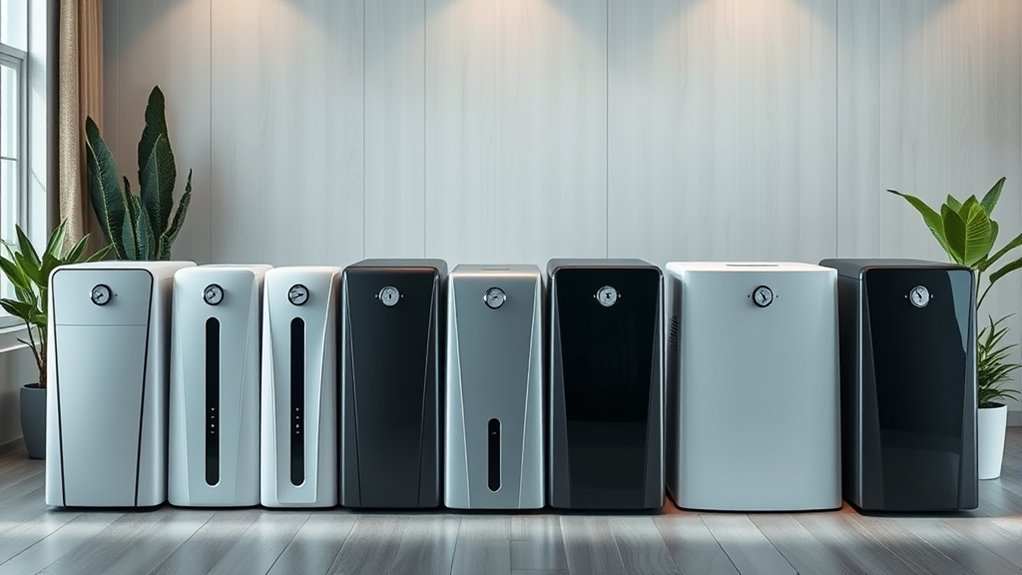
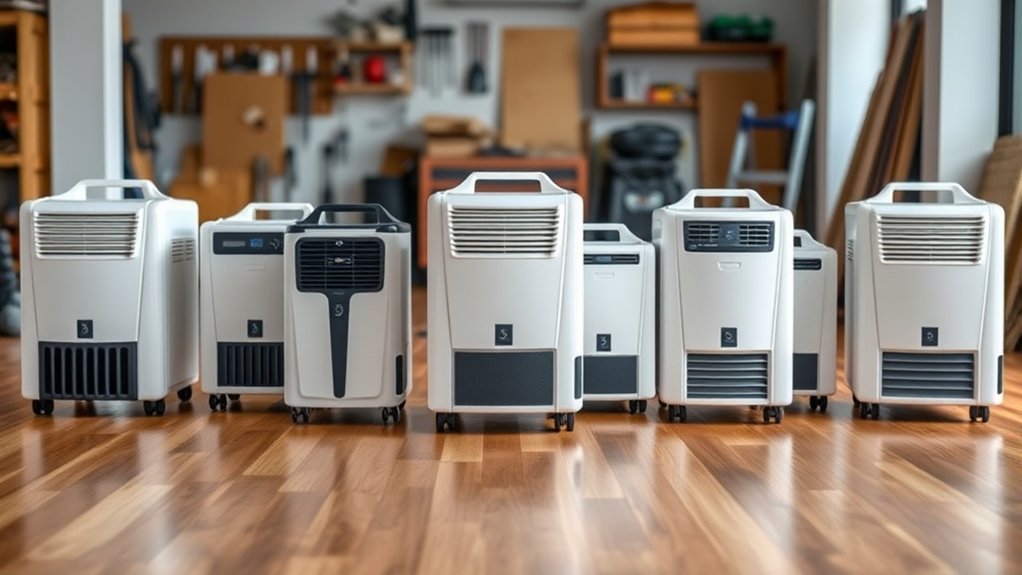
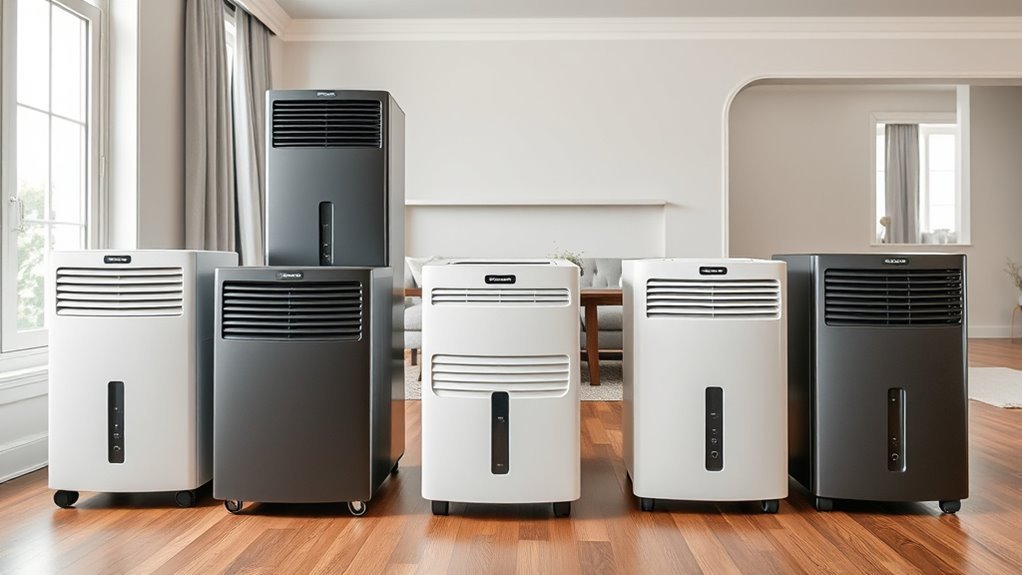
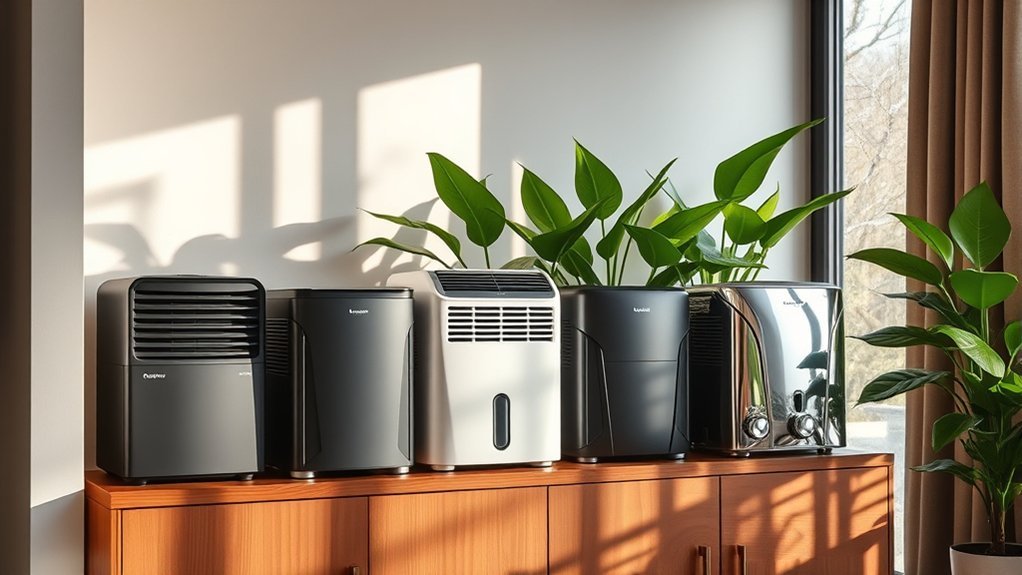
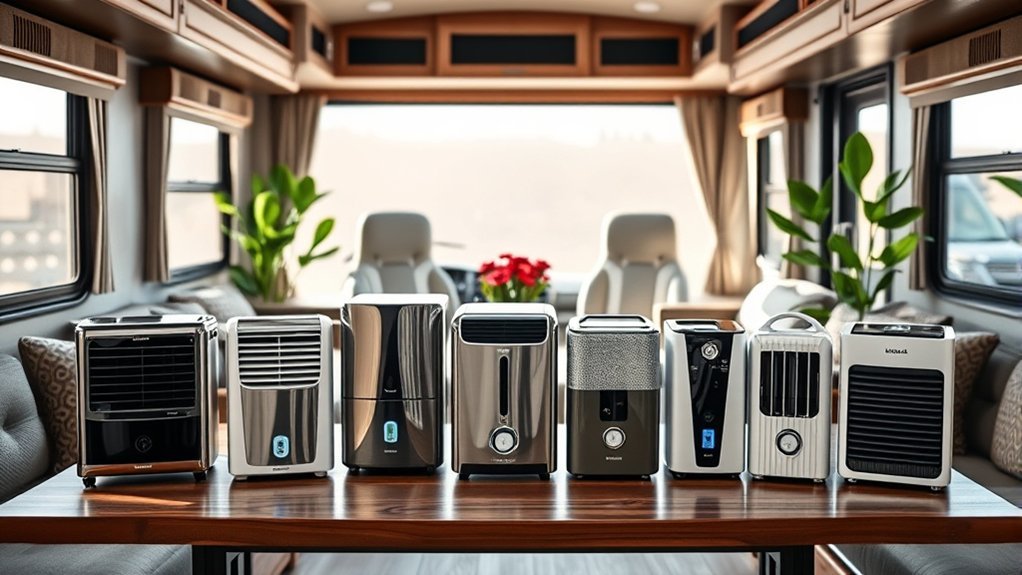
The best dehumidifier for a basement is not simply the model with the biggest pint number. You need enough real-world moisture-removal capacity for the basement’s temperature and dampness, plus a drainage setup you can leave running safely. For most finished or open basements, the Waykar 80 Pint offers the best overall balance. The Gasbye DryPrime-50-B is a stronger portable choice for a large, persistently damp space, while the ALORAIR Sentinel HD55S is a better low-profile option for a smaller crawl space or unfinished basement.
Quick verdict
- Best overall portable: Waykar 80 Pint
- Best for a large basement: Gasbye DryPrime-50-B
- Best value for a medium basement: KNKA 34 Pint
- Best quiet portable pick: BANABIE 32 Pint
- Best portable model with a pump: Waykar 150 Pint
- Best compact crawl-space model: ALORAIR Sentinel HD55S
- Best commercial-duty option: Airzentti 155 Pint
Quick Comparison of the Best Basement Dehumidifiers
| Model | Best for | Capacity wording | Claimed coverage | Drainage | Details |
|---|---|---|---|---|---|
| Waykar 80 Pint | Best overall portable | 80 pints/day at 95°F, 90% RH | Up to 5,000 sq. ft. | Tank or gravity hose | View on Amazon |
| Gasbye DryPrime-50-B | Large open basements | 115 at 86°F, 80% RH; 73 at 80°F, 60% RH | Up to 4,500 sq. ft. | Tank, hose, or adapter | View on Amazon |
| KNKA 34 Pint | Value for medium basements | 34 pints/day maximum | Up to 2,500 sq. ft. | Tank or gravity hose | View on Amazon |
| PLUSCENT 32 Pint | Simple mode control | 32 pints/day maximum | Up to 2,500 sq. ft. | Tank or gravity hose | View on Amazon |
| BANABIE 32 Pint | Quiet finished basements | 32 pints/day maximum | Up to 2,500 sq. ft. | Tank or gravity hose | View on Amazon |
| Waykar 150 Pint | Portable unit with pump | 150 pints/day at 95°F, 90% RH | Up to 7,000 sq. ft. | Tank, gravity hose, or pump | View on Amazon |
| Waykar 125 Pint | Heavy-duty crawl spaces | 125 pints/day at 95°F, 90% RH | Up to 6,500 sq. ft. | Continuous gravity drain (non-pump model) | View on Amazon |
| HBN 125 Pint | Pump-equipped crawl spaces | 125 at 95°F, 90% RH; 60 AHAM | Up to 5,900 sq. ft. | Gravity hose or pump | View on Amazon |
| ALORAIR Sentinel HD55S | Smaller crawl spaces | 120 saturation / 55 AHAM | Up to 1,300 sq. ft. | Gravity drain | View on Amazon |
| Airzentti Commercial | Commercial-style drying | 155 near-saturation / 70 AHAM | Up to 7,500 sq. ft. | Gravity hose or pump | View on Amazon |
How these picks were selected: The list favors compressor-based models with a clear brand and model identity, continuous-drain capability, and a realistic basement, crawl-space, or utility-area use case. Products with conflicting ASIN identities or materially inconsistent capacity wording were excluded. Rankings are editorial judgments based on published specifications and use-case fit, not laboratory or hands-on test results. No exact price, discount, review-count, or stock claim is used because those details change frequently.
Best Basement Dehumidifier Reviews
Waykar 80 Pint Dehumidifier
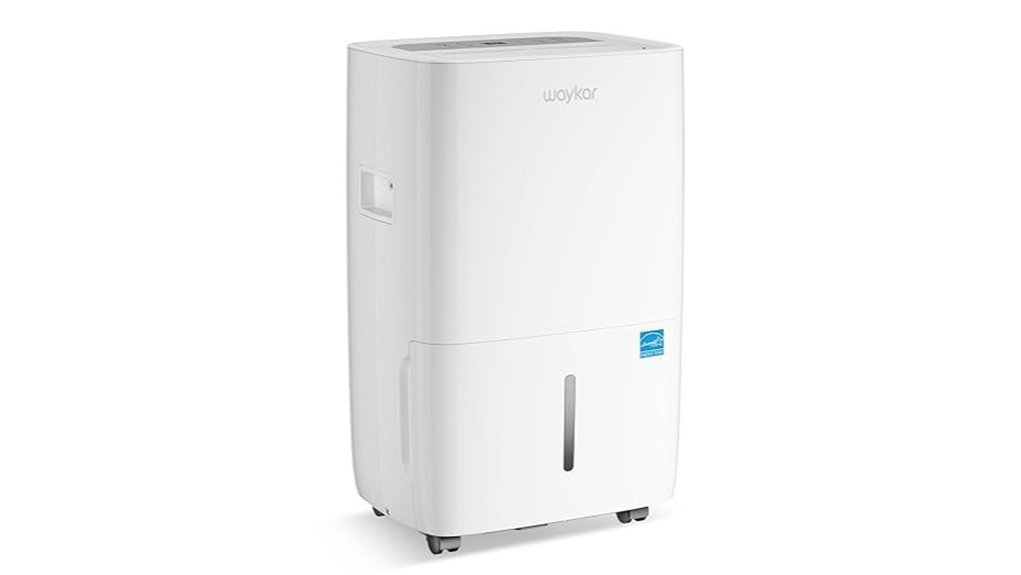
The Waykar 80 Pint model is a practical starting point for a large, open basement because it combines a humidistat, continuous-drain support, a washable filter, a timer, and easy room-to-room mobility. Its advertised 80-pint figure is a maximum measured at 95°F and 90% RH, so do not compare that number directly with an AHAM or DOE-rated capacity from another model.
- Advertised coverage: Up to 5,000 sq. ft.
- Advertised maximum removal: 80 pints per day at 95°F and 90% RH.
- Drainage: Water tank or gravity drain hose.
- Useful features: Adjustable humidistat, auto defrost, auto restart, timer, washable filter, and approximately 42 dB listed noise output.
Why you’ll like it: Buy this if you want one portable unit for a finished or open-plan basement and have access to a nearby floor drain.
Who should avoid it: Skip it if your drain is above the unit, your basement is divided into many closed rooms, or you need restoration-grade drying.
Pros:
- Balanced feature set for everyday basement humidity control.
- Gravity-drain option reduces tank-emptying chores.
- Auto-swing airflow can help distribute drier air across an open room.
Cons:
- The maximum pint rating reflects unusually warm, humid test conditions.
- No built-in condensate pump for lifting water to a higher drain.
- Manufacturer square-foot coverage should be treated as a rough guide, not a sizing guarantee.
Gasbye DryPrime-50-B Dehumidifier
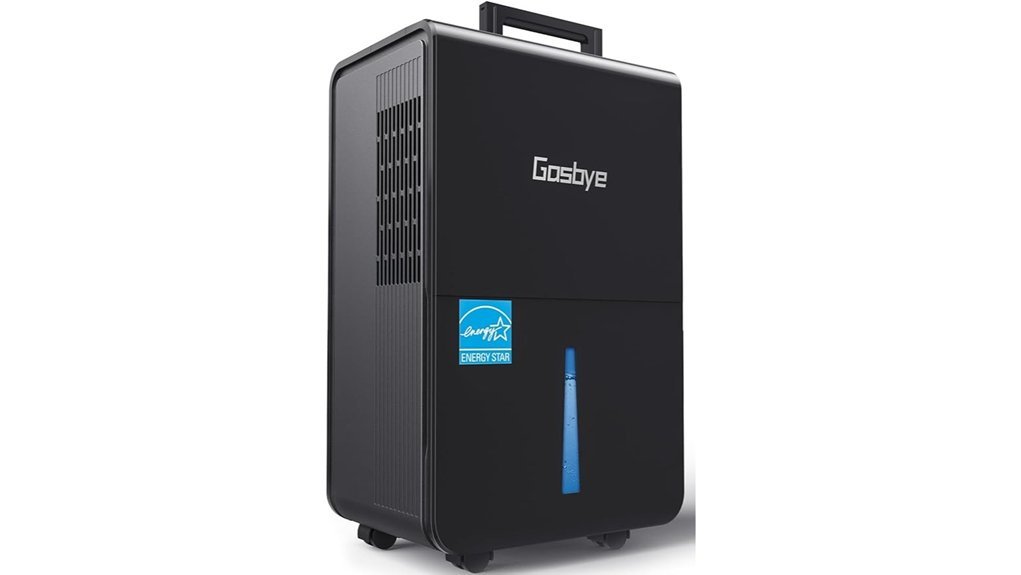
The Gasbye DryPrime-50-B is one of the stronger portable options in this list. Its listing provides capacity at several conditions: up to 115 pints per day at 86°F and 80% RH, about 73 pints at 80°F and 60% RH, and about 50 pints at 65°F and 60% RH. Those condition-specific numbers make it easier to estimate how performance may fall in a cool basement.
- Advertised coverage: Up to 4,500 sq. ft.
- Condition-based removal: Up to 115 pints/day at 86°F and 80% RH; lower at cooler, less humid conditions.
- Drainage: Tank, drain hose, or garden-hose adapter.
- Useful features: Adjustable humidity control, auto shut-off, auto restart, washable filter, and approximately 44 dB listed noise output.
Why you’ll like it: Choose it for a large basement where you want more portable capacity than a typical 30- to 50-pint unit.
Who should avoid it: Avoid it if you need a built-in pump or a low-profile crawl-space cabinet.
Pros:
- Capacity claims include test conditions instead of presenting one unexplained maximum.
- Large 1.7-gallon-class tank reduces emptying frequency when hose drainage is unavailable.
- Suitable for open basements with a high but not restoration-level moisture load.
Cons:
- At about 41.9 lb, it is less convenient to carry between floors.
- The 115-pint headline is not the expected output in a cool basement.
- Confirm the exact current ENERGY STAR listing for the model before relying on certification claims.
KNKA 34 Pint Dehumidifier
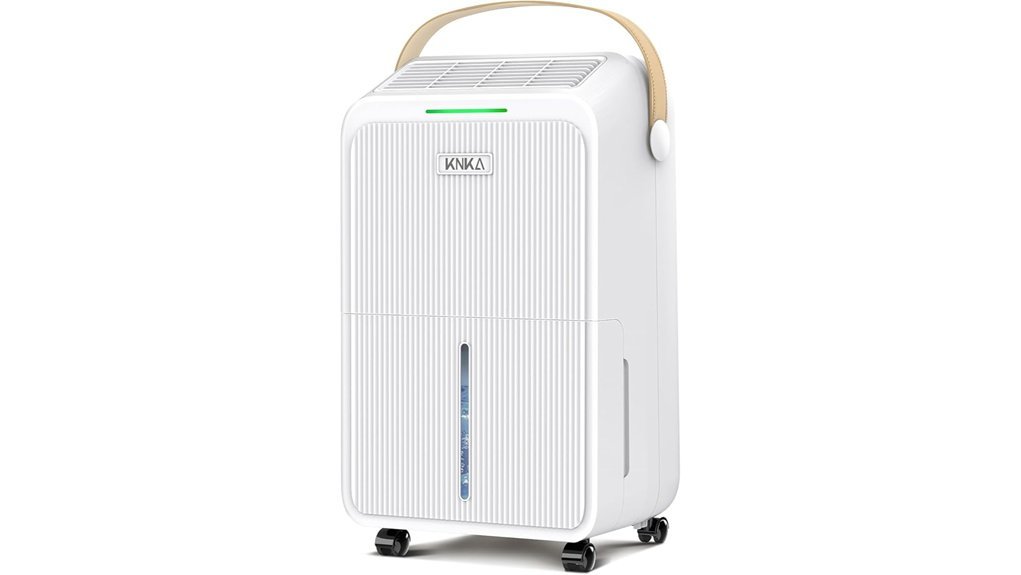
The KNKA model targets basements and large rooms up to a claimed 2,500 sq. ft. with a 34-pint maximum rating. It is a sensible value-oriented option for a moderately damp basement, especially when you want simple digital controls, three operating modes, and a supplied gravity-drain hose.
- Advertised coverage: Up to 2,500 sq. ft.
- Advertised maximum removal: 34 pints per day.
- Drainage: 3 L tank or gravity drain hose.
- Useful features: DEHU, DRY, and CONT modes; timer; auto defrost; child lock; washable filter; 360° wheels.
Why you’ll like it: Choose it for a medium basement with routine seasonal humidity rather than active water intrusion.
Who should avoid it: Avoid it for very large basements, standing-water problems, or situations that require a built-in pump.
Pros:
- Straightforward controls and useful daily-operation modes.
- Compact enough to move without the bulk of a commercial unit.
- Continuous drainage and a washable filter reduce routine maintenance.
Cons:
- Not intended for flood restoration or very high moisture loads.
- The small tank can fill quickly if hose drainage is not used.
- Coverage will be lower in divided, cool, or extremely damp basements.
PLUSCENT 32 Pint Dehumidifier
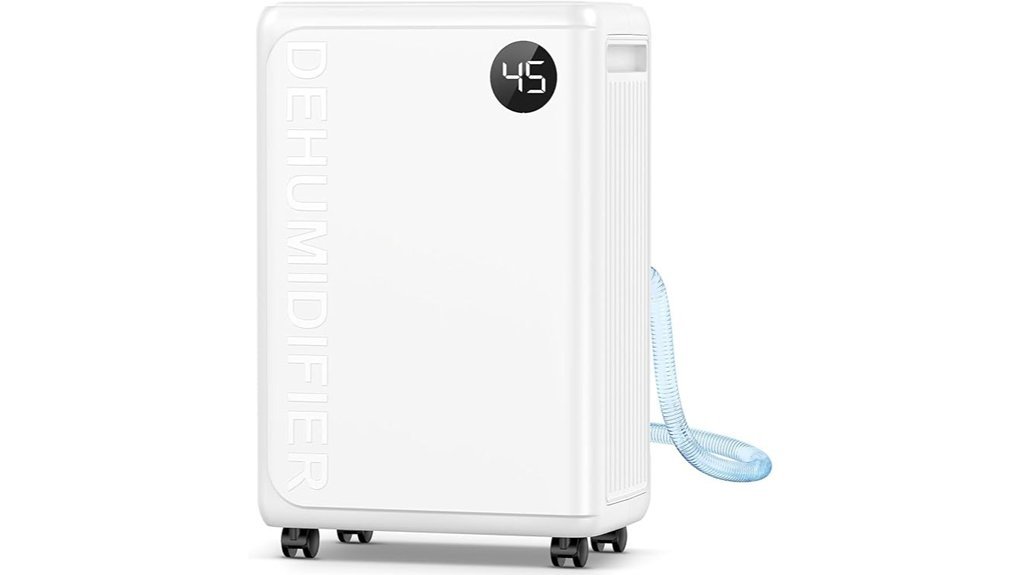
The PLUSCENT 32 Pint model closely matches the needs of a medium basement. It provides dehumidify, continuous, and drying modes, plus a timer, auto restart, a washable filter, and a drain hose. It is not a high-capacity restoration machine, but its controls are easy to understand.
- Advertised coverage: Up to 2,500 sq. ft.
- Advertised maximum removal: 32 pints per day.
- Drainage: Internal tank or included gravity hose.
- Useful features: Touch controls, three modes, 24-hour timer, auto restart, child lock, washable filter, and caster wheels.
Why you’ll like it: Buy it for a finished or partly finished basement where ease of use matters more than maximum extraction.
Who should avoid it: Skip it if your space regularly exceeds 60% RH despite continuous operation from a mid-capacity unit.
Pros:
- Easy mode selection for normal humidity control, continuous operation, or laundry drying.
- Quiet-operation claims make it more suitable for finished basements.
- Filter and drainage access are designed for routine homeowner maintenance.
Cons:
- The tank may require frequent emptying during humid weather.
- Actual performance depends heavily on basement temperature and moisture load.
- No built-in pump for an elevated sink or window drain.
BANABIE 32 Pint Dehumidifier
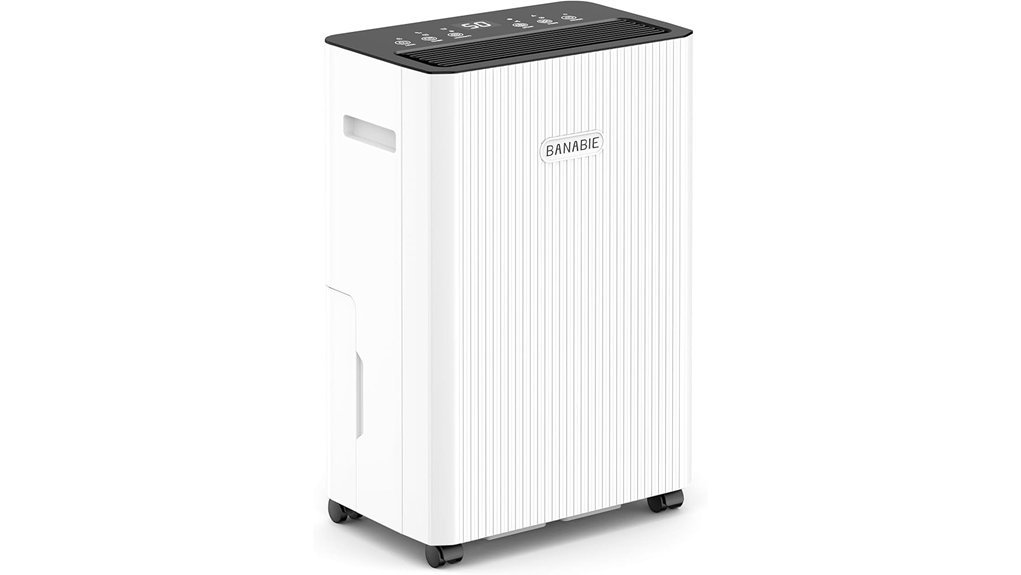
The original heading omitted the brand, making the product look generic. The ASIN corresponds to a BANABIE 32 Pint compressor dehumidifier marketed for up to 2,500 sq. ft. Its main appeal is a listed 32 dB operating level, smart humidity control, a 2.5 L tank, and continuous-drain support.
- Advertised coverage: Up to 2,500 sq. ft.
- Advertised maximum removal: 32 pints per day.
- Drainage: 2.5 L tank or gravity drain hose.
- Useful features: Auto, continuous, and custom modes; timer; washable filter; caster wheels; listed 32 dB operation.
Why you’ll like it: Choose it for a finished basement where quiet operation and simple automation are priorities.
Who should avoid it: Avoid it if you need proven commercial durability, a pump, or a high-capacity AHAM rating.
Pros:
- Low listed noise level suits a TV room, office, or guest area in a basement.
- Smart humidity modes reduce the need for frequent manual adjustments.
- Portable design is easier to reposition than a crawl-space unit.
Cons:
- Noise figures are usually measured under specific settings and may rise at full output.
- The 2.5 L tank is small for a damp basement.
- Brand support and long-term parts availability should be checked before purchase.
Waykar 150 Pint Dehumidifier with Pump
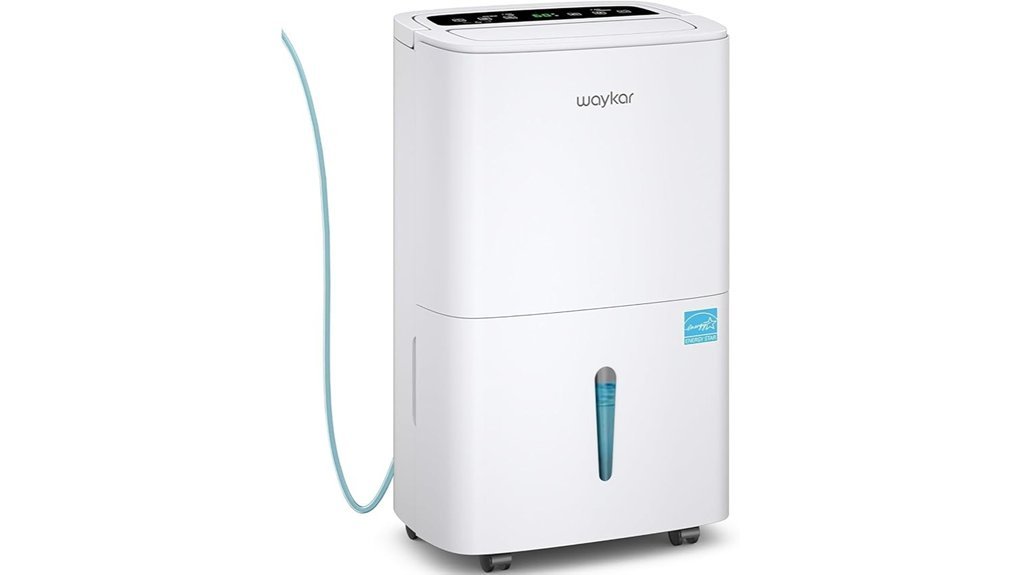
The Waykar 150 Pint model combines a portable cabinet with a built-in pump. That makes it useful where the nearest drain is above the floor or several feet away. Treat 150 pints per day as an advertised maximum under hot, very humid conditions, not as a standardized basement output.
- Advertised coverage: Up to 7,000 sq. ft.
- Advertised maximum removal: Up to 150 pints per day at 95°F and 90% RH.
- Drainage: Tank, gravity hose, or built-in pump.
- Useful features: Digital humidistat, timer, auto defrost, auto restart, washable filter, and portable wheels.
Why you’ll like it: Buy it when a large basement needs strong portable drying and water must be lifted to a sink, standpipe, or window-level drain.
Who should avoid it: Skip it if a gravity drain is available and a smaller, quieter unit can maintain your target humidity.
Pros:
- Built-in pump offers more installation flexibility than gravity-only portable units.
- High advertised capacity suits a large open basement with a substantial moisture load.
- Multiple drainage choices support both temporary and long-term setups.
Cons:
- Heavier and more power-hungry than mid-capacity portable units.
- Headline capacity is not directly comparable with AHAM-rated commercial models.
- A pump adds another component that requires cleaning and can eventually need service.
Waykar 125 Pint Crawl-Space Dehumidifier
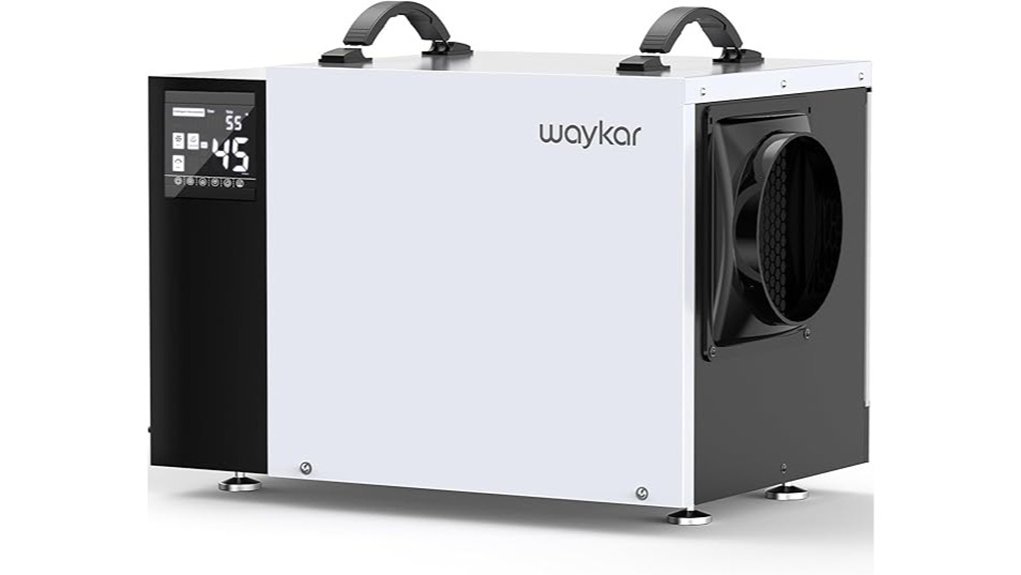
This low-profile Waykar is built for crawl spaces, basements, storage areas, and light commercial moisture control. Its 125-pint figure is specified at 95°F and 90% RH. The exact ASIN linked here is the non-pump AFW2.0D configuration, with a metal housing, continuous gravity drainage, auto defrost, and controls designed for long-term placement.
- Advertised coverage: Up to 6,500 sq. ft.
- Advertised maximum removal: 125 pints per day at 95°F and 90% RH.
- Drainage: Continuous gravity drainage through the included hose; the linked AFW2.0D configuration does not include a built-in pump.
- Useful features: Metal housing, humidistat, auto defrost, timer, touchscreen controls, washable filter, and continuous operation.
Why you’ll like it: Choose it for a crawl space, unfinished basement, or utility room where a durable cabinet and a reliable downhill drain route are available.
Who should avoid it: Avoid it if the drain is above the unit, or if a bedroom-like finished space needs a tank, wheels, and lower perceived noise.
Pros:
- Low-profile metal cabinet is easier to position in a crawl space or utility area.
- Designed for continuous drainage and longer unattended runs.
- Auto defrost is useful in cooler basement conditions.
Cons:
- At roughly 49 lb, it is not a casual room-to-room portable unit.
- Installation may require a stable platform and a carefully routed drain line.
- The linked configuration is gravity-only, so an elevated drain requires a separate compatible condensate pump.
HBN 125 Pint Crawl-Space Dehumidifier with Pump
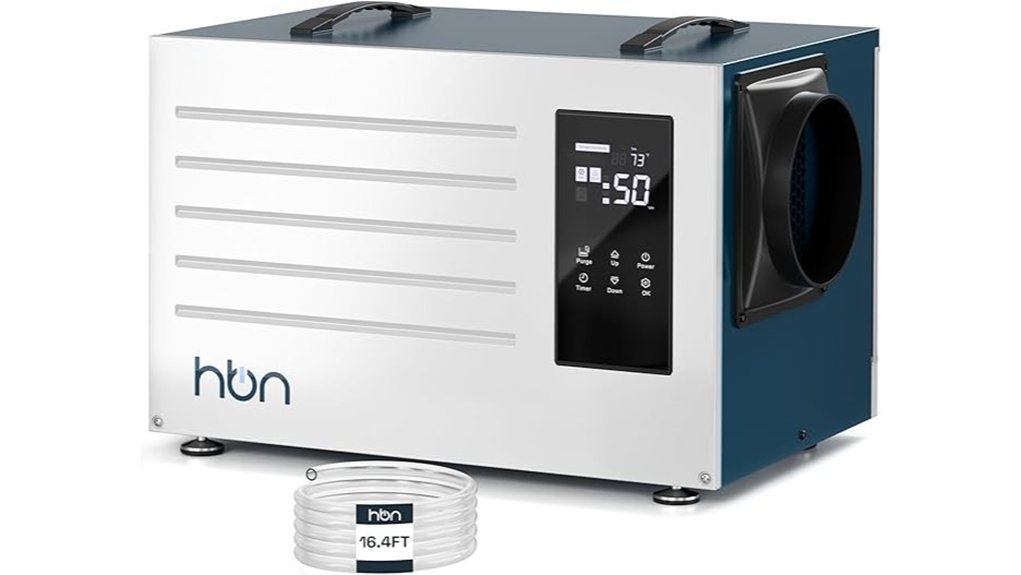
The HBN 125 Pint model is aimed at crawl spaces, basements, garages, and light commercial areas. Its main advantage is dual drainage: a gravity hose for a low drain and a built-in pump that can lift condensate when gravity is not practical.
- Advertised coverage: Up to 5,900 sq. ft.
- Capacity wording: Up to 125 pints per day at 95°F and 90% RH; about 60 pints per day under AHAM conditions.
- Drainage: Gravity hose plus built-in pump, advertised to lift water up to 16.4 ft.
- Useful features: Touchscreen controls, humidity sensor, timer, auto defrost, and continuous operation.
Why you’ll like it: Buy it when you need a crawl-space cabinet and cannot rely on a downhill drain route.
Who should avoid it: Skip it if your basement only has mild seasonal humidity or if quiet living-space operation is the main goal.
Pros:
- Pump and gravity drainage offer flexible installation.
- Metal crawl-space format is suitable for long-term placement.
- High advertised moisture-removal capacity fits demanding basement conditions.
Cons:
- Bulky and less convenient to move than a portable room unit.
- Pump tubing and the drain path need regular inspection.
- Maximum pint figures may reflect hot, humid test conditions rather than normal basement performance.
ALORAIR Sentinel HD55S Crawl-Space Dehumidifier
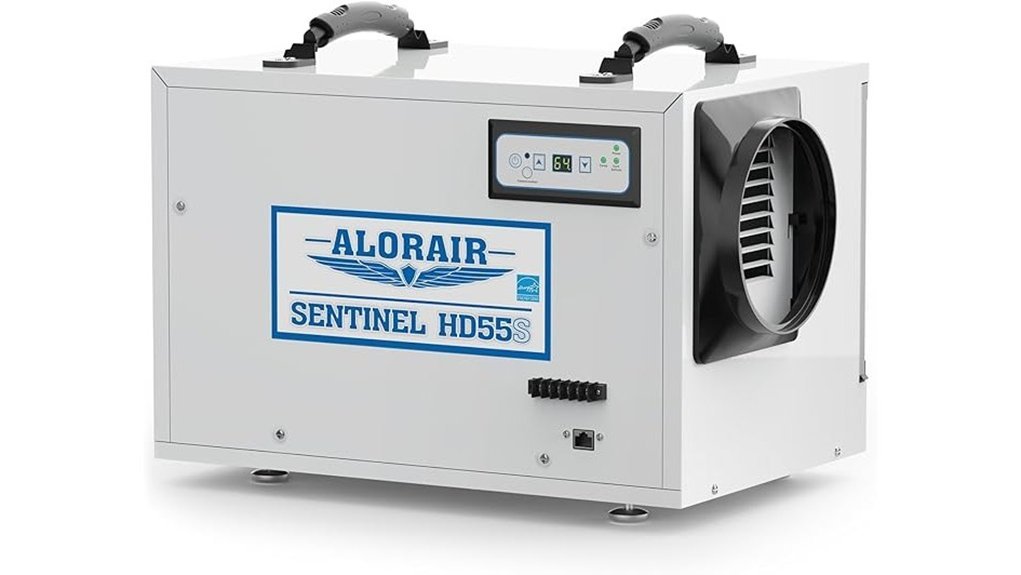
The ALORAIR Sentinel HD55S is a more transparent example of why capacity conditions matter. It is commonly marketed as 120 pints per day at saturation but about 55 pints per day under AHAM conditions. That standardized figure is the better number for comparing it with other units.
- Advertised coverage: Up to 1,300 sq. ft.
- Capacity: 120 pints/day at saturation; approximately 55 pints/day under AHAM conditions.
- Drainage: Continuous gravity drainage.
- Useful features: Metal housing, auto defrost, an advertised operating range down to 33.8°F, MERV-1 filter, and cETL listing.
Why you’ll like it: Choose it for a smaller crawl space or basement where you value a compact metal cabinet and standardized capacity information.
Who should avoid it: Avoid it if you need a built-in pump, a portable tank, or coverage for a very large open basement.
Pros:
- Clearly suited to crawl spaces and smaller unfinished basements.
- Auto defrost supports operation in cooler environments.
- Continuous drainage and a compact cabinet support set-and-monitor use.
Cons:
- No collection tank for temporary standalone operation.
- Gravity drainage requires a lower drain or a separate condensate pump.
- Coverage is lower than the larger commercial-style models in this roundup.
Airzentti 155 Pint Commercial Dehumidifier
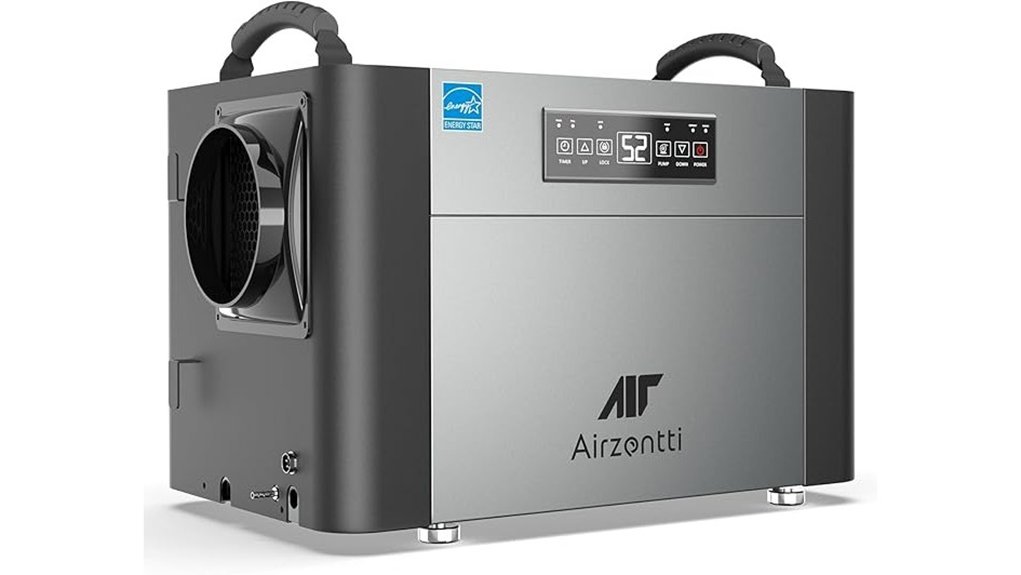
The Airzentti unit is the most commercial-style option here. Its listing distinguishes between a 155-pint saturation rating and roughly 70 pints per day under AHAM conditions. It also provides 220 CFM airflow, a built-in pump, a gravity drain, and a duct collar for more directed drying.
- Advertised coverage: Up to 7,500 sq. ft.
- Capacity: Up to 155 pints/day under near-saturated conditions; about 70 pints/day under AHAM conditions.
- Airflow: Approximately 220 CFM.
- Drainage: Gravity hose or built-in pump with an advertised lift of up to 16.4 ft.
Why you’ll like it: Buy it for a very large basement, workshop, storage area, or demanding moisture-control job where airflow and pump drainage matter.
Who should avoid it: Skip it if you want a quiet, lightweight unit for a finished family room.
Pros:
- Commercial-style airflow and duct-collar support suit large utility areas.
- AHAM and saturation ratings are both disclosed, improving comparison accuracy.
- Built-in pump supports drains that are not below the unit.
Cons:
- At around 60 lb, it is heavy and less convenient for finished living spaces.
- Likely louder than compact portable models.
- Commercial capacity and airflow may be unnecessary for a mildly damp residential basement.
Factors to Consider When Choosing a Basement Dehumidifier
A whole-basement dehumidifier is not necessarily a true whole-home dehumidifier. Portable and crawl-space models operate inside the basement, while a whole-home model is usually installed with ductwork. Choose the type that matches your layout and installation plan.
Compare Capacity Under the Same Test Condition
Do not rank products by the largest pint number alone. A rating measured at 95°F and 90% RH can look much higher than an AHAM or DOE-style capacity measured under cooler, less humid conditions. Look for the temperature and relative-humidity condition beside the rating. When a listing gives both a saturation rating and an AHAM rating, use the AHAM figure for comparison with other standardized ratings.
Size for Moisture Load, Not Square Footage Alone
Square footage is only a starting point. A 1,000 sq. ft. basement with seepage, wet walls, or frequent laundry moisture may need more capacity than a dry 2,000 sq. ft. finished basement. Measure the actual RH with a separate hygrometer, note the basement temperature, and check whether the unit can hold the space near your target humidity during the wettest season. There is no reliable universal formula that converts square footage directly into pints per day.
Choose a Sensible Humidity Target
A practical target for many homes is about 40% to 50% RH. The U.S. EPA recommends keeping indoor humidity below 60% and ideally between 30% and 50% when possible. Avoid setting the humidistat unnecessarily low because that can waste energy and may make the space feel uncomfortably dry.
Choose the Right Drainage Method
- Tank: Simple, but it can fill quickly in a damp basement.
- Gravity hose: Best when a floor drain or sump inlet is lower than the dehumidifier outlet.
- Built-in pump: Useful when condensate must travel upward to a sink, standpipe, or window-level drain.
- External condensate pump: A separate option for gravity-only units, provided the pump is compatible and installed correctly.
Route the hose without kinks, secure it against movement, and check it regularly for slime, clogs, or leaks.
Consider Low-Temperature Performance
Cool basements can cause frost to form on a dehumidifier’s evaporator coil. Auto defrost helps the unit recover, but it does not make every model equally effective in cold conditions. Check the manufacturer’s minimum operating temperature and expect moisture-removal capacity to fall as the room gets cooler.
Portable vs. Crawl-Space Cabinet
A portable unit is easier to move and usually includes a tank. It works well in a finished basement with open airflow. A crawl-space or commercial-style cabinet is heavier but often uses metal housing, continuous drainage, higher airflow, and optional ducting. It is better for a utility area, crawl space, or long-term fixed placement.
Noise and Placement
Noise specifications are useful, but they may be measured at a low fan setting or from a particular distance. Place the unit on a level surface, leave the manufacturer’s required clearance around the air intake and exhaust, and avoid positioning it where vibration can transfer into joists, shelving, or hollow cabinetry.
Energy Efficiency and Certification
Look for the exact model in the current ENERGY STAR Product Finder instead of relying only on a year printed in a marketplace title. ENERGY STAR uses Integrated Energy Factor, expressed in liters of water removed per kilowatt-hour, to compare efficiency. Certification labels and model eligibility can change as specifications are updated.
Before You Buy Checklist
- Measure the basement’s square footage and typical RH.
- Note the lowest temperature during the humid season.
- Decide whether water can drain downhill or needs a pump.
- Compare pint ratings measured under the same conditions.
- Confirm the exact model number, included hose or pump, warranty terms, and electrical requirements on the current listing.
- Fix leaks, seepage, clogged gutters, or grading problems instead of expecting the dehumidifier to solve the water source.
Basement Dehumidifier Safety and Maintenance
- Plug the unit directly into a properly grounded outlet unless the manufacturer specifically approves another setup.
- Keep the air intake and exhaust clear of walls, stored boxes, curtains, and dust.
- Clean the washable filter on the schedule in the manual, or sooner in a dusty basement.
- Inspect the tank, drain hose, pump tubing, and drain connection for leaks or blockages.
- Do not operate a damaged unit, a unit with a frayed cord, or a unit that repeatedly trips a breaker.
- After moving a compressor dehumidifier, follow the manual’s standing-time instructions before turning it on.
Frequently Asked Questions
What Size Dehumidifier Do I Need for My Basement?
Start with the room size, but also consider RH, temperature, visible dampness, laundry use, seepage, and whether doors divide the basement. Compare standardized pint ratings whenever possible. A moderately damp medium basement may be served by a 30- to 50-pint-class unit, while a large or persistently wet basement may need more capacity, a crawl-space unit, or multiple air paths. Do not rely on square footage alone.
What Is the Difference Between AHAM and Saturation Pint Ratings?
An AHAM or DOE-style rating is measured under defined moderate conditions and is the better figure for comparing standardized capacity. A saturation or “maximum” rating is measured in hotter, wetter air and can be much larger. Never compare a saturation number from one unit with an AHAM figure from another as though they measure the same performance.
What Humidity Should I Set in a Basement?
A setting near 45% to 50% RH is a practical starting point for many basements. Adjust as needed to keep the space comfortable and below 60% RH. A separate hygrometer placed away from the dehumidifier’s air outlet can help confirm the built-in sensor.
Can a Dehumidifier Prevent Mold?
It can reduce one condition that supports mold growth by lowering humidity, but it cannot repair leaks, remove wet building materials, or eliminate existing mold. Fix the moisture source and dry wet materials promptly. Large or recurring mold problems may require professional assessment or remediation.
Should I Use Continuous Drainage?
Continuous drainage is usually the most convenient choice for a basement. Use gravity drainage only when the entire hose runs downhill. Use a built-in or external condensate pump when the water must move upward. Check the drain path regularly even when the system appears to be working.
Is a Built-In Pump Worth It?
Yes, when there is no floor drain or sump inlet below the dehumidifier. A pump adds flexibility, but it also adds tubing and a moving component that needs cleaning and inspection. If a reliable gravity drain is available, gravity is usually simpler.
Can I Run a Dehumidifier All the Time?
Many models can cycle automatically around a humidity set point or run continuously when needed. Continuous mode is useful after a humid-weather spike, but normal humidistat control is usually more efficient once the basement reaches the target RH. Follow the manual and keep the filter and drain system clean.
Why Does My Dehumidifier Freeze Up?
Common causes include a cold room, restricted airflow, a dirty filter, blocked coils, or a refrigeration problem. Auto defrost can manage normal frost formation, but repeated heavy icing after cleaning and correct placement may indicate a fault that needs service.
How Often Should I Clean the Filter?
Follow the manufacturer’s schedule. Monthly cleaning is a reasonable inspection interval for many homes, but a dusty workshop or renovation area may require more frequent attention. Never reinstall a washable filter until it is fully dry.
Final Recommendation
Best editorial pick for most buyers: The Waykar 80 Pint offers the most balanced published feature set for a large, open basement with a floor drain.
For more demanding humidity: Choose the Gasbye DryPrime-50-B when you want stronger portable performance and condition-specific capacity information.
For crawl spaces or permanent utility-room placement: The ALORAIR Sentinel HD55S is the most compact choice, while the HBN 125 Pint is better when you need a built-in pump.
For commercial-style airflow: The Airzentti 155 Pint is the strongest fit, but its meaningful comparison figure is about 70 pints per day under AHAM conditions rather than the 155-pint saturation headline.
Whichever model you choose, verify the exact current model number and test-condition capacity on the listing, plan the drainage route before purchase, and address leaks or water intrusion at the source. A correctly sized dehumidifier can control airborne moisture, but it should be part of a broader basement moisture plan.