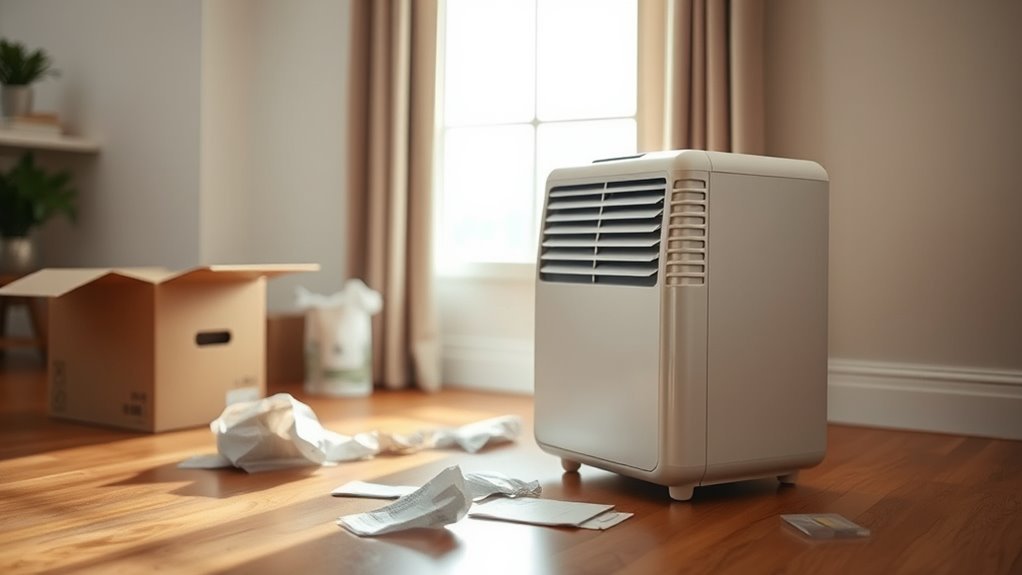
If you want a small dehumidifier for a living room, focus on moisture-removal capacity, room layout, drainage, and noise rather than the advertised coverage number alone. The four compact models below are best suited to mild or localized humidity, enclosed living rooms, apartments, and occasional moisture control. For persistent dampness, visible condensation, leaks, or a large open-plan space, a higher-capacity compressor dehumidifier is usually the more appropriate category.
Quick Verdict
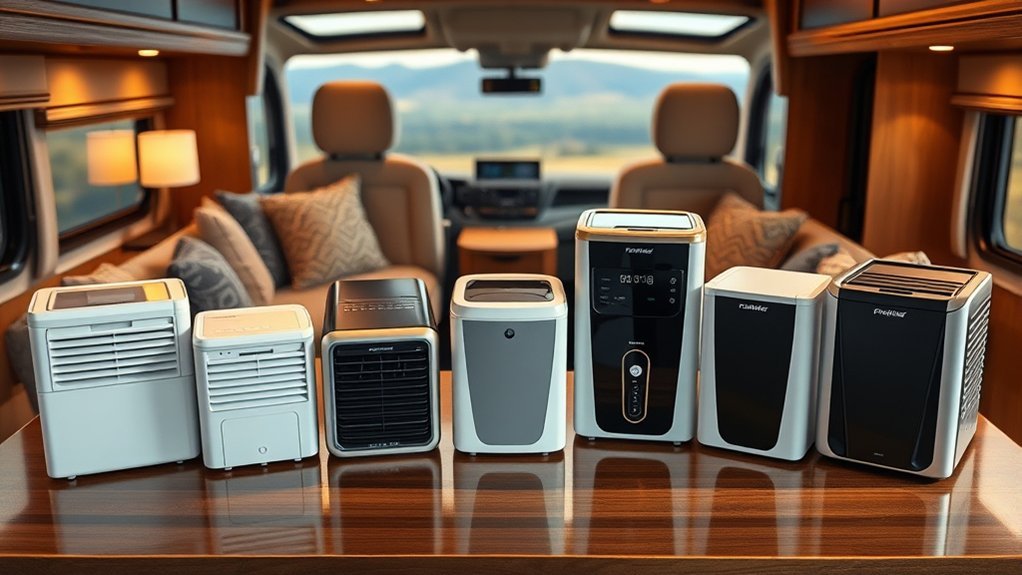
WoEleLigt black model is the best overall choice here when continuous drainage is the priority. Choose the BEDRED CT11 for a verified 95-ounce tank and ambient lighting, the NeedDuck B-2 for a very small enclosed living area, or the TENKER QIG-D05 for a larger 77-ounce tank, two speeds, and a published moisture-removal figure.
Key Takeaways
- These compact thermoelectric units are best for mild humidity in closed rooms, not leaks, wet walls, or whole-home moisture control.
- Tank size affects how often you empty the unit; it does not prove how quickly the unit removes moisture.
- Use a separate hygrometer and judge results by the room’s humidity change over time.
| Product | Best For | Tank | Key Features | Amazon |
|---|---|---|---|---|
| WoEleLigt Black Model | Best overall for continuous drainage | Confirm current listing | Two modes, drain hose, auto shutoff, 7-color light | Check Price on Amazon |
| BEDRED CT11 | Best for lighting and quiet use | 95 oz | Seven-color light, auto shutoff, quiet operation | Check Price on Amazon |
| NeedDuck B-2 | Best for very small living rooms | 44 oz | Three modes, four timers, defrost, auto shutoff | Check Price on Amazon |
| TENKER QIG-D05 | Best balanced compact pick | 77 oz | Two speeds, sleep mode, auto shutoff | Check Price on Amazon |
How these picks were compared: Product details were cross-checked in August 2026 using current retailer information. We compared listed tank size, moisture-removal claims, drainage, operating modes, noise-related features, portability, and overflow protection. This guide does not claim hands-on testing, and advertised coverage should not be treated as guaranteed performance.
WoEleLigt Black Small Dehumidifier with Drain Hose
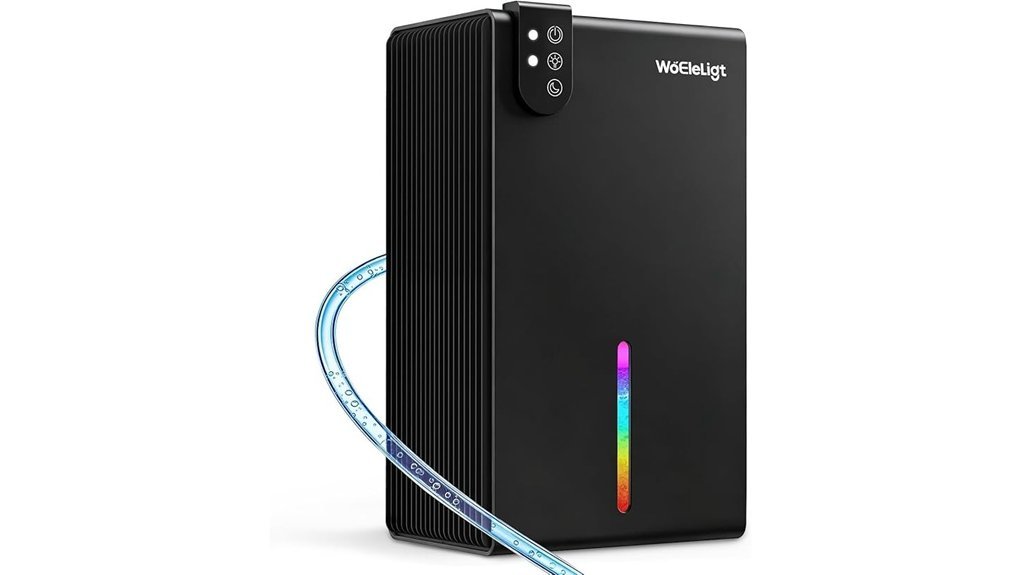
Best Overall for Continuous Drainage: This black WoEleLigt small dehumidifier uses thermoelectric condensation and offers a high-power mode, a quieter sleep mode, automatic shutoff, a seven-color ambient light, and drain-hose support. The hose is its biggest advantage for a living room where you want longer operation without repeatedly emptying the tank.
Key Specs: Two operating modes, automatic shutoff, an included drain hose, and a portable handle. Retailer copies for this ASIN are not fully consistent about the exact tank size and daily extraction rate, so confirm those figures on the current Amazon detail page. Treat the advertised 1,000-square-foot coverage as a marketing ceiling, not a promise that this compact unit will control a large or open-plan room.
Best For: Buyers who prioritize a compact footprint, quiet mode, and a continuous-drain option.
Why You’ll Like It:
- Two operating modes let you choose faster collection or lower nighttime noise.
- The included drain-hose option can reduce routine tank emptying when you have a safe gravity-drain route.
- Compact body and built-in handle make it easier to move between rooms.
Who Should Avoid It:
- Buyers who need precisely documented extraction performance before purchase.
- Large living rooms with high ceilings, open doorways, or severe moisture.
- Cold spaces where thermoelectric units may collect water slowly.
BEDRED CT11 95-Ounce Dehumidifier with 7-Color Light
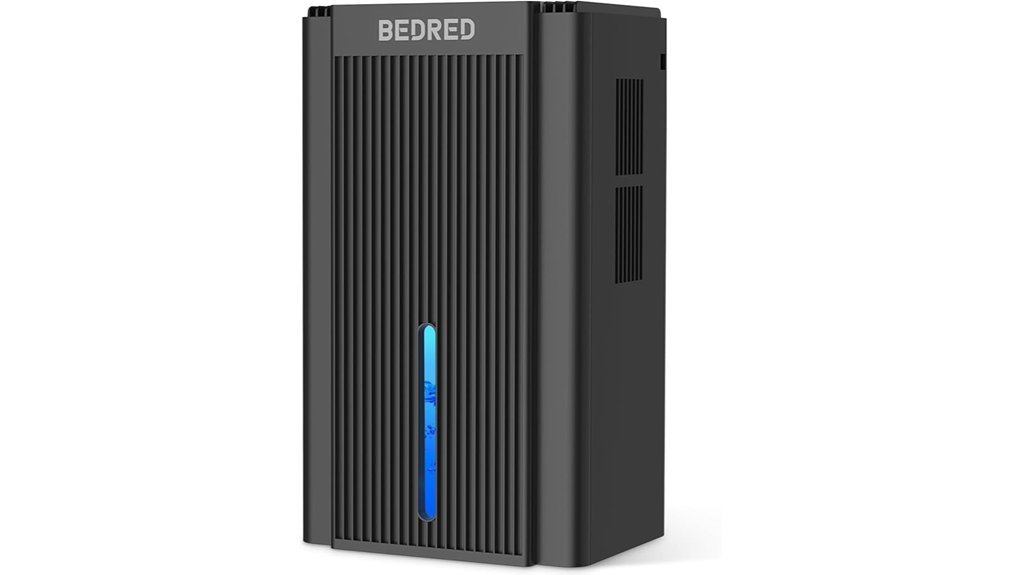
Best for Ambient Lighting: The BEDRED CT11 combines a verified 95-ounce tank with thermoelectric operation, automatic shutoff, quiet-focused operation, and a seven-color ambient light. It suits readers who want a compact dehumidifier that looks less industrial in a living room.
Key Specs: 95-ounce tank, approximately 6.7 × 8.7 × 14.6 inches, model CT11, and automatic shutoff. The listing markets it for rooms up to 1,000 square feet, but its compact design is more appropriate for localized moisture control than for major humidity problems. Use a separate hygrometer to confirm whether the room is actually reaching your target humidity.
Best For: Small to medium enclosed living rooms where quiet operation and appearance matter.
Why You’ll Like It:
- Seven-color lighting can be fixed on one color, cycled, or turned off.
- Quiet-focused operation and switchable lighting make it easier to use during evening hours.
- Automatic shutoff helps prevent tank overflow.
Who Should Avoid It:
- Anyone who needs an included continuous-drain system.
- Large open spaces or homes with persistent condensation.
- Buyers who need a built-in humidistat with precise target settings.
NeedDuck B-2 44-Ounce Small Dehumidifier with Timer
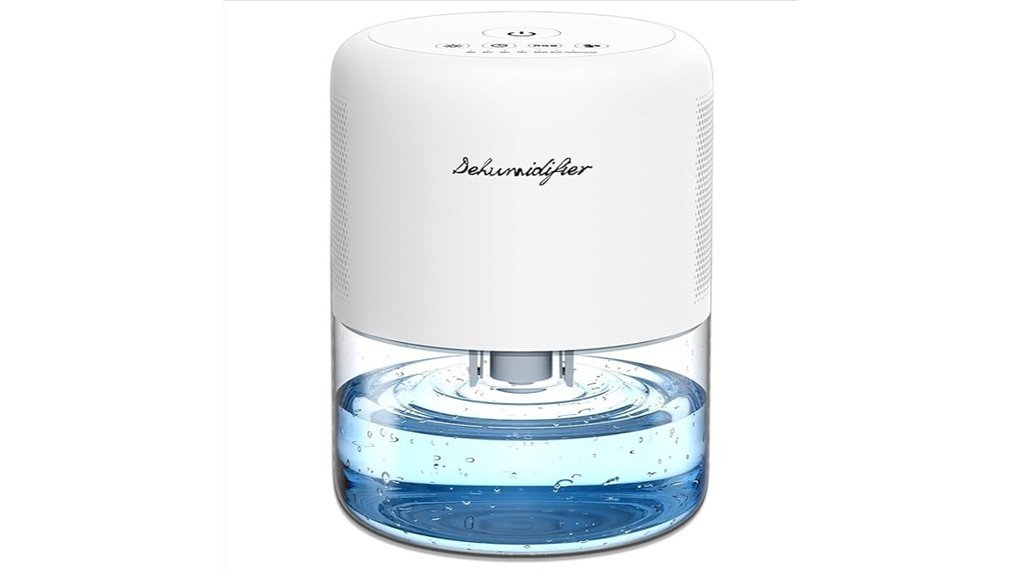
Best for Very Small Living Rooms: The NeedDuck B-2 is the smallest-capacity option in this guide. It has a verified 44-ounce tank, a listed coverage area of 215 square feet, three operating modes, four timer options, automatic defrost, automatic shutoff, and 10-color lighting.
Key Specs: Approximately 5.91 × 5.91 × 8.46 inches, about 2.56 pounds, three speeds, and a 28-watt listed power draw. Its compact size makes it a sensible choice for a reading nook, closed sitting room, RV, or another small area. The 215-square-foot rating gives buyers a clearer small-space expectation than broad 1,000-square-foot marketing claims.
Best For: Small enclosed living spaces where portability, timer control, and low operating noise matter more than high extraction.
Why You’ll Like It:
- Compact dimensions and low weight make it easy to reposition.
- Three modes and four timer settings offer more control than many mini units.
- Automatic defrost and shutoff improve convenience and protection.
Who Should Avoid It:
- Living rooms larger than about 215 square feet.
- High-humidity areas that fill small tanks quickly.
- Buyers who need a drain hose or high daily moisture removal.
TENKER QIG-D05 77-Ounce Dehumidifier
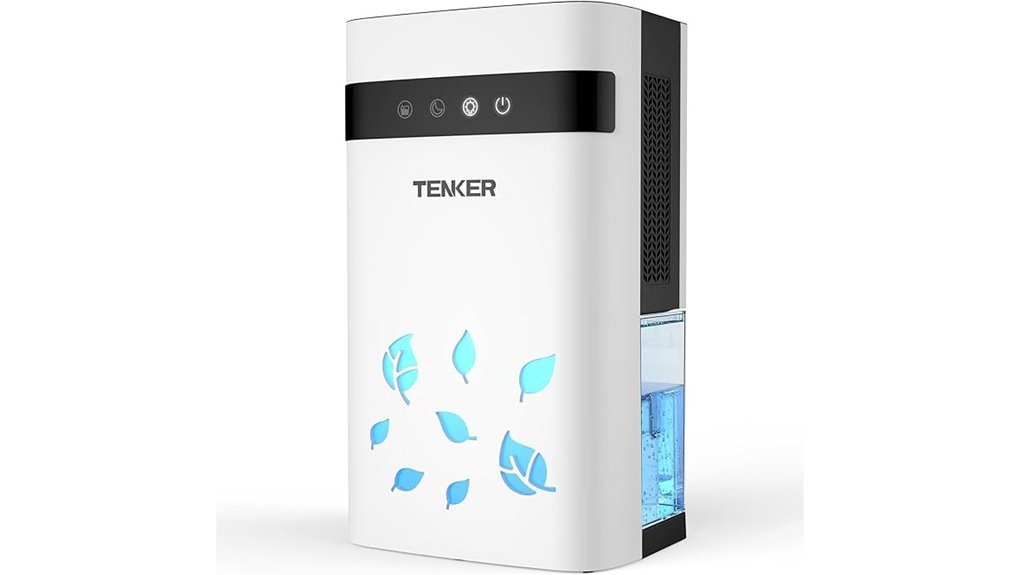
Best Balanced Compact Pick: The TENKER QIG-D05 pairs a verified 77-ounce (2,200 mL) tank with thermoelectric operation, two speed settings, sleep mode, automatic shutoff, an ergonomic handle, and seven-color lighting. Its product data lists moisture removal of about 1.8 pints per day under stated test conditions.
Key Specs: Approximately 7.87 × 5.5 × 13.78 inches, two speeds, and a listed one-year warranty. The current Amazon title says 1,000 square feet while the product-detail field says 800 square feet, so treat both as promotional coverage estimates. It is a better fit for a closed living room with mild humidity than for a wet basement or large open floor plan.
Best For: Buyers who want a large tank, simple controls, and quieter evening operation in a compact unit.
Why You’ll Like It:
- Two speeds make it easy to switch between stronger operation and sleep mode.
- The 77-ounce tank provides a useful balance between capacity and portability.
- Automatic shutoff helps protect against overflow when the tank is full.
Who Should Avoid It:
- Anyone who requires continuous drainage.
- Rooms with severe dampness or an active moisture source.
- Buyers who need automatic target-humidity control.
Factors to Consider When Choosing a Small Dehumidifier for a Living Room
The best compact dehumidifier is the one that matches your room size, humidity level, and maintenance preferences. Use the points below to avoid choosing by tank size or advertised coverage alone.
1. Measure the Room and Humidity
Measure the living room’s floor area and note whether it opens into a hallway, kitchen, or dining space. Open layouts are harder for a small unit to control. A separate hygrometer is useful because it tells you whether the dehumidifier is producing a meaningful change instead of merely collecting some water. The U.S. EPA recommends keeping indoor humidity between 30% and 50%.
2. Understand Thermoelectric Limits
Most models in this guide use semiconductor or thermoelectric cooling. This design is compact and relatively quiet, but it generally removes less water than a compressor-based dehumidifier. It works best for mild dampness, musty closets, condensation near a window, or a closed living room rather than flooding, structural moisture, or severe basement humidity.
3. Compare Moisture Removal, Not Just Tank Size
A large tank reduces emptying frequency, but it does not prove that the unit removes moisture quickly. Compare the listed ounces or pints collected per day, the conditions used for that claim, and whether the model has a humidistat. Performance usually drops in cooler or less humid rooms.
4. Choose the Right Drainage Setup
A drain hose is valuable when the unit runs daily, but gravity drainage needs a continuous downward route to a suitable drain. Without that setup, choose a tank that is easy to remove, carry, empty, rinse, and reinstall. Never let a hose create a trip hazard across the living room.
5. Check Noise, Placement, and Airflow
Sleep modes can reduce fan noise, but sound descriptions are not always measured under the same conditions. Place the unit on a firm, level surface with clearance around the air inlet and outlet. Keep it away from curtains, upholstered furniture, heat sources, and areas where children or pets may tip it.
6. Prioritize Safety Features
Look for automatic shutoff when the tank is full or incorrectly seated, a stable base, a properly rated power adapter, and clear maintenance instructions. Automatic defrost is useful in cooler rooms, but compact thermoelectric units still tend to work best in warmer indoor conditions.
Before You Buy
- Confirm the current tank size, included accessories, warranty, and drain-hose details on Amazon.
- Use a hygrometer to measure the room before and after setup; aim for a stable indoor range rather than maximum water collection.
- Choose a compressor model instead if you have persistent condensation, wet walls, leaks, or a large open space.
- Plan where the unit will sit and how you will empty or drain it safely.
Frequently Asked Questions
Can a Small Dehumidifier Handle a Full Living Room?
It can help in a small, enclosed living room with mild humidity. Advertised coverage figures are not directly comparable across brands, so judge performance by measured humidity change and daily water collection. Large open-plan rooms, persistent condensation, and active moisture sources usually call for a higher-capacity compressor unit and correction of the underlying moisture problem.
How Often Should I Empty the Dehumidifier’s Water Tank?
Empty it whenever the full-tank indicator appears, before moving the unit, and before extended storage. The interval may range from daily to every several days depending on room humidity, tank size, temperature, and whether continuous drainage is connected.
Are Small Dehumidifiers Energy-Efficient?
Thermoelectric models may use less power than large compressor units, but they also tend to remove less moisture. Compare energy use with actual water-removal capacity rather than assuming lower wattage always means better efficiency. Only treat a model as ENERGY STAR certified when that exact model appears in the official ENERGY STAR Product Finder.
Can Dehumidifiers Help With Allergies?
Lowering excess humidity may make the room less favorable for mold and dust mites, but a dehumidifier does not treat allergies or replace cleaning, ventilation, leak repair, mold remediation, or medical advice. Use a hygrometer, aim for the EPA’s recommended 30% to 50% indoor range, and address visible mold or water damage directly.
Where Should I Place a Small Dehumidifier?
Place it on a level, stable surface near the damp area while keeping the air inlet and outlet clear. Do not press it tightly against furniture or curtains, and keep power cords and drain hoses out of walkways.
What Maintenance Is Required for Small Dehumidifiers?
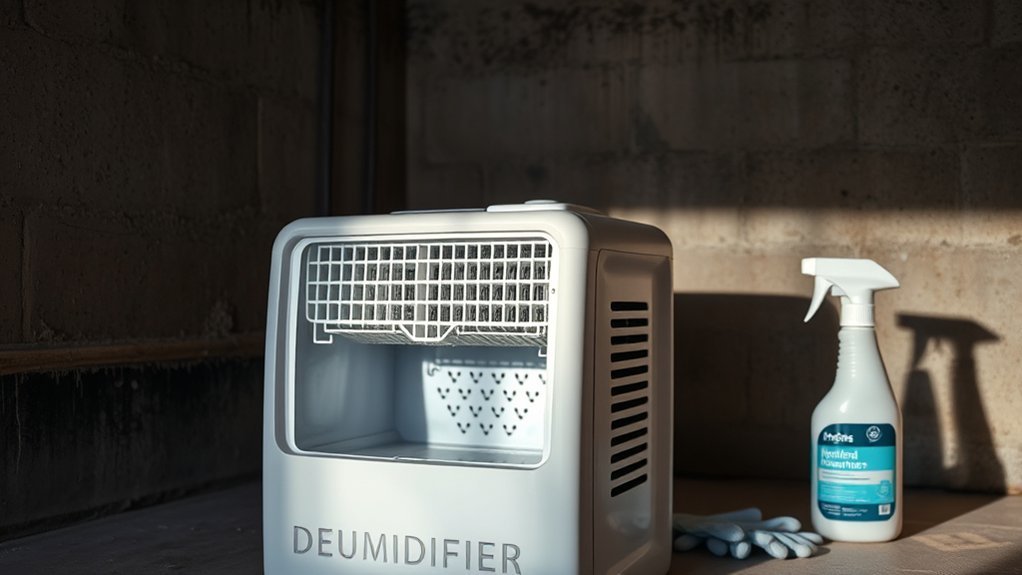
Unplug the unit before maintenance. Empty and rinse the tank, clean washable filters as directed, wipe dust from the vents, check the drain hose for clogs or kinks, and let every removable part dry before reassembly or storage.
Final Recommendation
Choose the WoEleLigt black model when continuous drainage is the main priority. Pick the BEDRED CT11 for a verified 95-ounce tank and ambient lighting, the NeedDuck B-2 for a very small enclosed living area, or the TENKER QIG-D05 for a larger tank, two speeds, and a published moisture-removal figure.
Whichever model you choose, verify the current Amazon specifications and measure the room’s humidity after setup. A compact thermoelectric unit is useful for mild moisture, but it should not be expected to solve leaks, water damage, or severe whole-room humidity.