Disclosure: As an Amazon Associate I earn from qualifying purchases.
For a single small room, a compact dehumidifier should be easy to place, simple to empty, and appropriately sized for light moisture control. The TABYIK DH-CS01, AlohaAir Small Dehumidifier, Lonxfy 35 oz Small Dehumidifier, CLEVAST CL-DH04, and avylo DH-CS17 all match that buyer intent, but they differ in listed noise levels, tank size, operating modes, and cold-weather features. TABYIK is a balanced everyday pick, AlohaAir adds a simple night light, Lonxfy adds sleep mode and a washable filter, CLEVAST has the lowest listed noise rating in this lineup, and avylo adds auto defrost. Compare the details below and pay attention to the test conditions behind each moisture-removal claim.
Quick Verdict: Best Small Room Dehumidifiers
Best Overall: TABYIK DH-CS01 offers a useful balance of compact size, a 35 oz tank, auto shut-off, and a manufacturer-listed 28 dB noise level.
Best for Night Use: Lonxfy 35 oz Small Dehumidifier adds sleep mode, a listed 30 dB noise level, night lights, and a washable filter.
Quietest Listed Rating: CLEVAST CL-DH04 lists 24 dB in Quiet Mode, the lowest stated noise figure among these five models.
Best with Auto Defrost: avylo DH-CS17 combines a 35 oz tank, auto shut-off, and auto defrost for rooms that may run cooler.
Best Simple Night-Light Pick: AlohaAir pairs a 34 oz tank with auto shut-off and a 7-color night light for basic small-room use.
| Product | Best For | Listed Room Guidance | Listed Noise | Main Advantage | Amazon |
|---|---|---|---|---|---|
| TABYIK DH-CS01 | Bedrooms, bathrooms, RVs, closets | Up to 280 sq. ft. listed | 28 dB listed | Compact size, 35 oz tank, auto shut-off | Check Price |
| AlohaAir Small Dehumidifier | Small rooms needing light moisture control | Up to 200 sq. ft. listed | 35 dB listed | Night light and removable transparent tank | Check Price |
| Lonxfy 35 oz Small Dehumidifier | Bedrooms, small offices, closets, RVs | Small rooms; listing markets up to 350 sq. ft. | 30 dB listed | Sleep mode and washable filter | Check Price |
| CLEVAST CL-DH04 | Quiet bedrooms, closets, offices, RVs | 285 sq. ft. listed | 24 dB in Quiet Mode | Lowest listed noise rating here | Check Price |
| avylo DH-CS17 | Bathrooms, dorms, RVs, closets, offices | About 320–330 sq. ft. across listing details | Below 25 dB listed | 35 oz tank and auto defrost | Check Price |
Before You Buy: These are compact thermoelectric-style dehumidifiers intended for light moisture control in small spaces. Their daily extraction figures are typically measured in warm, humid test conditions, so real-world water collection can be lower. Do not treat a square-footage claim as a guarantee. If you have leaks, standing water, visible mold, or persistent heavy dampness, fix the moisture source and consider a higher-capacity dehumidifier.
TABYIK DH-CS01 Small Dehumidifier for Bedroom, Bathroom, RV, Closet
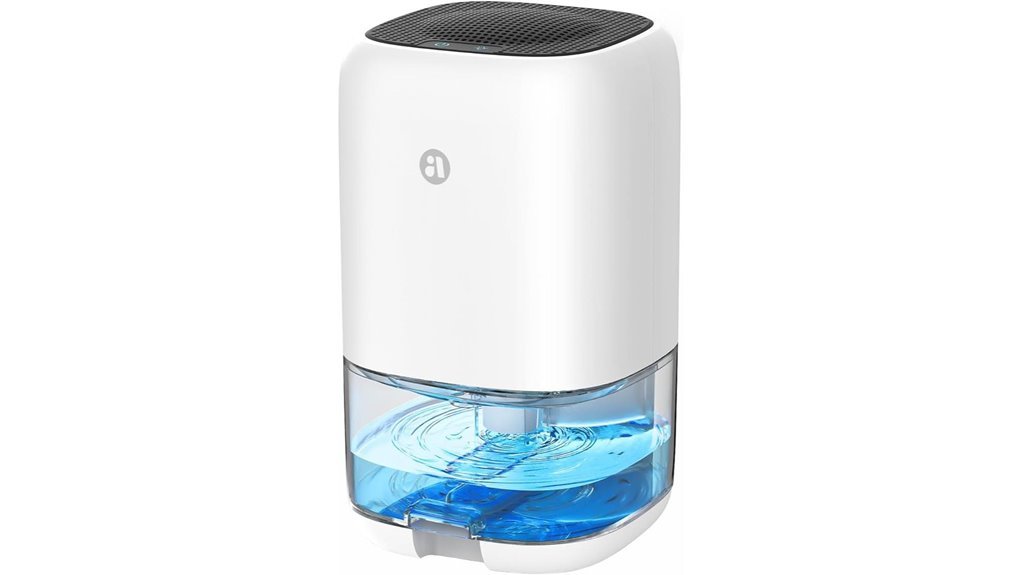
If you want a compact dehumidifier for a bedroom, bathroom, RV, or closet, the TABYIK DH-CS01 is a balanced option. The listing specifies a 28 dB noise level, a compact 5.9 x 5.9 x 10.1-inch body, a 1000 ml or 35 oz transparent tank, and auto shut-off. Its maximum extraction claim is up to 16 oz (450 ml) in 24 hours under warm, humid test conditions of 86°F and 80% RH, so expect actual collection to vary with room temperature and humidity.
Why You’ll Like It: The small footprint and built-in handle make it easy to move between compact spaces. The transparent tank also lets you see the water level without opening the unit, while auto shut-off helps prevent overflow when the tank reaches its shut-off level.
Best For: Light moisture control in bedrooms, bathrooms, RVs, closets, and similar small spaces.
Who Should Buy This: Choose it if you want a straightforward small dehumidifier with a clear tank, quiet listed operation, and easy portability.
Who Should Avoid This: Skip it if you need rapid drying, continuous drainage, or full-size dehumidification for a persistently wet room.
Pros:
- Manufacturer-listed 28 dB operation for noise-sensitive spaces.
- Compact body with a built-in handle and transparent 35 oz tank.
- Auto shut-off and a visible full-tank warning simplify routine use.
Cons:
- The 16 oz/day figure is a maximum claim measured in warm, humid conditions.
- It uses a collection tank rather than continuous drainage.
- It is intended for light small-space moisture control, not major water problems.
AlohaAir Small Dehumidifier with Night Light
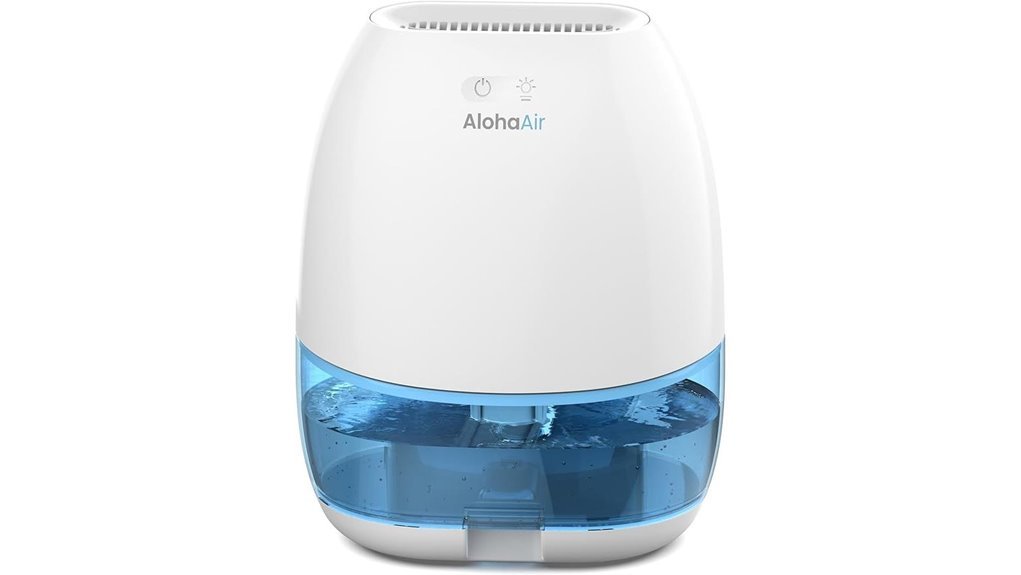
The AlohaAir Small Dehumidifier is aimed at light moisture control in compact rooms. Its listing describes coverage up to 200 square feet, moisture removal up to 280 ml per day, a 1000 ml or 34 oz transparent tank, auto shut-off, a full-tank warning light, 35 dB listed operation, and a 7-color night light. Because compact dehumidifier output changes with temperature and humidity, treat the daily extraction figure as a best-case listing specification rather than a guaranteed result in every room.
Why You’ll Like It: AlohaAir keeps the feature set simple: a removable transparent tank, automatic shut-off, and a separate night light. That makes it easy to understand and convenient for a bedroom, bathroom, RV, or closet where you only need light moisture management.
Best For: Small spaces where you want basic moisture collection plus a night-light feature.
Who Should Buy This: Choose it if you prefer a simple compact unit with a transparent tank, auto shut-off, and colorful lighting.
Who Should Avoid This: Skip it if you need stronger daily extraction, continuous drainage, or the lowest listed noise rating in this comparison.
Pros:
- Seller-listed 280 ml/day extraction and up to 200 sq. ft. room guidance.
- 35 dB listed operation with a 7-color night light.
- Transparent removable tank and auto shut-off make water-level checks simple.
Cons:
- Best suited to light dampness rather than large or persistently wet rooms.
- Daily extraction depends heavily on room temperature and humidity.
- The lighting feature may be unnecessary if you want a very basic unit.
Lonxfy 35 oz Small Dehumidifier with Sleep Mode and Lights
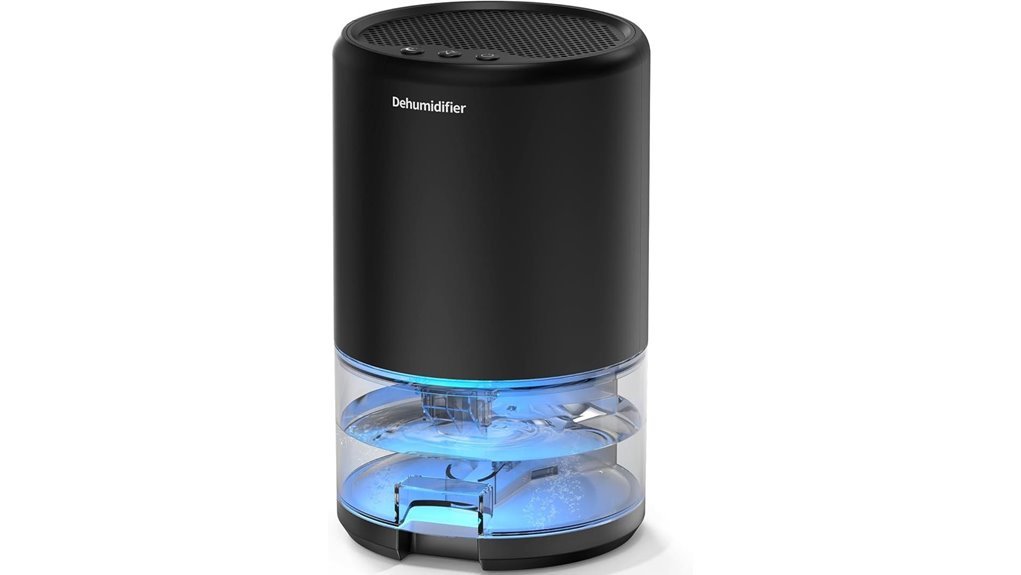
The Lonxfy 35 oz Small Dehumidifier is the most feature-focused night-use option in this lineup. The listing specifies 30 dB operation, sleep mode, auto shut-off, 7-color lighting, one-touch control, a 1000 ml tank, a washable filter, and 36-watt power draw. Amazon product details list dehumidification capacity at about 0.3 liters per day. The listing also markets the unit for spaces up to 350 sq. ft., but room-size fields are not fully consistent, so use that number as seller guidance rather than a guaranteed effective area.
Why You’ll Like It: Sleep mode, simple controls, a washable filter, and a built-in handle make this model easy to live with in a bedroom, office, closet, or RV. It is a better fit for someone who values convenience features more than maximum water-removal capacity.
Best For: Bedrooms and other small spaces where sleep mode, low listed noise, lighting controls, and easy filter care matter.
Who Should Buy This: Choose it if you want a compact unit with sleep mode and a washable filter rather than a bare-bones design.
Who Should Avoid This: Skip it if you need high-capacity drying or want a room-size rating with no ambiguity in the listing.
Pros:
- 30 dB listed operation with sleep mode for nighttime use.
- 1000 ml tank, built-in handle, auto shut-off, and washable filter.
- Simple one-touch control and 36-watt listed power draw.
Cons:
- About 0.3 liters/day is modest compared with full-size compressor dehumidifiers.
- The listing’s room-size information is not fully consistent across its fields.
- Colorful lights may not appeal to users who prefer a plain design.
CLEVAST CL-DH04 Small Quiet Mini Dehumidifier
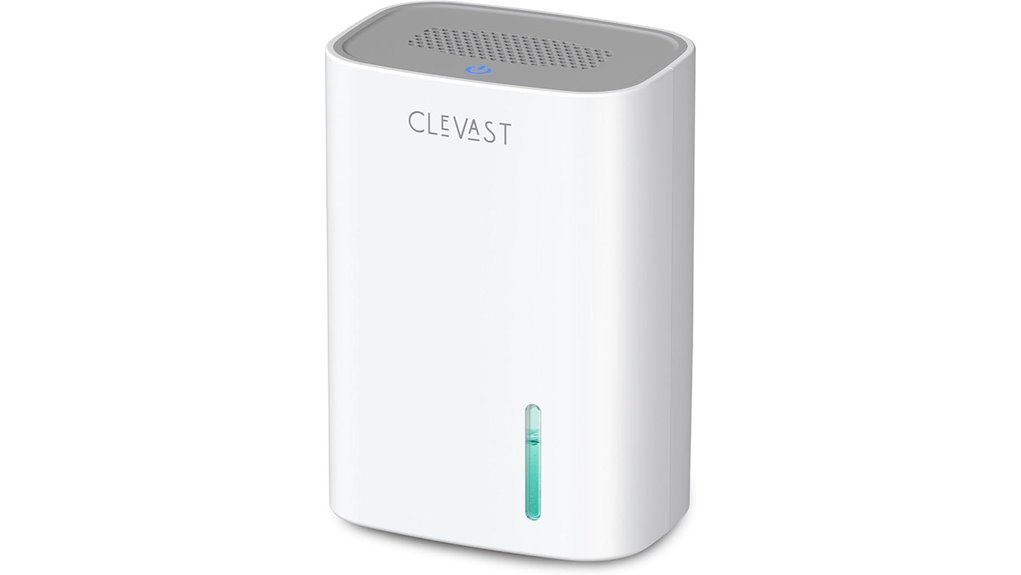
If low noise is your main priority, the CLEVAST CL-DH04 deserves a close look. The listing specifies 24 dB in Quiet Mode, two operating modes, a 30 oz tank, a compact body around 4.5 x 6.5 x 9.2 inches, and a weight of about 2.1 pounds. In high-efficiency mode, the seller claims up to 10 oz (295 ml) of water collection in 24 hours at 86°F and 85% RH. The recommended working range is listed as 68°F to 86°F for optimal performance.
Why You’ll Like It: CLEVAST has the lowest stated noise figure among these five models and is very compact. Its one-button control, carry handle, auto shut-off, and orange full-tank indicator make it especially easy to place in a bedroom, closet, bathroom corner, RV, or small office.
Best For: Noise-sensitive small spaces where quiet-mode operation matters more than high extraction capacity.
Who Should Buy This: Choose it if you want the lowest listed noise rating in this lineup and a very compact 30 oz unit.
Who Should Avoid This: Skip it if your room often stays below the recommended operating temperature or needs much higher moisture removal.
Pros:
- 24 dB listed in Quiet Mode.
- Compact 30 oz design with a carry handle and simple controls.
- Auto shut-off and a full-tank indicator reduce overflow risk.
Cons:
- The 10 oz/day extraction claim is measured under warm, very humid conditions.
- Recommended operating temperature is 68°F to 86°F for optimal performance.
- Its 30 oz tank is smaller than the 34–35 oz tanks on several alternatives here.
avylo DH-CS17 Small Portable Dehumidifier with Auto Defrost
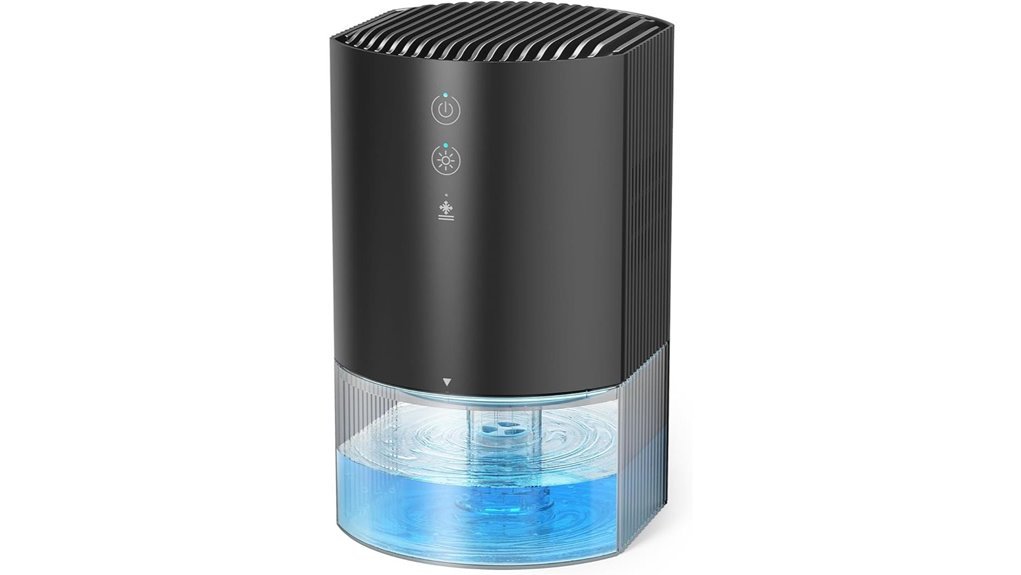
The avylo DH-CS17 is a practical option if you want a compact dehumidifier with auto defrost. Its listing specifies a 35 oz tank, auto shut-off with a red full-tank reminder, quiet operation below 25 dB, colorful lights, and up to 16 oz/day of moisture collection under a 75°F and 80% RH lab condition. Amazon listing fields vary between about 320 and 330 sq. ft. for room guidance, so it is better to treat this as a small-room unit and focus on the extraction rate and operating conditions rather than the square-foot number alone.
Why You’ll Like It: Auto defrost is the standout feature. The 35 oz tank, twist-lock cleaning design, visible water level, and automatic shut-off also make routine maintenance straightforward.
Best For: Bathrooms, dorm rooms, RVs, closets, offices, and other small spaces where occasional cooler conditions make auto defrost useful.
Who Should Buy This: Choose it if you want a compact unit with a larger tank, low listed noise, and auto defrost.
Who Should Avoid This: Skip it if you need continuous drainage or substantially higher daily extraction.
Pros:
- Auto defrost helps the unit manage frost on its cold-side components.
- 35 oz tank with auto shut-off and a visible full-tank warning.
- Below-25 dB listed noise level and up to 16 oz/day under the seller’s stated test condition.
Cons:
- Room-size figures vary slightly across the listing.
- It still relies on manual tank emptying.
- The maximum extraction figure comes from warm, humid test conditions and may be lower in normal rooms.
Factors to Consider When Choosing a Single Small Room Dehumidifier
When you choose a small-room dehumidifier, compare more than the square-footage number on the listing. Daily water removal, the temperature and relative humidity used for that claim, tank capacity, noise level, operating temperature, power use, and drainage method all affect how useful the unit will be in your room.
Before You Buy Checklist
- Measure the room: Use square-footage guidance as a starting point, not a performance guarantee.
- Compare daily extraction: Check how many ounces or milliliters the unit can collect and under what temperature and humidity conditions.
- Check tank size: A larger tank can reduce emptying frequency, but fill time still depends on actual moisture collection.
- Consider noise: For bedrooms and offices, compare the stated dB figure and confirm whether it applies to a special Quiet or Sleep Mode.
- Check operating temperature: Thermoelectric mini units generally lose effectiveness as conditions get cooler.
- Confirm shut-off and placement rules: Follow the manual for unattended use, airflow clearance, electrical safety, and bathroom placement.
Room Size and Moisture Load
Do not choose a mini dehumidifier from square footage alone. A small room with shower steam or consistently high relative humidity can be a harder job than a larger room with only mild dampness. Compare the seller’s room-size guidance with the unit’s listed daily extraction and test conditions. If the room stays very damp, has condensation on multiple surfaces, or has an active leak, a higher-capacity unit may be more appropriate.
Daily Moisture Removal
Daily moisture-removal capacity is one of the most useful comparison points. In this lineup, seller claims are generally around 10 to 16 oz per day, but those figures are tied to warm, humid test conditions. Cooler or less humid rooms usually produce less collected water. Compare products using similar test conditions whenever possible instead of assuming the highest square-footage number will perform best.
Water Tank Capacity
Tank size affects how often you may need to empty the unit, but it does not tell you how quickly the room will dry. These models use tanks around 30 to 35 oz. A transparent or visible tank makes water-level checks easier, and auto shut-off is useful because it stops collection when the tank reaches its limit. If you need hands-off drainage for long periods, look for a model with a supported continuous-drain option instead.
Noise Level
Noise matters most in bedrooms, nurseries, home offices, and other quiet spaces. Compare the exact wording behind a decibel claim. CLEVAST, for example, lists 24 dB specifically in Quiet Mode, while other products list figures such as 28, 30, 35, or below 25 dB. Manufacturer dB figures are useful for comparison, but real perceived noise can still vary with placement, surface vibration, and operating mode.
Power Use
Instead of following an arbitrary wattage cutoff, compare each model’s listed wattage or daily energy use with its extraction capacity and expected runtime. A compact unit may use relatively little electricity but also remove much less water than a full-size compressor dehumidifier. Auto shut-off can prevent unnecessary operation after the tank is full, but it does not replace a humidistat or target-humidity control.
Target Indoor Humidity
A small hygrometer can help you decide whether the unit is actually improving the room rather than judging only by how much water appears in the tank. For general indoor moisture control, keeping relative humidity below 60% and ideally around 30% to 50% can help reduce conditions that support mold growth. If the room stays above that range despite continuous use, the mini dehumidifier may be undersized for the moisture load.
Safety and Placement
Look for auto shut-off, a clear full-tank indicator, stable placement, unobstructed air intake and outlet, and operating-temperature guidance in the manual. In bathrooms, keep the unit away from direct splashes and follow the manufacturer’s electrical-safety instructions. Do not assume a model has overheat protection, a safety certification, or approval for unattended use unless the product documentation specifically says so.
Pro Tips for Better Results
- Place the dehumidifier on a stable surface with clear airflow around its intake and outlet.
- Close doors and windows while it runs if outdoor air is more humid than the room.
- Use a hygrometer so you can track relative humidity instead of judging performance only by tank water.
- Empty and clean the tank regularly according to the manual.
- Clean or wash the filter only if the manufacturer says that filter is removable and washable.
- Use Quiet or Sleep Mode when available, but confirm which features or lights remain active in that mode.
Frequently Asked Questions
How Often Should I Empty the Water Tank?
Check the tank daily when you first start using the unit, then adjust based on how quickly it fills in your room. Empty it whenever it reaches the full mark or the unit shuts off. Fill time can vary widely with temperature, humidity, tank size, and the unit’s actual extraction rate.
Can I Run It Overnight?
Only run a dehumidifier overnight or unattended if the manufacturer’s instructions allow it and the unit is placed correctly with clear airflow. Auto shut-off is helpful, but you should still keep the unit on a stable, dry surface and away from direct water exposure.
Does It Work in Colder Temperatures?
Compact thermoelectric dehumidifiers usually collect less water as the room gets cooler. Check the model’s recommended operating range. If your room regularly runs cool, a model with auto defrost, such as the avylo DH-CS17, may be more suitable, but its extraction rate can still drop with temperature.
Will It Increase My Electricity Bill?
Any powered dehumidifier adds to electricity use. The actual cost depends on wattage, runtime, and your local electricity rate. Compare listed power use and run the unit only as needed for the room’s humidity conditions.
How Do I Clean the Filter Properly?
Follow the manual for your exact model. If the filter is removable and washable, switch off and unplug the unit first, clean the filter as directed, and let it dry completely before reinstalling. Do not rinse a filter unless the manufacturer says it is washable.
Is a Mini Dehumidifier Enough for a Bathroom?
It can help with light residual humidity, but it should not replace an exhaust fan or other ventilation. Shower steam can create a much larger moisture load than a mini unit can remove quickly. Use ventilation, wipe standing water, and address any leaks.
Where Should I Place a Small Room Dehumidifier?
Place it on a stable, level surface with the manufacturer’s recommended clearance around the intake and outlet. Keep it away from curtains, clothing, towels, and direct splashes. Put it where you can easily reach the tank for regular emptying.
Do Small Dehumidifiers Remove Mold?
No. A dehumidifier can lower moisture in the air, but it does not remove existing mold. If mold is already present, clean it appropriately and fix the moisture source. Humidity control is one part of preventing the damp conditions that support mold growth.
Final Recommendation
For the most balanced small-room option, start with the TABYIK DH-CS01. Choose the Lonxfy 35 oz model if sleep mode and a washable filter matter most. Pick CLEVAST CL-DH04 if you want the lowest listed noise rating in this comparison. Choose avylo DH-CS17 if auto defrost is important for a cooler room. AlohaAir is the simpler choice if you mainly want basic light moisture control with a night-light feature.
Conclusion
The best small room dehumidifier depends on the moisture load, room temperature, listed extraction rate, tank size, noise level, and maintenance you are comfortable with. These compact models are best treated as light-duty moisture-control tools for bedrooms, bathrooms, RVs, closets, dorms, and offices. Compare the test conditions behind the specifications, use a hygrometer to track actual humidity, and move to a higher-capacity dehumidifier if the room remains persistently damp.