Affiliate disclosure: As an Amazon Associate, we may earn from qualifying purchases at no extra cost to you.
Last updated: August 2026
A dehumidifier can support a dust mite allergy control plan by helping keep indoor relative humidity below 50%. It does not remove dust mite allergens from bedding, carpets, or furniture, so humidity control works best alongside regular cleaning, allergen-proof covers, and weekly bedding care. For dependable room or basement moisture control, a properly sized compressor dehumidifier is usually more suitable than a low-capacity thermoelectric mini unit.
Quick verdict: The Midea Cube 20 Pint is the best all-around choice for smart control and a large bucket. The VEAGASO 34 Pint is a practical value option when you want a drain hose and simple modes. The AEOCKY 4500 Sq.Ft model is the stronger fit for larger or damper areas, but buyers should compare the standardized pint rating and current warranty shown on the live listing.
Humidity target: Use a separate hygrometer and aim for roughly 30% to 50% relative humidity, with a setting below 50% commonly recommended for discouraging dust mites.
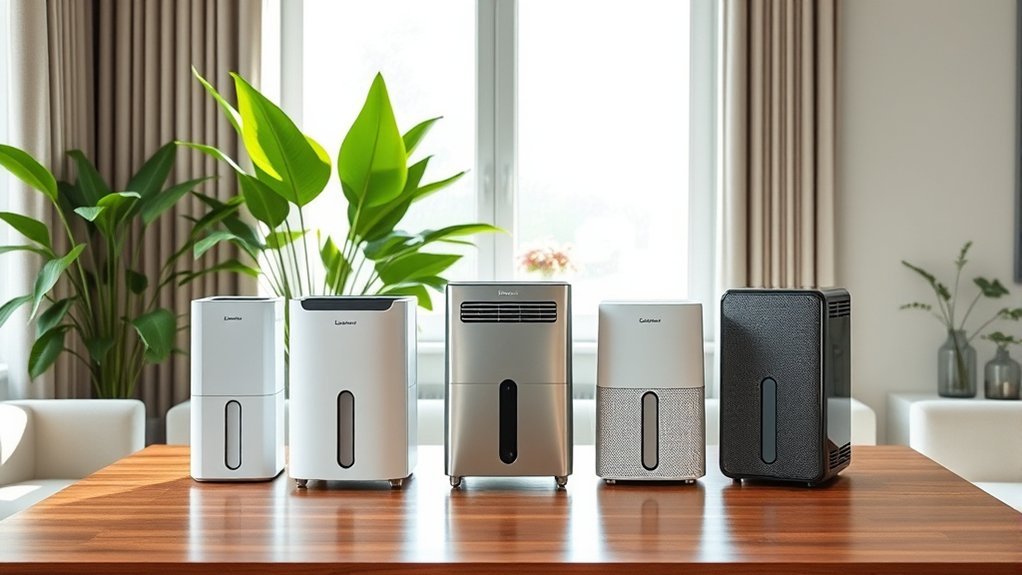
Quick Comparison
| Product | Best For | Moisture Capacity | Drainage | Main Limitation | Check Details |
|---|---|---|---|---|---|
| Midea Cube 20 Pint | Bedrooms, living areas, and smart-home users | 20 pints per day | Large removable bucket or included drain hose; no built-in pump | May be undersized for a very damp, large basement | Check Price on Amazon |
| VEAGASO 34 Pint | Value-focused buyers who want continuous drainage | Advertised up to 34 pints per day | 2-liter tank or included drain hose | Small bucket and limited official product documentation | Check Price on Amazon |
| AEOCKY 4500 Sq.Ft | Larger or damper rooms and basements | Advertised max 80 pints per day; standardized rating may be lower | Removable tank or drain hose | Large coverage and max-capacity claims depend on test conditions | Check Price on Amazon |
How We Selected These Dehumidifiers
For an allergy-focused article, the most important question is not whether a unit has decorative lighting or a large-looking tank. It is whether the dehumidifier has enough pints-per-day capacity, reliable humidity control, and a workable drainage method to help maintain the target relative humidity in the intended room. The three models below are compressor-based options with substantially more moisture-removal ability than typical mini thermoelectric units.
Midea Cube 20 Pint Dehumidifier with Smart Control
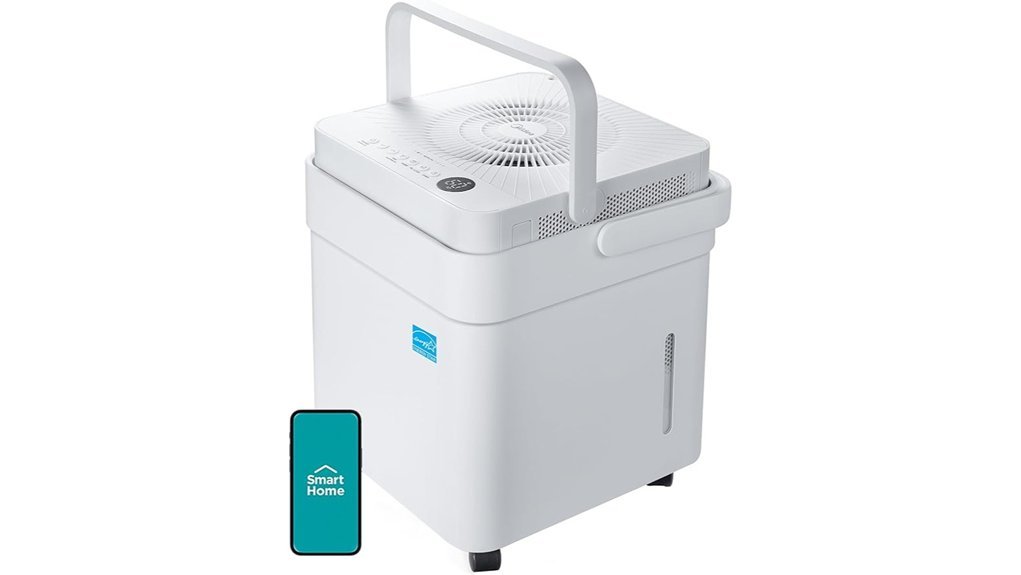
The Midea Cube 20 Pint Dehumidifier is a strong fit for bedrooms, living areas, and moderately damp spaces where convenient controls matter. Midea lists this model for spaces up to 1,500 square feet, with a 20-pint daily capacity, smart app control, voice-assistant compatibility, wheels, and an included hose for continuous drainage. Its lift-and-twist design also gives it a larger-than-usual 12-liter bucket while allowing the unit to nest into a more compact shape.
Why You’ll Like It: You can monitor and adjust humidity without repeatedly walking to the unit, and the large bucket reduces emptying compared with many compact compressor models. The washable filter is useful for protecting airflow and maintaining the appliance, but it should not be confused with a HEPA air purifier.
Best For: Buyers who want a well-documented 20-pint compressor dehumidifier with smart control for a bedroom, living room, office, or moderately damp basement area.
Who Should Avoid It: Buyers dealing with persistent seepage, a very wet basement, or a large open floor plan may need a higher standardized pint capacity.
Pros:
- 20-pint compressor capacity with smart app and voice control.
- Large removable bucket plus an included drain hose.
- ENERGY STAR certified and rated at about 45 dBA by the manufacturer.
Cons:
- No built-in pump, so gravity drainage requires a suitable lower drain.
- Heavier than a mini dehumidifier despite its compact nested shape.
- May be too small for severe moisture loads in large basements.
VEAGASO Dehumidifier for Home with Drain Hose
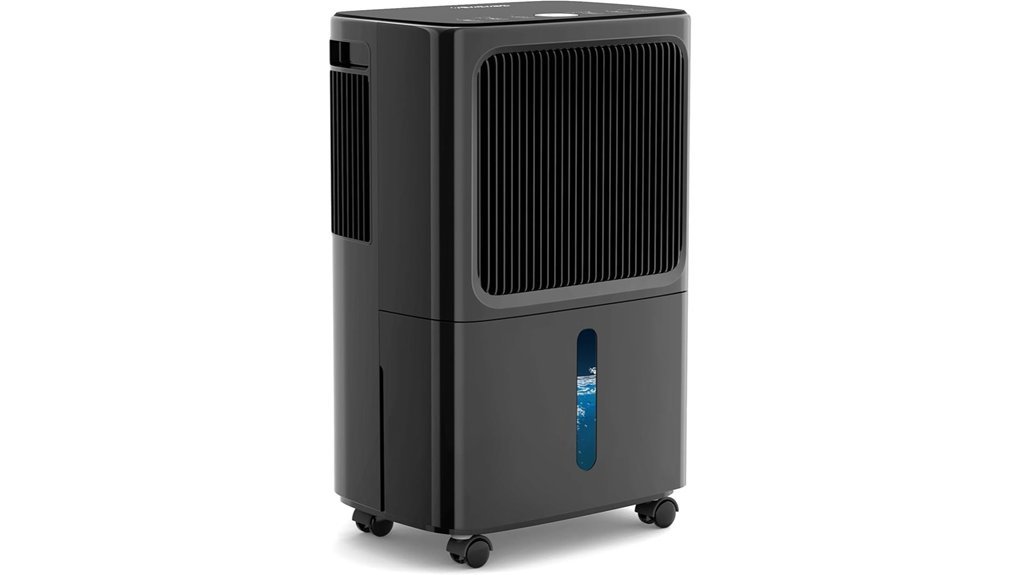
The VEAGASO VG380 is advertised as a 34-pint compressor dehumidifier for spaces up to 2,500 square feet. Its practical features include DEHU, DRY, and continuous modes, adjustable humidity control, a 24-hour timer, automatic defrost, a washable filter, wheels, and an included drain hose. These features make it easier to run the unit consistently in a basement, laundry area, or larger room.
Why You’ll Like It: The continuous-drain option reduces the biggest inconvenience of its small 2-liter tank. The simple mode selection can also be easier for buyers who do not need app control.
Best For: Value-focused buyers who want more capacity than a 20-pint model and have access to a floor drain or another safe gravity-drain location.
Who Should Avoid It: Buyers who prioritize extensive manufacturer documentation, a large water bucket, or a built-in pump should compare other options carefully.
Pros:
- Advertised 34-pint daily capacity with adjustable humidity control.
- Includes a drain hose for longer unattended operation.
- Portable design with wheels, handles, and a washable filter.
Cons:
- The 2-liter tank can fill quickly when the hose is not used.
- The 2,500-square-foot figure is a seller coverage claim; real performance depends on dampness, temperature, layout, and air movement.
- Current warranty terms and detailed performance documentation should be confirmed on the live listing.
AEOCKY 4500 Sq.Ft Smart Compressor Dehumidifier
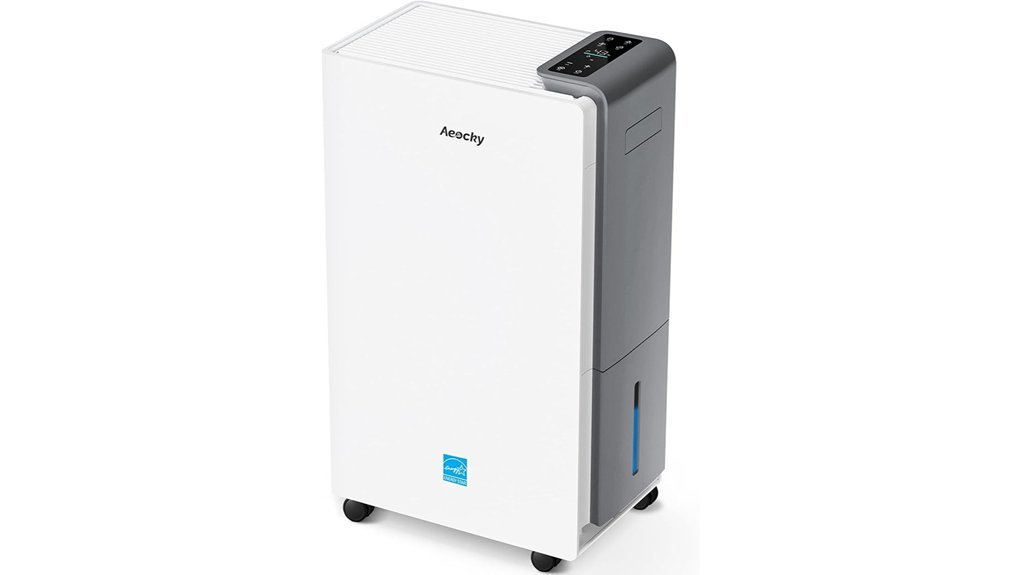
The AEOCKY RHEA-series compressor dehumidifier is marketed for spaces up to 4,500 square feet and advertises a maximum moisture-removal figure of up to 80 pints per day under high-temperature, high-humidity conditions. Standardized DOE-style capacity can be lower, so buyers should compare the exact rated capacity shown on the current product page rather than relying only on the largest marketing number.
Why You’ll Like It: It combines an adjustable humidistat, automatic modes, a drain hose, and a larger compressor platform intended for heavier moisture loads. The product line has also appeared in ENERGY STAR listings, including models carrying a Most Efficient 2025 designation.
Best For: Larger basements, open areas, or consistently damp rooms where a 20- or 34-pint unit may run too long or fail to reach the target humidity.
Who Should Avoid It: Small-bedroom users may find it unnecessarily large, and buyers who need Wi-Fi control should confirm connectivity because “smart” may refer to automatic humidity sensing rather than app support.
Pros:
- Higher advertised moisture-removal capacity for larger or damper areas.
- Adjustable humidity control and continuous-drain support.
- Energy-efficiency credentials are stronger than unsupported dollar-savings claims.
Cons:
- Maximum-capacity and coverage claims depend heavily on test conditions.
- Current warranty length should be verified because retailer descriptions can differ.
- Larger size and weight may make frequent room-to-room movement less convenient.
Factors to Consider When Choosing a Dehumidifier for Allergies to Dust Mites
The best dehumidifier for dust mite concerns is the one that can maintain the target humidity in your actual space. Room size matters, but so do starting humidity, water intrusion, temperature, closed doors, airflow, and how often the unit can drain.
Use a Hygrometer and Target the Right Humidity
A practical target is about 30% to 50% relative humidity. Keeping humidity below 50% can make conditions less favorable for dust mites, but running a home excessively dry may cause discomfort. A separate digital hygrometer helps confirm whether the dehumidifier is reaching the target instead of relying only on the unit’s display.
Choose Capacity by Dampness, Not Marketing Coverage Alone
Capacity is measured in pints of water removed per 24 hours under defined test conditions. A slightly damp room may need less capacity than a basement with visible moisture or laundry drying. It is usually safer to choose adequate capacity and let the humidistat cycle the unit than to rely on an undersized machine that runs constantly.
Compressor vs. Thermoelectric Dehumidifiers
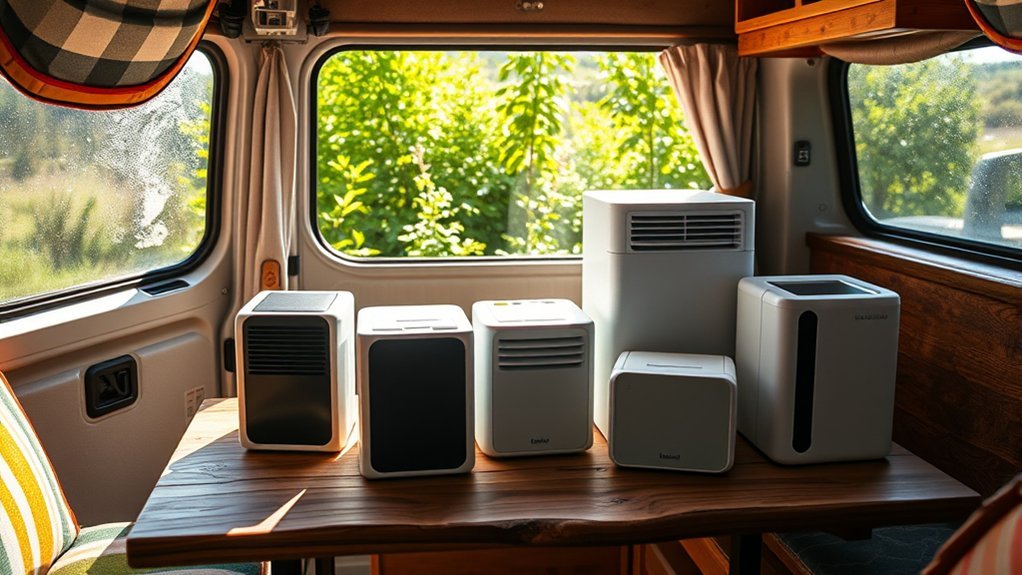
Compressor dehumidifiers are generally the better fit for bedrooms, living areas, basements, and other full-size rooms with a meaningful moisture load. Thermoelectric mini units can collect small amounts of water in closets, cabinets, or very small enclosed spaces, but their low daily extraction often makes them a poor primary choice for maintaining below-50% humidity across a normal room.
Consider Continuous Drainage
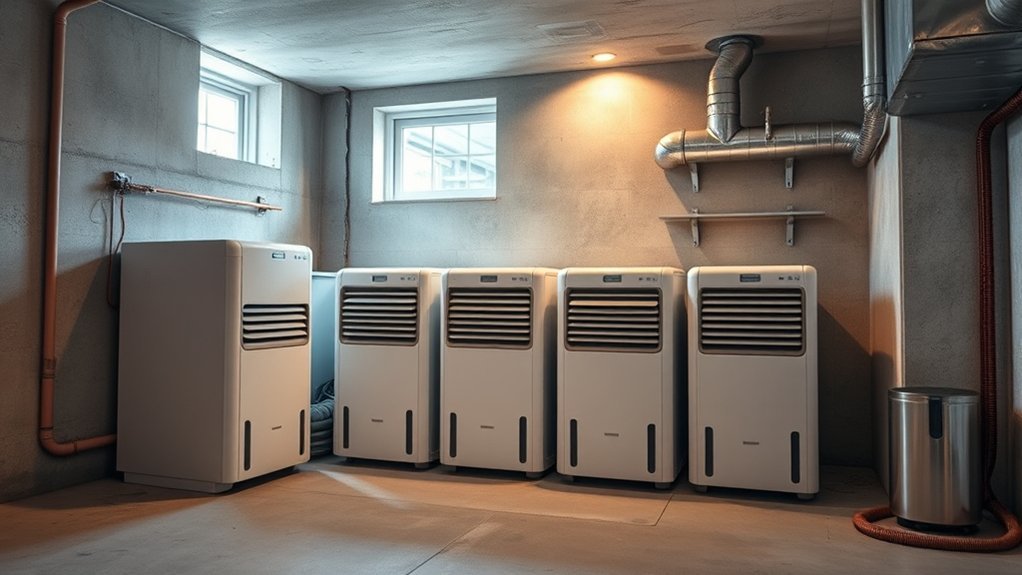
For consistent allergy-focused humidity control, a drain hose can be more important than a large bucket. Gravity drainage needs a hose that slopes continuously downward into a safe drain. A built-in pump is useful when the drain is higher than the unit, but none of the three reviewed models should be assumed to include a pump unless the live listing clearly says so.
Check Operating Temperature and Defrost
Compressor performance falls in cooler conditions, and frost can form on the coils. For an unheated basement or garage, check the manufacturer’s minimum operating temperature and automatic-defrost guidance before buying.
Compare Energy Efficiency
Look for an ENERGY STAR label and compare capacity alongside energy use. Avoid dramatic annual-savings promises unless they are supported by your electricity rate, operating hours, humidity load, and a direct comparison with the unit being replaced.
Match Noise to the Room
Bedroom users should look for a documented decibel rating, sleep mode, and adjustable fan speed. Remember that compressor cycling, fan speed, floor vibration, and placement near walls can all affect perceived noise.
Plan for Maintenance
Clean the washable filter according to the manual, keep the intake and exhaust clear, empty and wash the bucket, inspect the drain hose for clogs, and keep the unit upright after transport for the period stated by the manufacturer. A dehumidifier filter mainly protects the appliance; it is not a substitute for a HEPA air cleaner.
Use It as Part of a Dust Mite Control Plan
Humidity control does not remove allergen particles already present in bedding and soft furnishings. Combine it with allergen-proof mattress and pillow covers, regular hot-water bedding care where fabric instructions allow, damp dusting, and a vacuum with effective fine-particle filtration. Seek medical advice for persistent or severe allergy or asthma symptoms.
Frequently Asked Questions
Can a Dehumidifier Cure Dust Mite Allergies?
No. A dehumidifier is a moisture-control appliance, not a medical treatment. It may help make the home less favorable for dust mites by lowering humidity, but it does not remove all mites or allergens and should be used with cleaning and exposure-reduction measures.
What Humidity Level Is Ideal for Dust Mite Control?
Aim for roughly 30% to 50% relative humidity and use a hygrometer to verify the result. Keeping the level below 50% is commonly recommended for discouraging dust mites, while humidity that is too low can feel uncomfortable.
What Size Dehumidifier Do I Need?
Match the pint capacity to both the size and dampness of the space. A 20-pint unit can suit a moderately damp smaller area, while larger or wetter spaces may need 30 to 50 pints per day or more. Visible seepage or chronic water entry should be repaired rather than managed only with a portable dehumidifier.
Does a Dehumidifier Remove Dust Mite Allergens From the Air?
Not effectively. Its main job is moisture removal. For airborne particles, use appropriate filtration and cleaning methods; for bedding and mattresses, use allergen-proof covers and regular laundering.
Is Continuous Drainage Worth It?
Yes, especially in a basement or consistently humid room. A properly installed drain hose allows longer operation without the unit shutting off when the bucket fills.
How Often Should I Clean a Dehumidifier?
Follow the model’s manual. In general, inspect the filter regularly, clean the bucket before residue builds up, keep the coils and air paths free of dust, and check the drain hose for blockage or standing water.
Conclusion
For most buyers, the Midea Cube 20 Pint offers the best mix of documented specifications, smart control, a large bucket, and continuous drainage. Choose the VEAGASO 34 Pint when value and a drain hose matter more than app features, and consider the AEOCKY for a larger or damper area after confirming the live standardized capacity and warranty.
Final recommendation: Buy based on measured humidity and moisture load, not square-foot claims alone. Set up a hygrometer, aim below 50% without over-drying the room, and use the dehumidifier as one part of a broader dust mite allergy-control routine.
Best overall: Midea Cube 20 Pint | Best value: VEAGASO 34 Pint | Best for larger damp spaces: AEOCKY 4500 Sq.Ft