Keeping indoor relative humidity consistently around 35% to 50% can make the home less favorable for dust mites. This range is consistent with EPA indoor-air guidance and published dust-mite control recommendations. The right dehumidifier depends more on its moisture-removal rate, room conditions, and humidity controls than on tank size alone. For a damp basement or a room that regularly stays above 60% humidity, a compressor model with a built-in humidistat is usually the strongest choice. Compact semiconductor units are better for small, enclosed spaces with light moisture.
Quick Comparison of Dehumidifiers for Dust Mites
| Product | Best Use | Type | Key Capacity Detail | Main Limitation | Amazon |
|---|---|---|---|---|---|
| AEOCKY 50 Pint | Basements and persistently humid rooms | Compressor | Up to 50 pints/day under rating conditions | Larger and less portable than mini units | Check Price |
| KeepGlad 98OZ | Small to medium rooms with light moisture | Dual semiconductor | Listing claims up to 40 oz/day in warm, humid test conditions | Not comparable to a 40- or 50-pint compressor unit | Check Price |
| Natrogix CS3 106OZ | Quiet bedroom or bathroom use | Dual semiconductor | Listing claims up to 40 oz/day at 86°F and 80% RH | Performance falls in cooler or less humid rooms | Check Price |
| 135 OZ Tank Dehumidifier | Users wanting fewer tank-emptying trips | Dual semiconductor | Large 135 oz tank; listing claims up to 40 oz/day | Generic listing details and warranty should be checked | Check Price |
| TENKER 77OZ | Portable light-duty room use | Dual semiconductor | Listing claims up to about 35 oz/day in warm, humid conditions | Too small for serious basement moisture | Check Price |
| NeedDuck 44OZ | Closets, bathrooms, RVs, and compact bedrooms | Semiconductor | 44 oz tank; listing coverage up to 215 sq. ft. | Limited moisture-removal power | Check Price |
| BeOkay DH-A2 | Bedrooms and small bathrooms | Semiconductor | Listing coverage around 230 sq. ft. | Current tank specification varies by listing version | Check Price |
| ToLife 95OZ | Simple light-duty moisture control | Semiconductor | 95 oz tank with high and sleep modes | No verified pints-per-day figure in the supplied copy | Check Price |
| NineSky 95OZ | Quiet light-duty bedroom use | Semiconductor | 95 oz tank with high-speed and night modes | Manufacturer coverage claim should not be treated as guaranteed performance | Check Price |
| Onsekin CS08 | Light-duty use with optional scent feature | Semiconductor | Two modes, auto shut-off, and optional drain setup | Fragrance may not suit scent-sensitive allergy users | Check Price |
AEOCKY 50 Pint Dehumidifier for Home and Basement
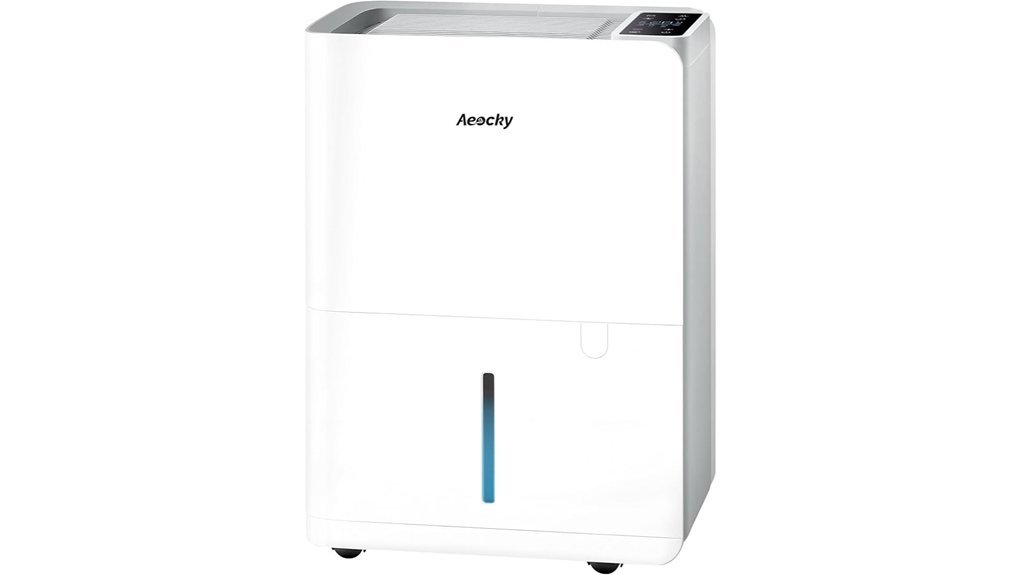
For sustained dust-mite humidity control, the AEOCKY 50 Pint is the strongest match in this roundup. It is a compressor dehumidifier rated to remove up to 50 pints of moisture per day under specified test conditions, giving it much more practical capacity for a damp basement, bedroom, or living area than a small semiconductor unit. Its adjustable humidistat lets you set a target humidity instead of relying only on a timer.
The unit includes a removable tank, drain-hose support, fan-speed control, and a timer. The current listing for this ASIN also describes a three-year machine warranty. Its larger size is the tradeoff, but that extra capacity is important when the goal is to hold a room near 50% RH rather than simply collect a small amount of condensation.
Best For: Homes with persistent humidity, basements, and buyers who need meaningful whole-room moisture removal.
Why You’ll Like It:
- Much higher moisture-removal capacity than compact thermoelectric models.
- Adjustable humidity control helps the unit cycle around a chosen RH target.
- Drain-hose support reduces the need to empty the tank manually.
Who Should Avoid It:
- Buyers who need an ultra-small, cordless, or shelf-size unit.
- Anyone seeking silent operation directly beside a bed.
- Users who have not fixed an active leak or water intrusion problem.
KeepGlad 98OZ Dehumidifier for Home and Basement
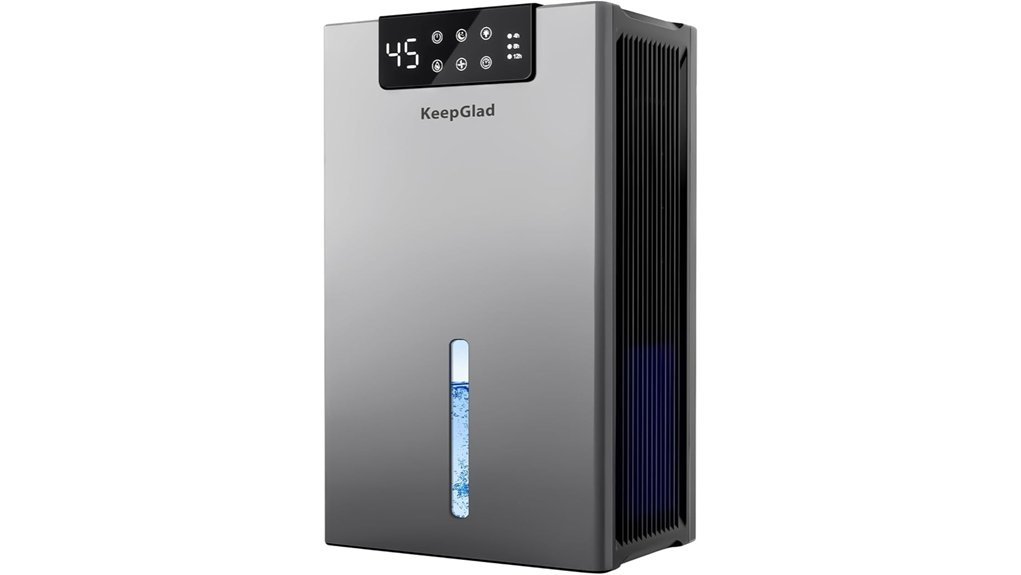
The KeepGlad 98OZ is a compact dual-semiconductor model with a real-time humidity display, several operating speeds, a timer, auto shut-off, a washable filter, and continuous-drain support. Its listing claims moisture removal of up to 40 ounces per day under warm, humid test conditions. That equals only about 2.5 pints per day, so it should be treated as a light-duty unit rather than a substitute for a 40- or 50-pint compressor dehumidifier.
Its display is useful because dust-mite control depends on the humidity level you actually achieve. This model makes the most sense in a closed bedroom, bathroom, RV, or other modest space where humidity is slightly elevated and the unit can run for long periods.
Best For: Buyers who want a compact unit with a visible humidity reading and optional continuous drainage.
Pros:
- Humidity display makes it easier to track whether the room is approaching the target range.
- Drain hose can reduce manual tank emptying.
- Quiet sleep mode and washable filter improve everyday convenience.
Limitations:
- Its extraction rate is far below a full-size compressor dehumidifier.
- The 1,000-square-foot listing claim may not reflect real performance in a damp or open-plan area.
- Best results require closed doors and windows.
Dehumidifier for Home with 106 OZ Water Tank
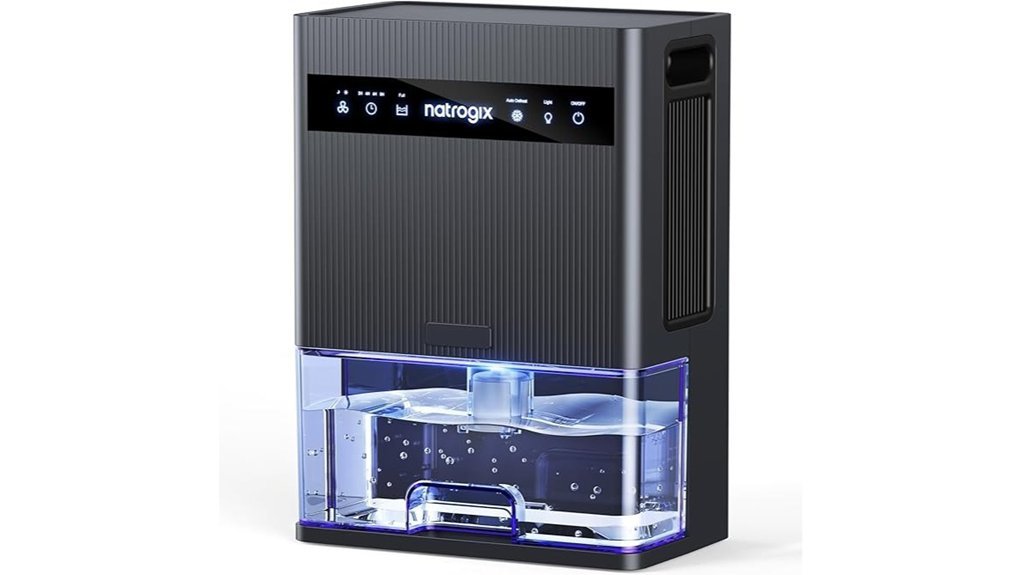
The Natrogix CS3 combines a 106 oz tank with dual-semiconductor condensation technology. The listing states that it can collect up to 40 ounces of water per day at 86°F and 80% relative humidity. Those are favorable test conditions, so expect less collection in a cooler room or when humidity is already closer to the desired range.
Power and sleep modes let you choose between faster operation and lower noise. The listing also describes auto shut-off, timer controls, smart defrost, and a 20 dB sleep-mode claim. It is a practical compact option for a bedroom or bathroom, but it should not be presented as equal to a compressor model for a wet basement.
Best For: A closed bedroom, bathroom, or RV where low noise and a larger tank matter more than maximum extraction power.
Pros:
- Large tank reduces how often you need to empty it.
- Sleep mode and lights-off operation suit nighttime use.
- Auto shut-off and defrost features add convenience.
Limitations:
- Maximum output is based on warm, high-humidity conditions.
- No built-in humidistat is clearly confirmed in the supplied product copy.
- Not designed for severe moisture, leaks, or whole-basement drying.
Dehumidifier for Home with 135 OZ Water Tank
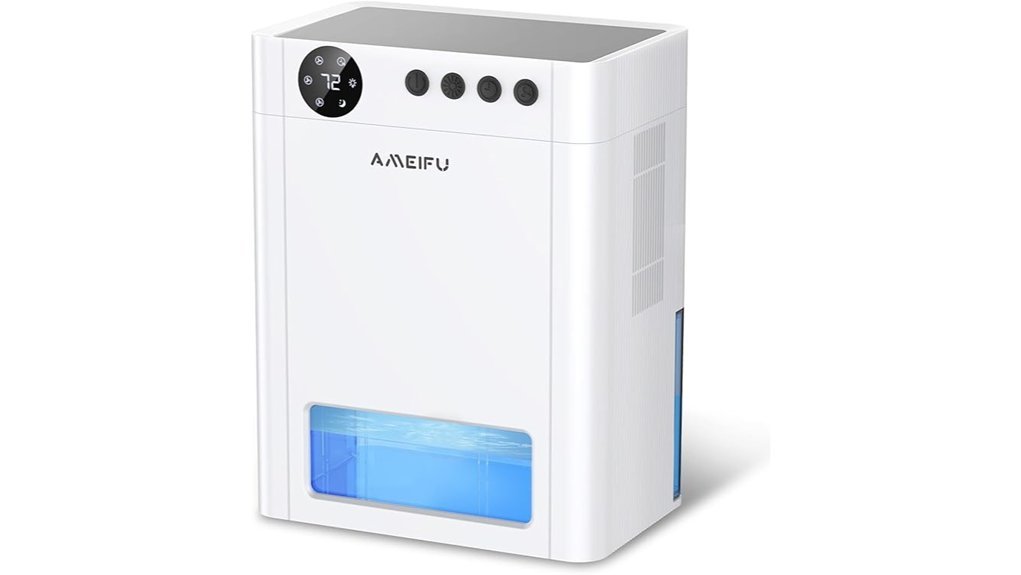
This compact dehumidifier stands out for its 135 oz removable water tank. The product listing describes dual-semiconductor condensation, timer settings, auto shut-off, ambient lighting, and moisture collection of up to 40 ounces per day in favorable conditions. The large tank is convenient, but it does not make the unit as powerful as a compressor model.
The listing does not present a clearly recognizable brand name in the supplied article, so buyers should verify the current seller, warranty terms, return policy, and exact model details before ordering. Use it for light-to-moderate moisture in a closed room, not as the main solution for a wet basement.
Best For: Buyers who prefer a larger tank and quiet compact operation in a bedroom, bathroom, or RV.
Pros:
- Large tank can extend time between emptying.
- Timer and auto shut-off support unattended daily use.
- Low-noise design is suitable for living spaces.
Limitations:
- Brand and warranty details should be checked on the live listing.
- Manufacturer coverage figures may be optimistic for a humid 1,000-square-foot area.
- Tank size should not be confused with daily extraction capacity.
TENKER Dehumidifier for Home (77oz Water Tank)
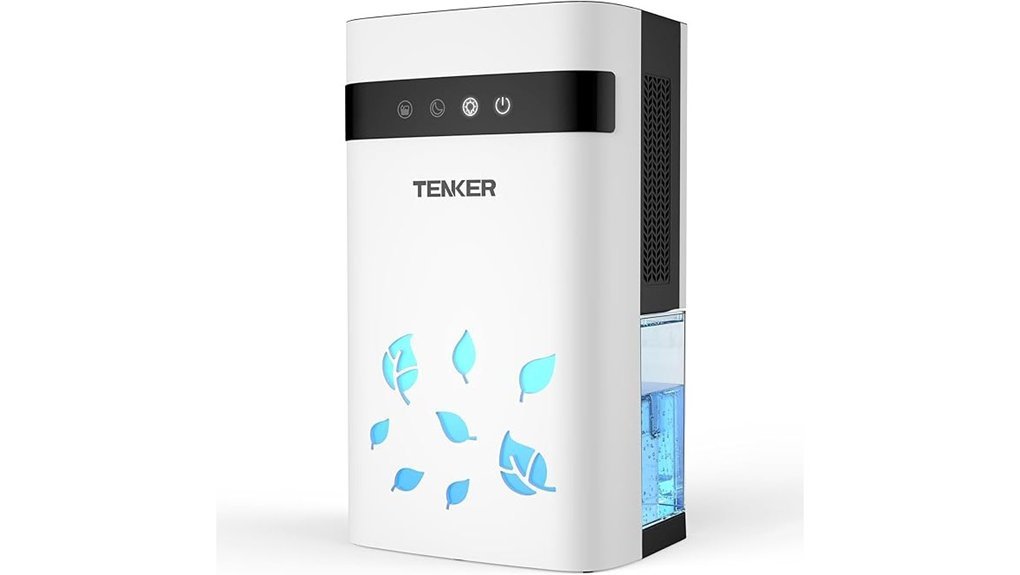
The TENKER model pairs a 77 oz tank with a lightweight body and carrying handle. Its listing claims up to about 35 ounces of moisture collection per day in a closed room at warm, high-humidity conditions. It also includes standard and sleep modes, auto shut-off, and seven LED light choices.
This is a practical pick for light moisture in a bedroom, bathroom, closet, or RV. It is not the right choice for standing water, a wet foundation, or a basement that needs dozens of pints removed each day.
Best For: Users who want an easy-to-move unit for small, enclosed rooms.
Pros:
- Portable design with an ergonomic handle.
- Sleep mode is intended for lower-noise nighttime use.
- Auto shut-off helps prevent tank overflow.
Limitations:
- Real-world extraction may be lower than the warm-condition maximum.
- No confirmed automatic RH target control in the supplied copy.
- Requires manual emptying and regular cleaning.
Dehumidifier for Home with 44OZ Water Tank
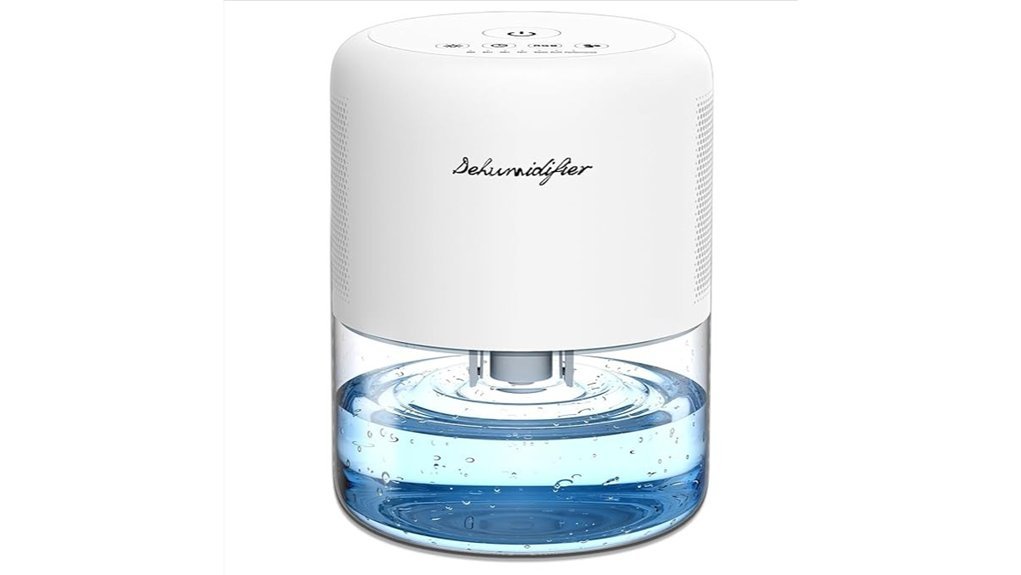
The NeedDuck Dehumidifier is designed for compact areas, with listing coverage of up to 215 square feet. Its 44 oz tank, three modes, timer options, auto defrost, and full-tank shut-off make it easy to use in a small bathroom, closet, RV, or bedroom.
Because this is a compact semiconductor model, it is best for mild moisture rather than aggressive humidity control. Pair it with a hygrometer and confirm that the room actually stays near 50% RH. If the reading remains high after continuous use, step up to a compressor dehumidifier.
Best For: Small enclosed spaces where portability and quiet operation are more important than high extraction capacity.
Pros:
- Compact and lightweight for easy placement.
- Timer and multiple modes improve control.
- Auto shut-off helps prevent spills.
Limitations:
- Not suitable for large rooms or heavy dampness.
- The smaller tank may need frequent emptying in humid weather.
- Decorative lights may be distracting unless switched off.
Small Dehumidifier for Home with Adjustable Lights
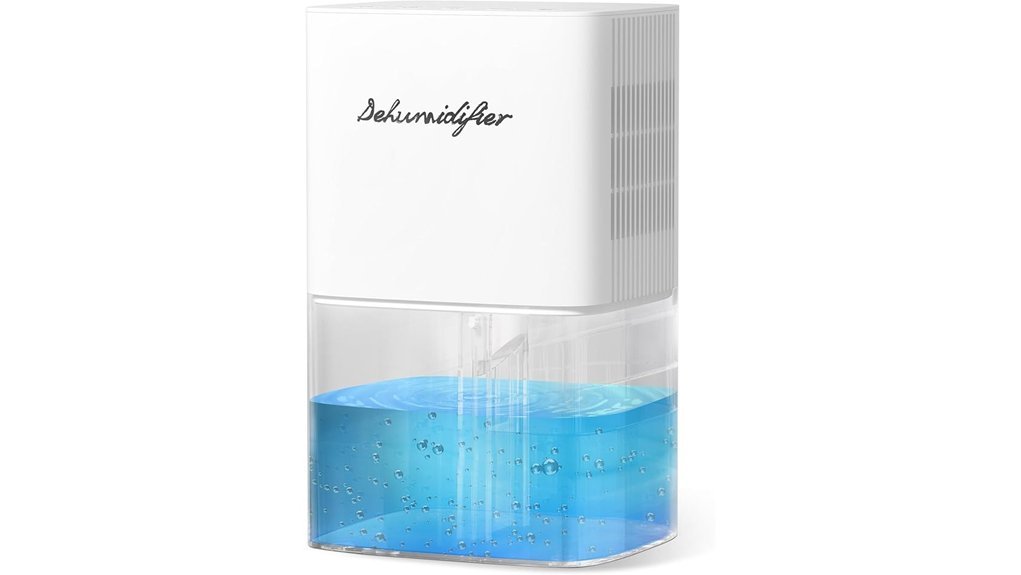
The BeOkay DH-A2 is a compact dehumidifier intended for spaces around 230 square feet. It offers three modes, timer settings, auto shut-off, and adjustable night-light colors. A quiet sleep mode makes it suitable for bedrooms where a louder compressor unit would be distracting.
Current third-party listing data for this ASIN shows conflicting tank figures, so the exact capacity should be confirmed on Amazon before purchase. The more important question is whether it can hold your room near the target RH. Use it in a closed, mildly damp room and monitor results with a separate hygrometer.
Best For: A small bedroom or bathroom where low noise and simple controls matter.
Pros:
- Sleep mode supports quieter nighttime operation.
- Timer and auto shut-off improve convenience.
- Compact body is easier to move than a compressor unit.
Limitations:
- Tank specifications vary across current listing copies.
- Limited coverage makes it unsuitable for open-plan rooms.
- No continuous-drain feature is confirmed in the supplied article.
ToLife 1000 sq.ft Dehumidifier with 95 OZ Tank
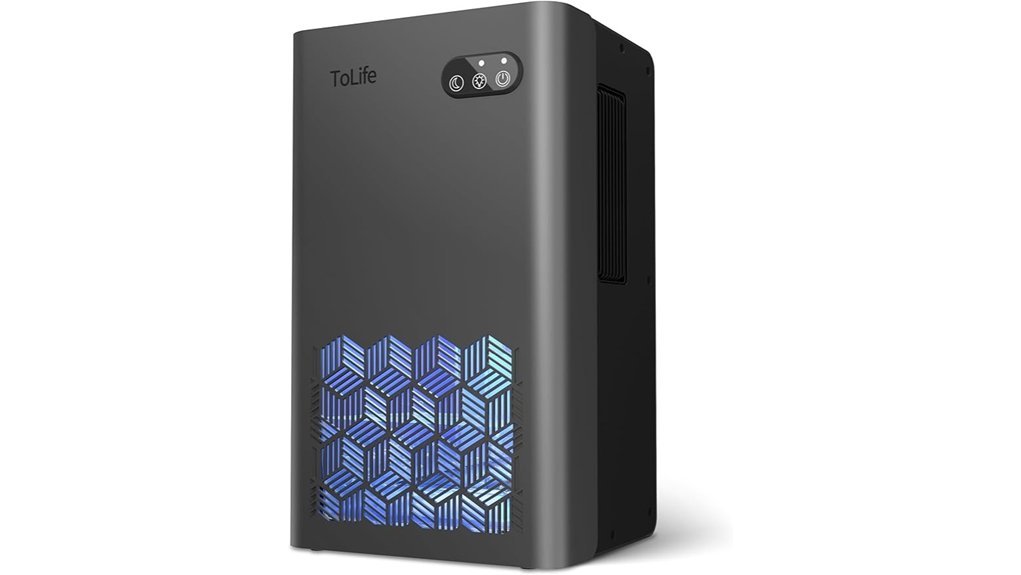
The ToLife model has a 95 oz tank, semiconductor condensation technology, a high-output mode, a sleep mode, auto shut-off, built-in handles, and decorative LED lighting. It is lightweight and simple to move between rooms.
The supplied copy does not provide a reliable pints-per-day figure, so the 1,000-square-foot marketing claim should be treated cautiously. This unit is better positioned for light moisture in a closed bedroom, bathroom, or closet than for a large damp basement. Track the actual RH rather than judging performance only by the amount of water in the tank.
Best For: Buyers who want a straightforward compact model with a larger tank and two operating modes.
Pros:
- Portable design with built-in handles.
- Sleep mode is convenient for bedroom use.
- Auto shut-off helps protect against overflow.
Limitations:
- No verified daily extraction figure in the supplied article.
- Not a smart-home or full humidistat-controlled model.
- Manufacturer coverage claims may exceed practical performance in humid conditions.
NineSky Dehumidifier with 95oz Water Tank
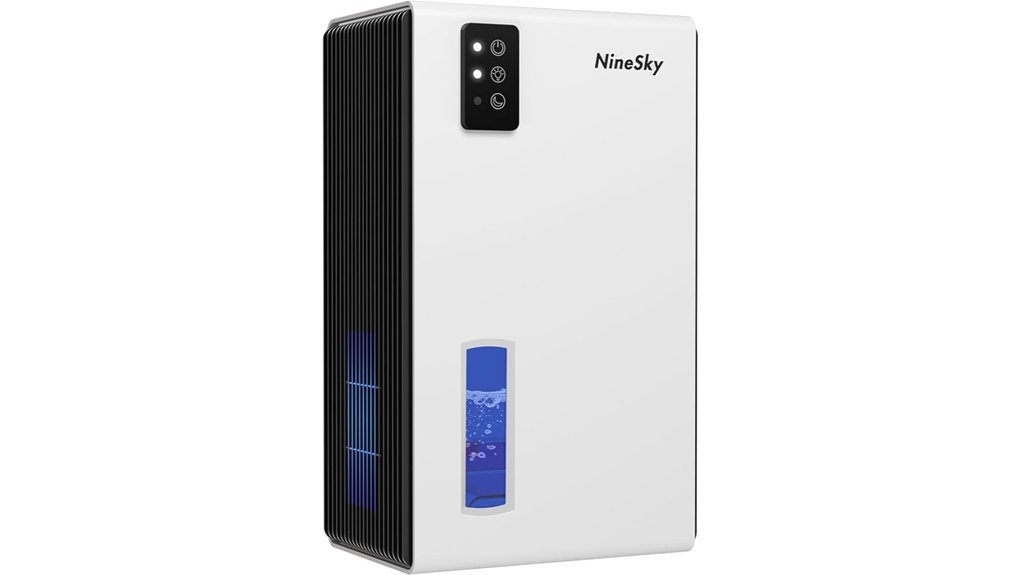
The NineSky Dehumidifier uses semiconductor condensation and includes a 95 oz tank, high-speed and night modes, auto shut-off, and a seven-color ambient light. It is easy to place in a bedroom, bathroom, or other smaller area where low noise is a priority.
The current product identity and features can be confirmed by its ASIN, but the supplied article does not give a dependable extraction rate for this exact model. For dust-mite control, that missing number matters. Treat it as a light-duty compact unit and verify with a hygrometer that the room remains below 50% RH.
Best For: Small-room users who want quiet operation and a simple full-tank safety feature.
Pros:
- Night mode turns off the light for sleep.
- Auto shut-off helps prevent leaks.
- Large tank for a compact thermoelectric unit.
Limitations:
- Exact daily water-removal capacity is not confirmed in the supplied copy.
- Not suitable for severe dampness or active water problems.
- Coverage claims should be checked against real humidity readings.
Dehumidifier for Home with Aromatherapy and LED Light
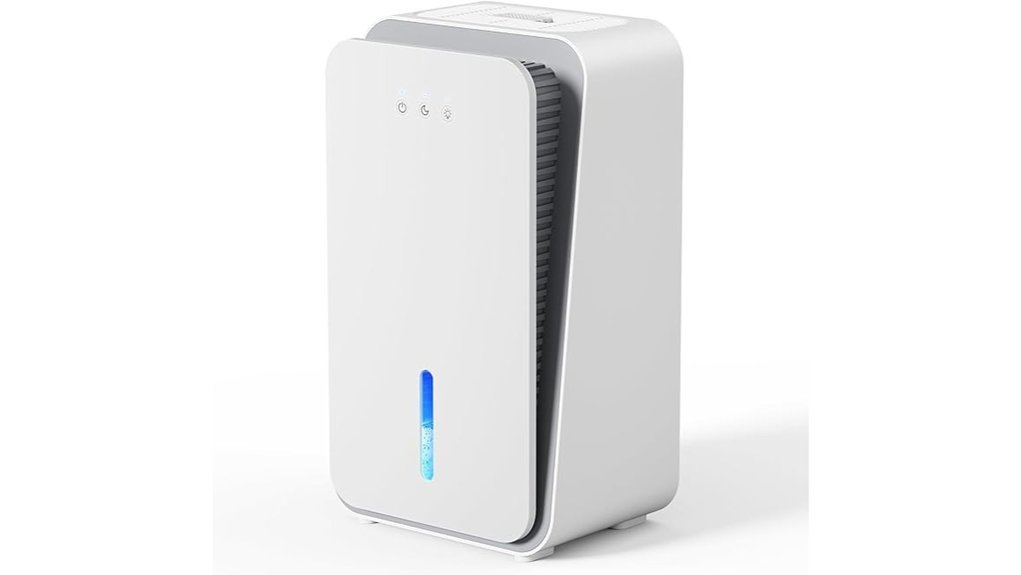
The Onsekin CS08 combines semiconductor dehumidification with an optional aromatherapy diffuser, two operating modes, auto shut-off, seven-color lighting, and a compact carry-friendly design. The scent feature is separate from moisture removal and does not improve dust-mite control.
People with fragrance sensitivity, asthma, or allergy symptoms may prefer to leave the aromatherapy slot unused. As with the other compact models, the 1,000-square-foot listing claim should not be treated as a guarantee. It is most suitable for mild moisture in a closed room.
Best For: Buyers who want a small dehumidifier and an optional scent feature in a bedroom or living area.
Pros:
- Combines light-duty dehumidification with an optional diffuser.
- Sleep mode and low-noise design suit nighttime use.
- Auto shut-off and compact handles add convenience.
Limitations:
- Fragrance can bother scent-sensitive users.
- Daily extraction capacity is not clearly verified in the supplied copy.
- Not a replacement for a compressor dehumidifier in a damp basement.
Factors to Consider When Choosing a Dehumidifier for Dust Mites
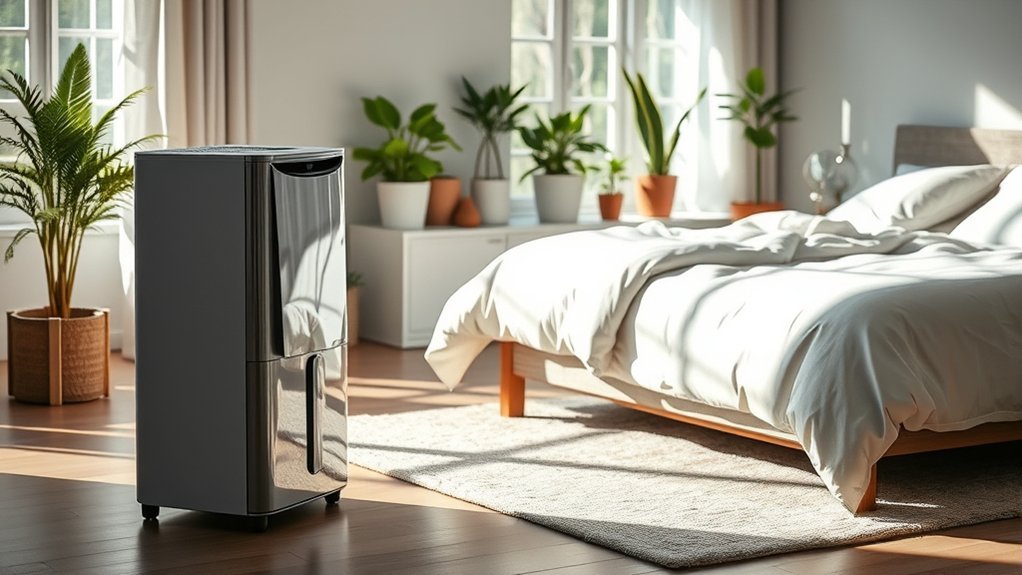
The best model is the one that can keep the actual room humidity in the target range for long periods. Compare pints per day, humidistat control, drainage, room conditions, noise, and maintenance before comparing tank size or decorative features.
Measure Humidity First
Use a separate digital hygrometer before and after running the unit. Aim for roughly 35% to 50% RH. Avoid making the room excessively dry, and remember that cooking, showers, open windows, leaks, and poor ventilation can push humidity back up.
Compare Moisture Removal, Not Just Tank Size
A 100 oz tank only tells you how much water the container can hold. It does not tell you how quickly the machine removes moisture. A 50-pint compressor model can remove many times more water per day than a compact unit rated around 35 to 40 ounces. For a damp basement, large room, or consistently high RH, choose a higher-capacity compressor dehumidifier.
Match the Unit to Real Room Conditions
Square-foot coverage claims are often measured under ideal or loosely defined conditions. Ceiling height, doors, airflow, outdoor humidity, temperature, and moisture sources all affect performance. Compact semiconductor models work best in closed, warm, mildly damp spaces. They lose effectiveness in cooler rooms and may struggle in open layouts.
Look for a Humidistat and Drainage
A built-in humidistat can turn the unit on and off around a selected RH level. This is more useful for dust-mite control than a basic timer. A drain hose is also valuable for continuous operation, especially in a basement or humid climate.
Check Noise for Bedroom Use
Compressor dehumidifiers are usually more powerful but also more noticeable. Compact thermoelectric models may be quieter. Check the operating mode, fan speed, and whether the display or lights can be switched off before placing a unit beside a bed.
Consider Energy Use
For a compressor unit that will run frequently, look for current ENERGY STAR certification or an efficiency rating on the live product page. The ENERGY STAR dehumidifier guide also shows why daily pint capacity should be matched to how damp the room is. Do not assume a low-watt compact unit is automatically more efficient: it may use less power but also remove far less water.
Plan for Maintenance
Empty and wash the tank regularly, clean or replace the filter as directed, keep the inlet and outlet clear, and inspect the drain hose. A dirty filter or blocked airflow reduces performance. Auto shut-off helps prevent overflow but does not replace routine cleaning.
Before You Buy Checklist
- Measure the room’s current RH with a hygrometer.
- Choose a daily extraction rate suitable for the moisture load.
- Confirm whether the unit has a true adjustable humidistat.
- Check for continuous drainage if you cannot empty the tank daily.
- Verify current dimensions, warranty, seller, and return terms on Amazon.
- Fix leaks and improve bathroom or kitchen ventilation first.
Frequently Asked Questions
How Do Dehumidifiers Help Control Dust Mites?
Dust mites depend on moisture in the air. Holding indoor RH near 35% to 50% can slow their growth and reduce survival over time. The humidity must stay controlled consistently, so a hygrometer and correctly sized dehumidifier are important.
What Humidity Level Is Best for Dust-Mite Control?
A practical target is about 35% to 50% RH. Keeping the home below 50% is commonly recommended, but very dry air may be uncomfortable. Check several rooms because humidity can vary throughout the home.
Can a Dehumidifier Cure Dust-Mite Allergies?
No. A dehumidifier may make conditions less favorable for mites, but it does not remove existing allergens or replace medical treatment. Combine humidity control with regular cleaning, bedding care, dust-mite covers, and advice from a qualified healthcare professional when symptoms are significant.
Are Mini Dehumidifiers Strong Enough for Dust Mites?
They may help in a small, closed, mildly damp room, but many mini models remove only a few pints or less per day. They are unlikely to control a large basement or a room with major moisture problems. Use a hygrometer to judge results.
How Often Should I Empty the Water Tank?
Empty it whenever the full-tank indicator appears, and inspect it at least daily during humid weather. A continuous drain hose can reduce this work if the unit supports gravity drainage and is installed correctly.
Does a Larger Tank Mean Better Dehumidification?
No. A larger tank means less frequent emptying. The performance figure to compare is the moisture-removal rate, usually listed in pints per day or ounces per day under stated temperature and humidity conditions.
Should I Run a Dehumidifier All Day?
It may need to run continuously at first if RH is high. A model with a humidistat can cycle automatically after the room reaches the target. Follow the manufacturer’s placement and safety instructions, and never block the air inlet or outlet.
Final Recommendation
Choose the AEOCKY 50 Pint for a damp basement, large room, or any area that needs serious daily moisture removal. Choose the KeepGlad 98OZ when you want a compact unit with a humidity display and drain hose for light-duty use. For a very small bathroom, closet, or RV, the NeedDuck 44OZ is the more sensible size.
Whichever model you choose, base the decision on the room’s measured RH and the unit’s daily extraction rate. A dehumidifier that cannot keep the space below 50% RH is not the right tool for sustained dust-mite humidity control.