For 1,500 square feet, you’ll usually want a 50- to 70-pint dehumidifier, with 30- to 50-pint units working only if humidity is already stable. Check your hygrometer first: if indoor RH runs above 60%, size up. Choose an Energy Star compressor model with a built-in humidistat and continuous drainage, especially for basements or persistently damp spaces. If your space stays cool or wet, a larger unit can perform better, and there’s more to compare.
What Size Dehumidifier Fits 1,500 Square Feet?

For 1,500 square feet, you’ll usually want a dehumidifier rated at 50 to 70 pints per day to keep moisture under control. That capacity gives you enough reserve to manage damp rooms, basements, and open layouts without straining the machine. If your space stays humid or you deal with persistent moisture, choose the 70-pint range for stronger performance. You’ll also want the proper size for steady humidity levels between 30% and 50% RH, which helps block mold and dust mites. Prioritize energy efficiency, especially if the unit will run often; Energy Star models can cut operating costs while still delivering reliable moisture removal. Continuous drainage, such as a built-in pump or gravity drain, lets you keep the dehumidifier working without constant emptying, so you can focus on living freely in a drier, healthier space.
Check Your Humidity Level First
Before you pick a dehumidifier size for 1,500 square feet, measure the room’s current humidity with a hygrometer. Track relative humidity, not guesswork, because your desired humidity level should stay near 30-50% RH for healthy humidity control. If readings climb above 60% RH, you’ll likely need more capacity to protect the space from mold and excess moisture.
| RH Reading | Action | Result |
|---|---|---|
| 30-50% | Maintain | Stable comfort |
| 51-60% | Monitor | Adjust settings |
| >60% | Increase capacity | Better moisture removal |
For moderately damp rooms, a unit that dehumidifier removes 30-40 pints of moisture per day often fits. If you face persistent wetness, choose 50-70 pints daily. Check humidity regularly, then tune the unit so it keeps working at the target range. That’s how you reclaim drier air and keep control over your environment.
How Dehumidifier Capacity Is Measured
Dehumidifier capacity is rated in pints per day (PPD), which tells you how much moisture a unit can pull from the air over a 24-hour period. You use that number to compare dehumidifier sizing with your square footage and dampness level.
- PPD shows removal rate, not tank size.
- AHAM rating standardizes tests, so models stay comparable.
- Temperature and humidity change real-world capacity, especially in cooler rooms.
- Persistent moisture can justify a higher-capacity unit than basic charts suggest.
For a 1,500-square-foot space, you’ll usually review units in the 50- to 70-pint range, but the exact choice depends on how wet the room feels. If your basement or living area stays clammy, choose based on the moisture load, not just floor area. That keeps your environment controlled, efficient, and free from the drag of excess humidity.
Why 30 to 50 Pints Usually Works
For 1,500 square feet, you usually need 30 to 50 pints per day because that range matches the room’s moisture load and helps hold relative humidity near 30% to 50%. A 30-pint unit can handle slight humidity, while a 50-pint model gives you more capacity for wetter conditions. When you size it correctly, you’ll get steadier humidity control, fewer cycles, and lower energy use.
Humidity And Room Load
At 1,500 square feet, a dehumidifier rated at 30 to 50 pints per day usually keeps indoor humidity in the ideal 30% to 50% range, which helps prevent mold growth and discourages dust mites that thrive above 50% RH. Your room’s moisture load drives the needed capacity:
- Use 30 pints for moderate humidity and light moisture.
- Choose 50 pints when dampness is high or moisture sources persist.
- Poor ventilation pushes you toward the upper end.
- Track performance with a hygrometer and adjust if readings stay high.
A properly sized dehumidifier protects your space, improves ventilation outcomes, and gives you control over indoor conditions without excess energy waste.
Why 30–50 Pints
A 1,500-square-foot space usually stays in control with a 30- to 50-pint dehumidifier because that capacity matches the typical moisture load without overworking the unit. You’ll keep humidity levels near 30-50%, which supports comfort and mold prevention.
| Feature | Benefit |
|---|---|
| 30-50 pints | Handles moderate load |
| Built-in humidistat | Automates control |
| Energy efficiency | Cuts runtime |
| Flexible range | Adapts to moisture conditions |
You don’t need oversized gear to win back dry air. A 30- to 50-pint model removes excess moisture fast enough for living spaces, yet it still preserves energy efficiency by cycling less often. With a built-in humidistat, you can set your target and let the unit respond to changing moisture conditions, giving you steady, practical control.
When a 50-Pint Dehumidifier Makes Sense
A 50-pint dehumidifier makes sense when you’re conditioning about 1,500 square feet with persistent humidity, especially if the space runs above 60% relative humidity. You’ll get the best results in damp basements or living areas because this size can remove enough moisture to hold indoor humidity near 30-50%, and continuous drainage can reduce maintenance. Place it in the most humid, open area with clear airflow so it can work efficiently and meet the load without short cycling.
Ideal Room Conditions
When your 1,500-square-foot space sits in the 40% to 60% relative humidity range, a 50-pint dehumidifier is usually the right fit. You’re matching capacity to room load, not overworking the unit.
- Keep humidity levels near 50% to limit mold growth.
- Use it in basements, laundry rooms, or humid climates.
- Expect stable operation in 60°F to 90°F conditions.
- Lower cycling can reduce energy consumption and protect indoor air quality.
If your space holds moisture but isn’t severely saturated, this size gives you control without excess. You can reclaim dry, breathable rooms and stop letting damp air dictate how you live. With the right 50-pint setup, you maintain comfort, preserve finishes, and stay in command of your environment.
Why 50 Pints
For spaces up to 1,500 square feet, a 50-pint dehumidifier usually gives you the right balance of capacity and control. This Size works when your humidity stays above 50% and you need steady moisture removal without overdoing it. At 50 pints per day, it can handle damp basements, living rooms, and larger bedrooms with persistent buildup. You’ll keep indoor relative humidity near 30-50%, which supports healthier air quality and discourages mold. In practical terms, this means you gain reliable control over moisture while preserving comfort and freedom from stale, heavy air. If your space feels damp but isn’t extreme, 50 pints is the efficient, technically sound choice. Many models add humidistats and continuous drainage, so the system can run with less oversight.
Best Placement Tips
Once you’ve settled on a 50-pint unit for up to 1,500 square feet, placement becomes the next factor that affects performance. A properly sized dehumidifier still needs smart positioning for real humidity control.
- Set it in a central location so air moves evenly through the room.
- Keep 12 inches of clearance from walls and furniture; restricted air intake cuts efficiency.
- If the space stays damp, use continuous drainage to avoid tank pauses and preserve consistent operation.
- Check humidistat settings often and hold 40–60% humidity for comfort and mold prevention.
With these steps, you’ll support peak performance and let the unit work freely, without waste or needless intervention.
Best Dehumidifier Size for Damp Basements
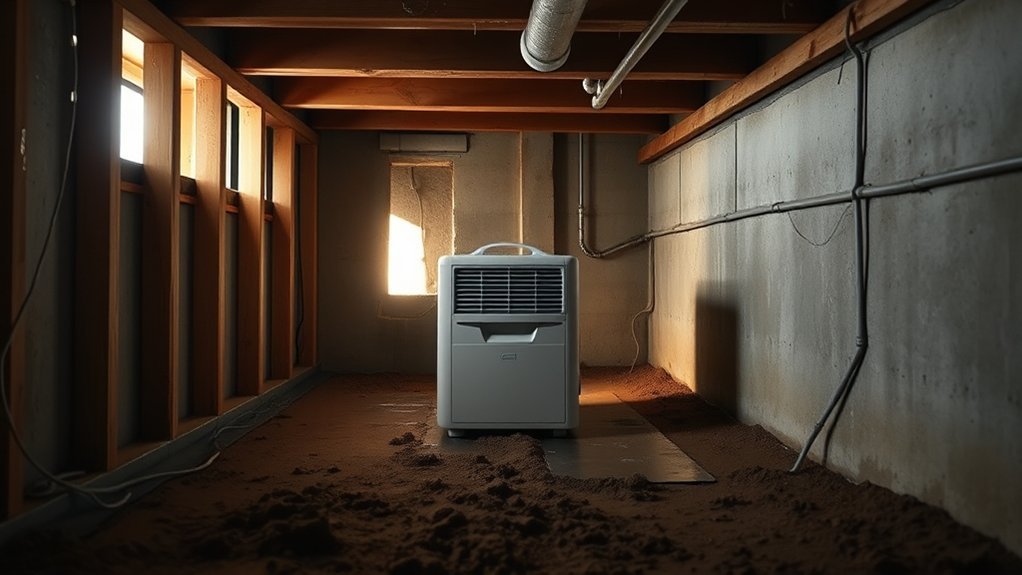
In a damp 1,500-square-foot basement, you’ll typically need a dehumidifier rated at 50–70 pints per day to control moisture effectively and help prevent mold growth and structural damage. This dehumidifier size gives you enough capacity to remove moisture from basements and keep humidity levels near 40–45%.
| Feature | Target | Why it matters |
|---|---|---|
| Capacity | 50–70 pints/day | Matches damp basements |
| Relative humidity | 40–45% | Blocks mold |
| Drainage | Continuous drainage | Cuts manual emptying |
| Climate | Below 65°F | Needs automatic defrost |
Choose continuous drainage if you want less labor and more freedom from tank checks. Add a hygrometer to verify performance and fine-tune settings. If your basement stays cool, automatic defrost keeps the unit running efficiently. For sustained control, run the dehumidifier continuously until humidity stabilizes, then maintain it as conditions change.
Best Dehumidifier Size for Bedrooms and Living Rooms
For bedrooms and living rooms around 1,500 square feet, you’ll typically need a dehumidifier rated at 30–50 pints per day to keep humidity under control. In these spaces, aim for 30–50% relative humidity, and choose a unit with a built-in humidistat so it can adjust automatically. For bedrooms, prioritize quiet operation around 45–55 dBA, and leave at least 12 inches of clearance around the unit to maintain airflow.
Bedroom Capacity Needs
When you’re sizing a dehumidifier for bedrooms and living rooms around 1,500 square feet, a 30- to 50-pint-per-day unit is usually the right range for keeping humidity near 35% to 45%. Choose the dehumidifier size by room load, not guesswork; your capacity should match moisture sources and local climate.
- Set humidity levels at 35% to 45% to limit mold and dust mites.
- Pick an Energy Star certified model to cut power use.
- Use automatic humidity control so the unit cycles on its own.
- Keep noise levels near 40 to 50 dBA for sleep-friendly operation.
This setup gives you cleaner air, steadier comfort, and more freedom from damp, passive rooms.
Living Room Humidity Control
A 1,500-square-foot living room typically needs a 30- to 50-pint-per-day dehumidifier to keep humidity in the 35% to 45% range and reduce mold risk. You can control humidity with a hygrometer and a humidistat for precise, automatic operation.
| Setting | Target |
|---|---|
| Humidity | 35%-45% |
| Capacity | 30-50 pints of water/day |
| Drainage | Gravity drain or built-in pump |
| Efficiency | Lower energy use |
Choose a model with a built-in pump if your living area can’t drain by gravity. That setup cuts manual emptying and protects your time. In a spacious room, steady removal of pints of water keeps air cleaner, surfaces drier, and energy use efficient.
Compressor or Desiccant Dehumidifier?
So which dehumidifier type fits a 1,500-square-foot space best? You’ll usually want compressor dehumidifiers. They handle warmer rooms above 60°F, cover the needed capacity range, and remove moisture more efficiently than desiccant dehumidifiers. That gives you better energy efficiency and lower overall cost in typical home use.
- Pick compressor units if your space stays warm and damp.
- Choose desiccant units only when temperatures fall below 60°F.
- Expect more noise levels from compressor models, so place them away from quiet zones.
- Use upfront cost as a guide: compressor models usually start lower and remain easier to find.
For a 1,500-square-foot area, compressor dehumidifiers usually offer the best balance of performance, price, and availability. Desiccant dehumidifiers can still work, but they’re less practical when you need strong moisture removal across a larger zone.
Best Features for a 1,500-Square-Foot Dehumidifier
Once you’ve chosen a compressor model for a 1,500-square-foot space, the next step is matching it with the right features. Aim for a dehumidifier size with 50–70 pints of capacity per day, so it can control moisture without constant strain. A built-in humidistat lets you set a target humidity level around 45–55%, then hands off regulation to the unit. That’s real control.
Prioritize continuous drainage with a gravity hose or built-in pump; you won’t need to stop and empty a tank every day. For energy efficiency, choose Energy Star certified models. They cut power use while keeping performance steady, which frees you from higher bills. Add convenience features like auto-restart after outages and adjustable fan speeds. These options give you flexible operation, quieter running when needed, and less manual oversight. In practice, the best features make your dehumidifier work harder so you don’t have to.
When a Bigger Dehumidifier Is Needed
If your 1,500-square-foot space stays damp despite a 50–70 pint unit, you may need to size up. Your dehumidifier size should match the moisture load, not just the floor area. In basements, leak-prone rooms, or spaces with chronic humidity levels, a larger capacity unit pulls water faster and keeps the air in the ideal range.
- You notice condensation on walls, windows, or pipes.
- A hygrometer shows readings above 50% for days.
- You’re dealing with mold issues or musty odors.
- The current unit runs nonstop and still can’t dry the space.
When you upgrade, you can reduce overwork, improve efficiency, and lower energy costs. A bigger unit also gives you more control when outdoor air, plumbing leaks, or poor ventilation drive moisture back in. Use a hygrometer to confirm performance and keep relative humidity between 30% and 50%.
Frequently Asked Questions
What Size Dehumidifier Do I Need for 1500 Sq Ft?
You need a 50–70 pint dehumidifier capacity for 1,500 sq ft, adjusting for humidity levels and room conditions. Higher moisture removal improves energy efficiency. Use maintenance tips like continuous drainage and a hygrometer to monitor.
Should You Use a Dehumidifier if You Have COPD?
Yes—if your home’s humidity tops 50%, you should use one; EPA data says 30-50% indoor humidity helps. You’ll reduce COPD symptoms, improve air quality, protect lung health, gain dehumidifier benefits, and breathe easier.
Is It Better to Undersize or Oversize a Dehumidifier?
You should oversize it. You’ll improve dehumidifier efficiency, stabilize humidity levels, and reduce energy consumption through shorter cycles. Match room conditions and airflow, follow maintenance tips, and you’ll avoid constant operation and stress.
How Much Does It Cost to Run a Dehumidifier 12 Hours a Day?
Isn’t control worth paying for? You’ll spend about $0.50–$1.20 daily, or $15–$36 monthly, based on energy consumption, humidity levels, and electricity rates; better operational efficiency, lower maintenance costs, and health benefits often justify it.
Conclusion
For a 1,500-square-foot space, you usually want a 30- to 50-pint dehumidifier, but your actual humidity level should guide the final choice. If you see persistent dampness, condensation, or musty odors, a 50-pint unit often gives you better control. Check capacity ratings, room layout, and drainage options before you buy. Remember, an ounce of prevention is worth a pound of cure, so sizing it correctly now helps you avoid bigger moisture problems later.