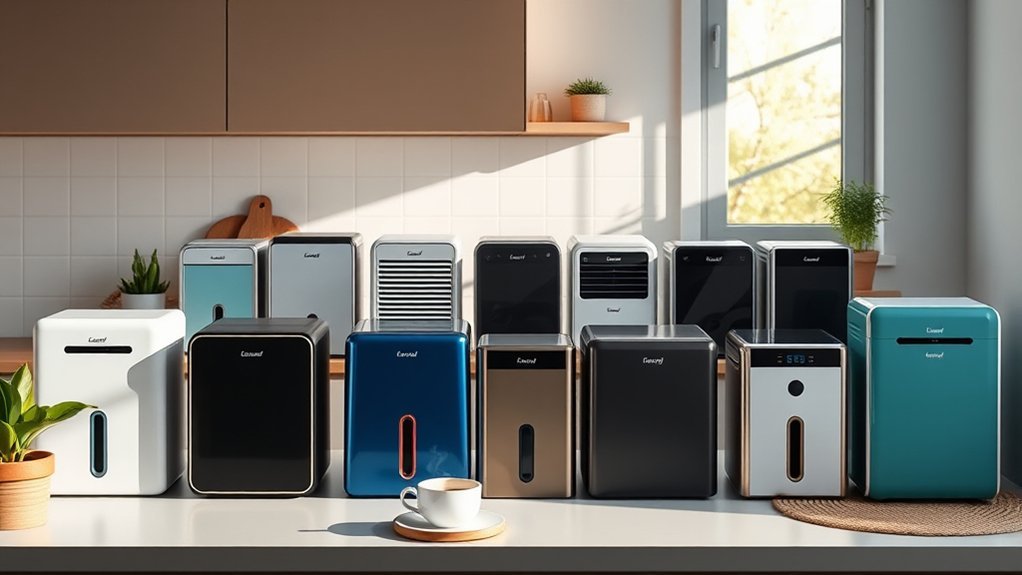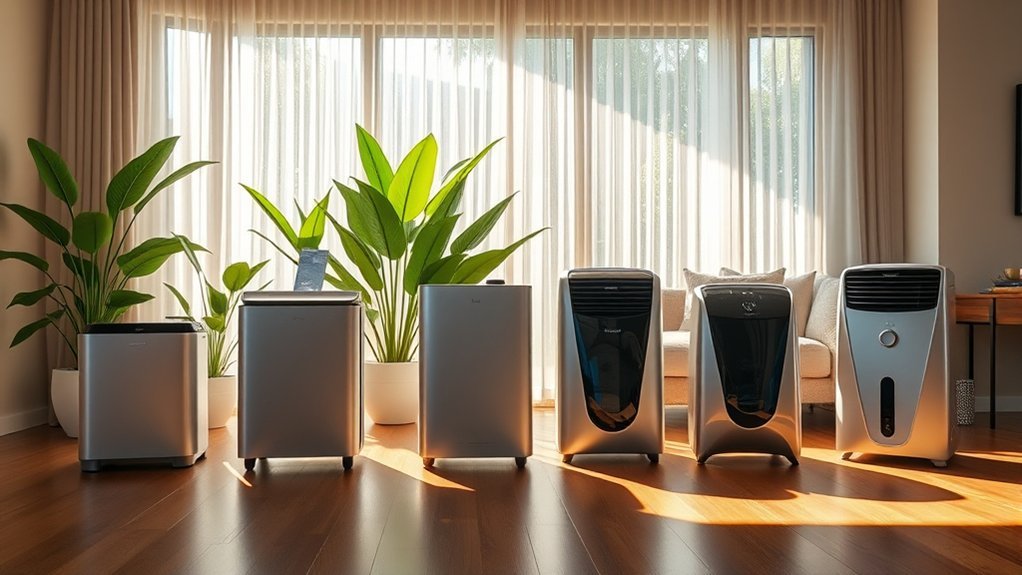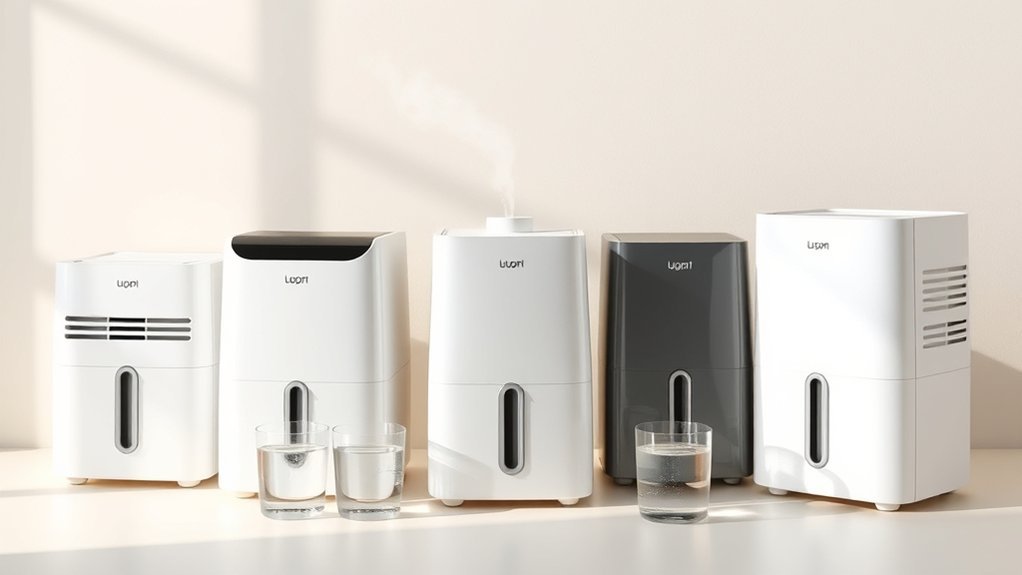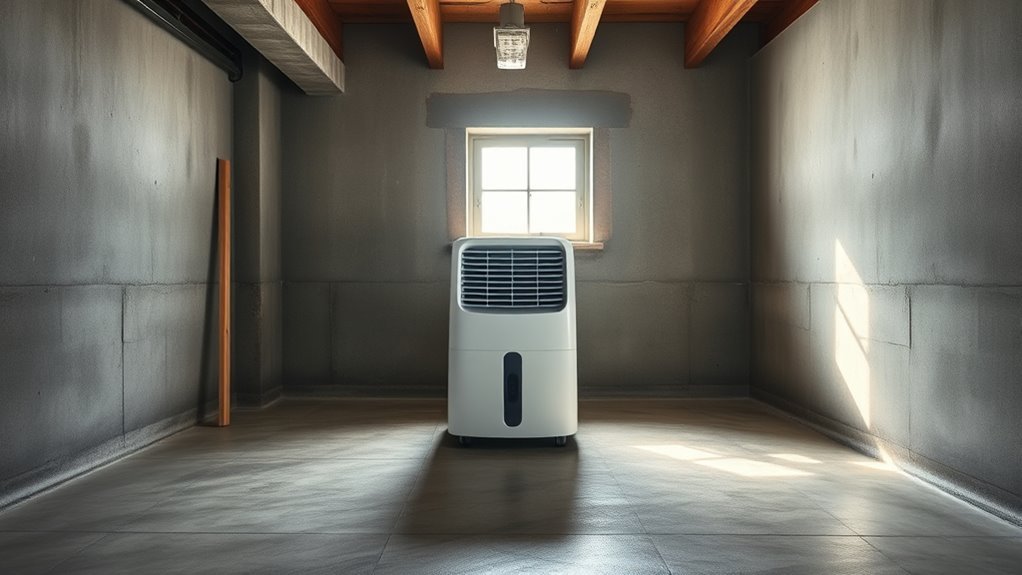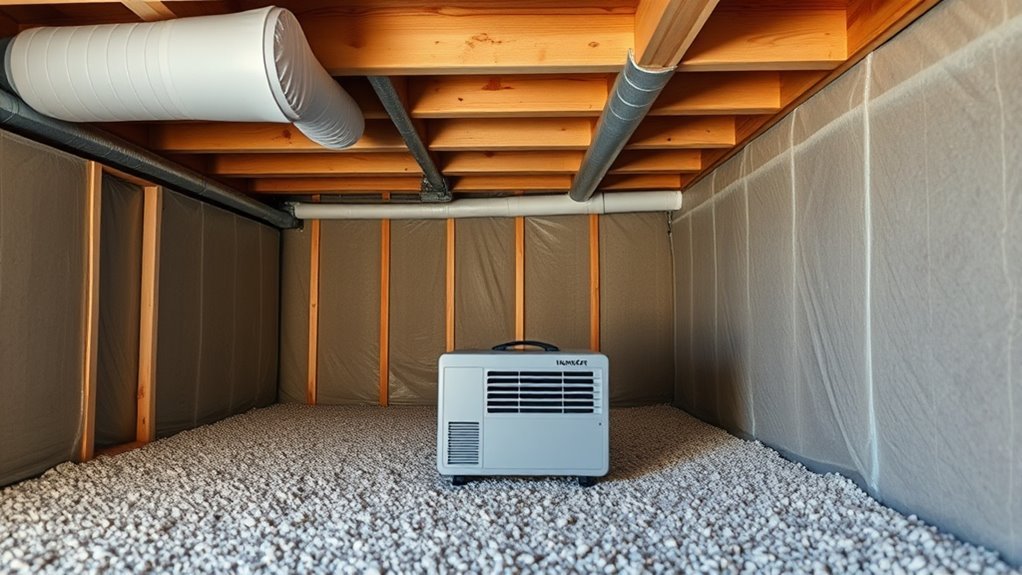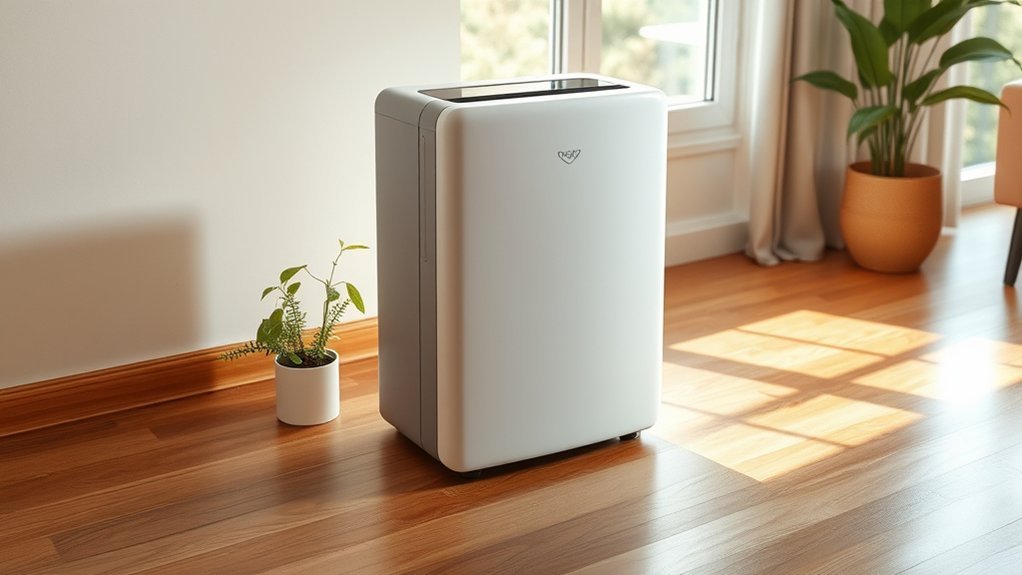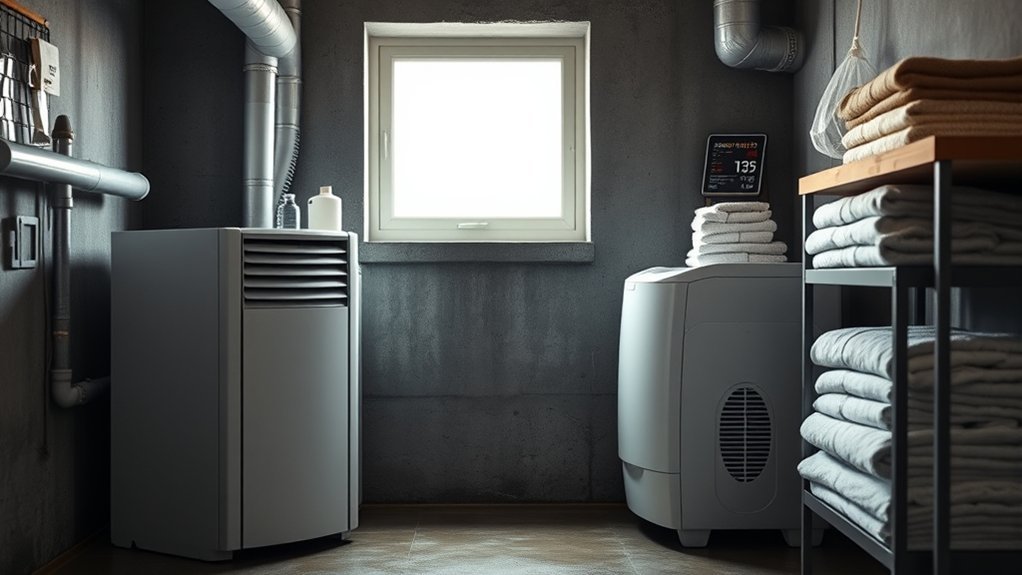
A commercial dehumidifier can be a smart home purchase, but only when the moisture load is bigger than a standard residential unit can handle. Before you spend more money, measure the humidity, look for leaks or drainage problems, and decide whether you need extra capacity, continuous drainage, rugged construction, or just a better-sized residential model.
Quick Answer
Commercial dehumidifiers are worth it for large basements, crawl spaces, water-damage drying, or homes that stay above about 60% relative humidity after leaks and drainage issues are fixed. For ordinary room humidity, a properly sized ENERGY STAR residential or whole-house dehumidifier is usually quieter, cheaper, and easier to live with.
Key Takeaways
- Choose a commercial dehumidifier for persistent dampness, large unfinished spaces, crawl spaces, or post-leak drying—not for mild seasonal humidity.
- Measure relative humidity with a hygrometer first. EPA guidance recommends keeping indoor humidity below 60%, ideally around 30% to 50% when possible.
- Fix water sources before buying any dehumidifier. A machine cannot solve bad grading, plumbing leaks, roof leaks, or groundwater seepage by itself.
- Compare pints-per-day ratings carefully because dehumidifier capacity depends on test conditions, room conditions, and the severity of the moisture problem.
- Plan for noise, drainage, electrical load, filter maintenance, and warranty terms before choosing a commercial unit for a home.
Commercial Vs. Residential Dehumidifiers: Which Fits Your Home?
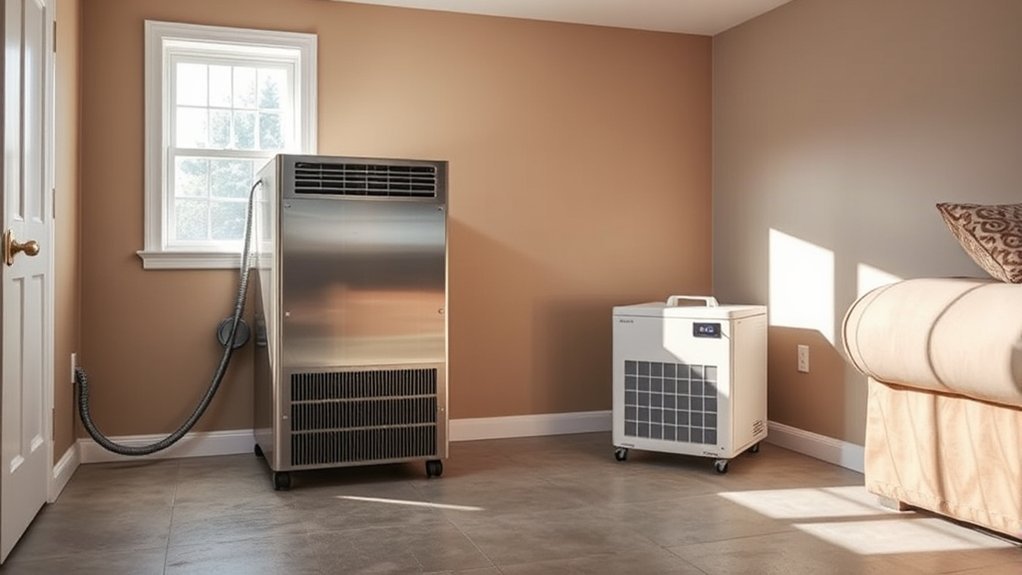
The best dehumidifier is the one that matches the moisture problem, not the one with the biggest number on the box. A residential portable dehumidifier is usually enough for bedrooms, laundry rooms, small basements, and normal seasonal dampness. A commercial or restoration-grade unit makes more sense when a large area stays wet, a crawl space needs continuous drying, or a standard unit runs constantly without lowering humidity.
The first target is not “commercial” or “residential.” The first target is indoor relative humidity. The EPA recommends keeping indoor humidity below 60%, ideally 30% to 50% if possible. If your room is only slightly above that range, a residential unit may be enough. If your basement or crawl space stays damp for days, smells musty, or shows condensation, you may need more capacity and better drainage.
| Best fit | Use it when | Main tradeoff |
|---|---|---|
| Residential portable dehumidifier | One room or a modest basement has mild to moderate humidity. | Lower capacity and smaller bucket. |
| Whole-house dehumidifier | You want quieter, permanent humidity control tied into ductwork or a dedicated drain. | Higher installation cost and less portability. |
| Commercial/restoration dehumidifier | Large damp areas, crawl spaces, flood drying, or severe humidity need continuous high-output drying. | More noise, weight, heat, power draw, and maintenance. |
Recommended Products

[Commercial Grade Dehumidifier] This Airzentti crawl space dehumidifier with large capacity removes moisture from basement, attic, large room and small rooms efficiently up to 155 pints per day under nearly saturated condition (70 PPD in AHAM), with 220 CFM airflow, it is ideal for space up to 7,500 square feet.

80-PINTS COMPACT COMMERCIAL DEHUMIDIFIER: Control excess moisture efficiently with this crawlspace dehumidifier. Designed for crawl spaces, basements, and warehouses up to 1,200 sq. ft., it removes up to 80 pints of water per day at saturation, with 38 Pints per Day at AHAM standards (80°F, 60% RH).
What Makes Commercial Dehumidifiers Different?
Commercial dehumidifiers are built for heavier moisture removal and longer runtime. Many restoration-grade units use rugged housings, stronger fans, automatic condensate pumps, long drain hoses, and controls designed for job sites. Some models are LGR units, which stands for low-grain refrigerant, a design used in water-damage restoration to keep pulling moisture from already-drier air.
That extra performance comes with tradeoffs. Commercial units are often louder, heavier, and less attractive in finished living spaces. They may also release noticeable heat into the room while they run. For a basement workshop, crawl space, utility room, or unfinished storage area, that may be acceptable. For a bedroom, home office, or family room, it may be frustrating.
Note: “Commercial” is not a single standard. A restoration dehumidifier, a crawl-space dehumidifier, and a ducted whole-house dehumidifier may all be marketed as heavy-duty, but they are built for different installations.
Recommended Products

【Waykar Dehumidifier For Spaces Up To 7,000 Sq. Ft.】Our dehumidifier are able to remove up to 150 pints (under 95°F, 90%RH condition) of moisture per day, which cover areas up to 7,000 Sq. Ft. and adjust humidity from 30% to 80%. It is a dehumidifier ideal for home, basement, wine cellars, garages, supermarkets, concourses, and other indoor/outdoor places,cellars, crawlspace, large spaces, etc.

70-pint Dehumidifier:This commercial dehumidifiers can remove 70 pints per day of moisture from the air with less than other conventional dehumidifiers, is a great helper in saving and your money. It is suitable for large spaces up to 1,000 sq ft, such as crawl spaces, basements, storage areas, garage, laundry rooms or commercial use, you can maintain a healthy 45%-55% humidity range easily.

Specially Designed for Crawl Spaces— The AIUSEVO commercial dehumidifier features a high-performance compressor and a powerful 265 CFM airflow, removes up to 125 pint/d(at 95°F, 90% RH). Covers up to 6500 sq. ft. It can keep humidity at an ideal level and prevent excessive moisture from damaging your personal belongings. With compact dimensions of 19.3" x 17.8" x 17.5" , it fits between floor joists and in low-clearance crawl spaces. Ideal for Garage,warehouses, offices, factories, shops
Measure the Moisture Problem Before You Buy
Start with a digital hygrometer. Put it in the problem room for at least a few days and check readings in the morning, evening, and after rain. If the space stays below 60% relative humidity and has no musty odor, condensation, or visible dampness, a commercial dehumidifier is probably overkill. If readings stay high even after a residential unit runs continuously, the space needs closer attention.
Also look for the source of the moisture. A dehumidifier can manage airborne humidity, but it cannot replace repairs. The EPA says the key to mold control is moisture control, and water-damaged materials should be dried quickly. Check for plumbing leaks, clogged gutters, poor grading, missing vapor barriers, seepage through foundation walls, damp crawl-space soil, and HVAC condensation problems.
Warning: If you see standing water, active leaks, electrical hazards, visible mold growth, or flood damage, fix the water source first and consider professional help. Do not place or plug in a dehumidifier where cords, outlets, or extension cords can sit in water.
Recommended Products

Wellness Indicator: This humidity meter with humidity level icon indicates air conditions - DRY/COMFORT/WET, allowing this humidity sensor to ensure you’re always aware of changes to your home/household with just a quick glance

Face Icon Comfort Indicator: Humidity temperature gauge features face icons to indicate DRY/COMFORT/WET air conditions, quickly informs you how to adjust your humidifier or dehumidifier to achieve optimal comfort.

Smart Features: The Govee Wireless Thermometer Hygrometer supports all basic functions as well as smart functions such as remote monitoring and temp humidity graphs. Our humidity meters are reliable and easy to use for homes, greenhouses and more.(Only supports 164ft Bluetooth connection)
How Big and Powerful Are They?
Capacity is where commercial dehumidifiers separate themselves from ordinary portable models. Dehumidifier capacity is usually listed in pints per 24 hours, but that number is measured under specific test conditions. ENERGY STAR explains that capacity identifies the relative amount of moisture a dehumidifier can remove per day, while the energy-efficiency metric shows how much water the unit removes per kilowatt-hour of energy used. See ENERGY STAR’s dehumidifier testing and capacity guidance for the current rating context.
For real-world buying, do not compare numbers blindly. A unit rated at 50 pints under current residential testing is not the same as an older label that used different conditions. Restoration units may also show one capacity at AHAM conditions and a higher saturation capacity at hotter, wetter conditions. That is why the best sizing method combines the rating with your room size, humidity readings, drainage setup, and how quickly moisture returns.
Capacity and Coverage
A residential unit may work well when one room is damp. A commercial unit is more appropriate when moisture affects a large basement, an encapsulated crawl space, a garage workshop, or a post-leak drying area. For example, some restoration-grade units are rated around 80 to 125 pints per day at AHAM conditions, while certain whole-house models remove around 100 to 120 pints per day. Those numbers can be useful, but only when you compare the same rating conditions.
Use this simple decision rule: if a properly sized residential dehumidifier lowers the room into the target range and cycles off, stay residential. If it runs nonstop, the bucket fills repeatedly, the room stays above 60% RH, or moisture returns immediately after rain, step up to a crawl-space, whole-house, or commercial model.
Size and Placement
Commercial units are heavier and bulkier, so placement matters. They need enough clearance around the air intake and exhaust, a stable floor, and a practical drainage route. In a finished room, the footprint and fan noise can feel intrusive. In a basement, mechanical room, or crawl space, the same drawbacks may be easier to tolerate.
| Placement factor | What to check | Why it matters |
|---|---|---|
| Airflow | Clear space around intake and exhaust. | Blocked airflow reduces moisture removal and can stress the unit. |
| Drainage | Floor drain, sump pit, condensate pump, or gravity drain route. | High-capacity units can collect too much water for a bucket-only setup. |
| Noise | Distance from bedrooms, offices, and living areas. | A powerful fan can be annoying in quiet spaces. |
| Temperature | Basement or crawl-space temperature range. | Cool spaces may need auto-defrost or a unit rated for lower temperatures. |
| Power | Amps, outlet type, GFCI needs, and cord routing. | Wet locations and overloaded circuits create safety risks. |
Noise and Power Use
Commercial dehumidifiers usually move more air and run stronger compressors, so they often use more electricity than residential units. Instead of relying on a generic monthly estimate, calculate your own cost:
Estimated monthly cost = watts ÷ 1,000 × hours used per day × 30 × your electricity rate.
For example, a unit that draws 900 watts and runs 10 hours per day uses about 270 kWh per month. Multiply that by your local electricity rate to estimate the operating cost. If a smaller ENERGY STAR unit reaches the same humidity target, it may cost less to own even if it takes longer to dry the room.
Pro Tip: If you are replacing a residential dehumidifier, track how much water you empty each day. ENERGY STAR recommends using the amount of water collected by the old unit as one clue for judging needed capacity.
When To Choose a Commercial Unit
A commercial dehumidifier is worth considering when the moisture problem is persistent, widespread, or tied to an unfinished area where noise and appearance matter less. It is especially useful when a standard unit cannot keep up with the humidity load.
- Choose one for a large basement that stays above 60% RH after repairs and ventilation improvements.
- Choose one for a crawl space with a vapor barrier, drainage plan, and continuous drain route.
- Choose one after a leak or flood only after the source of water is stopped and the area is safe to dry.
- Choose one when you need continuous operation, a built-in pump, rugged housing, or job-site durability.
- Choose one when emptying a small bucket several times a day is not realistic.
Commercial capacity can protect stored items, reduce musty odors, and help prevent moisture-related damage when the space truly needs that level of drying. It is not automatically the best choice for finished living areas or small rooms.
When a Residential or Whole-House Unit Is the Better Buy
A residential dehumidifier is usually the better choice when the problem is limited to one room, the humidity is only mildly high, or you want quieter operation. Many modern residential units include built-in humidistats, auto-defrost, drain-hose connections, pumps, and ENERGY STAR certification. For everyday home humidity, those features often matter more than raw capacity.
A ducted whole-house dehumidifier can be the smarter middle option when the whole home feels humid but you do not want a loud restoration unit in the living space. It can be tied into HVAC or installed with dedicated ducting and drainage. The tradeoff is installation complexity and cost, so it is usually a better fit for ongoing whole-home humidity problems than for a temporary damp corner.
Commercial Vs. Residential Costs
Commercial units usually cost more upfront, use more energy when they run, and may require more expensive service parts. Residential units cost less, move more easily, and are easier to replace. Whole-house units sit between the two: they can cost more to install, but they are designed for permanent home comfort and drainage.
Do not judge cost by sticker price alone. Compare these items:
- Purchase price: commercial and whole-house units usually cost more than portable residential models.
- Energy use: check watts, amps, and efficiency ratings.
- Runtime: an oversized unit that short-cycles may control humidity poorly; an undersized unit may run nonstop.
- Drainage: a pump or floor drain may be worth paying for if the unit removes a lot of water.
- Maintenance: filters, coils, pump parts, and condensate lines need regular attention.
- Service access: a repairable unit may be better for a crawl space or rental property than a disposable portable model.
Maintenance, Warranty, and Long-Term Value
Commercial dehumidifiers can last longer in demanding conditions, but only if they are maintained. Clogged filters, dirty coils, kinked drain hoses, and blocked pumps all reduce performance. If the unit is in a crawl space, schedule inspections so you do not discover a problem months later.
Maintenance Requirements
- Clean or replace filters on the schedule in the manual.
- Keep the intake and exhaust clear.
- Inspect the drain hose for clogs, kinks, algae, and freezing risk.
- Clean coils only as the manufacturer allows.
- Check the humidistat with a separate hygrometer if readings seem off.
- Watch for unusual noise, ice buildup, short cycling, or water leaks.
For crawl spaces and basements, combine the dehumidifier with source control: gutters that move water away, proper grading, sealed foundation gaps, a vapor barrier where needed, and prompt plumbing repairs.
Warranty Coverage
Before buying, read the warranty instead of only the product page. Look for parts coverage, labor coverage, sealed refrigeration system coverage, pump coverage, residential-use exclusions, authorized-service requirements, and whether online purchase affects support. Some commercial units are made for contractors and restoration pros, so warranty terms may not feel as simple as a residential appliance warranty.
| Warranty item | Question to ask |
|---|---|
| Parts and labor | Are both covered, or only parts? |
| Compressor/refrigeration system | Is the sealed system covered longer than the rest of the unit? |
| Pump and controls | Are the pump, sensors, display, and control board included? |
| Use case | Does the warranty allow residential, crawl-space, rental, or commercial use? |
| Service access | Is there local service, or will you need to ship the unit? |
Frequently Asked Questions
Are commercial grade dehumidifiers worth it for a home?
Yes, but only for the right moisture problem. A commercial unit is worth it when a large basement, crawl space, or wet area needs high-capacity drying and continuous drainage. If your humidity problem is mild or limited to a bedroom or small room, a residential ENERGY STAR model is usually more practical.
Should you use a dehumidifier if you have COPD?
A dehumidifier may help when your home is damp, musty, or above the recommended humidity range, because dampness and mold can aggravate respiratory problems. However, COPD needs individual medical guidance. Monitor humidity with a hygrometer, avoid over-drying the air, and ask your clinician if symptoms worsen or you are unsure what indoor humidity range is best for you.
Will a dehumidifier help dry out plaster?
Yes, a dehumidifier can help dry damp plaster after the water source is fixed. Use air movement, moderate heat if appropriate, and humidity control together. If plaster is saturated, crumbling, contaminated by floodwater, or moldy, get professional advice before sealing, painting, or covering it.
Will a dehumidifier help with termites?
A dehumidifier can reduce damp conditions that attract pests, especially in basements and crawl spaces, but it will not eliminate termites. Termites require inspection, prevention, and treatment by a qualified pest professional. Use moisture control as prevention, not as a termite treatment.
What humidity level should I set a dehumidifier to?
A common home target is about 40% to 50% relative humidity. EPA guidance recommends keeping indoor humidity below 60%, ideally 30% to 50% when possible. In very cold weather, you may need a lower target to reduce window condensation.
Can a commercial dehumidifier be too big?
Yes. An oversized unit can cost more, create more noise and heat, and may short-cycle instead of holding steady humidity. Bigger is helpful only when the space has enough moisture load to justify the capacity.
Conclusion
A commercial dehumidifier is worth it when your home has a serious moisture load: a damp basement, crawl space, large unfinished area, or drying project that a residential unit cannot handle. It is not automatically the best choice for everyday humidity. Measure the space, fix water sources first, compare capacity under the same rating conditions, and plan for drainage, noise, power, maintenance, and warranty support. When the problem is severe, commercial capacity can be the right tool. When the problem is moderate, a residential or whole-house unit is often the smarter buy.
Sources
- U.S. EPA — A Brief Guide to Mold, Moisture and Your Home — moisture control and drying water-damaged materials.
- U.S. EPA — Mold Course Chapter 9 — recommended indoor humidity guidance.
- ENERGY STAR — Dehumidifier Testing and Capacity — pints-per-day ratings and efficiency metrics.
- ENERGY STAR — Dehumidifiers — choosing capacity based on space and dampness conditions.
- CDC — Clinical Guidance for Asthma, Other Respiratory Conditions, and Mold — respiratory caution around leaks and mold.
- U.S. EPA — Termites: How to Identify and Control Them — termite prevention and treatment context.