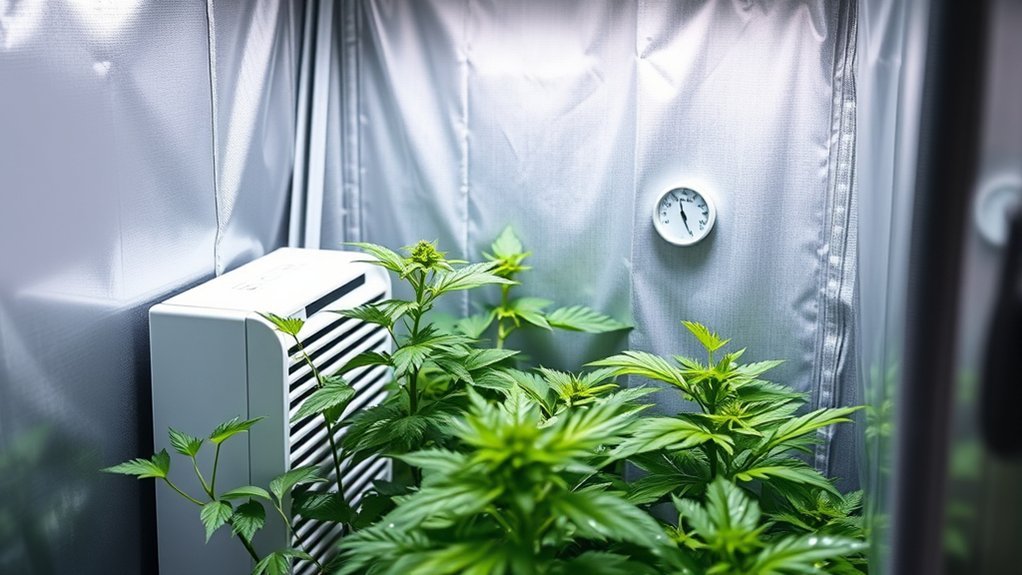
A grow tent gets humid fast because plants transpire, wet media evaporates, and warm grow lights change how much moisture the air can hold. To bring humidity down, start with the simple fixes first: remove standing runoff, increase exhaust, open the intake path, thin crowded foliage, and check whether the room outside the tent is already too damp. If those steps do not hold your target RH, size a dehumidifier for the lung room and moisture load, not just the tent footprint.
Quick Answer
To lower humidity in a grow tent, exhaust humid air from the top, bring drier intake air in low, keep oscillating fans moving air through the canopy, stop overwatering, remove runoff, and use a properly sized dehumidifier in the lung room when ventilation alone cannot hold the target RH.
Key Takeaways
- Lower humidity by controlling the moisture source first: watering, runoff, dense foliage, and wet surfaces.
- Use exhaust and intake airflow to replace damp tent air with drier lung-room air.
- A dehumidifier works best when it is sized for the lung room, plant water use, and ambient humidity.
- Read RH with temperature. Vapor pressure deficit, or VPD, gives a better picture of how easily plants can transpire.
- Watch humidity after lights out, because cooler air can push RH up even when no extra water was added.
At a Glance
| Time Required | 10 minutes for quick checks; 1–24 hours to stabilize after airflow, watering, or dehumidifier changes |
| Difficulty | Easy to moderate |
| Tools Needed | Hygrometer/thermometer, exhaust fan, intake vents, oscillating fan, pruning shears, saucer or wet/dry vacuum, optional dehumidifier |
| Cost | $0–$50 for airflow and watering fixes; $150–$350+ for a portable dehumidifier |
Why Grow Tent Humidity Causes Problems
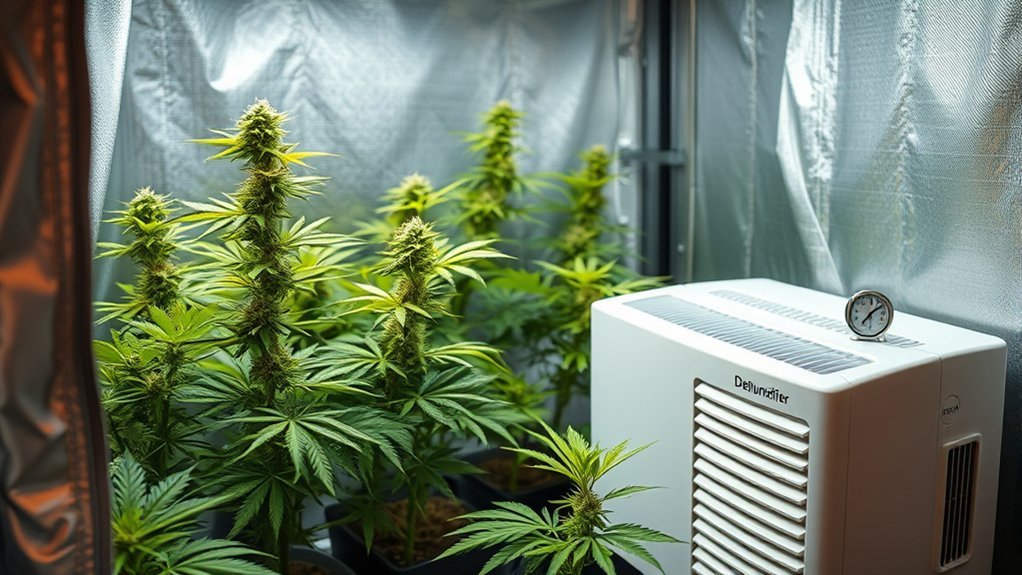
High humidity is not just an uncomfortable reading on a hygrometer. It changes how plants move water, how quickly leaves dry, and how easily fungal diseases can take hold. Michigan State University Extension explains that high relative humidity can create conditions that favor fungal pathogens because moisture remains on leaves longer and plants cannot transpire as effectively.
The biggest risks are mold, mildew, Botrytis or gray mold, weak transpiration, and slow dryback in the growing medium. Penn State Extension notes that Botrytis infection is encouraged by free moisture on plant tissue, very high canopy humidity, and cool temperatures. In a grow tent, that combination often appears after lights out, after heavy watering, or inside a crowded canopy.
Note: Root rot is mainly a wet-root-zone problem, not an air-humidity problem by itself. Overwatering, poor drainage, and standing runoff keep the medium oxygen-poor and can raise tent humidity at the same time.
Humidity can also worsen plant stress, and stressed plants are easier targets for pests. However, do not assume every pest is caused by high RH. For example, University of Minnesota Extension identifies twospotted spider mite outbreaks as especially common during hot, dry weather. Keep pest management separate from humidity control: inspect leaves, maintain clean plants, and avoid both soggy and drought-stressed conditions.
Ideal Grow Tent Humidity by Growth Stage
Your target humidity should change as plants mature. Young plants usually tolerate higher humidity because their root systems are still developing. Flowering plants usually need drier air because dense flowers and tight canopies trap moisture. The exact target depends on plant species, temperature, cultivar, airflow, and growing style, but these ranges work as a practical starting point for many indoor grow tents.
| Growth Stage | Typical RH Target | Main Goal |
|---|---|---|
| Seedling / propagation | 65–75% | Prevent young plants from drying too fast |
| Vegetative growth | 50–70% | Support steady transpiration and fast growth |
| Early flowering | 40–50% | Reduce mold risk while avoiding overly dry stress |
| Late flowering / dense canopy | 35–45% | Keep flowers and inner canopy drier |
Do not chase RH alone. Temperature changes the meaning of the same humidity number. MSU Extension recommends paying attention to vapor pressure deficit, or VPD, because it better predicts plant transpiration and water loss than relative humidity alone. A low VPD means the air is close to saturated and plants cannot transpire well; an extremely high VPD means the air is too dry and plants may close stomata to reduce water loss.
The same RH can behave very differently at 68°F than it does at 82°F. Always read humidity and temperature together.
How to Lower Humidity in a Grow Tent
Start with the fastest causes before buying equipment. Most grow-tent humidity spikes come from poor air exchange, standing water, wet media, too much leaf mass, or a damp lung room.
- Check the reading. Put a reliable hygrometer at canopy height and compare it with a second meter if the number seems extreme.
- Remove standing water. Empty saucers, clean spills, and do not let runoff sit inside the tent.
- Increase exhaust. Move warm, humid air out from the top of the tent.
- Open intake paths. Bring drier air in from low vents or an active intake fan.
- Move air through the canopy. Use oscillating fans so leaves gently move, but do not blast one plant constantly.
- Water less often or in smaller pulses. In soil or potting mix, wait until the top 1–2 inches dry before watering again. Coco and hydroponic systems need crop-specific irrigation rules, so use pot weight, runoff EC, and plant response instead of the soil-dry rule.
- Thin dense foliage. Remove crowded lower growth and dead leaves so damp air does not sit inside the plant mass.
- Measure the lung room. If the room outside the tent is 65–75% RH, the tent cannot stay dry for long without dehumidification.
Pro Tip: Log humidity at lights on, mid-cycle, immediately after watering, and 30–60 minutes after lights out. The pattern tells you whether the problem is airflow, watering, or night cooling.
Recommended Products
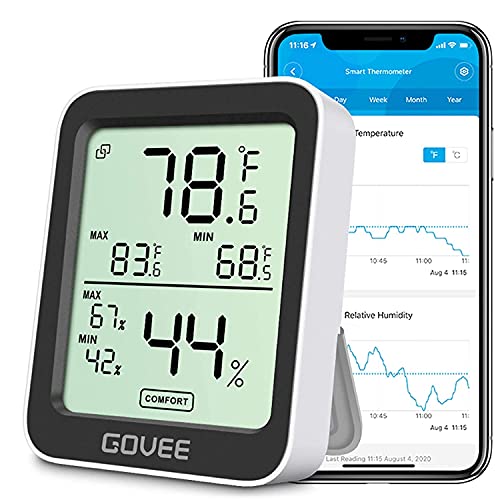
Smart Features: The Govee Wireless Thermometer Hygrometer supports all basic functions as well as smart functions such as remote monitoring and temp humidity graphs. Our humidity meters are reliable and easy to use for homes, greenhouses and more.(Only supports 164ft Bluetooth connection)

High Accuracy & Dual Channels: Utilizing a built-in smart Swiss sensor, coupled with the option to incorporate an external sensor probe for dual-channel monitoring, this wireless thermometer hygrometer delivers rapid, real-time, and highly accurate temp & humidity readings (±0.9℉/±5%RH)

Face Icon Comfort Indicator: Humidity temperature gauge features face icons to indicate DRY/COMFORT/WET air conditions, quickly informs you how to adjust your humidifier or dehumidifier to achieve optimal comfort.
Choose the Right Dehumidifier Size
A dehumidifier can solve stubborn humidity, but only if it can remove moisture faster than the plants, pots, and room add it. ENERGY STAR explains that dehumidifier capacity is measured in pints per 24 hours and depends on both the size of the space and the dampness of that space. For grow tents, that usually means sizing the unit for the lung room, not only the tent.
Recommended Products

Superior Humidity Control: Features a high-efficiency compressor that removes up to 12L of moisture daily; Equipped with high-precision sensors that monitor temperature and humidity to maintain the perfect grow room environment

Designed with smart controls and precision vapors to obtain optimal humidity levels for plant growth.

Match Pints to Moisture Load
Plant water use is a major part of the moisture load. NASA/JPL notes that more than 95% of water entering a plant can pass through the plant and transpire into the air. In a tent, that water has to go somewhere. If your plants and media use one gallon of water per day, that is up to about eight pints of water that may eventually become vapor, before you count wet floors, runoff, humid intake air, or the room itself.
Use this simple sizing logic:
- Low load: small tent, few plants, dry lung room, and modest watering. A smaller portable unit may work.
- Medium load: 3×3 or 4×4 tent, several mature plants, or RH that rises after watering. Look for more capacity and continuous drain capability.
- High load: 5×5 or larger tent, dense canopy, flowering stage, humid basement, or high daily water use. Choose a larger unit or consider a dedicated grow-room dehumidifier.
Consider Room Humidity Load
The lung room is the room your tent breathes from. If the lung room is damp, the tent keeps pulling damp air back in. A dehumidifier placed in the lung room often works better than one squeezed inside a small tent because it lowers the humidity of the intake air before it enters the grow space.
Place the dehumidifier where it can circulate air freely, drain safely, and avoid blowing hot exhaust directly into the tent intake. Many portable dehumidifiers add heat to the room, so check temperature after installation.
Balance Capacity and Budget
Do not buy only by tent footprint. A 4×4 in a dry room may need far less capacity than a 2×4 in a wet basement. When comparing units, remember that ENERGY STAR notes that DOE dehumidifier ratings changed in 2019, with current portable units tested at 65°F and rated with Integrated Energy Factor, or IEF. Newer pint ratings may look smaller than older ratings even when real-world performance is similar.
- Choose a unit with a humidistat so it cycles automatically.
- Use continuous drain if the tank fills too fast.
- Clean filters as directed by the manufacturer.
- Oversize slightly rather than running a small unit at maximum output all day.
Warning: Keep dehumidifiers, drain hoses, runoff trays, and power strips separated. Do not let water drip onto outlets, extension cords, controllers, or fan plugs.
Lower Grow Tent Humidity Without a Dehumidifier
You can often lower grow tent humidity without a dehumidifier if the lung room is reasonably dry. The goal is to reduce moisture at the source and move damp air out before it settles on leaves, tent walls, or flowers.
- Exhaust from the top. Warm, moist air rises, so pull it out high.
- Intake from the bottom. Fresh air should enter low and move across the plants before leaving through the exhaust.
- Use negative pressure. The tent walls should pull inward slightly when the exhaust fan runs. That means air is being pulled through the intended intake path.
- Prune crowded lower growth. Thick lower foliage traps damp air around stems and pot surfaces.
- Space plants apart. Leaves should not press into each other or touch wet tent walls.
- Water at the right time. Water early in the light cycle so the tent has time to dry before lights out.
- Use fabric pots or well-draining containers. Better drainage helps media dry evenly and reduces stagnant water.
- Remove dead plant material. Dead leaves hold moisture and give fungi a place to start.
Natural moisture absorbers such as silica gel, activated charcoal, rice, salt, or baking soda can help in storage bins or tiny closed spaces, but they will not control an active grow tent with living plants transpiring every day. Use them only as minor support, not as the main humidity-control method.
Recommended Products
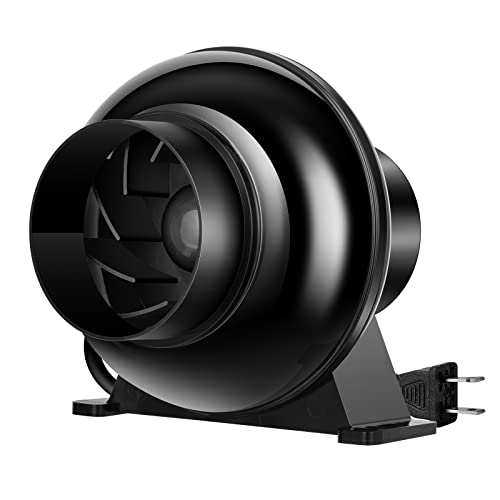
Powerful Airflow: This powerful blower with a fan speed of 2500 RPM can create an airflow of 195 CFM; It works efficiently in ventilating grow tents, transferring heat or cool rooms, circulating fresh air, as well as controlling proper humidity, temperature, and air quality for your grow area

Powerful Airflow: Delivers strong airflow up to 130 CFM, efficiently enhancing ventilation and removing exhaust; Ideal for grow tents, greenhouses, basements, bathrooms, kitchens, attics, and workshops

PRECISE STEPLESS SPEED CONTROL: The included controller allows smooth airflow adjustment from gentle circulation to maximum extraction, helping you select the right ventilation level for changing heat, humidity and air-quality requirements.
Improve Grow Tent Ventilation Fast
Ventilation is the fastest non-dehumidifier fix because it removes humid air and replaces it with drier air. A strong setup has three parts: exhaust, intake, and circulation.
Exhaust Fan Setup
Mount the exhaust fan near the top of the tent. For basic sizing, calculate tent volume:
Tent length × tent width × tent height = cubic feet of air inside the tent.
As a starting point, aim for enough fan capacity to exchange the tent’s air roughly every 1–3 minutes, then add headroom for carbon filters, duct bends, long duct runs, high heat, and dense canopies. A 4x4x6.5-foot tent holds about 104 cubic feet of air. One full air exchange per minute starts around 104 CFM before resistance. With a carbon filter and ducting, you may need a fan rated higher than that to get the actual airflow you want.
- Keep ducting as short and straight as possible.
- Use a carbon filter if odor control is needed.
- Open enough passive intake area so the fan is not starved for air.
- Increase fan speed during late flower, after watering, and after lights out if RH spikes.
Boost Air Circulation
Exhaust changes the air. Circulation moves air inside the tent. You need both. Put oscillating fans near canopy level and, in dense tents, add gentle lower airflow across pot surfaces. Leaves should flutter slightly, not fold, claw, or dry out from direct wind.
Good circulation prevents stagnant pockets where humidity stays higher than the hygrometer reading. This matters because the canopy can be much more humid than the open air near the tent door.
Fix Watering and Runoff Problems
Watering mistakes are one of the most common reasons humidity keeps coming back. Every extra ounce of water in trays, saucers, fabric pots, or wet floors can evaporate into the tent.
- Check pot weight before watering. A heavy pot usually means the root zone still has water.
- For soil or potting mix, check the top 1–2 inches. If it is still wet, wait.
- Elevate pots. Use risers or grates so containers do not sit in runoff.
- Remove runoff quickly. Do not let saucers become open humidity trays.
- Improve drainage. UGA Extension warns that root-rot organisms thrive in excess soil water from overwatering or poor drainage.
- Water earlier in the light cycle. This gives media, leaves, and tent surfaces more time to dry.
If you use drip irrigation, tune the schedule to plant uptake instead of running the same volume every day. As plants mature, they may need more water; after pruning, transplanting, or environmental changes, they may need less.
Reduce Heat, Spacing, and Dense Growth
Humidity, heat, and plant density work together. Warm air can hold more water, but when lights go off and temperatures drop, the same amount of moisture can become a much higher RH reading. Dense foliage also slows air movement, especially in the lower canopy.
| Action | Effect |
|---|---|
| Increase plant spacing | Opens paths for airflow and reduces leaf-to-leaf moisture traps |
| Prune crowded foliage | Lets air move through the canopy and lowers mold risk |
| Run exhaust after lights out | Helps control the common nighttime RH spike |
| Avoid overwatering | Prevents wet media and runoff from adding moisture to the air |
For many warm-season indoor crops, lights-on temperatures around the mid-70s to low-80s °F are common, but your target should match the plant you are growing. If the tent is too hot, plants transpire more and equipment works harder. If the tent gets too cool after lights out, RH can spike and condensation may appear.
Control Night Humidity Spikes
Many grow tents look fine during the day and become too humid at night. This happens because lights turn off, air cools, transpiration changes, and the air holds less moisture. A night spike can be enough to wet tent walls or trap moisture inside flowers.
To control it:
- Keep the exhaust fan running at a lower night speed instead of shutting it off completely.
- Run the dehumidifier on a humidistat through the dark period.
- Avoid watering right before lights out.
- Keep the temperature drop gradual rather than sudden.
- Move air gently through the canopy all night.
- Inspect inner flowers, leaf undersides, and tent seams for condensation.
Note: If humidity jumps only after lights out, the problem may not be “too much water.” It may be that cooler night air is raising RH. Adjust exhaust, dehumidification, and temperature together.
Monitor Grow Tent Humidity So It Stays Low
Use a hygrometer/thermometer at canopy height and check high/low memory daily. One reading at the tent door is not enough because humidity can be higher inside a dense canopy, near wet pots, or in corners with poor airflow.
- Record RH and temperature at lights on.
- Record RH and temperature near the middle of the light cycle.
- Record RH 30–60 minutes after watering.
- Record RH 30–60 minutes after lights out.
- Check leaves, flowers, tent walls, and media surfaces for moisture.
When humidity climbs, change one major variable at a time. For example, raise exhaust speed for a day, then adjust watering if the spike remains. If you change fan speed, watering volume, pruning, and dehumidifier settings all at once, it is harder to know which fix worked.
Grow Tent Humidity Troubleshooting
| Problem | Likely Cause | Fix |
|---|---|---|
| RH spikes after watering | Too much water, runoff, or wet media surface | Reduce volume, remove runoff, water earlier, improve drainage |
| RH spikes after lights out | Cooler air, reduced transpiration, low night exhaust | Run night exhaust, use humidistat, avoid late watering |
| Wet tent walls | Condensation or poor air exchange | Increase exhaust, add circulation, reduce temperature swings |
| Musty smell | Stagnant air, dead leaves, wet trays, or mold growth | Clean tent, remove dead material, increase airflow, inspect plants |
| Dehumidifier runs constantly | Undersized unit, humid lung room, or too much water added daily | Increase capacity, use continuous drain, reduce moisture sources |
Frequently Asked Questions
How do I make my grow tent less humid fast?
Remove standing runoff, turn up the exhaust fan, open intake vents, run oscillating fans, and stop watering until the medium actually needs it. If the lung room is humid, run a dehumidifier outside the tent so the intake air is drier.
What naturally soaks up moisture in a grow tent?
Silica gel, activated charcoal, salt, rice, and baking soda can absorb small amounts of moisture, but they are not strong enough for an active grow tent with transpiring plants. Use airflow, watering control, and a dehumidifier for real humidity control.
Should I put a dehumidifier inside a grow tent?
In most small tents, put the dehumidifier in the lung room instead. It lowers the humidity of the air entering the tent and avoids crowding the canopy with extra heat. Put one inside only if there is enough space, safe drainage, and good airflow around the unit.
What happens if humidity is too high in a grow tent?
Plants transpire less efficiently, leaves and flowers dry more slowly, and fungal disease risk rises. High humidity also makes watering mistakes harder to recover from because wet media, runoff, and dense foliage stay damp longer.
Why does my grow tent humidity rise when the lights turn off?
When lights turn off, air temperature drops. Cooler air holds less moisture, so RH rises even if no extra water was added. Keep some exhaust running, avoid watering right before lights out, and use a humidistat-controlled dehumidifier if the spike continues.
Is 70% humidity too high for a grow tent?
It can be fine for seedlings or early vegetative growth, but it is usually too high for dense flowering plants. During flowering, many growers aim closer to 40–50%, and even lower in late flower if mold risk is high.
Conclusion
Lowering grow tent humidity is mostly about controlling where water goes. Remove runoff, water only when the crop and medium need it, keep air moving through the canopy, and exhaust damp air before it collects on leaves or tent walls. If the room outside the tent is humid, a dehumidifier in the lung room is often the cleanest fix. Track RH and temperature together, watch night spikes, and make small adjustments until your tent stays in the right range for the plant’s growth stage.
Sources
- Michigan State University Extension: Vapor Pressure Deficit — supports RH/VPD and transpiration guidance.
- Penn State Extension: Managing Botrytis or Gray Mold in the Greenhouse — supports high-humidity and free-moisture disease risk.
- ENERGY STAR: Dehumidifiers — supports dehumidifier capacity and sizing factors.
- ENERGY STAR: Dehumidifier Testing and Capacity — supports current pint/day and IEF rating context.
- UGA Extension: Improving Drainage — supports overwatering, drainage, and root-zone disease guidance.
- University of Minnesota Extension: Twospotted Spider Mites — supports pest-condition clarification.