Affiliate disclosure: As an Amazon Associate, we may earn from qualifying purchases made through links in this article, at no additional cost to you. Product specifications, certification status, seller terms, and availability can change, so confirm the exact model on the current listing before ordering.
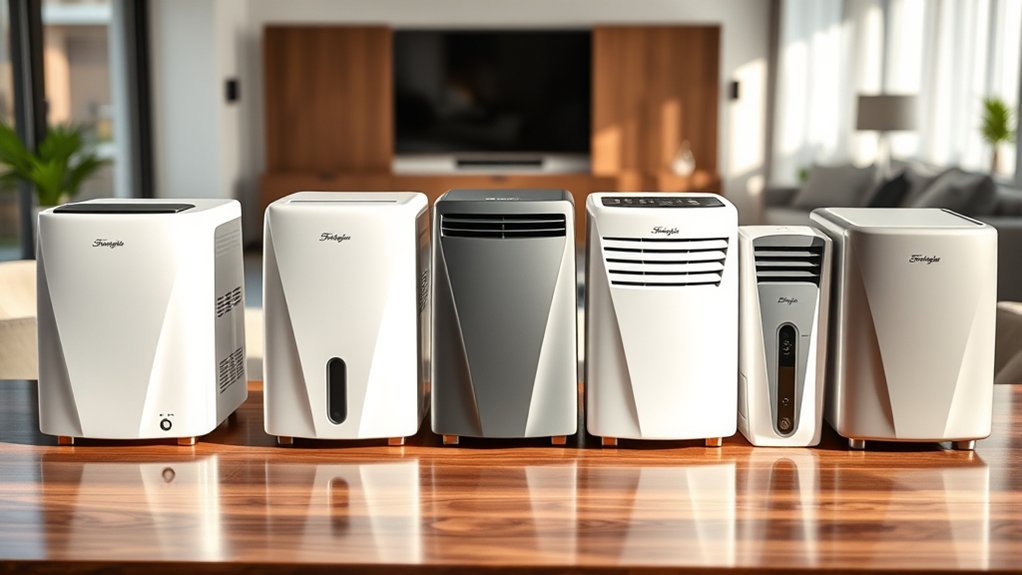
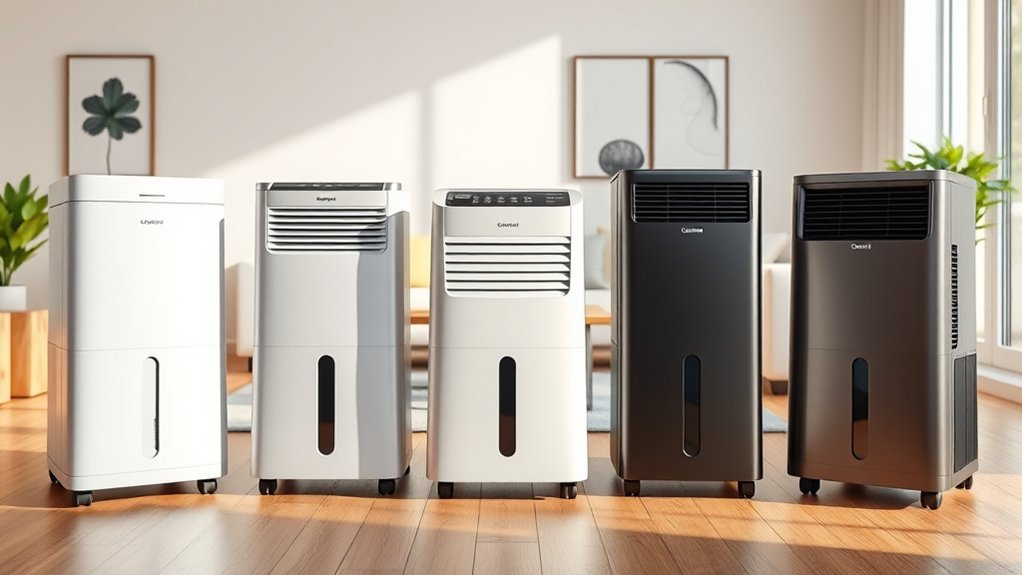
If you want to reduce indoor humidity without wasting electricity, start with a properly sized energy-efficient dehumidifier. Our strongest large-space option is the Gasbye DryPrime, while the Vellgoo is another practical choice for a large basement or garage with a nearby gravity drain. The Waykar and Kesnos models suit medium-sized spaces, and the Midea 22-pint unit is easier to place in bedrooms, offices, laundry areas, and smaller basements.
Do not compare the largest advertised pint number alone. Some manufacturers publish a maximum extraction figure measured in hotter and more humid air than the standardized DOE or ENERGY STAR test. Check the exact model’s certified capacity, tank size, drainage method, noise claim, operating-temperature range, and room conditions before deciding.
Quick Comparison of the Best Energy-Efficient Dehumidifiers
| Product | Capacity Context | Advertised Coverage | Drainage | Best For | Check Details |
|---|---|---|---|---|---|
| Gasbye DryPrime | About 49.7 pints/day standardized capacity; up to 115 pints/day at 86°F and 80% RH | Up to 4,500 sq. ft. | 1.7-gallon tank, included drain hose, or garden-hose adapter | Large, persistently damp basements | Check Product Details |
| Vellgoo 64-Pint | Up to 64 pints/day under seller-stated conditions; verify the exact standardized capacity for the listed model | Up to 4,000 sq. ft. | Tank, included hose, or compatible garden-hose connection | Large rooms with a lower drain | Check Product Details |
| Waykar 34-Pint | 34 pints/day at 95°F and 90% RH; the PD160B ENERGY STAR record lists about 9.81 pints/day | Up to 2,000 sq. ft. | 0.66-gallon tank or gravity drain | Medium rooms and offices | Check Product Details |
| Kesnos 30-Pint | 30-pint seller rating; an ENERGY STAR record associated with the CTH30B family lists about 9.2 pints/day | Approximately 2,000–2,500 sq. ft. | 0.39-gallon tank or included gravity hose | Medium spaces where lower stated noise matters | Check Product Details |
| Midea 22-Pint | 22 pints/day | Up to 1,500 sq. ft. | 0.8-gallon tank or gravity drain; hose not included | Bedrooms, offices, and smaller basements | Check Product Details |
Gasbye DryPrime Energy-Efficient Dehumidifier with Drain Hose
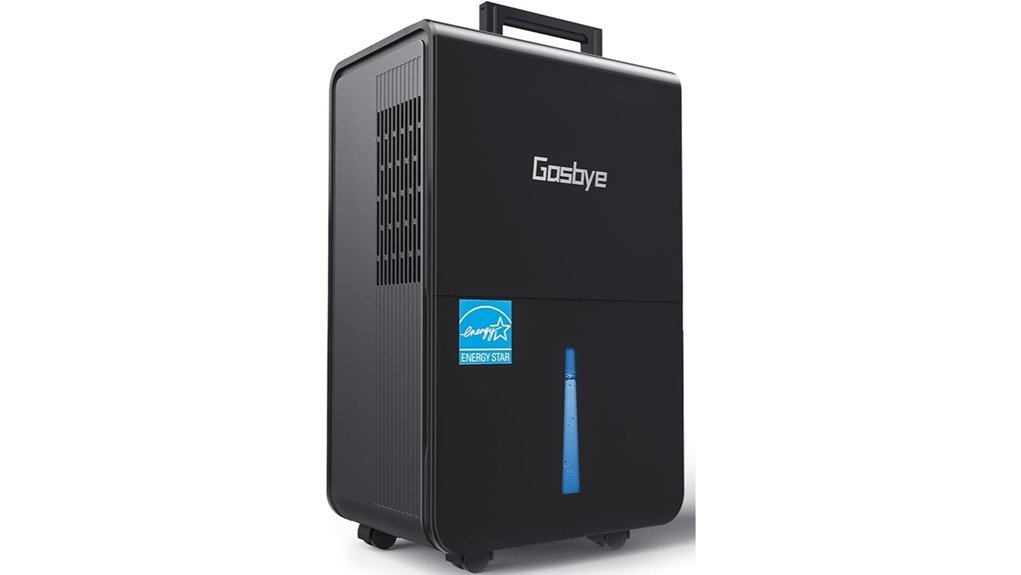
Best Overall for Large, Damp Spaces
The Gasbye DryPrime is the strongest option here for a large basement, garage, or open living area with a significant moisture load. Documentation for the DryPrime-50 model lists about 49.7 pints per day under standardized testing. The manufacturer also advertises up to 115 pints per day at 86°F and 80% relative humidity, so the larger number should not be treated as a direct standardized-capacity comparison.
The unit is marketed for spaces up to 4,500 square feet. Its approximately 44 dB operating claim is reasonable for a full-size compressor unit, although the compressor and fan may still be noticeable in a quiet living area. At roughly 42 pounds, it is better suited to a mostly permanent basement or garage position than frequent room-to-room carrying.
Who Should Buy This: Homeowners, landlords, and basement users who need strong standardized moisture removal, a large tank, and several gravity-drainage choices.
Who Should Avoid This: Apartment dwellers and shoppers who need a lightweight unit for a small room or who require a built-in pump to move water upward.
Pros:
- Strong standardized moisture-removal capacity for a portable unit.
- Large 1.7-gallon tank reduces manual emptying.
- Includes a drain hose and garden-hose adapter.
- Automatic shutoff and restart simplify unattended operation.
- Washable filter helps reduce routine replacement costs.
Cons:
- Heavy at roughly 42 pounds.
- The 115-pint claim applies to hotter and more humid conditions than standardized testing.
- No built-in condensate pump.
- More capacity than most small rooms require.
Vellgoo 64-Pint Energy-Efficient Dehumidifier with Drain Hose
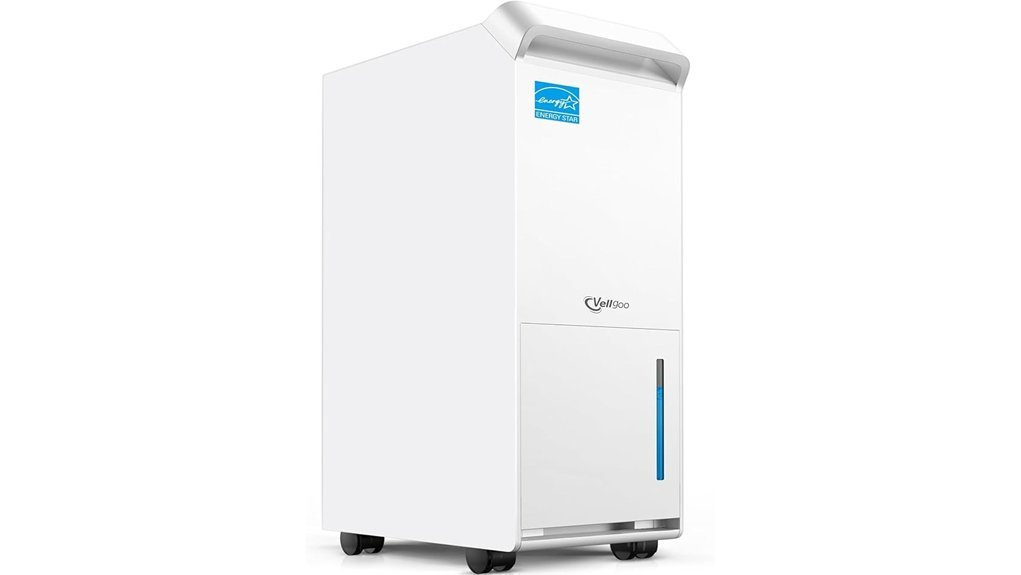
Best Large-Space Alternative for Gravity Drainage
The Vellgoo DryTank is a practical choice for shoppers who need moisture control in a basement, garage, or other large area. The linked model is marketed for spaces up to 4,000 square feet and up to 64 pints of daily moisture removal under the seller’s stated conditions.
The seller identifies this model with an ENERGY STAR Most Efficient 2024 claim. Because “Most Efficient” is year-specific and the exact standardized pint capacity was not clearly confirmed for this ASIN in the sources reviewed, verify the model number and current certification details before buying.
You can collect water in the removable tank, use the included drain hose for gravity drainage, or connect a compatible longer garden hose when the manual permits it. This flexibility makes it easier to run the unit near a basement floor drain, but the hose must maintain a continuous downward slope.
Who Should Buy This: Buyers who want a large-space model with flexible gravity drainage and automatic humidity management.
Who Should Avoid This: People furnishing a small room or anyone who needs a built-in pump to move water upward.
Pros:
- Designed for large rooms and basement moisture control.
- Multiple drainage methods reduce manual tank handling.
- Timer, child lock, auto defrost, and auto restart improve convenience.
- Automatic humidity control can reduce unnecessary compressor cycling.
- Included hose supports a basic continuous-drain setup.
Cons:
- The 64-pint figure is a seller-stated maximum rather than a clearly confirmed standardized figure.
- The 2024 “Most Efficient” wording is historical and model-specific.
- No built-in condensate pump.
- Larger footprint than a compact bedroom model.
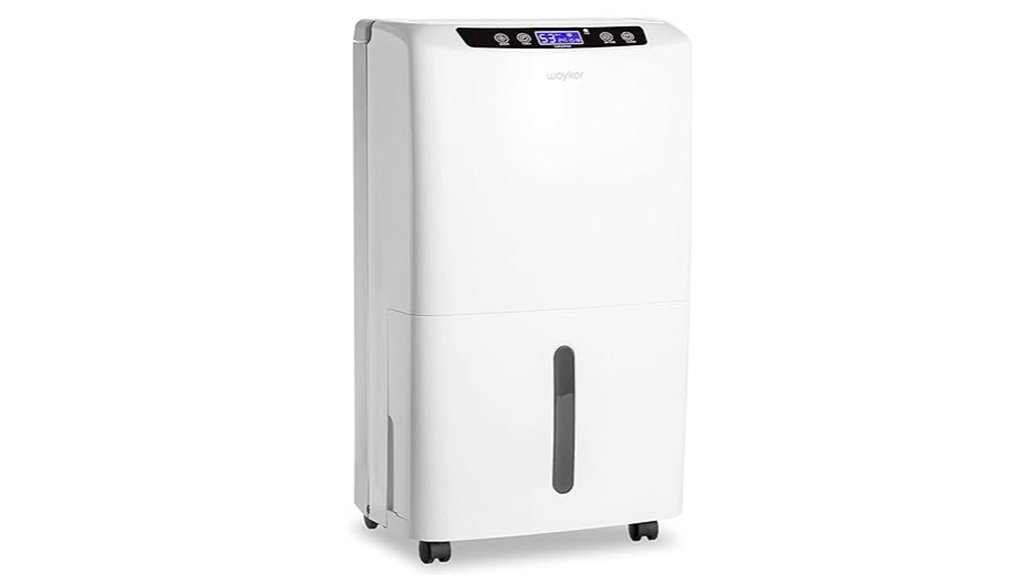
Waykar 34-Pint ENERGY STAR Dehumidifier for Medium Spaces
Best Balanced Pick for Medium Spaces
Waykar’s PD160B offers a useful middle ground between compact room units and heavier large-basement machines. It is marketed for rooms up to 2,000 square feet and appears in the ENERGY STAR product database as a certified portable dehumidifier.
The advertised 34-pint extraction figure is measured at 95°F and 90% relative humidity. The ENERGY STAR listing for model PD160B shows about 9.81 pints per day under standardized conditions, so buyers should use that lower figure for a fair comparison with other certified models.
The 0.66-gallon tank works for occasional manual drainage, while a gravity-drain connection is more convenient in a consistently damp basement. Handles and caster wheels make the unit easier to reposition on one floor. Automatic defrost, automatic restart, washable filtration, and full-tank shutoff cover the main everyday convenience features.
Who Should Buy This: Homeowners or small-office users who need an efficient unit for a medium-sized basement, garage, office, or living area with moderate moisture.
Who Should Avoid This: Buyers who need a pump-assisted drain or the strongest standardized moisture removal for a severely wet, very large basement.
Pros:
- ENERGY STAR-certified PD160B model.
- Adjustable 30%–80% target-humidity range.
- Two fan speeds and a 24-hour timer.
- Tank and continuous gravity-drain options.
- Automatic defrost, restart, and full-tank shutoff.
Cons:
- The 34-pint headline figure comes from very warm, humid test conditions.
- The standardized capacity is much lower than the marketing figure.
- The 0.66-gallon tank can fill quickly in a damp basement.
- No built-in pump for upward drainage.
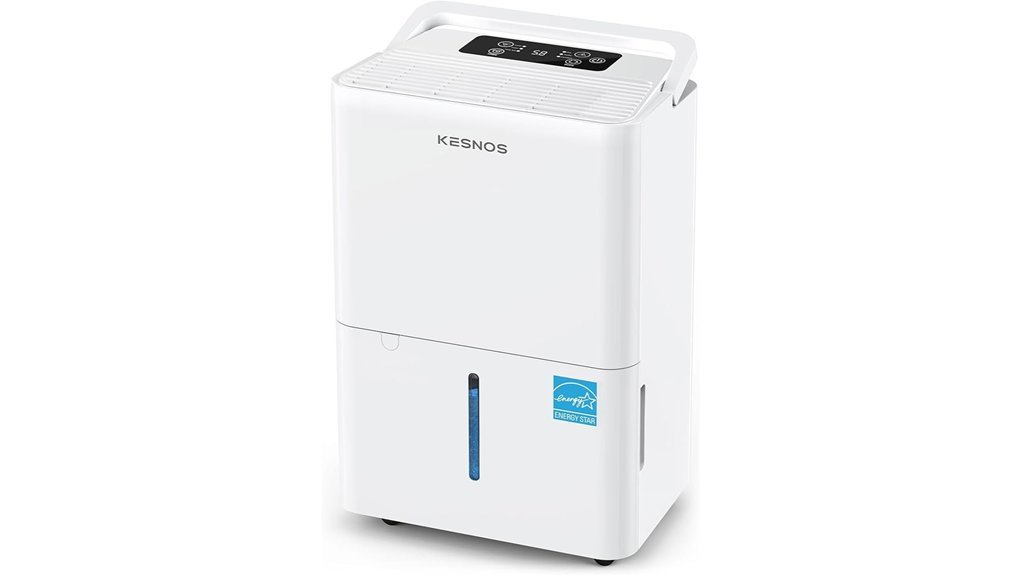
Kesnos 30-Pint ENERGY STAR Dehumidifier for Home and Basement
Best for Lower Stated Noise in a Medium Space
The Kesnos 30-pint dehumidifier is aimed at bedrooms, living areas, offices, laundry areas, and medium-sized basements. Coverage descriptions vary between approximately 2,000 and 2,500 square feet, so treat that range as a seller estimate rather than a guarantee for every room layout or moisture condition.
The listing describes operation as low as 36 dB, making it one of the lower stated noise figures in this roundup. Actual sound can rise in Turbo mode or when the compressor cycles. An ENERGY STAR record associated with the CTH30B model family lists about 9.2 pints per day under standardized testing, which is more useful for comparison than the 30-pint seller headline.
The 0.39-gallon tank is relatively small, so continuous drainage is the better setup in a persistently damp room. As with any gravity-drain model, the outlet must remain below the unit and the hose must not kink or rise.
Who Should Buy This: Renters and homeowners who want a portable compressor dehumidifier for a medium-sized room and value a lower advertised noise level.
Who Should Avoid This: Anyone who cannot place the unit near a lower drain and does not want to empty a small tank regularly.
Pros:
- ENERGY STAR-certified model family.
- Four operating modes for different moisture conditions.
- Lower stated noise figure than the other retained models.
- Includes a drain hose for continuous gravity drainage.
- Automatic defrost and memory restart improve convenience.
Cons:
- Coverage estimates vary between available product descriptions.
- The standardized capacity is far below the 30-pint marketing headline.
- Small 0.39-gallon tank may need frequent attention.
- No built-in pump for draining above the unit.
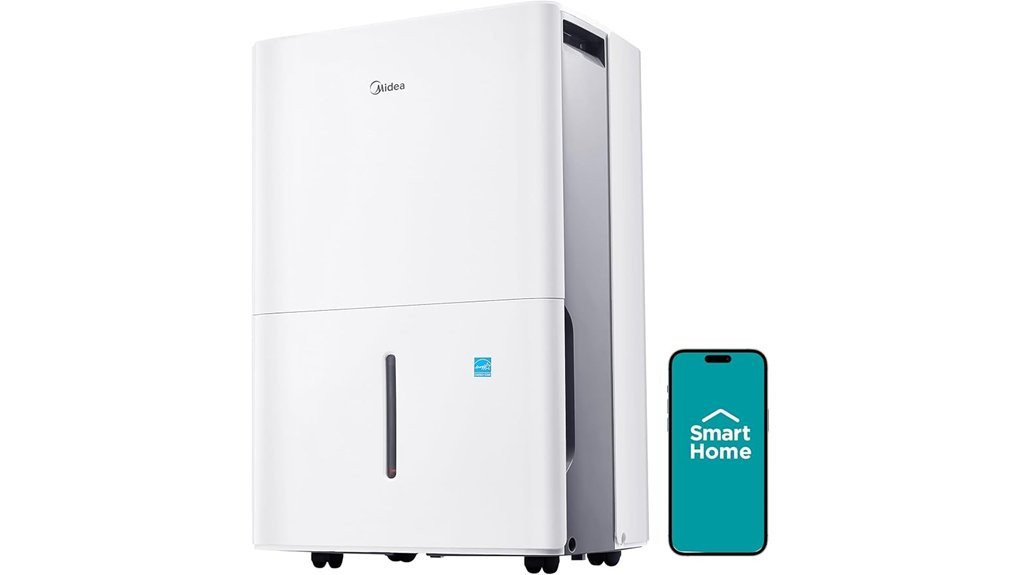
Midea 22-Pint ENERGY STAR Dehumidifier with Reusable Filter
Best for Smaller Rooms and Straightforward Operation
The linked Midea 22-pint ENERGY STAR dehumidifier is better suited to a bedroom, office, laundry area, or smaller basement than the larger units above. It is marketed to remove up to 22 pints of moisture per day in spaces up to 1,500 square feet.
The stated 47 dBA noise level can suit general living spaces, although light sleepers may still notice the compressor cycling. Its 0.8-gallon bucket is larger than the Kesnos tank, and you can attach a compatible standard hose for continuous gravity drainage. The hose is not included.
Who Should Buy This: Shoppers who want a straightforward ENERGY STAR model for a smaller or moderately damp area.
Who Should Avoid This: Buyers dealing with a very wet, open basement or anyone who requires pump-assisted drainage.
Pros:
- 22-pint daily capacity listed for the linked model.
- ENERGY STAR-certified operation.
- Adjustable humidity settings from 35% to 85%.
- Reusable filter and easy-rolling caster wheels.
- Supports continuous gravity drainage.
Cons:
- Drain hose is not included.
- Not powerful enough for the heaviest large-basement moisture loads.
- 47 dBA operation may still be audible in a silent bedroom.
- No built-in pump.
Factors to Consider When Choosing an Energy-Efficient Dehumidifier
The right dehumidifier should match the room’s moisture load, drainage access, temperature, noise requirements, and available electrical outlet. A larger advertised coverage number does not automatically mean a model will work better in every home.
ENERGY STAR Certification
An ENERGY STAR-certified dehumidifier must meet defined efficiency and performance requirements. Certification is more useful than vague phrases such as “energy saving,” but it applies to a specific model number rather than every product sold under the same brand.
For a more detailed comparison, look for the unit’s Integrated Energy Factor, measured in liters of water removed per kilowatt-hour. A higher IEF indicates more moisture removal for the electricity consumed under the specified test.
Pint Capacity and Testing Conditions
Pint capacity describes how much water a dehumidifier can remove in 24 hours under stated test conditions. However, not every large number shown in a product title uses the same conditions.
A manufacturer may advertise a maximum measured at 86°F and 80% relative humidity or at 95°F and 90% relative humidity. Those figures can be much higher than a standardized capacity measured in milder conditions. Look for the DOE or ENERGY STAR capacity when making an apples-to-apples efficiency comparison.
Coverage Area and Moisture Severity
Square-foot coverage is normally a manufacturer estimate. Actual performance depends on:
- Starting humidity
- Room temperature
- Ceiling height
- Open doors and adjoining rooms
- Air leaks
- Groundwater or plumbing leaks
- Laundry, showers, and other moisture sources
A modestly damp 2,000-square-foot open room may need less capacity than a smaller, cold basement with water seepage. Prioritize standardized pint capacity and the severity of the moisture problem over the largest coverage claim.
Noise Levels
Compressor dehumidifiers produce both fan noise and compressor noise. A model with a stated rating below 40 dB may be easier to tolerate in a bedroom or office, while units around 45–50 dBA are often better suited to basements, living rooms, and utility areas.
Check whether the quiet rating applies only to low fan speed. Turbo, laundry, and continuous modes will normally be louder, and room acoustics can change how the sound is perceived.
Drainage Options
A removable tank offers flexible placement, but it must be emptied whenever it fills. Continuous gravity drainage is more convenient when the unit can sit above a nearby floor drain or other approved outlet.
A built-in pump is helpful when water must travel upward or across a longer distance. None of the retained models should be assumed to pump water upward. For gravity drainage, keep the hose below the outlet, maintain a continuous downward slope, and follow the manual’s hose-length and connection requirements.
Tank Size
A larger tank does not increase the machine’s moisture-removal capacity, but it reduces how often you need to empty it. A small tank may be acceptable in a bedroom with moderate humidity. In a wet basement, continuous drainage is usually more practical.
Humidity Controls
For many homes, a target between 40% and 50% relative humidity offers a useful balance between comfort and moisture control. A humidistat lets the compressor cycle off when the target is reached, which can reduce unnecessary operation.
Continuous mode ignores the normal target setting and keeps the unit running until the tank fills, the timer ends, or you turn it off. Reserve it for drying laundry, responding to a temporary moisture spike, or using a properly installed continuous drain.
Low-Temperature Operation
Basements and garages can be cooler than living spaces. Check the manufacturer’s minimum operating temperature and look for automatic defrost. Frost forming on the evaporator coils reduces airflow and moisture removal.
Electrical and Placement Safety
Use a grounded wall outlet that matches the manual, and do not use an extension cord unless the manufacturer explicitly permits it. Keep the unit away from splashing water, blocked airflow, soft surfaces, and areas where children can pull the hose or power cord. For bathroom use, follow the product manual and local electrical-safety requirements rather than relying only on a marketplace coverage claim.
Maintenance Needs
A clogged filter makes the fan and compressor work harder. Clean the washable filter according to the manufacturer’s schedule, keep the air inlet clear, inspect the bucket for residue, and confirm that the drain hose remains unobstructed.
Place the unit on a level surface and leave the recommended clearance around the air inlet and outlet. Unplug it before cleaning or moving it.
Before You Buy: Quick Checklist
- Measure the room and consider ceiling height.
- Determine whether the area is mildly damp, very damp, or affected by a leak.
- Compare standardized pint capacity where available.
- Confirm the exact ENERGY STAR model number, not just the brand name.
- Choose tank, gravity drain, or pump drainage before deciding where to place the unit.
- Check whether a drain hose and any required adapter are included.
- Review the minimum operating temperature for a cold basement.
- Confirm the stated noise level and the fan mode used for that measurement.
- Allow the manual’s required clearance around the inlet and outlet.
- Confirm the warranty, return terms, and current seller details before ordering.
Frequently Asked Questions
What Maintenance Extends a Dehumidifier’s Lifespan?
Clean the filter regularly, keep the air inlet and outlet clear, rinse and dry the tank, inspect the drain hose, and remove dust from accessible exterior vents. Follow the manual before attempting coil cleaning or internal maintenance.
How Do Energy Ratings Affect Monthly Electricity Costs?
An ENERGY STAR-certified model is designed to remove moisture efficiently under standardized testing. Your actual monthly cost still depends on input wattage, humidity, room temperature, target setting, electricity rate, and daily run time. To estimate cost, multiply the unit’s kilowatts by hours used and your electricity price per kilowatt-hour.
Can Dehumidifiers Help Reduce Mold Risk in Humid Climates?
They can help by lowering the indoor moisture that supports mold growth. They do not kill established mold or replace leak repair, ventilation, cleaning, or professional remediation.
What Humidity Level Is Ideal for Most Homes?
A target of approximately 40% to 50% relative humidity works well in many homes. Keep humidity below 60% and avoid unnecessary over-drying below 30%.
Should I Choose a Pump or Gravity Drain?
Choose gravity drainage when the hose can run continuously downward to a nearby approved drain. Choose a built-in pump when the water must travel upward to a sink or elevated outlet. Check the supported lift height and hose requirements before buying a pump model.
Why Do Two Similar Dehumidifiers Have Very Different Pint Ratings?
The products may have been measured under different temperature and humidity conditions. Hotter, wetter air allows a dehumidifier to collect more water, producing a larger maximum figure. Compare standardized DOE or ENERGY STAR capacity whenever possible.
Does a Larger Tank Mean Better Performance?
No. Tank size determines how much water the unit can store before stopping. Pint capacity describes how quickly it can remove moisture. A powerful machine can still have a small tank and require continuous drainage.
Can I Use a Dehumidifier in a Cold Basement?
Yes, provided the room remains within the model’s stated operating-temperature range. Choose a unit with automatic defrost and do not operate it below the manufacturer’s minimum temperature.
Can I Run a Dehumidifier Overnight?
Many models are designed for extended operation when they are placed on a level surface with clear airflow and used according to the manual. Use full-tank shutoff or a secure continuous drain, keep the cord and hose out of walkways, and avoid any location exposed to splashing water.
Conclusion
The Gasbye DryPrime is the most suitable option here for a large, persistently damp basement because it combines strong standardized capacity with a large tank and flexible gravity drainage. The Vellgoo is a large-space alternative for buyers who can verify the exact certification details and use a lower drain.
For a medium-sized basement, office, or living area, the Waykar 34-Pint offers a balanced mix of controls, portability, and certified efficiency. Choose the Kesnos when a lower stated noise figure is more important, or the Midea 22-Pint for a smaller room and straightforward operation.
Whichever model you select, compare its standardized capacity, confirm the exact model number and certification, and plan the drainage setup before ordering. Correct sizing, safe placement, and practical drainage matter more than choosing the product with the largest marketing claim.