Last updated: August 2026
Affiliate disclosure: This article contains Amazon affiliate links. We may earn a commission from qualifying purchases at no extra cost to you.
Health note: A dehumidifier does not diagnose or treat a cough. It may help only when indoor humidity is high and dampness, mold, or dust mites are contributing to irritation.
Use a hygrometer and aim for about 30% to 50% relative humidity, which is the range recommended by the U.S. EPA. The CDC notes that damp and moldy environments can cause coughing or wheezing in some people. Seek medical care for trouble breathing, chest pain, coughing blood, dehydration, a worsening cough, or symptoms that persist.
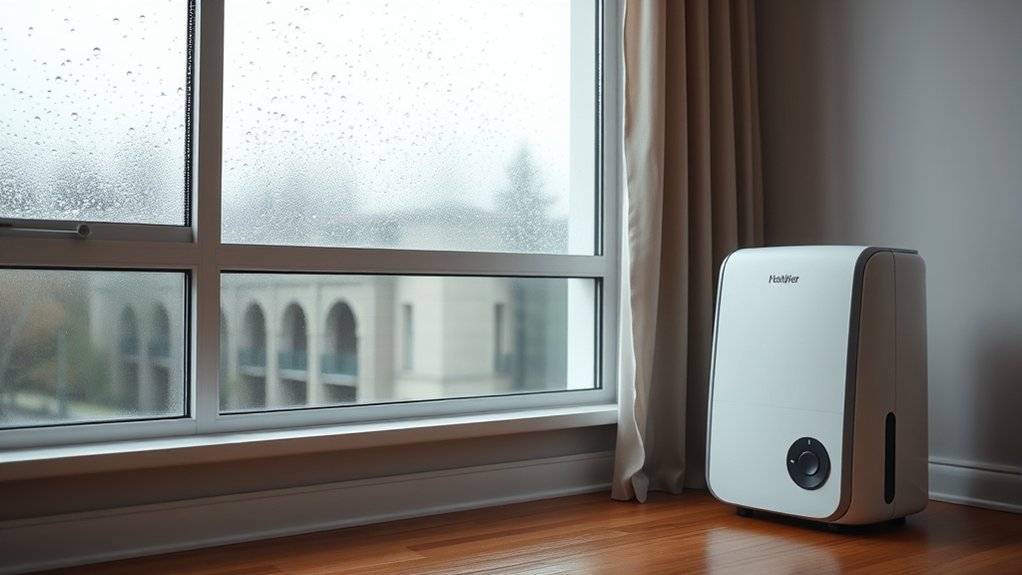
If a bedroom or other small room feels damp, shows condensation, or regularly measures above 50% relative humidity, a compact dehumidifier may help control mild excess moisture. The best choice depends on daily moisture-removal capacity, room temperature, noise, tank size, and controls—not only the advertised square footage.
Among the three currently suitable options in this guide, the TABYIK 35 oz is the best overall pick for a small bedroom because it has a clearly stated extraction rate, a compact footprint, and a low seller-listed noise level. The Windangel 44 oz is better when you want multiple modes and timers, while the BEDRED 95 oz is the simplest large-tank option.
Quick Verdict
Best overall for a small bedroom: TABYIK 35 oz. Best timer and mode controls: Windangel 44 oz. Best large-tank simple pick: BEDRED 95 oz.
Key Takeaways
- Measure humidity before buying; a dehumidifier is useful only when the room is genuinely too humid.
- Tank size shows how much water the container holds, not how quickly the appliance removes moisture.
- These compact thermoelectric models suit mild dampness in small, enclosed spaces—not flooding, active leaks, or a wet basement.
Quick Comparison
| Product | Best For | Seller-Listed Area | Moisture Removal | Key Feature | Amazon |
|---|---|---|---|---|---|
| BEDRED 95 oz | Large tank and simple controls | Up to 1,000 sq. ft.* | Not clearly stated | 95 oz tank and sleep mode | Check Availability |
| TABYIK 35 oz | Small bedrooms, bathrooms, and RVs | Up to 280 sq. ft.* | Up to 16 oz/day** | 28 dB seller-listed noise level | Check Availability |
| Windangel 44 oz | Small rooms and scheduled operation | Up to 215 sq. ft.* | Up to 11.8 oz/day** | Three modes and four timer choices | Check Availability |
*Seller-listed floor area is a marketing estimate, not a standardized performance guarantee. **Maximum seller-stated extraction under warm, very humid test conditions of 86°F and 80% RH. Real-world collection is usually lower in cooler or less humid rooms.
How We Chose These Dehumidifiers
We checked whether each linked product was still identifiable as a dehumidifier, matched the stated Amazon listing, and provided useful buyer information such as tank volume, extraction rate, sleep controls, automatic shutoff, or timers. We excluded linked models that were currently unavailable during this update and kept only products that still fit the small-room humidity-control intent.
We gave more weight to a clearly stated daily moisture-removal rate than to a broad square-foot claim. We also favored honest use-case guidance, because a compact thermoelectric unit should not be presented as a substitute for a full-size compressor dehumidifier in a wet basement or after water intrusion.
BEDRED 95 oz Dehumidifier
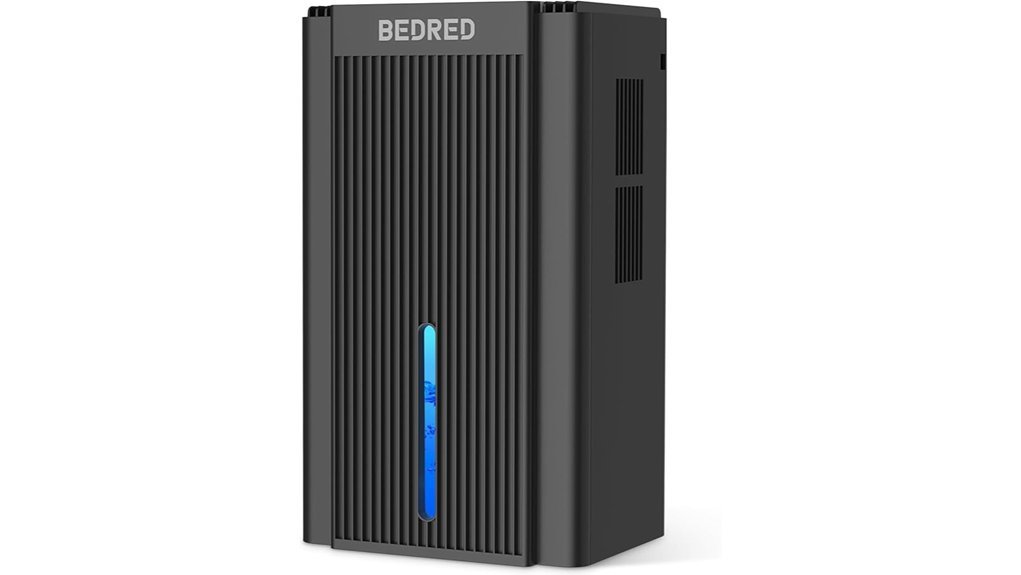
The BEDRED is a straightforward thermoelectric dehumidifier with a 95 oz tank, automatic shutoff, sleep mode, and seven-color ambient lighting. The seller markets it for areas up to 1,000 sq. ft., but the listing does not clearly publish a daily moisture-removal rate. For that reason, it is better treated as a light-to-moderate moisture-control option for an enclosed room rather than as a heavy-duty basement machine.
Why You’ll Like It: The large tank can reduce emptying frequency, while sleep mode turns off the ambient light for less distraction at night.
Best For: Buyers who want simple controls and a larger water tank for a bedroom, living room, RV, or lightly damp enclosed area.
Who Should Avoid It: Anyone who needs a verified extraction rate, a built-in humidistat, continuous drainage, or rapid drying after a leak.
Pros:
- 95 oz tank supports longer use between emptying.
- Automatic shutoff helps prevent tank overflow.
- Sleep mode turns off the decorative lighting.
Cons:
- Daily moisture-removal capacity is not clearly stated on the listing.
- No built-in humidity display or continuous-drain feature is highlighted.
- The 1,000 sq. ft. seller claim should not be treated as guaranteed real-world coverage.
TABYIK 35 oz Small Dehumidifier
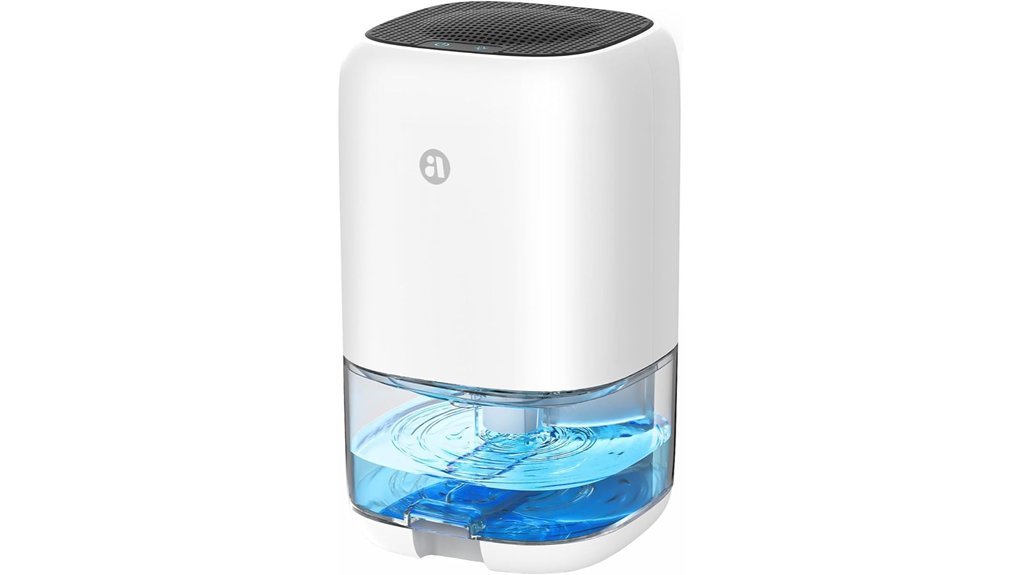
The TABYIK is designed for small enclosed spaces, with a seller-listed coverage of up to 280 sq. ft., a 35 oz tank, automatic shutoff, a carry handle, one operating speed, and a listed noise level of 28 dB. Under warm, very humid test conditions of 86°F and 80% RH, the seller states a maximum removal rate of 16 oz per day. Expect less water collection in cooler or moderately humid rooms.
Why You’ll Like It: It combines compact size, a clearly stated extraction rate, simple controls, and a low seller-listed noise figure that suits a small bedroom.
Best For: Small bedrooms, bathrooms, closets, or RVs with mild condensation or humidity above the target range.
Who Should Avoid It: Buyers trying to dry a large basement, an open-plan floor, or a room with an active leak or severe moisture problem.
Pros:
- Compact 35 oz design is easy to move with the built-in handle.
- Maximum 16 oz/day extraction is clearly stated with its test conditions.
- Automatic shutoff helps prevent overflow when the tank fills.
Cons:
- Maximum extraction applies only under warm, highly humid conditions.
- One operating speed provides less control than the Windangel model.
- Decorative lighting may be unnecessary for buyers who prefer a plain appliance.
Windangel 44 oz Small Portable Dehumidifier
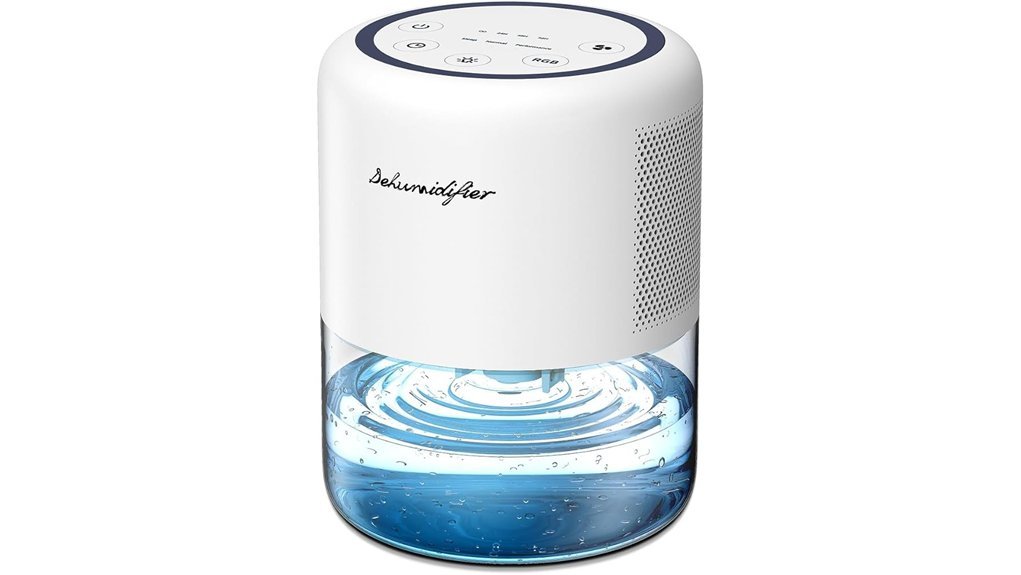
The Windangel offers more operating choices than the other compact models here. It has sleep, normal, and performance modes, a 44 oz tank, automatic shutoff, automatic defrost, and continuous, 24-, 48-, and 72-hour timer choices. The seller lists coverage up to 215 sq. ft. and a maximum extraction rate of 11.8 oz per day at 86°F and 80% RH.
Why You’ll Like It: Multiple modes and timers make it easier to match operation to bedtime, work hours, or periods when humidity tends to rise.
Best For: Small bedrooms, offices, closets, dorm rooms, and RVs where scheduled operation and adjustable modes matter.
Who Should Avoid It: Buyers who need rapid moisture removal, a built-in humidistat, or verified performance for a large or wet basement.
Pros:
- Three modes provide more control than a single-speed compact unit.
- Continuous, 24-, 48-, and 72-hour choices support scheduled operation.
- Automatic shutoff and defrost add everyday convenience.
Cons:
- 11.8 oz/day is modest and based on warm, highly humid test conditions.
- It has a lower maximum extraction rate than the TABYIK model.
- It is not suitable for severe dampness or active water intrusion.
Factors to Consider When Choosing a Dehumidifier for a Damp Room
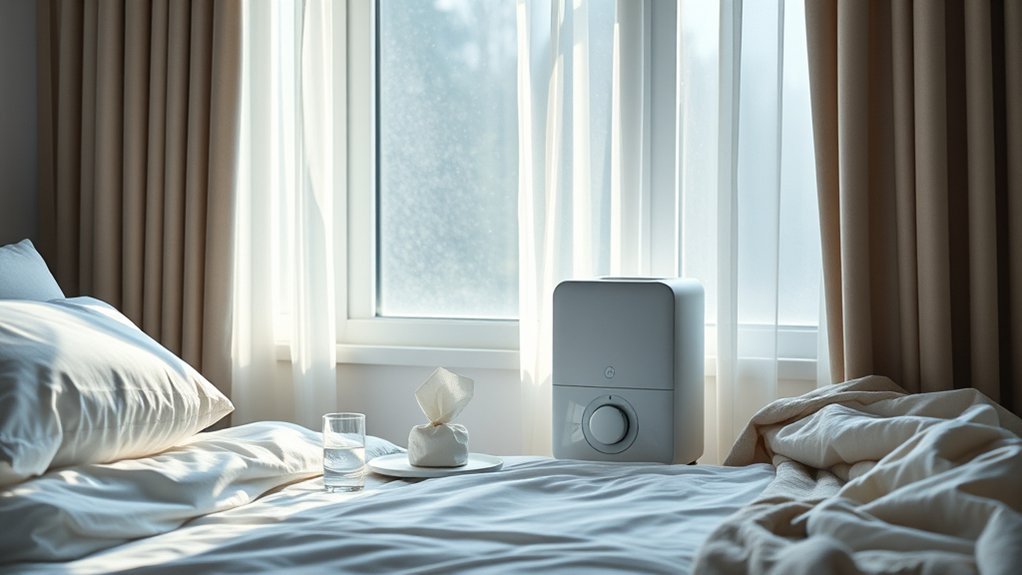
The goal is not to make the room as dry as possible. It is to keep relative humidity in a comfortable range while correcting the source of excess moisture. Use a hygrometer first, then compare extraction capacity, room temperature, noise, tank size, and maintenance.
Measure Humidity First
Use a separate hygrometer or a reliable built-in display before running a dehumidifier. The U.S. EPA recommends keeping indoor humidity between 30% and 50%. If the reading is already within or below that range, focus on other possible causes of discomfort instead of automatically drying the air further.
Compare Moisture-Removal Capacity
Tank size tells you how often the unit may need emptying, not how quickly it dries the air. Compare ounces, liters, or pints removed per day. Thermoelectric models usually perform best in warm, humid, enclosed spaces and collect less water as temperature and humidity fall.
Treat Coverage Claims Carefully
Seller-listed square footage is a rough marketing figure, not a standardized guarantee. A compact unit may reduce mild moisture in a closed bedroom but struggle in a large open area. For a wet basement, persistent condensation across several rooms, or visible water intrusion, correct the moisture source and consider a properly sized compressor dehumidifier.
Thermoelectric vs. Compressor Dehumidifiers
Compact thermoelectric models are light, portable, and suitable for mild moisture in small rooms. Compressor dehumidifiers remove much more water per day and are generally the better choice for basements, laundry areas, or persistent dampness. Compare standardized pint-per-day ratings when shopping for a full-size model.
Noise and Sleep Mode
For bedroom use, compare the stated decibel level and check whether sleep mode dims or turns off lights. Also consider placement, because vibration against a wall, shelf, or uneven floor can make a quiet appliance sound louder.
Tank Capacity and Emptying
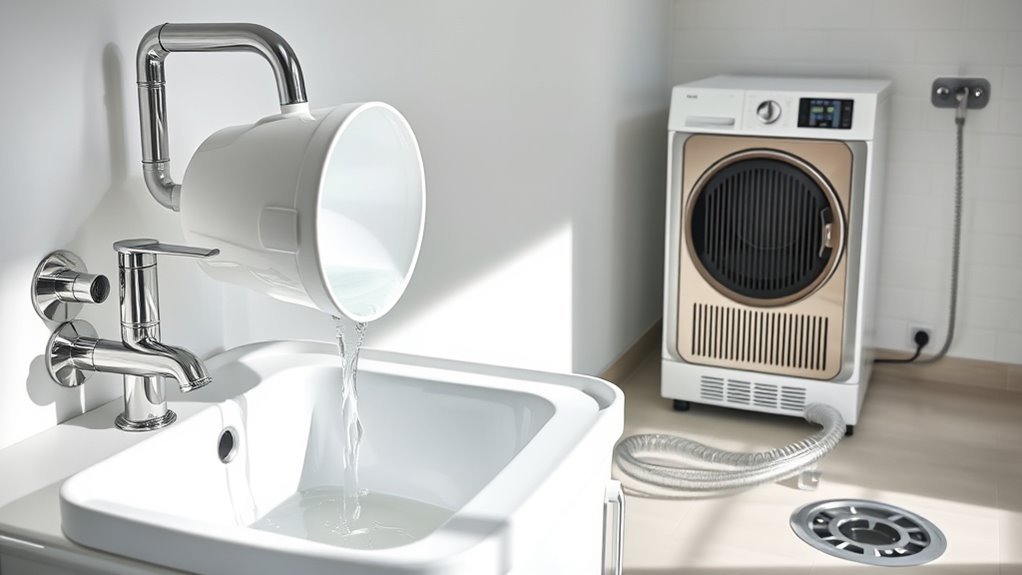
A larger tank can reduce emptying frequency, but standing water still needs regular attention. Empty and rinse the tank before residue or odors build up, and make sure it is seated correctly so the automatic shutoff can work as intended.
Automatic Shutoff and Placement
Automatic shutoff helps prevent overflow when the tank is full or incorrectly installed. Place the dehumidifier upright on a stable, dry surface with enough clearance for airflow. Keep cords away from beds, cribs, sinks, and walkways, and do not use an extension cord unless the manufacturer permits it.
Cleaning and Maintenance
Empty and rinse the tank regularly, inspect it for residue, and clean the air inlet or filter according to the manual. Let washable parts dry fully before reinstalling them. A dirty tank or blocked intake can reduce performance and contribute to odors.
Before You Buy: Fix leaks and visible water damage first. A dehumidifier can manage airborne moisture, but it cannot repair plumbing, stop rain intrusion, or safely remove established mold from porous materials.
Quick Buying Checklist
- Confirm the room is regularly above 50% relative humidity.
- Choose by daily extraction rate before advertised square footage.
- Decide whether you need simple one-speed operation or timers and multiple modes.
- Check where the unit will sit and how often you can empty and clean the tank.
- Move to a compressor model if the room is large, cool, very damp, or affected by water intrusion.
Frequently Asked Questions
Can a Dehumidifier Help Reduce Nighttime Coughing?
It may help only when high humidity, dampness, mold, or dust mites are contributing to irritation. It will not treat coughs caused by infection, asthma, reflux, medication side effects, smoke, or naturally dry air. Measure humidity before deciding whether a dehumidifier is appropriate.
What Humidity Level Is Best?
A practical target is 30% to 50% relative humidity. Many people find the middle of that range comfortable. Avoid running the appliance continuously once the room reaches the target range.
Can Too Much Dehumidification Make a Room Uncomfortable?
Yes. Air below the recommended humidity range can feel uncomfortably dry. Reduce or stop dehumidifier use if the hygrometer falls below the target range or dryness feels worse.
Is a Dehumidifier Safe in a Child’s Bedroom?
It can be used when placed upright on a stable surface away from the bed or crib, with the cord secured and the tank cleaned regularly. Use a hygrometer so the room does not become too dry, and follow the manufacturer’s placement and electrical instructions.
How Often Should I Clean the Tank and Filter?
Inspect the tank and intake at least weekly during regular use, and follow the model’s manual for the exact cleaning schedule. Empty standing water promptly, rinse away residue, and dry washable parts before reassembly.
Are Small Thermoelectric Dehumidifiers Good for Basements?
They may help in a small, mildly damp, warm enclosed area, but they are usually not the best choice for a large or wet basement. A compressor dehumidifier with a clearly stated pint-per-day rating is generally more suitable for a heavy moisture load.
When Should I Seek Medical Care for a Cough?
Follow CDC guidance on warning signs of respiratory illness. Seek prompt medical care for trouble breathing, chest pain, dehydration, coughing blood, symptoms that improve and then worsen, or a cough that persists. Young infants, older adults, and people with chronic lung or immune conditions may need earlier advice.
Conclusion
For a small damp bedroom, the TABYIK 35 oz is the strongest overall choice in this updated list because it combines a compact design, a stated maximum extraction rate, automatic shutoff, and a low seller-listed noise figure. The Windangel 44 oz is the better choice when timers and multiple modes matter, while the BEDRED 95 oz offers the largest tank but does not clearly publish a daily extraction rate.
Whichever model you choose, measure humidity first, keep the room near 30% to 50% relative humidity, and correct the cause of persistent moisture instead of relying on a compact appliance alone.
Final Recommendation: Choose TABYIK for the best balance in a small bedroom, Windangel for scheduled operation and mode control, or BEDRED when a larger tank and simple operation matter most. For severe dampness, skip compact thermoelectric models and use a properly sized compressor dehumidifier after fixing the moisture source.