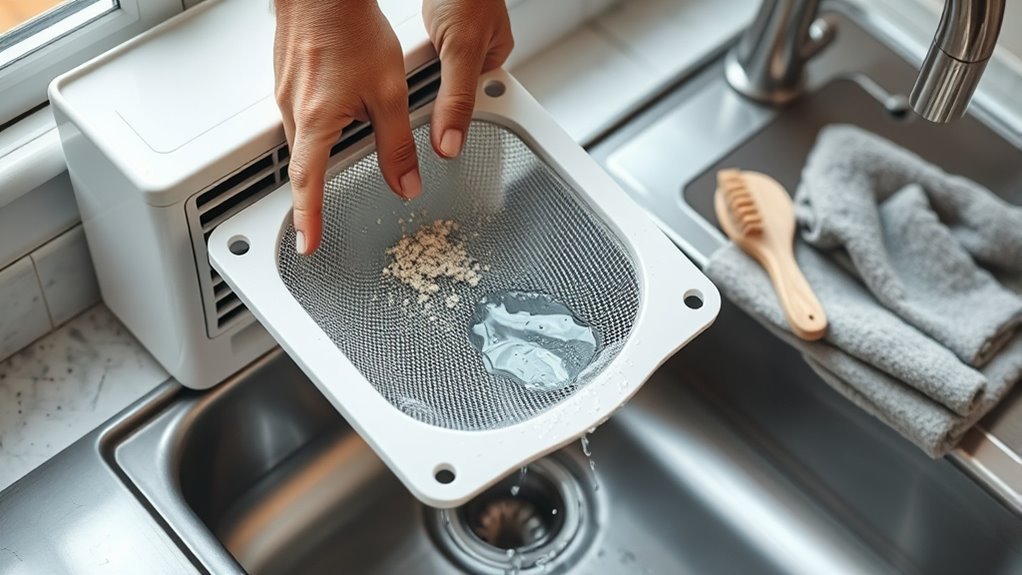
Finding a budget-friendly dehumidifier in 2026 is mostly about matching the machine to the moisture problem. The models below are compact electric dehumidifiers designed for bedrooms, bathrooms, closets, RVs, and other small or enclosed spaces. They are best for mild, localized dampness rather than flooding, active leaks, or a wet full-size basement.
Quick Verdict
NeedDuck is the most flexible choice for modes, timers, and lighting. BREEZOME combines a 60 oz tank with a higher manufacturer-listed removal rate for a compact unit. CLEVAST is the strongest fit for noise-sensitive rooms, while POOYUPPC and UBBO stand out when you want a 95 oz tank and a drain hose.
- Best for controls: NeedDuck 44 oz Dehumidifier
- Best large tank for a small room: BREEZOME 60 oz Dehumidifier
- Quietest listed option: CLEVAST 30 oz Mini Dehumidifier
- Best simple small-room pick: TABYIK 35 oz Dehumidifier
- Best for continuous drainage: POOYUPPC 95 oz Dehumidifier
Quick Comparison of Economy Dehumidifiers
| Product | Best For | Tank | Listed Max Removal | Noise / Controls | Amazon |
|---|---|---|---|---|---|
| NeedDuck | Modes, timers, portability | 44 oz | Not clearly stated | 3 modes, 4 timer options | Check Details |
| BREEZOME | Larger tank in a compact unit | 60 oz / 1.8 L | Up to 700 ml/day* | Sleep mode, timer | Check Details |
| Deyagoo | Simple operation and a clear tank | 50 oz / 1.5 L | Up to 300 ml/day* | Listed at 30 dB | Check Details |
| CLEVAST | Bedrooms and quiet spaces | 30 oz | Up to 10 oz/day* | Quiet mode listed at 24 dB | Check Details |
| POOYUPPC | Large tank and drain hose | 95 oz | Up to 25 oz/day* | Sleep mode, child lock | Check Details |
| TABYIK 38 oz | Compact rooms and RVs | 38 oz | Up to 11 oz/day* | Below 30 dB | Check Details |
| TABYIK 35 oz | Balanced everyday small-room use | 35 oz / 1 L | Up to 16 oz/day* | Listed at 28 dB | Check Details |
| UBBO | Large tank, drain hose, timer | 95 oz | Up to 1.2 L/day* | 35 dB sleep mode, 8/16/24-hour timer | Check Details |
*Manufacturer-listed maximum under warm, highly humid test conditions. Real-world water collection may be much lower.
NeedDuck 44 OZ Small Dehumidifier
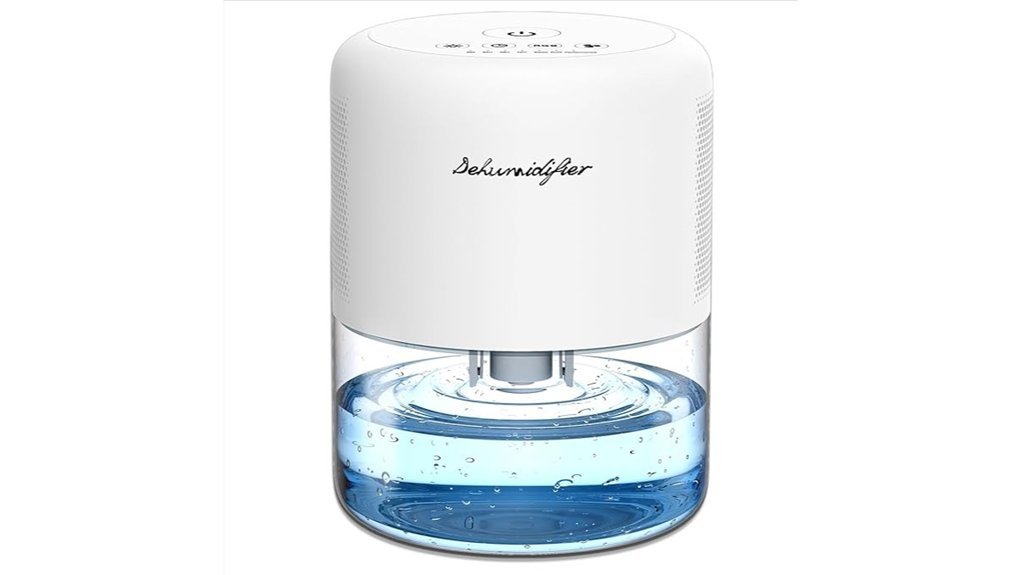
Best for Controls
The NeedDuck model is a practical choice when you want more control than a basic one-button mini dehumidifier offers. Its 44 oz tank, 2.56-pound body, and compact footprint make it easy to move between a bedroom, bathroom, closet, or RV. The listing includes three operating modes, four timer choices, auto shutoff, auto defrost, and adjustable lighting.
Why You’ll Like It: It gives you useful scheduling and mode options without moving into a large compressor-style machine.
Best For: Mild moisture in small, enclosed spaces where portability and flexible controls matter.
Who Should Avoid It: Buyers dealing with standing water, a persistently wet basement, or a large open-plan room.
Pros:
- Lightweight 2.56-pound design is easy to move.
- 44 oz tank is larger than many ultra-mini models.
- Includes auto shutoff, auto defrost, multiple modes, timers, and adjustable lighting.
Cons:
- Designed for gradual moisture control, not rapid drying.
- No clearly stated pint-per-day or liter-per-day removal rate on the listing.
- Advertised room coverage should not be treated as heavy-duty basement capacity.
BREEZOME 60 OZ Quiet Dehumidifier with Timer
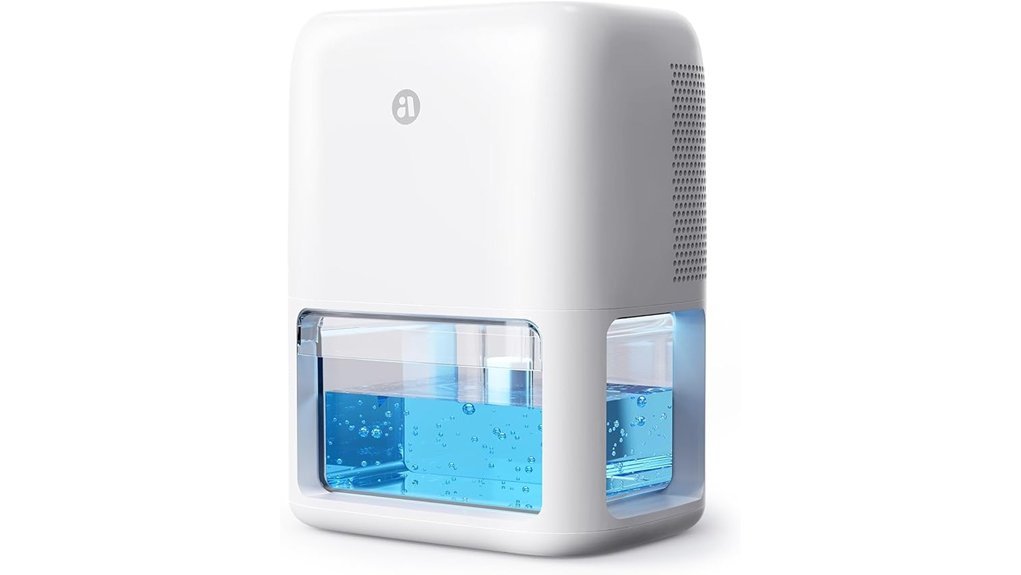
Best Large Tank for Small Rooms
The BREEZOME combines a 1.8 L (60 oz) tank with a dual-semiconductor design. The manufacturer lists water collection of up to 700 ml per day under 86°F and 80% relative humidity, which is a test condition rather than a typical-room promise. It also includes timer settings, sleep mode, auto shutoff, defrost protection, and a seven-color light.
Why You’ll Like It: The larger tank can reduce how often you empty the unit compared with 30–40 oz models.
Best For: Bathrooms, bedrooms, kitchens, cloakrooms, and RVs with mild to moderate localized humidity.
Who Should Avoid It: Anyone expecting compressor-level performance or automatic control to a precise humidity percentage.
Pros:
- Large 60 oz tank for a compact dehumidifier.
- Dual-semiconductor system with a higher listed removal rate than many mini units.
- Timer, sleep mode, auto shutoff, defrost protection, and night light add convenience.
Cons:
- Maximum removal figures are based on hot, humid test conditions.
- Still intended for small-space moisture control.
- No built-in humidity percentage display is highlighted in the listing.
Deyagoo 1500ML Dehumidifier for Bedroom and RV
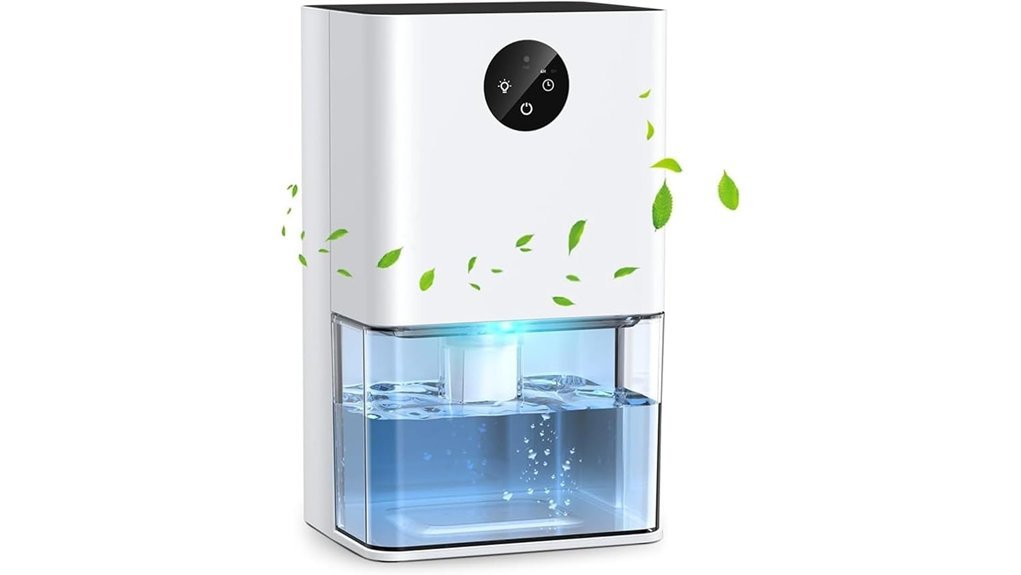
Best Clear-Tank Value
The Deyagoo uses a 1500 ml (50 oz) transparent tank, so you can see the collected water without removing it. The listing states up to 300 ml of water collection per day at 86°F and 80% relative humidity, plus 30 dB operation, auto shutoff, a full-tank red light, and a seven-color light.
Why You’ll Like It: It is simple to monitor, compact to place, and offers a larger tank than many entry-level mini models.
Best For: A bedroom, bathroom, RV, closet, or other enclosed area with mild dampness.
Who Should Avoid It: Buyers who need fast drying after leaks or want a true basement dehumidifier.
Pros:
- 50 oz transparent tank is easy to monitor.
- Compact dimensions suit shelves, counters, and RV storage areas.
- Auto shutoff and a full-tank light reduce overflow risk.
Cons:
- Listed removal rate is modest at up to 300 ml per day.
- Performance falls as temperature and humidity drop.
- Advertised 300 sq. ft. coverage does not guarantee whole-room humidity control.
CLEVAST 30 OZ Quiet Mini Dehumidifier
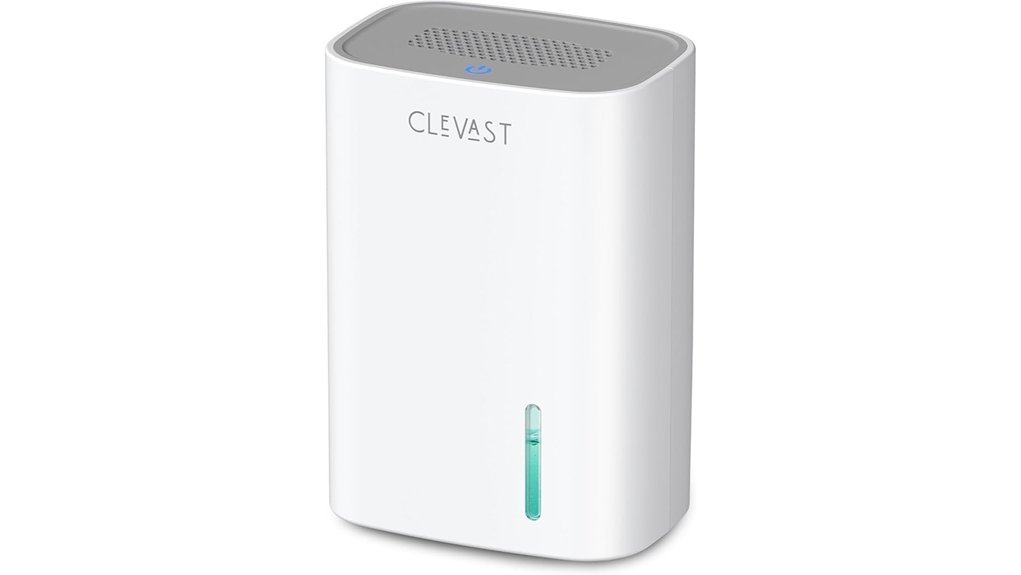
Quietest Listed Option
CLEVAST is the best fit here for a noise-sensitive bedroom or office. Its quiet mode is listed at 24 dB, and the manufacturer states that high-efficiency mode can collect up to 10 oz (295 ml) in 24 hours at 86°F and 85% relative humidity. The compact unit has a 30 oz tank, a built-in handle, auto shutoff, a tank-full indicator, and overheat protection.
Why You’ll Like It: It focuses on low-noise operation and easy portability rather than decorative extras or complicated controls.
Best For: Bedrooms, closets, bathrooms, offices, campers, and other small spaces where quiet operation matters.
Who Should Avoid It: Anyone who needs continuous drainage or high-capacity moisture removal.
Pros:
- Quiet mode is listed at 24 dB.
- Compact, lightweight design includes a carrying handle.
- Auto shutoff, full-tank alert, and overheat protection support simple operation.
Cons:
- Small 30 oz tank needs more frequent emptying.
- Up to 10 oz per day is limited compared with compressor models.
- No drain hose or precise humidity setpoint is highlighted.
POOYUPPC 95 OZ Dehumidifier with Drain Hose
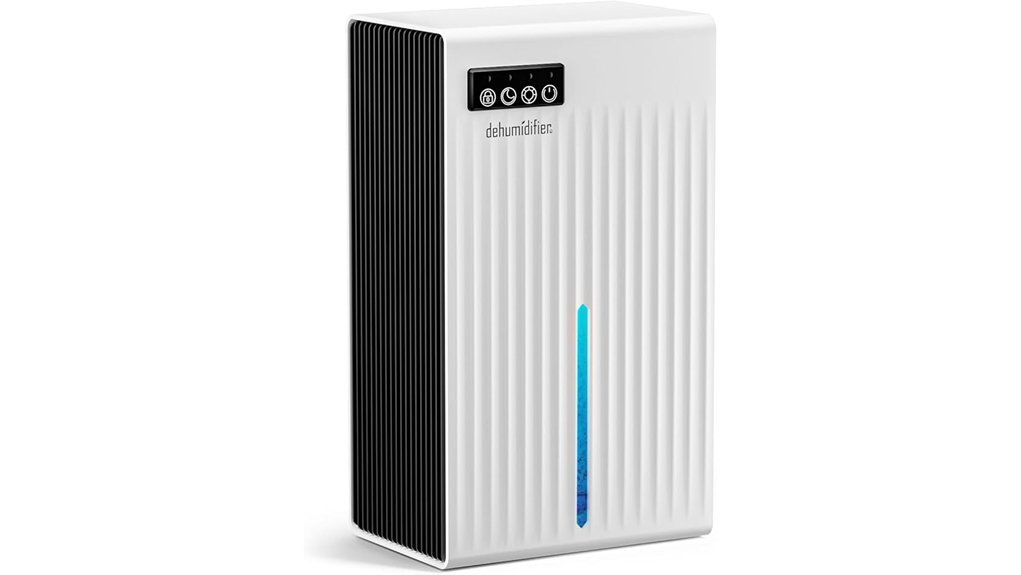
Best for Continuous Drainage
POOYUPPC is a convenient option when you want fewer tank-emptying trips. It has a 95 oz tank, an included drain hose, an LED touch panel, sleep mode, a full-tank alert, auto shutoff, and a child lock. The manufacturer lists removal of up to 25 oz per day and coverage up to 1,000 sq. ft., but those figures should be viewed as ideal-condition claims rather than proof of heavy-duty basement performance.
Why You’ll Like It: You can use the tank for portable operation or connect the hose for continuous gravity drainage.
Best For: A bedroom, bathroom, RV, or a localized damp area where a nearby drain is available.
Who Should Avoid It: Buyers with a wet basement, no suitable gravity drain, or a need for a built-in humidistat display.
Pros:
- Large 95 oz tank reduces manual emptying.
- Supports manual collection and continuous hose drainage.
- Sleep mode, touch controls, child lock, and auto shutoff add convenience.
Cons:
- Continuous drainage depends on correct hose placement and gravity flow.
- Manufacturer square-foot coverage may be optimistic in open or very damp rooms.
- Still removes far less water than a full-size compressor dehumidifier.
TABYIK 38 OZ Small Quiet Dehumidifier
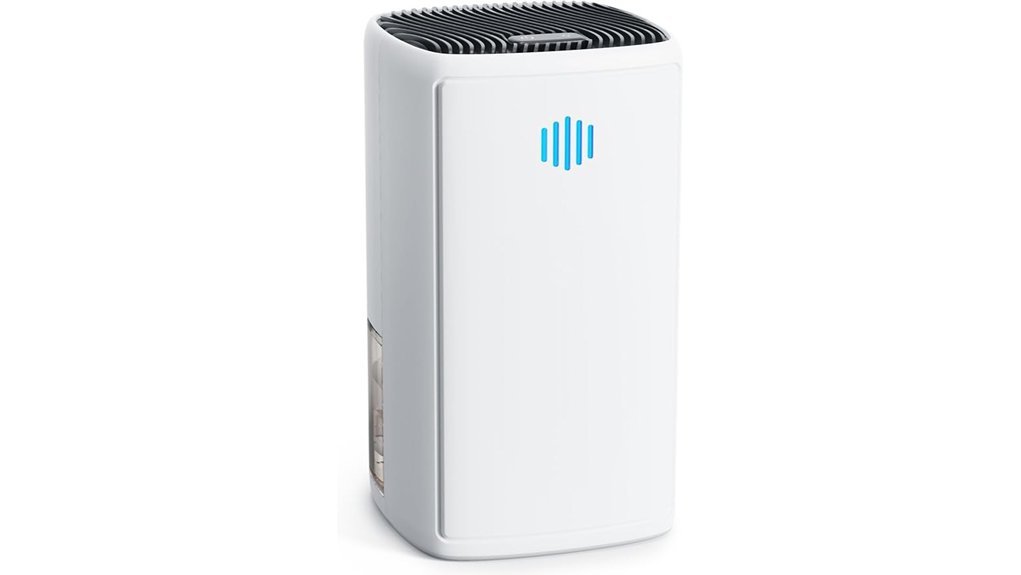
Best Compact 38 OZ Pick
The TABYIK 38 oz model balances a small footprint with a tank that is slightly larger than the brand’s 35 oz version. The listing states up to 11 oz of moisture collection per day at 86°F and 80% humidity, below-30 dB operation, auto shutoff, a tank-full light, and auto defrost.
Why You’ll Like It: It is easy to place in a tight bathroom, closet, office, or RV without adding much noise.
Best For: Small enclosed areas with light condensation, musty air, or seasonal dampness.
Who Should Avoid It: Anyone trying to dry construction materials, recover from water damage, or manage a wet basement.
Pros:
- Compact shape and 38 oz tank work well in tight areas.
- Below-30 dB listed operation is suitable for quiet rooms.
- Auto shutoff, full-tank indicator, and auto defrost add convenience.
Cons:
- 11 oz per day is a modest ideal-condition rating.
- No continuous drain hose is highlighted.
- Room-size marketing does not account for open doors, air leakage, or heavy moisture loads.
TABYIK 35 OZ Dehumidifier for Bedroom, Bathroom, RV, and Closet
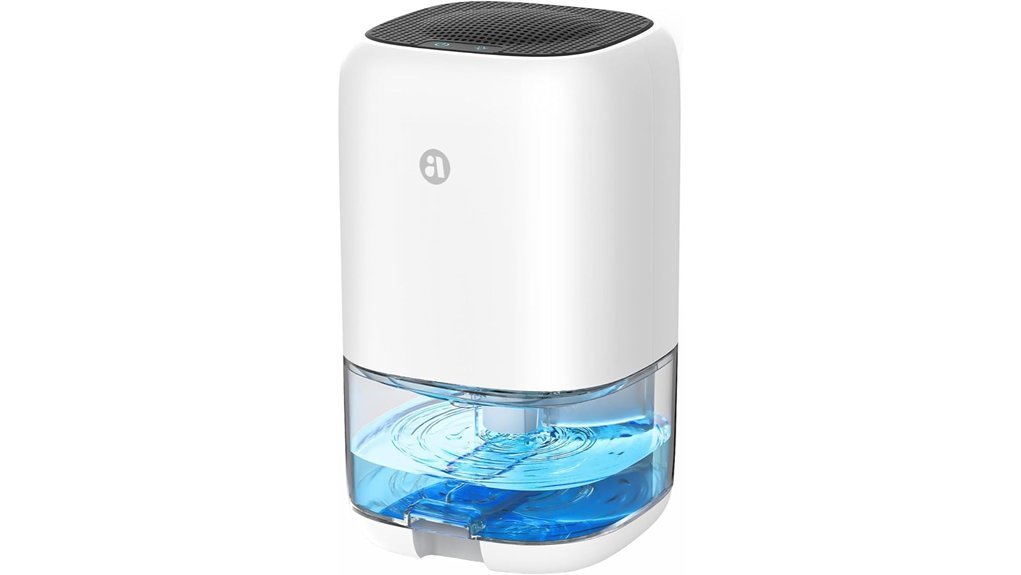
Best Balanced Small-Room Pick
The TABYIK 35 oz model is a straightforward choice for everyday small-room moisture control. It has a 1 L tank, a transparent water window, auto shutoff, and a seven-color light. The listing states up to 16 oz (450 ml) of water collection per day under 86°F and 80% relative humidity, with noise listed at 28 dB.
Why You’ll Like It: It combines quiet operation, simple controls, and an easy-to-check tank in a compact body.
Best For: Bedrooms, bathrooms, closets, offices, and RVs with mild humidity.
Who Should Avoid It: Buyers who need a drain hose, a humidity display, or rapid moisture removal.
Pros:
- Listed at 28 dB for quiet use.
- Transparent tank and auto shutoff simplify daily maintenance.
- Compact 2.2-pound design is easy to move.
Cons:
- Tank still needs regular manual emptying.
- Maximum collection is measured under warm, humid test conditions.
- Air inlet and outlet need clear space for proper airflow.
UBBO 95 OZ Dehumidifier with Drain Hose, Black Gold
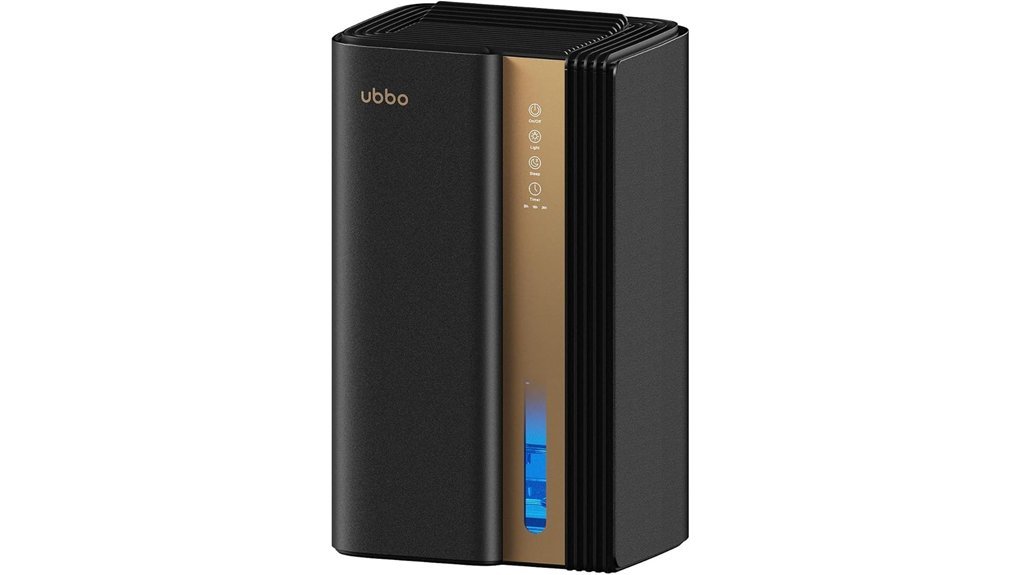
Best Feature Set
The UBBO combines a 95 oz tank with dual semiconductor condensers, a drain hose, auto shutoff, sleep mode, 8-, 16-, and 24-hour timers, a washable filter, a night light, and an aroma box. The manufacturer lists up to 1.2 L of moisture removal per day at 86°F and 80% relative humidity and sleep-mode noise at 35 dB.
Why You’ll Like It: It offers the broadest feature set in this group and gives you both tank and continuous-drain options.
Best For: Buyers who want a large tank, scheduled operation, quiet mode, and optional gravity drainage in a bedroom, bathroom, RV, or localized damp zone.
Who Should Avoid It: Anyone who wants compressor-grade basement performance or needs a verified current-humidity display.
Pros:
- Large 95 oz tank with an included drain hose.
- Timer, sleep mode, auto shutoff, washable filter, lighting, and aroma box.
- Highest manufacturer-listed daily removal rate in this group.
Cons:
- 1,000 sq. ft. marketing should not be read as heavy-duty whole-basement capacity.
- Actual output can be much lower in cooler or less humid rooms.
- The aroma feature may not appeal to fragrance-sensitive users.
Factors to Consider When Choosing an Economy Dehumidifier
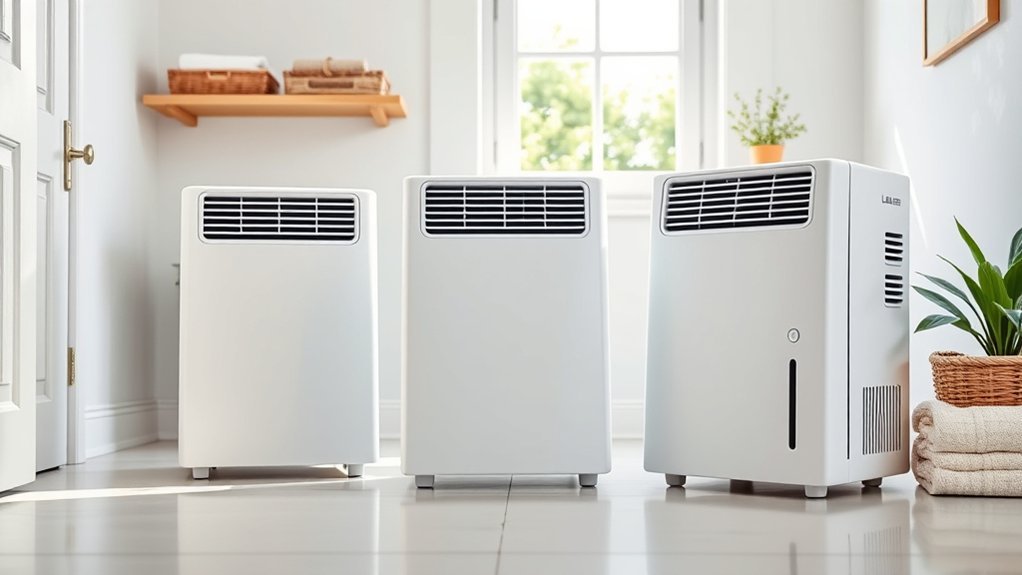
Start with the moisture problem, not the decorative features. Tank size affects maintenance, but daily moisture-removal capacity, room temperature, drainage, noise, and controls determine whether the unit will actually suit your space.
Semiconductor vs. Compressor Models
Most compact products above use Peltier or semiconductor technology. These units are light, quiet, and inexpensive to run, but they remove far less water than full-size compressor dehumidifiers. Choose a mini unit for mild dampness in an enclosed space. Choose a compressor model when walls or floors feel damp, condensation is persistent, or a basement needs whole-room control.
Tank Capacity
A larger tank means fewer emptying trips, but it does not make the dehumidifier remove moisture faster. Compare tank size with the listed daily removal rate. A 95 oz tank can be convenient, yet a low-output unit may take several days to fill it. A drain hose is more useful than a large tank when the unit will run for long periods near a suitable drain.
Moisture Removal Rate
Daily removal capacity is more useful than square-foot marketing. Check whether the figure is stated in ounces, milliliters, liters, or pints per day and note the test conditions. Warm air can hold more moisture, so a unit tested around 86°F and 80% relative humidity may collect much less water in a cooler bedroom or basement.
Energy Use
Use the wattage and your planned runtime to estimate electricity use: watts × hours used ÷ 1,000 = kilowatt-hours. For a monthly estimate, multiply by the number of days used. Do not assume a sleep mode saves energy unless the manufacturer specifically states that it changes power draw.
Noise Level
For bedrooms and offices, look for a manufacturer-listed rating around 24–35 dB and check whether that number applies only to quiet or sleep mode. Noise claims are not always measured the same way, so use them as comparison guidance rather than a guarantee.
Coverage Area
Advertised square footage can be misleading because it does not fully account for room temperature, air leakage, ceiling height, doors, showers, laundry, or groundwater moisture. A compact semiconductor unit may physically operate in a large room but still fail to lower the room’s overall humidity. For serious dampness, prioritize pint-per-day capacity and a built-in humidistat.
Auto Shut-Off and Humidity Control
Full-tank auto shutoff stops the unit when the reservoir is full, helping prevent overflow. It is not the same as a humidistat. A humidistat measures relative humidity and cycles the machine to maintain a selected level. Many mini models do not provide a humidity percentage setting, so a separate hygrometer can help you judge whether the unit is working.
Timer Options
Timers are useful when you want the machine to stop after a set period. Check whether the timer is a delayed shutoff, delayed start, or a repeating schedule. A timer does not replace a humidistat because it cannot respond to changing room humidity.
Continuous Drainage
A drain hose can reduce daily maintenance, but most compact units rely on gravity. Keep the hose sloping downward without kinks, and place the end in a safe drain that cannot back up. Follow the manufacturer’s setup instructions before leaving continuous drainage unattended.
Portability Features
Check the unit’s weight, carrying handle, tank design, cord length, and ventilation clearances. Place it on a stable, level surface with the air inlet and outlet unobstructed. Avoid using a damaged or overloaded extension cord, and follow the product manual for electrical placement in damp areas.
Before You Buy: Quick Checklist
- Measure the room and identify whether the problem is mild humidity or active water intrusion.
- Compare daily removal capacity, not only tank size or advertised square footage.
- Check the minimum operating temperature if the unit will be used in a basement or garage.
- Choose a drain-hose model when regular manual emptying will be inconvenient.
- Verify the current warranty, return policy, included accessories, and seller on Amazon.
- Use a hygrometer if the dehumidifier does not show the room’s relative humidity.
Frequently Asked Questions
How Often Should I Empty the Water Tank?
Empty it when the full-tank light appears or before the water reaches the maximum line. The schedule may range from daily to every several days depending on humidity, temperature, tank size, and removal rate. A correctly installed drain hose can eliminate most manual emptying.
Can Economy Dehumidifiers Run Overnight?
Many can run overnight when the manual permits it. Use a stable, level surface, keep all vents clear, install the tank or drain hose correctly, and do not bypass auto shutoff. Stop using the unit if the cord, plug, adapter, tank, or drainage setup is damaged.
Do These Models Work in Cold Basements?
Compact semiconductor models usually collect less water as the air gets cooler. Auto defrost may help prevent icing, but it does not turn a mini unit into a high-capacity basement dehumidifier. Check the listed operating-temperature range and consider a compressor model designed for cooler conditions.
How Much Electricity Do Small Dehumidifiers Use Monthly?
It depends on wattage and runtime. Multiply the unit’s watts by the hours used each day, divide by 1,000, and multiply by the number of days. Then multiply the result by your electricity rate. This is more reliable than using one monthly estimate for every model.
What Humidity Level Should I Use?
A common indoor target is between 30% and 50% relative humidity. Starting around 45%–50% is reasonable for many homes. If the mini dehumidifier has no humidistat, place a separate hygrometer nearby and adjust runtime based on the reading.
Can a Mini Dehumidifier Fix Mold or Water Leaks?
No. A dehumidifier can help control airborne moisture, but it cannot repair plumbing, foundation seepage, roof leaks, or existing mold damage. Fix the moisture source first and clean or remediate affected materials as appropriate.
Conclusion
The best economy dehumidifier is the one that matches your actual moisture load. Choose NeedDuck for flexible controls, BREEZOME for a larger compact tank, CLEVAST for low-noise operation, TABYIK for simple everyday small-room use, or POOYUPPC and UBBO when a 95 oz tank and drain hose matter most. Keep expectations realistic: these compact units are useful for mild, localized humidity, while persistent basement dampness usually calls for a higher-capacity compressor dehumidifier.