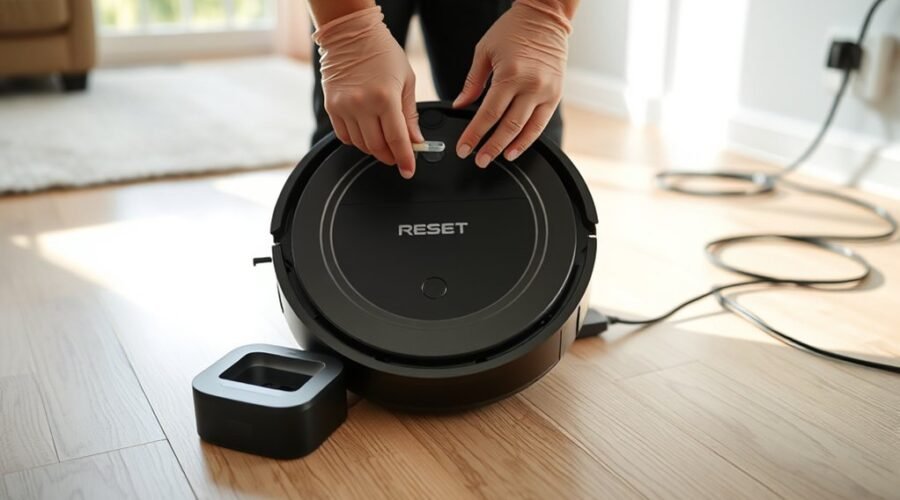
A robot vacuum usually needs a factory reset when it keeps losing Wi‑Fi, behaves unpredictably, or is being handed to a new owner. Before that step, essential maps and schedules should be saved if possible, since a reset clears them. The process is not difficult, but the exact button sequence varies by model. What matters next is doing it safely, so the device can be restored without unnecessary trouble.
When to Factory Reset Your Robot Vacuum
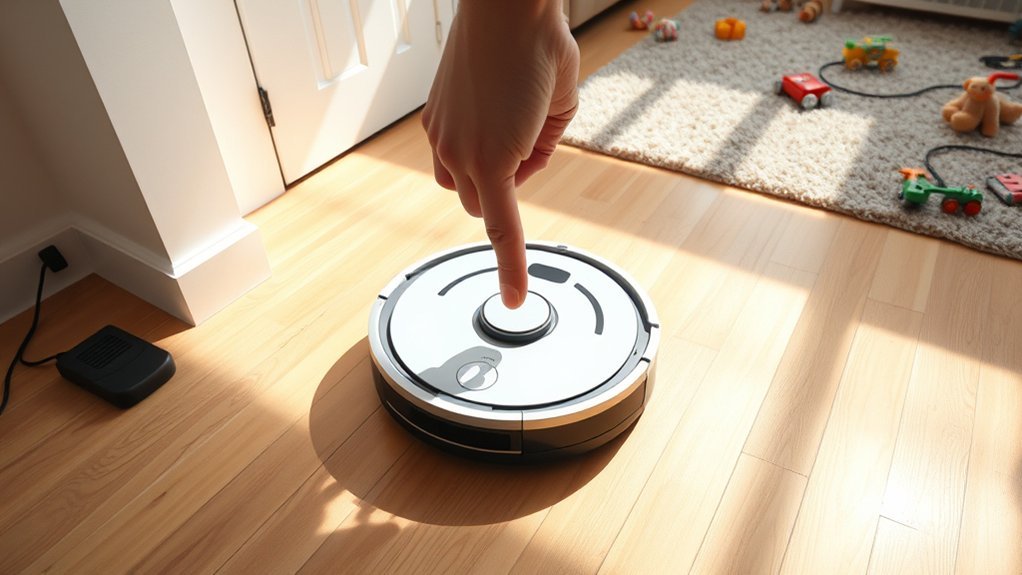
A factory reset is best considered when a robot vacuum continues to show persistent problems, such as sensor blockages or Wi‑Fi connection failures, even after a soft reset and other troubleshooting steps.
Use a factory reset when persistent errors remain after basic troubleshooting and soft resets.
It can also help when Wi‑Fi connectivity remains unstable, the device becomes unresponsive, or reset fixes no longer bring reliable performance.
For someone reclaiming control of a difficult machine, this step offers a clean return to original settings. It is especially useful after moving the robot to a new home, where old maps and schedules no longer fit the space.
A factory reset is also appropriate before selling or gifting the unit, because it clears stored data and restores default behavior.
In each case, the goal is not punishment, but release from repeated errors and stale configurations.
When basic attempts fail, a factory reset becomes the clearest path forward, allowing the robot vacuum to start again with a more usable, dependable baseline.
What to Back Up Before Resetting
Before a factory reset, it is wise to save any cleaning maps and schedules if the robot vacuum supports them.
It should also be helpful to record custom room labels, cleaning preferences, and other app settings that will need to be set again afterward.
The Wi-Fi network name, password, and any smart home connection details should be noted so the robot can be reconnected without difficulty.
Save Maps And Schedules
Many robot vacuums store useful setup details in their app, so it is worth checking whether maps, schedules, room labels, and no-go zones can be backed up before a factory reset.
In Device Settings, the owner should look for options to save maps and schedules, or export them to the app or cloud. If backup is unavailable, screenshots and notes can preserve each room name and cleaning time before the Robot Vacuum Cleaner returns to its original state.
- Capture current floor maps.
- Save weekly cleaning schedules.
- Record no-go zones and room labels.
- Confirm cloud export or backup.
Once the reset begins, every saved preference is erased permanently, so preparing first protects hard-won organization and helps restore freedom quickly after reboot.
Note Custom Cleaning Settings
Custom cleaning settings deserve the same attention as maps and schedules before a factory reset. A careful note of custom cleaning schedules helps the robot return to its preferred routine with less effort afterward.
Any saved room maps should be backed up if the device allows it, since that can prevent unnecessary remapping. It is also wise to record preferred suction levels, cleaning patterns, and other app settings that shape daily performance. Screenshots can preserve details that are easy to forget later.
Most important, any no-go zones or virtual barriers in the app should be documented clearly, because these protections must be rebuilt after the reset. This small preparation supports a smoother restoration and a more liberated restart.
Record Wi-Fi And App Details
A quick record of Wi‑Fi and app details can save time after a factory reset. Before the process, note the Wi‑Fi network name and password, since factory resets erase saved connections.
Screenshots of app details, cleaning schedules, and room settings help restore control without confusion. Any saved preferences or configurations should also be written down, because they often disappear during the reset.
If the robot supports it, backup maps to speed remapping later. Third-party accessories and integrations should be listed as well, so they can be reconnected smoothly.
This simple record protects a user’s freedom to set up the vacuum on their own terms again.
- Wi‑Fi network name and password
- app details, schedules, and room settings
- preferences, configurations, and accessories
- backup maps for faster remapping
How to Factory Reset Your Robot Vacuum
Before starting a factory reset, the robot vacuum should have power and not be actively cleaning, and any important maps or settings should be backed up if the model allows it.
To begin the factory reset, the correct button combination or reset button should be pressed and held for 10 to 20 seconds, until a tone sounds or the lights change. This step clears stored data, including the Wi-Fi connection, cleaning preferences, and saved maps, returning the machine to its original state.
After the reset, the vacuum may need to be reconfigured through its app, but that is handled separately. If the model supports it, preserving important information beforehand helps avoid loss of a carefully learned mapping cycle.
Once the reset is complete, the device is ready for a fresh start, free from old settings that no longer serve it, and prepared for later setup and testing.
Reconnect Wi‑Fi and the App
Once the factory reset is complete, the robot vacuum should be powered on and placed on its charging dock so reconfiguration can begin smoothly.
To reconnect Wi‑Fi and the app, the user should connect your smartphone to the same 4 GHz Wi‑Fi network the vacuum will use. This choice supports compatibility, since many models reject 5 GHz signals.
Next, open the app and add the device again, following the on-screen steps for a reset via setup. Bluetooth should remain enabled, and the phone should stay close to the vacuum during the pairing process to keep the link steady.
- Docked and powered
- Phone on 4 GHz Wi‑Fi network
- App open for pairing
- Device nearby for stable connection
After connection, the app can remap your space and restore cleaning schedules.
Because prior settings were erased, the new setup gives the household a clean, independent start.
Fixing a Failed Robot Vacuum Reset
If a factory reset fails, the first step is to recheck the reset steps for the specific model and confirm the correct button sequence.
The robot should also be charged above 20 percent, with no debris or obstructions around the buttons or sensors, before another attempt.
If the reset succeeds but the app does not reconnect, the Wi‑Fi and app setup may need to be completed again.
Check Reset Steps
A failed robot vacuum reset often comes down to a few simple checks.
To Reset Your Robot Vacuum, confirm the factory reset steps match the specific model, since button combinations vary by brand. Before trying again, clean the robot’s sensors and wheels so dust or debris does not block the process.
If the factory reset still fails, make sure the battery level is above 20% and repeat the sequence calmly. After success, expect saved maps, schedules, and other settings to be erased, so the home can be set up again with freedom.
- Check the manual for the exact reset sequence
- Press only the buttons required for the specific model
- Remove dirt from sensors and wheels first
- Reconfigure saved maps after the reset
Verify Power And Charge
Power and charge should be confirmed before trying the reset again, since a weak battery can stop the process even when the steps are correct.
To verify power, the robot vacuum should sit on the docking station for at least an hour and be charging properly. The dock itself should be plugged into a working outlet, and its indicator light should show normal operation.
The power button on the vacuum should also be turned on, because some models will not complete a factory reset unless they are active. Charging contacts on both the robot and dock should be checked for dust or debris.
If the reset still fails, remove the unit from the dock and place it back again, making sure adequate power is restored before proceeding.
Reconnect App And Wi-Fi
After the factory reset, the robot vacuum should be fully charged and placed on its docking station before the app connection is attempted again.
To reconnect, the owner should clear network settings by removing the vacuum from the app, then start fresh with a 2.4 GHz Wi-Fi network that stays active during setup. Many models lack compatibility with 5 GHz service.
Bluetooth on the smartphone should remain enabled, and the phone should stay close while the app guides pairing.
If the device still resists reconnection, reinstalling the app or checking firmware updates may restore stable performance and preserve freedom from repeated setup failures.
- Dock the vacuum fully charged.
- Use 2.4 GHz Wi-Fi only.
- Keep Bluetooth on and nearby.
- Reinstall the app if needed.
Restore Maps and Schedules
Before a factory reset is carried out, any available cleaning maps and schedules should be backed up first, since a reset erases these stored settings completely.
If the robot vacuum offers cloud or app storage, this backup can later help restore maps and schedules with less effort and more freedom from repeat setup.
After the factory reset, the device must usually learn the home again through a full remapping process.
Floors should be cleared of cords, shoes, and other obstacles so mapping remains accurate and obstacle avoidance works well.
All interior doors should be opened so the robot can chart every room.
Once mapping is complete, room names can be added and no-go areas can be set to protect delicate spaces.
Schedules may then be rebuilt or restored from the backup, allowing the vacuum to return to a reliable routine without unnecessary friction.
Frequently Asked Questions
How to Perform a Hard Factory Reset?
A hard factory reset is performed by holding the reset button 10–15 seconds until a beep or light change. He notes reset methods, troubleshooting tips, vacuum settings, device compatibility, maintenance advice, and user experiences.
Is It Okay to Fully Reset My Roomba?
Yes, fully resetting a Roomba is acceptable when needed; Roomba maintenance tips, Resetting benefits, Roomba troubleshooting guide, Vacuum performance issues, Battery health checks, and User experience feedback all suggest it can restore freedom and reliable operation.
What Is the Average Lifespan of a Robot Vacuum?
A robot vacuum typically lasts 3 to 6 years. Robot vacuum maintenance, battery replacement tips, and troubleshooting common issues extend life, while cleaning performance comparison, smart home integration, and technology advancements often improve durability and value.
Can You Factory Reset a Roomba Without the App?
Yes, a Roomba can be factory reset without the app. Roomba troubleshooting tips suggest holding Clean; app connectivity issues vanish afterward. Battery maintenance advice matters. Cleaning schedule optimization, firmware update process, sensor calibration methods then require reconfiguration.
Conclusion
In the end, a factory reset is best treated as a careful restart, not a quick fix. One study found that nearly 1 in 3 smart-home users lose at least one saved setting during a device reset, a vivid reminder to back up maps and schedules first. With the vacuum charged, disconnected, and reset correctly, it can return to work cleanly. Reconnecting Wi‑Fi and restoring preferences then makes the fresh start feel complete.