Last updated: August 19, 2026
Quick answer: Yes, ordinary salt can take up moisture, but only under conditions humid enough for sodium chloride to become a useful brine-forming absorber. That happens at roughly 75% relative humidity (RH) around normal room temperatures. Because the U.S. EPA recommends keeping indoor RH below 60%, ideally between 30% and 50%, rock salt is not a practical replacement for a room dehumidifier. It may visibly collect water in a very humid, tiny enclosure, but it cannot reliably maintain a healthy indoor humidity target.
Best use case: Treat rock salt as a simple experiment or temporary moisture trap when a hygrometer shows that a very small space repeatedly reaches roughly 75% RH or higher.
Skip salt when: your goal is to keep a room below 60% RH, condensation keeps returning, you smell mustiness, or you see mold. Fix the moisture source, improve ventilation, and use a properly sized dehumidifier when needed.
Does Salt Really Work as a Dehumidifier?
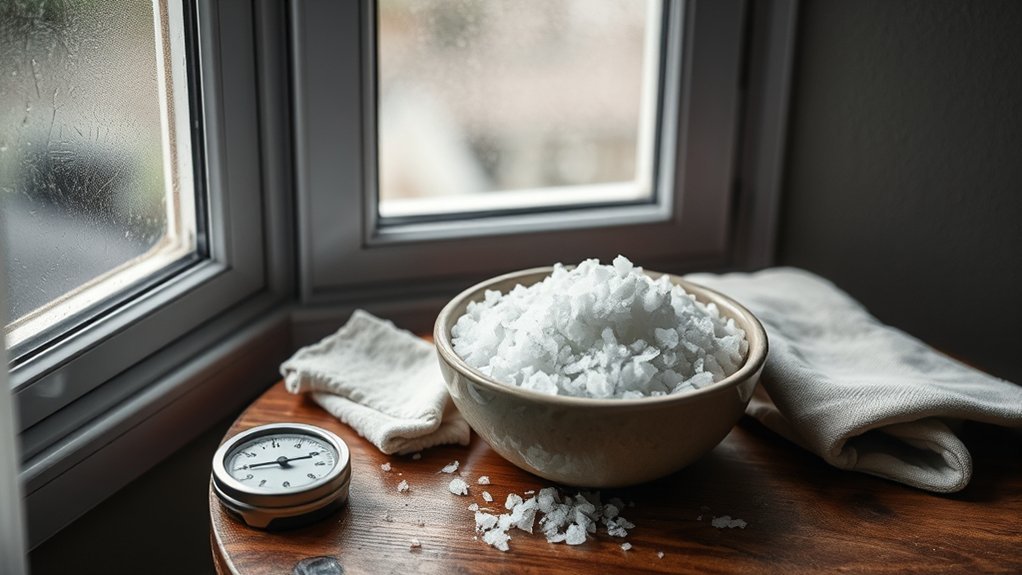
Yes, but with an important limit. Rock salt and table salt are primarily sodium chloride. Laboratory measurements show that sodium chloride has an equilibrium humidity near 75% RH, and measurements of sodium chloride deliquescence also place the transition near that level. In other words, the large, visible moisture uptake people expect from a salt trap occurs in very humid air, when salt begins forming brine. See the National Bureau of Standards/NIST saturated-salt data and laboratory measurements of sodium chloride deliquescence.
That threshold explains why ordinary salt is a poor tool for normal indoor humidity control. The U.S. EPA recommends keeping indoor humidity below 60%, ideally between 30% and 50%. Pure sodium chloride cannot be expected to pull a room reliably into that range.
| Condition | What ordinary sodium chloride does | Practical choice |
|---|---|---|
| RH well below about 75% | Do not expect strong, brine-forming moisture removal | Monitor RH and use ventilation or another appropriate moisture-control method |
| RH around or above about 75% | Salt can take up enough water to dissolve and form brine | Treat this as a sign that the space is already very humid |
| Target is below 60% RH | Ordinary salt is not a suitable control method | Fix moisture sources and use ventilation, air conditioning, or a powered dehumidifier as needed |
| Persistent mold or condensation | Salt does not correct the underlying moisture source | Dry the area, correct the source, and control room humidity |
Use salt as a limited experiment, not as a substitute for leak repair, bathroom exhaust fans, air conditioning, ventilation, or a powered dehumidifier.
How a Salt Dehumidifier Absorbs Moisture
Sodium chloride interacts with water vapor at the crystal surface, but the important household-scale effect is humidity-dependent. As RH approaches the salt’s deliquescence point, the crystals can take up enough water to begin dissolving. The resulting salty liquid is called brine.
If solid sodium chloride and saturated brine remain together, the system tends toward an equilibrium humidity close to 75% RH rather than continuing to dry the air toward 50%. If surrounding air is wetter than that equilibrium, the salt-brine system can take up water. If surrounding air is drier, an exposed brine solution can lose water back to the air.
Surface area and air movement affect how quickly the system responds, but they do not change the fundamental humidity limit. A shallow layer or ventilated container can expose more salt to humid air, yet ordinary sodium chloride still cannot provide the controlled, below-60% RH performance expected from a powered dehumidifier.
Where to Use a Salt Dehumidifier Indoors
Choose a salt setup by measured humidity, not only by room size. A tiny closet at 50% or 60% RH is still below the range where ordinary sodium chloride becomes a strong brine-forming absorber. A salt trap makes more sense as a short experiment in a very small enclosure that repeatedly measures around 75% RH or higher.
If a closet, bathroom, bedroom, basement, or storage space remains damp, correct the source rather than adding more salt. A hygrometer gives you a much more useful answer than judging humidity by whether the salt looks wet.
| Space | Use ordinary salt? | Better option if dampness persists |
|---|---|---|
| Closet or cabinet | Only as a short test if measured RH is around 75% or higher | Improve airflow, correct moisture sources, or use a purpose-made absorber |
| Small bathroom | Not as the main humidity-control method | Run the exhaust fan, dry wet surfaces, and ventilate when conditions allow |
| Bedroom | No for normal room humidity control | Use a hygrometer and a powered dehumidifier if RH remains too high |
| Basement | No, especially for persistent dampness | Fix drainage or leaks and use a properly sized powered dehumidifier |
| Condensation-heavy windows | Not as a reliable condensation solution | Lower room RH, increase airflow, and address cold surfaces or insulation where appropriate |
How to Set Up a Salt Dehumidifier
If you want to test rock salt for yourself, use a shallow container for a tiny enclosure or a two-container setup that lets brine drain away from the remaining solid salt. Treat the setup as an experiment, and measure RH before deciding that it works.
Choose The Right Container
Choose plastic or glass rather than an unprotected metal container. Saltwater can accelerate corrosion, and a leaking brine container can stain or damage nearby materials. A shallow bowl exposes more salt surface to the air.
For a drain-through setup, put drainage holes in an inner plastic container, place it inside a larger outer container, and keep the rock salt in the upper container. If brine forms, it can drain into the lower container instead of pooling around all of the remaining crystals.
Add Salt Correctly
Add enough rock salt to create a useful exposed layer without filling the catch container so high that brine could overflow. Coarse rock salt is convenient for a drain-through bucket because the larger crystals are easier to contain. This is mainly a handling advantage; coarse sodium chloride does not have a fundamentally lower humidity limit than fine sodium chloride.
| Step | Action |
|---|---|
| 1 | Measure the starting RH with a hygrometer |
| 2 | Add rock salt to a stable plastic or glass container |
| 3 | Place it near the damp area where it cannot be knocked over |
| 4 | Check for clumping, dissolved salt, or collected brine |
| 5 | Record the ending RH and empty brine before the catch container fills |
Do not place the container directly on wood, fabric, carpet, or unprotected metal. Put a stable tray underneath it so a saltwater spill is easier to contain.
Place It Strategically
Place the salt where you are actually measuring high humidity, but keep it away from splash water. Direct liquid water can dissolve the salt immediately and tells you nothing about how much water vapor the salt removed from the air.
Keep air space around the container. Do not bury it behind boxes or close it under an airtight lid. If you use a ventilated cover to reduce spill risk, make sure air can still reach the salt.
When a Salt Dehumidifier Stops Working
A salt trap does not have a simple “full versus empty” operating state. When sodium chloride forms brine, it has already taken up water. If solid salt remains and surrounding RH stays above the salt-brine equilibrium, more water can still enter the solution. If the surrounding air becomes drier, the open brine can instead lose water.
For household use, the practical limit is usually the catch container, the amount of solid salt remaining, and whether the setup produces any meaningful change in measured RH. If RH stays too high, the salt is not solving the problem even if you can see liquid in the container.
Salt Saturation Signs
Watch for these signs that the setup needs attention:
- Solid salt is dissolving and brine is collecting.
- The crystals have clumped into a wet mass.
- The catch container is approaching its safe fill level.
- Measured RH is not improving.
- Condensation continues to return.
- The area still smells musty after the moisture source has been investigated.
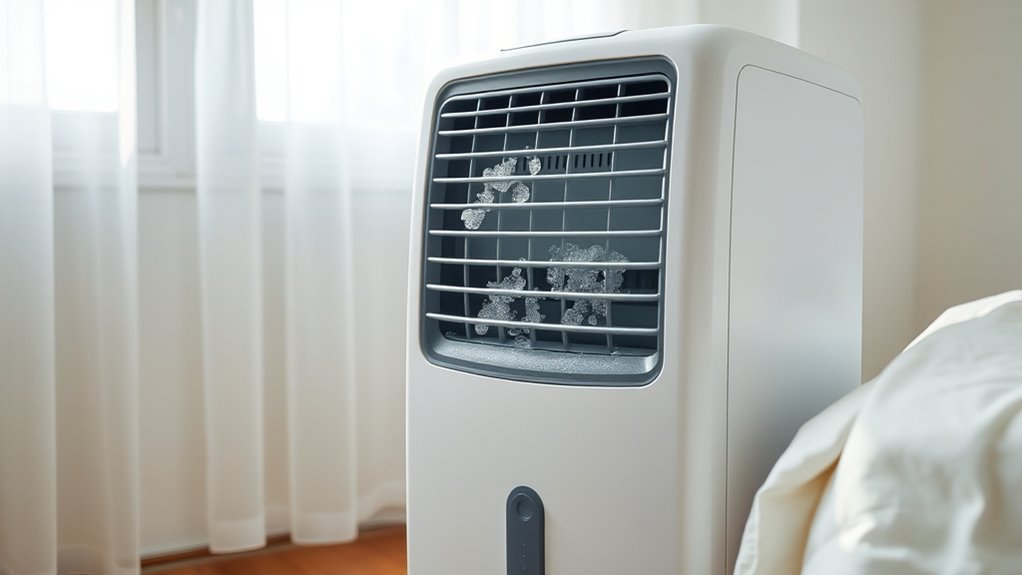
If brine appears quickly while RH remains high, treat that as evidence of a heavy moisture load, not proof that salt is an adequate long-term solution. Improve ventilation, look for leaks or wet materials, and use a powered dehumidifier when appropriate.
Refreshing The Dehumidifier
To refresh a DIY setup, empty the collected brine without spilling it, rinse and dry the catch container, and add more solid rock salt if needed. The goal is to restore solid salt and safe liquid-collection capacity, not to make sodium chloride capable of reaching a lower equilibrium RH.
| Action | Result |
|---|---|
| Add fresh solid salt | Restores the amount of sodium chloride available to dissolve |
| Empty brine | Restores catch capacity and reduces spill risk |
| Clean the container | Removes salt residue before reuse |
| Check the hygrometer | Shows whether room humidity is actually changing |
| Fix moisture sources | Addresses the reason humidity keeps returning |
Should You Use Salt or Rock Salt?
Rock salt and table salt are both primarily sodium chloride, so the coarse version is not a fundamentally stronger low-humidity desiccant. Rock salt is simply easier to handle in a bucket-style setup because its larger crystals are less likely to fall through drainage holes or turn immediately into a dense mass.
Do not confuse sodium chloride with calcium chloride. Calcium chloride belongs to a more strongly hygroscopic group of salts with a lower deliquescence humidity than sodium chloride, which is why purpose-made calcium-chloride moisture absorbers are better suited to passive moisture collection at lower RH. Follow the product’s container and handling directions rather than putting loose calcium chloride on an exposed household surface.
| Material | Best use | Main limit |
|---|---|---|
| Rock salt | Simple high-humidity DIY experiment | Ordinary NaCl is not practical for maintaining sub-60% indoor RH |
| Table salt | Tiny controlled experiment when no coarse salt is available | Fine crystals are messier to contain; chemistry is still sodium chloride |
| Silica gel | Small sealed containers and stored items when appropriately sized | Capacity must match the enclosure and it eventually needs replacement or regeneration |
| Calcium chloride | Purpose-made passive moisture absorbers | Forms liquid brine and needs a spill-safe collection system |
| Powered dehumidifier | Rooms with persistent high RH | Requires electricity, correct sizing, drainage, and maintenance |
Recommended Products

POWERFUL MOISTURE & ODOR ELIMINATOR: Our advanced spherical beads instantly attract and trap excess moisture from the air, eliminating musty odors at the source. Creates fresher, cleaner air for your home and protects clothes, leather, and valuables from damp damage. Fragrance-free formula ideal for sensitive noses.

EFFICIENT DEHUMIDIFICATION: The large spherical calcium chloride particles in the moisture absorber boxes expand the contact area with air and accelerate the dehumidifying process. That's why Vacplus moisture removers can effectively collect the excess moisture in the air and keep your room comfortable.
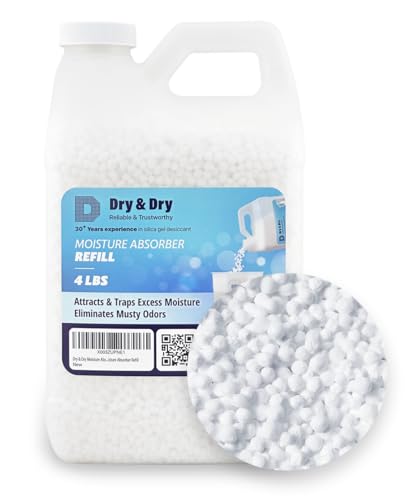
Moisture Absorber Refill, Frangrance Free, Eliminates Musty Odors, Attracts and Traps Excess Moisture
What Are the Best DIY Dehumidifier Options?
The best moisture-control method depends on the humidity target and the size of the space. Start with a hygrometer rather than choosing an absorber based only on what you already have in the kitchen.
- Ordinary rock salt: Use mainly as a low-cost experiment when measured RH is around 75% or higher. Do not expect it to maintain a room below 60% RH.
- Purpose-made calcium chloride absorber: A stronger passive option for small enclosed spaces when you want non-electric moisture collection. Use a spill-safe product designed to hold the resulting brine.
- Silica gel: Better suited to small sealed storage containers, tools, documents, camera gear, and similar items when the desiccant quantity is appropriate for the enclosure.
- Ventilation and source control: The first choice when showers, cooking, leaks, wet materials, or poor airflow are adding moisture to a room.
- Powered dehumidifier: The practical choice when indoor RH remains above 60% or a whole room needs controlled drying.
If you are unsure whether a powered unit is removing enough water, see our guide to how much water a dehumidifier should collect per day.
Recommended Products

EFFECTIVE DEHUMIDIFICATION: The CLEVAST dehumidifier bags feature spherical calcium chloride particles that can attract and absorb excess moisture quickly and efficiently. Moisture absorbers are designed with a premium one-way moisture-permeable paper that will securely lock the moisture inside.(WHEN the temperature drops sharply or the humidity is low, crystals may appear inside the bag, and no water droplets at the bottom. This is normal, please be patient for the product to work)

LARGE 2200 ML CAPACITY: This Vacplus moisture absorber bucket holds up to 2200 ml of water, absorbing over four times more moisture than standard 500 ml options. The clear water tank allows you to easily track the fill level over time. A safe moisture absorber that’s also a cost-effective choice for closets, basements, and storage areas with ongoing humidity problems.
Can Salt Prevent Mold and Condensation?
Ordinary salt cannot be relied on to prevent mold because its useful sodium-chloride moisture-uptake range is much higher than the EPA’s recommended indoor RH target. Mold control starts with moisture control: repair leaks, dry wet materials, ventilate moisture-producing areas, and keep indoor RH below 60%, ideally between 30% and 50%.
Condensation is also a warning that the local surface is cold enough, relative to the air’s moisture content, for water to form. Lowering indoor RH, improving air movement, and addressing persistently cold surfaces are more dependable strategies than placing a bowl of salt nearby.
Does Salt Help With Window Condensation?
A salt container may collect some water from very humid air near a window if RH is high enough, but it does not pull liquid condensation out of glass, drywall, or wood. Wipe up existing condensation and correct the condition that keeps recreating it.
For rooms where still air contributes to damp corners or window moisture, see these practical ways to improve indoor air circulation.
Limits for Mold and Condensation
Ordinary sodium chloride has three major limits here. It does not provide a healthy-room RH setpoint, it cannot repair water intrusion, and it cannot dry water trapped inside building materials.
For a bathroom, use the exhaust fan and dry wet surfaces. For a basement, correct seepage or drainage issues and use a properly sized dehumidifier when needed. For a closet, measure RH first rather than assuming a bowl of salt is controlling it.
How Much Moisture Can Salt Handle?
Ordinary salt has no reliable room-size or pint-per-day rating. Performance depends on relative humidity, temperature, airflow, the amount of salt, exposed surface area, container design, and the moisture entering the space. A container that collects visible brine has proved that water reached the salt, but it has not proved that room RH fell to a useful level.
For household humidity control, judge a salt setup by measured RH, not by how dramatic the brine looks.
- Record the starting RH and temperature.
- Weigh the dry salt and dry container together.
- Keep doors, windows, and normal moisture sources as consistent as practical during the test.
- After a fixed test period, record the ending RH.
- Weigh the salt, brine, and container again.
- Compare both the mass change and the RH change before deciding whether the setup was useful.
If the salt gains mass but RH remains far above your target, it is collecting some water without controlling the space. If RH is already well below roughly 75% and little changes, that is also consistent with ordinary sodium chloride’s limited usefulness at lower humidity.
How Can You Make Salt Last Longer?
With ordinary salt, “lasting longer” matters less than whether it changes the humidity enough to be useful. Keep the setup away from direct splash water, use a stable catch container, and expose enough crystal surface to the air without creating a spill hazard.
A two-container setup makes cleanup easier because brine can drain away from some of the remaining solid salt. It does not change sodium chloride’s equilibrium humidity.
Check the setup every few days when first testing it. Record both the brine level and the hygrometer reading. If you are repeatedly adding salt while RH stays too high, stop treating replacement frequency as the problem and switch to a stronger moisture-control method.
When Should You Use a Powered Dehumidifier Instead?
Use a powered dehumidifier when measured indoor RH stays above 60%, when condensation keeps returning, or when you need to control an entire room rather than run a small experiment. Unlike ordinary salt, a powered dehumidifier actively removes water and can be controlled toward a useful room-humidity target.
You should also move beyond DIY salt if you have visible mold, water-damaged materials, a leaking pipe, a wet basement, or another continuing moisture source. Correct the source first, dry wet materials, improve ventilation, monitor RH with a hygrometer, and then use a dehumidifier where needed.
If the problem is confined to a compact room or enclosed area, our guide to dehumidifiers for small spaces explains the tradeoffs of compact powered units.
Recommended Products

Semiconductor dehumidifiers use thermoelectric cooling to remove moisture from the air. They create a drier, more comfortable environment by reducing humidity and improving air quality.

2500 Sq. Ft High-Efficiency Dehumidifier – The KNKA basement dehumidifier features a quiet, high-performance compressor that removes up to 34 pints of moisture per day (at 95°F, 90% RH). Ideal for basements, offices, bathrooms, bedrooms, kitchens, stockrooms, living rooms, laundry rooms, garages, crawlspaces, or RVs. It helps maintain optimal humidity between 50%–70% for healthier, more comfortable living
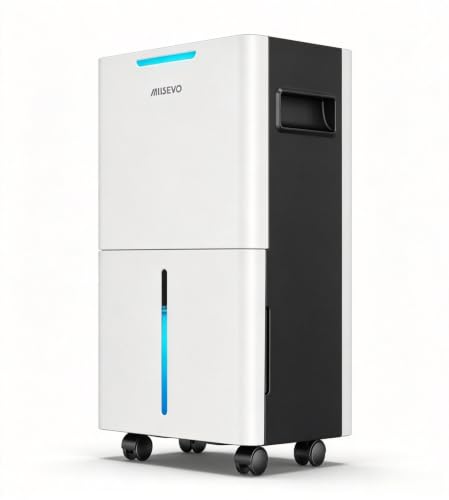
High Efficient Dehumidifier — Equipped with a high-performance compressor, Whether it’s your basement, bedroom, bathroom, living room, bathroom, crawlspace, or even an RV, this dehumidifier effectively keeps your environment dry, comfortable, and healthy.
Sources and References
- National Bureau of Standards/NIST: Relative Humidity-Temperature Relationships of Some Saturated Salt Solutions
- Peer-reviewed sodium chloride deliquescence measurements
- U.S. EPA: A Brief Guide to Mold, Moisture and Your Home
- Peer-reviewed discussion of salt deliquescence humidity and hygroscopicity
Frequently Asked Questions
Is Salt an Effective Dehumidifier?
Ordinary sodium chloride is not an effective way to control normal room humidity. It can form brine when RH reaches roughly 75% or higher, but the EPA recommends keeping indoor RH below 60%, ideally between 30% and 50%. Use salt as a limited high-humidity experiment rather than a substitute for a powered dehumidifier.
Does Putting Salt in a Room Reduce Humidity?
It may remove some water when the air is humid enough, but ordinary salt cannot reliably lower a room into the recommended indoor-humidity range. If a hygrometer reads below roughly 75% RH, do not expect strong brine-forming moisture removal from pure sodium chloride.
What Is the Best Homemade Moisture Absorber?
There is no single best absorber for every space. Ordinary rock salt is mainly useful as a high-RH experiment. Purpose-made calcium chloride absorbers are stronger passive options for small spaces, while silica gel is useful in appropriately sized sealed storage. For a damp room, source control, ventilation, and a powered dehumidifier are more dependable.
How Long Does Rock Salt Last as a Dehumidifier?
There is no reliable fixed lifespan. If RH stays below roughly 75%, ordinary sodium chloride may collect little visible water. At higher RH, the rate depends on the amount of salt, temperature, airflow, exposed surface, container design, and how much moisture enters the space.
Can Salt Stop Mold From Growing?
No. Ordinary salt cannot be relied on to keep indoor humidity in the EPA’s preferred range. Mold prevention requires controlling the moisture source, drying wet materials, improving ventilation, and keeping indoor RH below 60%, ideally between 30% and 50%.
Is Calcium Chloride Better Than Salt for Humidity?
For passive moisture absorption, purpose-made calcium chloride products are generally more useful than ordinary sodium chloride because calcium chloride has a lower deliquescence humidity. It also forms liquid brine, so use a product or container designed to contain that liquid safely.
At What Humidity Does Salt Absorb Enough Moisture to Form Brine?
For sodium chloride, the important bulk deliquescence point is around 75% RH at normal room temperatures. The exact value changes slightly with temperature and material purity, so treat 75% as a practical approximate threshold rather than a household calibration standard.
Can Wet Salt Release Moisture Back Into the Air?
Yes. A saturated sodium chloride solution tends toward an equilibrium humidity near 75% RH. If the surrounding air is wetter, it can take up water; if the surrounding air is drier, exposed brine can lose water. That is another reason not to use an open salt-brine container as a way to maintain normal indoor humidity.
Conclusion
Salt can collect moisture, but ordinary sodium chloride is much more limited than common DIY advice suggests. Its useful brine-forming behavior occurs around 75% RH, which is already above the EPA’s recommended indoor range. That makes rock salt a reasonable experiment in an extremely humid tiny enclosure, but not a true room dehumidifier.
Measure humidity with a hygrometer before choosing a solution. If RH stays above 60%, condensation returns, or you find mold, leaks, or wet materials, correct the moisture source, improve ventilation, and use a properly sized powered dehumidifier when needed.