
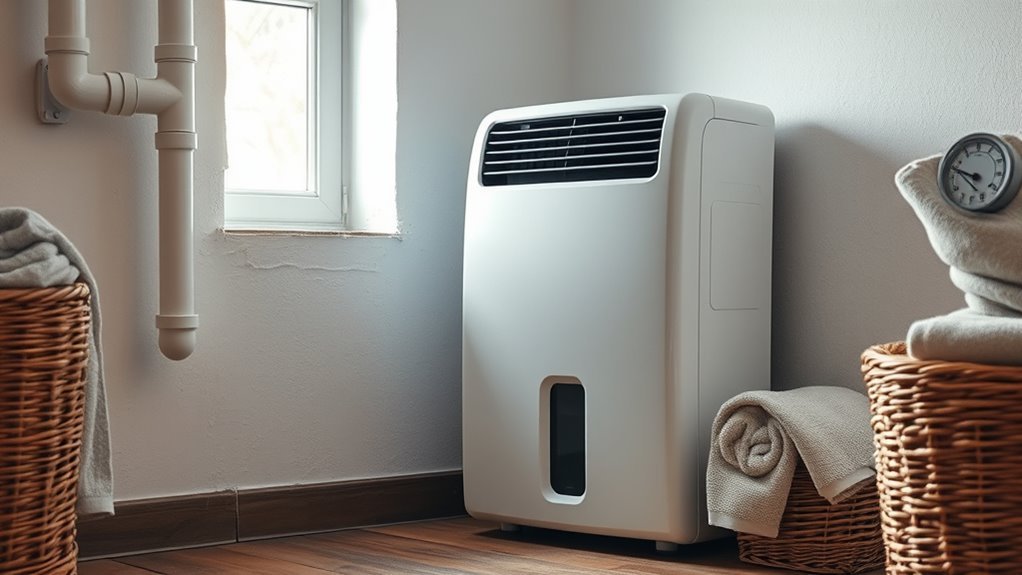
Choose a dehumidifier by matching its pint capacity to the size and dampness of your space, then narrow your options by drainage, noise, efficiency, and maintenance needs. The right unit should lower humidity without running nonstop, filling the bucket every few hours, or wasting electricity on capacity you do not need.
Quick Answer
For most rooms, choose a dehumidifier by measuring the square footage, checking humidity with a hygrometer, and matching the pint rating to the room’s dampness. A 20- to 30-pint unit fits many moderately damp rooms, while very damp basements often need 40 to 50 pints or a whole-home system.
Key Takeaways
- Dehumidifier “size” means moisture-removal capacity in pints per 24 hours, not the physical size of the machine or the bucket.
- Aim for indoor relative humidity around 30% to 50%; above that range, moisture problems and mold risk become more likely.
- Basements, laundry areas, and rooms with seepage need more capacity than dry bedrooms of the same square footage.
- Continuous drainage, a built-in humidistat, easy filter access, and ENERGY STAR certification are usually worth paying for.
- Do not rely on brand name alone. Check the exact model’s capacity, warranty, noise rating, efficiency, user reviews, and recall history.
At a Glance
| Time Required | 10 to 20 minutes to measure the room, check humidity, and compare models. |
| Difficulty | Easy for portable units; moderate for whole-home systems that require HVAC installation. |
| Tools Needed | Tape measure, hygrometer, nearby grounded outlet, and an optional floor drain or condensate pump. |
| Cost | Varies by capacity, efficiency, pump, smart controls, and whether you choose a portable or whole-home unit. |
What Size Dehumidifier Do You Need?
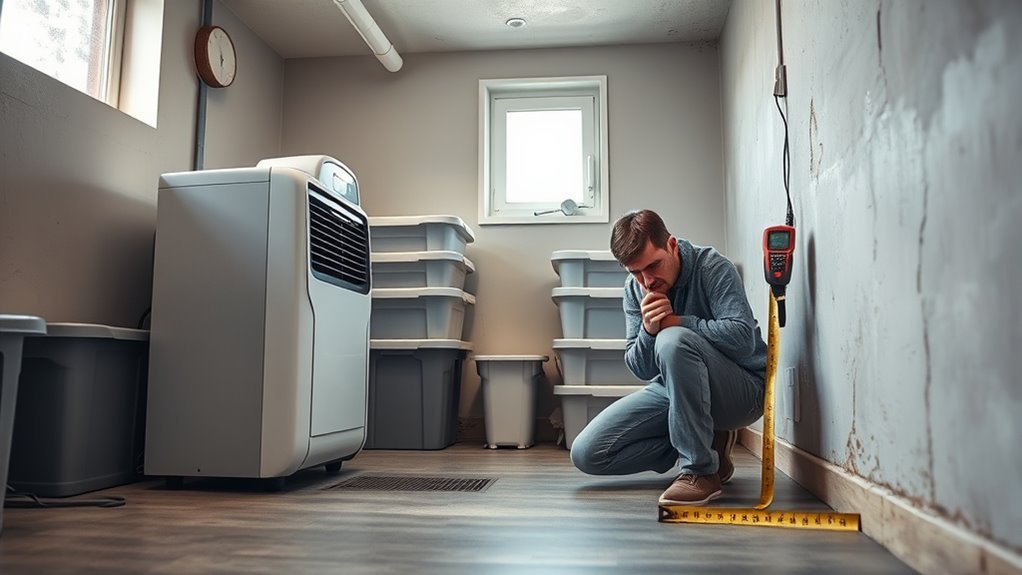
To size a dehumidifier correctly, focus on moisture removal capacity, measured in pints per day. This rating tells you how much water the unit can remove from air in 24 hours under test conditions. It does not tell you the bucket size, and it does not guarantee the same output in every real room.
Start with two measurements: the room’s square footage and its relative humidity. A simple hygrometer gives you a better answer than guessing by feel. The ENERGY STAR dehumidifier buying guide recommends looking at both room size and dampness level because a slightly damp bedroom and a wet basement need different capacities, even if the square footage is similar.
| Room Condition | What It Feels Like | Good Starting Capacity |
|---|---|---|
| Slightly to moderately damp | Occasional musty smell, mild dampness, humidity often around 50% to 75% | 20 to 30 pints for many small-to-medium spaces |
| Very damp | Room feels damp often, musty odor is consistent, damp spots may appear | 25 to 40 pints for many small-to-medium spaces |
| Wet or high-load | Seepage, sweating walls or floors, laundry drying, or humidity near 90% to 100% | 30 to 50 pints, or a whole-home system for large areas |
These ranges follow the ENERGY STAR sizing guidance for small-to-medium rooms; larger rooms need more. Treat them as a starting point and check the manufacturer’s sizing chart.
Note: If your room has high ceilings, open doorways, poor air circulation, or frequent moisture from laundry, showers, seepage, or cooking, choose the next capacity level up instead of buying the smallest unit that appears to fit.
Should You Choose a Compressor Dehumidifier?
For most homes, a compressor dehumidifier is the best starting point. It pulls humid air across cold coils, condenses moisture into water, and sends drier air back into the room. This type works especially well in warm, humid rooms, basements, laundry areas, and larger spaces where damp air lingers.
The main exception is temperature. If the area often falls below 65°F, a standard compressor unit may lose efficiency or develop frost on the coils. In that case, look for a model rated for lower-temperature operation, an auto-defrost feature, or a desiccant model if the space is consistently cool.
Warning: Do not place a dehumidifier where water can drain near electrical cords, outlets, power strips, or appliances. Use a properly grounded outlet, follow the manufacturer’s clearance rules, and keep drain hoses routed where they will not create a trip hazard.
Why Does Dehumidifier Pint Capacity Matter?
Pint capacity tells you how much moisture a dehumidifier can remove in one day. A 50-pint dehumidifier can remove up to 50 pints, or 6.25 gallons, in 24 hours under its rating conditions. In a cooler room, a room with poor airflow, or a room with new moisture entering constantly, the real-world result may be lower.
Capacity vs. Bucket Size
Capacity and bucket size are not the same thing. A 50-pint unit does not usually hold 50 pints in its tank. It means the machine may be able to remove that much moisture per day, while the bucket may need to be emptied several times unless you connect a drain hose.
If you do not want to empty the bucket often, prioritize continuous drainage. A gravity drain hose works if the unit sits higher than a floor drain or sump. If the drain is uphill, choose a model with a built-in pump or use a compatible condensate pump.
Matching Pints to Space
Smaller spaces usually need less capacity, but dampness matters more than square footage alone. A dry 500-square-foot bedroom may only need a modest unit, while a 500-square-foot basement with seepage may need a much larger one. Use the pint rating as a starting point, then adjust for the room’s actual moisture load.
Real-World Performance Differences
Real rooms rarely match test conditions. Open doors, air leaks, cold walls, dirty filters, blocked airflow, and water intrusion can all make a dehumidifier work harder. If humidity stays high after a full day of operation, the unit may be undersized, placed poorly, or fighting an active moisture source.
ENERGY STAR certified dehumidifiers use about 20% less energy than similarly sized conventional models while removing the same amount of moisture.
How to Choose a Dehumidifier for Your Space
Use a simple process instead of guessing:
- Measure the area. Multiply room length by width to get square footage. For open basements, include the connected area the unit must dry.
- Check humidity. Use a hygrometer near the problem area. A good indoor target is usually around 30% to 50% relative humidity.
- Judge the moisture source. Musty smell, condensation, wet walls, seepage, or laundry drying all increase the capacity you need.
- Choose the capacity. Start with the table above, then size up for high ceilings, open layouts, heavy moisture, or frequent door opening.
- Plan drainage. Decide whether you will empty a bucket, use a gravity hose, or need a pump.
- Confirm temperature range. For cool basements, choose a low-temperature or auto-defrost model.
A dehumidifier helps control humidity, but it does not fix the source of water. If a room has leaks, seepage, poor grading, clogged gutters, or wet building materials, solve those issues too. The EPA’s mold guidance explains that controlling moisture is the key to controlling indoor mold growth.
Pro Tip: Put the hygrometer across the room from the dehumidifier, not directly beside the air outlet. This gives you a better reading of the whole space instead of the driest air near the machine.
Which Dehumidifier Features Are Worth It?
The best features are the ones that reduce daily effort and keep humidity stable.
- Built-in humidistat: Lets you set a target humidity level so the unit cycles on and off automatically.
- Continuous drain option: Useful for basements, laundry rooms, and any space where the bucket fills quickly.
- Built-in pump: Worth it when water must move up to a sink, window, or higher drain line.
- Auto shutoff: Stops the unit when the bucket is full, helping prevent overflow.
- Washable filter: Makes maintenance easier and protects airflow.
- Auto-defrost: Helpful for cooler basements and shoulder-season use.
- Low-noise mode: Important for bedrooms, offices, and living rooms.
- ENERGY STAR certification: Helps reduce electricity use during frequent operation.
Smart controls, app alerts, and timers are convenient but not essential. Buy them if they solve a real problem, such as monitoring a vacation home or checking humidity without going downstairs.
Recommended Products

【The Undisputed Champion — Industry‑Leading Dehumidifier Brand】When you choose AEOCKY, you get double market validation. In 2025, AEOCKY was an industry‑leading dehumidifier brand on Amazon US. This means you’re not just choosing a flagship from a market leader, but the top choice proven by millions of real users—representing the ultimate combination of performance, quality, and trust.

【Waykar Dehumidifier For Spaces Up To 7,000 Sq. Ft.】Our dehumidifier are able to remove up to 150 pints (under 95°F, 90%RH condition) of moisture per day, which cover areas up to 7,000 Sq. Ft. and adjust humidity from 30% to 80%. It is a dehumidifier ideal for home, basement, wine cellars, garages, supermarkets, concourses, and other indoor/outdoor places,cellars, crawlspace, large spaces, etc.
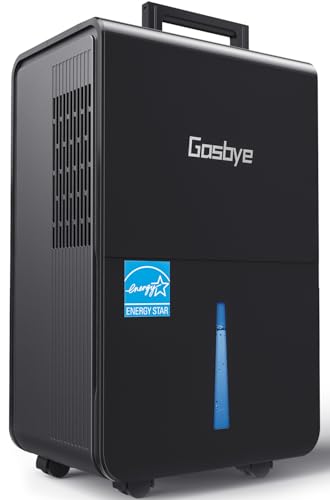
[43-Pound Solid Build] Gasbye DryPrime dehumidifier pulls up to 115 pints/day at 86°F, 80% RH, 73 pints/day at 80°F, 60% RH, and 50 pints/day at 65°F, 60% RH. Since we don’t inflate the pints/day performance figures, what you see is what you get. Dimensions: 11" D × 15" W × 24" H, which may be larger compared to some other "mini" models with inflated pints/day ratings
How Does Energy Efficiency Affect Running Costs?
Energy efficiency directly affects what you spend to keep a room dry. When comparing models, check for ENERGY STAR certification and compare the Integrated Energy Factor, often shown as IEF. IEF measures liters of water removed per kilowatt-hour. In general, a higher IEF means the unit removes more moisture for each unit of electricity.
Also check the yellow EnergyGuide label when it is available. It helps shoppers compare estimated yearly operating cost and energy use among similar models.
Do not choose the smallest model only because it uses fewer watts. An undersized unit may run constantly and still leave the room damp. A properly sized, efficient model often performs better because it reaches the target humidity sooner and cycles more normally.
Portable vs. Whole-Home Dehumidifiers
A portable dehumidifier is best for one room, a basement zone, a bedroom, a bathroom area, or a seasonal moisture problem. It is easier to buy, move, clean, and replace.
A whole-home dehumidifier is better when humidity is high throughout the house, the home has central ducts, and portable units cannot keep up. Whole-home systems usually require professional HVAC sizing and installation, but they can be the better long-term choice for well-sealed homes in humid climates.
Choose portable if the problem is local. Consider whole-home if multiple rooms stay above your target humidity even when the HVAC system is working properly.
Recommended Products

Semiconductor dehumidifiers use thermoelectric cooling to remove moisture from the air. They create a drier, more comfortable environment by reducing humidity and improving air quality.

32-Pint Daily Capacity for Spaces up to 2,500 Sq. Ft. — Designed to manage ambient moisture in large living spaces, finished basements, and storage areas. This unit removes up to 32 pints of water vapor every 24 hours under test conditions of 95°F and 90% RH, helping promote a more balanced indoor air environment across areas up to 2,500 sq. ft

3 Smart Modes for Every Space — Whether you need everyday moisture control, faster clothes drying, or continuous protection in damp areas, this dehumidifier has you covered. DEHU mode maintains your ideal living room humidity. DRY mode speeds up drying delicate clothes indoors. CONT mode runs nonstop for basements, crawl spaces, and any area that never seems to dry out. All adjusted with a single tap on the LED touchscreen.
Which Dehumidifier Brands Are Worth Considering?
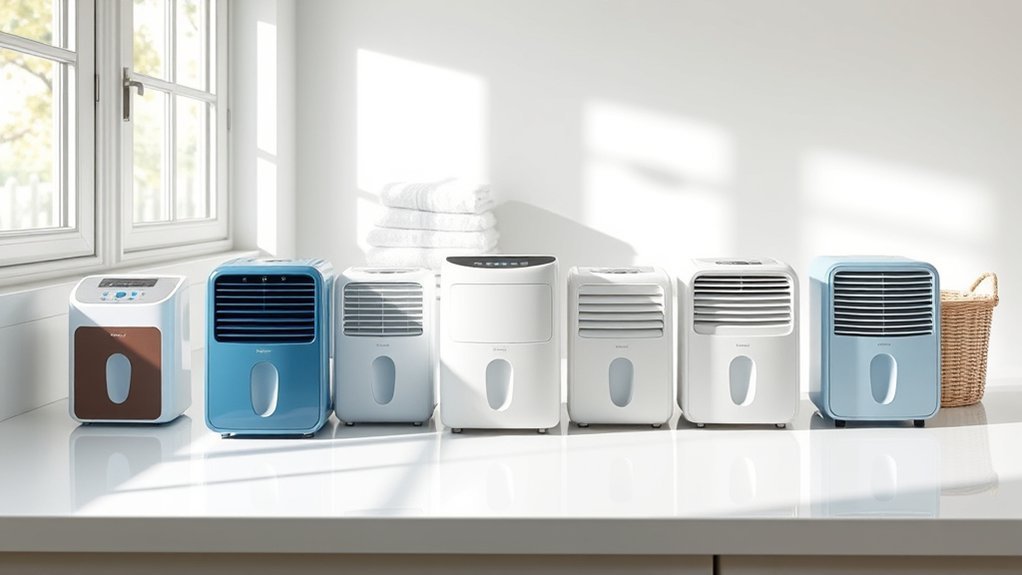
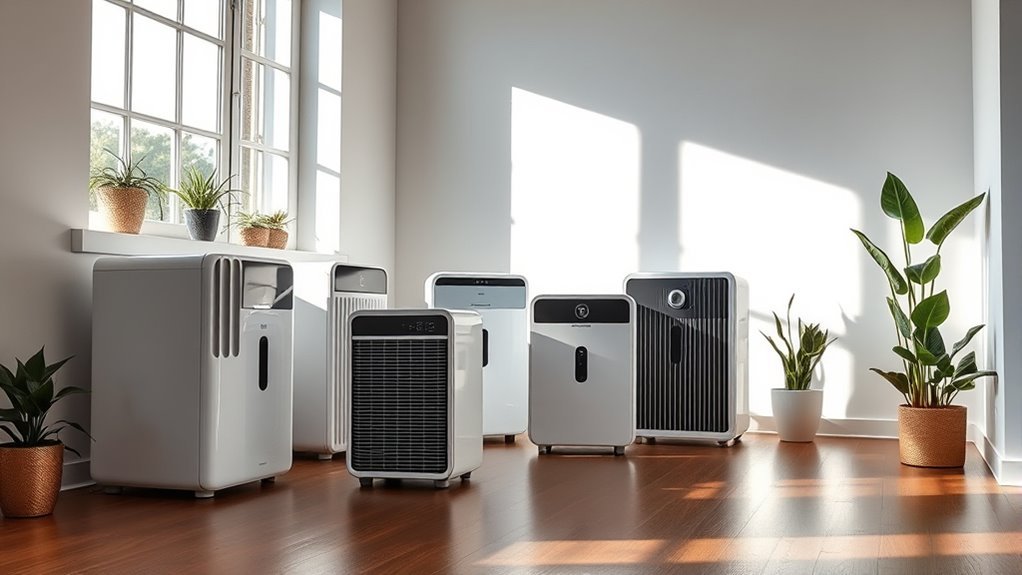
Brand can help you build a shortlist, but the exact model matters more than the logo. Midea, Frigidaire, Honeywell, GE, hOmeLabs, Black+Decker, and other common brands all sell models in different capacities and feature levels. Instead of assuming one brand is always best, compare the details that affect daily use:
- Certified efficiency: Look for ENERGY STAR certification and compare IEF.
- Capacity: Match the pint rating to room size and dampness level.
- Drainage: Choose bucket, gravity drain, or pump based on your layout.
- Noise: Check decibel ratings and owner feedback if the unit will run near living space.
- Warranty and parts: Favor brands with clear warranty terms, accessible filters, and responsive support.
- Recall status: Search the exact model number before buying used or clearance inventory.
The U.S. Consumer Product Safety Commission has listed major dehumidifier recalls in the past, so a model-level safety check is a smart step before purchase.
Recommended Products

【Waykar 150 Pints for Spaces up to 7,000 Sq. Ft】Effectively extracts up to 150 pints of humidity per day (under 95°F, 90% RH), making it ideal for damp basements, humid homes, bedrooms, laundry areas, storage rooms, and bathrooms. Covers up to 7,000 sq. ft., helping reduce condensation and unpleasant odors to create a cleaner, drier, healthier living space. With a 30%–80% RH adjustable range, maintain full control of indoor comfort through all seasons—from muggy summers to wet winters

4,500 SQ. FT. DEHUMIDIFIER – Removes up to 50 pints of moisture per day with an adjustable humidity setting from 35% to 85%. Perfect for use in basement, bathroom, bedroom, office, kitchen, cellar, or crawlspace. Maintain a healthy 45%-55% humidity range
Where Should You Place a Dehumidifier?
Place the dehumidifier where air can move freely. Keep it away from walls, curtains, furniture, dust, and sawdust unless the manual says the air discharge design allows wall placement. Close doors and windows while it runs so the unit is not trying to dry outdoor air.
For drainage, keep the hose short, downward-sloping, and secure. A long hose across a walkway can kink, leak, or become a trip hazard. If you cannot route water safely to a floor drain, use the bucket or choose a pump model.
How Do You Maintain a Dehumidifier?
Good maintenance protects performance and helps the unit last longer.
- Clean or rinse the filter as often as the manual recommends.
- Empty and rinse the bucket to prevent odor and buildup.
- Check the drain hose for kinks, clogs, algae, or poor slope.
- Vacuum dust from intake and outlet grilles.
- Keep the unit upright and level.
- Store it dry if you only use it seasonally.
If performance suddenly drops, clean the filter first. Restricted airflow is one of the simplest reasons a dehumidifier runs but removes little water.
What If Your Dehumidifier Does Not Lower Humidity?
If the unit runs but humidity stays high, work through these checks:
- Check the setting: Set the humidistat around 45% to 50% and give the unit several hours.
- Confirm room temperature: Cold air can reduce moisture removal, especially below 65°F.
- Improve airflow: Move the unit away from walls and furniture.
- Close the space: Shut doors and windows while dehumidifying.
- Look for water sources: Leaks, seepage, damp crawl spaces, and indoor drying laundry can overwhelm the unit.
- Clean the filter: Dust buildup reduces airflow and performance.
- Recheck capacity: If the unit never reaches the target, it may be undersized for the moisture load.
Frequently Asked Questions
How often should I empty the water tank?
Whenever it fills. In a damp basement that may be once or twice a day; in a mildly humid bedroom, much less often. If you empty it constantly, connect a drain hose or choose a model with a pump.
Can a dehumidifier run continuously and safely?
Yes, if the model is designed for it, the filter is clean, the unit is plugged into a grounded outlet, and drainage is set up safely. Use the humidistat instead of forcing nonstop operation.
Do dehumidifiers work in cold basement temperatures?
They can, but standard compressor models remove less moisture as the room cools, and frost can form on the coils below about 65°F. For cool spaces, choose a model rated for lower temperatures or with auto-defrost.
Should I buy the biggest dehumidifier available?
Not always. ENERGY STAR says it is better to oversize than undersize, but an oversized unit costs more, takes more space, and can be louder. Match capacity to room size, dampness, and drainage needs.
Do I need a pump on my dehumidifier?
Only if water must move upward or across a distance to a sink, window, or higher drain. If the unit can drain downhill to a floor drain or sump, a gravity hose may be enough.
Will a dehumidifier remove mold?
No. It reduces the moisture that lets mold grow, but it does not remove existing mold or fix leaks. Clean mold safely, dry wet materials quickly, and repair the moisture source.
Conclusion
Choosing the right dehumidifier comes down to four decisions: how damp the space is, how many pints per day you need, how you will drain the water, and how much energy the unit will use. Measure the room, check humidity with a hygrometer, choose enough capacity for the real moisture load, and prioritize a humidistat, continuous drain option, cleanable filter, and efficient operation. A well-chosen dehumidifier will not replace leak repair or ventilation, but it can keep humidity under control and make damp rooms healthier, drier, and easier to live with.
Sources
- ENERGY STAR — Dehumidifiers — backs up capacity guidance, ENERGY STAR efficiency, IEF, humidistat, placement, drainage, and low-temperature notes.
- U.S. EPA — Mold Course Chapter 2 — backs up humidity targets, moisture control, and mold-prevention wording.
- eCFR — DOE Dehumidifier Test Method — backs up capacity and integrated energy factor definitions.
- Federal Trade Commission — EnergyGuide Labeling FAQs — backs up EnergyGuide label comparison and operating-cost guidance.
- U.S. Consumer Product Safety Commission — Dehumidifier Recall Example — backs up the recommendation to check model-level recall history.


[…] For valuable goods, use calcium chloride as one layer of protection, not the only protection. Seal cartons properly, keep items off concrete floors, allow air gaps between stacks, and inspect for leaks or sweating walls. If the space stays above your target humidity even after using absorbers, you need ventilation or a powered dehumidifier. […]