Affiliate disclosure: As an Amazon Associate, we may earn from qualifying purchases at no extra cost to you. Product specifications, sellers, warranties, and availability can change, so confirm the current Amazon listing and manufacturer instructions before ordering.
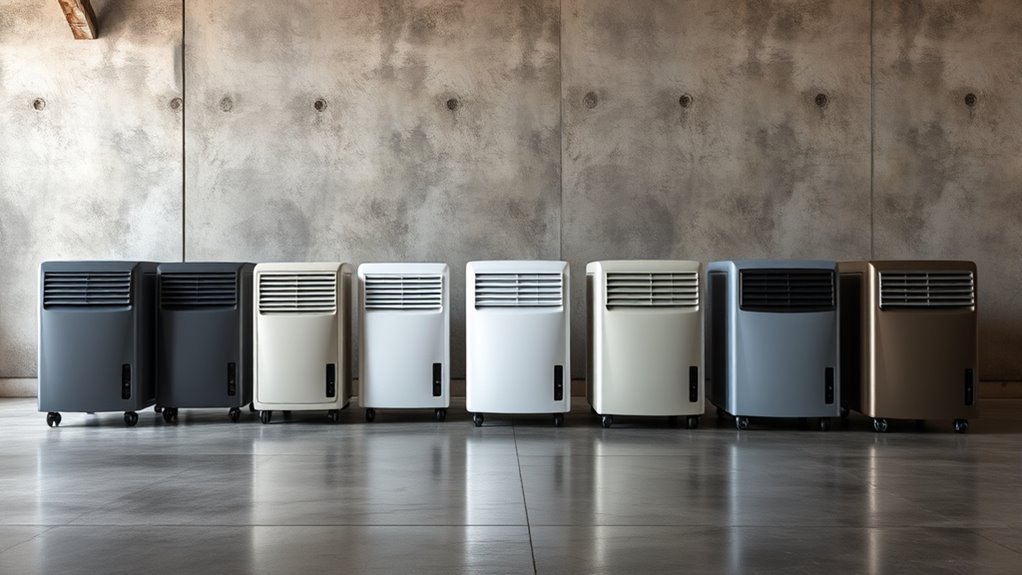
Choosing the best dehumidifier for a mobile home starts with the actual humidity level, the number of connected rooms, and the source of the moisture. Compact thermoelectric models are easy to place in bedrooms, bathrooms, closets, and RV-style spaces, but they remove far less water than compressor dehumidifiers. For persistent dampness, recurring window condensation, or moisture across several rooms, a compressor model with a humidistat and continuous drainage is usually the stronger choice.
Use a separate hygrometer to check relative humidity before buying. Also remember that tank size is not daily moisture-removal capacity, and seller-stated square-foot coverage does not prove that a mini unit can control a whole mobile home.
Quick verdict: The Waykar 34-Pint is the most balanced compressor option for many mobile homes, the NEWBULIG 30-Pint is a practical value alternative, and the AEOCKY is better for severe humidity or a larger connected space. For one bedroom, bathroom, or closet, the TABYIK 35 OZ and NeedDuck 44 OZ are compact, quiet choices.
Important: Seller-stated square-foot coverage is not the same as moisture-removal capacity. Compare the dehumidifier type, stated test conditions, drainage options, and your measured humidity before buying.
How We Evaluated These Dehumidifiers
We compared dehumidifier type, seller-stated extraction capacity, test conditions, drainage, humidistat controls, automatic defrost, tank access, noise-related features, and suitability for a mobile home’s limited floor space. Compressor models receive priority for multi-room or persistent moisture, while thermoelectric models are treated as localized solutions for mild humidity. We did not treat tank volume or a large square-foot claim as proof of whole-home performance.
Quick Comparison of Mobile Home Dehumidifiers
| Product | Best For | Type / Capacity | Key Advantage | Amazon |
|---|---|---|---|---|
| Waykar 34 Pint | Best overall for multi-room control | Compressor; up to 34 pints/day at 95°F/90% RH (seller test) | ENERGY STAR, humidistat, drain hose | Check Price |
| AEOCKY | Severe humidity or larger connected areas | Compressor; up to 80 pints/day at 95°F/95% RH (seller test) | High capacity and continuous drainage | Check Price |
| NEWBULIG 30 Pint | Medium-size mobile homes | Compressor; seller-stated 30 pints/day | Child lock, auto defrost, drain option | Check Price |
| TABYIK 35 OZ | Quiet bedrooms and small bathrooms | Thermoelectric; 35 oz tank, up to 16 oz/day at 86°F/80% RH | Very compact and quiet | Check Price |
| NeedDuck 44 OZ | Closets, bathrooms, and small rooms | Thermoelectric; 44 oz tank; no standardized daily rate shown | Auto defrost and timer modes | Check Price |
| BREEZOME 60 OZ | Timer-equipped small-room use | Thermoelectric; 60 oz tank, up to 700 mL/day at 86°F/80% RH | Large tank and programmable timer | Check Price |
| ToLife 95 OZ | Large-tank tabletop use | Thermoelectric; 95 oz tank; daily rate not clearly stated | Slim shape and two modes | Check Price |
| KeepGlad 98 OZ | Compact continuous drainage | Compact; seller-stated 2.8 pints/day | Humidity display and drain option | Check Price |
| BEDRED 95 OZ | Ambient light and sleep mode | Thermoelectric; 95 oz tank; daily rate not clearly stated | Upright footprint and night light | Check Price |
| Onsekin CS08 | Aromatherapy and mild humidity | Thermoelectric; daily rate not clearly stated | Diffuser, lighting, and sleep mode | Check Price |
NeedDuck 44 OZ Portable Quiet Dehumidifier
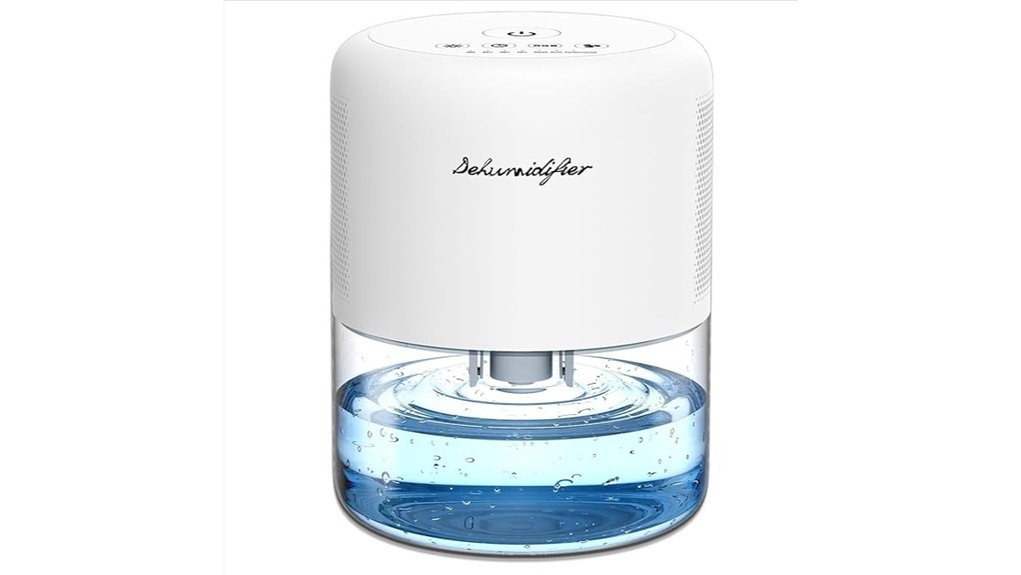
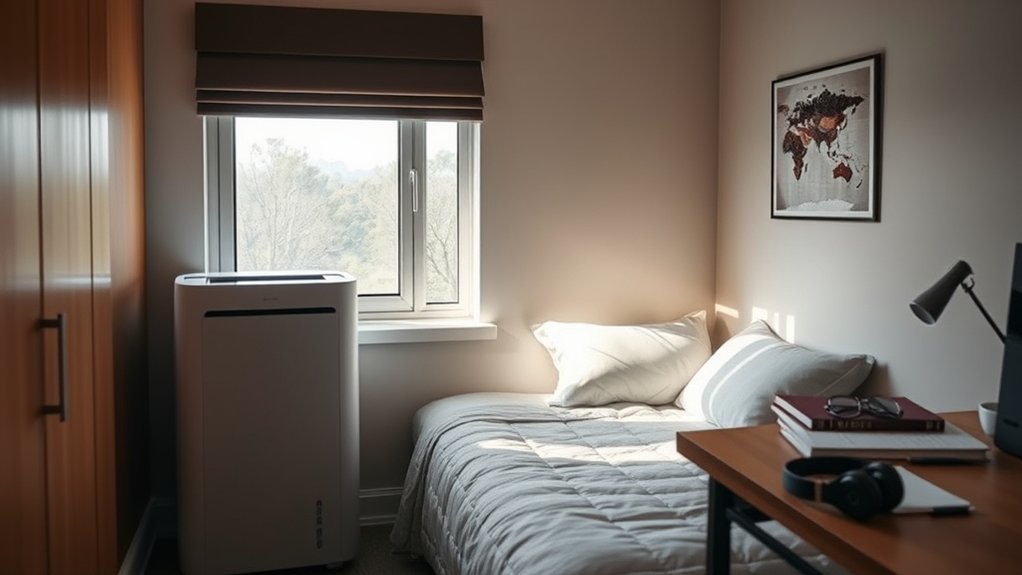
Best compact pick: The NeedDuck 44 OZ model is designed for targeted humidity control in small mobile-home spaces such as a bathroom, closet, sleeping area, or laundry nook. Its 44-ounce tank, compact footprint, automatic shutoff, and automatic defrost make it easier to use where floor space is limited.
The current listing confirms a 44-ounce tank, automatic shutoff, automatic defrost, three operating modes, four timer choices, and seller-stated coverage up to 215 square feet. It does not clearly present a standardized pints-per-day rating. Treat it as a mild, localized moisture-control unit rather than a solution for an entire damp mobile home.
Why You’ll Like It:
- Compact design fits shelves, counters, and tight corners.
- Auto shutoff helps prevent tank overflow.
- Timer choices, multiple modes, and auto defrost add convenience.
Who Should Avoid It: Buyers dealing with widespread dampness, standing moisture, or several humid rooms should choose a pint-rated compressor model.
Pros:
- Portable and suitable for small rooms.
- Quiet operation for sleeping areas.
- 44-ounce removable tank with safety shutoff.
Cons:
- Lower moisture-removal ability than compressor dehumidifiers.
- May need frequent emptying in humid weather.
- Not intended as a whole-home solution.
AEOCKY 4500 Sq.Ft Smart Compressor Dehumidifier
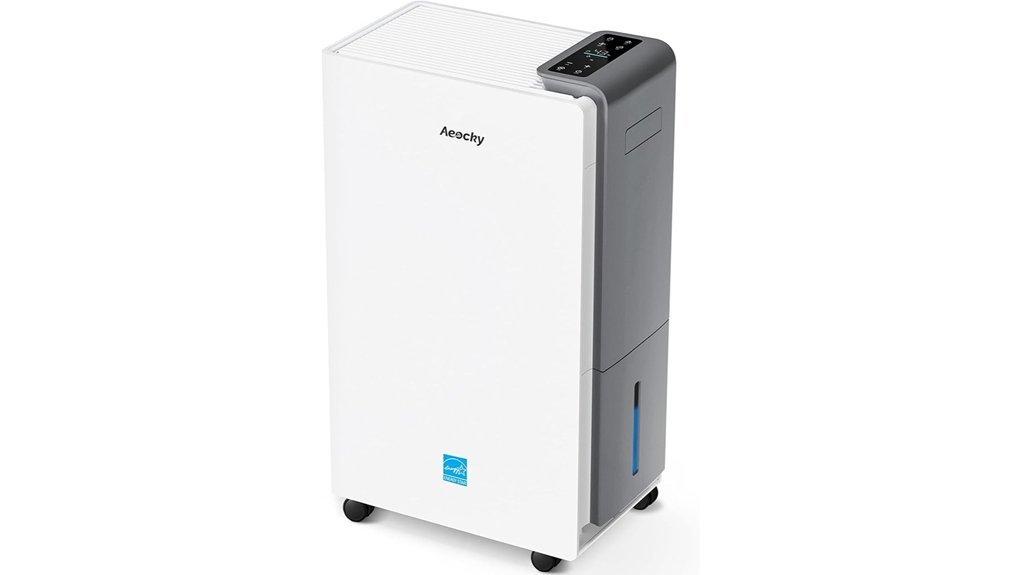
Best high-capacity pick: The AEOCKY is a compressor dehumidifier for persistent moisture, several connected rooms, or a larger mobile home affected by damp air from below. The seller states up to 80 pints per day at 95°F and 95% relative humidity and 59.3 pints per day at 86°F and 80% relative humidity. Those figures should not be compared directly with standardized DOE capacity ratings unless the same test method is used.
It includes an adjustable humidistat, a 1.45-gallon tank, a drain hose, a child lock, and timer controls. The current listing identifies it as an ENERGY STAR Most Efficient 2025 model. It is a stronger choice than a mini thermoelectric unit when the goal is to manage serious humidity across connected rooms rather than in one small corner.
Why You’ll Like It:
- High moisture-removal capacity for difficult humidity problems.
- Continuous drainage reduces tank-emptying work.
- Humidistat control helps maintain a selected humidity level.
Who Should Avoid It: It may be unnecessarily large for a single small bedroom, and buyers should confirm that they have suitable floor space and a practical drainage route.
Pros:
- Compressor performance for serious dampness.
- ENERGY STAR Most Efficient 2025 designation on the current listing.
- Drain hose and automatic humidity control.
Cons:
- Larger and heavier than compact thermoelectric models.
- The headline 80-pint claim uses unusually hot and humid seller test conditions.
- Higher capacity may be more than a small mobile home needs.
Onsekin CS08 Dehumidifier with Aromatherapy Diffuser
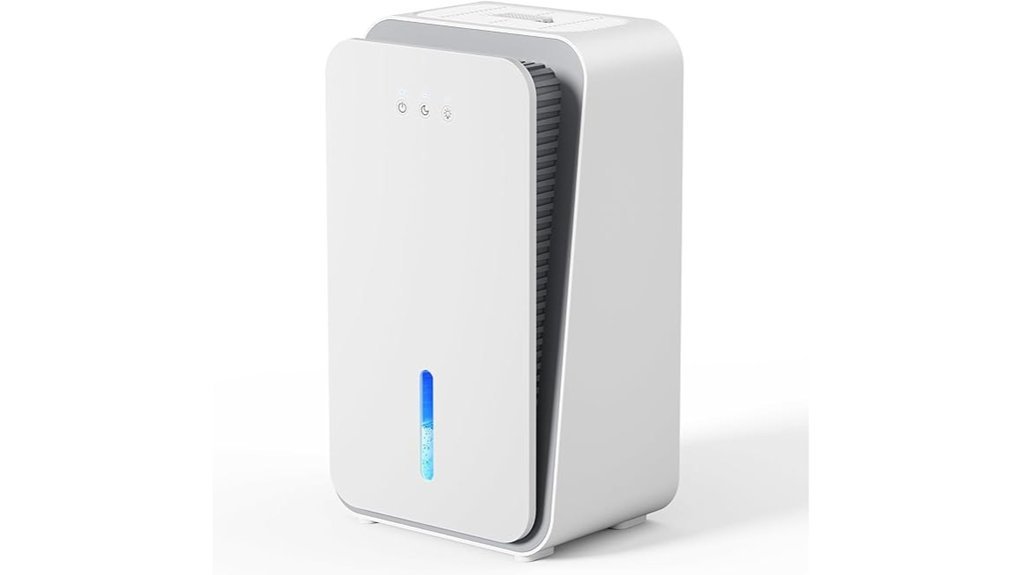
Best multifunction pick: The Onsekin CS08 combines a compact thermoelectric dehumidifier with an aromatherapy compartment, seven-color lighting, automatic shutoff, and sleep mode. It can suit a bedroom, bathroom, or small living area where mild humidity and ambiance are both priorities.
The seller lists coverage up to 1,000 square feet, but the current listing does not provide a clearly stated standardized daily extraction figure. Treat it as a targeted moisture-control unit rather than a substitute for a 30- or 34-pint compressor dehumidifier in a very damp mobile home. Use fragrance only in the dedicated aromatherapy area and follow the product manual; do not add oil to the water tank.
Why You’ll Like It:
- Combines moisture control, lighting, and aromatherapy.
- Two operating speeds and sleep mode improve flexibility.
- Compact dimensions make placement easier in a small home.
Who Should Avoid It: Skip it if fragrance sensitivity is a concern or if you need high-volume moisture removal.
Pros:
- Portable thermoelectric design.
- Auto shutoff and quiet-operation features.
- Useful for mild humidity in a single area.
Cons:
- No clearly stated daily moisture-removal rate on the current listing.
- Aromatherapy is not useful for every household.
- Not the best choice for severe or whole-home dampness.
BEDRED 95 OZ Dehumidifier with Ambient Light
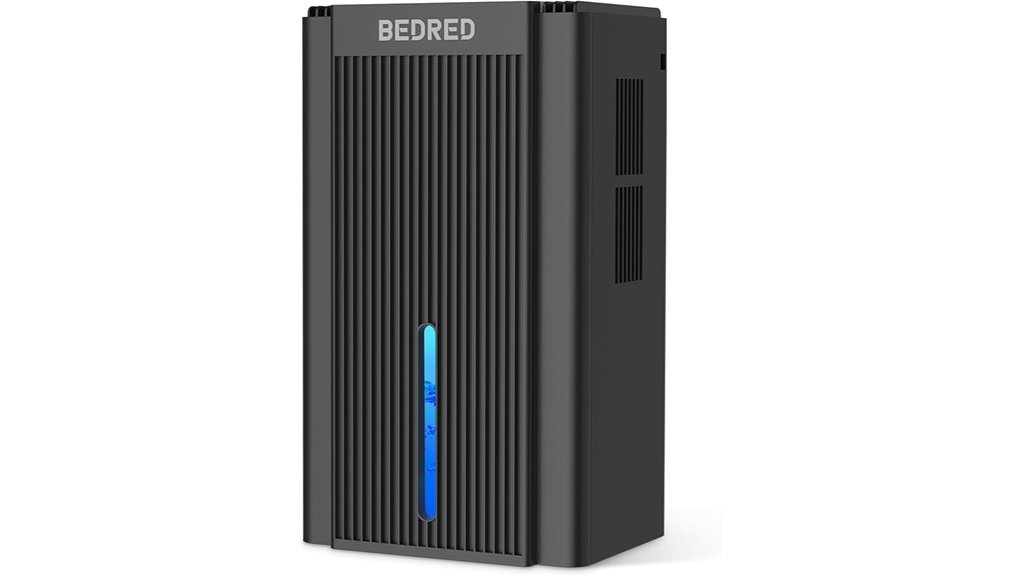
Best for ambient lighting: The BEDRED model has a 95-ounce tank, automatic shutoff, sleep mode, and seven-color ambient lighting. Its narrow footprint can work well beside a dresser, in a bathroom, or in a compact living area.
Although the seller advertises coverage up to 1,000 square feet, the listing does not clearly state a standardized daily extraction rate. This thermoelectric model is better suited to steady, low-level moisture control in a smaller zone than to fixing a major humidity problem throughout a mobile home.
Why You’ll Like It:
- Large tank for a compact thermoelectric design.
- Sleep mode reduces light and disturbance at night.
- Automatic shutoff adds overflow protection.
Who Should Avoid It: Buyers with severe dampness or recurring mold conditions should choose a compressor model and address any leaks or ventilation problems.
Pros:
- 95-ounce tank reduces emptying frequency.
- Compact, upright design.
- Lighting can double as a night-light feature.
Cons:
- Thermoelectric performance is limited in cooler conditions.
- Seller-stated coverage may overstate practical whole-room capability.
- No continuous-drain feature is highlighted.
NEWBULIG 30-Pint Dehumidifier for Home
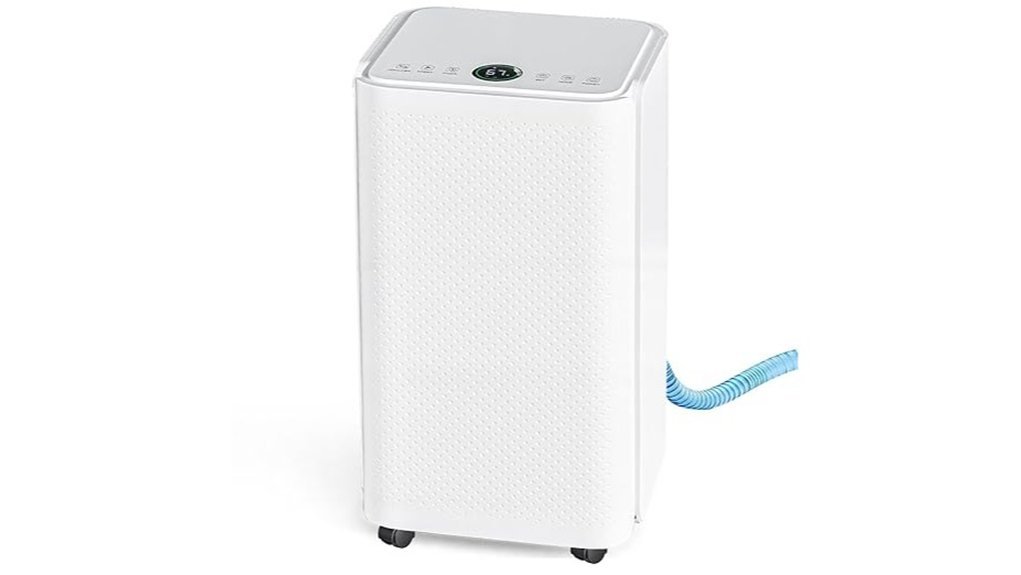
Best value compressor pick: The NEWBULIG listing states up to 30 pints of moisture removal per day and coverage up to 2,000 square feet. It includes automatic defrost, automatic restart, a child lock, a removable 2-liter (0.53-gallon) tank, and continuous-drain capability. The seller also advertises operation as low as 38 dB, but room acoustics and operating mode can affect perceived noise.
This model makes more sense than a mini dehumidifier for a mobile home with moisture in several rooms. Its humidity ring gives a quick visual status, but the current listing does not verify Wi-Fi or broader smart-home integration, so the article should not promise app or voice control.
Why You’ll Like It:
- True pint-rated compressor performance.
- Continuous drainage supports longer unattended operation.
- Child lock and auto restart are useful household features.
Who Should Avoid It: Buyers who only need light moisture control in a closet or tiny bathroom may prefer a smaller, quieter thermoelectric unit.
Pros:
- Seller-stated 30-pint daily capacity.
- Auto defrost, auto restart, and removable tank.
- Compact footprint for a compressor model.
Cons:
- Heavier than tabletop models.
- The 2-liter tank can fill quickly without continuous drainage.
- No verified smart-home compatibility on the current listing.
BREEZOME 60 OZ Quiet Portable Dehumidifier with Timer
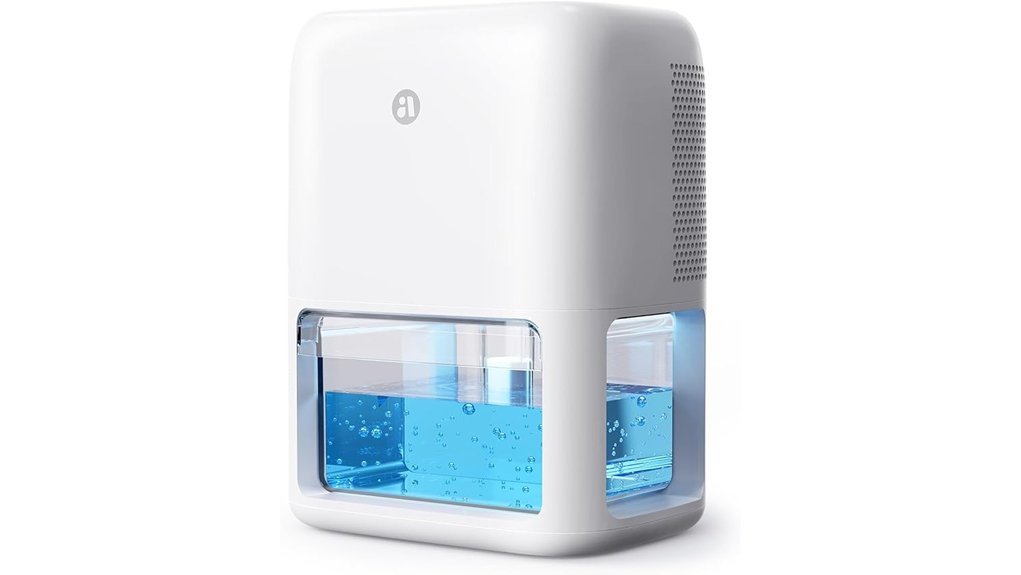
Best timer-equipped compact pick: The BREEZOME 60 OZ model uses dual semiconductor condensers and has a 1.8-liter tank, a 12/24/36/48-hour timer, sleep mode, automatic shutoff, and seven-color lighting. The seller states up to 700 mL of moisture removal per day at 86°F and 80% relative humidity, so output will be lower in cooler or less humid rooms.
This is a useful middle ground among compact units: it holds more water than many mini models, but it still cannot match a compressor dehumidifier in a persistently wet mobile home.
Why You’ll Like It:
- Large 60-ounce tank for a portable model.
- Timer helps limit unnecessary runtime.
- Dual thermoelectric condensers improve small-unit output.
Who Should Avoid It: Choose a 30-pint or larger compressor model for whole-home humidity, visible water intrusion, or frequent tank filling.
Pros:
- Low-wattage thermoelectric operation and a programmable timer.
- Automatic shutoff and sleep mode.
- Compact enough for bathrooms, bedrooms, and RV-style spaces.
Cons:
- Lower daily extraction than compressor models.
- Performance falls in cool rooms.
- Tank still needs manual emptying.
ToLife 95 OZ Dehumidifier for Home
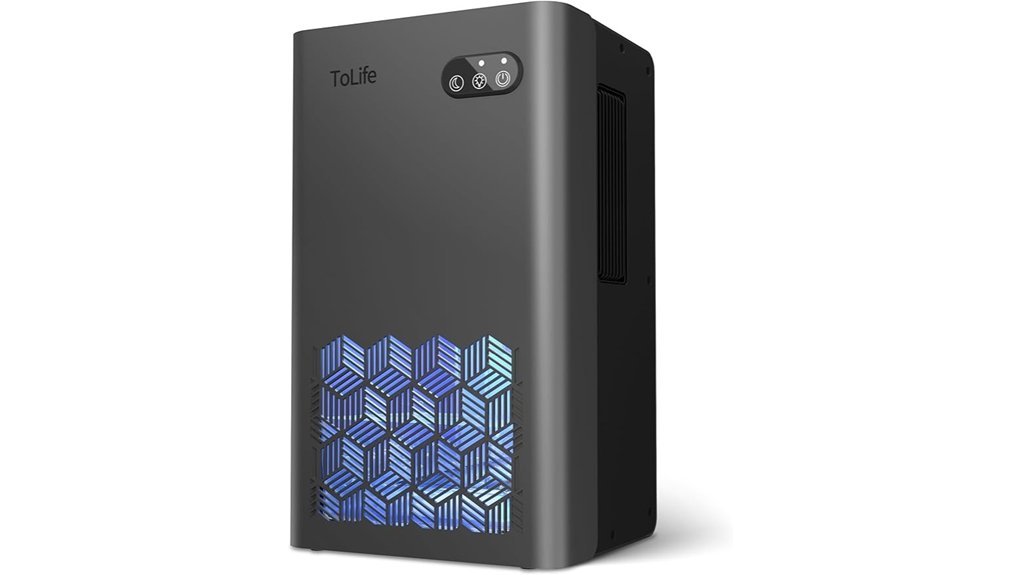
Best large-tank tabletop pick: The ToLife model has a 95-ounce tank, two operating modes, sleep mode, automatic shutoff, a removable tank, and seven-color lighting. The seller advertises use in spaces up to 1,000 square feet, but the current listing does not clearly state a standardized daily extraction rate.
Its slim shape is convenient for mobile-home rooms where floor space is tight. As with other thermoelectric models, practical performance depends heavily on room temperature and humidity, so it is best for mild, localized control rather than severe whole-home dampness.
Why You’ll Like It:
- Large tank with a narrow footprint.
- Sleep mode and quiet-operation features.
- Portable design for moving between rooms.
Who Should Avoid It: Buyers needing continuous drainage or verified compressor-level performance should choose another model. Confirm the electrical specifications shown on the current product page and manual before purchase.
Pros:
- 95-ounce tank and automatic shutoff.
- Two operating modes, including a quieter sleep setting.
- Simple two-mode operation.
Cons:
- No continuous-drain feature is highlighted.
- Coverage claims should be treated cautiously.
- Listing specification fields may require buyer verification.
TABYIK 35 OZ Dehumidifier for Bedroom and Home
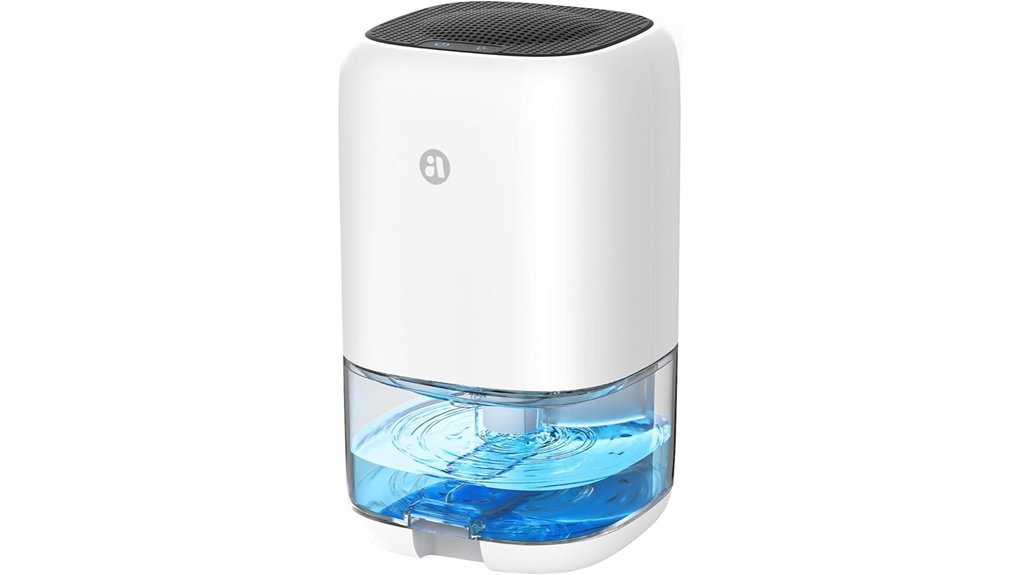
Best quiet small-room pick: The TABYIK 35 OZ dehumidifier is a compact unit for a bedroom, bathroom, closet, or RV-style sleeping area. The seller states a 280-square-foot coverage area, a 35-ounce tank, 28 dB operation, automatic shutoff, and up to 16 ounces (450 mL) of moisture removal per day at 86°F and 80% relative humidity.
At about 2.2 pounds, it is easy to move around a mobile home. Its low noise level is the main advantage, but it is not designed for heavy moisture across several rooms.
Why You’ll Like It:
- Very quiet for nighttime use.
- Small footprint and light weight.
- Transparent tank makes the water level easy to check.
Who Should Avoid It: It is too small for persistent whole-home humidity, flooded areas, or a damp crawl-space problem.
Pros:
- 28 dB seller-stated noise level.
- Automatic shutoff when the tank is nearly full.
- Simple, portable design.
Cons:
- Single-speed operation.
- Limited daily extraction.
- No continuous drain.
Waykar 34-Pint ENERGY STAR Dehumidifier
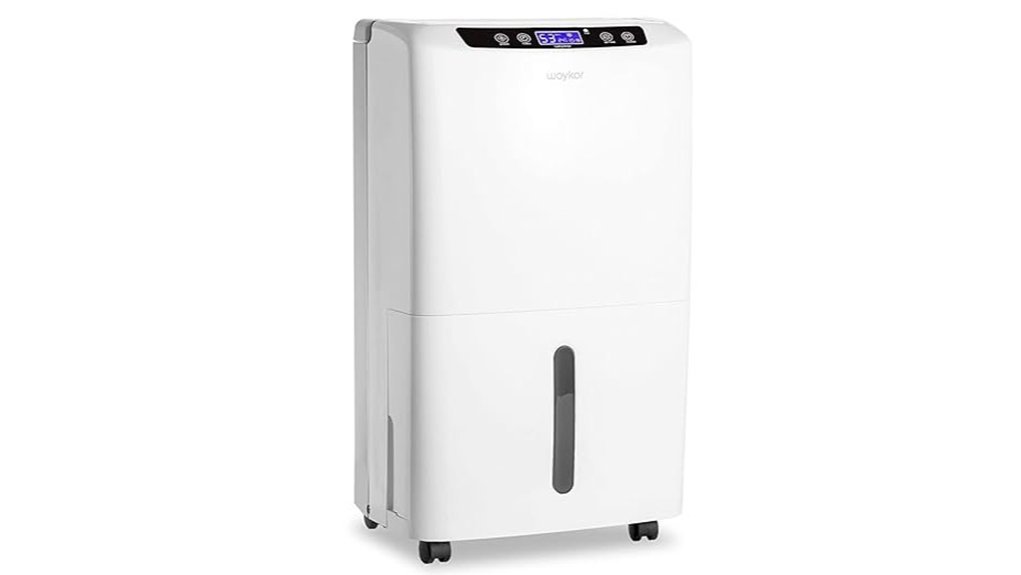
Best overall: The Waykar model combines compressor performance, ENERGY STAR certification, adjustable 30% to 80% humidity control, automatic defrost, a 0.66-gallon tank, and an included drain hose. The seller states up to 34 pints per day at 95°F and 90% relative humidity and lists coverage up to 2,000 square feet; actual output will be lower in cooler or less humid conditions.
For many mobile homes, this size is more practical than a higher-capacity unit while still offering useful multi-room moisture control. Use the continuous-drain option when possible, and place the hose where water can flow safely downhill without creating a trip or water-damage risk.
Why You’ll Like It:
- Pint-rated compressor performance for real humidity control.
- Adjustable humidistat and automatic cycling.
- Manual tank or continuous-drain operation.
Who Should Avoid It: It is larger than necessary for a single closet or small bathroom with only mild condensation.
Pros:
- Seller-stated 34 pints per day at 95°F and 90% relative humidity.
- ENERGY STAR designation on the current listing.
- Drain hose included.
Cons:
- Heavier and noisier than mini thermoelectric units.
- Tank may fill quickly in very humid conditions.
- Requires clearance for airflow and maintenance.
KeepGlad 98 OZ Dehumidifier for Home
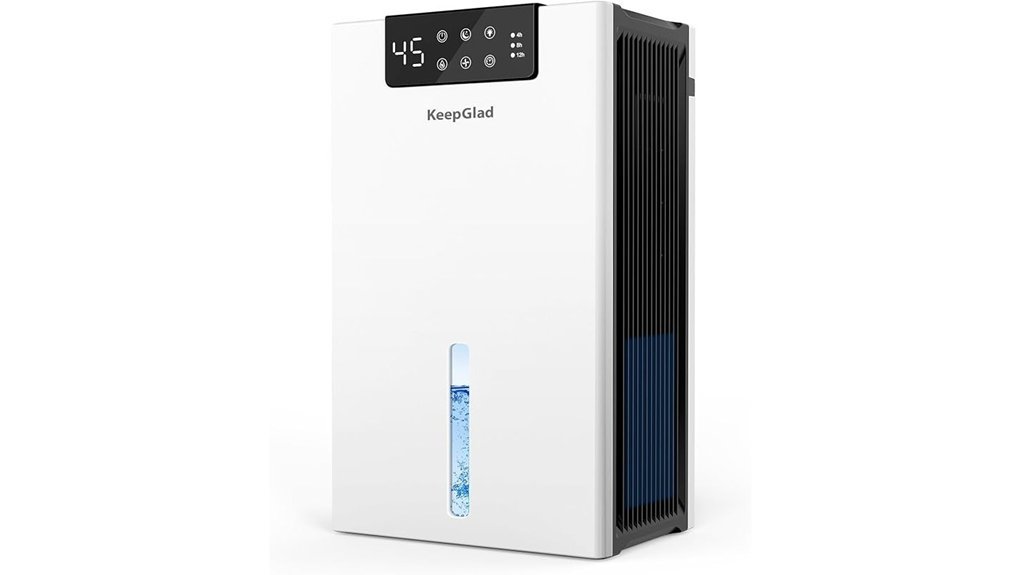
Best compact model with continuous drainage: The KeepGlad combines a 98-ounce tank, humidity display, quiet-operation features, automatic shutoff, and a continuous-drain option. It is a convenient choice for a bedroom, bathroom, or central area where you want a compact unit without emptying the tank as often.
The seller lists coverage up to 1,000 square feet and a daily extraction rate of 2.8 pints. Because it is still a compact unit, buyers should treat the square-foot figure cautiously and match the unit to mild or moderate localized humidity rather than severe whole-home moisture.
Why You’ll Like It:
- Continuous drainage is uncommon among compact units.
- Humidity display helps track room conditions.
- Large tank and carry handle improve daily convenience.
Who Should Avoid It: For serious whole-home moisture, choose a 30- or 34-pint compressor model instead.
Pros:
- 98-ounce tank.
- Continuous-drain option.
- Automatic shutoff and quiet-operation features.
Cons:
- Lower extraction capacity than compressor units.
- Performance depends on room temperature and humidity.
- Drain setup requires a safe downhill route.
Factors to Consider When Choosing a Dehumidifier for a Mobile Home
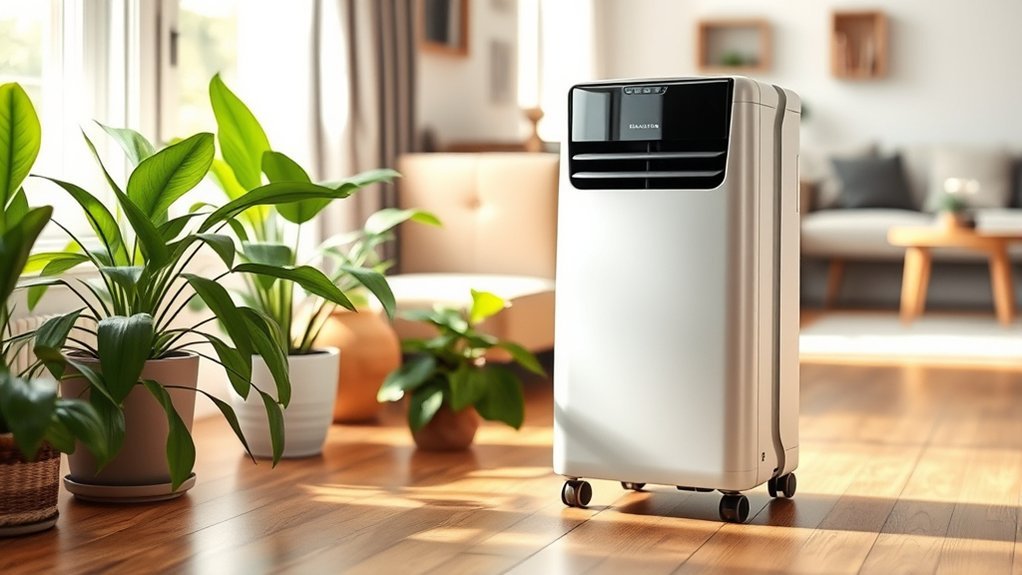
A mobile home has limited floor space, closely connected rooms, and sometimes more temperature variation than a conventional house. Focus on actual moisture-removal capacity, drainage, noise, and placement rather than relying only on a large square-foot number.
Thermoelectric vs. Compressor Models
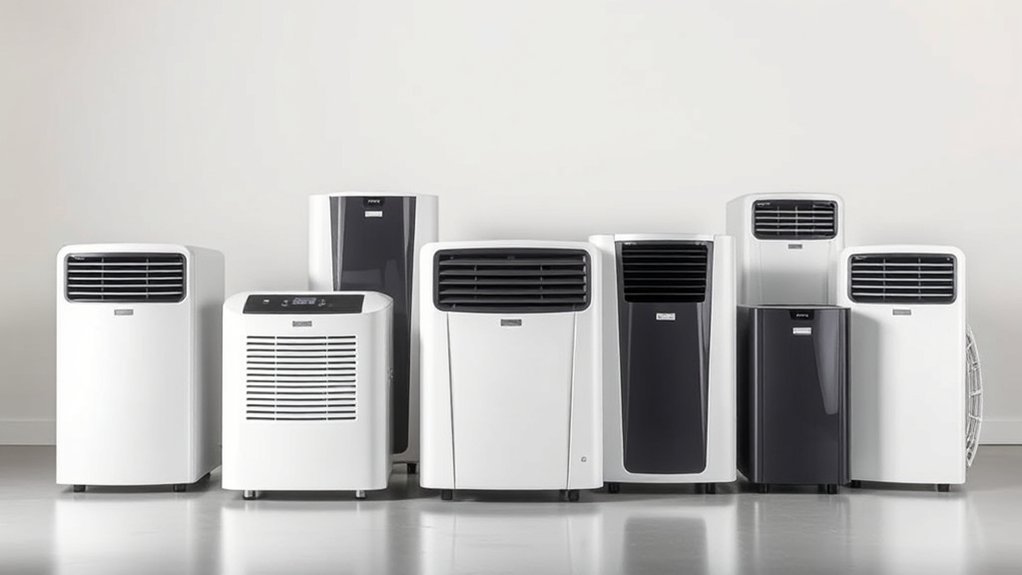
Thermoelectric dehumidifiers are small, light, and quiet. They work best for mild condensation in one bedroom, bathroom, closet, or storage area. Compressor dehumidifiers remove much more water and are the better choice for persistent humidity, several rooms, or recurring window condensation.
Match Capacity to the Moisture Problem
For a small enclosed area, a 35- to 98-ounce tabletop unit may be enough when humidity is only mildly elevated. For several connected rooms or persistent condensation, prioritize a compressor model and compare daily extraction using the same test standard whenever possible. A seller-stated coverage area does not guarantee that a mini unit can control humidity throughout that entire space.
Energy Efficiency and Runtime
Look for ENERGY STAR guidance on compressor models and use an adjustable humidistat so the unit cycles off after reaching the target. A smaller unit that runs continuously may use more energy while removing less water than a properly sized compressor model.
Temperature and Seasonal Performance
Thermoelectric units usually lose effectiveness as rooms become cooler, while compressor models may cycle into defrost mode. Check the manufacturer’s operating-temperature range if the mobile home, storage room, or under-home area becomes cool in winter.
Noise Levels and Placement
For bedrooms, a quiet thermoelectric model can be more comfortable. Compressor units are usually louder but more effective. Leave the clearance required by the manual, keep intake and exhaust vents unobstructed, and avoid placing the unit directly against walls, curtains, or furniture.
Humidity Control and Drainage
An adjustable humidistat, automatic restart, full-tank shutoff, and automatic defrost make a dehumidifier easier to manage. Continuous drainage is especially useful in humid climates, but the hose must slope downward without kinks and drain to an appropriate location.
Portability and Storage
Handles, caster wheels, and a compact footprint matter in a mobile home. Check the product dimensions before ordering and confirm that you can still access the tank, filter, and controls after placing the unit.
Safety, Source Control, and Maintenance
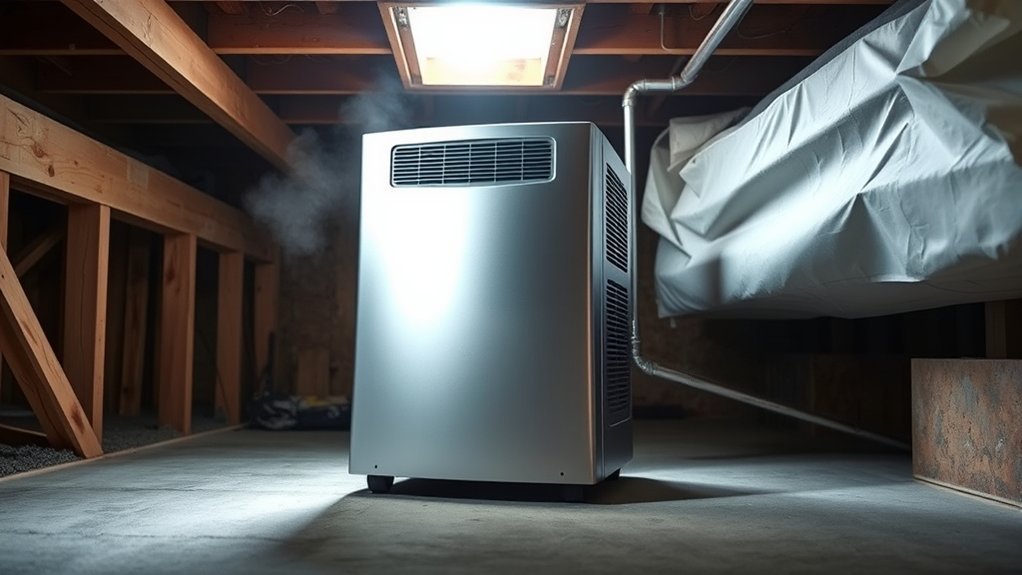
Use a properly grounded outlet and follow the manufacturer’s instructions for extension cords, drainage, and cleaning. Wash or vacuum reusable filters as directed, clean the tank regularly, and inspect the drain hose for buildup. A dehumidifier controls airborne moisture but does not repair roof or plumbing leaks, wet insulation, damaged skirting, poor bathroom ventilation, an unvented dryer, or water entering from the crawl space.
Before you buy: Measure the room, check the outlet and voltage requirements, decide whether you can use continuous drainage, and use a separate hygrometer if the unit does not show reliable humidity readings.
Frequently Asked Questions
How Do I Maintain My Dehumidifier for Optimal Performance?
Clean the filter and tank on the schedule in the manual, keep the air vents clear, and inspect any drain hose for kinks or buildup. Unplug the unit before cleaning and let washable parts dry fully before reinstalling them.
What Is the Ideal Humidity Level for a Mobile Home?
A practical target is usually between 30% and 50% relative humidity, consistent with EPA indoor-air guidance. In warm weather, keeping the level near 45% to 50% may feel comfortable while reducing condensation risk. Avoid setting the unit unnecessarily low, as that can waste energy and make the air feel dry.
Can a Dehumidifier Help With Mold Prevention?
It can reduce the damp conditions that support mold growth, but it cannot remove existing mold or fix the water source. Repair leaks, dry wet materials promptly, improve ventilation, and clean affected areas safely in addition to controlling humidity. EPA guidance emphasizes that moisture control is the key to mold control.
How Energy-Efficient Are Modern Dehumidifiers?
Efficiency varies by type and capacity. ENERGY STAR compressor models are designed to remove more moisture per unit of electricity than less efficient models. A correctly sized dehumidifier with a humidistat is usually more efficient than an undersized unit running continuously.
Which Features Matter Most in a Mobile Home?
Prioritize a compact footprint, automatic shutoff, adjustable humidity control, low-temperature defrost, easy filter access, and continuous drainage when available. Quiet operation matters for bedrooms because sound travels easily through a small floor plan.
Should I Choose a Mini or Pint-Rated Dehumidifier?
Choose a mini thermoelectric model for mild moisture in one small area. Choose a compressor model for persistent humidity, several rooms, frequent condensation, or a mobile home where the tank on a mini unit fills rapidly.
Why Is My Mobile Home Still Humid With a Dehumidifier Running?
The unit may be undersized, doors or windows may be open, the filter may be dirty, or the room may be too cool for strong extraction. Ongoing moisture can also come from plumbing or roof leaks, bathroom steam, an unvented clothes dryer, wet insulation, ground moisture, damaged skirting, or poor crawl-space drainage. Fix the source instead of relying only on a larger machine.
Final Recommendation
For many buyers who need multi-room humidity control in a mobile home, the Waykar 34-Pint ENERGY STAR Dehumidifier offers the best balance of seller-stated capacity, efficiency, humidistat control, and drainage flexibility. The NEWBULIG 30-Pint is another practical compressor option, while the AEOCKY is better suited to severe moisture or a larger connected area.
For one small bedroom, bathroom, or closet, the TABYIK 35 OZ, NeedDuck 44 OZ, or BREEZOME 60 OZ may be easier to place and quieter to run. Match the dehumidifier to the actual moisture load, not just the advertised square-foot figure, and address leaks or ventilation issues at the same time.