Disclosure: As an Amazon Associate, we may earn from qualifying purchases. This does not affect the price you pay.
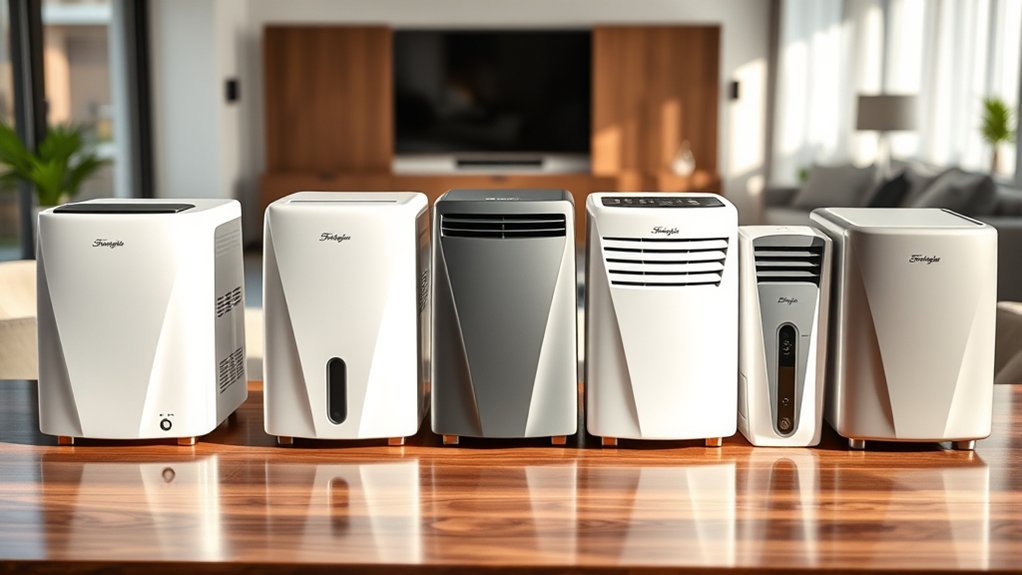
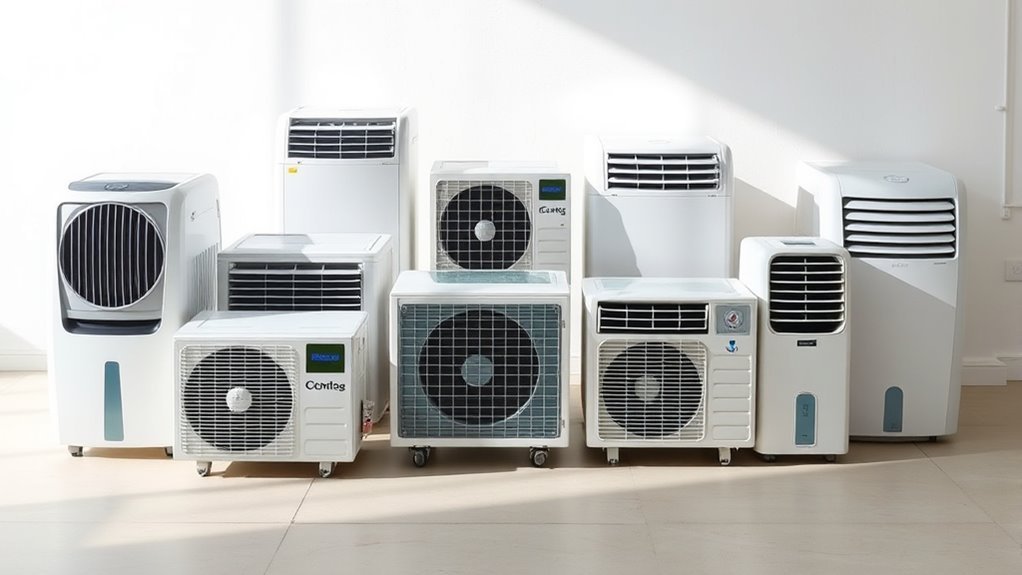
If you are choosing a dehumidifier for mold prevention in a basement crawl space, focus on realistic moisture-removal capacity, low-temperature operation, drainage, and installation clearance—not the largest advertised square-foot number. The crawl-space models below are designed for continuous moisture control, but their headline pint ratings are not always measured under the same conditions.
Quick Comparison
| Model | Best for | Advertised capacity | Drainage | Key caution | Amazon |
|---|---|---|---|---|---|
| ALORAIR Galaxy 60 | Best overall for medium-to-large crawl spaces | 145 PPD maximum; about 60 PPD at AHAM conditions | Gravity drain | Needs a continuously downward drain route | Check Price |
| BaseAire AirWerx 35P | Compact installations needing a pump | 70 PPD maximum; 35 PPD at AHAM conditions | Pump or gravity drain | Lower realistic capacity than the 70-PPD headline suggests | Check Price |
| ALORAIR HD55 | Smaller crawl spaces with a floor drain | 113 PPD maximum; 53 PPD at AHAM conditions | Gravity drain | No built-in condensate pump | Check Price |
| Airecoler GT-X5 | Large, open basements or crawl spaces | 125 PPD maximum; about 58–60 PPD at AHAM conditions | Gravity drain | Large coverage claims assume open airflow and suitable conditions | Check Price |
| Waykar 125-Pint | Large spaces needing high airflow | 125 PPD at 95°F/90% RH | Gravity drain on this listing | Confirm whether the selected variation includes a pump | Check Price |
| HBN 125-Pint | Large spaces needing pumped drainage | 125 PPD maximum; listing states 60 PPD at AHAM conditions | Pump and gravity drain | Verify current warranty and coverage details before ordering | Check Price |
| CADPXS 125-Pint | Installations requiring a high pump lift | 125 PPD maximum; listing states 55 PPD at AHAM conditions | Pump and gravity drain | Brand documentation is limited; confirm support terms | Check Price |
| ARGENDON 145-Pint | Alternative high-capacity gravity-drain setup | 145 PPD under high-temperature/high-humidity conditions | Gravity drain | Confirm current certification and warranty documentation | Check Price |
| ALORAIR 120 PPD | Mid-size crawl spaces needing a rugged metal unit | 120 PPD maximum; model revisions may be rated near 55 PPD at AHAM conditions | Gravity drain | Confirm the exact model revision linked on Amazon | Check Price |
ARGENDON Commercial Dehumidifier for Crawlspace (145 PPD)
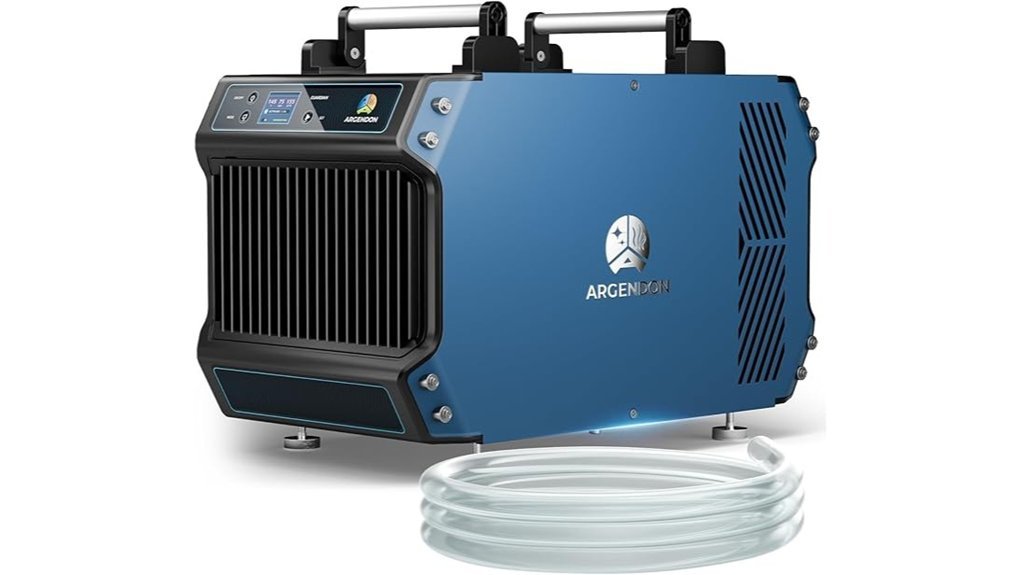
Best 145-PPD Alternative
The ARGENDON commercial dehumidifier is a crawl-space-style compressor unit with continuous gravity drainage, auto defrost, and a 165 CFM advertised airflow rate. Its 145-PPD figure is a maximum-condition rating, so it should not be compared directly with a portable dehumidifier rated under cooler DOE conditions. It is most appropriate for a crawl space or basement where you can route a drain hose continuously downhill.
Best For: Buyers who want a high-capacity, low-profile crawl-space unit and have a nearby floor drain or sump.
Why You’ll Like It:
- Low-profile housing is better suited to crawl spaces than a tall room dehumidifier.
- Continuous gravity drainage supports unattended operation.
- Auto defrost helps maintain operation in cooler conditions within the stated operating range.
Consider Before Buying:
- The 145-PPD claim is based on hot, humid test conditions rather than a typical cool basement.
- The unit weighs about 55 pounds, so installation may require two people in a tight crawl space.
- Confirm current ENERGY STAR/cETL documentation and warranty terms on the product page before ordering.
BaseAire Crawlspace Dehumidifier with Pump (70 PPD)
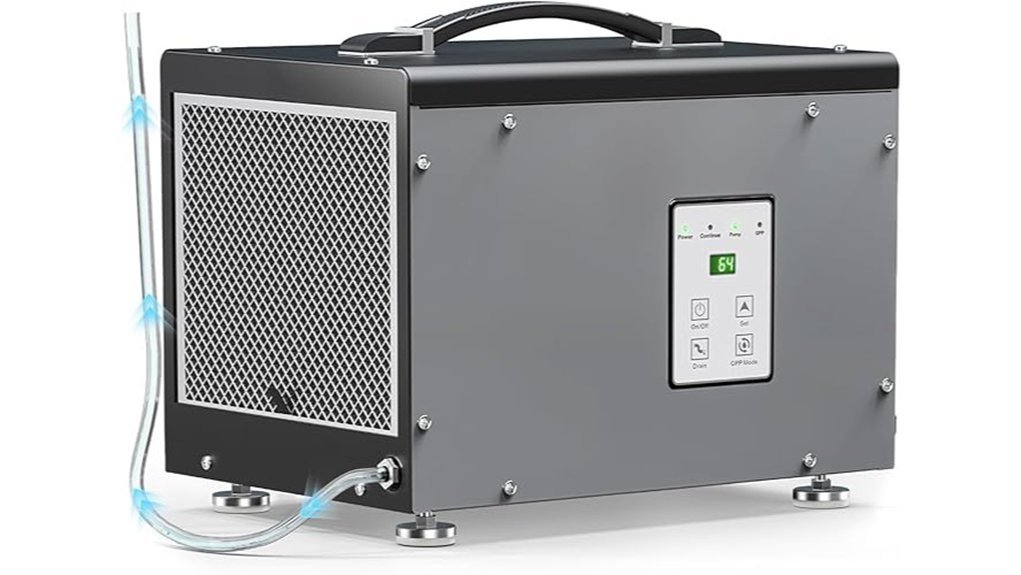
Best Compact Model With a Pump
The BaseAire AirWerx 35P is a practical choice when the drain is above the unit or a gravity route is not possible. BaseAire lists it at 70 PPD under saturation conditions and 35 PPD at AHAM conditions, with coverage up to 1,000 square feet. Its compact body, built-in condensate pump, gravity-drain option, humidity control, and auto defrost make it well suited to smaller encapsulated crawl spaces.
Best For: Small-to-medium crawl spaces where flexible pumped drainage matters more than maximum output.
Why You’ll Like It:
- Built-in pump and gravity drainage provide more installation flexibility.
- Compact dimensions help it fit through narrow crawl-space access points.
- Automatic humidity control and restart reduce day-to-day attention.
Consider Before Buying:
- The realistic AHAM rating is 35 PPD, not 70 PPD.
- It may be undersized for a very wet, poorly sealed, or compartmentalized crawl space.
- Allow clearance around the intake and exhaust rather than pushing it tightly against framing or insulation.
ALORAIR 113 Pint Commercial Dehumidifier (HD55)
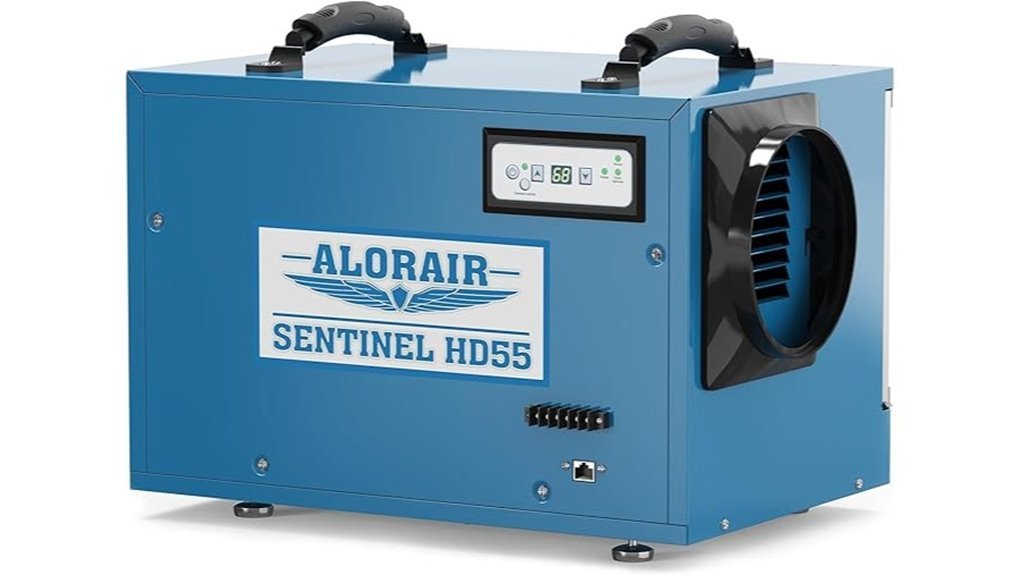
Best Value for a Smaller Crawl Space
The ALORAIR Sentinel HD55 is rated at 113 PPD at saturation and 53 PPD at AHAM conditions. It is designed for spaces up to about 1,200 square feet and uses gravity drainage rather than a built-in pump. The metal housing, MERV-1 prefilter, auto defrost, auto restart, and operating range down to the mid-30s Fahrenheit make it a sensible fit for many basement and crawl-space installations.
Best For: Buyers who want a proven compact crawl-space format and can route the hose to a lower drain.
Why You’ll Like It:
- 53-PPD AHAM capacity is easier to compare with real basement moisture loads.
- Auto defrost and restart support set-and-monitor operation.
- The MERV-1 filter protects internal components from larger dust and debris.
Consider Before Buying:
- Gravity drainage requires a continuous downward slope.
- The MERV-1 filter is a component-protection filter, not a substitute for mold remediation or a room air purifier.
- An optional remote controller may cost extra and may require a wired connection, depending on the version.
ALORAIR 145 Pint Commercial Dehumidifier for Crawlspaces
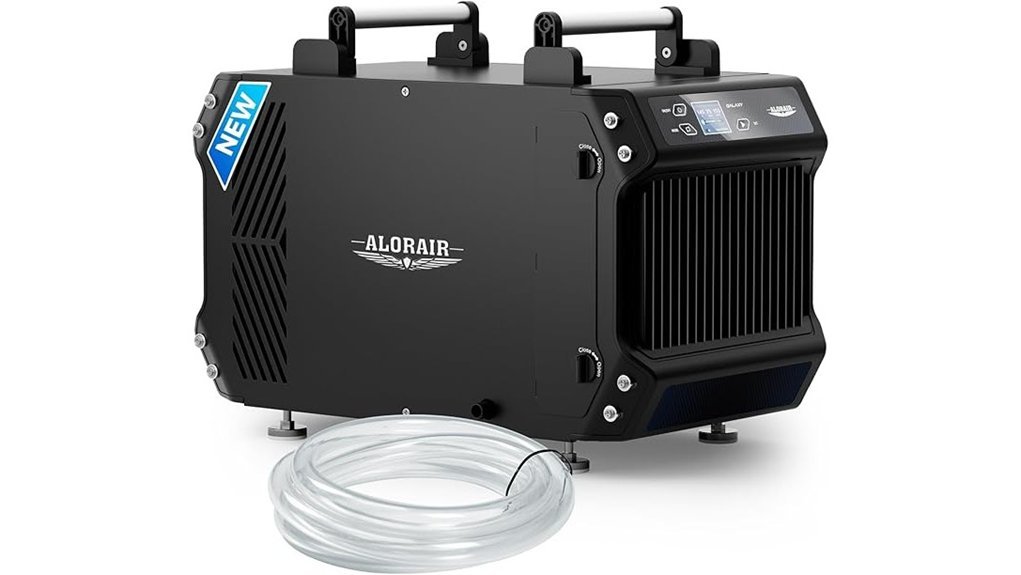
Best Overall
The ALORAIR Galaxy 60 combines a low-profile crawl-space design with 145 PPD maximum capacity and about 60 PPD at AHAM conditions. It is rated for up to 1,800 square feet, moves about 165 CFM, and includes auto defrost, auto restart, corrosion-resistant coil protection, and continuous gravity drainage. This balance makes it the strongest all-around option here for an encapsulated medium-to-large crawl space with a suitable drain location.
Best For: Medium-to-large crawl spaces that need dependable continuous moisture removal without a pump.
Why You’ll Like It:
- 60-PPD AHAM capacity offers a useful step up from smaller crawl-space models.
- Low-profile dimensions help with joist and access-clearance limitations.
- Auto defrost, auto restart, and continuous drainage support long-term installation.
Consider Before Buying:
- This version relies on gravity drainage; choose a pump-equipped variation when water must travel upward.
- The 1,800-square-foot claim assumes reasonably open airflow and does not account for severe groundwater intrusion.
- At roughly 47.5 pounds, it is portable by commercial-dehumidifier standards but still awkward in a low crawl space.
HBN 125 Pint Crawl Space Dehumidifier with Pump
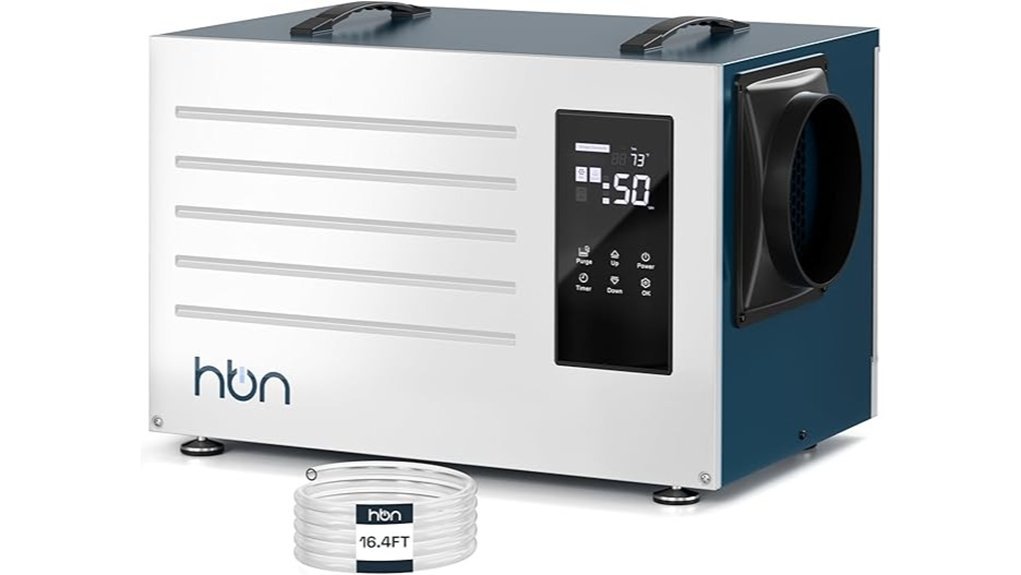
Best Pump Option for a Large Open Space
The HBN 125-Pint model is advertised to remove up to 125 pints per day at 95°F and 90% RH, with about 60 PPD at AHAM conditions. Its main advantage is the dual drainage system: gravity drainage for a nearby lower drain and a built-in pump for lifting condensate to a higher discharge point. The control panel also provides adjustable humidity settings, a timer, auto defrost, and power-outage memory.
Best For: Large basements or open crawl spaces where the condensate must be pumped upward.
Why You’ll Like It:
- Built-in pump reduces the need for a separate condensate pump.
- High airflow and maximum-condition capacity suit larger moisture loads.
- Power-outage memory helps restore previous settings after an interruption.
Consider Before Buying:
- Coverage figures around 5,900–6,500 square feet are manufacturer estimates and depend heavily on airflow and moisture load.
- Brand documentation is less extensive than for established crawl-space specialists.
- Confirm current pump-lift height, warranty terms, and included hoses on the Amazon detail page.
Airecoler GT-X5 125-Pint Commercial Dehumidifier
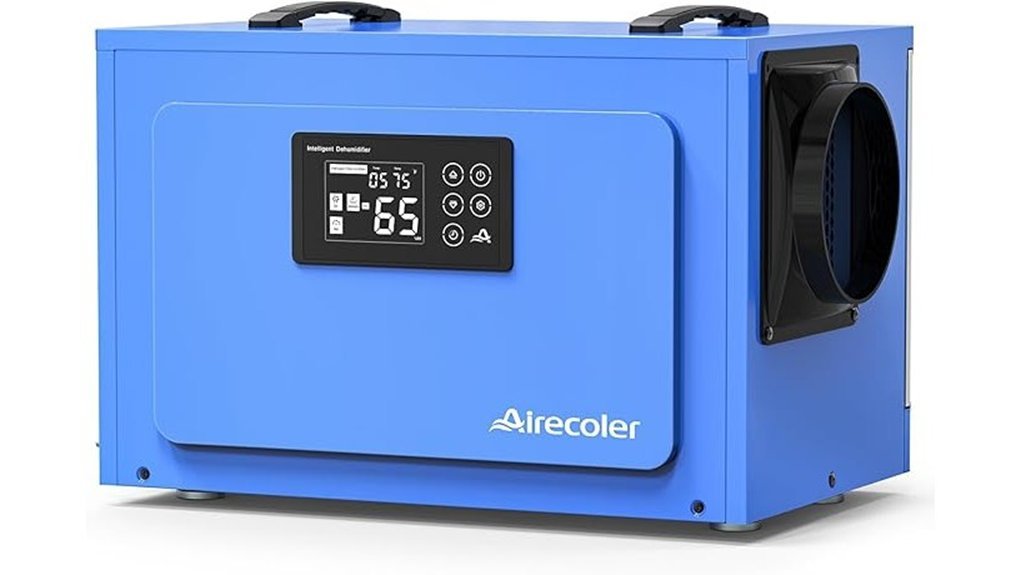
Best for High Airflow in a Large Area
The Airecoler GT-X5 is advertised at 125 PPD maximum and about 58–60 PPD at AHAM conditions, with airflow up to 265 CFM. Its low-profile metal housing, washable filter, auto defrost, restart memory, timer, adjustable feet, and 6.56-foot gravity drain hose make it suitable for an open basement, garage, or crawl space with a lower drain point.
Best For: Large open spaces where strong air circulation and gravity drainage are available.
Why You’ll Like It:
- 265 CFM airflow can help circulate damp air through a large open area.
- The washable filter and metal housing support routine long-term use.
- Auto defrost, restart, timer, and continuous drainage reduce manual attention.
Consider Before Buying:
- The 6,000-square-foot claim should not replace moisture-load sizing or airflow planning.
- This model uses gravity drainage and does not include a built-in pump.
- The five-year coverage is tiered: verify which parts and years receive full versus limited coverage.
CADPXS Crawl Space Dehumidifier with Pump
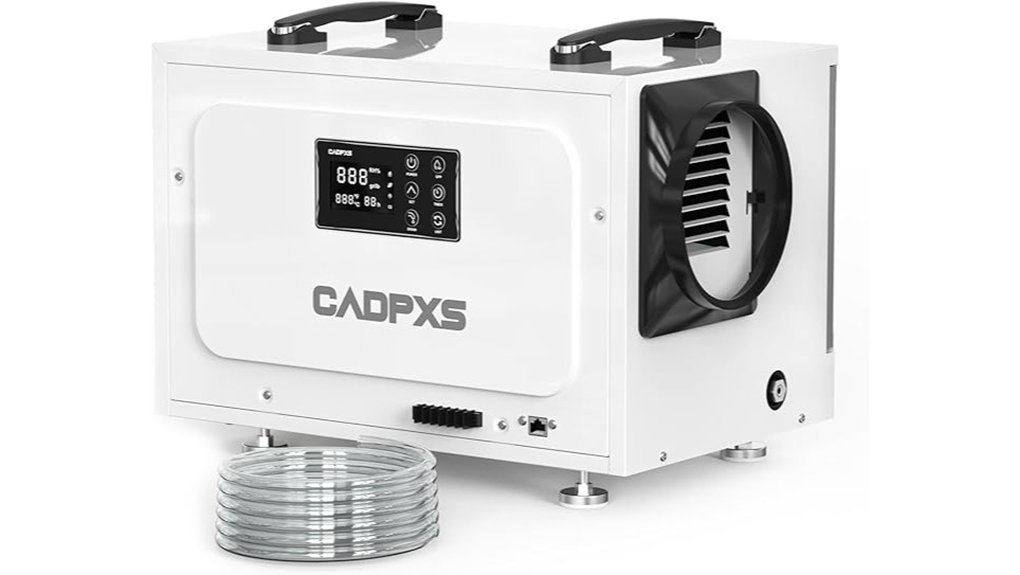
Best for High-Lift Pump Drainage
The CADPXS crawl-space dehumidifier is advertised at 125 PPD maximum, 55 PPD at AHAM conditions, and 36.68 PPD under the cooler DOE condition stated in the listing. Its distinguishing feature is a built-in pump advertised to lift condensate up to 19.6 feet, plus a gravity-drain option. The low-profile design, humidity control, timer, auto defrost, and restart memory address common crawl-space installation needs.
Best For: Tight installations where condensate must travel vertically to a distant drain.
Why You’ll Like It:
- High advertised pump lift offers flexible drain routing.
- Both pump and gravity modes provide a backup installation option.
- Auto defrost and restart memory support unattended moisture control.
Consider Before Buying:
- The cooler-condition DOE figure is much lower than the 125-PPD headline, which is normal but important for sizing.
- Independent manufacturer documentation is limited.
- Confirm the exact model name, pump hose length, warranty, and replacement-filter availability before purchase.
ALORAIR Crawl Space Dehumidifier 120 PPD
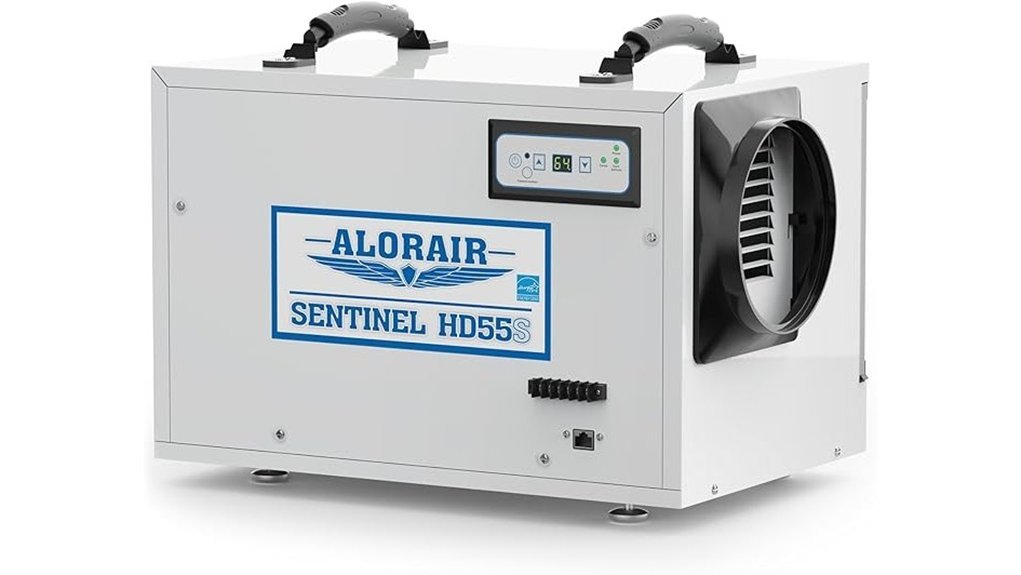
Best Rugged Mid-Size Option
This ALORAIR crawl-space model uses a rugged metal housing, continuous gravity drainage, automatic defrost, and restart memory. Comparable current ALORAIR 120-PPD models are commonly listed around 55 PPD at AHAM conditions and approximately 1,300 square feet, but the linked ASIN may represent an older model revision. Check the current Amazon specification table before using those figures for final sizing.
Best For: Buyers who want durable metal construction for a medium-size crawl space with gravity drainage.
Why You’ll Like It:
- Metal housing and internal coil protection are intended for demanding environments.
- Auto defrost helps prevent frost from stopping moisture removal in cooler conditions.
- Continuous drainage eliminates tank emptying.
Consider Before Buying:
- Verify the exact model revision, current capacity, airflow, and warranty attached to this ASIN.
- No built-in pump is stated in the source listing.
- Operational noise may be noticeable if the unit is directly below a bedroom or quiet living area.
Waykar 125 Pint Crawl Space Dehumidifier
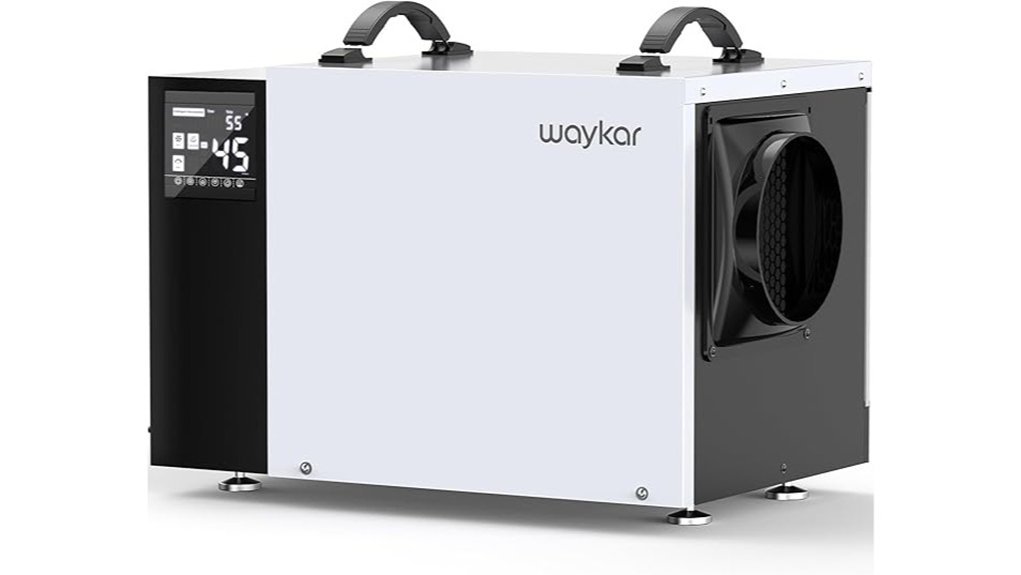
Best Large-Area Gravity-Drain Option
The Waykar AFW2.0D is advertised to remove up to 125 pints per day at 95°F and 90% RH, move up to 300 CFM, and serve open areas up to 6,500 square feet. It includes adjustable humidity control, gravity drainage, auto defrost, handles, and a digital control panel. A separate pump-equipped variation exists, so check the exact configuration attached to the Amazon link.
Best For: Large, open crawl spaces or basements with a lower drain and a need for high airflow.
Why You’ll Like It:
- High airflow can improve circulation across a large open space.
- Wide humidity adjustment supports drying and maintenance use cases.
- Handles and a low-profile shape simplify placement compared with tall restoration units.
Consider Before Buying:
- The standard AFW2.0D uses gravity drainage; the AFW2.0DPM is the pump version.
- The 125-PPD rating is measured under hot, very humid conditions, not a typical cool crawl space.
- Warranty coverage is tiered and may require registration; review the current terms before ordering.
Factors to Consider When Choosing a Dehumidifier for Mold in a Basement Crawl Space
A crawl-space dehumidifier should be sized for the actual moisture load, temperature, airflow, and drainage route. A large square-foot claim alone does not tell you whether a model will maintain the target humidity in a wet or divided space.
Compare Capacity Under the Same Test Conditions
Start with AHAM or DOE capacity when it is available. Maximum or saturation ratings are measured in warmer, wetter air and can be much higher. For example, models advertised at 113–145 PPD may be rated around 53–60 PPD at AHAM conditions. This does not make the headline number false, but it means you should not compare it directly with a portable dehumidifier tested at cooler basement conditions.
Match the Unit to Moisture Load and Airflow
Measure the crawl space and note whether it is open or divided by foundation walls, ducts, stored items, or insulation. A unit may cover a large open area but perform poorly when air cannot circulate. Persistent seepage, standing water, an uncovered soil floor, leaking plumbing, or unsealed vents must be corrected rather than handled by a larger dehumidifier alone.
Check Low-Temperature Operation and Auto Defrost
Cool crawl spaces reduce moisture-removal performance and can cause frost to form on the coil. Choose a model with automatic defrost and confirm its stated operating-temperature range. Do not assume a unit will deliver its maximum pint rating near the low end of that range.
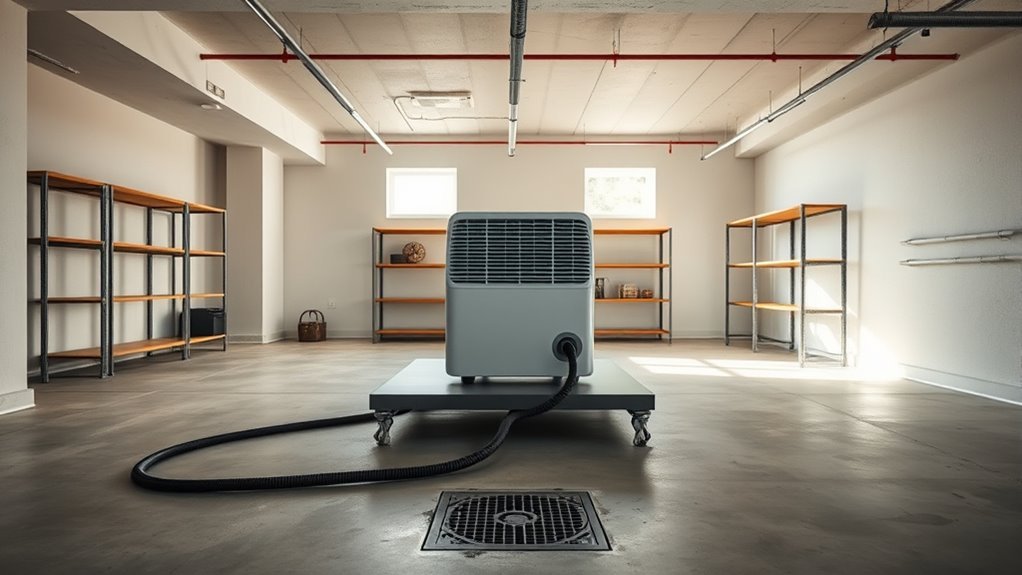
Choose Gravity or Pump Drainage Before Buying
A gravity drain is simple and reliable but requires the hose to slope downward continuously. A built-in pump is useful when water must move upward to a sink, window, or higher discharge point. Check the pump-lift height, included hose length, and whether the exact product variation includes the pump.
Review Energy Efficiency Using Comparable Metrics
Look for an Integrated Energy Factor or another clearly stated efficiency metric measured under a recognized test procedure. Timers, auto humidity control, and auto restart improve convenience, but they do not prove that one unit is more efficient than another. Certification claims should be confirmed in current product documentation.
Plan for Noise and Vibration
Commercial crawl-space units commonly operate around the sound level of a strong fan. Noise can travel through joists, especially when a unit sits below a bedroom. Place it on a stable, level surface, use vibration-isolating pads when allowed by the manufacturer, and keep the intake and exhaust clear.
Measure Access and Installation Clearance
Before ordering, measure the crawl-space door, joist clearance, and the proposed route to the installation point. Many of these units weigh about 40–55 pounds. Handles help, but they do not make a heavy metal unit easy to move while crawling. Leave the manufacturer-required clearance around the inlet, outlet, filter, and service panels.
Check Electrical and Safety Requirements
Use a properly grounded outlet that matches the unit’s voltage and current requirements. Keep the dehumidifier above standing water and follow the manual’s clearance and drain instructions. Look for current safety certification documentation, but do not rely only on a certification claim copied into a marketplace title.
Plan for Filter and Drain Maintenance
Clean or replace the filter on schedule, inspect the drain hose for kinks or biofilm, keep the coil and grilles free of debris, and verify that condensate reaches the drain. A MERV-1 filter mainly protects the machine; it is not intended to remove an existing mold problem from the structure.
- Measure the crawl-space area, height, access opening, and room divisions.
- Record temperature and relative humidity over several days with a hygrometer.
- Fix leaks, standing water, drainage, and ground-moisture problems first.
- Compare AHAM/DOE capacity—not only maximum-condition PPD.
- Choose pump or gravity drainage based on the actual hose route.
- Confirm voltage, outlet location, operating range, filter access, and warranty terms.
Frequently Asked Questions
How Do I Maintain My Dehumidifier for Optimal Performance?
Inspect and clean the filter regularly, keep the intake and exhaust unobstructed, check the drain hose for kinks or buildup, and confirm that the unit is level. Follow the manual for coil cleaning, pump maintenance, and filter replacement. Review the humidity reading with a separate hygrometer occasionally.
Can a Dehumidifier Eliminate Existing Mold?
No. A dehumidifier can reduce the moisture that supports future growth, but it does not remove existing mold from wood, insulation, drywall, or other materials. Existing contamination and the moisture source still need to be cleaned, removed, or professionally remediated as appropriate. See the EPA mold and moisture guide for general cleanup and prevention guidance.
What Is the Ideal Humidity Level for Crawl Spaces?
A practical target is generally around 45% to 50% relative humidity, while keeping the space below 60%. Avoid setting the unit unnecessarily low, because that can increase energy use without solving leaks or groundwater problems. EPA guidance recommends keeping indoor humidity below 60% and ideally between 30% and 50%.
Are Crawl-Space Dehumidifiers Noisy?
They can be. Many commercial-style units are around 50 dBA or higher, depending on the model and test method. Structure-borne vibration may be more noticeable than the airborne sound, so installation surface and location matter.
How Much Energy Do Crawl-Space Dehumidifiers Use?
Energy use varies with capacity, efficiency, temperature, humidity, fan airflow, and runtime. Compare the stated efficiency metric and wattage for the exact model, then estimate cost from expected daily runtime and your local electricity rate. A correctly sized unit in a sealed, drained crawl space usually runs less than one fighting constant outside air or water intrusion.
Do I Need a Built-In Pump?
You need a pump when the drain point is higher than the dehumidifier or when the hose cannot maintain a continuous downward slope. Gravity drainage is simpler when a floor drain or sump is lower and nearby.
Conclusion
For most medium-to-large encapsulated crawl spaces with gravity drainage, the ALORAIR Galaxy 60 offers the best balance of realistic capacity, compact construction, and crawl-space features. Choose the BaseAire AirWerx 35P when a compact built-in pump is essential, or the ALORAIR HD55 for a smaller gravity-drain installation. The Airecoler GT-X5, HBN 125-Pint, and Waykar 125-Pint are better suited to large, open areas, but their square-foot claims should be treated as estimates. Whichever model you choose, fix leaks and standing water first, compare capacity under the same test conditions, and use the dehumidifier to maintain humidity—not as a substitute for mold cleanup.