If you are comparing dehumidifiers for a room with lingering cigarette odor, start with one important limit: a dehumidifier controls excess moisture, but it does not capture smoke particles, remove toxic gases, or make indoor smoking safe. The two products below are compact thermoelectric dehumidifiers that may help a damp room feel less musty. For smoke itself, source control and suitable air filtration are separate priorities.
Affiliate disclosure: This article contains Amazon affiliate links. We may earn a commission from qualifying purchases at no extra cost to you.
Safety note: The only way to eliminate secondhand-smoke exposure indoors is to prevent smoking inside. Air cleaning and humidity control may supplement source control, but they cannot eliminate exposure. See the EPA guidance on secondhand tobacco smoke.
Quick Verdict
Best Overall for Simple Humidity Control: BEDRED 95OZ Dehumidifier. It offers a large collection tank for a thermoelectric model, automatic full-tank shutoff, and ambient lighting.
Best for Continuous Drainage and Extra Features: Onsekin CS08-Cream. It adds a drain-hose option, two operating speeds, aromatherapy, and LED lighting.
Quick Comparison
| Product | Type | Tank | Drainage | Best Fit | Amazon |
|---|---|---|---|---|---|
| BEDRED 95OZ Dehumidifier | Thermoelectric | 95 fl. oz. | Manual tank emptying | Localized dampness and simple operation | Check Details |
| Onsekin CS08-Cream | Thermoelectric | 2.5 L | Tank or drain hose | Longer unattended operation where gravity drainage is practical | Check Details |
BEDRED 95OZ Dehumidifier for Home
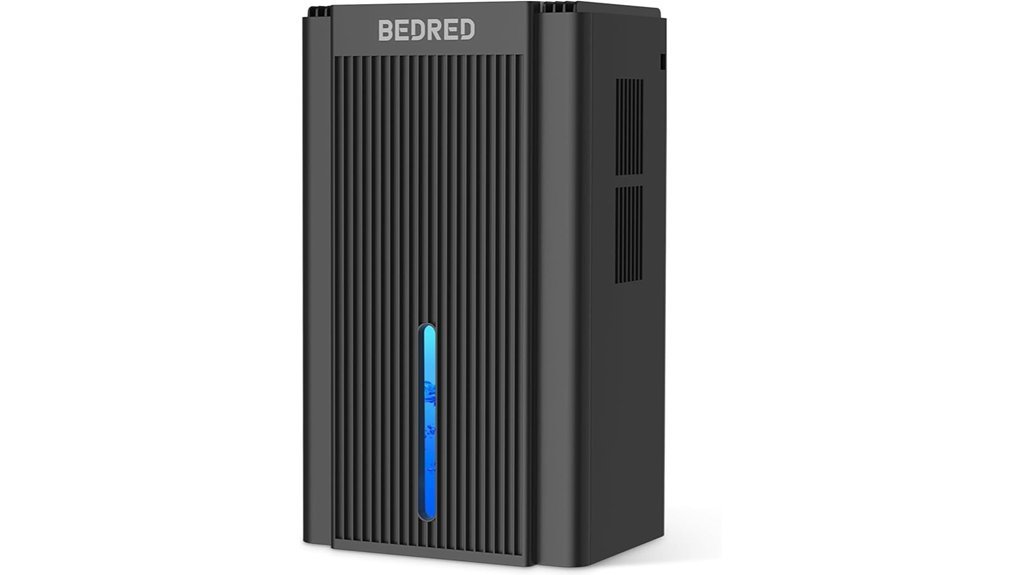
Best Overall for Simple Humidity Control
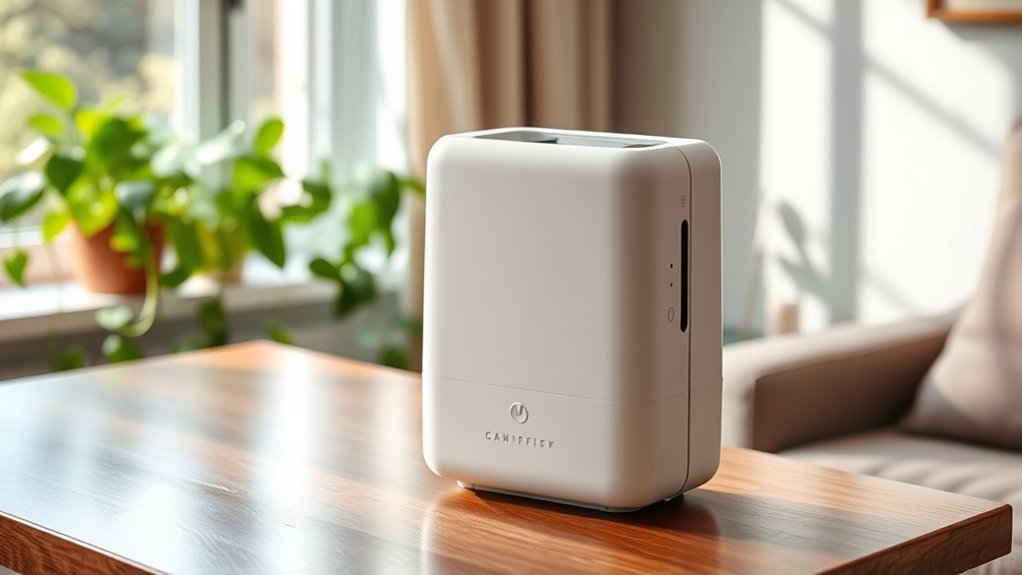
The BEDRED 95OZ Dehumidifier is a compact thermoelectric model for people who want straightforward moisture collection without the size and noise of a compressor unit. Its 95-fluid-ounce tank reduces how often you need to empty it compared with many mini dehumidifiers, while automatic shutoff helps prevent overflow when the tank is full. The seven-color ambient light can also be turned into a decorative feature for a bedroom or living area.
The seller rates this model for spaces up to 1,000 square feet, but that figure should not be treated as a guaranteed drying result. Thermoelectric dehumidifiers are generally most useful for localized dampness, smaller enclosed areas, or mild humidity rather than a very wet basement or whole-home moisture problem.
Why You’ll Like It: It combines a relatively large tank, simple controls, full-tank protection, and a compact footprint.
Who Should Buy This: Renters, apartment residents, or homeowners dealing with mild moisture in a bedroom, bathroom, office, closet area, or similar space.
Who Should Avoid This: Anyone who needs fast drying after leaks, persistent basement moisture control, or verified high-capacity pint-per-day performance.
Pros:
- 95-fluid-ounce collection tank supports longer operation between emptying.
- Automatic full-tank shutoff lowers overflow risk.
- Compact thermoelectric design is easier to place than a large compressor model.
- Seven-color ambient light adds an optional visual feature.
Cons:
- The seller’s square-foot coverage claim does not show how much water the unit removes per day under normal room conditions.
- Thermoelectric performance is better suited to mild or localized humidity than severe dampness.
- The tank capacity is not the same as the daily moisture-removal capacity.
Onsekin CS08-Cream Dehumidifier with Aromatherapy
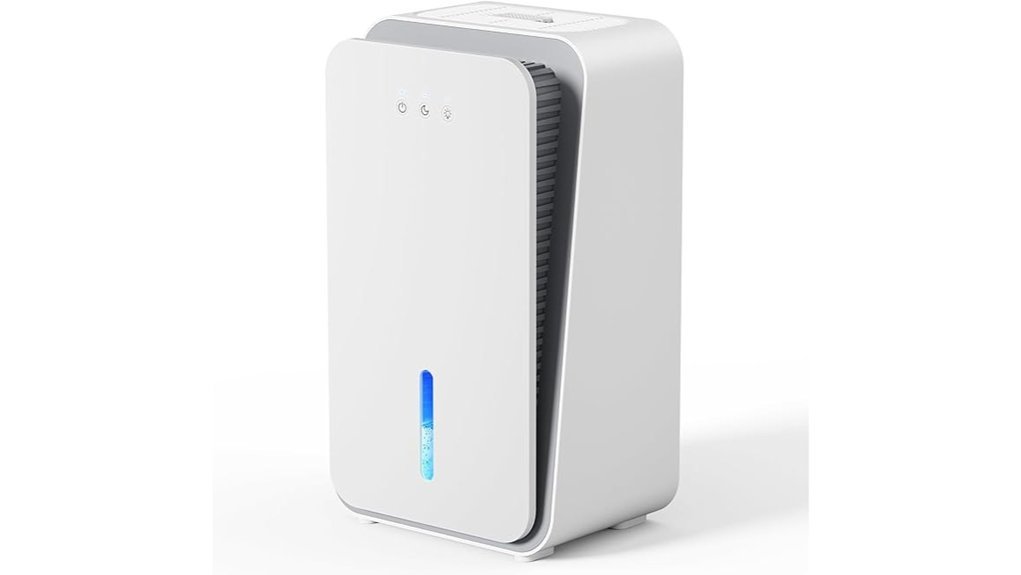
Best for Continuous Drainage and Extra Features
The Onsekin CS08-Cream is another compact thermoelectric dehumidifier, but it stands out by adding a 2.5-liter tank and an included drain-hose option. That makes it more convenient where you can route the hose downward to a suitable drain. It also includes two operating speeds, automatic full-tank shutoff, a built-in aromatherapy area, and seven LED light choices.
The seller lists coverage up to 1,000 square feet and moisture removal up to 37 ounces per day under stated test conditions. Real output can be lower in cooler or less-humid rooms, so choose it for mild-to-moderate localized moisture rather than assuming it will perform like a 20-, 35-, or 50-pint compressor dehumidifier.
Why You’ll Like It: The drain hose can reduce manual emptying, while sleep-oriented controls, lighting, and aromatherapy add comfort features.
Who Should Buy This: Buyers who want a compact unit near a gravity drain and value lighting or fragrance features alongside moisture control.
Who Should Avoid This: Buyers who need verified large-room extraction, do not want fragrance near the unit, or cannot place the drain hose with a continuous downward slope.
Pros:
- 2.5-liter tank offers useful water-storage capacity for a compact unit.
- Drain-hose option can support continuous gravity drainage.
- Automatic shutoff helps prevent tank overflow.
- Two speeds, aromatherapy, and seven LED colors provide more customization.
Cons:
- Seller-rated coverage should not be confused with verified whole-room drying performance.
- Thermoelectric output varies with room temperature and relative humidity.
- Aromatherapy and lighting add little value for buyers who only need basic dehumidification.
What a Dehumidifier Can and Cannot Do for Cigarette Smoke
A dehumidifier can: lower relative humidity, reduce condensation, and help control damp or musty conditions that can make a room feel stale.
A dehumidifier cannot: remove secondhand-smoke gases, capture most smoke particles, clean nicotine residue from surfaces, or protect children, pets, and adults from indoor smoke exposure.
For indoor air quality, the first step is to stop smoking inside the home or vehicle. If you also use an air cleaner, look for a model appropriately sized for the room, with particle filtration and enough activated carbon or another gas-phase medium for odors. Even then, air cleaning is a supplement rather than a substitute for a smoke-free indoor space.
Factors to Consider When Choosing a Dehumidifier for a Smoky Room
Daily Moisture Removal Versus Tank Size
Do not confuse the water-tank size with the amount of moisture a dehumidifier can remove in 24 hours. A 95-ounce tank only tells you how much collected water the container can hold. For meaningful performance comparisons, look for a daily moisture-removal figure measured under stated temperature and humidity conditions.
Realistic Room Coverage
Square-foot ratings can be useful as a rough seller guideline, but room temperature, starting humidity, airflow, doors, windows, and the severity of the moisture problem all affect results. Compact thermoelectric units are usually a better fit for mild humidity or a targeted area than for a wet basement. Choose a compressor dehumidifier with a recognized pint-per-day rating when moisture is severe or widespread.
Target Relative Humidity
Use a hygrometer instead of guessing. ENERGY STAR says an indoor relative-humidity range of about 30% to 50% is generally considered optimal. Avoid over-drying the room, and investigate leaks or water intrusion when humidity stays high despite regular dehumidifier use. See the ENERGY STAR dehumidifier guidance.
Noise and Bedroom Use
Thermoelectric models are often chosen for quiet spaces because they do not use a conventional compressor. Still, check the listed decibel level when available and confirm whether lights can be turned off. A quiet setting is helpful, but it should not replace sufficient moisture-removal capacity.
Automatic Shutoff and Drainage
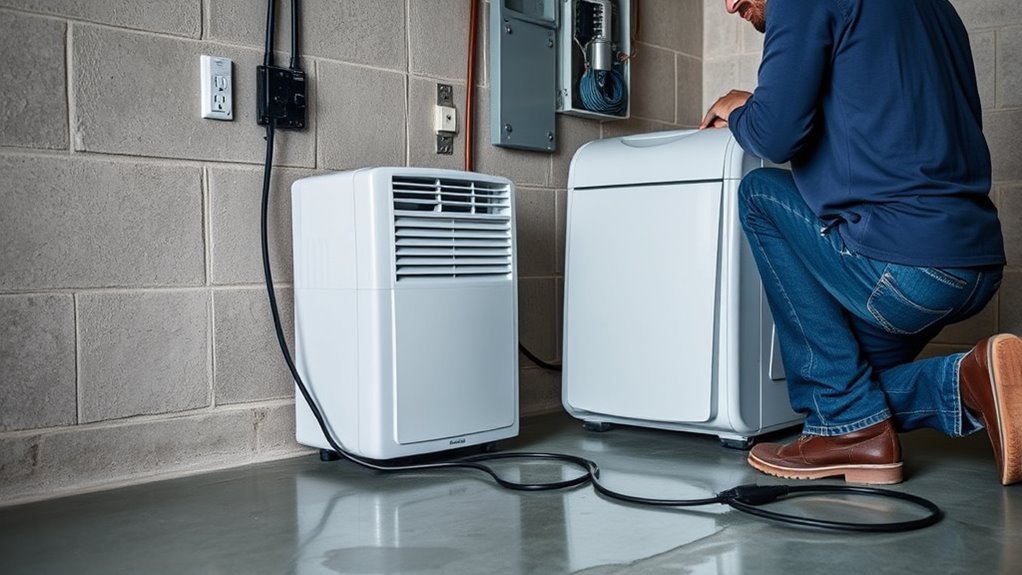
Automatic shutoff is important for any tank-based unit because it stops operation when the container is full. A drain hose can reduce maintenance, but gravity drainage only works when the hose slopes downward without kinks and ends at a safe drain location.
Cleaning and Maintenance
Empty and rinse the tank regularly, wipe the air intake, and follow the manufacturer’s cleaning instructions. Standing water and dirty surfaces can create new odors. Unplug the unit before cleaning, keep the cord away from water, and leave enough clearance around the air inlet and outlet.
Separate Air-Cleaning Needs
A dehumidifier is not an air purifier. For smoke particles, compare air cleaners by room size and smoke clean-air delivery rate when available. For gaseous odors, look for substantial activated-carbon or other gas-phase filtration. Avoid devices that intentionally generate ozone in occupied spaces.
Before You Buy Checklist
- Measure the room and check the current relative humidity with a hygrometer.
- Decide whether you need mild localized moisture control or high-capacity drying.
- Compare daily water-removal capacity, not only tank size or advertised square footage.
- Confirm whether you can empty the tank regularly or safely use gravity drainage.
- Check noise, light controls, operating temperature, and cleaning requirements.
- Use a separate smoke-control plan; do not rely on a dehumidifier for secondhand-smoke protection.
Frequently Asked Questions
Can a Dehumidifier Remove Cigarette Smoke?
No. A dehumidifier removes water vapor from the air. It is not designed to capture smoke particles or remove the gases in tobacco smoke.
Can a Dehumidifier Remove Smoke Odor?
It may reduce dampness or mustiness that makes a room feel stale, but it will not reliably remove tobacco odor. Smoke odor can remain in fabrics, carpets, walls, ceilings, and HVAC components and may require surface cleaning, laundering, filtration, or professional remediation.
Do Dehumidifiers Reduce Secondhand-Smoke Exposure?
No. They do not provide meaningful protection from secondhand smoke. The safest approach is a smoke-free indoor space. Filtration and ventilation may reduce some pollutants but do not eliminate exposure.
What Humidity Level Should I Use?
A relative-humidity range of about 30% to 50% is a practical general target for many homes. Use a hygrometer and adjust for comfort, climate, condensation, and the manufacturer’s operating guidance.
How Often Should I Empty the Tank?
Empty it whenever the full-tank indicator or automatic shutoff activates. The interval depends on the room’s humidity, temperature, tank size, and the unit’s real moisture-removal rate, so a fixed 8- or 12-hour schedule is not reliable.
Are Dehumidifiers Safe Around Children and Pets?
They can be used when installed and maintained according to the manual. Keep the cord, drain hose, collected water, and controls out of reach; place the unit on a stable surface; and never treat dehumidifier use as protection from indoor smoking.
Conclusion
Final Recommendation: Choose the BEDRED 95OZ model for straightforward tank-based humidity control. Choose the Onsekin CS08-Cream when a drain hose and extra comfort features matter more.
Neither model removes cigarette smoke or makes indoor smoking safe. Treat these products as compact moisture-control tools, verify the room’s humidity with a hygrometer, and use smoke-free source control as the main indoor-air-quality step.