Choosing a dehumidifier for a 4×4 grow tent requires more than comparing tank sizes or advertised room coverage. Plant count, watering volume, ventilation, temperature, canopy density, and humidity outside the tent all affect how much moisture the unit must remove. Of the products reviewed here, the AC Infinity HYDRONE 7 is the strongest purpose-built option. The UBBO Z18 and POOYUPPC are lower-cost choices for light or moderate moisture control, but they may not keep up with dense plants, frequent watering, or major lights-off humidity spikes.
Quick Comparison
| Product | Best For | Advertised Moisture Removal | Drainage | Main Limitation | Amazon |
|---|---|---|---|---|---|
| AC Infinity HYDRONE 7 | Purpose-built control for four to six plants | Manufacturer lists an 8-liter real-world draw rate that is not directly comparable with standard compressor ratings | 2-liter reservoir or gravity drain hose | Higher power draw, size, and purchase cost | Check Price |
| UBBO Z18 | Light or moderate humidity on a smaller budget | Up to 1.2 liters per day at warm, humid test conditions | 95-ounce tank or drain hose | Output can fall substantially outside ideal test conditions | Check Price |
| POOYUPPC 95-Ounce Dehumidifier | Quiet supplemental moisture removal | Up to 25 ounces per day under advertised conditions | 95-ounce tank or drain hose | Not designed for a heavy plant-transpiration load | Check Price |
AC Infinity HYDRONE 7 Smart Plant Dehumidifier — Best Overall
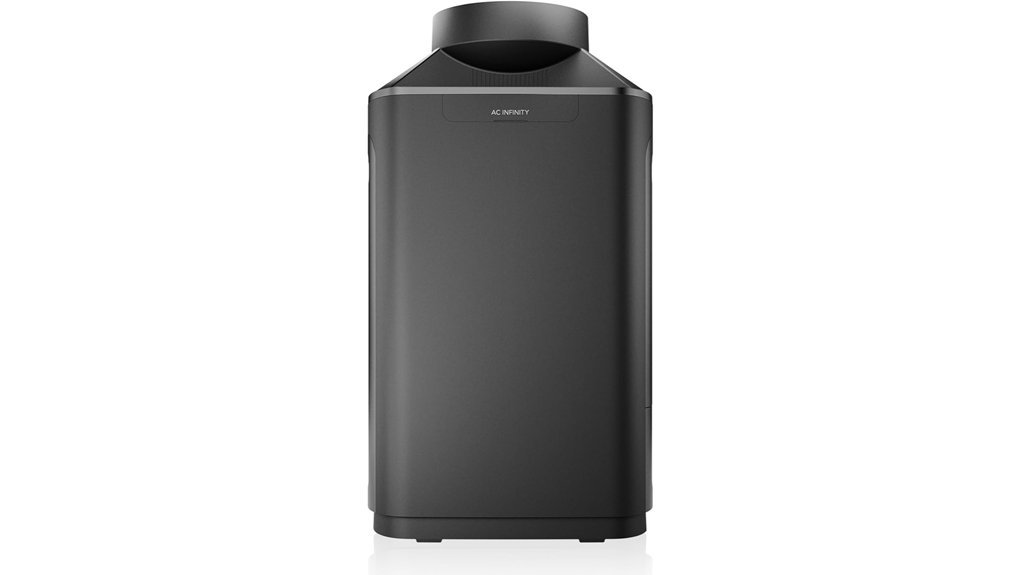
The AC Infinity HYDRONE 7 is the most relevant option in this comparison because it is designed specifically for indoor plant environments. Its onboard sensor can regulate either relative humidity or vapor pressure deficit, while 10 drying levels allow the unit to adjust its output rather than simply running at one fixed speed.
The manufacturer positions this model for approximately four to six plants. That makes it a logical starting point for many 4×4 grow tents, although actual performance will still depend on plant size, watering frequency, ventilation, temperature, and humidity in the surrounding room.
Dry air can be ducted into the tent through a 6-inch exhaust connection. An optional intake connection also supports a closed-loop arrangement. Water collects in the 2-liter internal reservoir, or the included drain hose can be routed to a suitable drain or container for longer unattended operation.
Why You’ll Like It
- Purpose-built controls: It can regulate humidity or VPD instead of relying only on a basic on-and-off switch.
- Variable drying output: Ten output levels provide finer control than a fixed-speed mini dehumidifier.
- Flexible placement: The dual duct connections allow internal, open-loop, or closed-loop configurations.
- Continuous-drain option: The included hose reduces the need to empty the internal reservoir manually.
Who Should Avoid It
This model may be more equipment than you need for a lightly planted propagation tent or a space where ventilation already keeps humidity stable. It is also larger and uses considerably more electricity than compact thermoelectric models. Optional ducted installations require suitable 6-inch ducting and enough room around the unit for unrestricted airflow.
Pros:
- Designed specifically for plant and grow-tent climate control.
- Humidity and VPD programming with a corded sensor.
- Ten adjustable drying levels.
- Works with an internal reservoir or continuous drainage.
- Can be integrated with compatible AC Infinity controllers.
Cons:
- Larger and more expensive than basic mini dehumidifiers.
- Power consumption varies from approximately 235 to 610 watts.
- Its roughly 24-inch height requires more installation space.
- Optional ducted layouts may require separately purchased ducting.
UBBO Z18 95-Ounce Dehumidifier — Best Budget Light-Duty Option
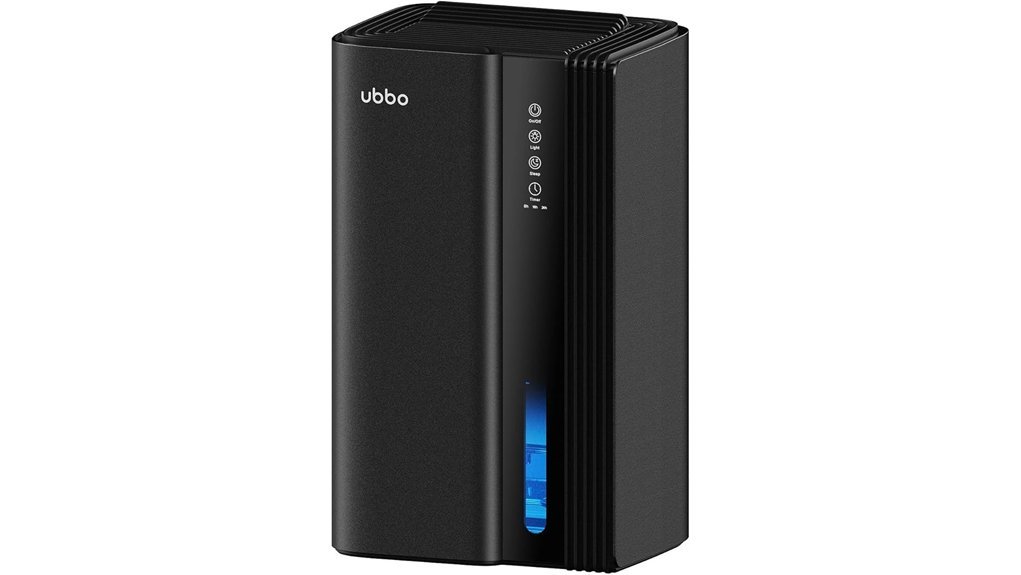
The UBBO Z18 offers a lower-cost approach when your 4×4 tent has only a light or moderate moisture load. Its advertised maximum extraction is 1.2 liters per day at approximately 86°F and 80% relative humidity. Those conditions are important because small thermoelectric dehumidifiers generally collect less water when the air is cooler or less humid.
The 95-ounce tank allows more time between manual emptying than many compact units. A drain hose is also included for continuous drainage, which is particularly useful when humidity rises overnight or while you are away. Timer, sleep, automatic shutoff, and washable-filter features add convenience.
Why You’ll Like It
- Large collection tank: The 95-ounce reservoir reduces how often it must be emptied.
- Drain-hose support: Continuous drainage makes longer operation more practical.
- Low stated power use: Its advertised 58-watt draw is much lower than a large purpose-built unit.
- Simple operating modes: Timer and sleep settings make it easy to adjust for different situations.
Who Should Avoid It
Do not choose this model solely because of its advertised room-coverage number. A dense canopy, hydroponic reservoir, frequent watering schedule, or humid surrounding room can produce more moisture than a compact thermoelectric unit can remove. Monitor the tent with a separate hygrometer during both lights-on and lights-off periods.
Pros:
- Advertised extraction of up to 1.2 liters per day in warm, humid conditions.
- Large 95-ounce collection tank.
- Includes a drain hose for continuous operation.
- Timer, sleep mode, automatic shutoff, and washable filter.
- Compact footprint for crowded grow areas.
Cons:
- Maximum extraction depends heavily on temperature and relative humidity.
- Not a substitute for a high-output unit in a heavily planted tent.
- The advertised square-foot coverage does not reflect every grow-tent moisture load.
- Brand support and long-term parts availability are less established than with major manufacturers.
POOYUPPC 95-Ounce Dehumidifier — Best Quiet Compact Option
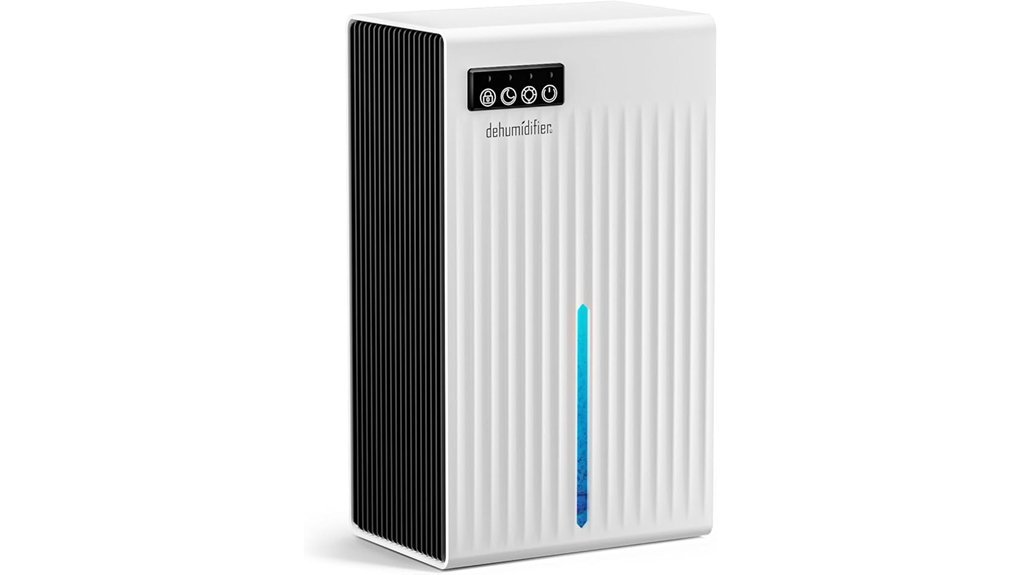
The POOYUPPC Dehumidifier is another compact option for supplemental humidity management. Its advertised extraction rate is up to 25 ounces, or roughly 0.74 liter, per day. That is more useful for judging performance than its promoted room-coverage figure.
The unit measures approximately 8.3 by 5.7 by 14.2 inches and includes a 95-ounce tank, drain hose, touch controls, child lock, normal operating mode, and a quieter sleep mode. Its compact design can work when floor space is limited, but the relatively modest extraction rate makes it best for mild conditions rather than a tent producing a large amount of moisture.
Why You’ll Like It
- Compact cabinet: It occupies less space than a full-size compressor dehumidifier.
- Quiet sleep setting: The advertised sleep-mode level is approximately 35 dB.
- Two drainage choices: Use the removable tank or connect the included hose.
- Simple controls: The touch panel and child-lock function reduce accidental setting changes.
Who Should Avoid It
This is not the right choice when humidity climbs rapidly after watering, stays high throughout the dark period, or remains above your target even with adequate exhaust airflow. Under those conditions, use a higher-output dehumidifier or control the humidity of the surrounding room.
Pros:
- Advertised removal of up to 25 ounces of moisture per day.
- Large 95-ounce water tank for its compact size.
- Drain hose supports continuous drainage.
- Approximately 35 dB in the advertised sleep mode.
- Touch interface and child-lock feature.
Cons:
- Limited extraction capacity for dense or heavily watered plants.
- Actual performance will vary with temperature and humidity.
- The advertised 1,000-square-foot coverage should not be used as the main sizing standard.
- Generic-brand warranty and replacement-part support may be limited.
How to Choose a Dehumidifier for a 4×4 Grow Tent
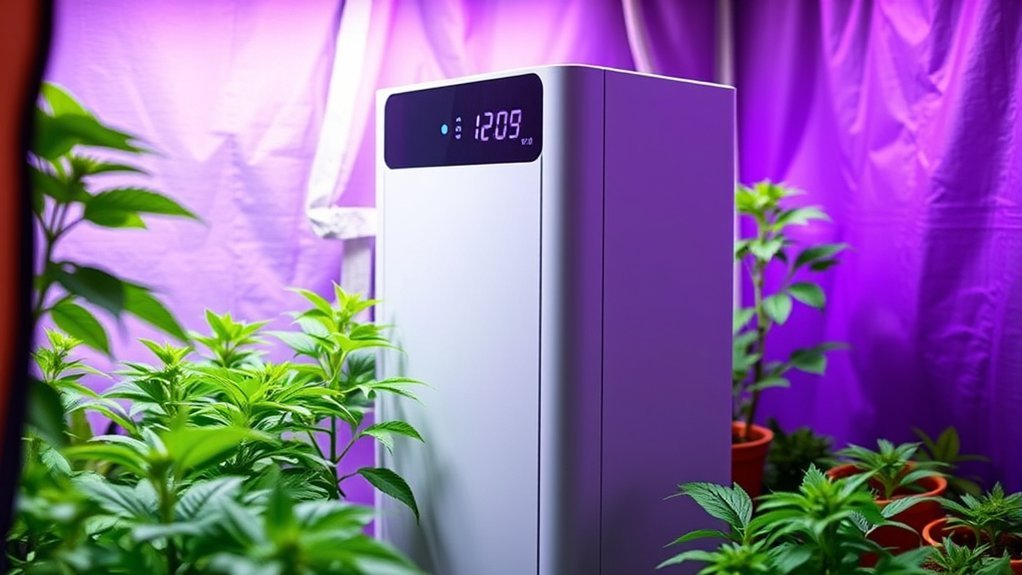
A 4×4 tent has a 16-square-foot floor area, but that number does not tell you how much water enters the air. A tent containing several mature plants can create a much larger moisture load than an empty room with the same floor area. Use the factors below instead of selecting a unit only by its advertised square-foot coverage.
Measure the Actual Humidity Pattern
Place a dependable hygrometer near the canopy and record humidity during the lights-on period, after watering, and several hours after the lights turn off. The nighttime reading is especially useful because relative humidity often rises as the air cools.
If your ventilation system already keeps the tent near the crop’s target range, a compact unit may be sufficient for occasional spikes. If humidity remains high for hours, a purpose-built or higher-output system is a safer choice.
Compare Removal Rate, Not Tank Size
Moisture-removal capacity describes how much water a machine can collect over a specified period. Tank capacity only describes how much collected water it can hold before being emptied.
Always check the temperature and relative humidity used for the advertised extraction test. A mini dehumidifier rated at warm, highly humid conditions will normally collect less water in cooler or drier air.
Consider the Plant and Watering Load
A lightly planted soil-based tent may release much less moisture than a tent with a full canopy, large hydroponic reservoir, frequent irrigation, or wet growing media. Size the dehumidifier for the most demanding stage of the grow rather than the least demanding week.
Inside the Tent or in the Surrounding Room?
Placing a compact unit inside the tent provides direct moisture removal, but it consumes floor space and releases heat. Another approach is to dehumidify the surrounding room—often called the lung room—and let the intake system pull conditioned air into the tent.
A purpose-built ducted model can be placed inside or outside the tent according to the manufacturer’s installation instructions. Make sure neither the intake nor exhaust opening is blocked by fabric walls, pots, or foliage.
Continuous Drainage
A drain hose is valuable when the unit must operate overnight or while you are away. The hose should slope continuously toward a safe drain or collection container. Check for kinks, leaks, or standing water that could stop gravity drainage.
Humidistat and Sensor Placement
A built-in humidistat can prevent unnecessary continuous operation, but sensor accuracy and placement matter. Avoid positioning the sensor directly in front of a humidifier, dehumidifier outlet, intake vent, or wet growing medium. A separate hygrometer provides a useful second reading.
Heat, Power, and Noise
Every dehumidifier adds some heat to the space. Check whether your cooling and exhaust systems can remove that additional heat before installing a high-output model inside the tent.
Power consumption also affects long-term operating cost. Compact thermoelectric units typically use less electricity but remove less moisture. Larger or purpose-built models consume more power but may reach the humidity target faster and operate more effectively during demanding conditions.
Noise is mainly a placement and comfort consideration. A quieter sleep mode may matter when the tent is near a bedroom, office, or shared living area.
Before You Buy Checklist
- Record daytime, post-watering, and lights-off humidity.
- Confirm the advertised moisture-removal rate and test conditions.
- Do not use tank volume as a substitute for extraction capacity.
- Check the unit’s dimensions and required airflow clearance.
- Decide whether the unit will sit inside the tent or in the surrounding room.
- Plan a safe continuous-drain route where possible.
- Estimate the added electrical load and heat output.
- Verify warranty terms and replacement support before ordering.
Frequently Asked Questions
How Much Dehumidifier Capacity Does a 4×4 Grow Tent Need?
There is no single capacity that works for every 4×4 tent. A lightly planted tent may need only supplemental moisture removal, while several mature plants can overwhelm a mini unit. Measure how high humidity rises after watering and when the lights are off, then choose a machine that can bring the tent back to its target range without running constantly at maximum output.
What Humidity Level Is Ideal for a 4×4 Grow Tent?
The correct level depends on the plant species, temperature, growth stage, and vapor pressure deficit. Many indoor growing environments operate somewhere within roughly 40% to 60% relative humidity, but young plants may require more humidity and flowering or fruiting plants may require less. Follow crop-specific guidance instead of using one fixed setting for every plant.
Can a Dehumidifier Run Continuously in a Grow Tent?
It can operate for extended periods when the manufacturer permits continuous use and the unit has safe drainage. A humidistat or controller is preferable because it can reduce output or stop the machine after the target humidity is reached. Running without control may waste electricity, add unnecessary heat, and make the air drier than intended.
Should the Dehumidifier Be Inside or Outside the Grow Tent?
Either arrangement can work. An internal unit removes moisture directly but occupies space and adds heat. A unit in the surrounding room can condition the air entering the tent. Purpose-built ducted models provide more installation flexibility than generic mini dehumidifiers.
How Often Should I Empty the Water Tank?
Empty it before it reaches the full-tank shutoff level. The interval may range from less than a day to several days depending on the extraction rate and current humidity. Continuous drainage is more convenient when the unit collects water quickly.
Does a Larger Water Tank Mean Better Performance?
No. A larger tank reduces emptying frequency, but it does not make the unit remove moisture faster. Compare the advertised amount removed per day, the testing conditions, control features, and drainage options.
Why Does Grow-Tent Humidity Rise When the Lights Turn Off?
Relative humidity can rise when the air cools, even when the total amount of water vapor changes very little. Plants and damp growing media may also continue releasing moisture. Keep exhaust and circulation fans operating as needed during the dark period and check humidity several hours after lights-out.
Final Recommendation
Best Overall: The AC Infinity HYDRONE 7 is the most suitable choice for growers who need purpose-built humidity or VPD control, adjustable drying output, ducting flexibility, and continuous drainage.
Best Lower-Cost Option: The UBBO Z18 provides the highest verified advertised extraction rate of the two compact budget models, along with a large tank and drain hose. Use it for light or moderate moisture rather than a demanding full-canopy grow.
Best Quiet Compact Option: The POOYUPPC can help manage smaller humidity spikes where quiet operation and a compact cabinet matter most, but it should be treated as supplemental equipment.
Before ordering, monitor your tent through a complete watering and light cycle. The best dehumidifier is the one that can maintain your crop-specific target without running continuously, overheating the tent, or requiring constant tank emptying.