Disclosure: This article contains Amazon affiliate links. We may earn a commission from qualifying purchases at no extra cost to you.
Chicago homes can face muggy summers, damp basements, condensation, and cold-season moisture. For these conditions, a compressor dehumidifier with enough pint capacity, a built-in humidistat, auto-defrost, and continuous drainage is usually the most practical choice. The Frigidaire 50 Pint WiFi model is the strongest all-around option here, while the Waykar 80 Pint suits larger, wetter areas. The AEOCKY, Tehanld, BANABIE, and PLUSCENT models offer useful alternatives for different room sizes, noise preferences, and budgets.
Quick Verdict
- Best Overall: Frigidaire 50 Pint Dehumidifier with WiFi
- Best for Very Large Spaces: Waykar 80 Pint Energy Star Dehumidifier
- Best Compact Compressor Option: AEOCKY 3500 Sq. Ft. Dehumidifier
- Best for Flexible Large-Space Control: Tehanld 50 Pint Dehumidifier
- Best Quiet Pick: BANABIE 32 Pint Dehumidifier
- Best Value Pick: PLUSCENT 32 Pint Dehumidifier
Humidity tip: Use a separate hygrometer to check the room. A practical target for many homes is about 40% to 50% relative humidity, while keeping indoor humidity below 60%. In winter, reduce runtime if the air is already dry or the room temperature falls below the unit’s operating range.
Quick Comparison
| Product | Listed Capacity | Listed Coverage | Best For | Drainage | Check Details |
|---|---|---|---|---|---|
| Frigidaire WiFi | 50 pints/day | Up to 4,500 sq. ft. | Overall home and basement use | Bucket or continuous drain | Check on Amazon |
| Waykar Energy Star | Up to 80 pints/day | Up to 5,000 sq. ft. | Large, persistently damp spaces | Tank or continuous drain | Check on Amazon |
| AEOCKY ARION | Up to 50 pints/day | Marketed up to 3,500 sq. ft. | Compact placement and laundry areas | Tank or continuous drain | Check on Amazon |
| Tehanld Smart Control | Up to 50 pints/day | Marketed up to 5,000 sq. ft. | Large rooms and storage areas | Tank or drain hose | Check on Amazon |
| BANABIE | Up to 32 pints/day | Marketed up to 2,500 sq. ft. | Bedrooms and moderate basement moisture | 2.5L tank or drain hose | Check on Amazon |
| PLUSCENT PD10 | Up to 32 pints/day | Marketed up to 2,500 sq. ft. | Value-focused everyday use | 2L tank or drain hose | Check on Amazon |
Note: Pint ratings and square-foot coverage are manufacturer-listed figures. Actual performance changes with room temperature, starting humidity, layout, airflow, and whether doors and windows remain closed.
Frigidaire 50 Pint Dehumidifier w/Wifi
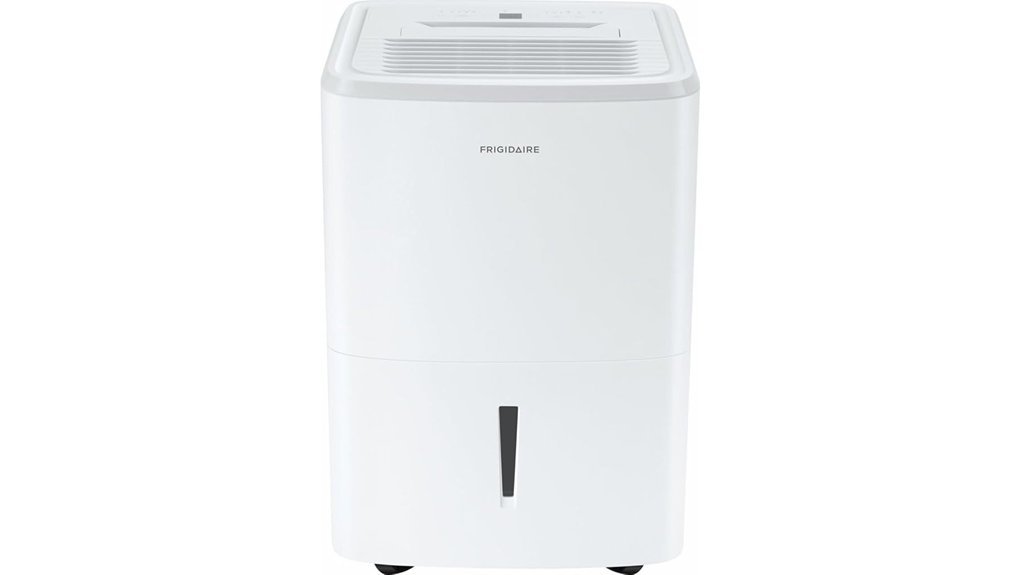
The Frigidaire 50 Pint Dehumidifier with WiFi is the most balanced option in this list for a large Chicago basement or living area. It is listed to remove up to 50 pints of moisture per day and cover up to 4,500 square feet. WiFi control lets you check settings remotely, while the washable filter, front-loading bucket, three fan speeds, and continuous-drain connection make daily use easier.
Why You’ll Like It: It combines a recognized brand, strong moisture-removal capacity, useful app control, and flexible drainage without relying on decorative extras.
Best For: Large finished basements, open living areas, and homeowners who want remote monitoring.
Who Should Avoid It: Buyers with a small room, limited floor space, or a need to carry the unit between floors frequently.
Pros:
- Listed for up to 50 pints of moisture removal per day.
- WiFi control, adjustable humidity settings, and three fan speeds.
- Washable filter plus bucket and continuous-drain options.
Cons:
- At about 44.5 pounds, it is not the easiest model to move frequently.
- A 50-pint compressor unit may be excessive for a small bedroom.
- Continuous drainage still requires a correctly sloped hose and a suitable drain.
BANABIE 32 Pint Dehumidifier for Home with Drain Hose
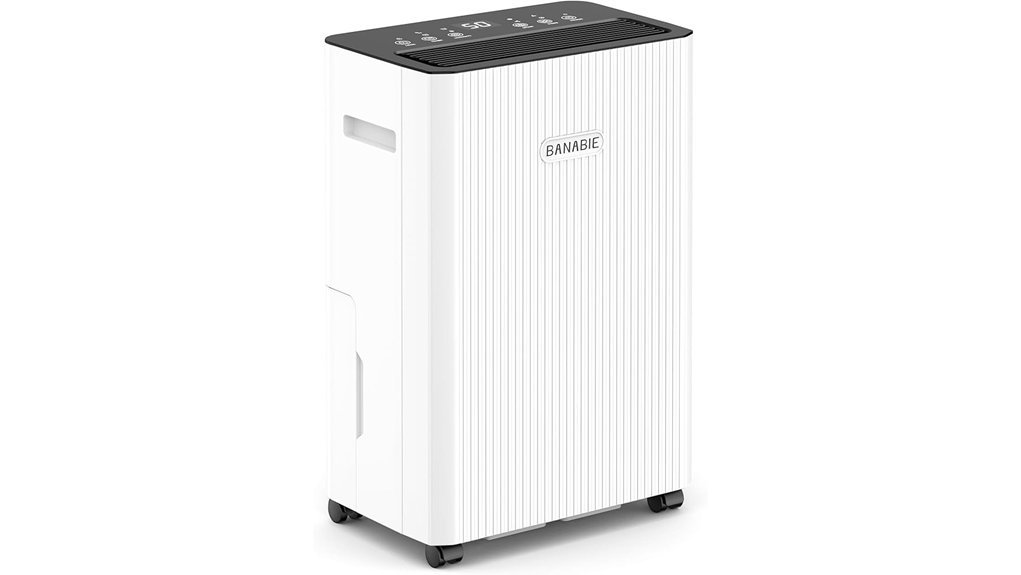
The BANABIE dehumidifier is listed to remove up to 32 pints per day and is marketed for spaces up to 2,500 square feet. It includes a 2.5L tank, a 3.28-foot drain hose, adjustable humidity control, multiple operating modes, auto-shutoff, child lock, wheels, and power-outage memory. The seller lists operation as low as 32 dB, making it worth considering for a finished basement, bedroom, or office where noise matters.
Why You’ll Like It: It offers compressor-based moisture removal with a larger tank than the PLUSCENT and a low listed noise level.
Best For: Moderate humidity in bedrooms, offices, and finished basements.
Who Should Avoid It: Buyers with standing water, active leaks, or a very large open basement that needs higher capacity.
Pros:
- Listed 32-pint capacity with adjustable humidity control.
- 2.5L tank and included drain hose.
- Wheels, child lock, auto-shutoff, and power-outage memory.
Cons:
- The 32 dB figure is seller-listed and may vary by fan speed and room acoustics.
- The tank may need frequent emptying in humid weather.
- No app or WiFi control.
Tehanld 50 Pint Dehumidifier with Drain Hose and Smart Control
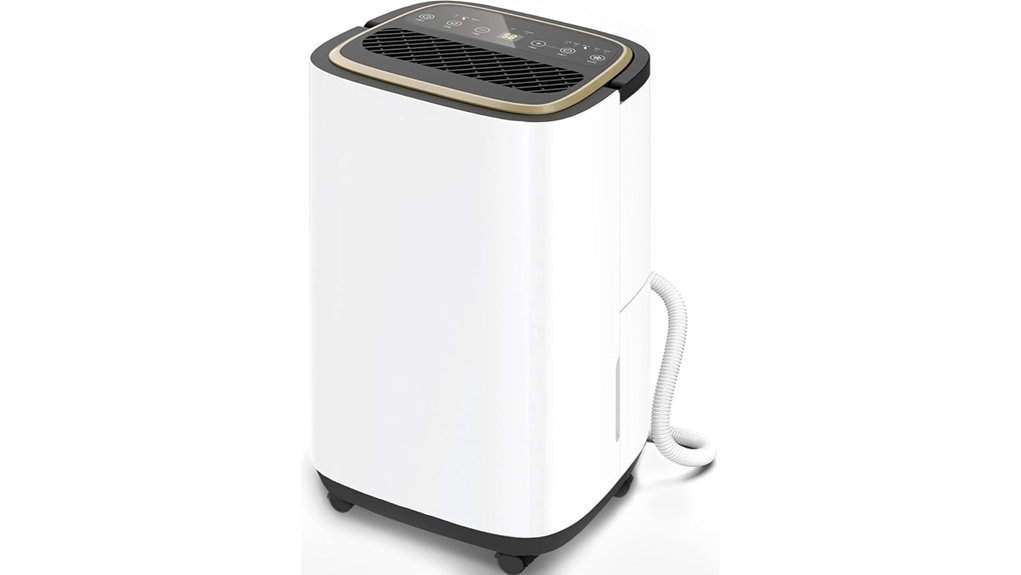
This Tehanld compressor dehumidifier is listed for up to 50 pints of moisture removal per day and is marketed for spaces up to 5,000 square feet. It offers an adjustable 30% to 80% humidity setting, two fan speeds, a 24-hour timer, auto-defrost, child lock, a removable tank, and a 60-inch drain hose. Those features can be useful in a large basement, storage room, or open area where you want either manual collection or continuous drainage.
Why You’ll Like It: It combines broad humidity settings and flexible drainage with a lighter listed weight than some competing 50-pint units.
Best For: Large rooms where a timer, child lock, and drain hose matter.
Who Should Avoid It: Buyers who prefer a long-established appliance brand or need independently confirmed real-world coverage.
Pros:
- Useful set of controls for a large room or basement.
- Tank and hose drainage options.
- Auto-defrost, timer, and child lock.
Cons:
- The 5,000-square-foot claim is manufacturer marketing and may overstate performance in divided or very wet spaces.
- The tank will still need regular emptying when the drain hose is not used.
- Brand history and long-term support are less established than Frigidaire’s.
PLUSCENT 32 Pint Dehumidifier for Large Rooms
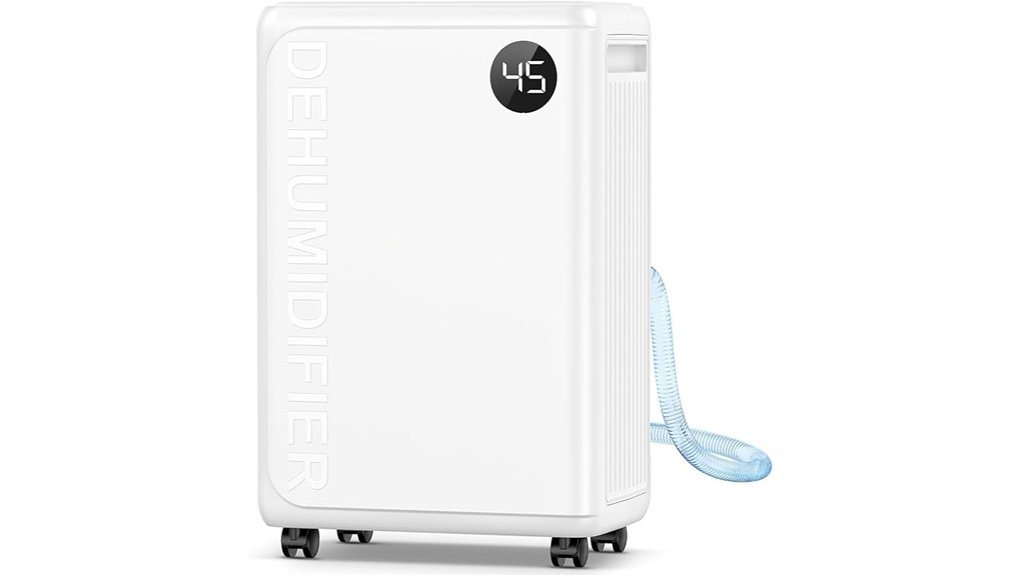
The PLUSCENT PD10 is listed for up to 32 pints of moisture removal per day and is marketed for spaces up to 2,500 square feet. DEHU, CONT, and DRY modes let you choose normal humidity control, continuous operation, or laundry support. It also includes a 24-hour timer, auto-shutoff, auto-restart, auto-defrost, child lock, a 2L tank, a 39.4-inch drain hose, wheels, and handles.
Why You’ll Like It: It covers the essential basement features—humidistat control, auto-defrost, timer, mobility, and drainage—without emphasizing app connectivity.
Best For: Value-focused buyers treating a moderate-size basement, laundry room, or living area.
Who Should Avoid It: Anyone who needs the higher capacity of a 50-pint class unit or a larger collection bucket.
Pros:
- Useful operating modes and adjustable humidity control.
- Auto-defrost, auto-restart, timer, and child lock.
- Included drain hose and easy mobility.
Cons:
- The 2L tank may fill quickly during muggy weather.
- Listed performance is based on favorable test conditions.
- Not the best choice for a severe water-intrusion problem.
Waykar 80 Pint Energy Star Dehumidifier for Home
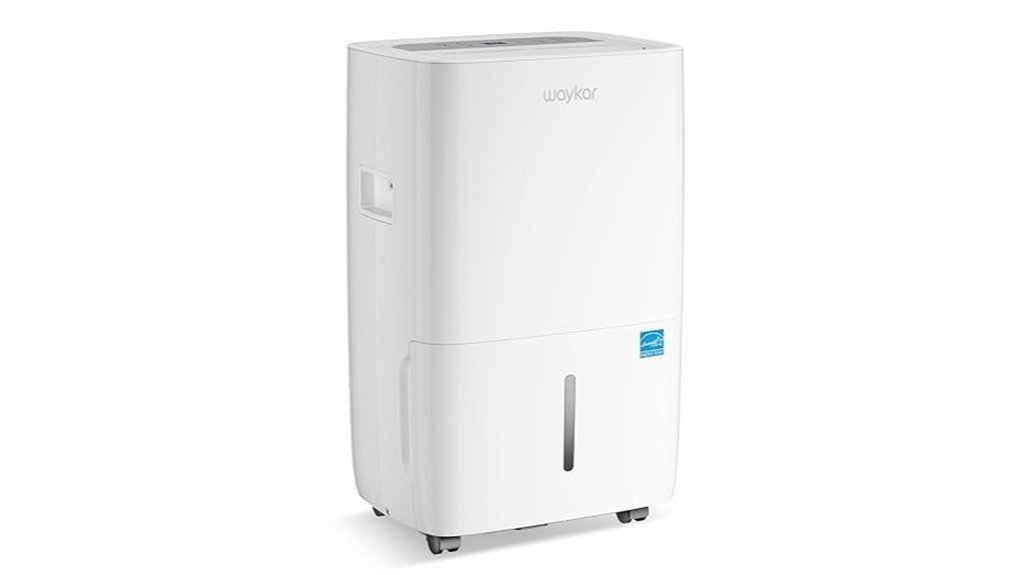
The Waykar model is listed for up to 80 pints of moisture removal per day under warm, very humid test conditions and is marketed for spaces up to 5,000 square feet. Its automatic swing function helps move air around a large room, while adjustable humidity control, auto-defrost, a washable filter, and Energy Star certification support practical basement use. You can empty the 1.14-gallon tank manually or attach the drain hose for continuous operation.
Why You’ll Like It: It offers the highest listed moisture-removal figure in this roundup and is better suited to a large, persistently damp area than a small thermoelectric unit.
Best For: Large basements, open floor plans, and users who expect the unit to run for long periods with a drain hose.
Who Should Avoid It: People treating a small room or anyone who cannot provide enough clearance around the air intake and outlet.
Pros:
- High listed capacity for severe humidity conditions.
- Energy Star certification, auto-defrost, and washable filter.
- Manual tank and continuous-drain options.
Cons:
- The 80-pint figure depends on hot, humid test conditions and will be lower in cooler rooms.
- The 1.14-gallon tank can fill quickly in a wet basement.
- Its size and capacity are unnecessary for mild moisture in a small room.
AEOCKY 3500 Sq.Ft Compressor Dehumidifier with Drain Hose
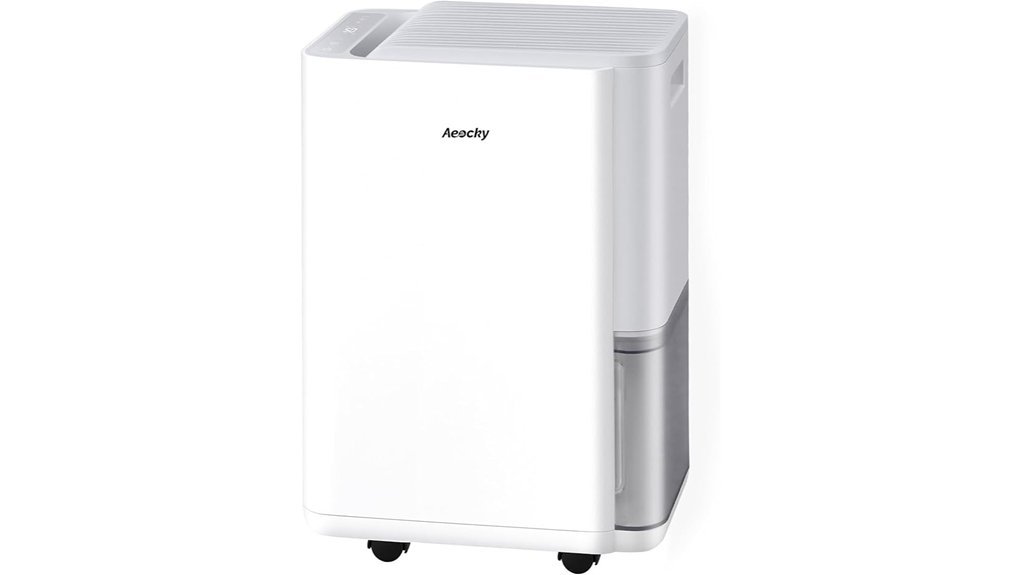
The AEOCKY ARION is a compact compressor dehumidifier marketed for spaces up to 3,500 square feet. Its listing states up to 50 pints per day in extreme heat and humidity and about 38 pints under less extreme conditions. The slim body, casters, carry handle, adjustable humidistat, multiple operating modes, and drain-hose support make it easier to place in a laundry area, finished basement, or large room.
Why You’ll Like It: It provides compressor-based moisture removal in a smaller footprint than many high-capacity units.
Best For: Buyers who need useful capacity but have limited floor space.
Who Should Avoid It: Anyone who needs independently verified coverage or warranty details before buying; confirm the current listing and documentation first.
Pros:
- Compact body with wheels and a handle.
- Adjustable humidity control and continuous drainage.
- More appropriate for substantial room moisture than a small semiconductor model.
Cons:
- The maximum pint figure is based on extreme test conditions.
- Coverage claims should be treated as marketing guidance rather than a guarantee.
- Current warranty terms should be confirmed on the seller page before purchase.
Factors to Consider When Choosing a Dehumidifier for Chicago
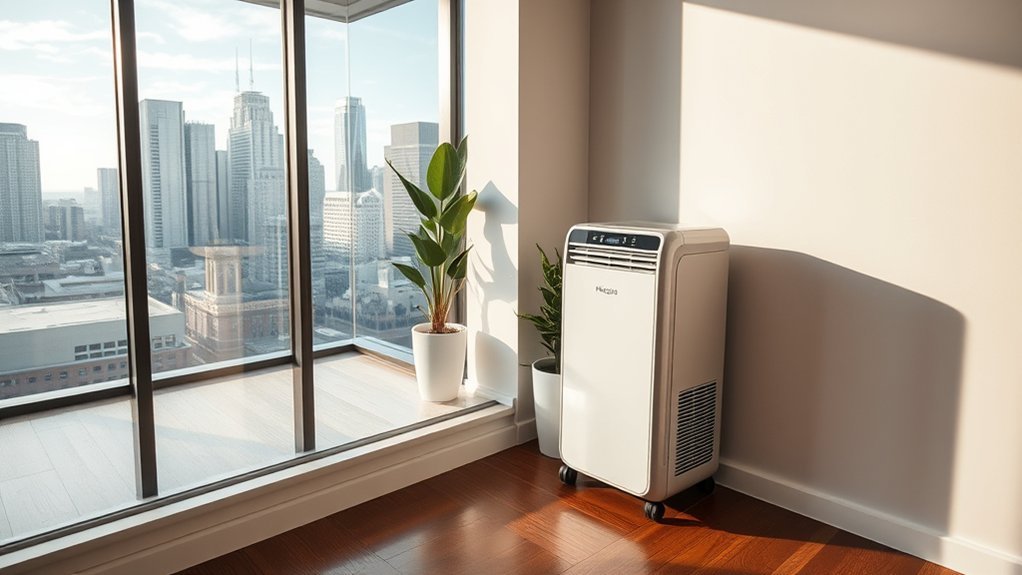
Choose a Chicago dehumidifier by matching the machine to the actual room conditions, not only the largest square-foot number on the box. Measure the space, check the starting relative humidity with a hygrometer, note the room temperature, and decide whether you can use a floor drain or sink for continuous drainage.
Humidity Control Range
Look for an adjustable humidistat that can maintain a practical indoor target. For many homes, about 40% to 50% RH is a useful goal, and indoor humidity should generally stay below 60%. Avoid running a dehumidifier simply because the room feels cool; verify the humidity first. In a Chicago winter, heated indoor air may already be dry, so continuous operation can waste energy and reduce comfort.
Room Size and Pint Capacity
Square-foot coverage claims are only a starting point. Pint capacity, temperature, humidity, room layout, ceiling height, and air movement all affect performance. A 32-pint model may work well in a moderately damp room, while a 50-pint class unit is usually a better fit for a large basement or persistent summer moisture. Choose extra capacity when the area is very damp, but do not expect a portable dehumidifier to solve standing water or an active leak.
Drainage Options
A removable bucket offers flexibility, but it can fill quickly during humid weather. Continuous gravity drainage is more convenient when the unit sits above a floor drain, sink, or condensate pump. Keep the hose short, straight, and sloped downward. A standard drain hose cannot push water uphill unless the dehumidifier includes a pump.
Noise Level Matters
Noise ratings can help compare models, but seller-listed decibel numbers may be measured under different conditions. For a bedroom or finished basement, look for a low fan setting or sleep mode and place the unit on a level, solid surface. Compressor units often make both fan noise and an occasional compressor sound, so a quoted number does not guarantee silence.
Energy Efficiency
Energy Star certification is a useful trust signal because certified models must meet program efficiency requirements. Also match capacity to the problem: an undersized unit that runs continuously may not save energy, while an oversized unit may cost more and take up unnecessary space. Clean the filter on schedule and keep doors and windows closed while the machine is running.
Cold-Weather Performance
Most portable compressor dehumidifiers remove less moisture as room temperature drops. Auto-defrost helps protect the coils, but it does not make a standard unit equally effective in an unheated Chicago garage or near-freezing basement. Check the manufacturer’s minimum operating temperature, and stop using the machine if ice persists or the room is colder than its rated range.
Portability and Size
Check the unit’s dimensions, weight, cord length, intake clearance, and handle design before buying. Wheels help on one floor, but they do not make a 30- to 45-pound unit easy to carry upstairs. Leave enough space around the intake and exhaust so air can circulate freely.
Before You Buy Checklist
- Measure the room and record the starting RH with a hygrometer.
- Fix leaks, seepage, or drainage problems before relying on a dehumidifier.
- Confirm the pint rating conditions and minimum operating temperature.
- Choose bucket, gravity hose, or pump drainage for your layout.
- Check filter access, tank size, noise controls, warranty, and return terms.
- Verify that the current Amazon listing matches the model and specifications described here.
Safety Note: A dehumidifier manages airborne moisture; it does not repair plumbing leaks, foundation seepage, flooding, or contaminated mold growth. Address the water source and use qualified help when the problem is extensive.
Frequently Asked Questions
Do Dehumidifiers Help Reduce Musty Odors in Chicago Basements?
They can help when the odor is linked to high humidity, because drier conditions are less favorable for mold and mildew. However, you still need to fix leaks, remove wet materials, improve ventilation, and clean the actual odor source.
How Often Should I Empty a Dehumidifier Tank in Humid Months?
Check the tank at least once or twice a day when first using the machine. A small bucket may fill within hours in a wet basement. For unattended operation, use a properly installed continuous-drain hose or a model with a pump.
Can I Run a Dehumidifier All Winter in Chicago?
Only when the measured humidity is high enough and the room stays within the unit’s operating-temperature range. Heated Chicago homes can become very dry in winter, while unheated spaces can be too cold for efficient compressor operation. Use a hygrometer rather than running the unit automatically all season.
Which Dehumidifier Noise Level Is Best for Bedrooms?
A lower listed decibel rating and a sleep or low-fan mode are preferable. Around 40 dB or lower may be comfortable for many sleepers, but sound perception varies, and compressor cycling can still be noticeable.
Do Portable Dehumidifiers Need Special Maintenance in Hard-Water Areas?
Hard water is less important than it is with a humidifier because you do not add water to a dehumidifier. Still, mineral residue can collect in the bucket or drain path. Wash the tank, inspect the hose for buildup, and clean the air filter according to the manual. Do not pour distilled water into the unit.
Is a Thermoelectric Dehumidifier Enough for a Chicago Basement?
Usually not for a full-size damp basement. Small thermoelectric or rechargeable moisture absorbers can help in closets, cabinets, or tiny enclosed spaces, but a compressor dehumidifier provides much higher moisture-removal capacity for a basement.
Conclusion
Final Recommendation
Choose the Frigidaire 50 Pint WiFi Dehumidifier for the best overall mix of capacity, brand recognition, controls, and drainage. Pick the Waykar 80 Pint when the space is especially large or damp, and consider the AEOCKY when you want compressor performance in a more compact body. The Tehanld, BANABIE, and PLUSCENT models can also fit specific budgets and room sizes, but verify the current seller listing before ordering.
Whichever model you choose, measure the humidity, size the unit for the actual conditions, use continuous drainage when practical, and correct any leaks or seepage that are feeding the moisture problem.