Updated: August 1, 2026
Choosing the right Hisense dehumidifier comes down to daily moisture-removal capacity, room conditions, drainage, noise, portability, and product condition. The renewed Hisense HT5021KP 50-Pint model is the strongest all-around option here because it combines substantial moisture removal with a built-in pump. The renewed Hisense HD3524 35-Pint model is easier to move and better suited to moderate dampness, while the DH10020KP1WG provides 60-pint-per-day capacity for heavier moisture loads.
Do not choose by advertised square footage alone. An open basement, a cool garage, and several divided rooms can require very different performance even when their floor areas are similar. Also confirm whether the listing is new, renewed, refurbished, used, or open-box before buying.
Key Takeaways
- Choose the HT5021KP when you want a balanced 50-pint model with pump-assisted drainage.
- Choose the HD3524 for moderate moisture, a smaller footprint, and easier movement.
- Choose the DH10020KP1WG for the highest daily moisture-removal capacity in this comparison.
Quick Verdict
Best Overall: Hisense HT5021KP 50-Pint Dehumidifier with Built-in Pump
Best for Easier Portability: Hisense HD3524 35-Pint Portable Dehumidifier
Best for Heavy Moisture: Hisense DH10020KP1WG 60-Pint Dehumidifier
How We Compared These Hisense Dehumidifiers
We compared the three models by verified model identity, daily pint capacity, drainage options, operating controls, low-temperature suitability, portability, noise information, seller condition, and the type of moisture problem each unit is best equipped to manage. We did not rank products by unverified discounts, review counts, or temporary availability.
Quick Comparison of the Best Hisense Dehumidifiers
| Model | Best For | Moisture Removal | Drainage | Condition | Amazon |
|---|---|---|---|---|---|
| Hisense HT5021KP | Large basements and convenient pump drainage | Up to 50 pints per day | Built-in pump, gravity hose or bucket | Renewed | Check Product Details |
| Hisense HD3524 | Moderately damp rooms and easier movement | Up to 35 pints per day | Gravity hose or bucket | Renewed | Check Product Details |
| Hisense DH10020KP1WG | Heavy moisture and high-capacity removal | Up to 60 pints per day | Built-in pump, gravity hose or bucket | Check seller listing | Check Product Details |
Hisense HT5021KP 50-Pint Dehumidifier with Built-in Pump (Renewed)
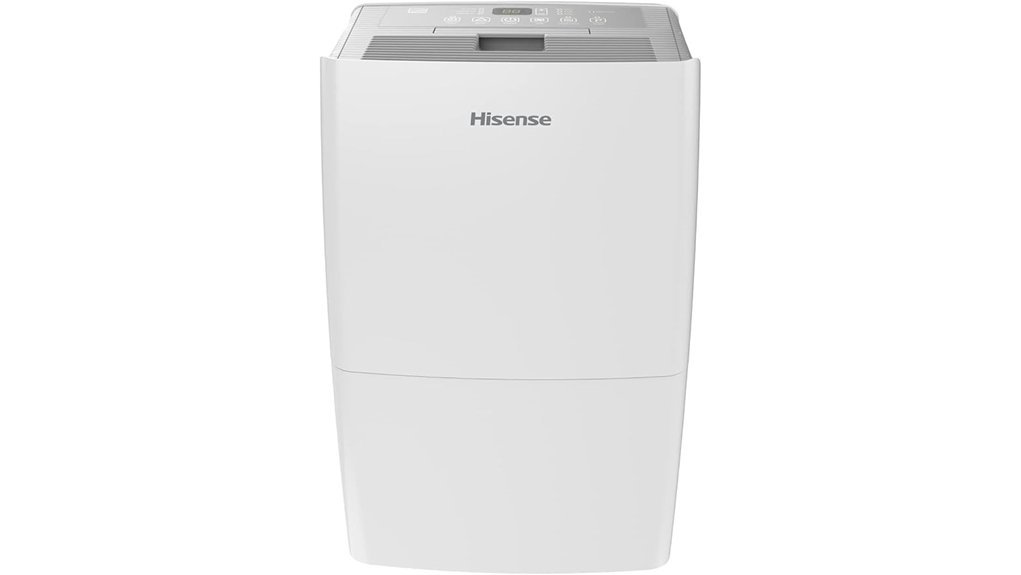
The renewed Hisense HT5021KP is the most balanced choice for buyers who want 50-pint daily moisture removal and flexible drainage. Its built-in pump can move collected water to a suitable sink, drain, or basement window, which solves a common basement problem when the available drain is above the dehumidifier.
Why You’ll Like It: It combines stronger residential capacity with three operating modes, three fan settings, and pump-assisted drainage, reducing the need to empty the bucket manually.
The model has three fan settings and Auto, Continuous, and Manual operating modes. It is advertised for spaces up to 4,500 square feet and can operate in temperatures as low as 38°F. Actual results will depend on the room layout, starting humidity, temperature, and severity of the moisture problem.
Its operating sound is listed at approximately 48 to 50 dB, so it should be manageable in a basement or utility room but may remain noticeable in a quiet bedroom. A washable filter, adjustable humidistat, timer, bucket-full alert, and automatic shutoff make routine operation easier.
Who Should Buy This: Buyers managing a large or persistently damp basement who want a pump to move water above the unit.
Who Should Avoid This: Light-duty users who only need occasional moisture control in one small room, buyers who want the lightest option, or shoppers who only want a factory-new appliance.
Pros:
- Removes up to 50 pints of moisture per day.
- Built-in pump provides more drainage flexibility than gravity-only models.
- Includes three fan settings and three useful operating modes.
- Supports low-temperature operation for cooler basements and garages.
- Washable filter and automatic shutoff simplify maintenance.
Cons:
- Renewed condition means appearance, accessories, and warranty terms may vary.
- Its 48 to 50 dB sound level can be noticeable in sleeping areas.
- A larger compressor dehumidifier takes more floor space than a compact room unit.
Hisense HD3524 35-Pint Portable Dehumidifier (Renewed)
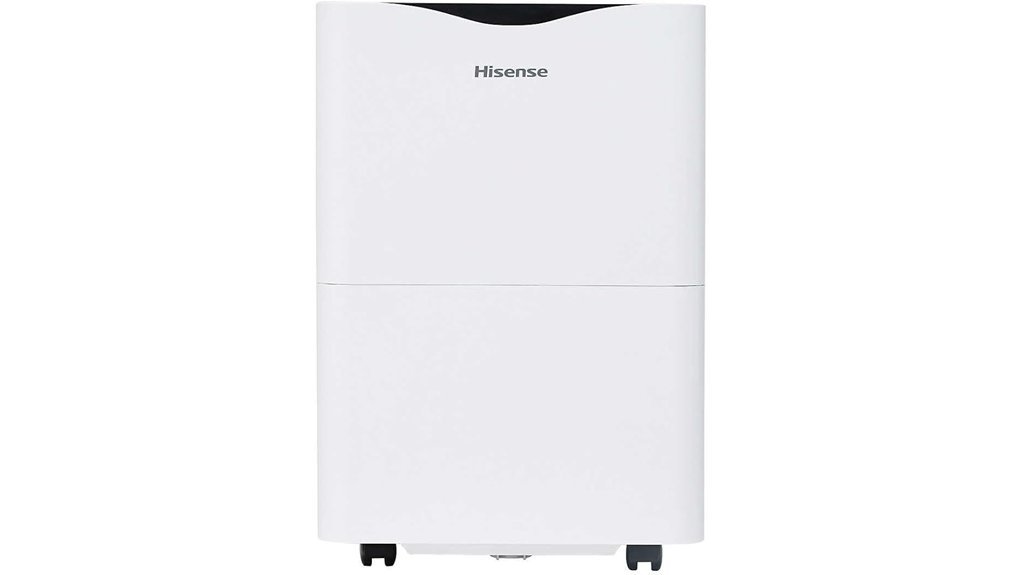
The renewed Hisense HD3524 is a practical middle-capacity model for buyers who do not need the heavier moisture removal of a 50 or 60-pint unit. It removes up to 35 pints of moisture per day and is advertised for spaces up to 3,000 square feet, though real-world performance still depends on temperature, layout, and moisture severity.
Why You’ll Like It: It offers useful humidity controls and gravity drainage in a lighter, easier-to-position design than the larger models in this guide.
Its three fan settings include Low, High, and Auto. Auto Dry, Continuous, and Manual modes let you choose automatic operation, nonstop moisture removal, or a specific humidity target. The model can operate at temperatures down to 38°F and has an easy-carry handle, slide-out bucket, automatic bucket shutoff, and washable filter.
You can empty the bucket manually or connect a compatible garden hose for gravity drainage. The hose must run downhill without kinks, and it is generally sold separately. Listed operating noise is approximately 45 to 49 dB, depending on the fan setting.
Who Should Buy This: Buyers who need dependable moisture control in a moderately damp basement, apartment, garage, or living area and value easier movement.
Who Should Avoid This: Buyers dealing with active flooding, standing water, severe water intrusion, or very high moisture loads that require greater extraction capacity and repair of the underlying water source.
Pros:
- 35-pint-per-day capacity suits moderate residential moisture problems.
- Three fan settings and three operating modes provide useful control.
- Supports both bucket collection and gravity-hose drainage.
- Easy-carry handle and lower weight improve portability.
- Low-temperature operation suits many unheated residential spaces.
Cons:
- Does not have a built-in pump for draining water upward.
- A gravity-drain garden hose is normally purchased separately.
- Renewed condition may include cosmetic wear or different warranty terms.
Hisense DH10020KP1WG 60-Pint Dehumidifier with Built-in Pump
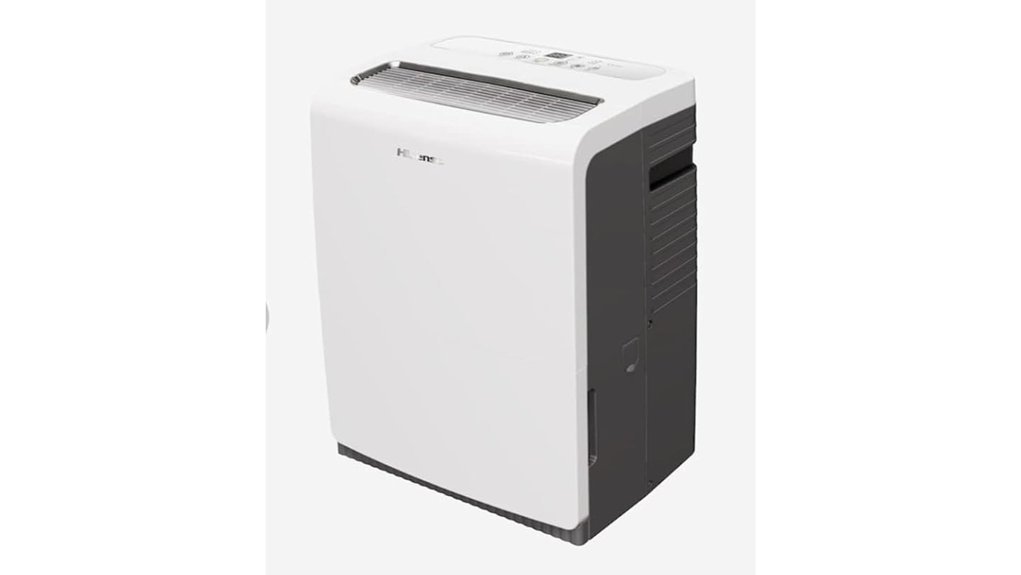
The Hisense DH10020KP1WG offers 60-pint-per-day moisture removal for buyers dealing with heavier residential dampness. The 60-pint figure describes how much water the unit can remove from the air under rated test conditions; it does not describe the size of the collection bucket.
Why You’ll Like It: It provides the highest daily extraction capacity in this comparison and includes pump-assisted drainage for large or persistently damp spaces.
This model has three fan speeds rather than a single-speed design. It also includes Auto, Continuous, and Manual modes, an adjustable humidistat, automatic bucket shutoff, a washable filter, and low-temperature operation down to approximately 38°F.
A built-in pump and quick-connect hose make it possible to send collected water to a drain point above the unit. Gravity drainage and bucket collection are also available. Published coverage descriptions for this model are not consistent across listings, so buyers should focus on its 60-pint rating, room layout, temperature, drainage route, and moisture severity rather than relying on one square-foot number.
Who Should Buy This: Homeowners with a large, cool, or persistently damp basement who want high-capacity moisture removal and pump-assisted drainage.
Who Should Avoid This: Buyers who need a light, compact unit for occasional use, shoppers with limited floor space, or anyone dealing with standing water that must be extracted before normal dehumidification begins.
Pros:
- Removes up to 60 pints of moisture per day under rated conditions.
- Built-in pump supports upward drainage to a suitable outlet.
- Three fan speeds provide more control over noise and performance.
- Offers Auto, Continuous, and Manual operating modes.
- Automatic shutoff and a washable filter simplify routine care.
Cons:
- Larger and heavier than the 35 and 50-pint models in this guide.
- Coverage descriptions vary between published listings.
- Marketplace condition, warranty, and included accessories should be checked carefully.
Factors to Consider When Choosing a Hisense Dehumidifier
Start with daily moisture-removal capacity rather than choosing only by the largest advertised coverage figure. You should also compare drainage, noise, operating temperature, portability, seller condition, and maintenance requirements.
Daily Pint Capacity
Pint capacity tells you how much moisture a dehumidifier can remove from the air in 24 hours under standardized conditions. It does not describe the water-bucket size.
The 35-pint HD3524 is suitable for moderate moisture loads. The 50-pint HT5021KP offers a stronger balance for large residential spaces, while the 60-pint DH10020KP1WG is the better choice for heavier dampness. A larger model may reach the target humidity faster, but it will also be heavier and can use more power while the compressor is running.
Room Size and Moisture Severity
Advertised square-foot coverage is only a starting point. An open basement with mild seasonal humidity may be easier to manage than a smaller room with water seepage, poor air sealing, or continuously wet laundry.
Consider ceiling height, doors, airflow between rooms, outdoor humidity, temperature, and whether the moisture source has been repaired. A dehumidifier can manage airborne moisture, but it cannot repair plumbing leaks, foundation seepage, or drainage problems.
Built-in Pump vs. Gravity Drainage
A built-in pump is useful when the water must travel upward to a sink, window, or raised drain. The HT5021KP and DH10020KP1WG include pump-assisted drainage.
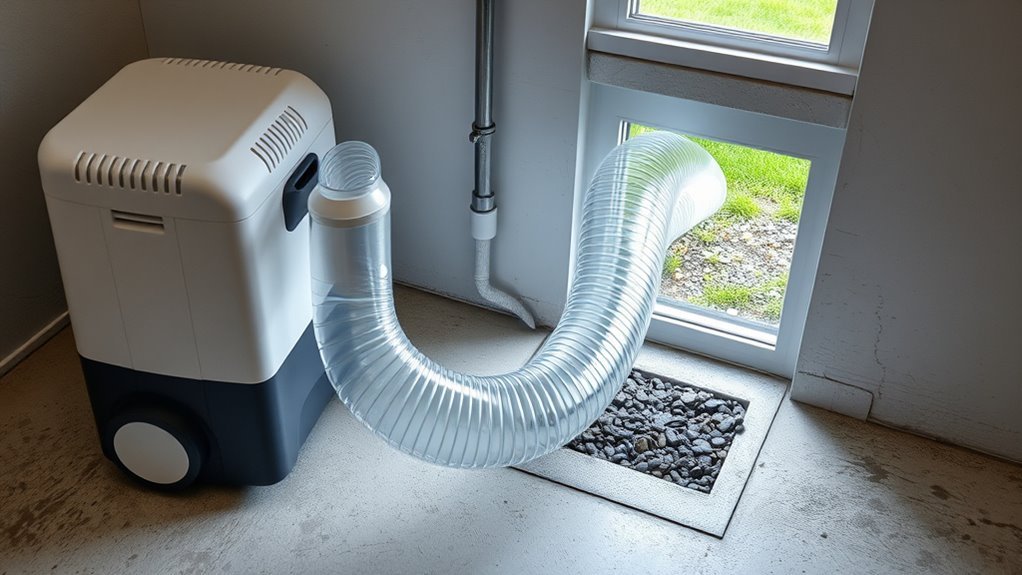
Gravity drainage is simpler and uses a standard hose connection, but the entire hose must slope downward from the unit to the drain. The HD3524 supports gravity drainage and requires a properly positioned compatible garden hose.
Noise Level
Compressor dehumidifiers create fan noise, compressor hum, and occasional cycling sounds. The HD3524 is listed at approximately 45 to 49 dB, the HT5021KP at approximately 48 to 50 dB, and the DH10020KP1WG at approximately 49 to 51 dB. Noise can still feel more noticeable in a bedroom than in a basement or utility room.
Low fan speed is usually the better choice for bedrooms and offices. High speed removes moisture faster but produces more noticeable airflow noise.
Renewed Condition
A renewed dehumidifier can reduce the purchase cost, but the condition and warranty may differ from a factory-new unit. Read the seller’s condition description instead of assuming every renewed product follows the same inspection or warranty process.
- Confirm who provides the warranty.
- Check the return window and return-shipping terms.
- Confirm whether drain and pump hoses are included.
- Inspect the bucket, float, filter, controls, cord, and drain connection.
- Test automatic shutoff and drainage before unattended operation.
Humidity Modes and Controls
Auto Dry is convenient when you want the dehumidifier to manage operation automatically. Continuous Mode is useful in persistently damp spaces, especially when a drain hose is connected. Manual Mode lets you choose a target relative-humidity setting.
For general household moisture control, a target in the mid-40% to 50% relative-humidity range is a practical starting point. Adjust as needed for climate, season, room temperature, condensation, and building conditions.
Portability and Placement
Check product weight, handles, casters, cord length, and available floor space. The HD3524 is easier to move than the larger models, while the 50 and 60-pint units are better suited to semi-permanent basement or utility-room placement.
Place the unit on a firm, level surface and leave the manufacturer-recommended clearance around its air inlet and outlet. Closing nearby windows and exterior doors will normally improve moisture-removal efficiency.
Maintenance
Inspect the filter about every two weeks and clean it when dust becomes visible or the filter indicator appears. Allow a washed filter to dry completely before reinstalling it.
Rinse the water bucket regularly, check the float mechanism, and inspect drain hoses for leaks, kinks, or buildup. Never drink collected water.
Before You Buy Checklist
- Confirm the exact model number and product condition.
- Measure the available floor space and drainage route.
- Decide whether you need bucket collection, gravity drainage, or a built-in pump.
- Check whether the required hose is included.
- Review the seller’s return policy and warranty provider.
- Fix leaks, seepage, or standing-water problems before relying on a dehumidifier.
Frequently Asked Questions
Which Hisense Dehumidifier Size Should I Choose?
Choose the 35-pint HD3524 for moderate dampness and easier portability. Choose the 50-pint HT5021KP when you want a strong general-purpose basement model with a pump. Choose the 60-pint DH10020KP1WG for heavier moisture loads and high-capacity operation.
Is a Built-in Pump Worth It?
A pump is worth considering when the nearest drain is above the dehumidifier or when gravity drainage would require placing the unit on a raised surface. You may not need a pump when a floor drain is nearby and the hose can slope downward continuously.
Can Hisense Dehumidifiers Run Continuously With a Drain Hose?
Yes, the models in this guide support continuous operation with an appropriate drainage setup. A gravity hose must run downhill without kinks, while a pump-equipped model can move water upward within the limits stated in its manual. Test the connection for leaks before leaving the unit unattended.
How Often Should the Filter Be Cleaned?
Inspect the filter about every two weeks and clean it sooner in dusty rooms. A clogged filter reduces airflow and can make the unit noisier or less effective.
Do Hisense Dehumidifiers Restart After a Power Outage?
The HD3524 is designed to resume its previous settings after power is restored. Restart behavior can vary by model, so check the manual before depending on automatic restart in an unattended basement.
Are Hisense Dehumidifiers Suitable for Laundry Rooms?
They can help remove moisture released by indoor laundry, provided the unit has enough capacity and unobstructed airflow. Use continuous drainage when possible if you dry clothes frequently, and keep fabrics away from the air inlet and outlet.
Will a Hisense Dehumidifier Remove Mold?
No. A dehumidifier can help maintain a drier environment, but it does not remove existing mold or fix the water source that caused it. Repair leaks and address visible mold using appropriate professional guidance when needed.
What Should I Check When Buying a Renewed Hisense Dehumidifier?
Check the seller, condition grade, return period, warranty provider, and included accessories. When it arrives, inspect the bucket, filter, float switch, drain connector, control panel, pump hose, and power cord before running it unattended.
Conclusion
The Hisense HT5021KP 50-Pint Dehumidifier is the best all-around choice in this guide because it combines strong daily moisture removal, three operating modes, and a built-in pump. The Hisense HD3524 35-Pint is the better choice when easier movement and moderate capacity matter more. For persistently damp spaces, the Hisense DH10020KP1WG 60-Pint provides the highest moisture-removal capacity of the three.
Choose based on the severity of the moisture problem, not only the advertised square footage. Confirm the drainage route, available floor space, noise tolerance, product condition, warranty provider, return window, and included accessories before ordering.
Final Recommendation
Choose the HT5021KP for the best combination of capacity and pump drainage.
Choose the HD3524 for moderate moisture and easier portability.
Choose the DH10020KP1WG when maximum daily moisture removal is the priority.