Affiliate Disclosure: As an Amazon Associate, we may earn from qualifying purchases. This does not affect the price you pay.
The best domestic desiccant dehumidifier depends on whether you need active humidity control throughout a room or passive moisture protection inside an enclosed storage space. These two product types are not interchangeable.
For a small room, bathroom, RV, boat, laundry area, or cool storage room, the powered Ivation 13-Pint Desiccant Dehumidifier actively processes room air and can drain into a tank or hose. For cars, gun safes, camera cases, cabinets, drawers, and sealed storage bins, rechargeable silica gel moisture absorbers are smaller, silent during use, and easier to position.
Quick Verdict
Choose the Ivation when you need to lower humidity throughout a small room. Choose Wisedry or unuaST bags for vehicles and larger sealed storage, Kiorafoto for USB-C reactivation, or a TOAAOT, FULLBOW, or Wisesorb canister set for safes, cabinets, drawers, and equipment cases.
How These Products Were Compared
The products were evaluated by intended use, powered versus passive operation, moisture capacity, enclosure size, reactivation method, drainage, operating temperature, portability, monitoring requirements, and important limitations. Manufacturer figures are treated as test-condition or listing guidance rather than guaranteed real-world performance.
Quick Comparison: Powered Dehumidifier vs. Passive Desiccants
| Product | Type | Best For | Reactivation or Drainage | Main Limitation | Details |
|---|---|---|---|---|---|
| Ivation 13-Pint | Powered desiccant rotor | Small rooms and cooler spaces | Tank or continuous drain hose | Requires electricity and is not sized for large rooms | Check Current Availability |
| Wisedry 2 x 500g | Reusable silica gel bags | Cars, closets, dry boxes, and sealed bins | Microwave or oven, as directed | Non-indicating bags must be monitored by weight | Check Current Availability |
| TOAAOT 200G 3-Pack | Aluminum silica gel canisters | Gun safes, toolboxes, and cases | Oven reactivation | Works only in enclosed storage | Check Current Availability |
| Kiorafoto USB-C 2-Pack | Heated reusable silica gel units | Camera gear, electronics, and filament storage | USB-C reactivation | Cannot absorb while being reactivated | Check Current Availability |
| FULLBOW 200G 3-Pack | Reusable silica gel canisters | Several small cabinets or safes | Oven reactivation | Coverage claims are not consistent across listings | Check Current Availability |
| Wisesorb 40G 5-Pack | Compact aluminum canisters | Drawers, cases, safes, and toolboxes | Oven reactivation | Small capacity per canister | Check Current Availability |
| unuaST 4 x 500g | Large reusable silica gel bags | Cars, RV storage, and large sealed containers | Microwave reactivation | Provides passive moisture control only | Check Current Availability |
Ivation 13-Pint Compact Quiet Desiccant Dehumidifier
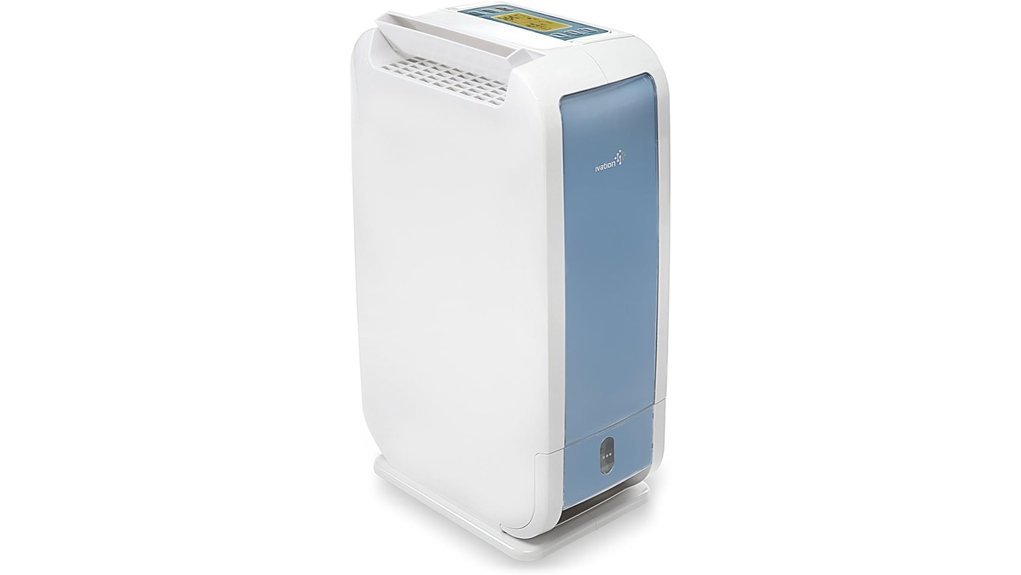
The Ivation 13-Pint Compact Desiccant Dehumidifier is the only product in this guide designed to actively lower humidity throughout a small room. Ivation markets it as a 13-pint model, while the current official specification lists moisture removal of 12 pints per day at 68°F and 60% relative humidity. Actual removal will change with room temperature and humidity.
The unit is intended for spaces up to 270 square feet and is rated to operate from 33°F to 104°F, making it useful in cooler areas where some compressor dehumidifiers become less effective. The digital controls let you select a humidity target, fan speed, timer, sleep setting, vent swing, and display brightness. Water can collect in the half-gallon tank, or you can connect the included hose for continuous gravity drainage.
Why You’ll Like It
This is the strongest choice here for bathrooms, laundry areas, small basements, RVs, boats, closets, and other spaces that need continuous moisture removal rather than passive protection.
Best For: Small rooms and cool spaces that have an electrical outlet and need active humidity control.
Who Should Avoid It: Buyers who only need moisture protection inside a small safe, drawer, camera case, or sealed storage box.
Pros:
- Rated for operation from 33°F to 104°F.
- Designed for active moisture removal in areas up to 270 square feet.
- Includes a removable tank and continuous drain hose.
- Digital controls include humidity settings, timer, fan speed, sleep mode, and vent swing.
- Includes auto shut-off, automatic restart, a carry handle, and a washable filter.
Cons:
- Requires electricity and produces slightly warmer exhaust air during normal operation.
- The half-gallon tank may need frequent emptying in damp conditions if the hose is not used.
- It is not designed for large rooms, widespread water damage, or an active leak.
- A specific operating-noise rating is not clearly published, so noise-sensitive buyers should check the current listing and manual.
Before Buying: Confirm that the room is within the recommended size, that a grounded outlet is available, and that a gravity-drain hose can slope continuously downward if you plan to use continuous drainage.
Wisedry Rechargeable Silica Gel Dehumidifier Packets (2x500g)
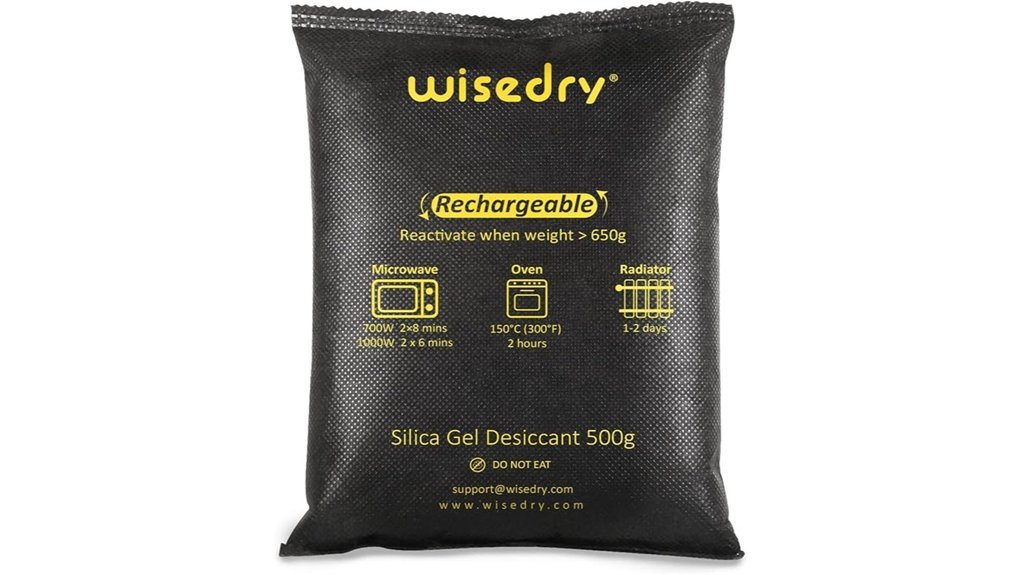
Wisedry’s two 500-gram rechargeable silica gel bags provide passive moisture protection without electricity. The manufacturer states that each 500-gram bag can absorb up to 180 grams of moisture under its stated conditions, although actual performance depends on humidity, temperature, airflow, and how well the space is sealed.
The bags are especially useful for reducing condensation inside cars and protecting items stored in cupboards, dry boxes, RV compartments, boats, safes, and sealed containers. Once saturated, they can be reactivated in a microwave or oven according to the supplied instructions.
Why You’ll Like It
The larger bag size provides more desiccant capacity than a small metal canister, while the soft shape is easy to position on a dashboard, shelf, or inside a storage bin.
Best For: Cars, cupboards, equipment storage, dry boxes, closets, and other small enclosed spaces.
Who Should Avoid It: Anyone expecting a passive bag to control humidity throughout an open basement, bathroom, bedroom, or garage.
Pros:
- Includes two large 500-gram silica gel bags.
- Each bag is advertised to absorb up to 180 grams of moisture under the manufacturer’s stated conditions.
- Reusable through multiple drying cycles when maintained correctly.
- Requires no electricity while absorbing moisture.
- Useful for vehicle condensation and sealed storage.
Cons:
- Provides passive protection rather than powered room dehumidification.
- The bags use non-indicating silica gel, so saturation must be checked by weight rather than color.
- Requires access to a microwave or oven for reactivation.
- Recharge frequency changes with humidity, enclosure size, and air leakage.
Monitoring Note: Record the dry weight before use. The manufacturer recommends reactivation when a 500-gram packet has gained about 30% of its original weight. Follow the exact heating method, wattage, temperature, and cooling instructions supplied with the bags.
TOAAOT 200G Silica Gel Gun Safe Canisters (3 Pack)
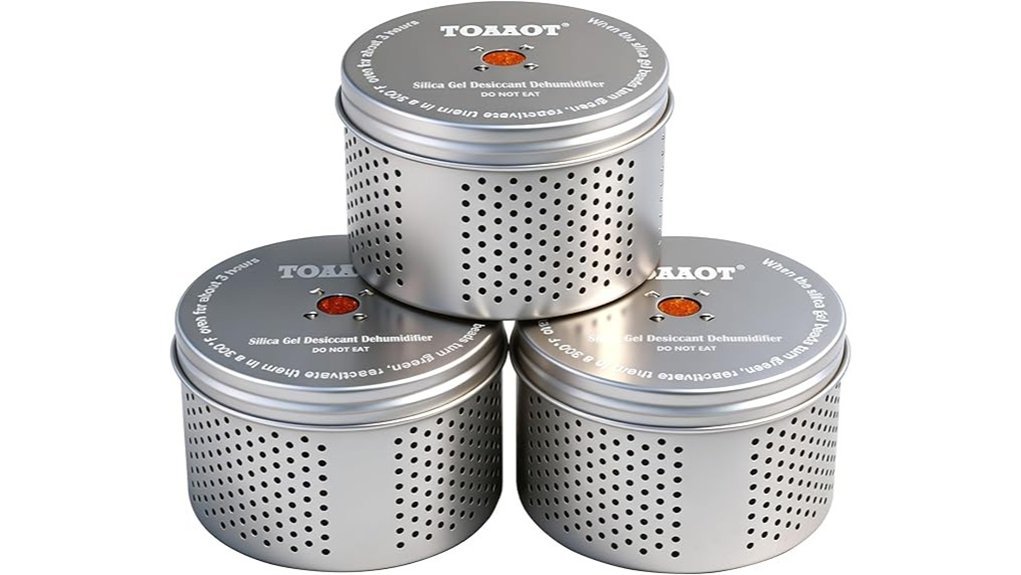
This TOAAOT set includes three 200-gram silica gel canisters for controlling moisture in gun safes, toolboxes, storage cases, cabinets, and sealed dry boxes. Retailer listings recommend approximately 15 cubic feet of enclosed space per canister, but that figure should be treated as general listing guidance rather than guaranteed coverage.
The orange indicator beads change toward dark green as they absorb moisture. The canisters can then be reactivated in an oven according to the manufacturer’s temperature and timing instructions. Their aluminum housings require no electricity during use and can be placed in separate storage areas.
Why You’ll Like It
The three-pack lets you protect several small enclosures or position more than one canister inside a larger safe.
Best For: Gun safes, ammunition cabinets, toolboxes, document cases, 3D filament boxes, and other enclosed storage.
Who Should Avoid It: Buyers who need active moisture removal in a room or an enclosure that is opened frequently.
Pros:
- Includes three reusable 200-gram canisters.
- Color indicator provides a visible recharge reminder.
- Requires no batteries or electricity while absorbing moisture.
- Aluminum housing is suitable for compact storage spaces.
- Canisters can be distributed among several cases or cabinets.
Cons:
- Requires manual oven reactivation.
- Works best in sealed or mostly sealed enclosures.
- Does not regulate humidity to a precise target.
- The retailer-listed coverage figure may not reflect a frequently opened or poorly sealed enclosure.
- Should not be used for food storage unless the manufacturer specifically approves that use.
Kiorafoto 2 Pack USB-C Rechargeable Desiccant Dehumidifier
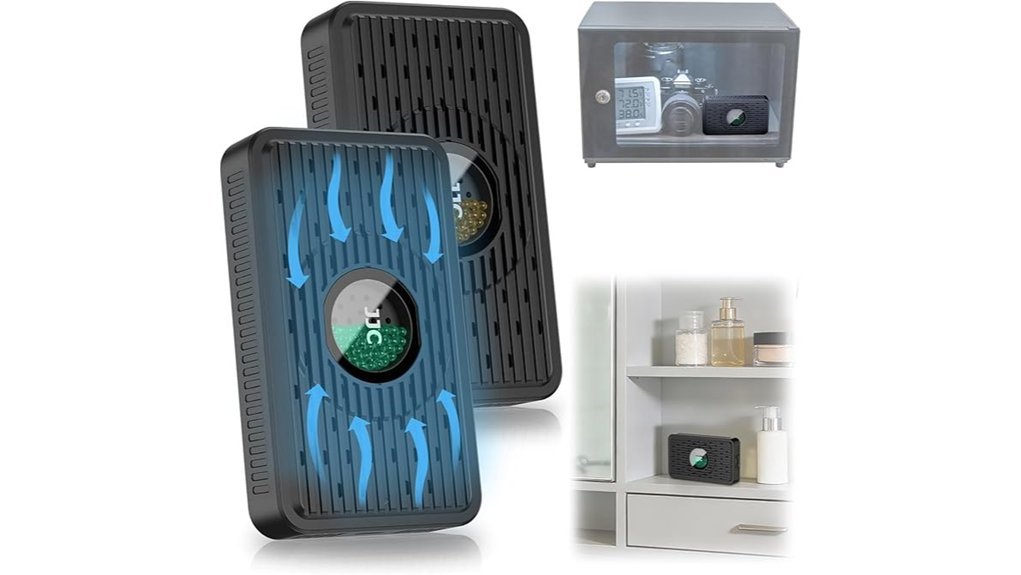
The Kiorafoto two-pack combines color-indicating silica gel with a built-in heater that reactivates through USB-C. No cord is needed while the units are absorbing moisture, but a USB-C power connection is required during the drying cycle.
Retailer listings advertise coverage of up to 90 cubic feet for enclosed and sealed storage. Treat that as listing guidance rather than guaranteed performance because results depend on humidity, airflow, enclosure leakage, unit saturation, and how often the container is opened. These units are best suited to camera cases, electronics cabinets, 3D filament storage, document boxes, and tool cases.
Why You’ll Like It
USB-C reactivation removes the need to place a metal canister in an oven or a fabric bag in a microwave.
Best For: Camera gear, electronics, lenses, 3D printing filament, documents, and enclosed equipment storage.
Who Should Avoid It: Buyers who need continuous room-level dehumidification or do not have a safe, ventilated charging location.
Pros:
- Includes two reusable units.
- Built-in color indicator shows when reactivation is needed.
- USB-C reactivation is convenient for homes, studios, and workshops.
- No power connection is needed while the units are absorbing moisture.
- Compact housing fits beside sensitive equipment.
Cons:
- Cannot absorb moisture while being reactivated.
- Requires a suitable USB-C power source and charging area.
- The listing’s coverage figure applies only to enclosed storage, not open rooms.
- A dependable manufacturer manual was not independently located, so follow the instructions supplied with the purchased units.
Charging Safety: Do not reactivate the units inside a closed safe, cabinet, bag, or case. Place them on a stable, heat-resistant surface with ventilation and follow the supplied charging instructions.
FULLBOW 200G Silica Gel Gun Safe Dehumidifier (3 Units)
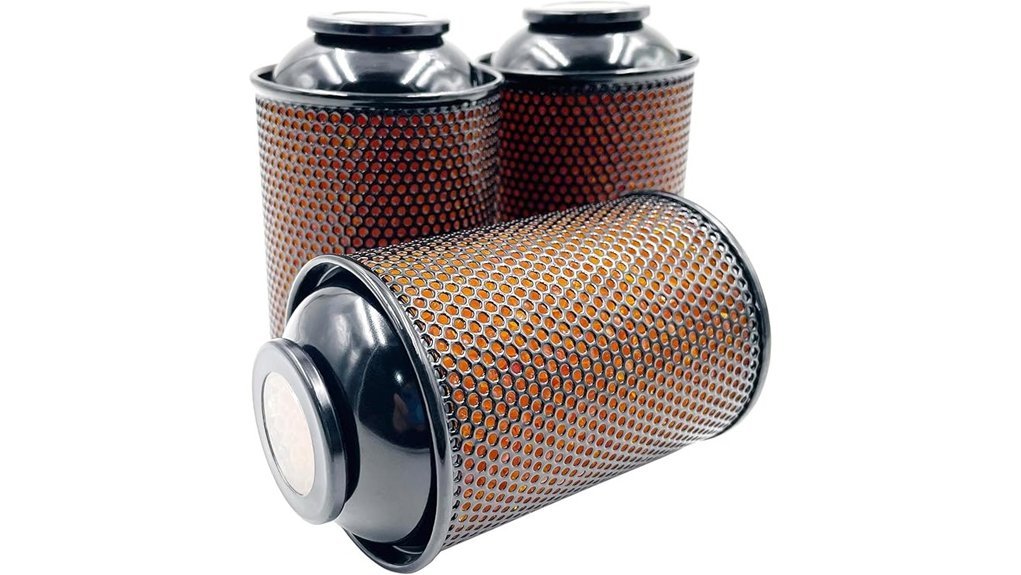
FULLBOW’s set includes three 200-gram rechargeable silica gel canisters. You can place them in separate gun safes, cabinets, closets, toolboxes, or storage cases, or use several together in a larger enclosed area.
The viewing window lets you monitor the indicator beads. When the beads show saturation, the canisters can be reactivated in an oven according to the product instructions. Because available retailer specifications contain conflicting coverage numbers, this guide does not assign an exact cubic-foot rating.
Why You’ll Like It
The three separate canisters give you more placement flexibility than one large moisture absorber.
Best For: Buyers who need reusable moisture absorbers for several small safes, closets, cases, or cabinets.
Who Should Avoid It: Anyone who needs a dehumidifier for an open room, wet basement, or active water leak.
Pros:
- Includes three 200-gram canisters.
- Reusable design reduces the need for disposable moisture absorbers.
- Viewing windows help you monitor saturation.
- No batteries, cords, or electricity are needed during normal use.
- Compact units can be placed in separate storage areas.
Cons:
- Requires oven reactivation and careful handling when hot.
- Exact coverage specifications are not consistent across available listings.
- Performance falls when used in an open or frequently accessed area.
- Humidity should still be checked with a separate hygrometer when protecting valuable items.
Wisesorb Silica Gel Canister Dehumidifiers (5 Pack)
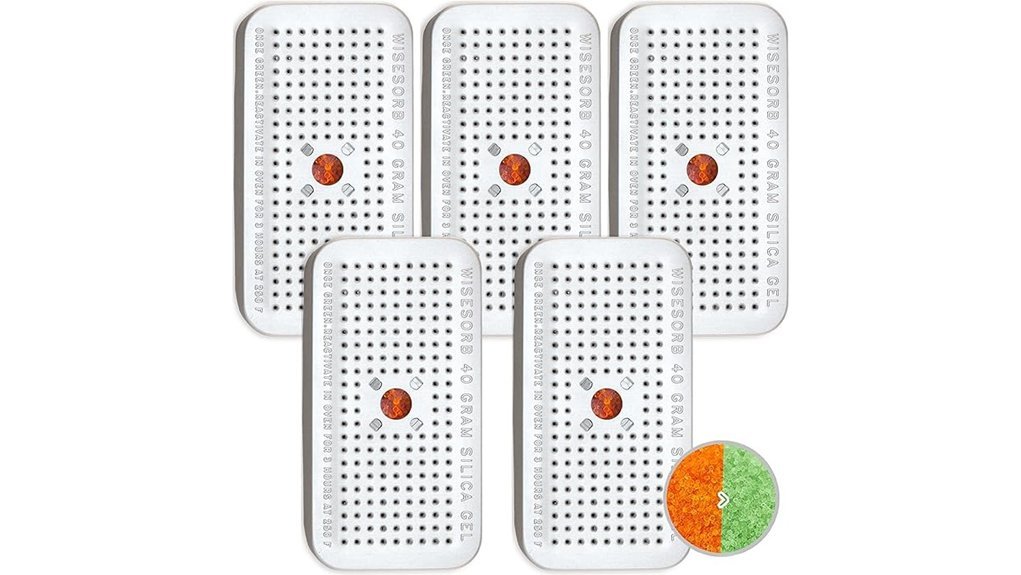
Wisesorb’s five-pack includes 40-gram aluminum silica gel canisters that fit into drawers, gun safes, camera cases, toolboxes, document boxes, and other tight storage areas. The compact size makes it easy to place one canister beside each item or divide the set among several containers.
The orange indicator beads change toward green as moisture builds. Retailer listings specify oven reactivation at 200°F to 250°F and advertise protection for enclosed storage of up to 30 cubic feet. However, the available wording does not consistently clarify whether that figure applies to one canister or the complete set, so use it only as general guidance.
Why You’ll Like It
The five small canisters are easier to distribute among multiple drawers and cases than one large bag or powered appliance.
Best For: Small safes, drawers, camera cases, toolboxes, document containers, and collectible storage.
Who Should Avoid It: Buyers trying to lower humidity across a room or protect a large, frequently opened cabinet with one small canister.
Pros:
- Includes five compact 40-gram canisters.
- Durable aluminum housings fit into tight storage areas.
- Transparent windows make the indicator beads easy to inspect.
- Reusable through oven reactivation.
- Suitable for distributing among several small enclosures.
Cons:
- Each canister has less capacity than a 200-gram canister or 500-gram bag.
- Requires oven reactivation.
- Does not automatically maintain a selected humidity percentage.
- The advertised coverage figure is not clearly defined across available listings.
- Several canisters may be needed in larger or leakier storage areas.
unuaST Rechargeable Silica Gel Car Dehumidifier Bags
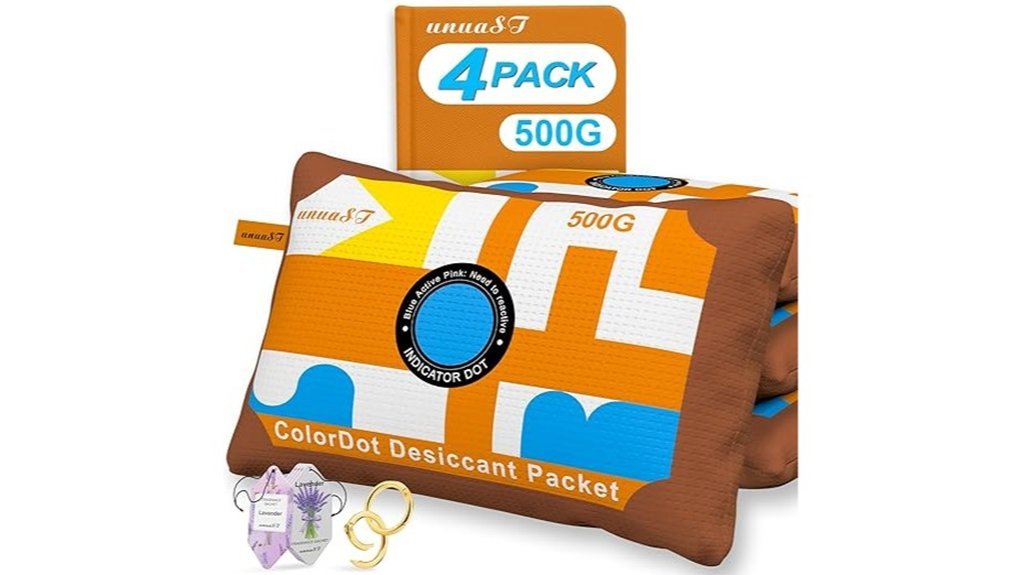
The unuaST set includes four 500-gram rechargeable silica gel bags, giving you 2 kilograms of desiccant to distribute among cars, RV compartments, cupboards, safes, closets, and large sealed storage containers.
A blue-to-pink indicator shows when the bags need reactivation. Retailer listings advertise microwave reactivation in as little as six minutes, but the correct process can depend on microwave power, heating cycles, bag condition, and the manufacturer’s instructions. Treat the bags as passive moisture absorbers, not as devices that remove a guaranteed number of pints or liters from a room each day.
Why You’ll Like It
The four-bag format lets you place absorbers in several vehicles or containers, or use multiple bags in one larger enclosed storage area.
Best For: Cars, RV storage, boats, large sealed bins, cupboards, closets, and equipment storage.
Who Should Avoid It: Buyers who need powered humidity control in an occupied room, open garage, wet basement, or area with an active leak.
Pros:
- Includes four large 500-gram bags.
- Provides a total of 2 kilograms of reusable silica gel.
- Color indicator helps identify when reactivation is needed.
- Soft bags are easy to place on dashboards, shelves, and inside containers.
- No electricity is required while the bags absorb moisture.
Cons:
- Passive absorption cannot replace a powered room dehumidifier.
- Each bag requires periodic microwave reactivation.
- The advertised six-minute time may not apply to every microwave or heating cycle.
- The full set is heavier and bulkier than small metal canisters.
- The indicator chemistry was not independently verified, so do not open the bags or describe them as cobalt-free or non-toxic without checking the manufacturer’s safety information.
Handling Note: Keep the bags sealed and away from children, pets, food, and sensitive equipment that could be damaged by loose beads. Stop using a bag if its fabric, seams, or indicator window becomes damaged.
Factors to Consider When Choosing a Domestic Desiccant Dehumidifier
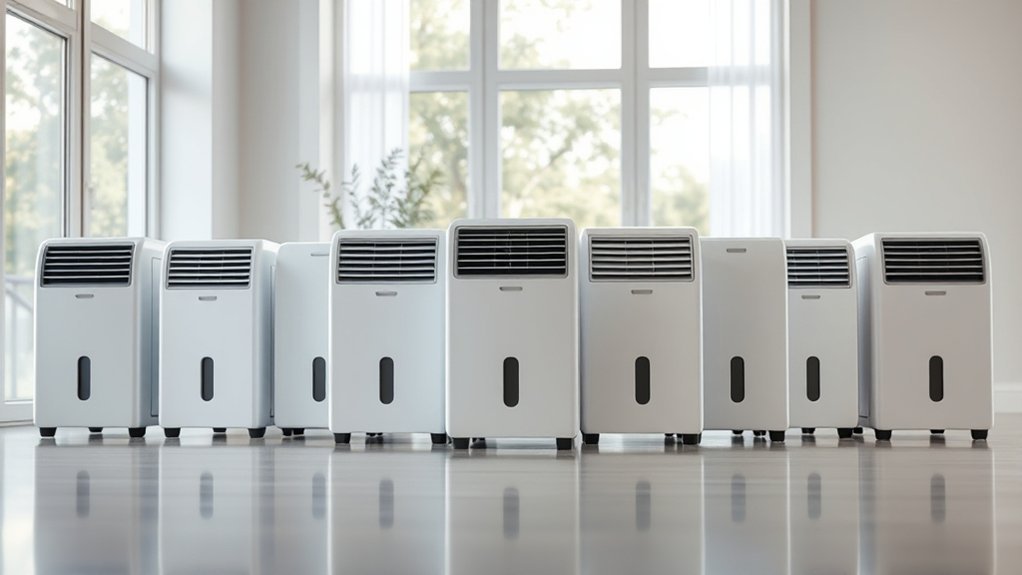
Before buying, decide whether you need to dehumidify a room or protect items inside an enclosure. A powered desiccant rotor unit and a passive silica gel bag solve different problems, even though both use desiccant materials.
Before You Buy Checklist
- Decide whether the target is an open room or an enclosed container.
- Measure the room, safe, cabinet, case, or storage-bin size.
- Check whether electricity and continuous drainage are available.
- Choose a reactivation method you can follow safely.
- Use a digital hygrometer instead of relying only on a color indicator.
- Find and repair leaks, seepage, or condensation sources.
Powered vs. Passive Desiccant
A powered desiccant dehumidifier moves room air through the appliance and continuously removes moisture into a tank or drain. It is suitable for bathrooms, laundry rooms, RVs, small basements, boats, and other occupied or regularly accessed areas.
A passive silica gel absorber collects a limited amount of moisture before it becomes saturated. It works best in cars, safes, drawers, cases, cabinets, and sealed storage boxes. It is not a direct replacement for a powered dehumidifier in a damp room.
Moisture Removal Capacity
Powered units are commonly described in pints per day, while passive silica products are described by desiccant weight or the amount of water absorbed before reactivation. These figures are not directly comparable.
For a room, compare the manufacturer’s daily removal rating under its stated temperature and humidity test conditions. For a storage container, compare the amount of silica gel, enclosure size, seal quality, opening frequency, and expected humidity.
Coverage Area
Room appliances normally use square feet. Passive canisters and bags often use cubic feet because they are intended for enclosed storage. Square-inch figures found in marketplace metadata are usually not useful for choosing a moisture absorber.
Do not assume that a product advertised for a sealed 30-cubic-foot safe can control an open closet or room of the same volume. Air leakage can cause the desiccant to saturate quickly.
Recharge Method
Choose a reactivation method you can follow safely:
- Microwave: Convenient for specifically approved fabric bags, but microwave wattage, heating cycles, cooling periods, and bag condition matter.
- Oven: Common for aluminum canisters and some bags, but temperatures and heating times vary by product.
- USB-C: Uses a built-in heater and avoids placing the unit in a kitchen appliance.
Never assume that two silica gel products use the same temperature, wattage, or timing. Follow the instructions supplied with the exact product and stop using any damaged bag or canister.
Operating Temperature
Powered desiccant rotor models are often chosen for cooler rooms because they can continue operating at temperatures where some compressor models become less effective. Check the appliance’s stated operating range before placing it in an attic, basement, garage, boat, or RV.
Passive silica gel canisters do not have a compressor, but their real-world performance still depends on temperature, humidity, airflow, saturation, and how well the storage space is sealed.
Noise Level
Noise matters only for powered products. If the unit will run in a bedroom, office, RV, or living area, look for a verified decibel specification and compare low and high fan settings. Descriptions such as “quiet” or “whisper quiet” are less useful without a measured rating.
Passive bags and canisters make no operating noise.
Portability Features
For a powered unit, check its weight, handle design, cord length, dimensions, and tank access. For passive products, check whether the bag or canister fits without touching sensitive equipment, blocking ventilation, or interfering with a safe’s locking mechanism.
Large bags provide more desiccant capacity, while small canisters are easier to distribute among drawers, cases, and cabinets.
Drainage Options
A room dehumidifier should have a tank that is easy to remove and an automatic shut-off when full. Continuous gravity drainage is useful for long operating periods, but the hose must slope downward without kinks or raised sections.
Passive silica gel products do not collect liquid in a drainable tank. They store adsorbed moisture until they are heated and reactivated.
Humidity Monitoring
A color indicator tells you when the desiccant may need reactivation, but it does not provide an exact humidity reading. Non-indicating bags may need to be checked by weight. Use a separate digital hygrometer when protecting firearms, documents, cameras, electronics, collectibles, musical instruments, or 3D printing filament.
For normal indoor living areas, a relative humidity range of approximately 30% to 50% is commonly recommended. Avoid keeping indoor humidity above 60% for extended periods. Specialized storage may require a different range.
Safety and Materials
Keep every desiccant bag or canister sealed and intact. Store it away from children and pets, and do not allow loose beads to contact food, mouths, eyes, or sensitive equipment.
Indicator colors do not prove that every product uses the same dye or chemical formulation. Check the manufacturer’s safety information rather than relying only on claims such as “non-toxic,” “food safe,” or “cobalt-free.”
Important Moisture Note: A dehumidifier can help control humidity, but it cannot repair plumbing leaks, stop groundwater entry, dry hidden building cavities, or remove existing mold. Fix the moisture source and clean contaminated materials safely.
Frequently Asked Questions
What Is the Difference Between an Electric Desiccant Dehumidifier and Silica Gel?
An electric desiccant dehumidifier uses a fan and desiccant rotor to process room air continuously. Silica gel bags and canisters adsorb a limited amount of moisture inside small enclosed spaces and must be reactivated after they become saturated.
How Often Should I Recharge Desiccant Dehumidifiers?
Recharge a passive desiccant product when its indicator changes, its weight reaches the manufacturer’s stated saturation point, a hygrometer shows rising humidity, condensation returns, or the product stops performing well. The interval may range from days to months depending on humidity, enclosure size, air leakage, opening frequency, and desiccant capacity.
Can Desiccant Dehumidifiers Remove Mold Odors?
They may reduce musty odors by lowering excess moisture, but they do not remove existing mold or contaminated materials. Find and repair the moisture source, clean the affected area safely, and replace materials that cannot be properly dried or cleaned.
Are Desiccant Dehumidifiers Safe Around Pets and Children?
They can be used safely when you follow the manufacturer’s instructions. Keep bags and canisters sealed and out of reach, secure electrical cords, maintain airflow around powered units, and never allow children or pets to handle loose silica gel beads.
What Humidity Level Is Ideal for Home Storage?
For general indoor spaces, aim for approximately 30% to 50% relative humidity and avoid extended periods above 60%. Valuable documents, firearms, instruments, electronics, and collectibles may have more specific storage requirements, so use a hygrometer and follow the item manufacturer’s guidance.
Do Desiccant Dehumidifiers Work in Unheated Rooms?
Many powered desiccant models are suitable for cooler rooms, but you must check the product’s minimum operating temperature. Passive silica gel can also protect items in cool storage, especially when the enclosure is small and well sealed.
Can Silica Gel Bags Dehumidify a Basement?
Not effectively. A silica gel bag may protect items inside a sealed box or cabinet located in the basement, but it cannot keep up with the moisture entering an open basement. Use a properly sized powered dehumidifier and correct any drainage, seepage, plumbing, or ventilation problems.
Should I Compare Square Feet or Cubic Feet?
Use square-foot ratings for powered room dehumidifiers. Use cubic-foot guidance for safes, cases, drawers, cabinets, and sealed storage containers. Do not treat these measurements as interchangeable.
Which Desiccant Dehumidifier Is Best for a Car?
A large reusable silica gel bag such as Wisedry or unuaST is easier to place on a dashboard, floor, or cargo-area shelf than a powered appliance. It can help manage routine condensation while the vehicle is parked, but it will not repair a door-seal leak, heater-core problem, clogged drain, or water entering through damaged bodywork.
Which Desiccant Is Best for a Gun Safe or Camera Case?
Use a compact canister for a small safe, drawer, or equipment case, or choose a USB-C rechargeable unit when you prefer not to use an oven. A larger bag can provide more capacity in a bigger sealed enclosure. In every case, verify the actual humidity with a hygrometer instead of relying only on the product’s indicator.
Conclusion
Choose the Ivation 13-Pint Desiccant Dehumidifier when you need active humidity control in a small room or cool space. Its tank, continuous drain option, digital controls, and low-temperature operating range make it the most complete room solution in this guide.
For passive storage protection, match the format to the enclosure. Wisedry and unuaST provide large reusable bags for cars and sealed storage. Kiorafoto offers USB-C reactivation for camera gear, electronics, and filament boxes. TOAAOT, FULLBOW, and Wisesorb provide compact canisters for safes, cabinets, drawers, and cases.
Final Recommendation
Buy a powered model for room-level dampness and a rechargeable silica gel product for enclosed storage. Measure humidity with a hygrometer, reactivate the desiccant on time, follow the exact heating instructions, and fix any leak or moisture source instead of relying on the absorber alone.