The best hearing aid dehumidifiers for 2026 make daily moisture care easier without exposing delicate devices to unnecessary heat or complicated maintenance. This guide compares seven relevant options, from simple desiccant jars and charger-case drying capsules to timed electronic dryers. PerfectDry Q.R. is the strongest all-around choice for a fast, simple cycle, while Flow Med Dry-Cap UV2 is better suited to rechargeable hearing aids that remain in their charging station. For low-cost overnight drying, Mini Super Dri-Aid and Sta-Dri are practical passive options. Always confirm that a dryer’s temperature, size, and operating method are approved for your exact hearing aid model.
Quick Verdict
Best Overall: PerfectDry Q.R. for its 45-minute cycle, automatic temperature regulation, and simple one-button operation.
Best for Rechargeable Hearing Aids: Flow Med Dry-Cap UV2 because it is designed to sit over a compatible charging station while the aids dry.
Best Feature-Rich Option: Serene Innovations ReNew DB-100 for selectable cycle lengths, a refresh function, battery storage, and a battery tester.
Best Low-Cost Overnight Options: Mini Super Dri-Aid for small custom instruments and Sta-Dri for larger ITE or traditional BTE devices.
Quick Comparison of the Best Hearing Aid Dehumidifiers
| Product | Best For | Drying Method | Cycle or Use | Amazon |
|---|---|---|---|---|
| PerfectDry Q.R. | Best overall electronic dryer | Pulsed warm air and ventilation | 45 minutes | Check Details |
| Flow Med Dry-Cap UV2 | Rechargeable aids in a charging station | Fan drying with UV-C hygiene cycle | 2-hour Dry & Clean mode | Check Details |
| Serene Innovations ReNew DB-100 | Users who want selectable cycles and battery tools | Gentle heat, ventilation, and refresh light | 2, 4, or 8 hours | Check Details |
| LINKIM Automatic Dryer | Timed plug-in drying after compatibility is confirmed | Controlled heated drying | 3 or 6 hours | Check Details |
| JB White Drying Capsules | Compatible charger cases | Replaceable silica desiccant | Leave in compatible charger lid | Check Details |
| Mini Super Dri-Aid | Small custom ITE and canal instruments | Reusable desiccant pellets | Overnight | Check Details |
| Sta-Dri | Simple overnight drying for ITE and traditional BTE aids | Reusable desiccant pillow | Overnight | Check Details |
Hearing Aid Drying Capsules for Charger Case (10pcs)
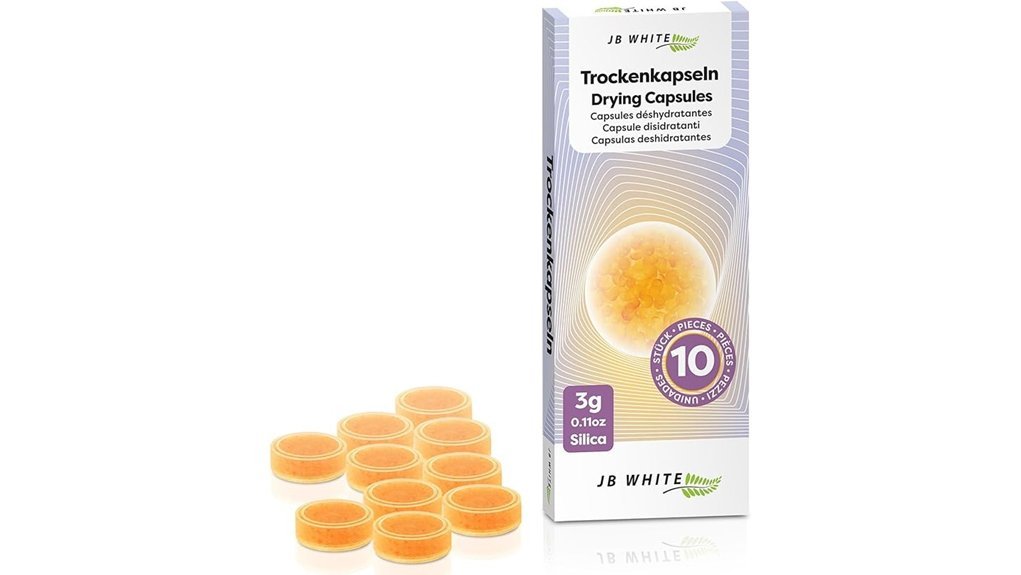
Best Charger-Case Accessory: These JB White C&C Dry-Cap capsules are designed for compatible charger lids, including selected Phonak, Starkey, and Unitron setups. Each capsule contains orange indicator silica beads that absorb moisture while the hearing aids are stored or charging. Remove the foil while leaving the cardboard cover in place, insert the capsule into the compatible charger lid, and replace it when the orange color fades toward pale white.
Why You’ll Like It: There is no power cord, cycle selection, or separate drying box. The pack of 10 also gives you multiple replacements without requiring the beads to be reheated.
Who Should Buy This: Users whose charger has a dedicated drying-capsule compartment and who want passive moisture control during charging.
Who Should Avoid This: Anyone whose charger does not have the correct capsule space, or anyone who wants a reusable or active electronic dryer.
Pros:
- Fits selected charger-case lids and works without electricity
- Color indicator helps show when a capsule should be replaced
- Ten-capsule pack is convenient for ongoing use
Cons:
- Compatibility is limited to chargers with the correct capsule compartment
- Capsules are consumable and must be replaced
- The charger case or drying jar is not included
Serene Innovations Hearing Aid Dryer Dehumidifier
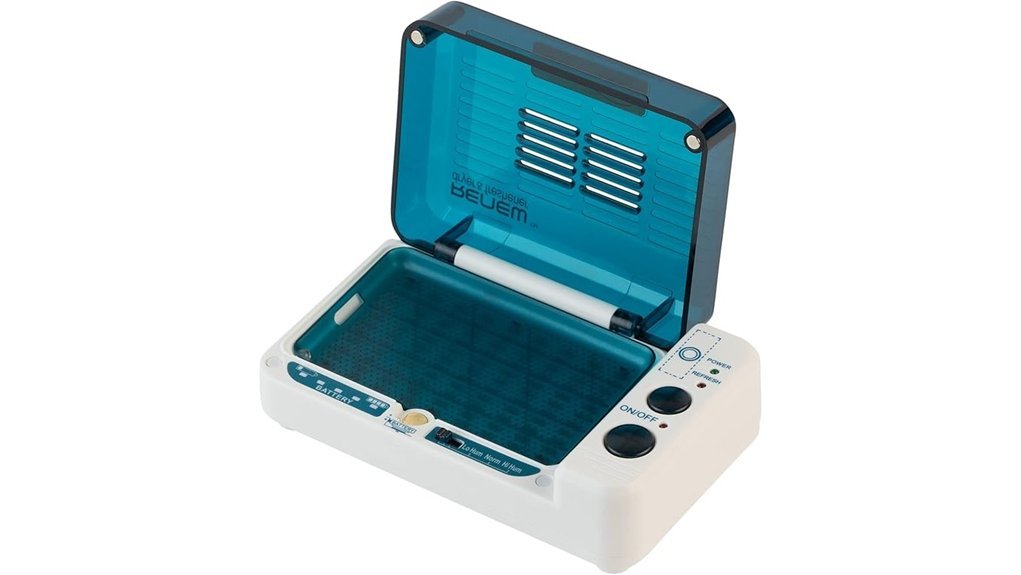
Best Feature-Rich Option: The Serene Innovations ReNew DB-100 combines timed drying with a refresh-light function and battery-management tools. Its selectable 2-, 4-, and 8-hour cycles let you match the run time to lighter or heavier moisture exposure. The chamber warms to about 113°F, and the ventilated design moves released moisture out of the box without replaceable desiccant.
Why You’ll Like It: The built-in battery tester and magnetic battery-storage strip are useful for people with replaceable-battery hearing aids. The longer cycle choices also suit humid climates and users who prefer overnight care.
Who Should Buy This: Users who want adjustable electronic drying and extra battery tools in one bedside unit.
Who Should Avoid This: Users who need a compact travel jar or whose rechargeable hearing aid instructions do not approve drying at this temperature.
Pros:
- Offers 2-, 4-, and 8-hour drying cycles
- Includes a refresh-light function, battery tester, and magnetic battery strip
- Does not require replacement desiccant packs
Cons:
- Larger and less travel-friendly than a passive jar
- Longer cycles may not suit users who need quick turnaround
- Device compatibility should be checked before using heated drying
LINKIM Automatic Hearing Aid Dryer & Dehumidifier
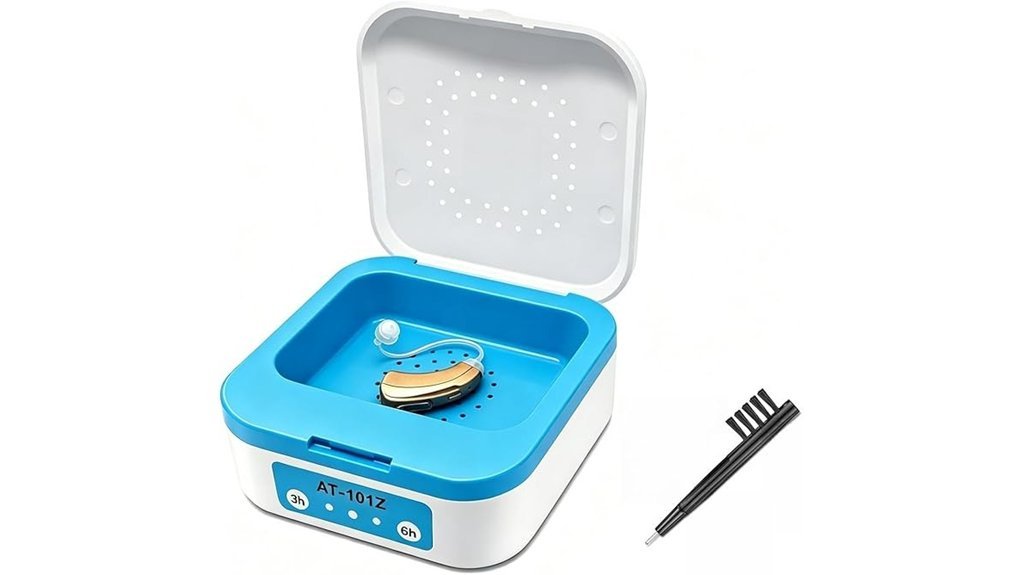
Best Timed Heat Dryer: LINKIM offers a 3-hour standard cycle and a 6-hour deeper-dry cycle with automatic shutoff. It uses heated drying rather than replaceable desiccants and has a compact body that is easier to pack than many full-size electronic boxes.
Why You’ll Like It: Operation is straightforward: place the approved device inside, select a cycle, and let the unit shut off when finished. The listed operating range reaches up to 131°F, so compatibility is the most important buying check.
Who Should Buy This: Users with hearing devices whose manufacturer specifically allows drying within the unit’s listed temperature range.
Who Should Avoid This: Owners of rechargeable hearing aids or other heat-sensitive devices unless their hearing aid manufacturer or hearing care professional confirms compatibility.
Pros:
- Two automatic cycle lengths for routine or deeper drying
- No desiccant replacements required
- Compact plug-in design with automatic shutoff
Cons:
- The listed maximum heat is higher than some rechargeable-device recommendations
- Requires an electrical outlet
- Does not replace manual wax and debris cleaning
Mini Super Dri Aid by Hal-Hen
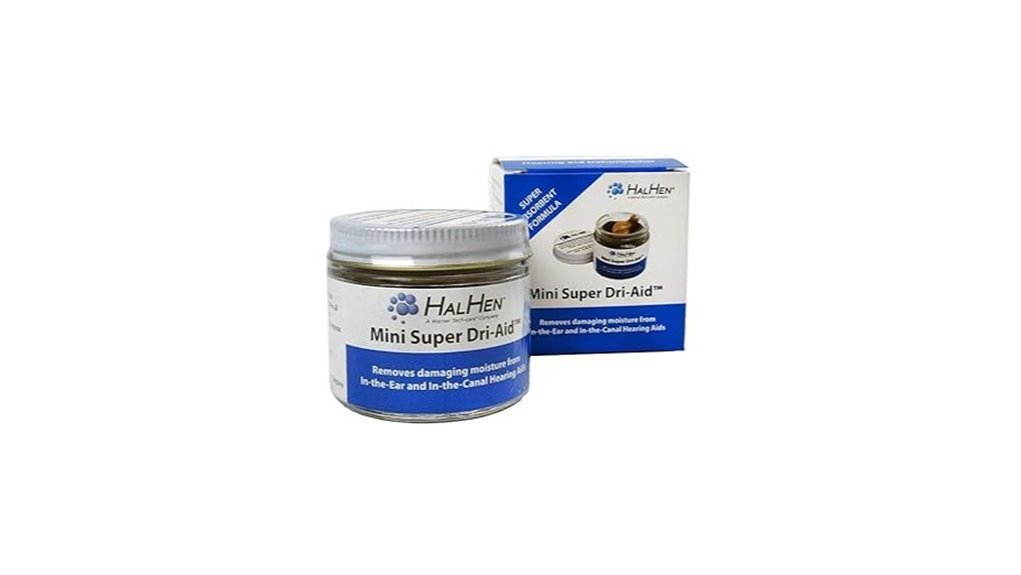
Best Compact Passive Jar: Mini Super Dri-Aid is a small screw-top glass jar with reusable desiccant pellets and a foam divider. It is mainly intended for small custom hearing instruments, including ITE and canal styles. Place the device on the foam pad, close the lid tightly, and leave it overnight.
Why You’ll Like It: It works without batteries or an outlet, fits easily on a nightstand or in luggage, and the indicator pellets show when reactivation is needed. The pellets can be reactivated according to the printed oven or microwave directions.
Who Should Buy This: Users with one or two small custom instruments who want a reusable, travel-friendly drying jar.
Who Should Avoid This: Users with bulky chargers, large processors, or devices that do not fit comfortably above the foam divider.
Pros:
- Reusable desiccant with visual reactivation indicator
- No electricity or replacement capsule required
- Compact size works well for travel and bedside storage
Cons:
- Limited capacity for larger hearing devices
- Requires overnight drying rather than a fast cycle
- Pellets need periodic reactivation
Flow Med Dry-Cap UV2 Electronic Hearing Aid Dryer for Rechargeable Aids
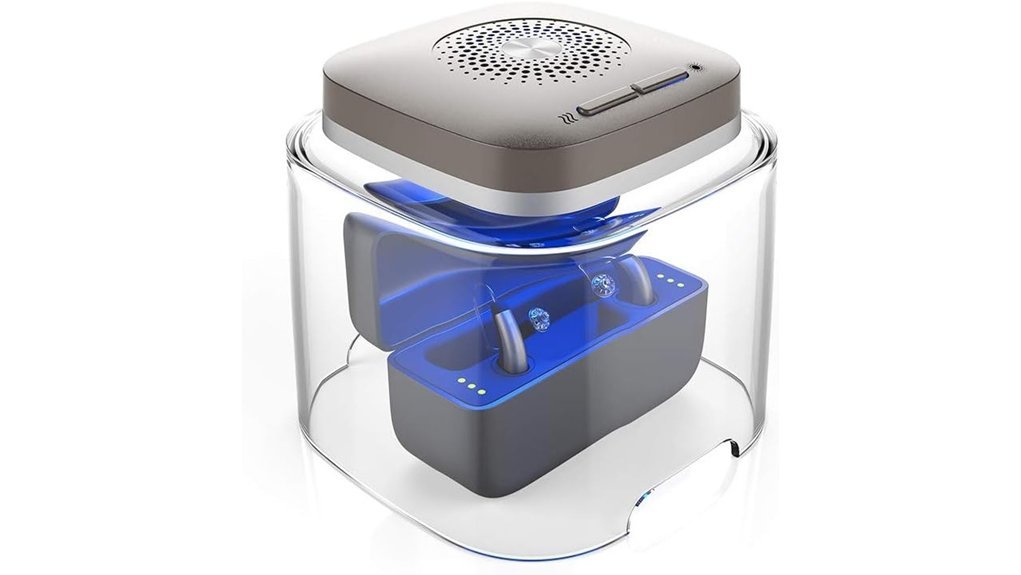
Best for Rechargeable Hearing Aids: Flow Med Dry-Cap UV2 is designed to sit over a compatible hearing aid charging station. Its 2-hour Dry & Clean mode combines fan drying with a UV-C hygiene cycle at the beginning and end. A separate short Clean mode runs the UV-C function without the full drying cycle.
Why You’ll Like It: Rechargeable hearing aids can remain in their charger while the cap operates, and the dual-port power setup can reduce cable clutter. The hood design also avoids enclosing the charger in a small heated box.
Who Should Buy This: Rechargeable-hearing-aid users who want drying and charging to happen together with minimal handling.
Who Should Avoid This: Users who want a sealed storage box, a passive no-power system, or guaranteed fit with an unusually large charging station. Confirm the exact UV2 model and seller version before ordering.
Pros:
- Designed around rechargeable aids and their charging station
- Combines fan drying with a separate UV-C hygiene function
- Allows charging and drying from one power setup
Cons:
- Charging-station size and cable routing must fit under the hood
- Requires power and takes about two hours for the full cycle
- UV-C hygiene does not replace physical wax and debris removal
Sta-Dri Hearing Aid Dehumidifier
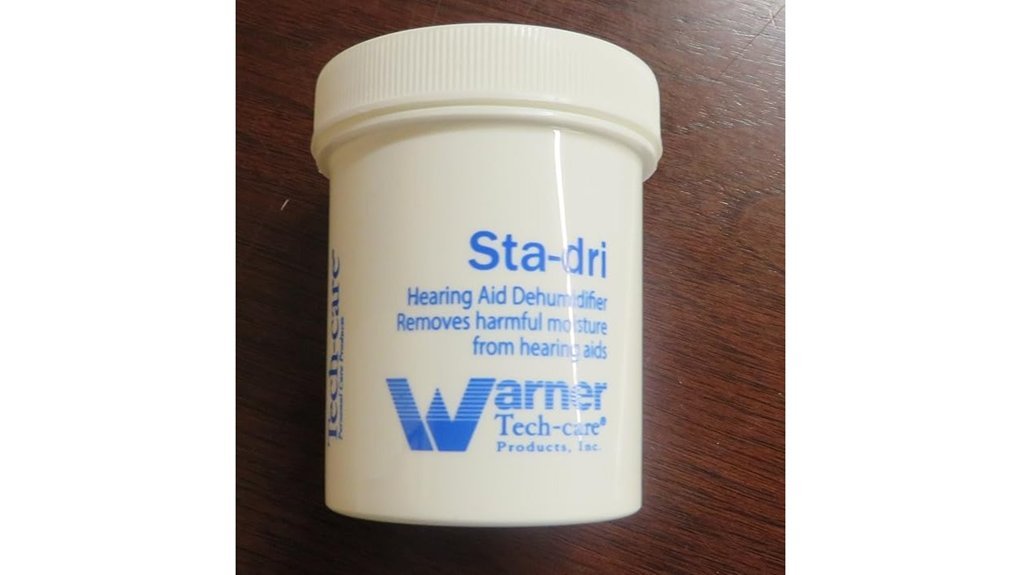
Best Simple Overnight Jar: Sta-Dri is a portable plastic jar with a reusable desiccant pillow for nightly moisture removal. Its chamber is larger than the Mini Super Dri-Aid and is commonly sized for two traditional BTE hearing aids or comparable ITE devices. Place dry-wiped hearing aids inside, close the lid, and leave them overnight.
Why You’ll Like It: There are no buttons, lights, cords, or cycle settings. When the desiccant needs refreshing, follow the included microwave or conventional-oven directions.
Who Should Buy This: Users who want a low-cost, larger passive jar for ordinary nightly drying.
Who Should Avoid This: Users who need rapid drying, a charging function, or a UV-C hygiene cycle.
Pros:
- Simple overnight operation with no electricity
- Reusable desiccant can be rejuvenated
- Roomier than many mini travel jars
Cons:
- Does not actively circulate air
- Requires periodic desiccant reactivation
- Removes moisture only and does not clean wax or debris
PerfectDry Hearing Aid Dryer & Dehumidifier Dry Box
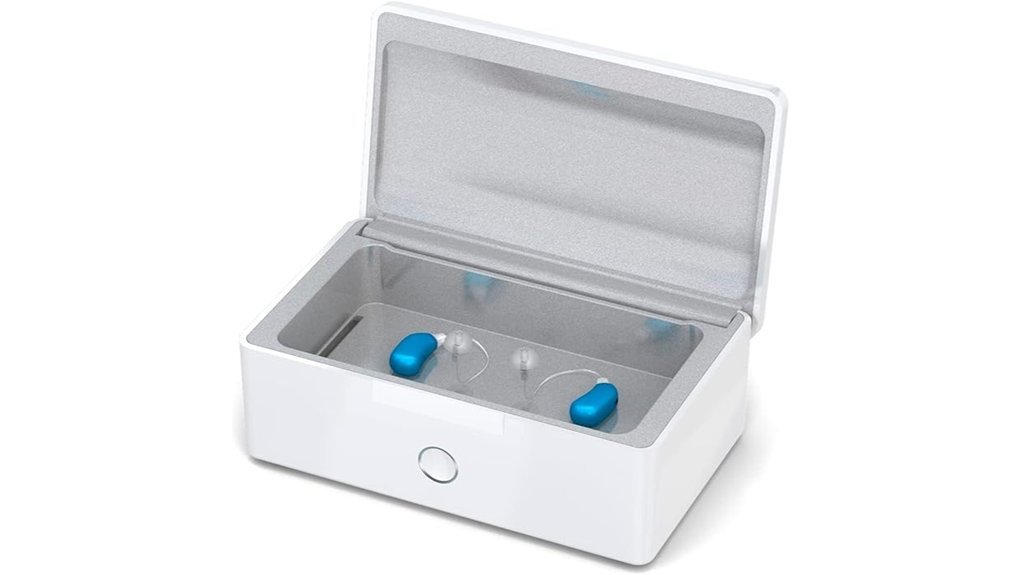
Best Overall: PerfectDry Q.R. uses pulsed warm air and controlled ventilation to complete a drying cycle in about 45 minutes. Automatic temperature regulation keeps the chamber below approximately 113°F, and the interior is sized for two BTE or ITE hearing aids or two compatible cochlear implant processors.
Why You’ll Like It: It is one of the easiest electronic models to operate: place the approved devices inside, close the lid, and press the start button. The unit shuts off automatically at the end of the cycle and does not need replacement desiccant.
Who Should Buy This: Users who want a quick, low-maintenance electronic dryer for daily home use.
Who Should Avoid This: Travelers who need battery operation or users whose devices cannot be exposed to the listed drying temperature.
Pros:
- Fast 45-minute cycle with automatic shutoff
- Automatic temperature regulation and controlled ventilation
- Fits a pair of common hearing aids without desiccant refills
Cons:
- Requires a power outlet
- Capacity is limited to the chamber size
- Higher upfront cost than a passive desiccant jar
Factors to Consider When Choosing a Hearing Aid Dehumidifier
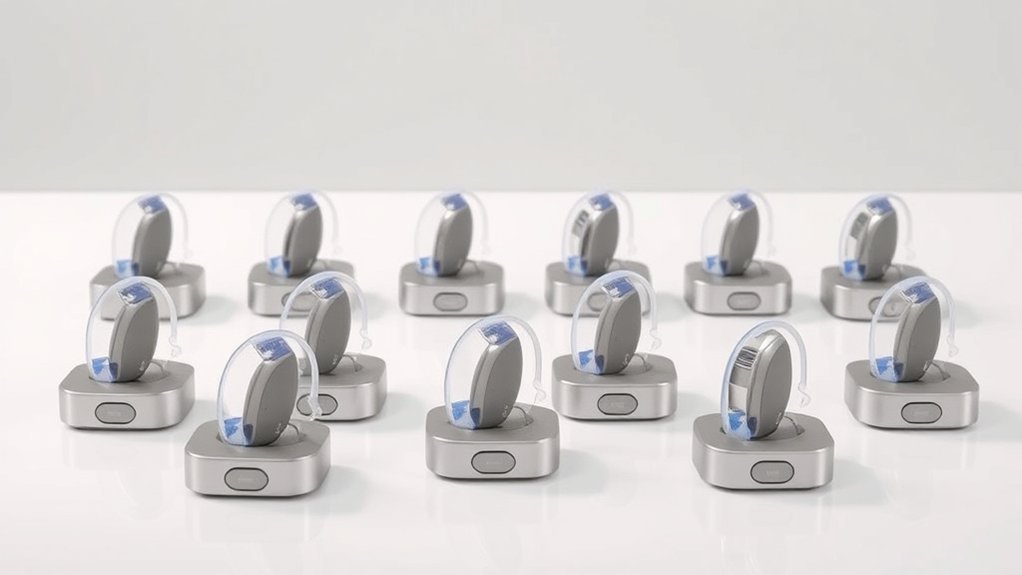
The right dryer depends less on the longest feature list and more on whether it safely fits your hearing aids, charger, battery type, and routine. Use the following checks before buying.
Device Compatibility
Start with the hearing aid manufacturer’s care instructions. Confirm whether your model is rechargeable or uses removable batteries, whether it can be placed in a heated dryer, and whether the charger must remain attached. A dryer described as “universal” may still be too small, too warm, or incompatible with a particular charging case. Measure bulky chargers and cochlear processors before choosing a sealed box or drying hood.
Moisture Removal Method
Passive desiccant systems absorb moisture without electricity and work well for overnight care. Electronic heated dryers shorten drying time but require temperature compatibility. Fan-based drying caps move air around rechargeable aids and chargers. A UV-C hygiene feature is separate from drying and does not remove wax, skin oil, or physical debris.
Temperature and Safety Features
Look for automatic shutoff, temperature regulation, stable construction, and clear operating instructions. Heat limits matter most for rechargeable devices because lithium batteries and charging components may have stricter temperature requirements. Never assume that a dryer is safe merely because the hearing aid fits inside. Avoid direct heat from hair dryers, heaters, ovens, or parked cars.
Drying Speed
A 45-minute electronic cycle is convenient when you need a quick turnaround, while 2- to 8-hour cycles work well for overnight routines. Passive jars usually need the full night. Faster is not automatically better: the best cycle is the one approved for your device and long enough to remove routine perspiration or humidity without excessive heat.
Capacity and Fit
Check whether the chamber holds one or two aids, a cochlear processor, earmolds, or a complete charging station. A device should sit without being bent, compressed, or placed against a hot surface. For drying caps, verify the hood height and cable openings. For small jars, confirm that the instruments fit above the desiccant and protective divider.
Portability
A passive jar is usually the easiest option for travel because it needs no outlet. Compact plug-in dryers are convenient in hotels but may require a compatible adapter outside your home country. A drying cap can be portable, but its hood and charging station take more luggage space. Choose a sturdy model that protects the aids while packed.
Power Options
Passive jars need no power. Electronic boxes may use a standard adapter or USB connection, while drying caps may share a power supply with a charger. Check voltage support before international travel and use only the supplied or manufacturer-approved power source. Rechargeable operation can be convenient, but battery capacity and charge time should be verified from the current listing.
Maintenance Needs
Reusable desiccants must be reactivated exactly as directed; disposable capsules must be replaced when their indicator changes. Electronic chambers should be unplugged and wiped with a soft, dry cloth, with vents kept clear. Do not pour water into a dryer or use household cleaners unless the manual specifically permits them. Remove visible wax from hearing aids with approved tools before drying.
Before You Buy Checklist
- Confirm heated-dryer compatibility with your hearing aid manufacturer or hearing care professional
- Measure your hearing aids, processor, or charger and compare the usable chamber size
- Choose passive overnight drying or a timed electronic cycle based on your routine
- Check whether desiccant replacements or reactivation will be required
- Look for automatic shutoff and a clearly stated temperature limit
- Remember that drying and cleaning are separate maintenance tasks
Frequently Asked Questions
How Often Should Hearing Aid Dehumidifiers Be Cleaned?
Inspect the chamber or jar regularly and clean it when you see dust, wax, or debris. For electronic units, unplug the dryer and use a soft, dry cloth unless the manual allows another method. Do not rinse the unit or use liquid cleaners without manufacturer approval.
Can Dehumidifiers Damage Rechargeable Hearing Aid Batteries?
An incompatible heated dryer can expose rechargeable aids to more heat than their manufacturer allows. Use a dryer specifically approved for your hearing aid model or confirm compatibility with your hearing care professional. Fan-based caps and manufacturer-approved low-temperature systems are usually easier to match with rechargeable charging stations.
Do All Hearing Aid Dehumidifiers Remove Wax Buildup?
No. A dehumidifier removes moisture. It does not physically remove earwax, skin oil, dust, or blocked wax filters. Wipe the aids with an approved cloth and use the cleaning tools recommended for your model before placing them in the dryer.
Are Travel-Sized Dehumidifiers as Effective as Larger Models?
Effectiveness depends on the drying method, seal, cycle length, capacity, and device fit—not size alone. A small desiccant jar can work well overnight for one or two small aids, while a larger electronic box may provide faster drying or room for a charger and accessories.
Should Batteries Be Removed Before Drying?
Follow the hearing aid and dryer manuals. Many replaceable-battery aids are dried with the battery removed and the battery door open, but rechargeable models have different requirements. Do not force open a sealed rechargeable device or place loose batteries in a heated chamber unless the instructions specifically allow it.
What Should I Do If My Hearing Aids Get Soaked?
Remove the aids from the water, turn them off, wipe the outside with a soft dry cloth, and remove a disposable battery only if the device instructions permit it. Do not use a hair dryer or other direct heat. A dehumidifier may help with moisture, but a heavily soaked or malfunctioning device should be checked by a hearing care professional.
What Maintenance Extends a Dehumidifier’s Lifespan?
Keep the chamber clean and dry, clear air vents, use the correct power adapter, replace or reactivate desiccant on schedule, and store the unit away from bathrooms, direct sunlight, and extreme heat. Follow the product manual instead of using a universal cleaning schedule.
Conclusion
A good hearing aid dehumidifier should fit your device, use an approved drying temperature, and match the amount of time you can leave your aids out of service. PerfectDry Q.R. is the best all-around choice for users who want a fast electronic cycle. Flow Med Dry-Cap UV2 is the more purpose-built choice for rechargeable aids that stay in their charging station. Serene Innovations ReNew offers the most adjustable cycle options, while Mini Super Dri-Aid and Sta-Dri provide simple overnight moisture control without electricity.