A good hearing aid dehumidifier for travel should be easy to pack, work with the power available on your trip, and stay within the care limits for your exact hearing aids. PerfectDome is the strongest all-around powered option here for travelers who value a short cycle, controlled temperature, and charging access. Redux DryBUDDY is the better heat-free cordless choice, while Wisesorb and Stay Dri provide simple electricity-free moisture control. Always follow the instructions for both the dryer and your hearing aids, especially when using rechargeable devices with sealed batteries.
Quick Verdict
Best Overall: PerfectDome for fast powered drying, controlled temperature, and charging access.
Best Heat-Free Travel Pick: Redux DryBUDDY for reusable cordless drying without heating the hearing aids during the drying cycle.
Best No-Power Pick: Wisesorb for a lightweight sealed jar and visible desiccant indicator.
Best Traditional Jar: Stay Dri for two traditional BTE hearing aids and reusable microwave-reactivated desiccant.
Important: A dryer supports routine moisture management. It cannot repair a soaked, corroded, or malfunctioning hearing aid and does not replace brushing, wiping, wax-filter care, or professional service.
Quick Comparison
| Product | Drying Method | Power During Drying | Typical Cycle | Best For | Compatibility Note |
|---|---|---|---|---|---|
| PerfectDome | Controlled heated air + UV-C feature | External power | About 60 minutes | Fast drying and compatible charging setups | Confirm charger fit, cable routing, and hearing-aid approval |
| Redux DryBUDDY | Heat-free reusable desiccant | CR2032 battery; USB-C for bead reactivation | Typically around 6 hours | Cordless drying and heat-sensitive devices | Use the specified fixed-output USB power source for reactivation |
| Wisesorb Set | Passive indicating silica-gel capsule | None | Several hours or overnight | Camping, flights, and no-power travel | Devices must fit without pressure and the jar must seal tightly |
| Stay Dri 1846943 | Microwave-reactivated desiccant jar | None during drying | Overnight | Two traditional BTE hearing aids | Reactivate only as printed on the jar; never heat hearing aids |
| Serene ReNew | Heated air + 400 nm light feature | External power | 2, 4, or 8 hours | Adjustable cycles and removable-battery tools | Check temperature approval before using with rechargeable devices |
| Zephyr | Warm moving air + replaceable desiccant | External power | 8 hours | Powered overnight care and international voltage | Manufacturer cautions that its temperature may be too high for some rechargeables |
- Find the maximum drying temperature allowed for your exact hearing-aid model and charger.
- Measure large BTE devices, earmolds, cochlear-implant parts, or charging cases before choosing a small jar or chamber.
- Check whether disposable batteries should be removed, left installed with the door open, or handled another way during drying.
- For international travel, verify the power-input range and pack the correct plug adapter.
PerfectDome Hearing Aid Dryer Dehumidifier Accessory
Best Overall for Fast Travel Drying
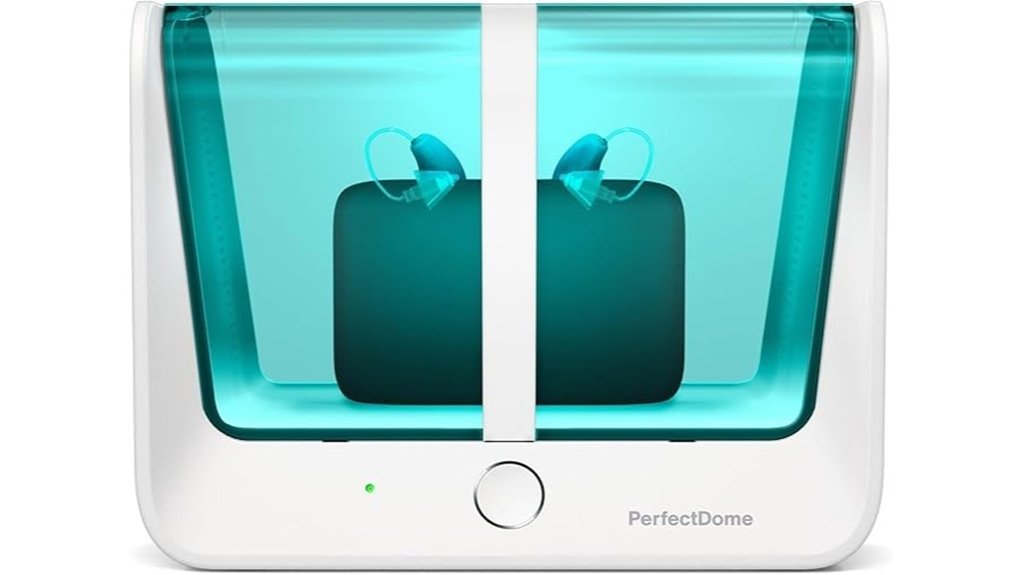
PerfectDome is a strong travel choice when you want a short powered cycle and a chamber designed to accommodate rechargeable as well as disposable-battery hearing devices. Its standard cycle runs for about 60 minutes, the listed temperature is regulated below 95°F, and its USB connections can support charging while drying when your charger and cables fit the setup. The unit also includes a UV-C feature and automatic shutoff at the end of the cycle or when the lid opens.
Why You’ll Like It: It combines quick drying, controlled heat, charging access, and automatic operation in one case, which can simplify a travel care routine.
Best For: Travelers with compatible rechargeable hearing aids, earbuds, or in-ear monitors who want a fast powered routine.
Who Should Avoid It: Travelers without dependable electricity or anyone whose hearing-aid care instructions do not permit this type of heated or UV-C-equipped drying system.
Pros:
- Approximately 60-minute standard drying cycle.
- Listed temperature regulation below 95°F.
- Automatic shutoff and charging connections improve convenience.
Cons:
- Requires external power.
- Charging compatibility depends on the size and cable layout of your charger.
- The UV-C feature does not replace manual cleaning, wax-filter care, or professional maintenance.
Redux DryBUDDY Hearing Aid Dryer and Dehumidifier
Best Cordless, Heat-Free Pick
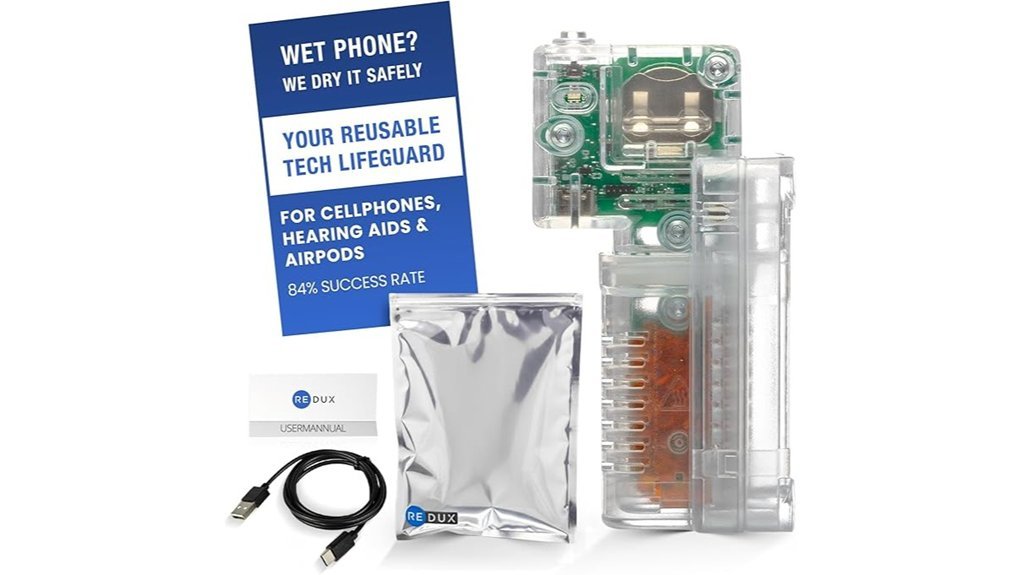
Redux DryBUDDY is designed for travelers who want heat-free drying for hearing aids and other small electronics. It uses reusable desiccant beads with humidity sensing, runs from a CR2032 battery during drying, and uses a USB-C-powered sleeve to reactivate the beads. A typical drying cycle is around six hours, although actual time varies with the moisture load, and the unit stops automatically when drying is complete or it reaches its maximum run time.
Why You’ll Like It: It dries without heating the hearing aids during the drying cycle and avoids disposable desiccant packets.
Best For: Camping, road trips, humid destinations, and users who prefer a reusable heat-free drying system.
Who Should Avoid It: Buyers who want a one-hour cycle or a completely passive jar with no battery and no regeneration step.
Pros:
- Heat-free drying for hearing aids, earbuds, and other small electronics.
- Cordless operation during the drying cycle.
- Reusable beads and status lights reduce guesswork.
Cons:
- Typical drying takes several hours.
- The beads need periodic USB-C-powered reactivation.
- Reactivation requires the specified fixed-output USB power setup rather than every smart or fast-charging adapter.
Wisesorb Hearing Aid Dryer and Dehumidifier Set
Best Electricity-Free Kit
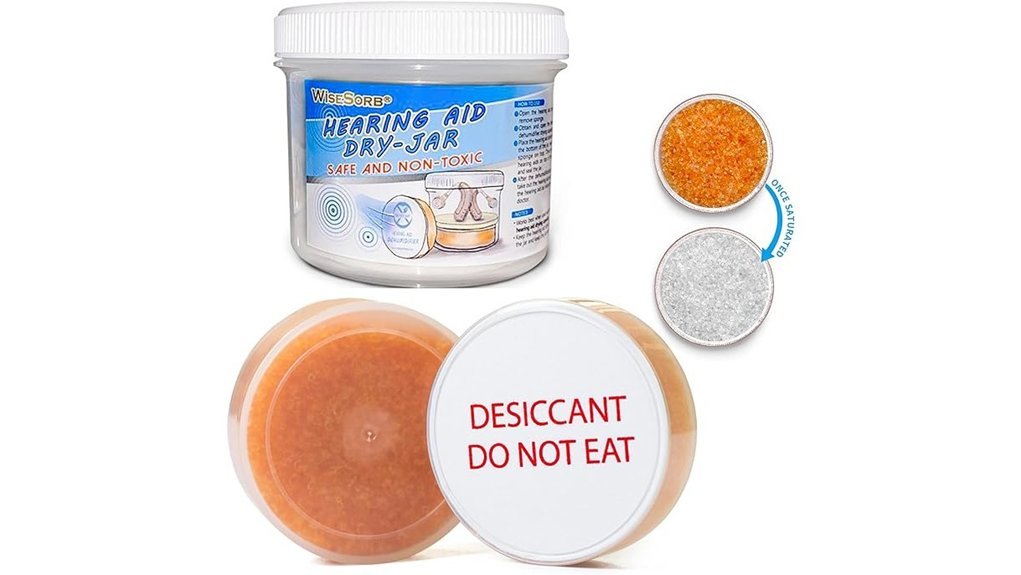
Wisesorb offers a simple passive drying kit for trips where outlets are limited. The set includes a screw-top jar, sponge inserts, and a 30g cobalt-free indicating silica-gel capsule. The beads change from orange toward white as the capsule becomes saturated, providing a visible replacement cue. The compact sealed jar is marketed for common BTE, CIC, ITE, and RIC hearing-aid styles, but you should still confirm that your devices fit without pressure on receivers, tubing, or earmolds.
Why You’ll Like It: There are no cords, fans, batteries, or controls to manage, making it one of the simplest options to pack.
Best For: Camping, boating, long flights, international travel, and anyone who wants low-maintenance passive drying.
Who Should Avoid It: Buyers who need rapid active drying or prefer a desiccant system that can be reactivated instead of replaced.
Pros:
- No electricity or batteries required.
- Color indicator helps show when the capsule is saturated.
- Sponge inserts separate the hearing aids from the desiccant capsule.
Cons:
- Passive drying is slower than active powered systems.
- The capsule eventually needs replacement.
- The jar must stay tightly closed to work effectively.
Stay Dri 1846943 Hearing Aid Dryer with Desiccant
Best Reusable Desiccant Jar
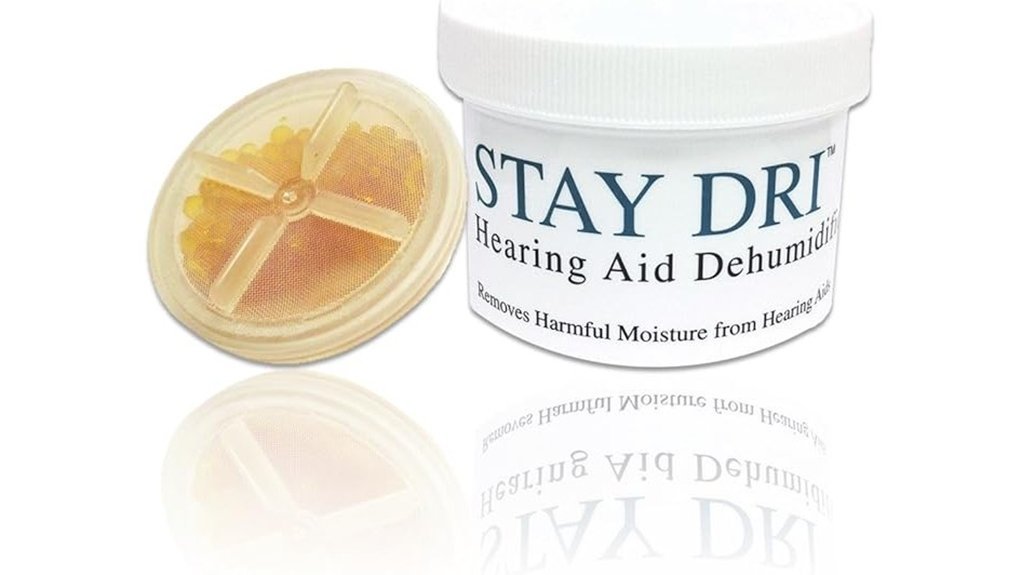
Stay Dri 1846943 is a compact screw-top jar sized for two traditional behind-the-ear hearing aids. Its desiccant can be reactivated in a microwave according to the instructions printed on the jar. Because it needs no electricity while the hearing aids are drying, it is easy to pack for hotels, cruises, camping, and road trips.
Why You’ll Like It: The reusable desiccant and printed instructions make it a practical low-tech option for repeat travel.
Best For: Travelers with two traditional BTE hearing aids who want a compact reusable jar.
Who Should Avoid It: Users whose hearing devices or accessories do not fit comfortably inside, or anyone without access to the specified desiccant reactivation method.
Pros:
- Small screw-top container is easy to pack.
- Holds two traditional BTE hearing aids.
- No electricity is needed while the hearing aids are drying.
Cons:
- Capacity is limited by the jar’s internal depth.
- Desiccant reactivation must follow the printed instructions exactly.
- Passive drying is slower than a powered airflow system.
Serene Innovations ReNew Hearing Aid Dryer & Freshener
Best Adjustable Cycle Options
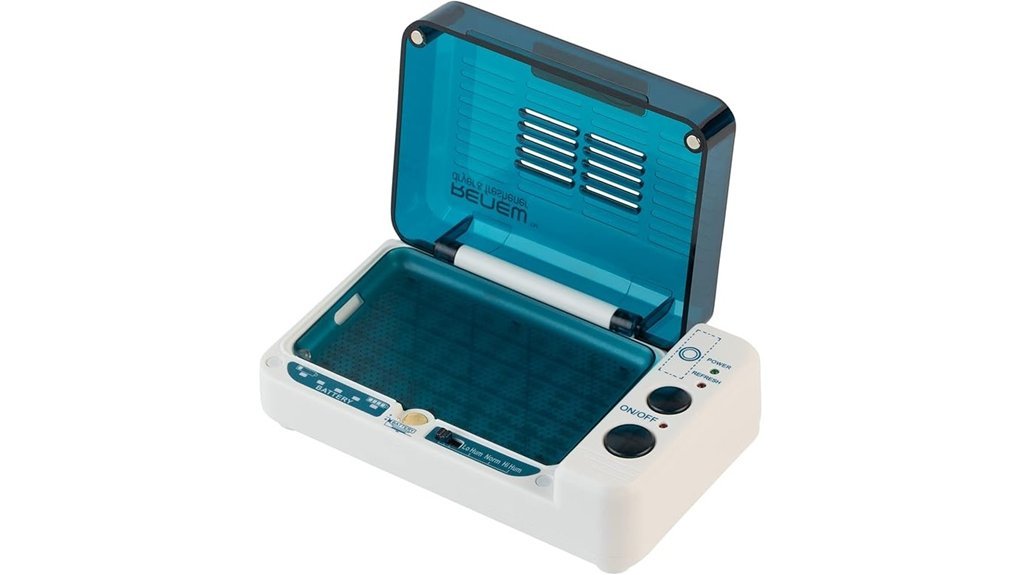
The Serene Innovations ReNew DB-100 provides two-, four-, and eight-hour cycle choices, making it easier to match drying time to the humidity and your routine. The manufacturer lists a nominal chamber temperature of about 113°F, a 400 nm light feature, a magnetic battery-storage strip, and a built-in battery tester. Its 100–240V adapter supports international travel when used with the correct plug adapter.
Why You’ll Like It: Flexible cycle lengths and battery-management tools can be useful for travelers with traditional disposable-battery hearing aids.
Best For: Users who want selectable drying times, universal-voltage input, and a place to store or test removable batteries.
Who Should Avoid It: Owners of rechargeable hearing aids unless the hearing-aid manufacturer approves the listed chamber temperature and drying method.
Pros:
- Choice of two-, four-, and eight-hour cycles.
- Magnetic battery strip and built-in battery tester.
- Universal 100–240V input supports international use with a plug adapter.
Cons:
- Bulkier and heavier than a passive travel jar.
- Requires electricity.
- The 400 nm light feature should not be described as proven sterilization or used instead of manual cleaning.
Zephyr Hearing Aid Dryer/Dehumidifier by Dry & Store
Best Powered Overnight Dryer
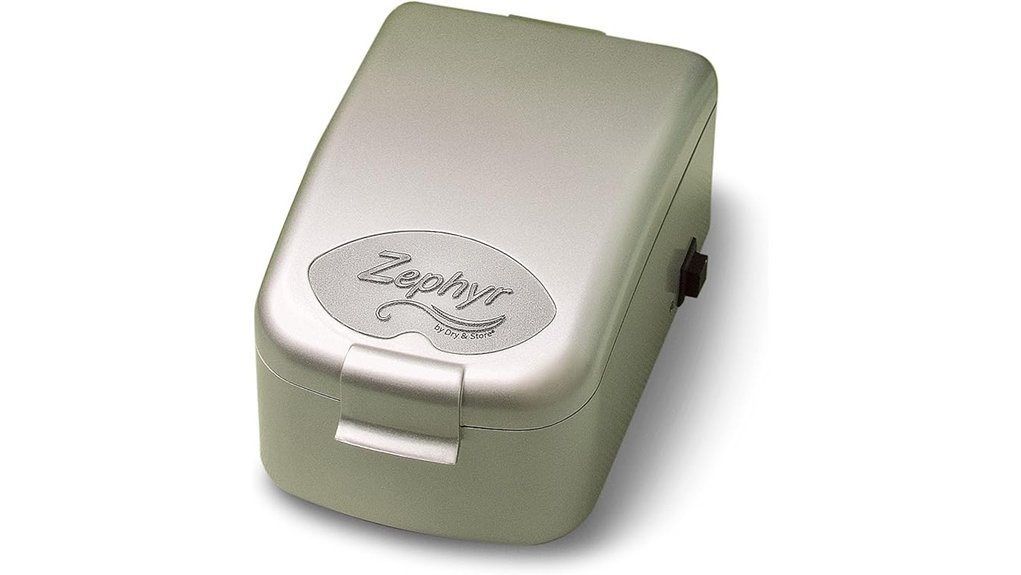
Zephyr uses warm moving air and a Dry-Brik II desiccant block during an automatic eight-hour cycle. Its 100–240V power supply is useful for international trips with the correct plug adapter, and the drying compartment accommodates many hearing aids, cochlear-implant components, and in-ear monitors. Dry & Store states that the operating temperature may be too high for some rechargeable devices, so this model is best reserved for hearing instruments specifically approved for its temperature range.
Why You’ll Like It: It combines airflow and desiccant drying in a set-it-and-forget-it overnight cycle.
Best For: Travelers with compatible traditional hearing instruments who want a powered overnight system.
Who Should Avoid It: Owners of rechargeable hearing aids unless their device manufacturer confirms compatibility with the dryer’s operating temperature.
Pros:
- Automatic eight-hour cycle with warm moving air and desiccant.
- Universal-voltage power supply supports travel abroad with the correct plug adapter.
- Compartment fits several types of hearing instruments and accessories.
Cons:
- Not suited to a quick daytime drying session.
- Dry-Brik II blocks require scheduled replacement.
- The manufacturer cautions that its temperature may be too high for some rechargeable devices.
Factors to Consider When Choosing a Hearing Aid Dehumidifier for Travel
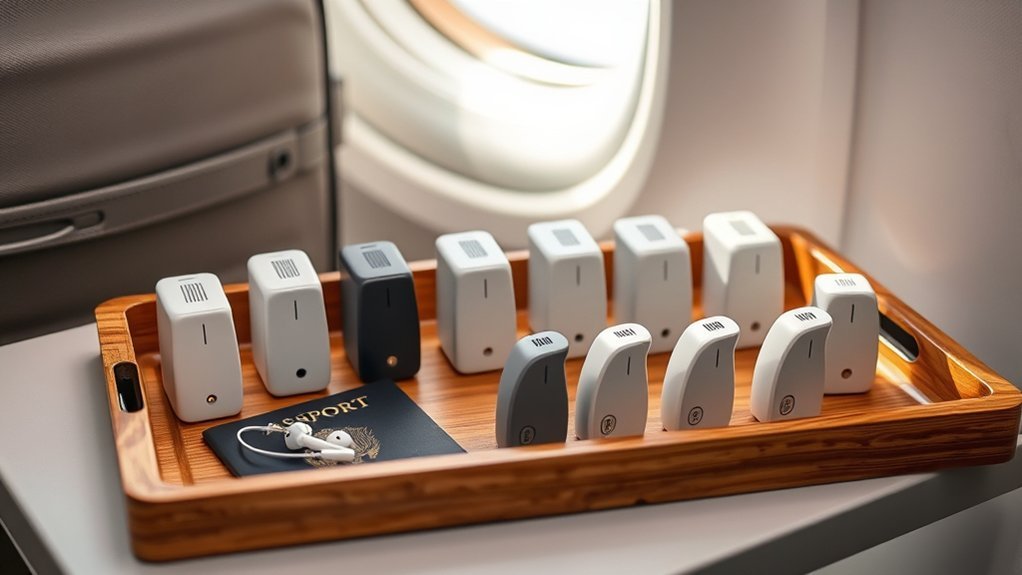
The best travel hearing aid dryer is not simply the smallest model. It should match your hearing-aid battery type, approved temperature range, trip length, luggage space, and access to electricity. Use the checks below to narrow your options without relying on broad “universal compatibility” claims.
Portability and Size
Check both the outside dimensions and the usable drying compartment. A tiny jar may fit easily in a carry-on but may not hold larger BTE devices, earmolds, cochlear-implant accessories, or a charging case. Powered units are usually bulkier, while passive jars are easier to pack. A secure lid also matters because it keeps the desiccant contained and helps prevent the case from opening inside your luggage.
Power Source Needs
Passive desiccant jars need no power during drying, making them useful for camping, cruises, flights, and rooms with limited outlets. Powered dryers may use an AC adapter or USB connection. For international trips, check the input-voltage range and remember that a universal-voltage power supply may still require a country-specific plug adapter. A USB-powered desiccant reactivation system is different from a dryer that must remain plugged in during the full drying cycle.
Drying Time Options
Travel dryers range from roughly one-hour powered cycles to several-hour or overnight routines. A short cycle is convenient when you need your hearing aids again soon. Longer cycles work well as part of a bedtime routine. Choose the cycle that fits your schedule and the product instructions rather than assuming that more heat or more time is always better.
Hearing Aid Compatibility
Compatibility is the most important safety check. Confirm whether the drying method and temperature are appropriate for your exact rechargeable or disposable-battery hearing aids. Rechargeable devices can have sealed batteries, charging-contact requirements, or different temperature limits. Also check whether disposable batteries should stay in place, be removed, or have their doors left open. Follow the hearing-aid manufacturer’s instructions whenever they differ from the dryer listing or general advice.
Moisture Removal Method
Passive desiccant jars are light, silent, and electricity-free, but they work slowly and need fresh or reactivated drying material. Heated-air dryers provide timed active drying but require power and confirmed temperature compatibility. Heat-free sensor-based systems can suit users who want to avoid heating their devices, although the desiccant may still need periodic powered reactivation. UV-C or other light features may be part of a care routine, but they should not automatically be treated as proof of sterilization or as a replacement for wiping, brushing, and wax-filter maintenance.
Desiccant Maintenance
Use the color indicator, status light, printed jar directions, or manufacturer schedule. Some capsules are disposable, some are microwave- or oven-reactivated, and others regenerate inside a powered sleeve. Do not substitute one reactivation method for another. Never place hearing aids, chargers, or batteries in a microwave or conventional oven.
Durability and Travel Protection
Look for a secure closure, durable shell, protected cable, and enough internal clearance to avoid pressure on receivers, tubes, earmolds, or charging contacts. Pack the dryer where it will not be crushed. Keep spare batteries in protective packaging or a battery case, and keep desiccant capsules sealed when not in use so they do not absorb unnecessary room or cabin humidity.
Frequently Asked Questions
How Long Do Travel Hearing Aid Dehumidifiers Usually Take to Dry Devices?
Powered travel models commonly use cycles from about one to eight hours. Passive desiccant jars are normally used for several hours or overnight. Follow the selected product’s instructions rather than automatically extending or repeating a drying cycle.
Can I Use a Dehumidifier With Rechargeable Hearing Aids?
Only when the care instructions for your hearing aids and the dryer indicate that the drying method and operating temperature are suitable. Rechargeable devices can have different temperature limits, sealed batteries, and charging-contact requirements. A lower-temperature or heat-free dryer may reduce one concern, but your exact hearing-aid care instructions should control the decision.
Are Travel Hearing Aid Dehumidifiers Allowed in Carry-On Luggage?
A small passive jar or plug-in dryer is generally packed like another personal electronic or hearing-care accessory, but battery rules depend on the battery type and airline. Under U.S. FAA rules, spare lithium batteries and power banks must be carried in the aircraft cabin, protected from damage and short circuits, and removed if your carry-on bag is gate-checked. Check your airline and the rules that apply in every country on your itinerary before departure.
How Often Should Desiccant Packs Be Replaced or Reactivated?
There is no reliable one-size-fits-all interval. Replace or reactivate the desiccant when its color indicator, status light, printed directions, or manufacturer schedule says it is saturated. Humid destinations and frequent opening of the container can shorten the interval.
Do UV or Light-Equipped Dryers Work Safely With Every Hearing Aid?
No broad compatibility rule covers every model. Chamber temperature, light wavelength, cycle length, plastics, coatings, rechargeable-battery design, and charger materials can differ. Check the care guidance for your exact hearing-aid model before using any heated, UV-C, or other light-equipped dryer.
Should I Remove Hearing Aid Batteries Before Drying?
Follow the instructions for both the hearing aid and the dryer. Some disposable-battery models may be dried with the batteries removed or the battery doors open, while sealed rechargeable devices must not be opened. When the instructions are unclear or conflict, ask the hearing-aid manufacturer or your hearing-care provider.
What Should I Do If My Hearing Aids Get Soaked?
A routine dryer is not a guaranteed water-damage recovery tool. Remove the devices from water, follow the manufacturer’s shutdown and battery guidance, do not apply direct heat, and avoid charging a wet device unless the manufacturer specifically directs you to do so. Contact your hearing-care provider promptly if the hearing aids stop working, sound distorted, or were submerged.
Conclusion
For most travelers who want fast powered drying, PerfectDome offers the best balance here of cycle speed, temperature control, and charging convenience. Redux DryBUDDY is the stronger choice when heat-free cordless drying matters. Wisesorb is the easiest no-power kit, while Stay Dri suits travelers who prefer a reusable traditional jar. For adjustable powered cycles, consider Serene ReNew; for an overnight airflow-and-desiccant routine, Zephyr is a better fit for hearing instruments approved for its operating temperature.
The final decision should be based on your hearing-aid model, permitted temperature, available internal space, access to power, and preferred drying time, not on a broad compatibility claim alone.