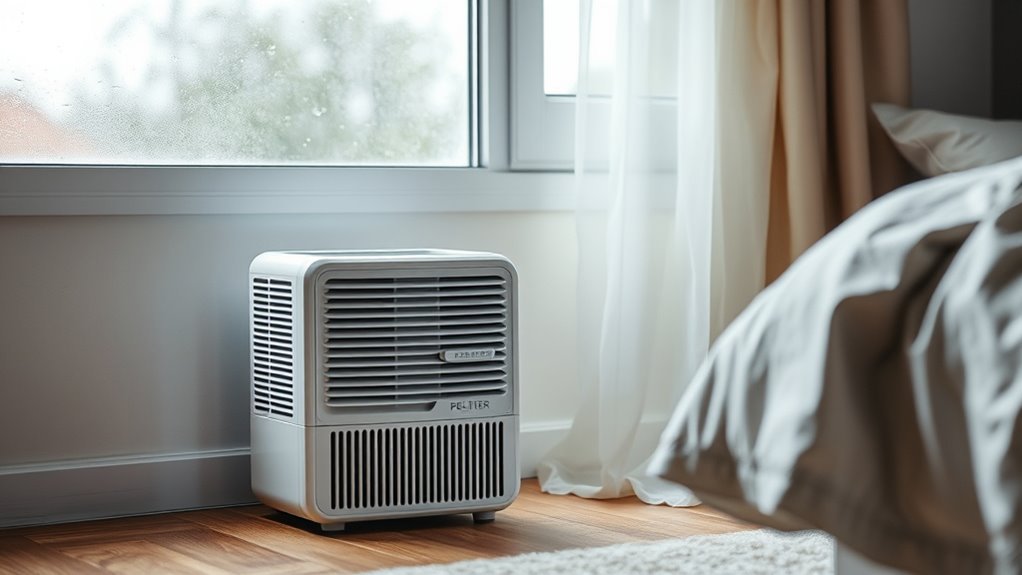
Are Peltier dehumidifiers any good? Only for light dampness in small, enclosed, warm spaces. Use one in a closet, cabinet, RV, or very small bedroom or office when quiet operation and low total power draw matter more than fast drying. Low wattage does not automatically mean efficient moisture removal, so do not use a Peltier unit as your main solution for a basement, wet wall, leak, laundry-drying problem, or whole-home humidity.
Quick Answer
Peltier dehumidifiers are worth it for light dampness in a small, warm, enclosed space where quiet operation matters more than fast drying. They usually remove ounces of water per day, not pints, and their low wattage does not guarantee good efficiency per unit of water removed. If relative humidity stays above 60% after 48 to 72 hours of continuous use, switch to a properly sized compressor or desiccant dehumidifier and fix any moisture source.
Key Takeaways
- Choose a Peltier dehumidifier for closets, cabinets, RVs, and other very small spaces with mild dampness.
- Do not expect compressor-level performance. Compact thermoelectric units remove moisture on an ounces-per-day scale, and they can be very slow even in modest rooms.
- Low power draw is not the same as high dehumidification efficiency. Compare moisture removed with energy used, not watts alone.
- Advertised capacity is usually measured in favorable conditions, so collection can drop sharply in cooler or drier rooms.
- Keep indoor relative humidity below 60%, and ideally around 30% to 50%, to reduce mold-friendly conditions.
- If you see leaks, flooding, visible mold, or damp building materials, fix the moisture source before relying on any dehumidifier.
Peltier Dehumidifier Fit Check
Use this quick fit check before buying. A Peltier unit works best when the problem is small, local, and slow. If moisture keeps entering the space faster than the unit can condense it, the tank may collect water while the room still feels damp.
| Your situation | Peltier fit? | Better choice if not |
| Closet, cabinet, or RV compartment with mild mustiness | Yes, if the space is warm, enclosed, and has clear airflow | Improve ventilation or use a moisture absorber for very small sealed storage |
| Very small bedroom or office with humidity only slightly above the target range | Maybe, only for light humidity and slow correction | Small compressor dehumidifier if RH stays above 60% |
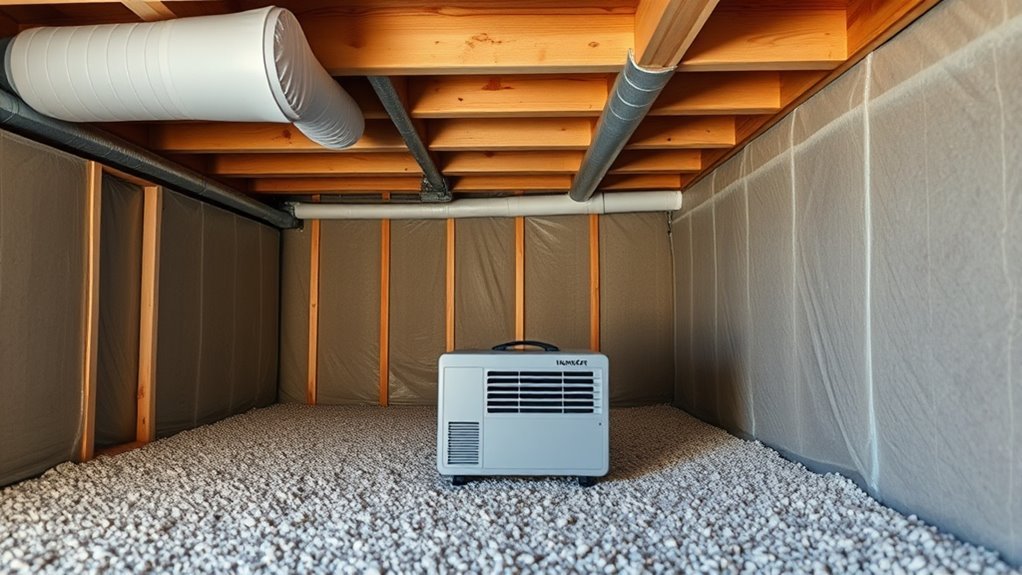
| Basement, laundry room, wet drywall, leak, or persistent condensation | No | Compressor, desiccant, ventilation repair, or professional drying |
Are Peltier Dehumidifiers Any Good?
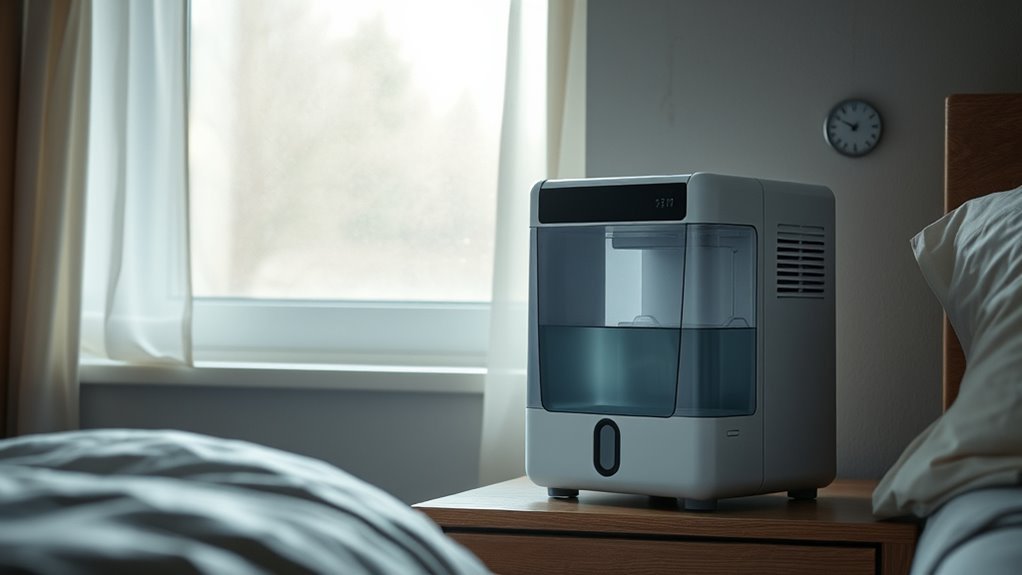
Yes, Peltier dehumidifiers can be good, but only for the right job. They are best for quiet, targeted humidity control in a very small space where the air is only mildly damp. They are not powerful enough to dry a wet basement, remove moisture from a large living room, or recover a room after a leak.
The main advantage is convenience. A Peltier unit is usually compact, lightweight, and quiet because it has no refrigerant compressor. It uses a small thermoelectric module and a fan, so it can fit on a shelf, desk, closet floor, or RV cabinet without taking up much space.
The tradeoff is capacity. ENERGY STAR explains that dehumidifier capacity is measured as water removed in 24 hours at specified test conditions and reported in pints per day. Peltier units operate on a much smaller scale. For a current manufacturer reference, Pro Breeze lists its compact 1200-cubic-foot Peltier model at up to 8.45 ounces per day, with a 9-ounce maximum-extraction specification.
Note: Do not compare a mini Peltier manufacturer claim directly with a standard portable-dehumidifier capacity rating. U.S. portable dehumidifiers are tested at controlled conditions, including 65°F under the current procedure, and capacity is reported in pints per day. Mini Peltier listings may use different conditions and are not automatically comparable on an apples-to-apples basis.
What Do Independent Tests Show?
Independent testers such as RTINGS compare small dehumidifiers on measured humidity reduction rather than advertised coverage. The practical lesson is simple: judge a Peltier unit by whether it lowers relative humidity in your space, not by low wattage or water in the tank alone.
How Do Peltier Dehumidifiers Work?
\n
For the full step-by-step, see how a Peltier dehumidifier works, or start with what a Peltier dehumidifier is.
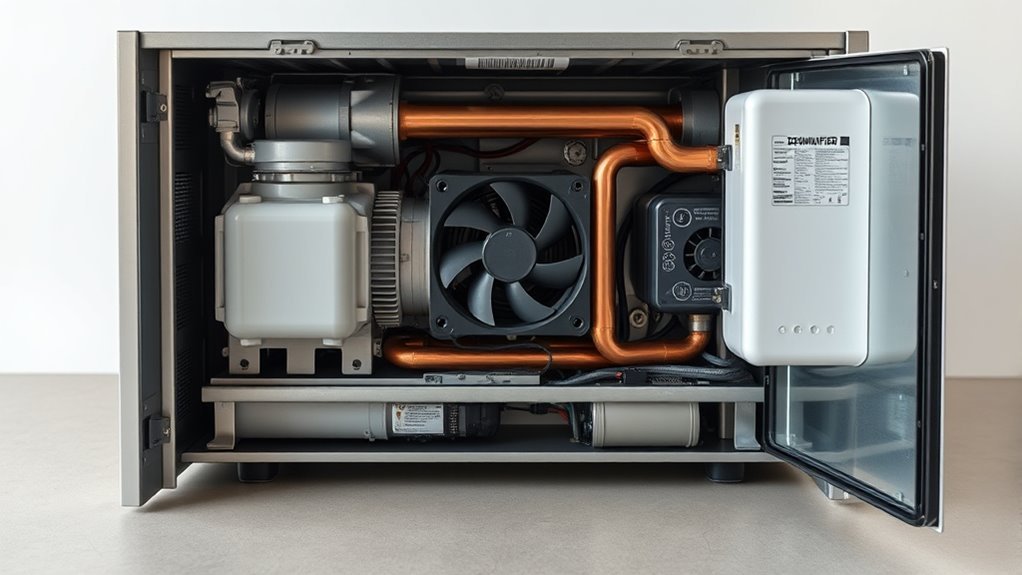
A Peltier dehumidifier uses a thermoelectric module instead of a compressor. When direct current passes through the module, heat moves from one side to the other. Ferrotec describes a thermoelectric module as a compact heat pump: one side becomes cold, and the other side becomes hot.
Inside the dehumidifier, a fan pulls humid air across the cold side. If that cold surface drops below the air’s dew point, water vapor condenses into liquid droplets. The droplets run into a small water tank, and the drier air moves back into the room.
Peltier Module Basics
The Peltier module is the heart of the unit. It creates the temperature difference that makes condensation possible. The cold side collects moisture, while the hot side needs a heat sink and airflow to move waste heat away.
This design keeps the unit simple and compact, but it also limits performance. A small thermoelectric module can only move a small amount of heat, so it can only condense a small amount of water at a time. That is why Peltier dehumidifiers work better as localized moisture-control tools than as room-drying machines.
Cooling and Condensation
Condensation happens when warm, humid air touches a surface cold enough to turn water vapor into liquid water. In a Peltier dehumidifier, that surface is the cold heat sink. The warmer and more humid the room is, the easier it is for the unit to collect water.
In cooler air, the cold plate may not collect much moisture. In very dry air, there may not be enough water vapor available. In very humid air, the unit may run constantly but still fail to lower the room’s relative humidity in a meaningful way because its capacity is too small.
Airflow and Collection
Airflow matters as much as the Peltier chip. The fan must move damp air across the cold surface and help move heat away from the hot side. If the intake is blocked, the unit is pushed into a corner, or dust builds up on the vents, moisture collection drops.
The water tank also matters. A tiny tank may need frequent emptying. Look for auto shutoff so the unit turns off when full, and choose a removable tank that is easy to clean. Some larger compact units include a drain hose, which is useful if you want continuous operation in a cabinet, RV, or another location permitted by the manufacturer.
Where Do Peltier Dehumidifiers Work Best?
Peltier dehumidifiers work best in small, enclosed, mildly damp spaces. They are most useful when the moisture problem is local and light, not structural or severe.
- Closets: Helps reduce musty odors around clothes, shoes, and stored fabrics.
- Cabinets and wardrobes: Useful where air circulation is poor and moisture collects slowly.
- RVs, boats, and campers: Helpful for small enclosed interiors during mild damp conditions when the appliance can be used safely and kept dry.
- Very small bedrooms or offices: Useful only when humidity is slightly high and you can accept slow correction.
- Bathrooms: Use only as a supplement to exhaust ventilation and only where the manufacturer permits the appliance to be used. Keep it on a stable, dry surface away from sinks, showers, tubs, and splashing water.
For U.S. homes, the Electrical Safety Foundation International says GFCI protection should be used where water may contact electrical products, including bathrooms. Never handle or plug in a dehumidifier with wet hands.
For mold prevention, the moisture target matters more than the amount of water in the tank. The U.S. EPA recommends keeping indoor relative humidity below 60%, ideally between 30% and 50% when possible.
Warning: A Peltier dehumidifier will not fix a leak, roof problem, plumbing drip, wet drywall, condensation inside walls, or visible mold growth. Stop the water source, improve ventilation, and clean or remediate affected materials first.
What Are the Limits of Peltier Dehumidifiers?
The biggest limit is low moisture-removal capacity. A Peltier unit may collect enough water to help a closet or cabinet, but it usually cannot pull humidity down quickly in a larger room. If the room keeps producing moisture faster than the unit can collect it, the tank may stay nearly empty or the humidity may barely change.
Peltier dehumidifiers also struggle in cool spaces. Since condensation depends on temperature and dew point, cooler air can reduce collection. That is why these units are often disappointing in cold basements, garages, crawl spaces, or unheated rooms.
Other limits include:
- Slow drying: They are not designed for wet carpets, damp walls, or fast recovery after water damage.
- Small tank size: Compact tanks need more frequent emptying.
- Limited room coverage: Manufacturer square-foot claims can be optimistic if the space is open or very damp.
- Efficiency per unit of water: Low total wattage can still produce poor moisture-removal efficiency because the extraction rate is so small.
- Heat release: Like all dehumidifiers, they release heat back into the room.
- Maintenance needs: Dusty vents, dirty tanks, and blocked airflow reduce performance.
How Do Peltier and Compressor Dehumidifiers Compare?
\n
Also see whether mini dehumidifiers are any good in general.
The main tradeoff is quiet convenience versus drying power. Peltier units are smaller and quieter, but compressor units remove far more water. A compressor dehumidifier is the better choice for basements, laundry rooms, large bedrooms, high humidity, and any space where you need measurable humidity reduction.
| Feature | Peltier Dehumidifier | Compressor Dehumidifier | Desiccant Dehumidifier |
| Best use | Closets, cabinets, RVs; bathrooms only with safe permitted placement | Basements, large rooms, high humidity | Cooler spaces and steady drying |
| Water removal | Low; often ounces per day | High; commonly sold by pint-per-day capacity | Moderate to high, depending on model |
| Noise | Very quiet fan noise | Louder fan and compressor noise | Varies; often quieter than large compressor units |
| Energy use | Low total wattage, but often weak moisture removal per unit of energy | Higher total wattage, but much more room-scale water removal | Can use more heat/electricity depending on design |
| Skip it if | The space is large, cold, wet, or above 60% RH for long periods | You need silent operation in a tiny enclosed space | You need the lowest purchase price |
Recommended Products

2500 Sq. Ft Dehumidifier - SEMKAP dehumidifier for basement features a quiet, high-performance compressor that removes up to 32 pints of moisture per day (at 95°F, 90% RH). Ideal for basements, offices, bathrooms, bedrooms, kitchens, stockrooms, living rooms, laundry rooms, garages, crawlspaces, or RVs. It helps maintain optimal humidity between 40%–60%RH for healthier, more comfortable living

POWERFUL 28-PINT DEHUMIDIFICATION FOR UP TO 2,000 SQ. FT.: Designed for basements and everyday home use, this VEAGASO dehumidifier removes up to 28 pints of moisture per day to help reduce excess humidity and damp air. Ideal as a dehumidifier for basement, bedroom, bathroom, laundry room, garage, living room or RV, it combines strong compressor performance with practical humidity control for spaces that need reliable, consistent moisture removal throughout the day.

1600 Sq.Ft High Capacity Dehumidifier- The GoGuess basement dehumidifier is equipped with a quiet yet powerful compressor that efficiently extracts up to 21 pints of moisture per day (tested at 95°F and 90% RH). Perfect for use in basements, offices, bathrooms, bedrooms, kitchens, storage areas, living rooms, laundry spaces, garages, crawl spaces, and RVs. It helps maintain a healthy humidity level between 30% and 70%, promoting a more comfortable and healthier indoor environment
How to Pick a Good Peltier Dehumidifier
Start with the moisture problem, not the product size. A good Peltier dehumidifier should match a small space with mild dampness. If you need to dry a full room, choose a compressor model instead.
Check these details before buying:
- Daily moisture removal: Look for ounces or milliliters per day, not just tank size.
- Rating conditions: Check the temperature and relative-humidity conditions behind the advertised extraction figure when the manufacturer provides them.
- Working temperature: Make sure the model is rated for the temperature where you plan to use it. Current Pro Breeze Peltier examples list minimum operating temperatures around 59°F to 60°F, but the range varies by model.
- Energy use: Compare power draw with moisture removal. Low wattage alone does not mean the unit removes water efficiently.
- Tank size: A larger tank means less frequent emptying.
- Auto shutoff: This prevents overflow when the tank is full.
- Drain hose option: Useful for longer unattended use.
- Airflow clearance: Make sure the intake and exhaust are easy to keep open.
- Noise rating: Check decibels if using it in a bedroom or office.
- Warranty and parts support: Avoid no-name units with unclear support.
Pro Tip: Use a small digital hygrometer near the dehumidifier. If relative humidity stays above 60% after 48 to 72 hours of continuous use, the Peltier unit is too small for that space.
Recommended Products

【Efficient Mini dehumidifier】Though very compact in size, this dehumidifier can absorb Max 14 OZ(420 ml) water per 24 hours from the humid ambient environment with 86°F and 80% RH. When used properly, this dehumidifier can help to reduce the humidity of your space a lot.

113 Pint Dehumidifier: AlorAir Sentinel HD55 commercial dehumidifier can remove 113 PPD at saturation, 53 pints per day at AHAM, up to 1,200 sq.ft, lowering the humidity to comfortable levels in a short period. On the other hand, this cETL-listed dehumidifier is made of a metal outer casing that withstands more rugged conditions, ensuring long-term use and easy maintenance. Fit any crawl spaces, basements, warehouses, offices, factories, shops, storage areas

[HIGH-EFFICIENCY MOISTURE REMOVAL] Powerfully removes up to 120 Pints at saturation (55 PPD at AHAM) per day, effectively covering areas up to 1,300 sq. ft. Perfect for crawlspaces, basements, garages, and commercial spaces. Its energy-efficient design quickly pays for itself by reducing utility bills while maximizing indoor comfort.
How to Tell If a Peltier Dehumidifier Is Working
Do not judge performance only by the water tank. A small tank can collect water while the room stays too humid, especially if damp air keeps entering from a bathroom, crawl space, leak, or open door. Measure relative humidity with a hygrometer near the problem area before you start.
Run the unit continuously for 48 to 72 hours with clear airflow and the door closed when practical. If relative humidity drops into the 30% to 50% range and stays below 60%, the unit is helping. If humidity remains above 60%, the room is too large, too cold, too wet, or poorly ventilated for a Peltier model.
Room-by-Room Placement Rules
Placement can decide whether a small Peltier unit helps or barely collects water. Keep the intake and exhaust clear, use the appliance only in locations allowed by its manual, and avoid placing electrical equipment where it can be splashed or become wet.
Very Small Bedrooms and Offices
A Peltier dehumidifier can help in a very small bedroom or office if relative humidity is only slightly high and you care more about quiet operation than fast water removal. Thermoelectric models can be very slow even in modest rooms, so measure humidity rather than assuming a square-foot claim means whole-room control.
Do not hide the unit behind furniture or inside a crowded shelf. Leave space around the intake and exhaust, keep doors closed when possible, and check the tank daily until you know how quickly it fills.
Bathrooms, Closets, and Cabinets
Closets and cabinets are often better fits because they are smaller and more enclosed. A Peltier unit can help reduce mustiness in a wardrobe or storage cabinet when the space is dry enough for safe electrical use and the vents remain clear.
In bathrooms, a dehumidifier should support ventilation, not replace it. Use the exhaust fan during and after showers, wipe standing water when practical, and keep the unit away from sinks, tubs, showers, and splash zones. Follow the manufacturer’s bathroom-use instructions and use appropriate GFCI protection.
What Do Current Peltier Dehumidifier Specs Look Like?
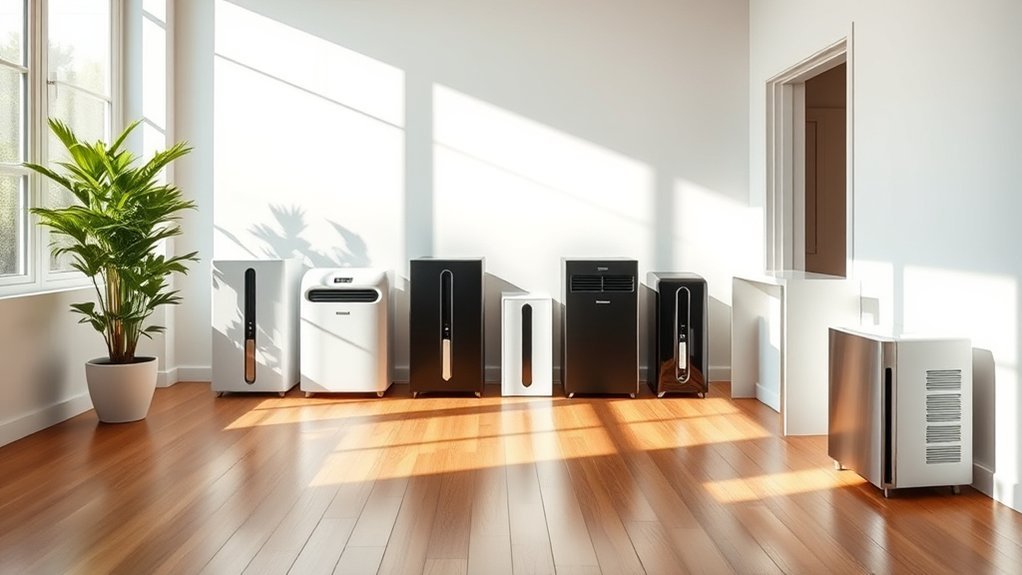
Use current Peltier specifications as a scale check, not as a promise that a whole room will reach your target humidity. Compare daily extraction, rating conditions, working temperature, noise, tank size, auto shutoff, and warranty support. Do not buy by advertised square footage alone.
As a current manufacturer reference, the Pro Breeze 1200-cubic-foot mini dehumidifier lists up to 8.45 ounces per day in its description, a 9-ounce maximum-extraction specification, 33 dBA noise, and a 59°F to 95°F working range. The larger Pro Breeze 2200-cubic-foot model lists about 17 ounces per day in its description, an 18-ounce maximum-extraction specification, 40 dBA noise, and a 60°F to 122°F working range. These are manufacturer-listed figures, so use them to understand the scale of Peltier performance rather than as guaranteed room results.
If you want model-by-model buying options, use the dedicated small-space dehumidifier comparison. For this decision, buy a Peltier unit only if you want quiet help in a closet, RV, cabinet, or very small room. Skip it if you need to control a basement, dry wet materials, or bring a full room from humid to comfortable quickly.
Recommended Products
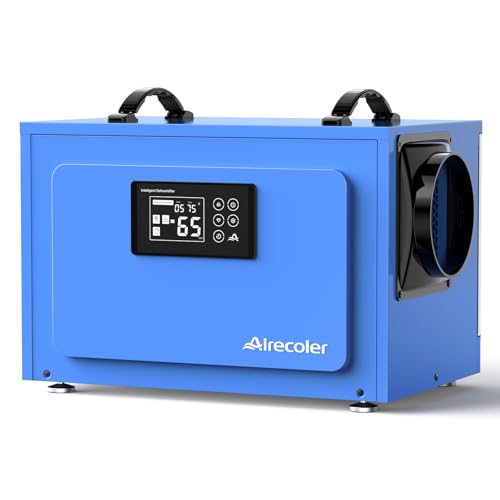
Enhanced Commercial Dehumidification: Airecoler commercial dehumidifier GT-X5 stands out for its exceptional moisture removal, capable of extracting up to 125 pints daily (Max.) and 60 pints at AHAM, being an optimal drying solution in expansive, damp places like crawl spaces, basements, warehouses, garages, and even commercial/industrial areas.
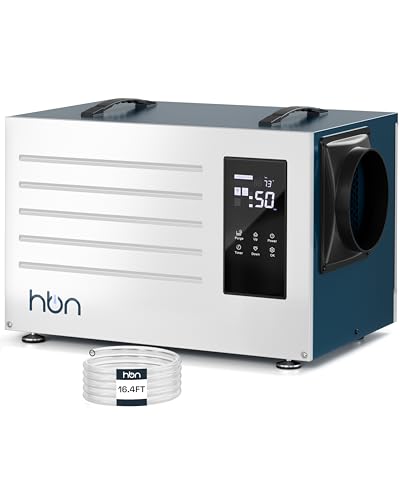
【Enhanced Dehumidification】 This commercial dehumidifier removes up to 125 pints/day (95°F, RH90%) and 60 pints/day under AHAM conditions, quickly reducing excess moisture. Covers up to 5,900 sq. ft. for large commercial areas and delivers precise 10%–90% RH control for smaller rooms and tight spaces.

125-Pint Crawl Space Dehumidifier - This powerful 125-pint commercial dehumidifier features a high-brush motor and up to 177 CFM rated circulation, capable of extracting up to 125 pints of water per day (95°F, 90% RH). It effectively reduces humidity in spaces up to 6,500 sq. ft. The adjustable humidity range of 10%-90% RH provides greater control than most models (20%-80% RH). Well-suited for commercial and industrial facilities, crawlspaces, storage rooms, garages, living areas, and offices
Maintenance Tips for Better Results
A Peltier dehumidifier works best when it stays clean and has steady airflow. Poor placement and dust buildup can make a small unit look weaker than it really is.
- Empty and rinse the tank often to prevent odor and buildup.
- Keep the intake and exhaust vents clear.
- Wipe dust from grilles and accessible surfaces.
- Place the unit on a level surface to help water drain into the tank.
- Close the closet, cabinet, or small room door when practical.
- Use a hygrometer to confirm whether humidity is actually dropping.
- Stop using the unit and investigate if you see active leaks, wet drywall, or recurring visible mold.
Frequently Asked Questions
Are Peltier dehumidifiers worth it?
Peltier dehumidifiers are worth it for quiet moisture control in a very small, warm, enclosed space with mild dampness. They are usually not worth it for basements, full-room drying, wet building materials, or humidity that stays above 60% after 48 to 72 hours of use.
What are the disadvantages of a Peltier dehumidifier?
The main disadvantages are low water removal, slow drying, weaker performance in cool rooms, small tank capacity, limited coverage, and poor moisture-removal efficiency on some models despite low total wattage. A Peltier unit is quiet and simple, but it is not strong enough for basements, flooding, large rooms, or serious humidity problems.
Do thermoelectric dehumidifiers really work?
Yes, thermoelectric dehumidifiers work, but only at small scale. They can collect moisture in a closet, cabinet, RV, or other very small enclosed space. They usually disappoint when people expect them to perform like compressor dehumidifiers, which are designed for much larger moisture loads.
Can you use a Peltier dehumidifier in a basement?
A Peltier dehumidifier is usually a poor choice for a basement. Basements are often cooler, larger, and more persistently damp than the small spaces Peltier units can handle. Use a compressor or desiccant model for basement humidity control.
How much water does a Peltier dehumidifier collect?
Many compact Peltier dehumidifiers operate on an ounces-per-day scale. Current Pro Breeze examples list up to 8.45 ounces per day for a compact model and about 17 ounces per day for a larger model, with maximum-extraction specifications of 9 and 18 ounces. Actual collection depends on temperature, relative humidity, airflow, and how enclosed the space is.
Is a Peltier dehumidifier better than a compressor dehumidifier?
A Peltier dehumidifier is better for quiet, low-capacity moisture control in tiny spaces. A compressor dehumidifier is better for larger rooms, basements, high humidity, and faster drying. Choose based on the moisture load and measured humidity change, not just noise, price, or wattage.
Conclusion
Peltier dehumidifiers are useful when your expectations are modest. They are quiet, compact, and easy to place in very small spaces, but they remove moisture slowly. Use one for a closet, cabinet, RV, or lightly damp enclosed area where the appliance can operate safely. For heavy humidity, cold basements, wet materials, laundry drying, or whole-room control, choose a properly sized compressor or desiccant dehumidifier instead.
The best way to decide is simple: measure relative humidity before and after 48 to 72 hours of continuous use. If a small Peltier unit helps keep the space below 60% and moves it toward the 30% to 50% range, it is doing its job. If humidity barely changes or stays above 60%, the moisture load is too large, the space is too challenging, or you need a stronger dehumidifier.
Sources
- U.S. EPA Mold Course, Chapter 2 — indoor relative humidity guidance for mold prevention.
- ENERGY STAR Dehumidifier Testing and Capacity — capacity, test-condition, and energy-efficiency context.
- eCFR 10 CFR Part 430, Appendix X1 — U.S. test-method context for measuring dehumidifier performance.
- Ferrotec Thermoelectric Modules — explanation of Peltier thermoelectric module operation.
- Pro Breeze 1200 Cubic Feet Mini Dehumidifier — current compact Peltier extraction, noise, and working-temperature specifications.
- Pro Breeze 2200 Cubic Feet Mini Dehumidifier — current larger Peltier extraction, noise, and working-temperature specifications.
- RTINGS Small Dehumidifier Testing — independent performance comparison of thermoelectric and refrigerant small dehumidifiers.
- Electrical Safety Foundation International GFCI Guidance — electrical safety around water and bathrooms.