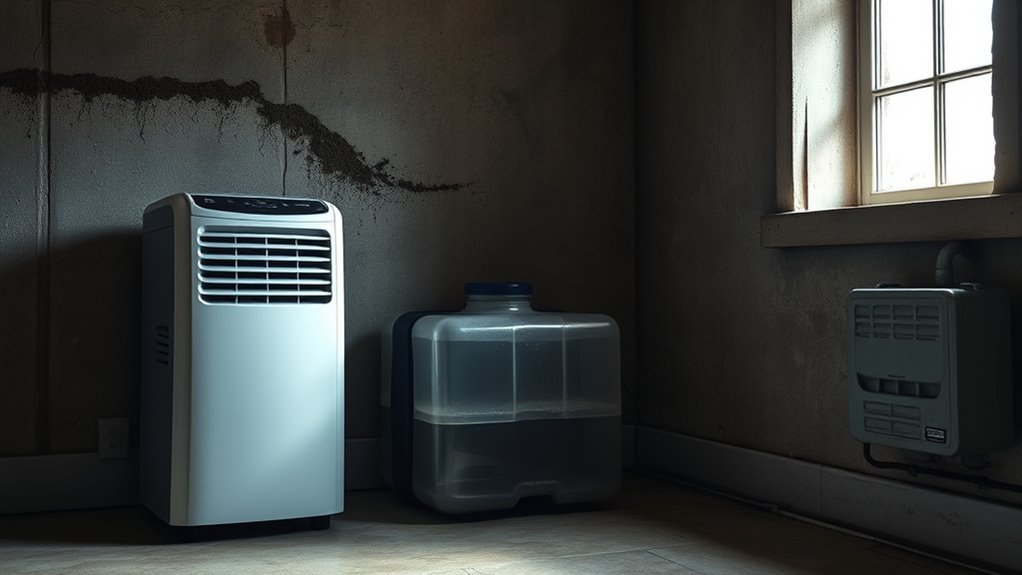
A dehumidifier can help prevent mold by reducing the moisture available for growth, especially in damp basements, laundry rooms, bathrooms, and crawlspaces. It cannot remove existing mold, repair a leak, or capture mold spores from the air. Lasting control requires lower humidity, prompt drying, ventilation, cleanup, and repair of the moisture source.
Quick Answer
Yes, a dehumidifier can help prevent mold by keeping relative humidity near 30% to 50%. It does not kill or remove existing mold. You must also repair leaks, dry wet materials within 24 to 48 hours, improve ventilation, and clean or remove contaminated materials.
Key Takeaways
- Aim for 30% to 50% relative humidity and investigate any reading that stays above 50% in a mold-prone room.
- A dehumidifier removes water vapor, not mold colonies or settled spores.
- Repair leaks and dry wet materials within 24 to 48 hours whenever possible.
- Use a hygrometer to confirm the humidity instead of relying only on how the room feels.
- Seek professional help for extensive growth, sewage contamination, HVAC involvement, recurring hidden mold, or health concerns.
How Dehumidifiers Help With Mold
Dehumidifiers help prevent mold by removing water vapor from indoor air. Lower relative humidity makes it harder for mold spores to begin growing on walls, wood, fabric, dust, insulation, and other materials.
The U.S. Environmental Protection Agency recommends keeping indoor relative humidity below 60%, ideally between 30% and 50%. The Centers for Disease Control and Prevention advises keeping household humidity no higher than 50% throughout the day.
A practical target for most mold-prone rooms is about 40% to 50%. In a cold climate, a lower winter setting may be necessary if condensation forms on windows, pipes, or exterior walls.
Moisture control prevents growth. It does not remove mold that is already on a surface or embedded in a material.
A dehumidifier does not filter mold spores from the air. It also cannot fix plumbing leaks, foundation seepage, roof damage, wet insulation, or poor exhaust ventilation. Think of it as one part of a larger moisture-control plan.
Why Mold Keeps Coming Back
Mold returns when moisture is still reaching a surface or when contaminated material was never fully cleaned or removed. Lowering the room’s average humidity can help, but it will not solve a hidden leak or a cold surface that repeatedly collects condensation.
Hidden Moisture Sources
Common hidden sources include leaking supply lines, slow drain leaks, roof damage, wet wall cavities, foundation seepage, damp insulation, blocked air-conditioning drains, and clothes dryers that do not vent outdoors.
Condensation is another warning sign. A room may show a reasonable hygrometer reading while a cold pipe, window frame, concrete wall, or uninsulated duct remains wet enough for localized growth. Dry the surface and correct the cause by improving ventilation, adding insulation where appropriate, or repairing the water source.
Porous Material Growth
Drywall, ceiling tile, carpet, upholstery, insulation, and some unfinished wood products can absorb water below the surface. Mold may grow inside their pores, where wiping the visible surface cannot reach it.
The EPA notes that moldy absorbent materials may need to be discarded because complete cleaning can be difficult or impossible. Hard, nonporous surfaces can often be scrubbed with detergent and water and then dried completely. The correct response depends on the material, the size of the affected area, and the source of contamination.
Wet Materials Were Not Dried Quickly
After a leak or clean-water spill, begin drying immediately. EPA guidance recommends drying damp materials within 24 to 48 hours whenever possible because delays increase the chance of mold growth.
Warning: Do not treat sewage, contaminated floodwater, or suspected HVAC mold as an ordinary do-it-yourself drying job. Avoid running an HVAC system that may be contaminated, and contact an experienced remediation professional.
What Humidity Level Helps Prevent Mold?
Keep indoor relative humidity between 30% and 50% when practical. In rooms with a history of mold, condensation, or musty odors, aim to stay at or below 50% rather than waiting for the reading to approach 60%.
| Relative Humidity | What It Means | Recommended Action |
|---|---|---|
| Below 30% | The air may be unnecessarily dry. | Raise the setting unless a healthcare professional or building condition requires otherwise. |
| 30% to 50% | The preferred general range for moisture control. | Maintain the range and continue checking problem surfaces. |
| Above 50% | Mold risk may rise in damp or poorly ventilated areas. | Run the dehumidifier, improve exhaust ventilation, and look for moisture sources. |
| Near or above 60% | The room is outside the EPA’s recommended upper limit. | Act promptly and investigate leaks, seepage, condensation, equipment sizing, and ventilation. |
Humidity is not the only factor. Mold can still grow around a leak, on a damp window frame, or behind furniture against a cold wall even when a hygrometer elsewhere in the room shows less than 50%.
Pro Tip: Place a separate hygrometer several feet from the dehumidifier. A sensor directly beside the dry discharge air may report a lower reading than the rest of the room.
Where Dehumidifiers Work Best
Dehumidifiers are most useful in enclosed or semi-enclosed spaces where moisture remains high despite normal heating, cooling, and ventilation. Close exterior doors and windows while the unit is operating unless ventilation with drier outdoor air is part of the drying plan.
| Area | Main Benefit | Important Consideration |
|---|---|---|
| Basement | Controls humid air, foundation dampness, and seasonal mustiness. | Repair seepage and choose a model designed for the room’s operating temperature. |
| Bathroom area | Helps manage moisture left after showers. | Use an exhaust fan first and keep the appliance outside splash zones and away from standing water. |
| Laundry room | Offsets moisture from washing and indoor drying. | Make sure the clothes dryer vents outdoors and has no leaking duct. |
| Crawlspace | Reduces persistent moisture beneath the home. | Drainage, vapor control, sealing, and professional sizing may also be necessary. |
| After a clean-water leak | Speeds drying after the water source has been stopped. | Remove standing water first and assess electrical safety before plugging in equipment. |
How To Use A Dehumidifier Properly
At a Glance
| Time Required | About 20 to 30 minutes for setup, followed by regular monitoring and maintenance |
| Difficulty | Easy for ordinary humidity control; professional help may be needed for drainage, electrical, structural, or mold problems |
| Tools Needed | Dehumidifier, separate hygrometer, grounded outlet, and an approved drain hose if continuous drainage is used |
| Cost | Varies by room size, moisture load, drainage needs, and whether a portable or whole-home system is required |
- Stop the moisture source. Repair leaks, clear blocked drains, improve exterior drainage, and vent moisture-producing appliances outdoors.
- Measure the humidity. Check the room with a hygrometer before choosing a setting. Take readings at different times because humidity changes throughout the day.
- Choose the correct capacity. Match the unit to both the size of the area and how damp it is. An undersized unit may run continuously without reaching the target.
- Set the humidistat. Begin around 45% to 50%. Lower the setting slightly if condensation continues, but avoid keeping the room below 30% without a specific reason.
- Protect airflow. Follow the manual’s clearance instructions. Do not block intake or discharge grilles with furniture, curtains, storage boxes, or walls.
- Close the space. Keep exterior doors and windows closed while the unit is running so it is not constantly trying to dry incoming humid air.
- Manage the water safely. Empty the bucket before it becomes dirty, or use continuous drainage with a secure hose that slopes correctly to an approved drain.
- Verify the result. Check a separate hygrometer away from the discharge air. Inspect cold walls, pipes, windows, and corners for condensation.
- Maintain the unit. Clean the filter, bucket, grille, and other serviceable parts according to the manufacturer’s instructions.
Warning: Keep the dehumidifier, plug, cord, and drain hose away from standing water and splash zones. Use a properly grounded outlet and follow all manufacturer warnings. Do not operate electrical equipment in a water-damaged area until it has been assessed as safe.
During ordinary seasonal humidity, use the humidistat or automatic mode so the compressor cycles off when the target is reached. Continuous operation is more appropriate during an active drying job or when the moisture load remains unusually high.
Recommended Products

Multi-Purpose Hose, 6ft Cut-to-Fit:This 6-foot hose is designed for various applications, including dehumidifier drainage and gardening tasks. It can be easily cut to the desired length for flexible use. Please confirm the required length before purchase.
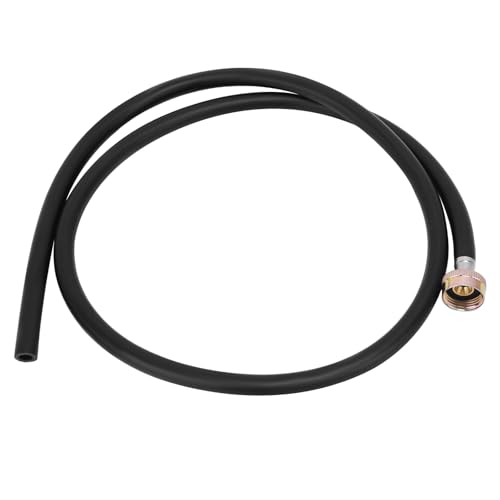
Dehumidifier Hose for Drainage Suitable for Most Dehumidifier Drainage Interfaces,Black
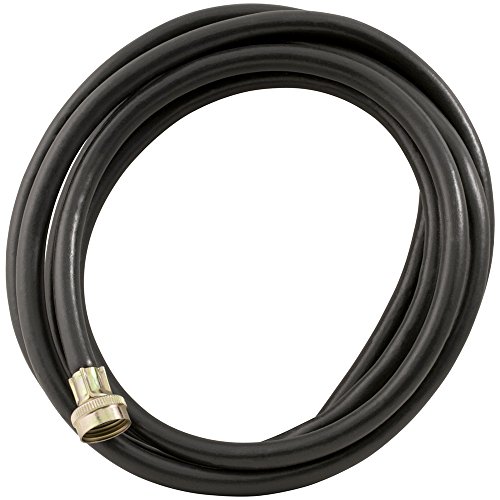
CONVENIENT - This drain hose automatically drains water from your dehumidifier to a drain, unattended
Choosing the Right Dehumidifier
The correct dehumidifier depends on floor area, ceiling height, air leakage, room temperature, and the severity of the dampness. The ENERGY STAR dehumidifier guidance recommends sizing by both the space and its condition rather than using floor area alone.
- Capacity: Choose enough daily water-removal capacity for the room and moisture load. Slight oversizing is generally better than chronic undersizing.
- Built-in humidistat: This allows the unit to cycle automatically at the selected relative humidity.
- Continuous drainage: Useful in a basement or other area with a safe nearby drain.
- Low-temperature operation: Consider a unit designed for cooler spaces if the room regularly falls below about 65°F. Frost on the coils can reduce performance.
- Automatic defrost: Helpful in cool basements and crawlspaces.
- ENERGY STAR certification: Helps reduce energy use when the unit must operate for long periods.
- Washable or accessible filter: Makes routine maintenance easier.
Note: A whole-home dehumidifier may be more suitable when several rooms remain above the target humidity despite normal air-conditioning and ventilation. It should be sized and installed by a qualified HVAC professional.
Recommended Products

Semiconductor dehumidifiers use thermoelectric cooling to remove moisture from the air. They create a drier, more comfortable environment by reducing humidity and improving air quality.

【Compact Size, Big Efficiency】 The upgraded 2025 Waykar dehumidifier features cutting-edge rotary compressor technology. It’s more compact but still powerful, capable of removing up to 34 pints of moisture per day (at 95℉, 90% RH), ideal for spaces up to 2,000 sq. ft. such as living rooms, basements, bedrooms, and offices. The adjustable humidity range from 30% to 80% helps you easily maintain the ideal indoor humidity

True ENERGY STAR Most Efficient 2025 Compressor Dehumidifier (2600 Sq.Ft) - High-Efficiency Dehumidifier - Dr.Prepare dehumidifier features a high-performance and quiet compressor that removes up to 38 pints of moisture per day (at 95°F, 90% RH). Ideal for basements, living rooms, bathrooms, bedrooms, garages, or travel trailers. Being able to adjust humidity from 30%RH to 80%RH, and cut costs bills year-round. (You can verify Dr. Prepare models DDH12LA on the official ENERGY STAR Product Finder.)
When A Dehumidifier Isn’t Enough
A dehumidifier is not enough when water is still entering the building, materials remain wet, or mold is already growing. It should support repairs and cleanup rather than replace them.
Consider professional assessment or remediation when:
- The total visible mold covers more than about 10 square feet.
- There has been extensive water damage.
- The water came from sewage, floodwater, or another contaminated source.
- Mold may be inside an HVAC system or near an air intake.
- A strong musty odor remains but the source cannot be found.
- Mold repeatedly returns after cleaning and humidity control.
- Wall cavities, insulation, subflooring, or other hidden materials may be affected.
- An occupant has significant allergies, asthma, COPD, immune suppression, or other health concerns.
According to the EPA’s residential mold-cleanup guidance, an area smaller than about 10 square feet can often be handled by the occupant. That benchmark does not apply when sewage, major water damage, HVAC contamination, structural damage, or health risks are involved.
Warning: People with asthma, COPD, immune suppression, severe mold allergies, or other chronic lung conditions should not perform mold cleanup. Ask a healthcare professional about symptoms or exposure concerns.
Can A Dehumidifier Kill Mold?
No. A dehumidifier does not kill mold, remove colonies, disinfect materials, or make contaminated surfaces safe. Lower humidity can stop or slow active growth, but the remaining mold and fragments may still trigger allergic or irritant reactions.
Existing growth must be physically removed from cleanable surfaces. Moldy absorbent materials may need to be discarded. The moisture source must also be corrected, or growth is likely to return.
If you clean a small affected area yourself, follow appropriate precautions. The CDC recommends protective gloves, eye protection, and at least a NIOSH-approved N95 respirator for mold cleanup. Never mix bleach with ammonia or any other cleaning product.
Dehumidifiers Vs. Air Purifiers For Mold
Dehumidifiers and air purifiers address different parts of a mold problem. Neither one replaces leak repair or physical cleanup.
| Feature | Dehumidifier | HEPA Air Purifier |
|---|---|---|
| Main purpose | Removes water vapor and lowers relative humidity. | Filters airborne particles that pass through the unit. |
| Helps prevent new growth | Yes, when excess humidity is part of the moisture problem. | No. It does not remove the water mold needs. |
| Removes existing mold | No. | No. |
| Airborne particles | Not designed to capture mold spores. | Can capture some airborne mold particles when correctly sized and operated. |
| Musty odors | May reduce odors caused by active dampness after the source is corrected. | A particle filter alone may not remove odor gases; activated carbon may help with some odors. |
A true HEPA filter is designed to capture at least 99.97% of 0.3-micron particles that pass through the filter under test conditions. This does not mean that a portable purifier removes 99.97% of all mold spores from a room. Actual room performance depends on clean-air delivery rate, room size, runtime, airflow, placement, and the strength of the contamination source.
Use a dehumidifier to control moisture, an air purifier to supplement particle control, and cleanup to remove the mold itself.
- Repair the leak or moisture source.
- Dry the affected area promptly.
- Remove existing mold safely.
- Maintain relative humidity near 30% to 50%.
- Use properly sized filtration only as a supplement.
Recommended Products

WHY CHOOSE AHAM VERIFIDE AIR PURIFIERS: AHAM (Association of Home Appliance Manufacturers) is an ANSI-accredited organization that sets strict standards for appliance performance. Air purifiers with the AHAM VERIFIDE seal have been independently tested for air cleaning performance and energy efficiency. When you choose an AHAM certified air purifier, you're choosing a product trusted for reliable and effective indoor air quality improvement

Effortless Operation: Simplified control panel with intuitive design makes it easy to operate. No complicated setup—just one tap, and you're on your way to cleaner air, saving time and letting you relax with ease

CAPTURES 99.97% OF ALLERGENS AND PARTICULATES* AND 99.9% OF VIRUSES AND BACTERIA.** With the Clorox Air Purifier, you can breathe easier. It has true HEPA filtration to capture 99.97%* of particles as small as 0.1 microns and 2 additional filters to capture larger particles and odors.
Should You Test for Mold?
Routine home mold testing is usually unnecessary when you can see mold or smell a clear musty odor. The CDC does not recommend routine mold testing because there are no health-based indoor standards that make a short-term spore count easy to interpret.
Focus first on finding the water source, removing the growth, and confirming that the area stays dry. Professional investigation may be useful when the source is hidden, a legal or insurance matter requires documentation, or a qualified specialist needs sampling to answer a specific remediation question.
Signs You Need Professional Mold Remediation
Professional help is appropriate when the problem is too large, complex, contaminated, or risky for ordinary household cleanup. Warning signs include:
- Mold covering more than about 10 square feet
- Growth across several rooms or building materials
- Persistent musty odors with no visible source
- Recurring mold after cleaning and dehumidification
- Water stains, bubbling paint, soft drywall, or damaged flooring
- Sewage or contaminated floodwater
- Suspected mold inside ducts or HVAC equipment
- Structural deterioration or wet insulation
- Respiratory symptoms that appear or worsen in the building
- Occupants with COPD, asthma, immune suppression, or severe allergies
A qualified professional should identify the moisture source, define the affected area, protect occupants from exposure, remove or clean contaminated materials, and verify that the repaired area remains dry. Routine testing is not automatically required for every project.
Medical Note: Mold exposure can affect people differently. This article provides general home-maintenance information and is not medical advice. Contact a healthcare professional about breathing difficulty, wheezing, persistent coughing, fever, or other concerning symptoms.
Frequently Asked Questions
Would a dehumidifier help prevent mold?
Yes. A dehumidifier can help prevent mold when excessive indoor humidity is part of the problem. Keep relative humidity around 30% to 50%, repair leaks, ventilate moisture-producing rooms, and dry wet materials promptly.
What setting should I use to prevent mold?
Start around 45% to 50% relative humidity and confirm the result with a separate hygrometer. Lower the setting slightly if condensation continues. Avoid unnecessary drying below 30%.
Should you use a dehumidifier if you have COPD?
A dehumidifier may help control dampness and reduce conditions that support mold, but it does not treat COPD. People with COPD should not clean mold or remain in a heavily mold-contaminated area during cleanup. Discuss breathing symptoms and indoor humidity concerns with a healthcare professional.
What are the downsides of a dehumidifier?
Dehumidifiers use electricity, make fan and compressor noise, warm the nearby air slightly, and require filter and bucket maintenance. An undersized unit may run constantly, while an unnecessarily low setting can over-dry the room.
Can you live in a house with mold in the basement?
Do not ignore basement mold, but the need to leave the entire home depends on the extent, whether the area can be isolated, HVAC involvement, the water source, and occupant health. People with COPD, asthma, immune suppression, or severe allergies should avoid the affected area and obtain professional advice.
How long should a dehumidifier run after a leak?
Run it as part of the drying process until materials are dry and the room remains within the target humidity without continuous operation. Begin drying immediately and aim to dry wet materials within 24 to 48 hours. Hidden wall, floor, or insulation moisture may require professional measurement.
Does mold die when it dries out?
Dry conditions can stop active growth, but they do not reliably remove or neutralize mold. Mold and fragments may remain allergenic, and growth may restart when moisture returns. Contaminated surfaces still require proper cleaning or removal.
Conclusion
A dehumidifier can help prevent mold by keeping indoor relative humidity near 30% to 50%, but it is a moisture-control tool rather than a cure. It cannot remove existing colonies, filter all spores, repair leaks, or restore damaged materials.
For lasting results, stop water entry, dry wet materials within 24 to 48 hours, ventilate bathrooms and laundry areas, use a correctly sized unit, and verify humidity with a hygrometer. Seek professional help when mold is extensive, hidden, recurring, connected to contaminated water or HVAC equipment, or affecting someone with significant health risks.
Sources
- U.S. EPA: A Brief Guide to Mold, Moisture and Your Home — humidity targets, moisture control, drying time, cleanup precautions, and hidden mold
- CDC: About Mold — prevention, health effects, cleaning, and home-testing guidance
- U.S. EPA: Mold Cleanup in Your Home — cleanup limits, porous materials, HVAC concerns, and professional-help triggers
- ENERGY STAR: Dehumidifiers — capacity, humidistats, low-temperature operation, drainage, placement, and electrical precautions
- U.S. EPA: What Is a HEPA Filter? — the official HEPA particle-capture definition
- U.S. EPA: Guide to Air Cleaners in the Home — air-purifier limitations, room sizing, filtration, odors, and ozone-producing devices