Updated for 2026: Basement dehumidifiers with built-in pumps are ideal when you need continuous drainage to a sink, floor drain, utility tub, or elevated drain point.
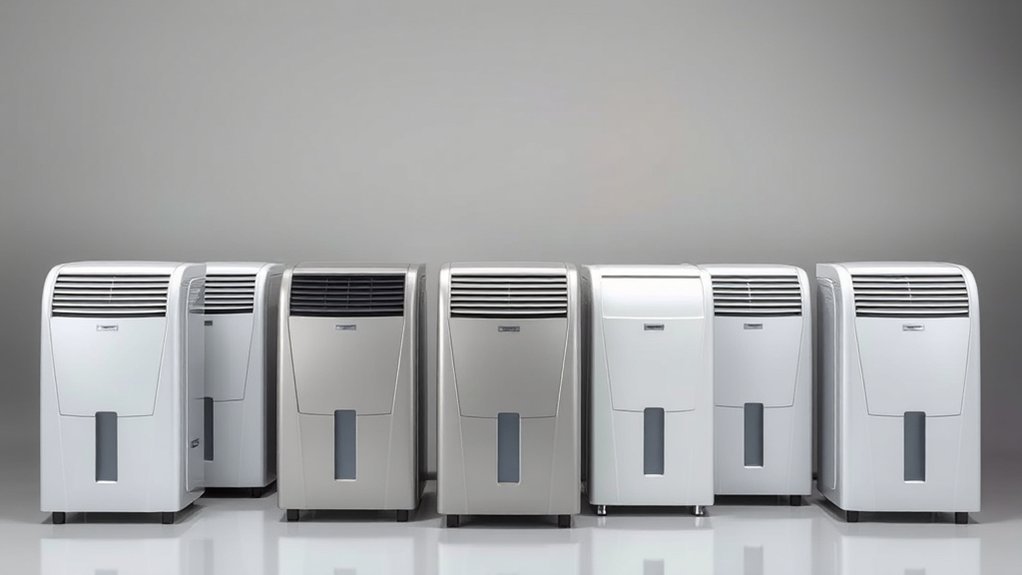
If you’re dealing with basement humidity, a dehumidifier with a built-in pump can save you from constantly emptying a water bucket. These models are built for damp basements, crawl spaces, garages, laundry rooms, and large lower-level areas where gravity drainage is not always possible. In this guide, you’ll find high-capacity choices like the Hisense 50 Pint, Waykar 150 Pint, Vellgoo 100 Pint, and smart Wi-Fi options from hOmeLabs, DuraComfort, and Midea. The best pick depends on your basement size, drainage location, humidity level, noise tolerance, and whether you want smart control.
Quick Verdict: Best Basement Dehumidifiers With Built-In Pumps
- Best overall large-basement pick: Hisense 50 Pint Portable Dehumidifier with Pump
- Best for crawl spaces: HBN 125 Pints Crawl Space Dehumidifier with Pump
- Best energy-focused option: AEOCKY 4500 Sq.Ft Energy Star Dehumidifier
- Best high-capacity home option: Waykar 150 Pint Dehumidifier with Pump
- Best smart Wi-Fi option: hOmeLabs Wi-Fi Dehumidifier with Pump
| Product | Best For | Key Strength | Amazon |
|---|---|---|---|
| Hisense 50 Pint Portable Dehumidifier with Pump | Large basements, garages, and attics | Balanced capacity, pump drainage, ENERGY STAR efficiency | Check Price on Amazon |
| HBN 125 Pints Crawl Space Dehumidifier with Pump | Crawl spaces and larger damp areas | High pint rating and dual drainage options | Check Price on Amazon |
| AEOCKY 4500 Sq.Ft Energy Star Dehumidifier | Energy-conscious homeowners | Efficient moisture removal with smart humidity control | Check Price on Amazon |
| DECIUU Max 100 Pint Energy Star Dehumidifier | Large finished or unfinished basements | High capacity with adjustable humidity settings | Check Price on Amazon |
| Avylo Dehumidifier for Basement with Pump | Damp basements needing easy drainage | Real-time humidity monitoring and mobility | Check Price on Amazon |
| Vellgoo 100 Pint Energy Star Dehumidifier with Pump | Large rooms, basements, bathrooms, and garages | Strong capacity with multiple drainage options | Check Price on Amazon |
| Waykar 150 Pint Dehumidifier with Pump for Home | Very large basements and garages | Extra-large moisture removal capacity | Check Price on Amazon |
| hOmeLabs Wi-Fi Dehumidifier with Pump | Smart-home users and large spaces | Wi-Fi control with pump drainage | Check Price on Amazon |
| DuraComfort Dehumidifier with Pump and WiFi | Remote humidity control | App control and quiet operation | Check Price on Amazon |
| Midea 50 Pint Dehumidifier with Pump | Basements, bathrooms, and crawlspaces | Quiet operation with smart app support | Check Price on Amazon |
Hisense 50 Pint Portable Dehumidifier with Pump
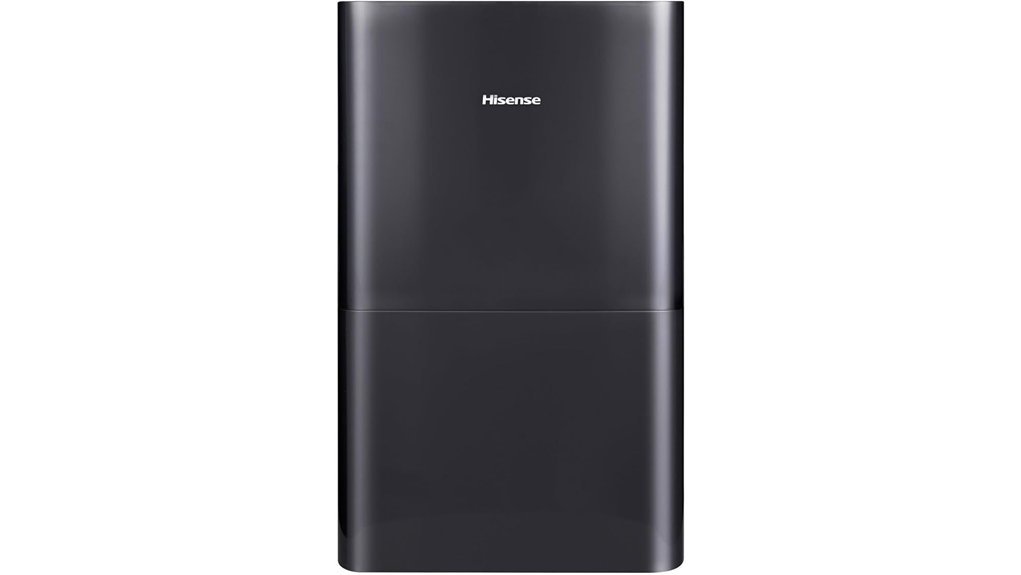
Best Overall for Most Large Basements
If you’re looking for an efficient solution to combat humidity in your basement, the Hisense 50 Pint Portable Dehumidifier with Pump stands out as an ideal choice. This unit can handle up to 50 pints of moisture daily, making it suitable for spaces up to 4,500 square feet. Its built-in pump allows for continuous drainage, so you won’t need to manually empty it when the hose is set up correctly. With three fan speeds and low-temperature operation down to 38°F, it works quietly and efficiently in cooler lower-level spaces. Plus, it’s ENERGY STAR certified, helping you reduce energy use while keeping your basement dry and comfortable.
Why You’ll Like It: This model is a strong fit if you want a balanced basement dehumidifier that combines pump drainage, large-space coverage, and simple daily operation. It is especially useful when your drain point is higher than the unit or when you do not want to rely on bucket emptying.
Best For: Those seeking an efficient and convenient dehumidifying solution for large residential spaces, such as basements, garages, and attics.
Who Should Avoid It: Skip it if you need a very compact dehumidifier for a small room or if you do not have enough space around the unit for airflow and hose routing.
Pros:
- Built-in pump enables continuous drainage without the hassle of manual emptying.
- Three fan speeds offer customizable airflow and noise levels to suit different preferences.
- ENERGY STAR certified, ensuring energy efficiency and cost savings on utility bills.
Cons:
- Weight of 40.3 pounds may make it less portable for some users.
- Limited to spaces up to 4,500 square feet, which may not suffice for larger areas.
- Plastic components might not be as durable as metal alternatives.
HBN 125 Pints Crawl Space Dehumidifier with Pump
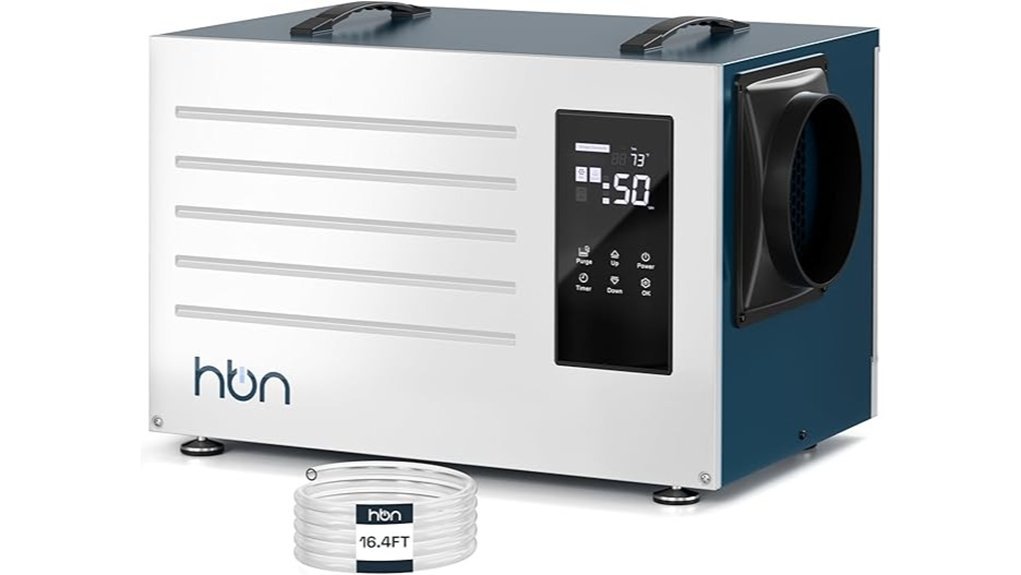
Best for Crawl Spaces and Utility Areas
The HBN 125 Pints Crawl Space Dehumidifier with Pump is perfect for homeowners needing effective moisture control in large areas. With a capacity of 125 pints per day, it covers up to 5,900 square feet, ensuring quick moisture removal in damp spaces. The intuitive touchscreen lets you easily adjust humidity settings and control the built-in pump. You can choose from dual drainage options, including a gravity drain or a pump that lifts water up to 16.4 feet. Plus, its automatic defrost feature helps it run smoothly in low temperatures. Enjoy peace of mind with a 1-year warranty and lifetime technical support.
Why You’ll Like It: Crawl spaces often need a more serious moisture-control setup than a basic room dehumidifier can provide. This model is aimed at high-moisture areas where continuous drainage, pump lift, and low-temperature operation matter more than a decorative design.
Best For: Homeowners needing effective moisture control in large crawl spaces or commercial areas.
Who Should Avoid It: It may be more dehumidifier than you need if you only have a small finished basement room with mild seasonal humidity.
Pros:
- High capacity of 125 pints/day, suitable for large spaces up to 5,900 sq. ft.
- Dual drainage options provide flexibility for water removal, including upward drainage with a built-in pump.
- User-friendly touchscreen control allows for easy adjustments and monitoring of humidity settings.
Cons:
- Weight not specified, which may affect mobility and handling.
- Initial setup may require assistance for optimal placement and drainage configuration.
- Limited warranty period for full coverage compared to some competitors.
AEOCKY 4500 Sq.Ft Energy Star Dehumidifier
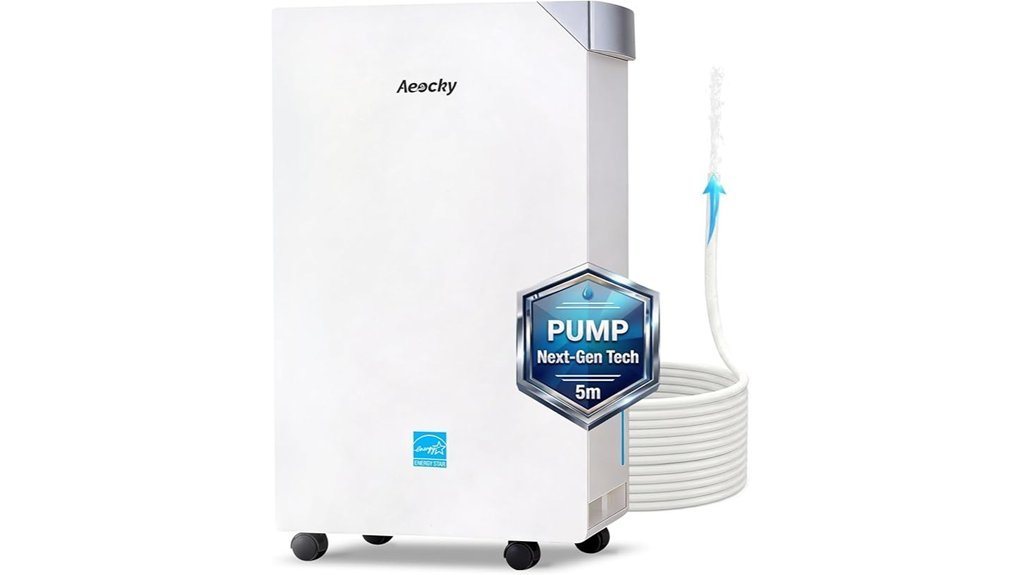
Best Energy-Focused Pick
Looking for an efficient solution to combat basement humidity? The AEOCKY 4500 Sq.Ft Energy Star Dehumidifier is a top choice. With its ENERGY STAR Most Efficient 2025 certification, you can trust its performance. It boasts exclusive pump technology for 360° auto-drainage, reducing the hassle of manual emptying when the drain is properly connected. Capable of dehumidifying up to 80 pints per day, it operates quietly, making it a useful option for residential spaces up to 4500 sq. ft. Plus, smart humidity control and a power-off memory function help it fit into a modern home. Enjoy a dry, comfortable basement with the AEOCKY dehumidifier.
Why You’ll Like It: This model works well for buyers who want a stronger-than-basic dehumidifier but still care about energy use, noise, and set-and-forget humidity control.
Best For: Homeowners seeking an efficient and reliable solution for controlling humidity in large spaces, particularly basements.
Who Should Avoid It: Avoid it if you only need occasional moisture removal in a small storage room or if you want the lowest upfront cost possible.
Pros:
- High dehumidification capacity: Removes up to 80 pints of moisture per day, ideal for high humidity areas.
- Quiet operation: Engineered for low noise, making it suitable for residential use without disturbance.
- Smart features: Includes advanced humidity control and power-off memory, enhancing compatibility with smart home systems.
Cons:
- Initial cost: Higher upfront investment compared to basic dehumidifiers.
- Size: Larger footprint may not fit in smaller spaces or homes with limited room.
- Dependence on drainage: Requires proper setup for continuous drainage, which may complicate installation.
DECIUU Max 100 Pint Energy Star Dehumidifier
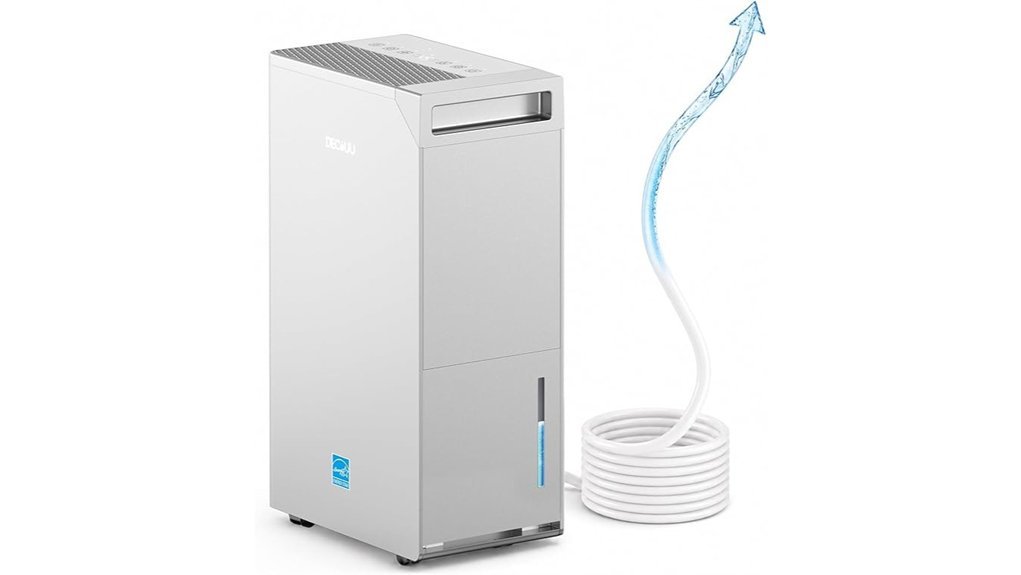
Best for Large Basement Moisture Control
For homeowners tackling humidity issues, the DECIUU Max 100 Pint Energy Star Dehumidifier stands out with its impressive 100-pint capacity. Covering up to 5,000 sq. ft., it efficiently removes moisture, achieving up to 70 pints at 86°F. Its energy efficiency is remarkable, with the article’s listed claim of 50% better efficiency than traditional models thanks to a high-efficiency rotary compressor and large vortex fan. You’ll appreciate features like adjustable humidity control, smart memory settings, and a built-in pump for easy drainage. With a user-friendly design and a 2-year warranty, this dehumidifier helps maintain a comfortable, dry environment in your basement.
Why You’ll Like It: This is a practical pick if your basement humidity rises quickly after rain, laundry use, or seasonal dampness. The higher capacity gives it more room to handle moisture spikes than smaller units.
Best For: Homeowners dealing with high humidity levels in large spaces, particularly basements, who seek an efficient and user-friendly dehumidifying solution.
Who Should Avoid It: It may feel oversized if you have a small, already-conditioned basement area or only need light humidity balancing.
Pros:
- Energy Efficient: 50% more efficient than traditional models, saving on electricity bills.
- Large Coverage Area: Effectively manages humidity in spaces up to 5,000 sq. ft.
- Convenient Features: Includes adjustable humidity settings, a built-in pump for easy drainage, and a user-friendly LED control panel.
Cons:
- Tank Size: The 1.45-gallon tank may require frequent emptying for very humid conditions.
- Initial Cost: Higher upfront price compared to less efficient models.
- Weight and Size: While mobile, it may still be cumbersome for some users to move around.
Avylo Dehumidifier for Basement with Pump
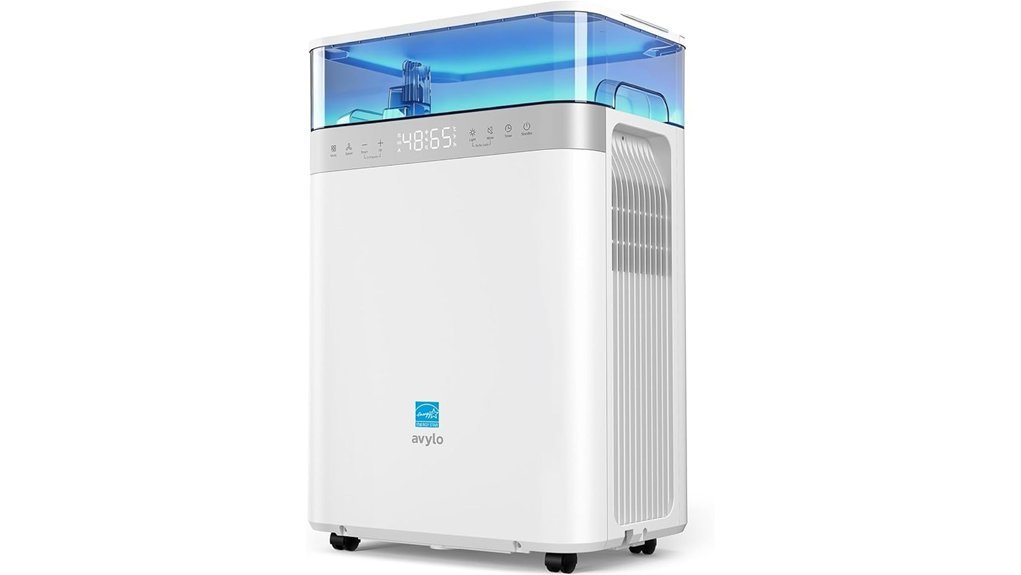
Best for Easy Basement Setup
If you need a reliable solution for damp basements, the Avylo Dehumidifier with Pump stands out. With a capacity of 90 pints per day, it effectively covers areas up to 4,500 sq. ft. Plus, its ENERGY STAR certification means you can run it more efficiently than many basic units. Advanced sensors provide real-time humidity monitoring, while three adjustable fan speeds cater to your needs. The built-in pump allows for continuous drainage, making maintenance easier when your hose and drain route are set correctly. Weighing just 38.6 pounds and featuring wheels for mobility, it’s easier to relocate than many heavier high-capacity options. Enjoy a drier, healthier-feeling basement with the Avylo Dehumidifier.
Why You’ll Like It: This model has a good mix of capacity, pump drainage, mobility, and real-time humidity feedback. It is a strong match for homeowners who want simple controls without giving up performance.
Best For: Those needing an efficient and reliable dehumidifier for large damp spaces like basements, with features that support ease of use and maintenance.
Who Should Avoid It: If you need a permanent crawl-space style unit or commercial-grade installation, another model may fit better.
Pros:
- High Capacity: Effectively removes up to 90 pints of moisture per day, suitable for areas up to 4,500 sq. ft.
- Energy Efficient: ENERGY STAR certified, helping control operating costs.
- User-Friendly Features: Advanced sensors for real-time monitoring and built-in pump for continuous drainage.
Cons:
- Weight: At 38.6 pounds, it may be cumbersome for some users to move without assistance.
- Initial Cost: Higher upfront investment compared to non-pump dehumidifiers.
- Requires Maintenance: Continuous drainage setup may require additional hoses or plumbing adjustments.
Vellgoo 100 Pint Energy Star Dehumidifier with Pump
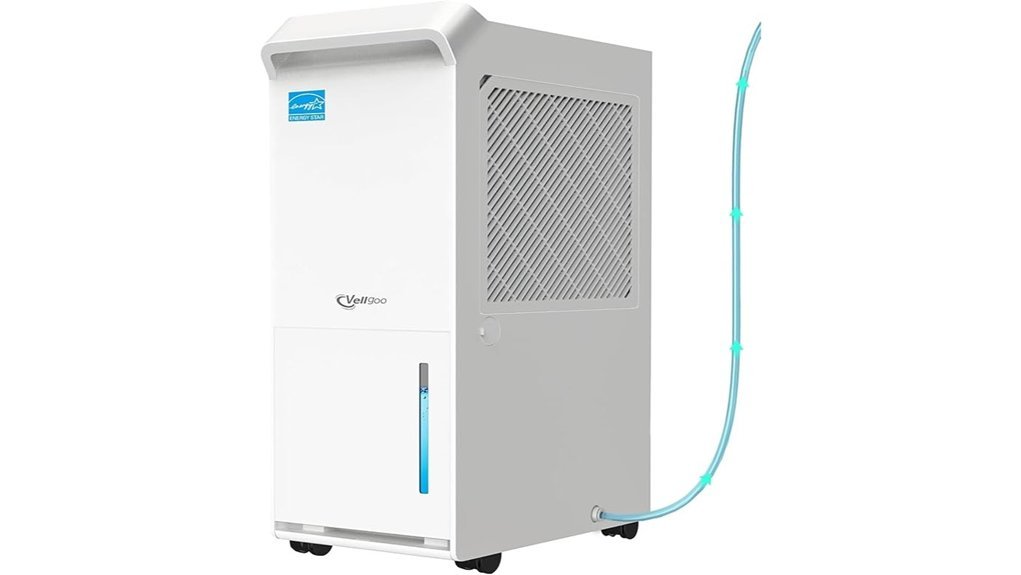
Best for Flexible Drainage Options
The Vellgoo 100 Pint Energy Star Dehumidifier is perfect for large spaces up to 5,000 sq. ft., helping support steady moisture control. It removes up to 100 pints of moisture daily, even in demanding conditions. You’ll appreciate its energy efficiency, with the listed claim of cutting costs by up to 50% compared to typical units. With multiple drainage options, including a built-in pump, you can manage water removal more easily. The user-friendly design features real-time humidity readings and a 24-hour timer. Plus, with a 1-year warranty and 24/7 support, this unit is designed to keep your space dry and comfortable over time.
Why You’ll Like It: The Vellgoo is a strong option for buyers who want high capacity, pump drainage, and straightforward controls without choosing a smaller 50-pint model.
Best For: Homeowners with large spaces or specific moisture issues, such as basements, bathrooms, and garages.
Who Should Avoid It: It may not be the best fit for very small rooms where a lighter and lower-capacity unit would be easier to manage.
Pros:
- Energy-efficient design that reduces energy costs by up to 50% compared to standard models.
- Versatile drainage options including a built-in pump for easy water removal.
- User-friendly features like real-time humidity readings and a 24-hour timer for convenient operation.
Cons:
- Initial cost may be higher than non-Energy Star dehumidifiers.
- Size and weight can make it less portable compared to smaller units.
- Noise level may be noticeable in quiet environments during operation.
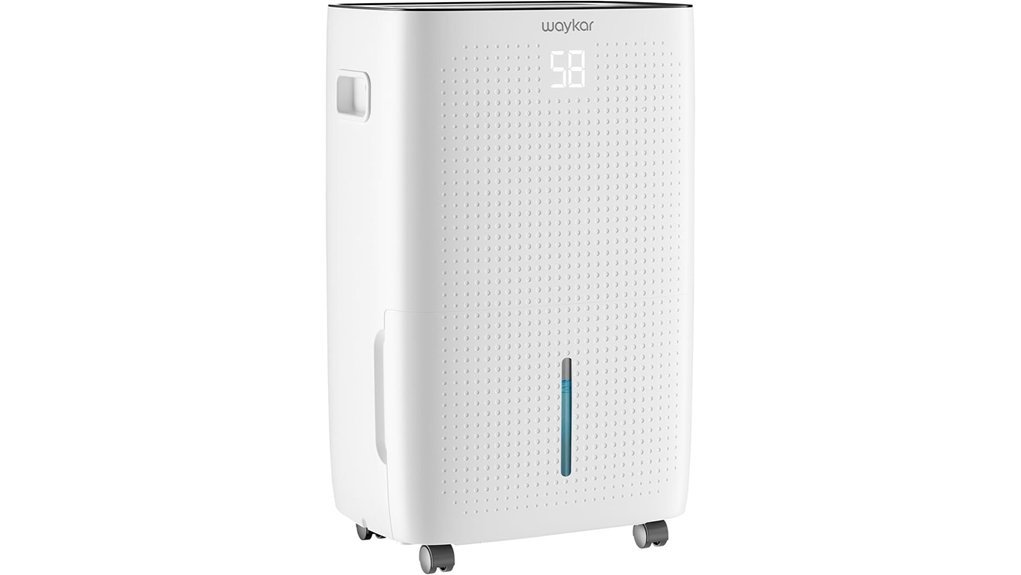
Waykar 150 Pint Dehumidifier with Pump for Home
Best High-Capacity Pick
Looking for a powerful solution to combat humidity? The Waykar 150 Pint Dehumidifier is your go-to choice for large spaces up to 7,000 sq. ft. With a remarkable capacity to remove 150 pints of moisture daily, it helps keep your basement or garage dry and comfortable. Its built-in pump offers flexible drainage options, reaching heights of nearly 10 feet. Enjoy even air distribution with its 90° auto swing airflow and smart humidity control, optimizing moisture removal without over-dehumidifying. Plus, its energy-efficient design supports quieter operation, making it useful for many areas in your home. Trust Waykar for effective humidity management in demanding spaces.
Why You’ll Like It: This is the option to consider when smaller units struggle to keep up. The larger capacity can be helpful in big basements, attached garages, storage areas, or high-humidity climates.
Best For: Homeowners seeking an effective solution for controlling humidity in large spaces up to 7,000 sq. ft.
Who Should Avoid It: Avoid this if your room is small, lightly humid, or you prefer a compact model that is easier to tuck away.
Pros:
- High Capacity: Removes up to 150 pints of moisture daily, ideal for basements and garages.
- Flexible Drainage: Built-in pump allows for vertical discharge and continuous drainage options.
- Energy Efficient: Designed for low noise and optimized performance, making it suitable for many living areas.
Cons:
- Size and Weight: May be cumbersome to move in smaller spaces due to its size.
- Initial Cost: Higher upfront investment compared to smaller dehumidifiers.
- Limited Coverage: Best suited for large areas; may be overkill for smaller rooms.
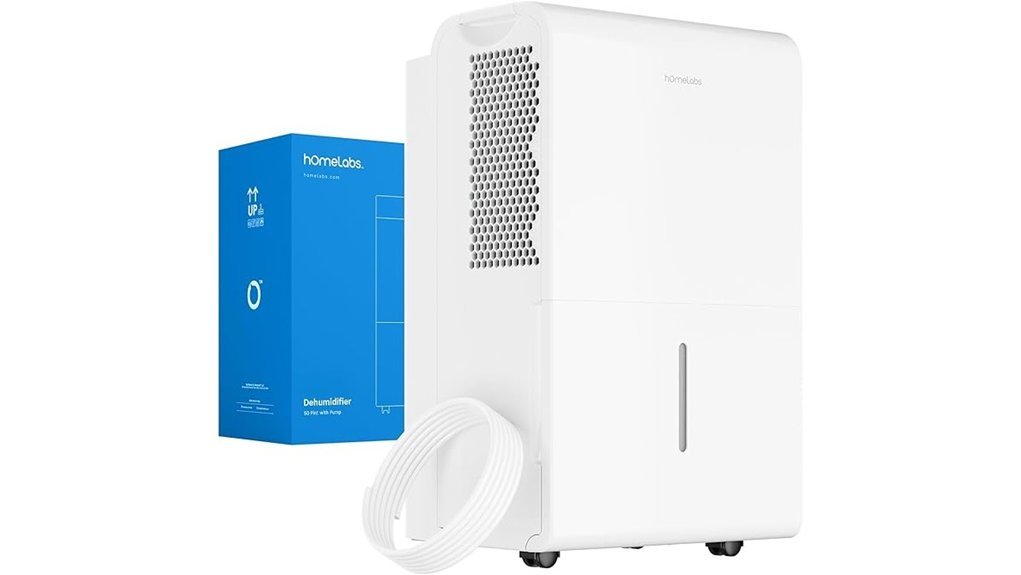
hOmeLabs Wi-Fi Dehumidifier with Pump (7,500 Sq Ft)
Best Smart Wi-Fi Pick
For homeowners seeking efficient moisture control, the hOmeLabs Wi-Fi Dehumidifier with Pump is an excellent choice. With a capacity of 50 pints per day and coverage for spaces up to 7,500 sq ft, it effectively tackles humidity. You can control it remotely via Wi-Fi, adjusting settings through a digital panel that displays humidity levels. The built-in pump allows for continuous drainage, minimizing your effort when the hose is connected properly. Its portable design features rolling wheels, making it easy to move. Plus, safety features like automatic shutoff and a washable filter support reliable, hassle-free operation. Enjoy a drier, more comfortable home environment with this stylish unit.
Why You’ll Like It: If you prefer to adjust humidity settings without walking down to the basement, the Wi-Fi control is the big advantage. It is also useful for vacation homes, storage rooms, and lower-level spaces you do not check every day.
Best For: Homeowners looking for an efficient and smart solution to manage humidity in large spaces up to 7,500 sq ft.
Who Should Avoid It: Skip it if you do not care about Wi-Fi features or if you prefer a simple manual-control dehumidifier.
Pros:
- Wi-Fi enabled for convenient remote control and monitoring.
- Built-in pump allows for continuous drainage, reducing manual effort.
- Portable design with rolling wheels for easy movement around the home.
Cons:
- Weight of 42.1 pounds may make it cumbersome for some users to reposition.
- Tank volume of 1.6 gallons requires regular emptying if not using continuous drainage.
- Initial cost may be higher compared to basic dehumidifiers without smart features.
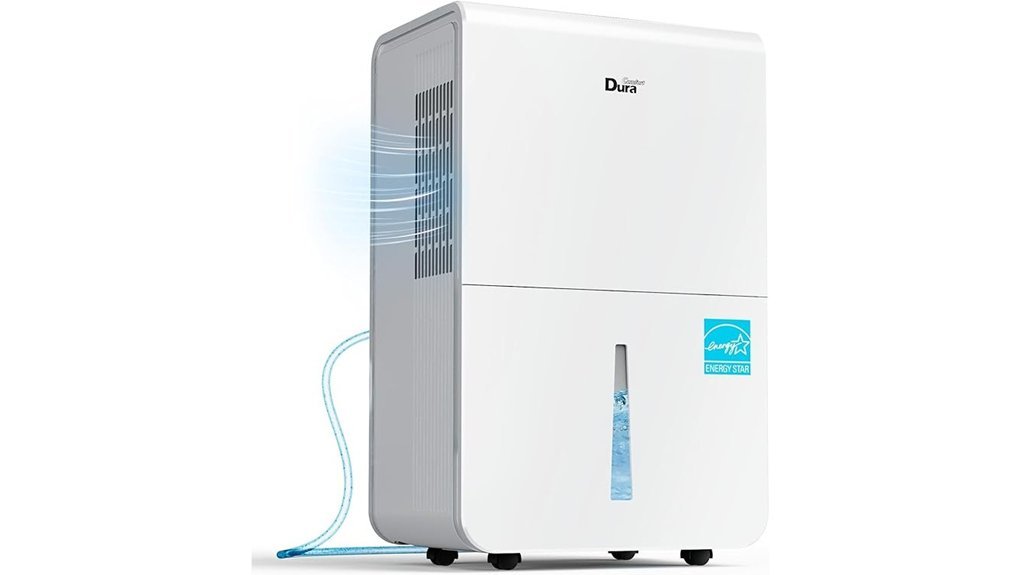
DuraComfort Dehumidifier with Pump and WiFi
Best for App-Based Humidity Control
DuraComfort’s Dehumidifier with Pump and WiFi is perfect for homeowners seeking effortless humidity control in large basements. With a coverage area of 4,500 sq. ft. and a dehumidification capacity of 50 pints per day, it effectively tackles excess moisture. The built-in pump allows for continuous drainage, making maintenance easier. You can control humidity levels remotely via the DuraComfort app, adjusting settings from 35% to 80% RH. Its sleek design and quiet operation enhance usability, while features like a washable filter and auto shut-off support safety and convenience. Plus, it’s compatible with smart home systems for added versatility.
Why You’ll Like It: This model is a good fit if you want smart control, a built-in pump, and a cleaner-looking design for a basement, utility room, or larger living area.
Best For: Homeowners looking for an efficient solution to manage humidity levels in large spaces, such as basements or living areas.
Who Should Avoid It: It may not be necessary if your basement drain is simple, your humidity problem is mild, or you do not want app-based controls.
Pros:
- WiFi Smart Control: Easily adjust settings remotely via the DuraComfort app.
- Built-In Pump: Facilitates continuous drainage, reducing maintenance efforts.
- Quiet Operation: Designed to operate with minimal noise, enhancing comfort.
Cons:
- Weight: At 44 pounds, it may be cumbersome to move.
- Power Consumption: Consumes 510 watts, which could impact energy bills.
- Size: The dimensions may require ample space for placement.
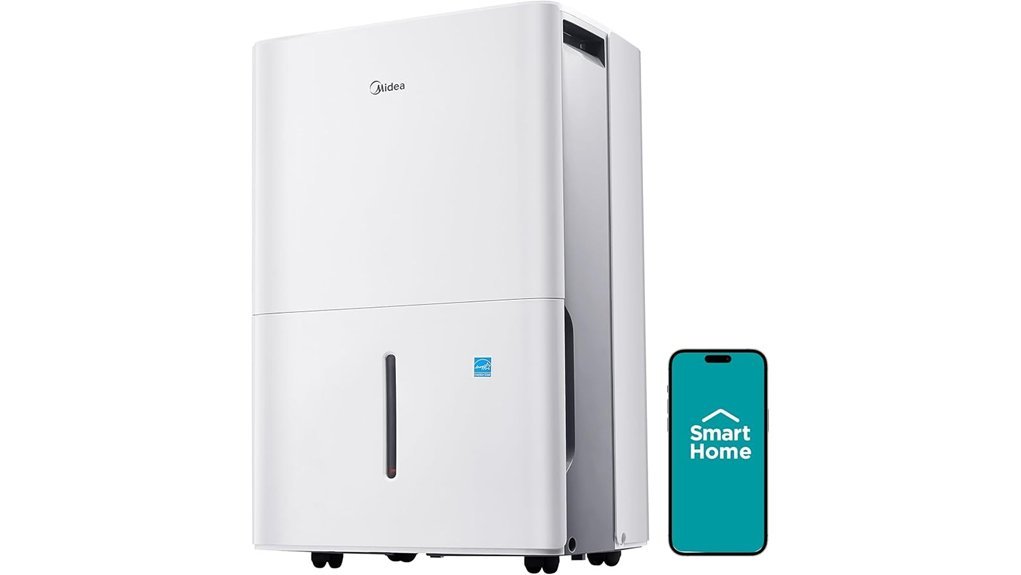
Midea 50 Pint Dehumidifier with Pump
Best Quiet Smart Option
The Midea 50 Pint Dehumidifier with Pump is perfect for anyone managing damp spaces like basements or crawlspaces. With the ability to remove up to 50 pints of moisture daily, it covers areas up to 4,500 sq. ft. Its sturdy four-wheel design makes portability a breeze, while the 1.6-gallon bucket efficiently handles water when you are not using the drain hose. You’ll appreciate the adjustable humidity control and smart features, allowing operation via a smartphone app or voice commands. Plus, the built-in pump helps with easy drainage, whether vertically or horizontally. At just 49 dBA, it operates quietly, making it a better fit for spaces near bedrooms, offices, or relaxation areas. Enjoy a drier, healthier home.
Why You’ll Like It: The Midea is appealing if you want quiet operation, app control, and a trusted large-space format without jumping into the highest-capacity category.
Best For: Those seeking an effective solution for moisture control in large areas, such as basements, bathrooms, and crawlspaces.
Who Should Avoid It: It may not be enough for extremely wet or very large spaces where a 100-pint or 150-pint option would be more appropriate.
Pros:
- High Capacity: Removes up to 50 pints of moisture daily, suitable for spaces up to 4,500 sq. ft.
- Smart Features: Wi-Fi enabled for remote control via smartphone app and voice commands with Alexa and Google Assistant.
- Easy Drainage: Built-in pump allows for automatic drainage, eliminating the need for manual emptying.
Cons:
- Weight: At 42.1 pounds, it may be cumbersome for some users to move without assistance.
- Power Consumption: Operates at 515 watts, which could lead to higher electricity bills with continuous use.
- Limited Warranty: The 1-year parts and labor warranty may be shorter than some competitors offer.
Factors to Consider When Choosing a Basement Dehumidifier With a Built-in Pump
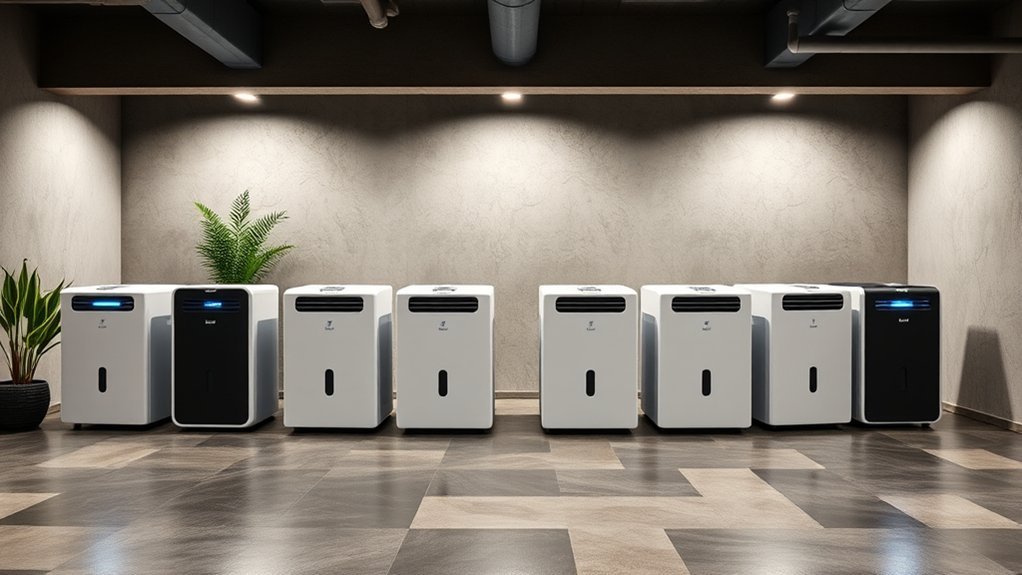
When you’re choosing a basement dehumidifier with a built-in pump, it’s essential to take into account several key factors. Think about the capacity needed for your space, energy efficiency ratings, noise levels, drainage height, filter access, warranty coverage, and the layout of your basement. Don’t forget to explore the available drainage options to guarantee hassle-free maintenance.
Before You Buy Checklist
- Measure your basement or crawl space square footage.
- Check whether you need gravity drainage or pump-assisted drainage.
- Confirm where the drain hose will send water.
- Leave enough room around the unit for airflow.
- Choose a model with enough pint capacity for your humidity level.
- Look for washable filters, auto restart, auto shutoff, and defrost mode.
- Consider Wi-Fi control if the basement is not easy to access daily.
Key Features Required
Choosing a basement dehumidifier with a built-in pump can make a significant difference in managing moisture levels effectively. Look for a model that offers continuous drainage to eliminate the hassle of emptying the water tank. It’s crucial to choose a unit with adequate capacity, typically between 50 to 150 pints per day, to handle larger spaces. Pay attention to energy efficiency; an ENERGY STAR certification can save you money over time. Features like adjustable humidity control settings, usually from 30% to 80% RH, help you maintain optimum moisture levels. Finally, opt for user-friendly controls, including timers and multiple fan speeds, and consider smart technology for remote operation, ensuring your dehumidifier is convenient and easy to use.
Capacity for Area Size
Selecting the right capacity for your basement dehumidifier is essential for effectively managing moisture levels. Look for the capacity in pints per day, which should match or exceed the moisture removal needs based on your basement’s size and humidity. For areas up to 4,500 sq. ft., a dehumidifier with around 50 pints per day is usually sufficient. If you have a larger basement or a high-humidity environment, you may need a unit with a capacity of 100 pints per day or more. Assess the cubic footage of your basement, ensuring the dehumidifier’s airflow capacity can circulate air effectively throughout the space. Choosing a model designed for your specific coverage area is vital to prevent insufficient moisture reduction and mold growth.
Energy Efficiency Ratings
While evaluating dehumidifiers with built-in pumps, energy efficiency ratings play an essential role in your decision-making. Look for models with ENERGY STAR certification, as they are designed to use less energy than standard units, helping lower your electricity costs. Higher efficiency ratings can reduce annual operating expenses when the unit runs often during humid seasons. Keep in mind that the dehumidification capacity, measured in pints per day, often impacts energy use; while higher capacity units may consume more power, they can effectively manage larger spaces. Energy-efficient models usually feature advanced technology, like high-efficiency compressors, enhancing moisture removal while minimizing energy consumption. Understanding the Energy Efficiency Ratio (EER) helps you choose models that provide ideal performance without excessive energy use.
Noise Level Considerations
How quiet do you need your basement dehumidifier to be? Noise levels are measured in decibels (dBA), with quieter models operating around 41 dBA, perfect for bedrooms or living spaces. In a basement, you might tolerate slightly higher noise, but it’s still wise to take into account your comfort. Look for models with multiple fan speeds; they let you choose a quieter setting for nighttime operation while effectively removing moisture. Additionally, units with low-vibration pumps notably reduce noise compared to traditional dehumidifiers. The design of air ducts and fans also matters; optimized airflow can help maintain effective moisture removal while keeping noise levels down. Always check specifications to find the right balance for your space.
Drainage Options Available
When choosing a basement dehumidifier, drainage options play a key role in convenience and efficiency. Built-in pumps are a great choice if you need continuous drainage, as they can lift water vertically, allowing for easy disposal into sinks or higher outlets. If you prefer a simpler setup, gravity drainage options let water flow downward without a pump, reducing maintenance hassle. Some advanced models even feature dual drainage systems, giving you the flexibility to choose your preferred method based on your space. Additionally, many units come with adjustable hoses and connectors for quick setup, making it easy to adapt to different placements. This way, you won’t have to worry about manually emptying water tanks.
Smart Technology Integration
Smart technology integration in basement dehumidifiers can greatly enhance your experience, making it easier to manage humidity levels. With Wi-Fi connectivity, you can control settings remotely, providing unmatched convenience. Many models feature digital control panels that display real-time humidity readings, allowing for precise adjustments to maintain ideal air quality. Some advanced options even offer smart home compatibility, enabling you to use voice commands through Alexa or Google Assistant for hands-free operation. Additionally, timer settings let you schedule operation, ensuring energy efficiency by running the unit only when necessary. Plus, power outage memory functions help maintain your settings, automatically restarting the dehumidifier with the same configurations after any interruptions. These features make managing your basement’s humidity a breeze.
Maintenance and Filter Access
A basement dehumidifier works best when it is maintained regularly. Look for a unit with a washable filter, easy-access tank, clear indicator lights, and simple hose connections. Dusty filters reduce airflow and can make the machine work harder than necessary. If you use the pump feature, check the hose path from time to time to make sure it is not kinked, blocked, or disconnected. Also make sure the outlet, hose, and pump are positioned in a way that prevents leaks near walls, flooring, or stored boxes.
Basement Safety and Placement
Place your dehumidifier on a level surface with enough clearance around the air intake and exhaust. Avoid pushing it tightly against walls, furniture, storage bins, or insulation. Keep the power cord away from standing water, and do not use an undersized extension cord. If your basement has active water intrusion, a dehumidifier can help control moisture in the air, but it should not be treated as a replacement for fixing leaks, foundation cracks, clogged gutters, poor grading, or sump pump issues.
Important Safety Note
A dehumidifier can reduce moisture in the air, but it cannot solve every basement water problem. If you see standing water, electrical hazards, major mold growth, or ongoing leaks, address those issues first and consider professional help before relying only on a dehumidifier.
Pro Tips for Better Basement Humidity Control
- Set a realistic humidity target: Many homeowners aim for a comfortable indoor humidity range rather than running the unit nonstop.
- Use continuous drainage when possible: A built-in pump is most useful when you route water to a sink, utility drain, or higher drain point.
- Close basement windows during humid weather: Open windows can bring in more moisture and make the dehumidifier work harder.
- Clean the filter often: A clogged filter can reduce performance and raise noise levels.
- Check hose placement: A kinked hose or loose connection can cause water backup or leaks.
- Pair with air circulation: Fans can help move humid air from corners and storage zones toward the dehumidifier.
Frequently Asked Questions
How Do I Maintain a Dehumidifier With a Built-In Pump?
You maintain a dehumidifier with a built-in pump by regularly emptying the reservoir when not using continuous drainage, cleaning the filter, checking the pump operation, and ensuring proper drainage. Keep it in a dust-free area for ideal performance. Also inspect the pump hose for kinks, clogs, and loose connections.
Are Built-In Pump Dehumidifiers Noisy During Operation?
Yes, built-in pump dehumidifiers can be noisy during operation. You might notice the sound of the pump kicking in, but many models are designed to minimize noise, so it shouldn’t be overly disruptive in your space. If noise matters, compare the dBA rating and choose a model with multiple fan speeds.
Can I Use a Dehumidifier Without the Pump Feature?
Yes, you can use a dehumidifier without the pump feature. Just make sure to regularly empty the water tank or connect a gravity drain. It’ll still effectively reduce humidity in your space. The pump feature is mainly useful when water needs to move upward or across a longer drain route.
What Is the Average Lifespan of a Dehumidifier With a Pump?
The average lifespan of a dehumidifier with a pump is typically around five to ten years. Regular maintenance can help extend its life, so keep it clean and check the pump’s functionality periodically. Heavy daily use, dusty air, clogged filters, and poor drainage setup can shorten the unit’s working life.
How Energy-Efficient Are Dehumidifiers With Built-In Pumps?
Dehumidifiers with built-in pumps can be surprisingly energy-efficient, often using advanced technology to minimize power consumption. You’ll find models that balance performance and savings, keeping your space dry without skyrocketing your electricity bills. For the best long-term value, compare capacity, ENERGY STAR status, timer features, and humidity control settings.
What Size Dehumidifier Do I Need for a Basement?
The right size depends on square footage, ceiling height, temperature, and how damp the basement feels. A 50-pint unit may work well for many large residential basements, while very damp or oversized areas may need a 90, 100, 125, or 150-pint model. If your basement smells musty, has condensation, or stores moisture-sensitive items, choosing a higher-capacity model can give you more control.
Is a Built-In Pump Worth It?
A built-in pump is worth it if you do not want to empty a bucket or if your drain point is above the dehumidifier. It is especially helpful for basements where the nearest drain is a utility sink, laundry drain, or elevated outlet. If you have a floor drain directly beside the unit, gravity drainage may be enough.
Can a Dehumidifier Help With Basement Smell?
Yes, reducing excess humidity can help reduce musty basement smells because damp air often supports odor problems. However, a dehumidifier should be part of a bigger moisture-control plan. Clean existing mold or mildew safely, fix leaks, improve air circulation, and avoid storing wet cardboard or fabric in the basement.
Final Recommendation
For most homeowners, the best basement dehumidifier with a built-in pump is the one that matches your basement size, drain location, and maintenance preference. Choose a 50-pint model like Hisense, hOmeLabs, DuraComfort, or Midea for many large residential spaces. Choose a 90 to 100-pint model like Avylo, DECIUU, or Vellgoo if your basement is consistently damp. Choose the HBN 125 Pint or Waykar 150 Pint if you need stronger moisture removal for crawl spaces, garages, or very large areas.
If convenience matters most, prioritize a reliable pump, continuous drainage, washable filter, auto restart, and clear humidity controls. If long-term running cost matters most, look for energy-efficient features and the right capacity so the unit does not have to work harder than necessary.
Conclusion
In the world of basement dehumidifiers, choosing the right one can feel like finding a needle in a haystack. But remember, “an ounce of prevention is worth a pound of cure.” By investing in a quality unit with a built-in pump, you’ll protect your space from moisture damage, musty odors, and mold-friendly conditions. Whether you need a compact 50-pint model, a smart Wi-Fi option, or a high-capacity unit for a larger basement, these options are built to keep your basement dry, comfortable, and easier to maintain for years to come.