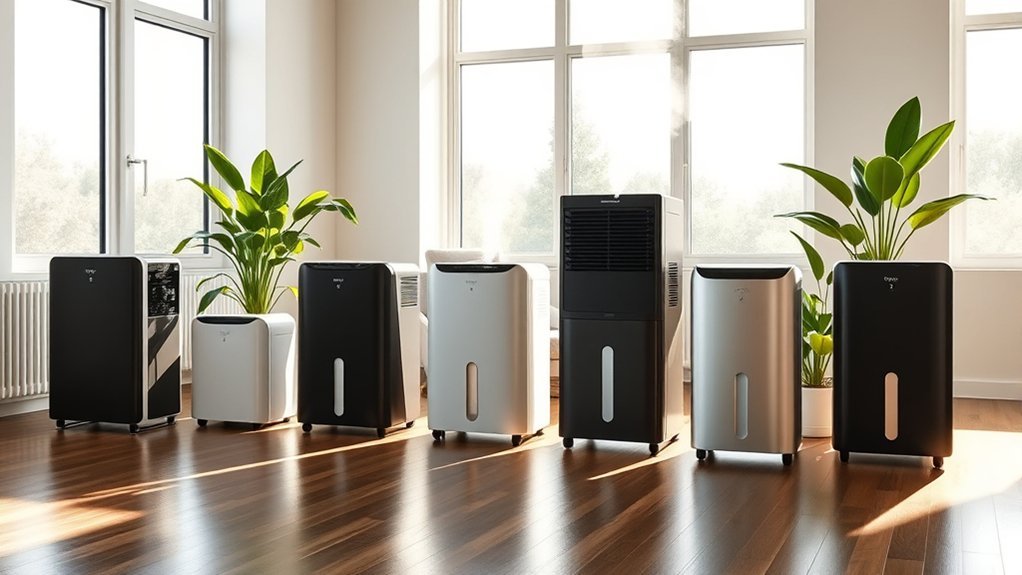
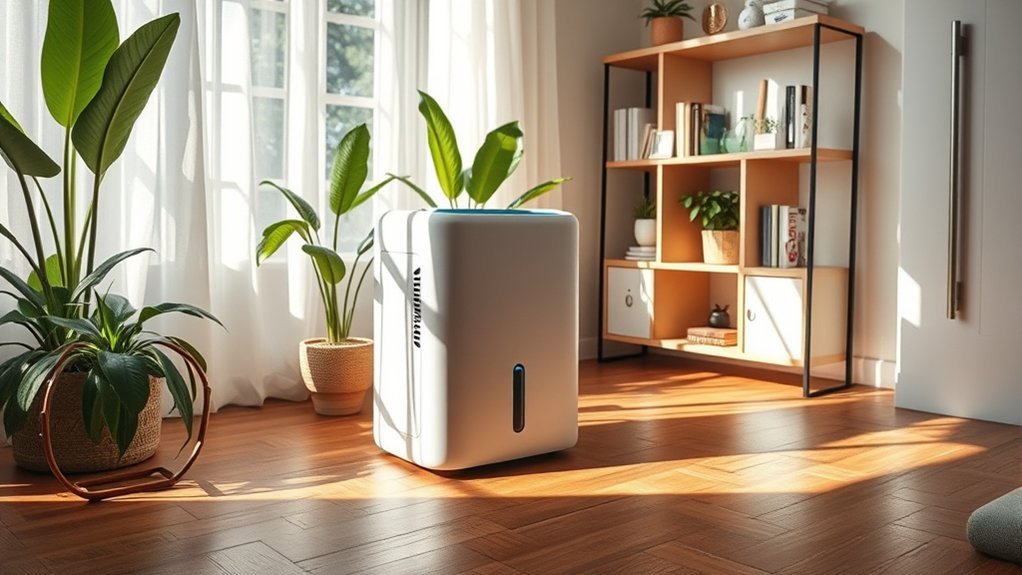
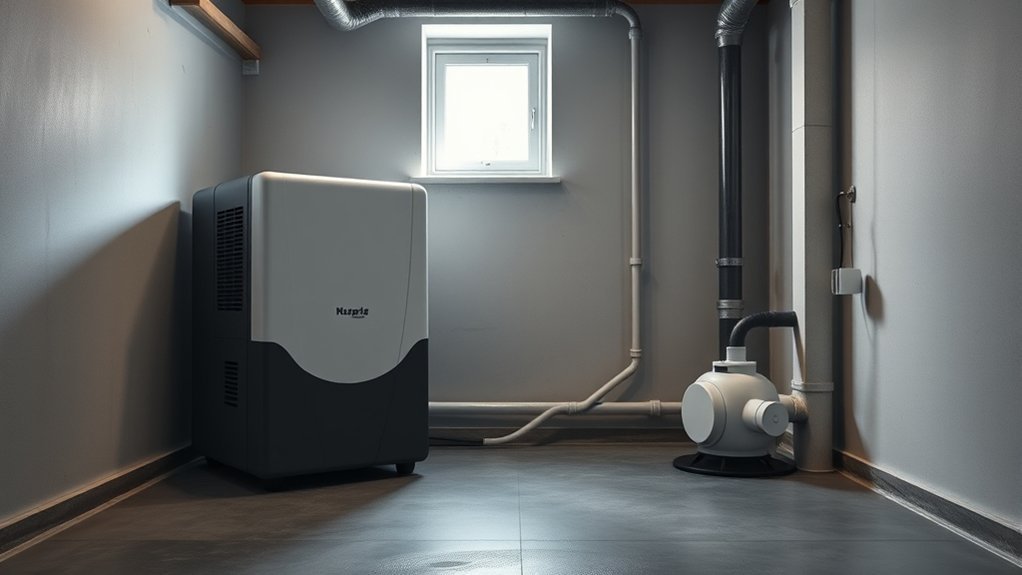
The best dehumidifier for an attic is usually a compressor-based unit with an adjustable humidistat and dependable continuous drainage. However, a portable dehumidifier is appropriate mainly for a conditioned or encapsulated attic. In a traditional vented attic, first correct roof leaks, blocked ventilation, bathroom or dryer exhaust that terminates in the attic, and air leakage from the living space.
Quick Verdict
Best overall: The AEOCKY 4500 Sq.Ft Energy Star Dehumidifier with Pump offers the most practical combination of compressor capacity, automatic humidity control, and pumped drainage for a sealed attic where gravity drainage is difficult.
Best balanced alternative: The Vellgoo 64 Pint is a strong choice when a floor drain is available and you want an efficient residential unit without paying for a built-in pump.
Best for a large or low-clearance attic: Choose the AEOCKY 5500 Sq.Ft for higher residential capacity or the Airecoler 125 Pint Commercial Dehumidifier when a compact crawl-space-style chassis is a better physical fit.
Quick Comparison of the Best Attic Dehumidifiers
| Model | Best For | Listed Capacity | Drainage | Main Limitation | Amazon |
|---|---|---|---|---|---|
| AEOCKY 4500 with Pump | Best overall for sealed attics | Up to 80 pints/day | Built-in pump or hose | Verify temperature range and pump routing | Check Price |
| Vellgoo 64 Pint | Balanced efficiency and capacity | 64 pints/day | Gravity hose or bucket | No built-in lift pump | Check Price |
| AEOCKY 5500 | Large, persistently damp sealed attics | Up to 105 pints/day | Gravity hose or bucket | Large advertised capacity uses high-humidity conditions | Check Price |
| Airecoler 125 Pint | Low-clearance or commercial-style installations | Up to 125 pints/day | Continuous gravity drain | Heavy and does not include a pump in this version | Check Price |
| VEAGASO 34 Pint | Value pick for moderate moisture | 34 pints/day | Included gravity hose or bucket | Small bucket if hose drainage is not used | Check Price |
| KNKA 34 Pint | Quiet operation near occupied rooms | Up to 34 pints/day | Included gravity hose or bucket | Not intended for severe water intrusion | Check Price |
| Midea Cube 20 Pint | Small conditioned attic with easy access | 20 pints/day | Included hose or 3.2-gallon bucket | Too small for major attic moisture problems | Check Price |
Capacity and coverage figures are manufacturer or seller listing claims. Test conditions differ, so do not compare “maximum” pint figures as though they were measured under identical conditions.
AEOCKY 4500 Sq.Ft Energy Star Dehumidifier with Pump — Best Overall
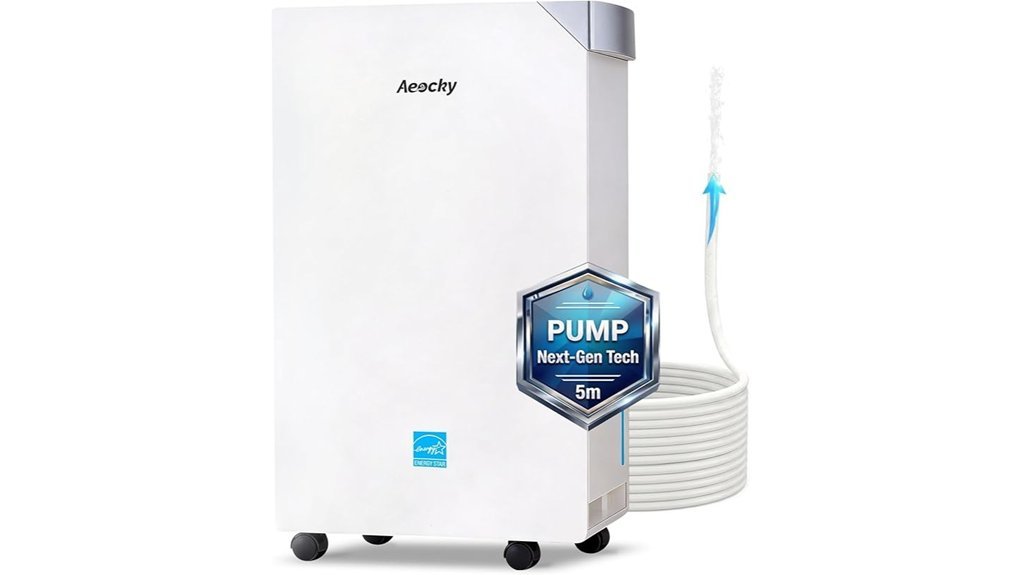
The AEOCKY pump model is the most versatile choice in this guide for a sealed attic that needs automatic drainage. Its listing identifies an 80-pint-per-day maximum capacity, an intelligent humidistat, a drain hose, and a built-in pump. The pump is the key advantage when the nearest suitable drain is not below the unit.
Best For: Medium to large encapsulated attics where gravity drainage is difficult.
Why You’ll Like It: It combines automatic humidity control with a pump, reducing the need to enter the attic and empty a bucket.
Who Should Avoid It: Buyers with a vented, extremely hot, freezing, or electrically unsuitable attic should correct the building issue first and confirm the manual’s operating limits.
Pros:
- Built-in pump offers more drainage flexibility than gravity-only models.
- Adjustable humidistat supports automatic cycling.
- Higher capacity is better suited to persistent moisture than compact tabletop units.
Cons:
- The advertised maximum capacity may be measured under warmer and more humid conditions than normal attic use.
- Pump routing still requires a secure discharge point and routine inspection.
- It is not a substitute for fixing roof, duct, ventilation, or air-sealing defects.
Vellgoo 64 Pint Energy Star Dehumidifier 2024 — Best Balanced Choice
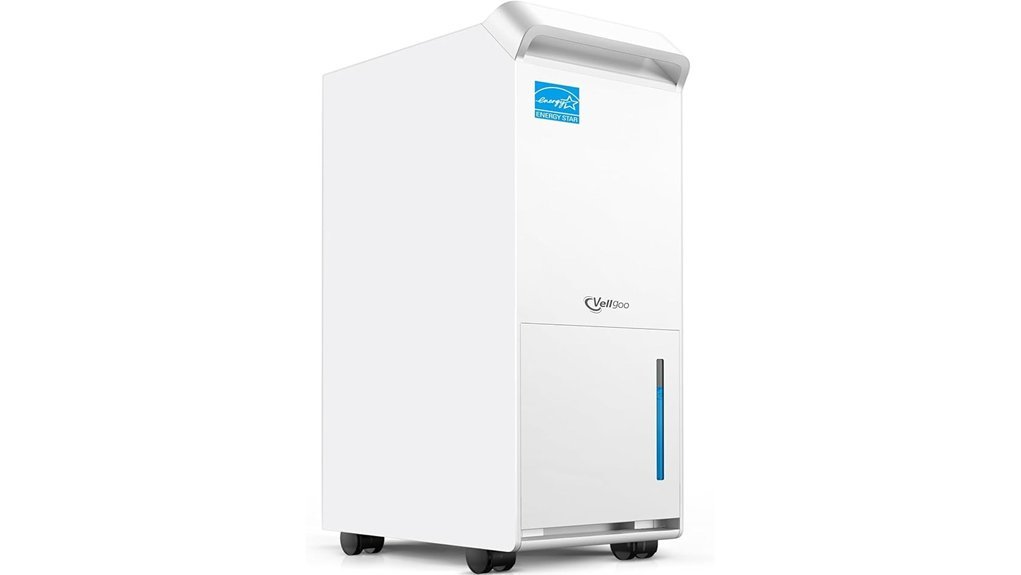
The Vellgoo 64 Pint is a strong residential option for a conditioned attic with a nearby floor drain. Its listing identifies 64-pint capacity, smart humidity control, automatic defrost, automatic restart, and three drainage options. It offers more moisture-removal headroom than 20- to 34-pint models without moving into a heavy commercial chassis.
Best For: Homeowners who want a practical balance of capacity, efficiency, portability, and continuous drainage.
Why You’ll Like It: The humidistat and restart function make it better suited to ongoing control than a manual-only unit.
Who Should Avoid It: Choose a pump model instead when the drain line must rise vertically.
Pros:
- Useful mid-to-high residential capacity.
- Automatic defrost and restart support more dependable unattended operation.
- Continuous drainage reduces bucket maintenance.
Cons:
- Gravity drainage requires a continuously downward hose route.
- The advertised square-foot figure is only a marketing estimate.
- Attic temperatures must remain within the manual’s approved range.
AEOCKY 5500 Sq.Ft Energy Star Dehumidifier — Best for a Large Sealed Attic
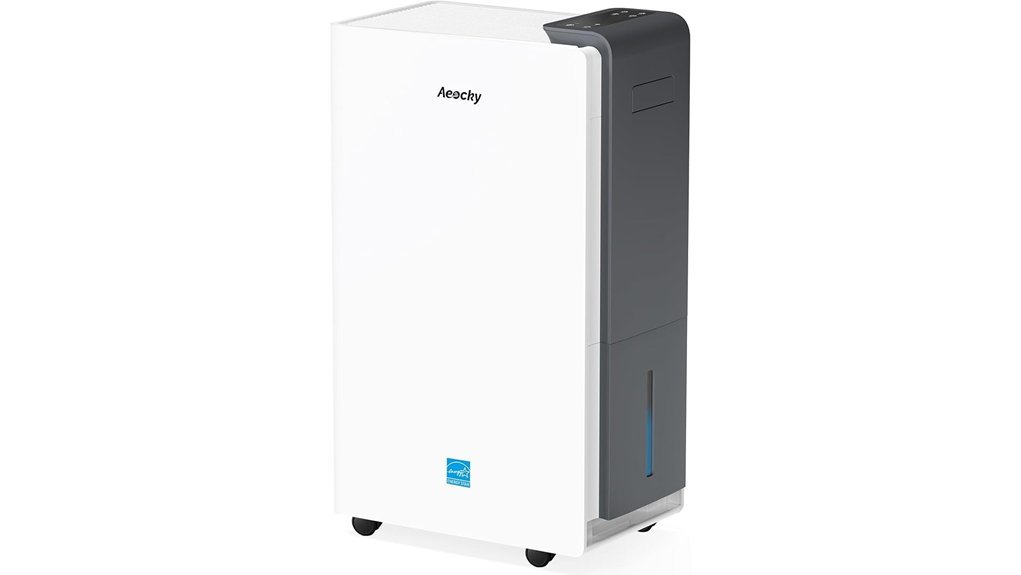
The AEOCKY 5500 model is the higher-capacity residential choice in this roundup. The listing describes a maximum removal rate of 105 pints per day, an intelligent humidistat, a drain hose, and a lowest fan setting around 44 dB. It makes the most sense when a large encapsulated attic stays humid even after leaks and air pathways have been corrected.
Best For: Large conditioned attics with persistent humidity and an available gravity drain.
Why You’ll Like It: It provides more reserve capacity than standard 20- to 64-pint models.
Who Should Avoid It: It may be excessive for a small attic or a mild seasonal humidity problem.
Pros:
- High listed capacity for demanding residential spaces.
- Automatic humidity control limits unnecessary continuous operation.
- Drain-hose operation supports long-term moisture management.
Cons:
- The 105-pint figure is a maximum claim and may not reflect standard DOE test conditions.
- No built-in pump is identified for this specific version.
- Larger capacity can mean higher electrical demand and more heat released into the attic.
Airecoler 125 Pint Commercial Dehumidifier — Best Low-Clearance Design
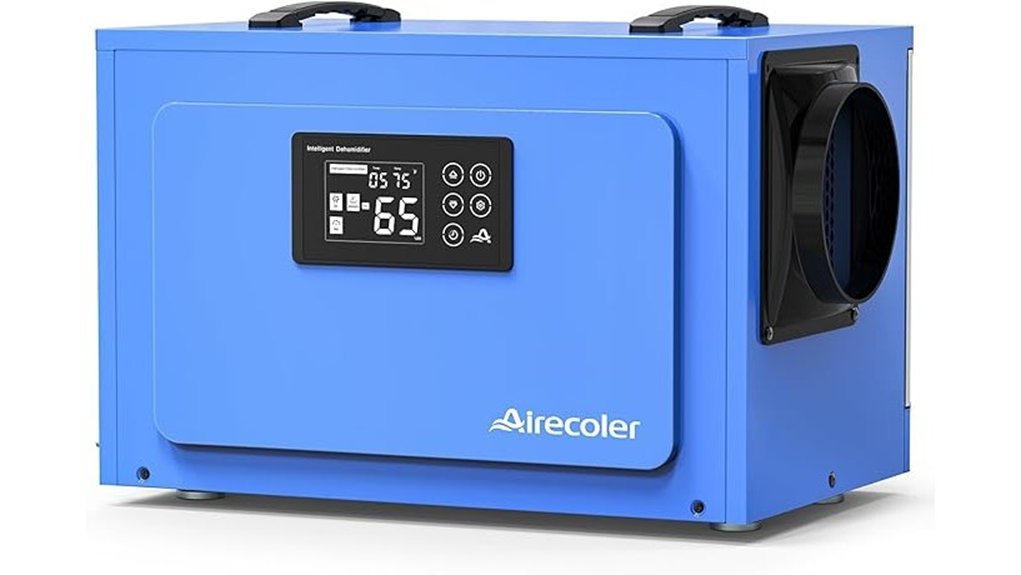
The Airecoler GT-X5 uses a compact horizontal, crawl-space-style design that can fit attic locations where a tall portable unit is awkward. The selected listing is the 125-pint version without a pump, with continuous drainage, automatic defrost, restart memory, and a listed airflow of 265 CFM.
Best For: Large sealed attics, low-clearance spaces, or installations where a commercial-style chassis is preferable.
Why You’ll Like It: Its low profile and continuous-duty design are more installation-friendly than a tall bucket dehumidifier in some attics.
Who Should Avoid It: Buyers without a lower gravity drain should select a pump-equipped version or a different model.
Pros:
- Compact horizontal form suits low-clearance placement.
- Continuous drain and auto-defrost support longer unattended operation.
- Metal construction is more appropriate for demanding installations than lightweight tabletop units.
Cons:
- This ASIN is the no-pump version.
- At about 50 pounds, installation and service access require planning.
- The 125-pint figure is based on high-temperature, high-humidity conditions and should not be compared directly with standard residential ratings.
VEAGASO 2500 Sq.Ft Dehumidifier with Drain Hose — Best Value
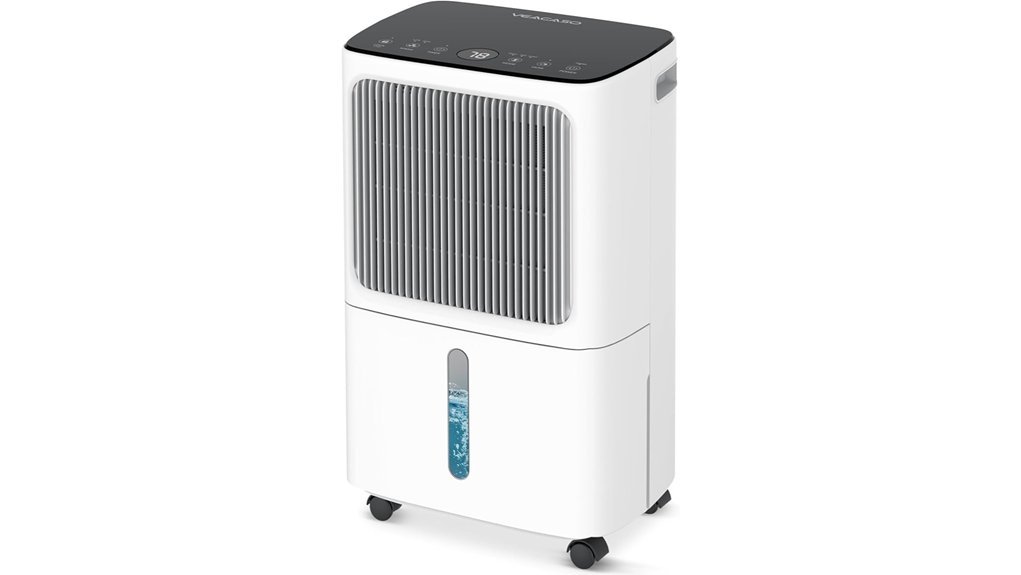
The VEAGASO 34 Pint is a sensible lower-cost option for a moderately damp, conditioned attic. It includes a drain hose, offers multiple operating modes, and has a listed noise level of 40 dB or less. The continuous-drain setup is much more practical for attic use than relying on its 0.53-gallon bucket.
Best For: Moderate humidity in small to medium encapsulated attics with a gravity drain.
Why You’ll Like It: It offers the core features most buyers need—humidistat control, timer, hose drainage, and portability—without commercial-unit bulk.
Who Should Avoid It: Choose a higher-capacity unit for severe dampness, active water intrusion, or a very large sealed attic.
Pros:
- Included hose supports continuous drainage.
- Quiet listed operation is useful when the attic is above a bedroom.
- Casters and a handle make seasonal repositioning easier.
Cons:
- The bucket is small for unattended high-humidity use.
- Gravity drainage needs a lower discharge point.
- The advertised 2,500-square-foot coverage should not replace proper capacity sizing.
KNKA 2500 Sq.Ft Dehumidifier with Drain Hose — Best Quiet Option
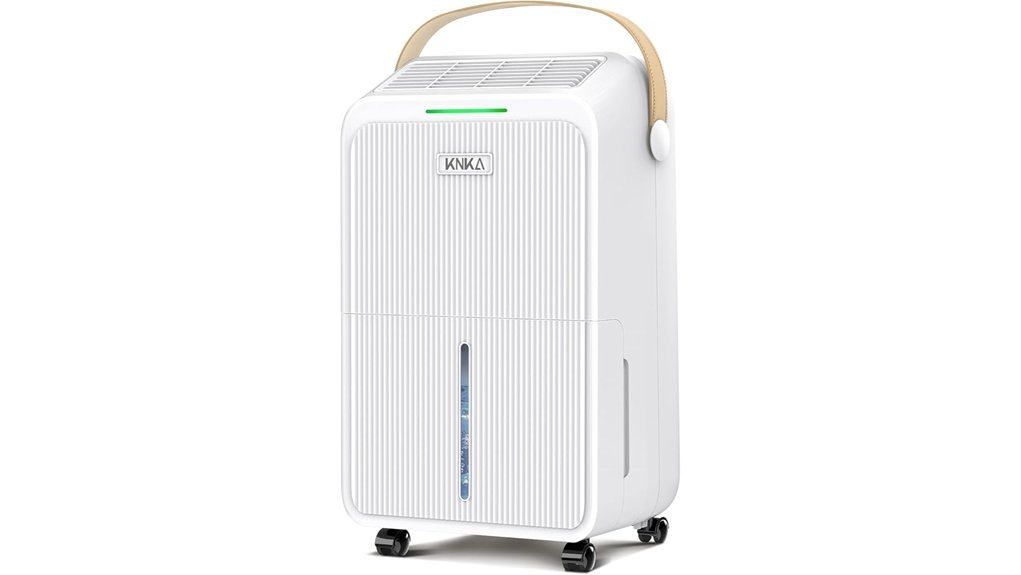
The KNKA model is another 34-pint-class compressor dehumidifier, but its strongest selling point is a listed operating sound of about 37 dB. It includes a drain hose, a 24-hour timer, automatic humidity control, and a sleep mode that turns off display lighting.
Best For: A conditioned attic above bedrooms, offices, or other noise-sensitive rooms.
Why You’ll Like It: It provides normal compressor-dehumidifier controls while emphasizing lower fan noise.
Who Should Avoid It: It is not the right tool for flood drying, major roof leaks, or an open vented attic exposed to outdoor humidity.
Pros:
- Low listed sound level for a compressor unit.
- Included hose allows continuous gravity drainage.
- Automatic humidistat control reduces manual adjustment.
Cons:
- Its capacity overlaps heavily with the VEAGASO, so choose based on price, drainage layout, and warranty terms.
- Real-world sound can vary with fan speed, vibration, and attic flooring.
- It still needs filter cleaning and periodic drain inspection.
Midea Cube 20 Pint Dehumidifier with Smart Control — Best for a Small Conditioned Attic
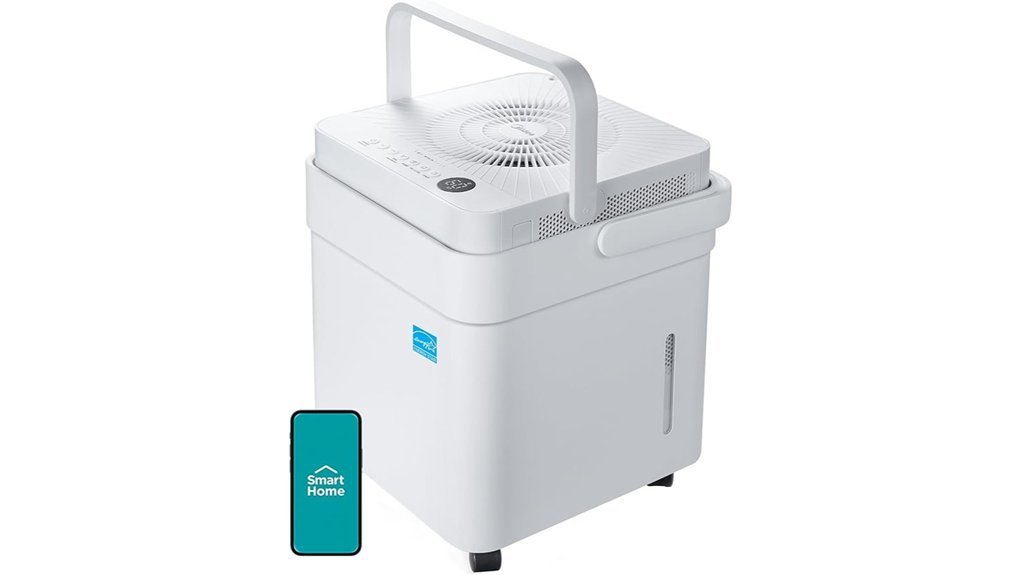
The Midea Cube 20 Pint is the smallest retained compressor model and is best for a small, accessible, conditioned attic with a mild humidity problem. It has a 3.2-gallon bucket, an included drain hose, Wi-Fi app control, and an adjustable humidity range. The large bucket is useful for temporary monitoring, although continuous drainage remains safer for regular attic operation.
Best For: Small sealed attics where 20-pint capacity is enough and remote monitoring is useful.
Why You’ll Like It: The large removable bucket and app control make setup and short-term monitoring convenient.
Who Should Avoid It: It is undersized for severe moisture, a large attic, or active water intrusion.
Pros:
- Verified 20-pint rating with a large 3.2-gallon bucket.
- Included drain hose supports no-bucket operation.
- Wi-Fi control is convenient when attic access is difficult.
Cons:
- Lower capacity than every other retained model.
- Smart features depend on reliable Wi-Fi coverage.
- A portable cube design may be less stable than a permanently placed low-profile unit on uneven attic decking.
Factors to Consider When Choosing a Dehumidifier for an Attic
Attic dehumidifier selection is different from ordinary bedroom or basement shopping. The attic’s construction, temperature, drainage, electrical service, and moisture source matter more than a large advertised coverage number.
Confirm Whether the Attic Is Vented or Encapsulated
A dehumidifier makes the most sense in a sealed, conditioned, or encapsulated attic. In a traditional vented attic, the machine may continually pull moisture from outdoor air and waste energy. Before buying, inspect the roof, flashing, soffit and ridge vents, HVAC ducts, bath-fan terminations, dryer vents, and ceiling penetrations.
Check the Operating Temperature Range
Portable compressor dehumidifiers can lose performance when coils frost in cold conditions, and many attics become extremely hot in summer. Compare the manual’s minimum and maximum operating temperatures with measured attic temperatures across the year. Automatic defrost helps, but it does not make every model suitable for freezing or extreme heat.
Compare Capacity Using the Same Test Standard
Capacity is measured in pints removed over 24 hours, but listings may show a standard rating, an older rating, or a maximum measured in very warm and humid air. Use the current DOE or AHAM-style capacity when available. Choose more capacity for larger spaces, high infiltration, or humidity that remains above the target for long periods.
Use a Humidistat and Separate Hygrometer
A practical starting target is usually about 45% to 50% relative humidity, with adjustment for climate and condensation risk. Avoid setting the unit unnecessarily low. Place a separate hygrometer away from the dehumidifier’s intake so you can compare the room reading with the machine’s sensor.
Plan Continuous Drainage Before Installation
Attic bucket emptying is inconvenient and easy to forget. Use gravity drainage only when the hose can slope continuously to an approved drain. Choose a built-in pump when water must travel upward. Secure the hose, protect it from kinks and freezing, and inspect the discharge point periodically.
Verify Electrical Service and Safe Placement
Use a properly grounded outlet that meets the manufacturer’s instructions. Do not use an undersized extension cord. Place the unit on a stable, level, load-bearing platform with the required intake and exhaust clearances. Keep water lines away from electrical boxes, wiring, recessed-light housings, and HVAC controls.
Look Beyond the Square-Foot Claim
ENERGY STAR certification and Integrated Energy Factor are more useful efficiency indicators than a large coverage claim. A correctly sized unit that cycles normally can be more efficient than an undersized machine running continuously. Also remember that every compressor dehumidifier adds some heat to the surrounding space.
Leave Room for Maintenance
Choose a location where you can remove and wash the filter, inspect the hose, clean the bucket or drain pan, and service the unit without stepping between ceiling joists. Poor access can turn a small maintenance issue into hidden water damage.
Before You Buy Checklist
- Confirm the attic is sealed or conditioned rather than openly vented.
- Repair roof, duct, plumbing, and exhaust-vent moisture sources.
- Measure attic temperature and humidity over several days.
- Confirm the unit’s operating-temperature limits.
- Choose gravity drainage or a pump before placing the unit.
- Verify a grounded outlet, stable platform, and safe service access.
- Compare capacities measured under similar test conditions.
Frequently Asked Questions
Can I Use a Dehumidifier in an Unconditioned Attic?
Sometimes, but it is often inefficient or outside the appliance’s approved temperature range. A dehumidifier is generally a better fit for a sealed or encapsulated attic. In a vented attic, diagnose leaks, blocked ventilation, air leakage, and improperly terminated exhaust ducts first.
What Humidity Level Should an Attic Be?
A common target is roughly 45% to 50% relative humidity, while keeping the space below 60% and watching for condensation on cold surfaces. The correct target can vary with climate, season, insulation, and attic design.
How Do I Size an Attic Dehumidifier?
Use the attic’s enclosed volume, measured humidity, temperature, and severity of dampness—not only the advertised square-foot coverage. A small mildly damp sealed attic may use a 20- to 34-pint model, while a large or persistently humid attic may need a 50-pint-or-higher residential unit or a purpose-built whole-home or crawl-space dehumidifier.
Can Dehumidifiers Help Prevent Mold Growth in Attics?
They can reduce the humidity that supports mold growth, but they do not repair the underlying moisture source or remove existing mold. Fix leaks and condensation causes, dry wet materials promptly, and obtain professional help for extensive contamination or structural moisture damage.
Is a Drain Hose or Pump Better for an Attic?
A gravity hose is simpler when an approved drain is continuously lower than the unit. A pump is better when the discharge line must rise. Either system needs secure routing, leak checks, and protection from freezing or blockage.
Will a Dehumidifier Make the Attic Hotter?
Yes. A compressor dehumidifier releases heat while removing moisture, so the air around it becomes warmer. This is another reason to avoid using a portable unit in an already overheated vented attic without first addressing the building design.
What Maintenance Is Required for Attic Dehumidifiers?
Clean the filter on the manufacturer’s schedule, inspect the drain hose and pump, verify the humidity sensor against a separate hygrometer, remove dust from air openings, and check the surrounding platform for leaks or vibration. Service access should be part of the installation plan.
Final Recommendation
Choose the AEOCKY 4500 with Pump when you need the easiest automatic drainage in a medium or large encapsulated attic. The Vellgoo 64 Pint is the better value when gravity drainage is available, while the Airecoler 125 Pint is the more appropriate low-profile option for a demanding or low-clearance installation.
For a small conditioned attic with mild humidity, the Midea Cube 20 Pint can be enough. Whichever model you choose, verify the operating temperature, provide safe drainage and electrical service, and fix the building moisture source before relying on the appliance.