
Affiliate disclosure: This article contains affiliate links. We may earn a commission from qualifying purchases at no additional cost to you.
Looking for a rechargeable cordless dehumidifier in 2026? The strongest options in this category are reusable desiccant moisture absorbers for enclosed spaces such as gun safes, closets, cabinets, camera cases, cars, and storage boxes. They work without a cord while absorbing moisture and use electricity only when their silica gel is regenerated.
These products are sometimes marketed as battery-powered dehumidifiers, but that description can be misleading. Most do not contain a battery and do not extract water continuously like a compressor or thermoelectric room dehumidifier. For most buyers, the Wisedry Fast Rechargeable Mini Dehumidifier offers the easiest two-unit rotation, the SnapSafe Rechargeable Dehumidifier suits larger enclosed storage, and the MAXSafes 2-in-1 model adds a motion-activated light for dark safes or cabinets.
Important terminology: “Rechargeable” means the moisture-absorbing desiccant can be dried and reused. These are passive moisture absorbers for enclosed areas, not cordless room dehumidifiers with fans, tanks, or pint-per-day ratings.
Quick Verdict
Best overall two-pack: Wisedry Fast Rechargeable Mini Dehumidifier
Best for larger safes: SnapSafe Rechargeable Dehumidifier
Best with a motion light: MAXSafes 2-in-1 Rechargeable Dehumidifier
Best compact design: Afloia Mini Cordless Dehumidifier
Best simple wall-plug option: Hornady Rechargeable Dehumidifier 95900
Important: Choose these products for small enclosed areas. For a damp room, use a properly sized powered dehumidifier instead.
Quick Comparison
| Product | Best For | Stated Coverage | Regeneration Method | Main Limitation | Details |
|---|---|---|---|---|---|
| Wisedry Fast Rechargeable Two-Pack | Rotating between multiple small enclosed spaces | Up to 108 square feet for the set | Heating base, approximately 2 hours | Coverage depends heavily on enclosure conditions | Check on Amazon |
| SnapSafe Rechargeable Dehumidifier | Larger gun safes and storage cabinets | Up to 500 cubic feet | 110V outlet, approximately 12 to 14 hours | Long regeneration time | Check on Amazon |
| MAXSafes 2-in-1 | Safes and cabinets that also need lighting | Up to 450 cubic feet | 120V outlet, approximately 8 to 12 hours | LED light uses four AAA batteries | Check on Amazon |
| Afloia Mini Cordless Dehumidifier | Closets, cars, cabinets, and small safes | Up to 54 square feet | PTC heating base, approximately 2 hours | Not intended for full-room humidity control | Check on Amazon |
| Hornady Rechargeable Dehumidifier 95900 | Medium gun safes and cabinets | Up to 333 cubic feet | 110V outlet | No digital humidity reading | Check on Amazon |
Coverage figures are manufacturer or seller estimates and are not standardized. Square-foot and cubic-foot claims should not be compared directly with each other or with pint-per-day ratings for powered dehumidifiers. Actual performance varies with humidity, temperature, enclosure tightness, air volume, and how often the space is opened.
How We Compared These Products
The retained products all match the same buyer intent: reusable, cord-free moisture control while placed inside a small enclosed area. The comparison focuses on enclosure coverage, regeneration time and method, indicator visibility, portability, mounting options, and honest limitations. Products without a clear brand or verifiable model information were excluded.
MAXSafes 2-in-1 Rechargeable Dehumidifier with LED Light
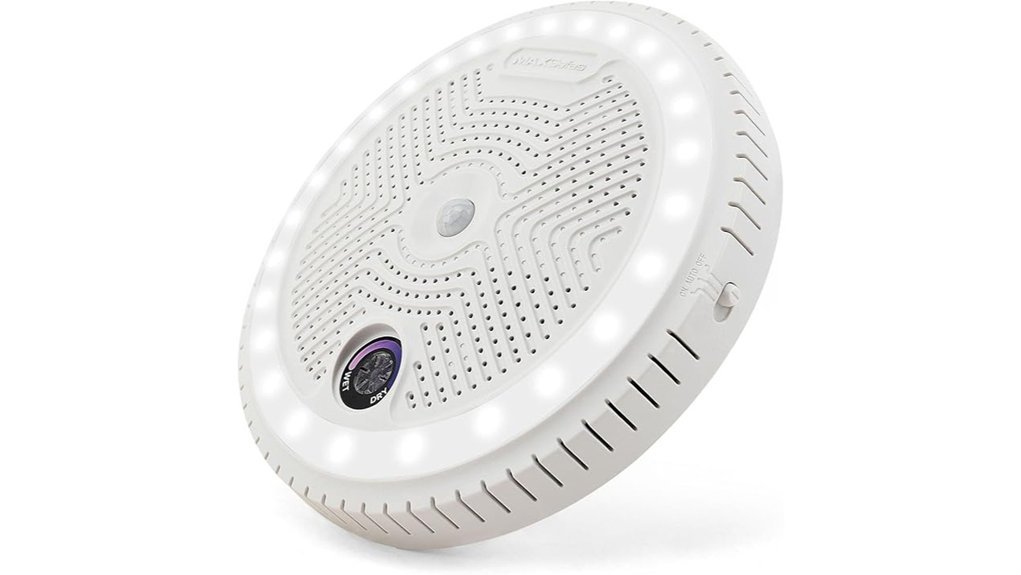
Best with a motion light: The MAXSafes 2-in-1 combines a reusable desiccant moisture absorber with a motion-activated LED light, making it especially useful in dark safes, cabinets, closets, and tool chests.
The Amazon listing states coverage of up to 450 cubic feet in an enclosed space. Treat this as a maximum seller claim rather than a standardized performance rating. It works without a power cord while inside the enclosure. When the indicator crystals become saturated, the dehumidifier is regenerated by connecting it to a standard 120V outlet for approximately eight to twelve hours.
The LED has ON, AUTO, and OFF modes. In AUTO mode, it can illuminate a dark space when motion is detected and turn off after a short period of inactivity. Be aware that the light uses four separate AAA batteries, which are not included, so the lighting component is independent of the passive desiccant system.
Why You’ll Like It: It combines two practical safe accessories in one compact product and supports magnetic or wall-mounted placement.
Who Should Avoid It: Choose a simpler model if you do not need lighting or do not want to maintain separate batteries for the LED.
Pros:
- Combines passive moisture absorption with motion-activated lighting.
- Useful in dark safes, closets, and cabinets.
- Visible indicator shows when the desiccant needs regeneration.
Cons:
- The light requires four separate AAA batteries, which are not included.
- The coverage claim applies to enclosed cubic volume, not a full room.
- Regeneration can take most of a day.
SnapSafe Rechargeable Dehumidifier for Gun Safes
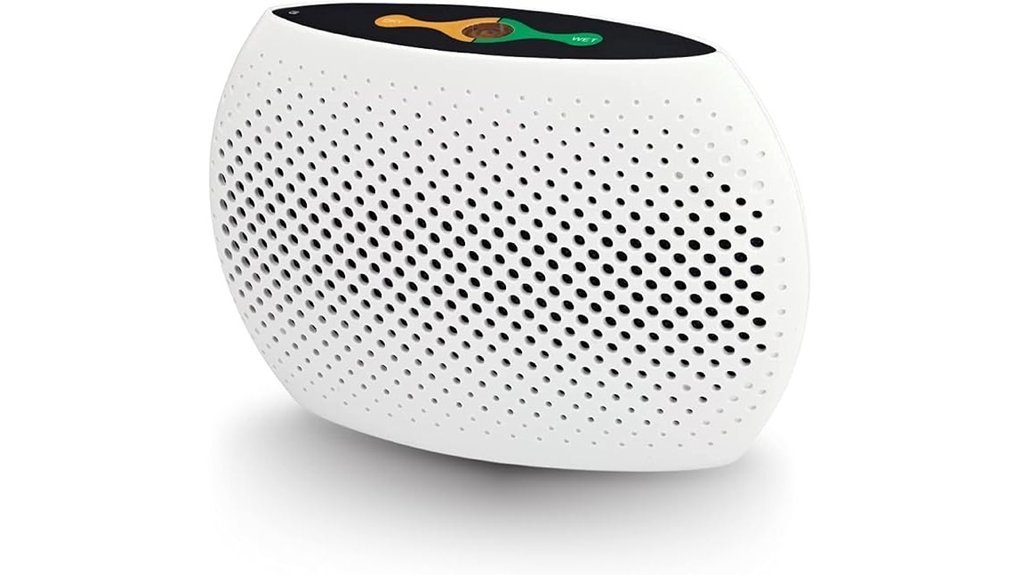
Best for larger safes: The SnapSafe Rechargeable Dehumidifier Large (model 75901) is a strong fit for gun safes, closets, pantries, and enclosed cabinets with up to a manufacturer-stated 500 cubic feet of internal volume.
It uses reusable silica-gel crystals to absorb moisture passively, so no battery or power cord is needed while the unit is working inside the enclosure. The indicator changes from orange when dry to green when saturated. Once saturated, the unit plugs into a 110V outlet in a well-ventilated location to release the collected moisture.
A full regeneration may take approximately 12 to 14 hours. That is longer than the heating-base models in this comparison, but the SnapSafe has a larger stated cubic-foot coverage than the other wall-plug safe models in this comparison.
Why You’ll Like It: Its larger stated capacity makes it easier to protect a tall safe or storage cabinet without placing several small desiccant packs inside.
Who Should Avoid It: Look elsewhere if you need a fast two-hour regeneration cycle or humidity control in an open room.
Pros:
- Large stated coverage of up to 500 cubic feet.
- No cord or battery is required during normal operation.
- Color indicator makes maintenance straightforward.
Cons:
- Regeneration can take approximately 12 to 14 hours.
- Requires access to a suitable 110V outlet.
- May need more frequent regeneration in very humid environments.
Afloia Mini Cordless Dehumidifier for Small Spaces
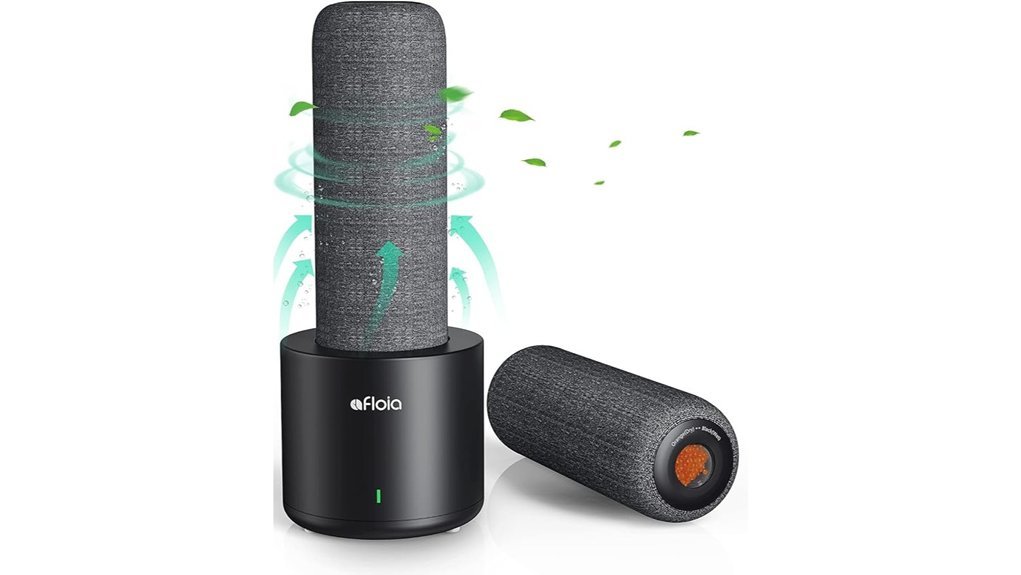
Best compact heating-base design: The Afloia Mini Cordless Dehumidifier is designed for closets, cabinets, cars, RV storage areas, bookcases, and small safes where a compact cylindrical unit is easier to place. It may also help inside a small bathroom cabinet, but it should not be treated as a bathroom-room dehumidifier.
Its 360-degree air-inlet design exposes the silica gel to moisture from multiple directions. The manufacturer describes absorption of up to approximately 4 oz or 100 ml under stated test conditions and coverage up to 54 square feet. Treat those figures as maximum estimates rather than guaranteed everyday performance.
When the beads change from orange to dark green, place the removable dehumidifier on its PTC heating base for approximately two hours. Only the base needs power during regeneration; the moisture absorber remains cordless while in use.
Why You’ll Like It: The separate base avoids placing a hot wall-plug unit directly into an outlet, and automatic shutoff helps simplify regeneration.
Who Should Avoid It: It is not suitable for a wet basement, a large bathroom, or any situation requiring continuous powered extraction.
Pros:
- Compact cylindrical shape fits tight storage spaces.
- Approximately two-hour regeneration cycle.
- Automatic shutoff on the heating base.
Cons:
- Limited to relatively small spaces.
- The heating base must be stored when not in use.
- Absorption performance decreases as the desiccant becomes saturated.
Hornady Rechargeable Dehumidifier for Gun Safes
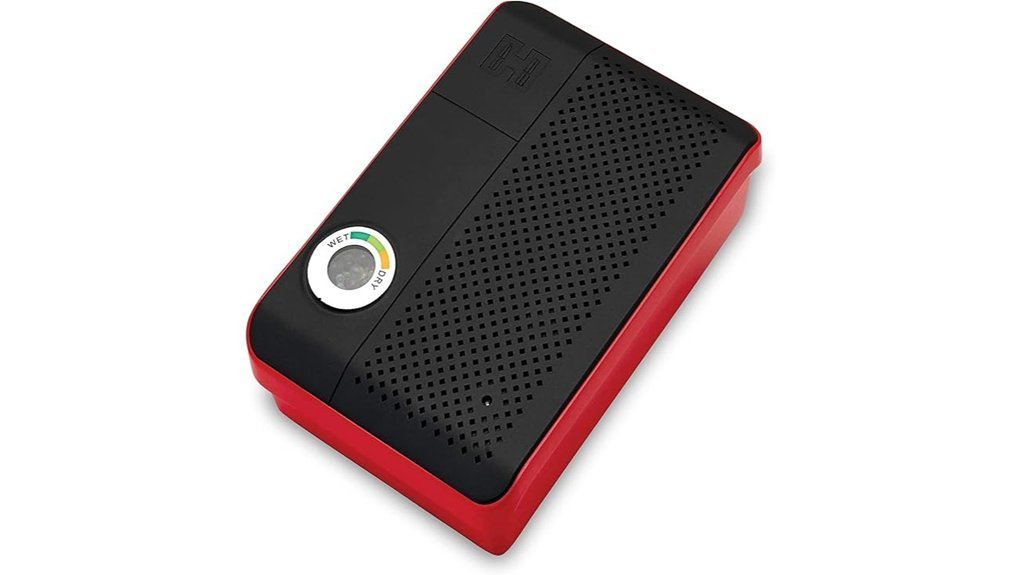
Best for medium gun safes: The Hornady Rechargeable Dehumidifier 95900 is designed to help control moisture in gun safes, cabinets, closets, and other enclosed storage areas up to a manufacturer-stated 333 cubic feet.
It uses reusable moisture-control crystals and does not need electricity or batteries while absorbing humidity. The indicator changes color as the crystals become saturated. To regenerate the unit, remove it from the safe and plug it into a 110V outlet until the crystals return to their dry color.
An included quick-connect mounting bracket helps keep the 1.5-by-4-by-6-inch unit off shelves or the safe floor. The design is straightforward, making this a practical option for buyers who want a recognized gun-storage brand without extra lighting or electronic controls.
Why You’ll Like It: It combines a clear status indicator, simple outlet regeneration, and a mounting bracket in a compact package.
Who Should Avoid It: Choose the larger SnapSafe model if your enclosure exceeds the stated 333-cubic-foot capacity.
Pros:
- Officially designed for enclosed storage areas up to 333 cubic feet.
- No battery or cord is required during moisture absorption.
- Includes a quick-connect mounting bracket.
Cons:
- Requires periodic removal and outlet regeneration.
- Not designed to maintain an entire room.
- Does not include a digital humidity display.
Wisedry Fast Rechargeable Mini Dehumidifier (2-Pack)
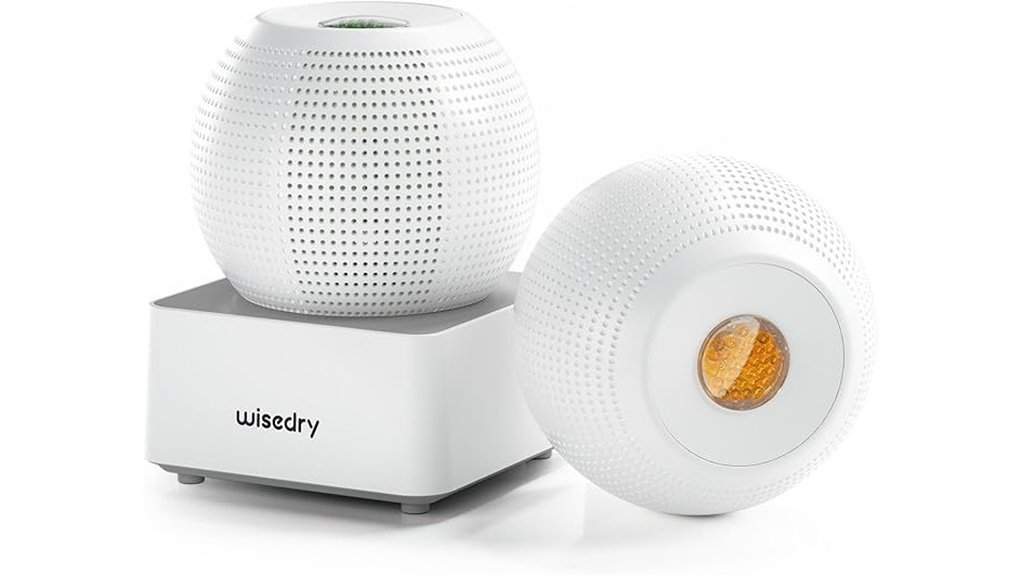
Best overall two-pack: The Wisedry Fast Rechargeable Mini Dehumidifier set is a practical choice when you want to rotate two cordless moisture absorbers between closets, cars, gym bags, cabinets, safes, and storage boxes.
The manufacturer describes the two-unit set as absorbing up to 200 ml or 8 oz of moisture per cycle and covering up to 108 square feet. Because passive desiccant performance depends strongly on enclosure conditions, the set will work best in contained spaces rather than open rooms.
When the indicator changes from orange to green, place a unit on the supplied heating base. Its tiered air-duct design is intended to regenerate the desiccant in approximately two hours, and an automatic shutoff feature helps prevent extended heating. Having two absorbers makes it possible to keep one in service while the other is being regenerated.
Why You’ll Like It: The two-piece setup, short regeneration time, visual indicator, and automatic shutoff provide one of the most convenient maintenance routines in the group.
Who Should Avoid It: Buyers with a large safe may prefer one higher-capacity unit instead of two smaller devices.
Pros:
- Two cordless moisture absorbers are included.
- Approximately two-hour regeneration cycle.
- Automatic shutoff reduces the need to supervise the heating base.
Cons:
- The stated capacity applies to the set and may vary by conditions.
- Both units rely on the supplied heating base.
- Not a substitute for a powered room dehumidifier.
Factors to Consider When Choosing a Rechargeable Cordless Dehumidifier
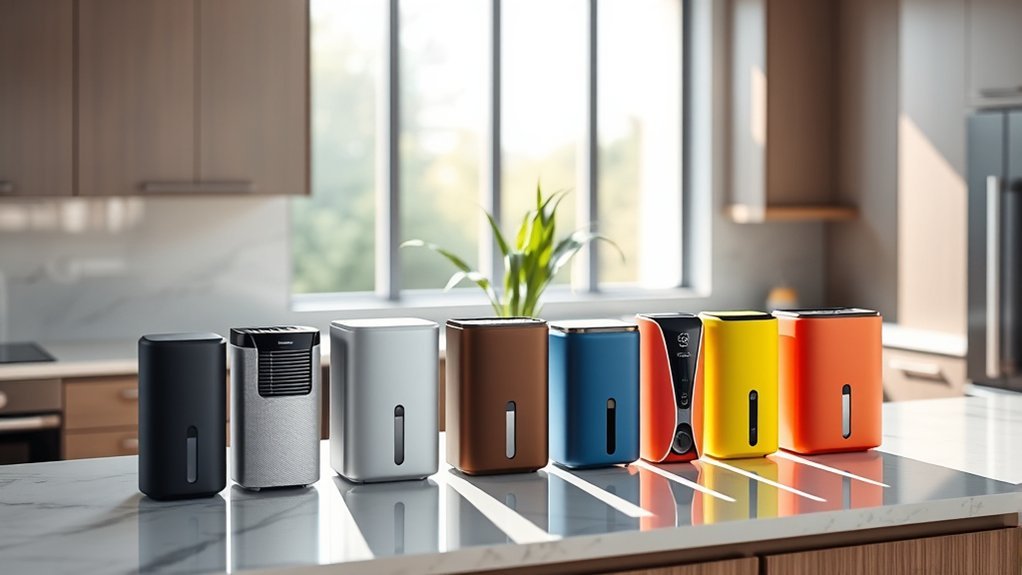
The best rechargeable desiccant dehumidifier depends on the internal size of your storage area, the local humidity, the regeneration method, and how often you are willing to maintain it. These products are most effective in relatively sealed spaces where outside humid air is not constantly entering.
Key Specifications to Evaluate
Compare the product’s stated enclosed-space coverage, desiccant capacity, indicator type, regeneration time, mounting options, and included accessories. Coverage may be listed in square feet or cubic feet, but these manufacturer estimates are not standardized and should not be compared with the pint-per-day ratings used for compressor dehumidifiers.
Enclosure Size and Coverage
Match the product to the volume of the safe, cabinet, closet, or storage box rather than the size of the surrounding room. A compact heating-base unit may be enough for a camera case, cabinet, or small safe, while a 333- or 500-cubic-foot model is more appropriate for a tall safe. In a humid climate, using a digital hygrometer can help you determine whether one passive unit is sufficient.
Regeneration Time and Method
The retained products use either built-in wall-plug heaters, separate PTC heating bases, or standard 110/120V outlet connections. Faster models may regenerate in approximately two hours, while larger wall-plug models can require eight to fourteen hours. Follow the manufacturer’s instructions and regenerate the product in a dry, well-ventilated location.
Moisture Absorption Capacity
Passive desiccant capacity is usually expressed as silica-gel weight or moisture absorbed per cycle rather than liters per day. A higher number can be useful, but enclosure tightness and environmental humidity often have a greater effect on how frequently the unit needs regeneration. Use the color indicator as the primary maintenance signal.
Design and Portability
Check the product’s shape and dimensions before buying. Flat wall-mounted units save shelf space in safes, while cylindrical and spherical models expose more surface area and are easy to move between locations. A two-pack can be useful when you want to protect several small storage areas or rotate units during regeneration.
Safety Features and Materials
Look for automatic shutoff on heating bases, intact outer housings, clear regeneration instructions, and color-changing indicators. Never cover the vents, immerse the product in water, or return a warm unit directly to a sensitive enclosure. Keep the regenerating device away from children, pets, flammable materials, and moisture.
Before You Buy Checklist
- Measure the internal volume and available placement space.
- Confirm whether the unit uses a heating base, a built-in plug, or a 110/120V outlet.
- Check whether the regeneration voltage matches your location.
- Decide whether you need a mounting bracket or freestanding design.
- Use a powered dehumidifier instead if the problem affects an entire room.
- Consider adding a hygrometer so you can track actual humidity.
Frequently Asked Questions
Are These Dehumidifiers Really Battery-Powered?
Most are not battery-powered during moisture removal. They use silica gel to absorb moisture passively and only need electricity when the desiccant is regenerated. The MAXSafes model is an exception only in the sense that its separate LED light uses four AAA batteries; its dehumidifying material still works passively.
How Long Do Rechargeable Dehumidifiers Last Between Regeneration Cycles?
They may work for several days or several weeks before regeneration is needed. The actual interval depends on humidity, temperature, enclosure size, air leakage, and how frequently the door or lid is opened. Regenerate the unit when its indicator reaches the saturated color.
Are Rechargeable Dehumidifiers Effective in Larger Spaces?
They are most effective in enclosed spaces such as safes, cabinets, storage boxes, and small closets. They generally cannot remove enough moisture to control a large bedroom, basement, or persistently wet bathroom. Use a powered compressor or thermoelectric dehumidifier for those situations.
Can These Dehumidifiers Be Used While They Are Regenerating?
Generally, no. Remove the saturated unit from the storage area and regenerate it according to the manufacturer’s directions. Heating-base and wall-plug models release moisture and heat during regeneration, so they should be placed in a suitable ventilated location rather than used inside the enclosure at the same time.
What Maintenance Do Rechargeable Desiccant Dehumidifiers Require?
Monitor the color indicator, keep the vents free of dust, wipe the exterior with a dry cloth, and regenerate the desiccant when saturated. These products normally do not have a water tank or washable air filter. Inspect the housing, plug, cable, or heating base before every regeneration cycle.
How Do I Know When to Regenerate My Dehumidifier?
Check the indicator window. Depending on the product, the beads may change from orange to green or from blue to pink when saturated. Follow the color chart printed on the product or in its manual because indicator colors vary between brands.
Should I Use a Hygrometer With a Cordless Dehumidifier?
A hygrometer is helpful because it shows whether the product is controlling humidity effectively in your specific enclosure. The desiccant indicator only shows the condition of the beads; it does not provide an exact relative-humidity reading.
Conclusion
Rechargeable cordless dehumidifiers are convenient for controlling moisture around stored belongings without running a permanent power cable into the enclosure. The Wisedry two-pack offers the easiest rotation and fast regeneration, the SnapSafe provides the largest stated cubic-foot coverage among the wall-plug safe models in this comparison, and the MAXSafes 2-in-1 adds useful motion-activated lighting.
For tighter spaces, the Afloia Mini is easy to place in closets, cars, cabinets, and small safes. The Hornady 95900 remains a straightforward option for a medium gun safe, especially when a mounting bracket is useful. Whichever model you choose, match it to the enclosure, monitor the indicator, and remember that passive desiccant products are not designed to replace a powered room dehumidifier.
Final Recommendation
Choose Wisedry for the most convenient two-unit rotation, SnapSafe for a larger safe, MAXSafes when motion-activated lighting adds real value, Afloia for a compact heating-base design, or Hornady for a simple wall-plug safe accessory. Verify the latest specifications, voltage, included accessories, and seller terms on the Amazon listing before purchasing.

[…] Rechargeable Cordless Dehumidifier Picks for 2026 […]