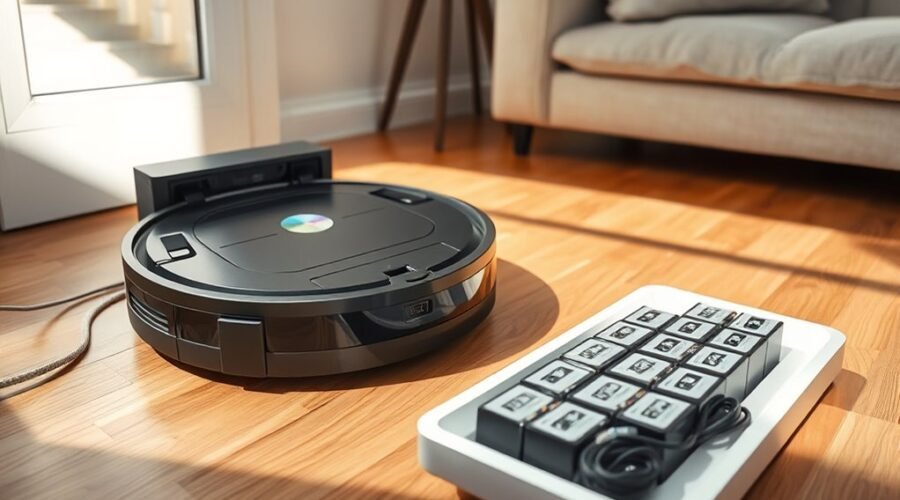
Robot vacuum batteries usually last longer when they are charged before dropping below 20% and kept away from heat. Proper storage matters too, with a cool, dry place and a partial charge around 50% offering better protection during downtime. Dirty contacts, repeated deep discharges, and unnecessary time on the charger can all reduce performance. The real issue is knowing which habits help, and which quietly wear the battery down.
How Long Robot Vacuum Batteries Last
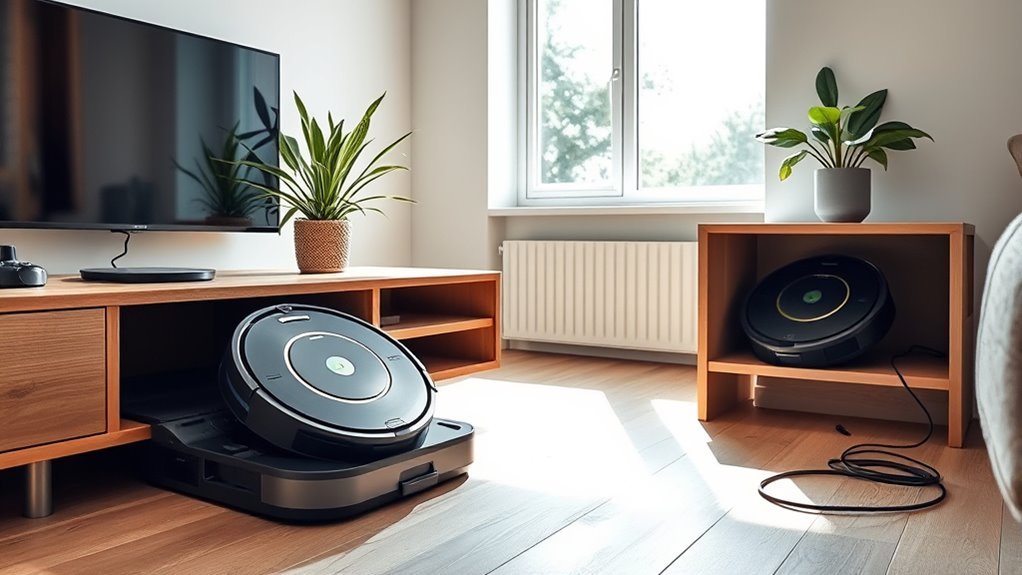
Robot vacuum batteries typically last 2 to 5 years under normal use, though daily cleaning can shorten that range to about 1 to 1.5 years because of frequent charge cycles and wear.
In practice, battery lifespan depends on load, maintenance, and how often the machine runs. Most robot vacuum batteries are lithium-ion cells rated for roughly 300 to 500 full cycles before capacity loss becomes noticeable.
Heavy suction, carpet work, and long sessions accelerate runtime drops, even when the unit still appears functional. Slow charging, reduced runtime, and poor charge retention are the main indicators that battery replacement may be near.
To preserve the life of the pack, owners should track these changes rather than accept fading performance as normal use. A clear pattern of decline signals diminishing capacity, not merely stronger cleaning demand.
How to Charge a Robot Vacuum Battery
Regular charging is best done before the battery falls below 20%, since deep discharge can shorten lifespan and reduce overall performance.
Battery care for a robot vacuum begins with routine charge cycles that stay shallow and consistent. A full charge is acceptable, but leaving the unit docked at 100% for long periods can increase internal stress and reduce battery life.
Trickle charging after a full charge is safe and supports daily cleaning without heavy wear. The charging contacts should be kept clean and free of debris so power transfer remains efficient and slow charging is avoided.
If the robot vacuum is used frequently, regular top-ups help preserve readiness and keep operation independent. For practical control, the dock should be stable, the contacts aligned, and the battery allowed to work within a moderate range rather than being pushed to extremes.
This approach keeps battery care disciplined and effective.
How to Store a Robot Vacuum Battery
For storage, a robot vacuum battery should be kept in a cool, dry place at room temperature, ideally between 18°C and 28°C, to limit heat-related degradation.
This battery should not remain on the charging dock at 100% for long periods, because constant full charging increases internal stress and shortens battery life.
For extended storage, a partial charge near 50% is the most practical state, balancing capacity retention with stability.
If the vacuum will be unused for weeks or months, inspect the charge monthly and recharge as needed to avoid deep discharge, which can cause irreversible damage.
Before storage, clean contacts should be verified so later charging remains efficient and reliable.
Before storage, ensure the contacts are clean so future charging stays efficient and dependable.
Proper storage reduces unnecessary wear, preserves autonomy, and supports long service without dependence on frequent intervention.
A disciplined routine gives the owner more control, less waste, and a healthier battery over time.
What Shortens Robot Vacuum Battery Life
Frequent deep discharges shorten robot vacuum battery life by increasing cycle wear, especially during large cleaning jobs.
Heat from the dock, motor, and prolonged charging at or near 100% further accelerates battery degradation.
Heavy use, carpet boost modes, and cluttered floors extend runtime and raise energy draw, which increases overall battery strain.
Frequent Deep Discharges
Deep discharges place heavy strain on robot vacuum batteries and can markedly reduce their service life. Frequent deep discharges shorten battery lifespan because most packs are rated for only 300 to 500 full cycles before capacity declines.
When a battery is repeatedly run to zero, battery health degrades faster, and reduced runtime often appears within a couple of years. Heavy cleaning loads, especially on carpets, increase discharge stress and speed wear.
A practical charging routine should favor recharge before the level falls below 20 percent, preserving efficiency and keeping the machine ready for use. Avoiding deep depletion also helps prevent weak suction and unreliable charging behavior.
For users who value autonomy, disciplined charging delays battery replacement and maintains dependable performance.
Heat and High Charge
Heat and prolonged high charge levels can greatly shorten a robot vacuum battery’s service life.
Keeping the unit docked at 100% on the charging station for long periods creates internal stress and speeds battery degradation. Heat from the dock, motor, or room air, especially at elevated temperatures, undermines battery health and reduces charging efficiency.
A battery held full in warm conditions ages faster and may deliver shorter runtimes over time.
Practical care means placing the charging station in a cool, ventilated environment, away from radiators, windows, and other heat sources. This lowers thermal strain, supports stable charging, and preserves usable capacity.
When heat is controlled and high charge exposure is limited, the battery retains more endurance, keeping maintenance simpler and user dependence lower.
Heavy Use and Carpet Boost
Beyond temperature control, usage patterns also shape battery wear. Heavy use, with frequent cleaning frequency, can shorten battery life to about 1-1.5 years. Carpet boost modes raise battery consumption because the motor must deliver more suction needed on thick rugs and heavy debris. That extra load increases run time and accelerates battery wear.
| Condition | Effect |
|---|---|
| Hard floors | Lower demand |
| Carpet boost modes | Faster drain |
| Condition | Effect |
| Thick rugs | Longer cleaning time |
| Heavy use | Shorter battery life |
Monitoring cleaning habits and limiting high-power cycles helps preserve battery life. When carpets are cleaned often, the robot works harder, so the battery pays the cost. Adjusting settings to match surface type keeps performance available without unnecessary depletion.
Signs Your Robot Vacuum Battery Needs Replacement
A robot vacuum battery often shows replacement needs through shorter runtime, with operating time dropping to around 15 minutes or less.
Slow charging and repeated failure to reach a full charge are also strong signs of battery deterioration.
When the unit no longer holds charge reliably, replacement is typically warranted.
Shorter Runtime
One of the clearest signs that a robot vacuum battery is nearing the end of its service life is a noticeable drop in runtime, sometimes falling to 15 minutes or less after roughly 300 to 500 charge cycles, often within two years of regular use.
At that point, the vacuum can no longer complete normal coverage without interruption. Users should monitor battery health and compare current runtime with the original specification.
If cleaning stops early, suction weakens, or charging problems appear, the battery needs closer inspection. These symptoms often indicate that energy delivery is degrading, making a replacement battery the practical fix.
A worn pack limits autonomy and control, reducing the machine’s usefulness. The user manual should be checked before replacing parts, since model-specific guidance varies and can prevent unnecessary expense.
Slow Charging
Slow charging is another common indicator that a robot vacuum battery is nearing the end of its useful life. When charge times lengthen, battery health is declining. After 300 to 500 charging cycles, battery deterioration often becomes visible. | Check | Normal | Concern | |—|—|—| | Charge time | Stable | Increasing | | Dock temperature | Cool | Excessive heat | | Contacts | Clean | Dirty | Reduced runtime after a full charge, such as 15 minutes, reinforces the diagnosis. Frequent slow charging may also reflect stress from excessive heat around the dock or room.
Routine maintenance helps separate fixable contact issues from true failure. Swollen or deformed packs require immediate replacement for safety and to restore autonomy.
Won’t Hold Charge
When a robot vacuum no longer holds a charge, the battery is usually nearing the end of its service life. A unit that won’t hold charge after short use, or needs frequent recharging, often shows battery deterioration.
In many cases, runtime drops to 15 minutes or less after 300 to 500 charging cycles, confirming weakened capacity. Longer charging times can also point to failing cells.
During operation, reduced suction power may appear because insufficient energy limits performance. Monitoring battery health should include checking for swelling or deformation, since physical changes indicate serious internal damage.
When these symptoms persist, it is practical to replace the battery rather than continue relying on reduced output. This restores autonomy, preserves cleaning efficiency, and prevents unnecessary downtime.
How to Extend Robot Vacuum Battery Life
Robot vacuum battery life is best extended by limiting high-power operation and reducing thermal stress. For a Robot, battery life improves when Auto or Normal modes handle routine cleaning; Max or Boost should be reserved for spot cleaning, because higher suction drains power faster.
To extend battery life, charging should begin at about 20% to 30%, before deep discharge becomes routine. After use, let the unit cool before charging, since warm cells age faster and heat can trigger degradation.
Charge around 20% to 30%, and let the vacuum cool before recharging to reduce battery wear.
Maintenance also matters: clean brushes, sensors, and filters regularly to reduce motor strain and excess heat. Store the vacuum in a cool, dry place and avoid extreme temperatures, which can shorten service life.
Proper charging discipline, careful store conditions, and consistent maintenance give users more freedom from premature battery failure and preserve performance without unnecessary replacement.
Frequently Asked Questions
Should You Leave Your Robot Vacuum Plugged in All the Time?
Generally yes, but continuous plug-in may shorten Battery lifespan; Overcharging risks are usually low. He should follow Manufacturer guidelines, favor Ideal conditions, and consider Usage patterns that preserve Charging cycles and Energy efficiency.
What Is the 20/80 Rule for Charging?
The 20/80 rule keeps a battery between 20% and 80% for ideal charging, improving battery lifespan, energy efficiency, and battery maintenance. It reduces charging cycles, moderates charging frequency, and supports safety precautions during use.
What Are Some Charging Tips for Improving Battery Life?
Like a lantern spared from overburning, the device benefits from Battery maintenance: Ideal charging near 20%, fewer deep Charge cycles, moderate Power settings, controlled Temperature effects, Smart features, and reduced dock time to extend Battery lifespan.
Should I Leave My Cordless Vacuum on the Charger All the Time?
Generally yes, though not indefinitely ideal. Modern chargers limit overcharging risks, but battery lifespan still benefits from a maintenance routine with periodic unplugging. Charging cycles, temperature effects, and performance decline should guide replacement signs.
Conclusion
In the end, a robot vacuum battery behaves like a small reservoir: it lasts longest when kept from running dry, filled with care, and stored in calm conditions. Charging before 20%, keeping contacts clean, and resting it near 50% charge in a cool, dry place reduce stress and preserve capacity. When power fades sooner, it is a signal, not a mystery. With steady maintenance, the battery remains the quiet engine behind reliable cleaning.